![Kurume Gasuri Indigo Cotton Cushion Cover: Chikugo Ikat Craft [2026]](https://jpmono.com/wp-content/uploads/2026/06/kurume-gasuri-indigo-cotton-cushion-cover-where-to-buy-2026-featured.jpg)
Kurume Gasuri (久留米絣, “Kurume ikat”) is the indigo-dyed cotton ikat of the Chikugo plain in southern Fukuoka, on the island of Kyūshū. A cushion cover in this fabric carries one of Japan’s three great kasuri traditions into an object you can actually live with — the slightly blurred white-on-indigo motifs that define the cloth come from threads tied off and resist-dyed before a single pass of the loom.
What makes the textile notable internationally is not just the look but the method, and the story attached to it. Tradition credits the invention of Kurume kasuri around 1800 to Inoue Den, a teenage girl who unraveled a faded scrap of cloth, noticed how the worn pattern revealed the underlying dyed-and-undyed threads, and reverse-engineered a way to tie and dye threads on purpose. The technique that grew out of that observation became a folk-craft industry across the cotton-growing Chikugo countryside, and was later championed by Yanagi Sōetsu’s mingei (民芸, “folk craft”) movement.
This guide is written for international readers deciding whether a Kurume Gasuri cushion cover is the right buy — and from where. We cover what the fabric is, where it comes from, who it suits, how to source it from outside Japan through Amazon US and the Amazon JP Global Store, and how it compares to neighboring Kyūshū crafts and to Japan’s other indigo kasuri traditions.
🔄 Updated:
⏱️ Read time: ~12 min
- Who this is for — and who should skip it
- Product overview (from published specs)
- 📍 Where this comes from — place, era, and the craft tradition
- 📌 How does it compare?
- 📦 Shipping & where to buy
- What it does well
- Weaknesses and things to verify before buying
- Conclusion — which buyer type are you?
- Other ways to approach this purchase
- ❓ Frequently Asked Questions
Who this is for — and who should skip it
- Want a piece of a named, METI-recognized Japanese textile tradition in everyday use rather than behind glass
- Prefer indigo (ai-zome) cotton that softens and fades attractively with washing and years of use
- Like the quiet, geometric white-on-blue ikat aesthetic that suits both Japanese and Scandinavian-leaning interiors
- Are buying a cover only and already own, or can size, a separate insert
- Value hand-weaving and small-workshop provenance over mass-printed “indigo-look” homeware
- Need an exact color match — indigo varies batch to batch, so precise shades are difficult to guarantee
- Want a stain-proof, bleach-safe cover; natural indigo can crock (rub off) and is sensitive to bleach
- Expect a cushion insert included — many covers are sold alone
- Need a guaranteed size; cotton ikat can shift slightly with weave and wash
- Are looking for the cheapest possible decorative pillow rather than a craft textile
Product overview (from published specs)
Kurume gasuri cushion covers are woven cotton textiles with indigo patterning; dimensions and whether a cover includes a pad vary by maker. The table focuses on the craft and treats piece-specific details separately.
| Attribute | Detail | Source |
|---|---|---|
| Craft | Kurume Gasuri (久留米絣) — indigo cotton warp-and-weft ikat | Maker tradition / data notes |
| Object | Cushion cover (clutch / pillow cover); insert typically not included | Product category |
| Material | Cotton, indigo (ai) dyeing — natural and synthetic indigo both exist in the trade | Craft tradition |
| Origin | Chikugo plain, Kurume area, Fukuoka Prefecture, Kyūshū | Data notes |
| Recognition | METI-designated traditional craft; Important Intangible Cultural Property | Data notes |
| Dimensions / fill | Unconfirmed | Not in fetched data |
A cushion cover’s dimensions and current price vary by maker and size; confirm those details before buying.
📖 Glossary — key terms
- Kasuri (絣) — Japanese ikat: a resist-dyeing method where threads are tied and dyed before weaving, producing the soft-edged, slightly “feathered” patterns once the cloth is woven.
- Gasuri — the same word as kasuri, voiced after a place name (Kurume → Kurume-gasuri).
- E-gasuri (絵絣) — “picture kasuri,” in which warp and weft are both patterned so that figurative or pictorial designs emerge across the cloth.
- Ai-zome (藍染) — Japanese indigo dyeing, traditionally fermented in vats; gives the deep blue that lightens gracefully with age.
- Mingei (民芸) — the folk-craft movement led by Yanagi Sōetsu in the early 20th century, which valued anonymous, useful, handmade everyday objects.
- Crocking — the rub-off of surface dye, common with natural indigo before it is fully set; worth knowing for a cushion you will lean on.
📍 Where this comes from — place, era, and the craft tradition

Kurume sits on the broad, flat Chikugo plain in the south of Fukuoka Prefecture, the most populous prefecture of Kyūshū — Japan’s southwestern main island. The city is threaded by the Chikugo River, the longest river in Kyūshū, whose floods over centuries laid down the fertile, well-watered lowland that made the district good for one crop in particular: cotton. That agricultural base is the quiet engine behind the craft. A cotton-growing plain produces spinners and weavers; cheap local fiber plus a water supply for dyeing is exactly the combination a domestic textile industry needs.

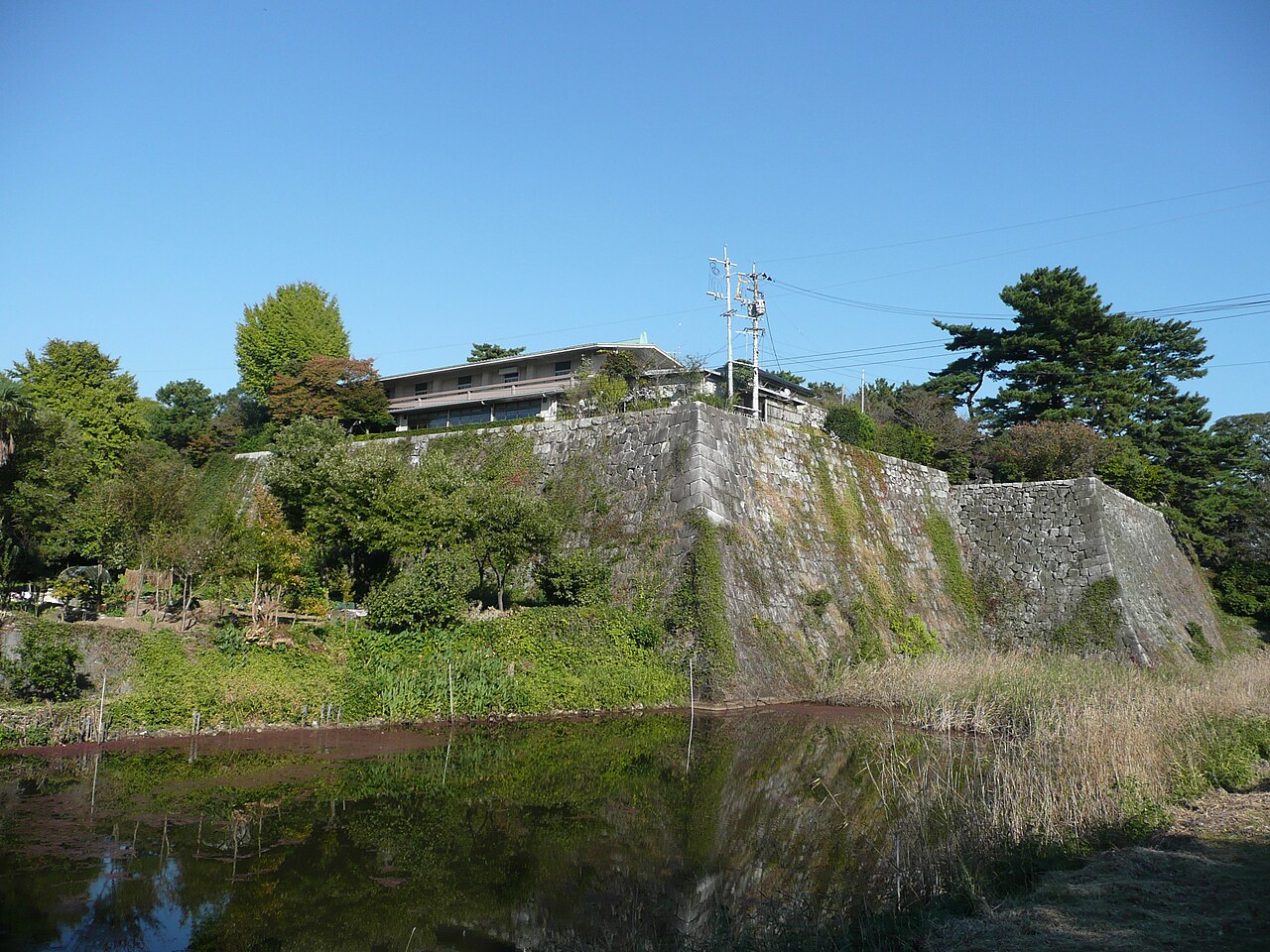
For most of the Edo period (1603–1868), Kurume was a castle town governed by the Arima clan, who ruled the Kurume domain. Domain administrations across Japan actively promoted local cash products, and cotton textiles were a natural fit for the Chikugo countryside. It was into this setting — a cotton-weaving region under settled domain rule — that the craft’s founding story is placed.
Tradition credits the invention of Kurume kasuri around 1800 to Inoue Den, a girl said to have been only twelve or thirteen. The account holds that she unraveled a piece of faded, worn cloth, saw how the abrasion had exposed a pattern of dyed and undyed thread, and worked backward to a method of binding threads with thread before dyeing — so that the cloth could be made to carry a deliberate pattern from the loom. Whether every detail of that story is literal or partly folk memory, the technique it describes is real, and it spread.
“A teenager pulling apart a faded rag became one of Japan’s three great ikat traditions — not in a palace workshop, but on a cotton plain in Kyūshū.”
Over the 19th century the method was refined into warp-and-weft patterning — e-gasuri, “picture kasuri” — in which both thread systems are resist-dyed so that motifs resolve as the cloth is woven. Kurume Gasuri took its place beside Iyo kasuri of Ehime and Bingo kasuri of Hiroshima as one of Japan’s three great kasuri traditions. In the early 20th century, Yanagi Sōetsu and the mingei movement held the cloth up as a model of honest, useful folk craft: anonymous, hard-wearing, and beautiful precisely because it was made to be worn.
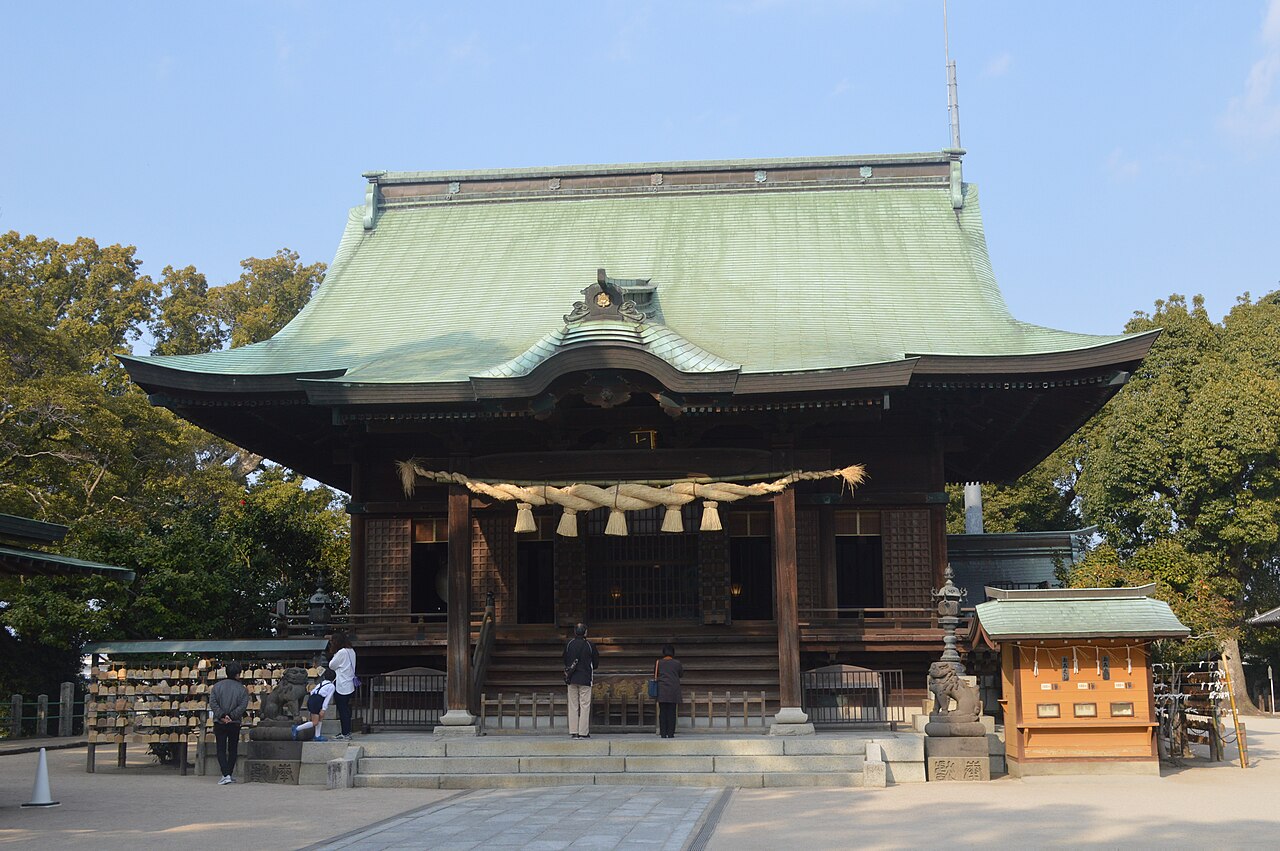
- 1620 — The Arima clan enters Kurume and begins its rule of the Kurume domain.
- c. 1800 — Inoue Den, a young teenager, reverse-engineers the kasuri resist-tying technique.
- 19th century — Refined into warp-and-weft (e-gasuri) picture-pattern weaving across the Chikugo plain.
- Early 20th c. — Yanagi Sōetsu and the mingei movement champion the cloth as model folk craft.
- 1957 — Kurume Gasuri is recognized as an Important Intangible Cultural Property.
- 1976 — Designated a traditional craft under Japan’s METI framework.
- 2026 — Still hand-woven by workshops in the Chikugo district of Fukuoka.
The continuity case is straightforward. Kurume Gasuri remains a living craft, hand-woven in workshops on the Chikugo plain, carrying both its METI traditional-craft designation and Important Intangible Cultural Property status. The watery lowland landscape that supported the cotton-and-indigo economy — the same kind of canal-laced terrain preserved a short distance away at Yanagawa — is still recognizably the place the cloth came from.
One distinction is worth fixing in mind before you shop. Kurume Gasuri is not Hakata-ori. Hakata-ori is the silk obi-weaving tradition of Hakata, the port district of Fukuoka city to the north — a formal, lustrous silk craft. Kurume Gasuri is its cotton, everyday-wear counterpart from the Chikugo countryside to the south. Same prefecture, very different cloth.
📌 How does it compare?
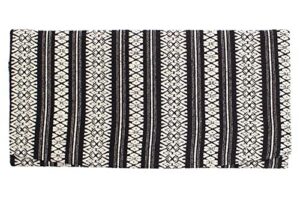 🧵 Hakata-ori silk gamaguchi — the silk-obi tradition of Fukuoka city, contrasted with Kurume’s cotton
✂️ Hakata Hasami scissors — another Fukuoka craft
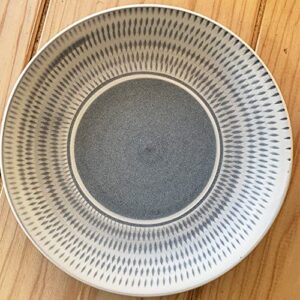 🍽️ Koishiwara-yaki tobikanna plate — Fukuoka folk pottery
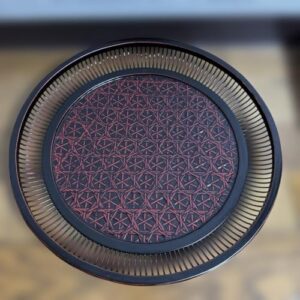 🥣 Kurume rantai lacquer bowl — another craft from Kurume itself
👜 Iyo Kasuri indigo tote — one of the three great kasuri (Ehime)
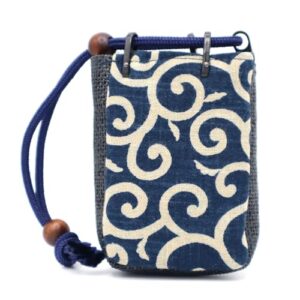 👝 Bingo Kasuri kinchaku pouch — the third great kasuri (Hiroshima)
🏃 Yumihama-gasuri table runner — Tottori indigo ikat
🟦 Awa Aizome indigo tenugui — Tokushima indigo dyeing
📦 Shipping & where to buy
A cushion cover is light and folds flat, so international shipping is often less demanding than for rigid goods, but charges and customs duties vary by destination. Compare the cloth, weave, and intended insert when choosing one.
| Store | Item / variant | Price (JPY + USD est.) | Notes |
|---|---|---|---|
| 🇺🇸 Amazon.com (US) | Browse Japanese indigo cushion covers | varies (USD) | Best if you are shopping from the US — Prime shipping, USD pricing, no international customs. Amazon US carries Japanese indigo and ikat home textiles from various makers, useful for comparing patterns and price tiers. The exact Kurume Gasuri cover here is sourced from Japan (next row). |
| 🇯🇵 Amazon JP Global Store | This Kurume Gasuri cushion cover | — | International availability depends on the seller. |
| Maker direct | Chikugo-district weaving workshops | varies (JPY) | Several Kurume Gasuri workshops sell direct; selection is wider but many sites are Japanese-only and may not ship abroad. |
| Proxy services (Buyee / Tenso) | Japan-only stores forwarded abroad | item + fees (JPY) | Use when a Japanese shop will not ship internationally; adds a service fee and a forwarding leg. |
Prices in USD are approximate and depend on the current exchange rate. The JPY price is the authoritative figure for the specific listed item; confirm it at the retailer before purchasing.
What it does well
Weaknesses and things to verify before buying
- Price unconfirmed. Compare current offers before committing.
- Cover only. Most cushion covers do not include an insert. Confirm whether a pad is included and what size it needs.
- Dimensions unstated here. Exact cover size was not in the fetched data; verify it fits the insert you own.
- Indigo can crock and is bleach-sensitive. Natural indigo may rub off slightly before fully set and reacts badly to bleach. Treat it as a hand-wash / gentle-care textile.
- Color and pattern vary. Indigo shade and kasuri motif differ batch to batch; do not expect an exact match to a product photo.
- Kurume Gasuri is a tradition, not a single maker. Quality and whether dye is natural or synthetic vary by workshop. If natural indigo or full hand-weaving matters to you, confirm those details with the maker.
- Customs and duties. International orders may incur import duty above your country’s threshold; factor that into the true landed cost.
Conclusion — which buyer type are you?
Other ways to approach this purchase
❓ Frequently Asked Questions
Does Amazon JP ship a Kurume Gasuri cushion cover internationally?
Yes. Items sold through the Amazon JP Global Store ship to most major international destinations. A cushion cover is light and folds flat, so shipping is usually toward the low end of the typical $15–$40 range to the US or EU. Customs duties may apply above your country’s threshold.
Is an insert (pad) included with the cover?
Most cushion-cover designs sell the cover alone; check whether a pad is included and make sure the size fits your existing insert.
How should I care for indigo cotton kasuri?
Treat it as a gentle-care textile. Natural indigo can crock (rub off slightly) before it is fully set and reacts badly to bleach, so hand-wash or use a gentle cold-water cycle, separate from light fabrics.
How is Kurume Gasuri different from Hakata-ori?
Both are from Fukuoka Prefecture, but they are different cloths. Hakata-ori is the lustrous silk obi-weaving of Hakata in Fukuoka city to the north. Kurume Gasuri is the cotton, everyday-wear indigo ikat of the Chikugo countryside to the south.
What are Japan’s three great kasuri?
Kurume Gasuri (Fukuoka), Iyo kasuri (Ehime), and Bingo kasuri (Hiroshima) are traditionally counted as Japan’s three great kasuri. Kurume’s claim rests on its scale, its two-century history, and its recognition as an Important Intangible Cultural Property.
Will the cover match the product photo exactly?
Not necessarily. Indigo shade and kasuri motif vary batch to batch because the cloth is dyed and woven by hand. Treat the photo as representative rather than an exact-match guarantee.
Is it a good gift?
It works well as a gift for someone who appreciates Japanese craft or natural-dye textiles, because it is useful, durable, and carries a clear cultural story. For a recipient who needs an exact color to match a room, confirm the look with them first.
jpmono.com is curated by a Japan-based editorial team (working out of Toyama in the Hokuriku region and Nara in Kansai) and is independent. We do not take payment from the makers we feature; we read maker specifications and craft references rather than physically testing every product.
This article was prepared with AI assistance and reviewed against craft references. Specifications can vary by maker and size; treat the care guidance as general.
Affiliate disclosure: jpmono.com may earn a commission on qualifying purchases made through links on this page, at no additional cost to you.