![Kutani Ware Gosai Guinomi: Hand-Painted Japanese Sake Cup [2026]](https://jpmono.com/wp-content/uploads/2026/06/kutani-ware-gosai-guinomi-sake-cup-where-to-buy-2026-featured.jpg)
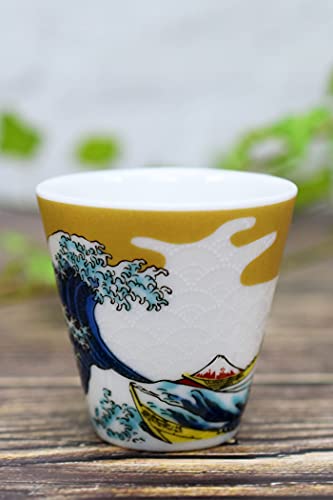
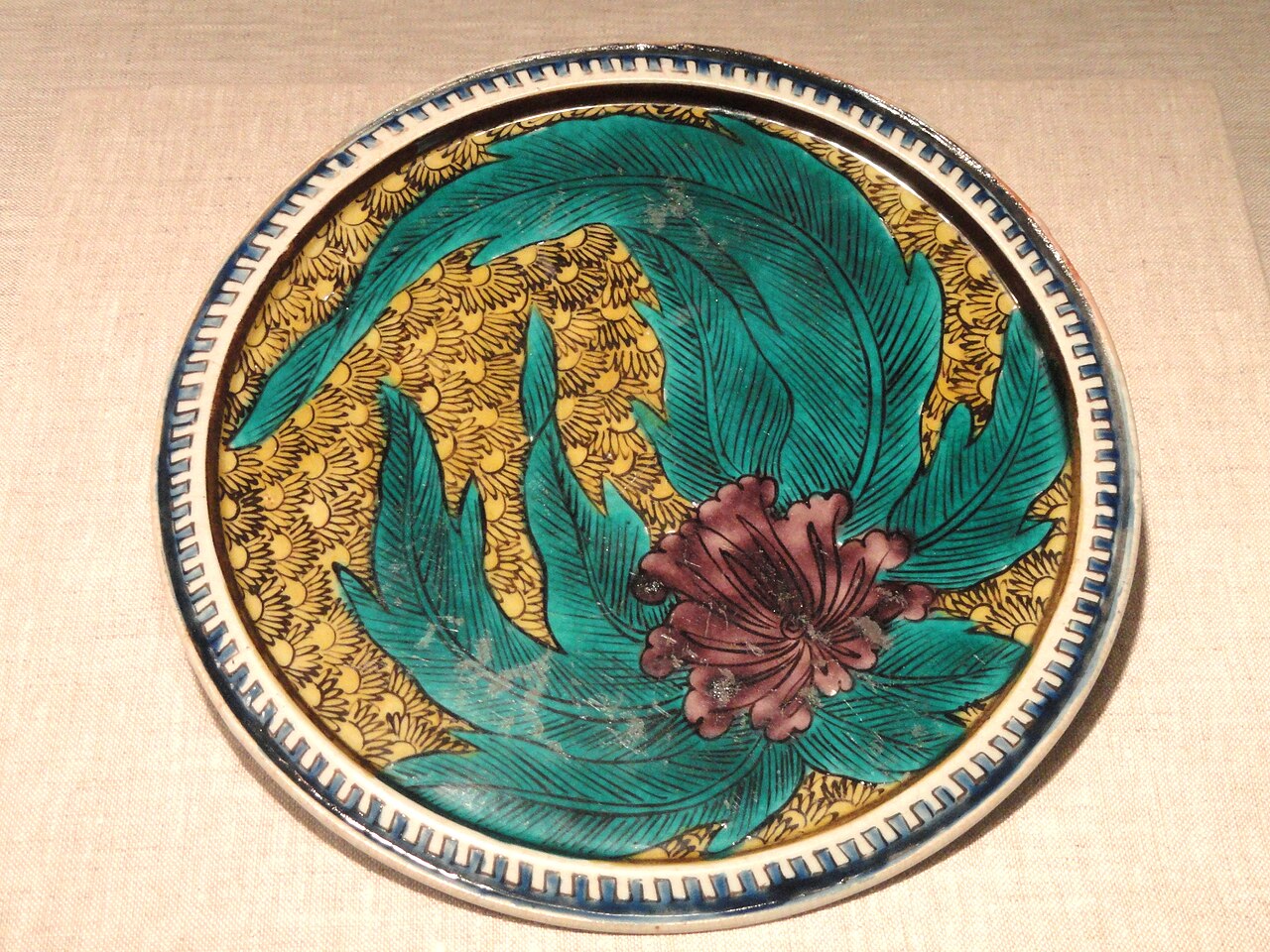
Kutani ware (九谷焼, Kutani-yaki) is the boldest overglaze porcelain Japan produces. Where many Japanese sake cups are quiet — iron-glazed stoneware in browns and ash-greens — a Kutani gosai (五彩, “five-color”) cup does the opposite: thick enamel in green, yellow, red, purple, and navy, laid over white porcelain like stained glass over snow. This guide covers a hand-painted gosai guinomi/ochoko sake cup made in Ishikawa Prefecture, on the Sea of Japan coast.
The form matters as much as the color. A guinomi (ぐい呑み) is a small cup sized for sipping sake neat, and it is the most accessible way to own a piece of a porcelain tradition that began around 1655 and was revived in the 1800s under the immensely wealthy, Maeda-ruled Kaga domain. You are buying a functional object that carries roughly three and a half centuries of decorative-arts history in the palm of your hand.
This article is written for international readers deciding whether — and from where — to buy one. We cover what the piece is, the place and history that produced it, how it differs from the stoneware sake cups of Tamba, Karatsu, and Satsuma, where to buy it from outside Japan, and which kind of buyer it actually suits. Written from a Japan-based editor’s desk in Toyama and Nara.
🔄 Updated:
⏱️ Read time: ~11 min
- Who this is for — and who should skip it
- Product overview (from published specs)
- 📍 Where this comes from — place, era, and the craft tradition
- Price snapshot across stores
- What it does well
- Weaknesses and things to verify before buying
- Conclusion — which buyer type are you?
- Other ways to approach this purchase
- 🏆 Editor’s Pick
- ❓ Frequently Asked Questions
Who this is for — and who should skip it
- Want a Japanese sake cup with bold color, not muted earth tones
- Appreciate hand-painted overglaze enamel and accept piece-to-piece variation
- Are building a small collection of regional Japanese ceramics by prefecture
- Want a giftable, display-worthy object that is still genuinely usable
- Like that porcelain is non-porous, easy to rinse, and does not retain odors
- Prefer the rustic wabi-sabi look of ash- or iron-glazed stoneware
- Want a large drinking vessel — a guinomi is small by design
- Need a guaranteed dishwasher- and microwave-safe daily mug
- Expect an exact pattern match to the photo (hand-painting varies)
- Are unwilling to verify live price and international shipping before buying
Product overview (from published specs)
The dataset for this guide is thin: only the Amazon JP Global Store listing reference (ASIN B09BFT1TDN) was available, and a live price snapshot was not captured at the time of writing. Where a specification is not confirmed in the source listing, it is marked rather than guessed. Verify all current details at the listing before purchasing.
Kutani Ware Gosai Guinomi
和座の蔵 縁起 おちょこ 酒器 九谷焼 ぐい呑み 波 陶器 ブランド 和食器 お猪口 日本製
残り9点 ご注文はお早めに · Sold by 和座の蔵 · ASIN B09BFT1TDN
Price and availability as of 2026-09-01 05:22 JST. The Amazon listing at the time of purchase is authoritative. jpmono.com earns a commission on qualifying purchases at no extra cost to you.
| Attribute | Detail (per source listing) | Source |
|---|---|---|
| Craft | Kutani ware (九谷焼), overglaze-enamel porcelain | Amazon JP Global Store (sourced listing) |
| Form | Guinomi / ochoko sake cup | Amazon JP Global Store |
| Material | White porcelain with gosai (five-color) overglaze enamel | Maker tradition / listing |
| Decoration | Hand-painted; pattern and palette vary by piece | Maker tradition |
| Origin | Ishikawa Prefecture, Chūbu region, Japan | Maker tradition / listing |
| Dimensions / capacity | Unconfirmed — check listing | — |
| Weight | Unconfirmed — check listing | — |
| Price | Not captured at time of writing — verify on listing | — |
Spec sheets indicate the defining features of Kutani ware are its white porcelain body and thick overglaze enamel; exact dimensions, weight, and price depend on the specific listed piece and were not present in the fetched data.
📖 Glossary — Kutani and sake-cup terms
- Kutani-yaki (九谷焼) — “Kutani ware,” overglaze-enamel porcelain originating in the village of Kutani, Ishikawa.
- gosai (五彩) — the “five colors” of classic Kutani: green, yellow, red, purple, and navy blue.
- guinomi (ぐい呑み) — a small sake cup, slightly larger than an ochoko, sized for sipping sake neat.
- ochoko (お猪口) — the smallest standard sake cup; the term is often used interchangeably with guinomi in listings.
- sakazuki (盃) — a flat, shallow ceremonial sake cup, distinct from the deeper guinomi.
- overglaze enamel (上絵, uwa-e) — color painted on top of an already-glazed, fired surface, then fired again at lower heat.
- Ko-Kutani (古九谷) — “Old Kutani,” the first production period from around 1655.
- Saikō-Kutani (再興九谷) — the “revived Kutani” of the early 1800s, after the original kilns had gone quiet.
- Kaga domain (加賀藩) — the wealthy Maeda-ruled feudal domain centered on Kanazawa that patronized the decorative arts.
Related Japanese sake cups, drinkware, and Ishikawa crafts covered elsewhere on jpmono.com — useful for comparing region, material, and decoration before you commit.

📍 Where this comes from — place, era, and the craft tradition

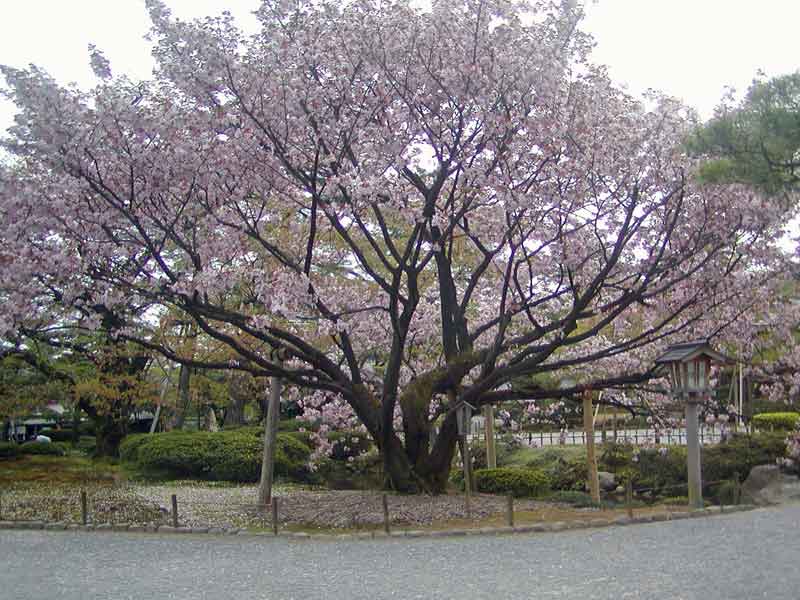
Ishikawa is a long, narrow prefecture on the Sea of Japan coast of central Honshu, in the Hokuriku part of the Chūbu region. Its capital, Kanazawa, lies roughly 300 km northwest of Tokyo. The prefecture’s geography is split between the Noto Peninsula reaching north into the sea and the Kaga plain to the south, where the village of Kutani sat near deposits of the porcelain stone that gave the ware its name.
The craft took root here for a specific reason: porcelain needs the right stone, and the right patron. Both were present. Porcelain stone was found near Kutani in the mid-17th century, and the surrounding Kaga domain — one of the richest in feudal Japan — had both the wealth and the cultural appetite to underwrite a luxury decorative art.
Kutani ware began around 1655 in the village of Kutani, then part of the Daishōji domain — a branch of Kaga — when porcelain stone was discovered nearby. This first period is called Ko-Kutani, “Old Kutani.” For reasons still debated by historians, the original kilns went quiet within a few decades.
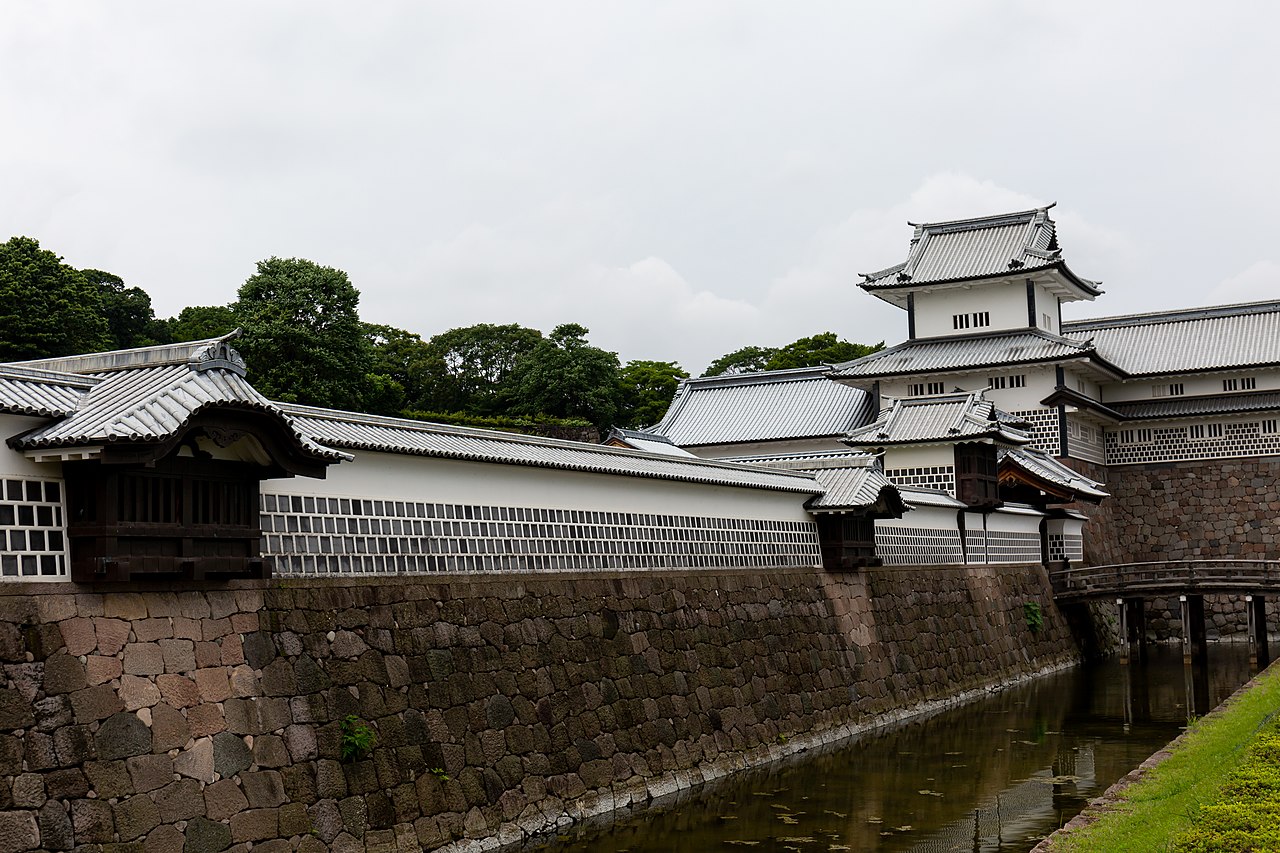
The revival came in the early 1800s, closer to Kanazawa, and is known as Saikō-Kutani, “revived Kutani.” It was fueled by the Maeda-ruled Kaga domain and its deep culture of refined decorative arts — the same culture that produced Kaga yuzen silk dyeing, lavish gold-leaf work, and the celebrated Kenrokuen garden. Several distinct revival styles emerged, each with its own palette and signature.
- c.1655 — Ko-Kutani: porcelain stone found near Kutani village (Daishōji, a Kaga branch); the first five-color kilns fire.
- early 1700s — Original Ko-Kutani production lapses and the kilns fall silent.
- early 1800s — Saikō-Kutani: kilns reopen near Kanazawa under Kaga-domain patronage, reviving the tradition.
- 19th century — Distinct revival styles develop, including the red-focused aka-e and other named schools.
- late 1800s — Kutani porcelain gains an international reputation through Meiji-era world expositions and export.
- 1975 — Kutani-yaki is designated a traditional craft by Japan’s industry ministry (METI).
- 2026 — Kilns around Kanazawa, Komatsu, and Nomi continue producing hand-painted gosai overglaze ware.
“Kutani’s signature is not subtlety. It is the confidence to paint thick green, yellow, red, purple, and navy over white porcelain — and to make that excess read as elegance.”
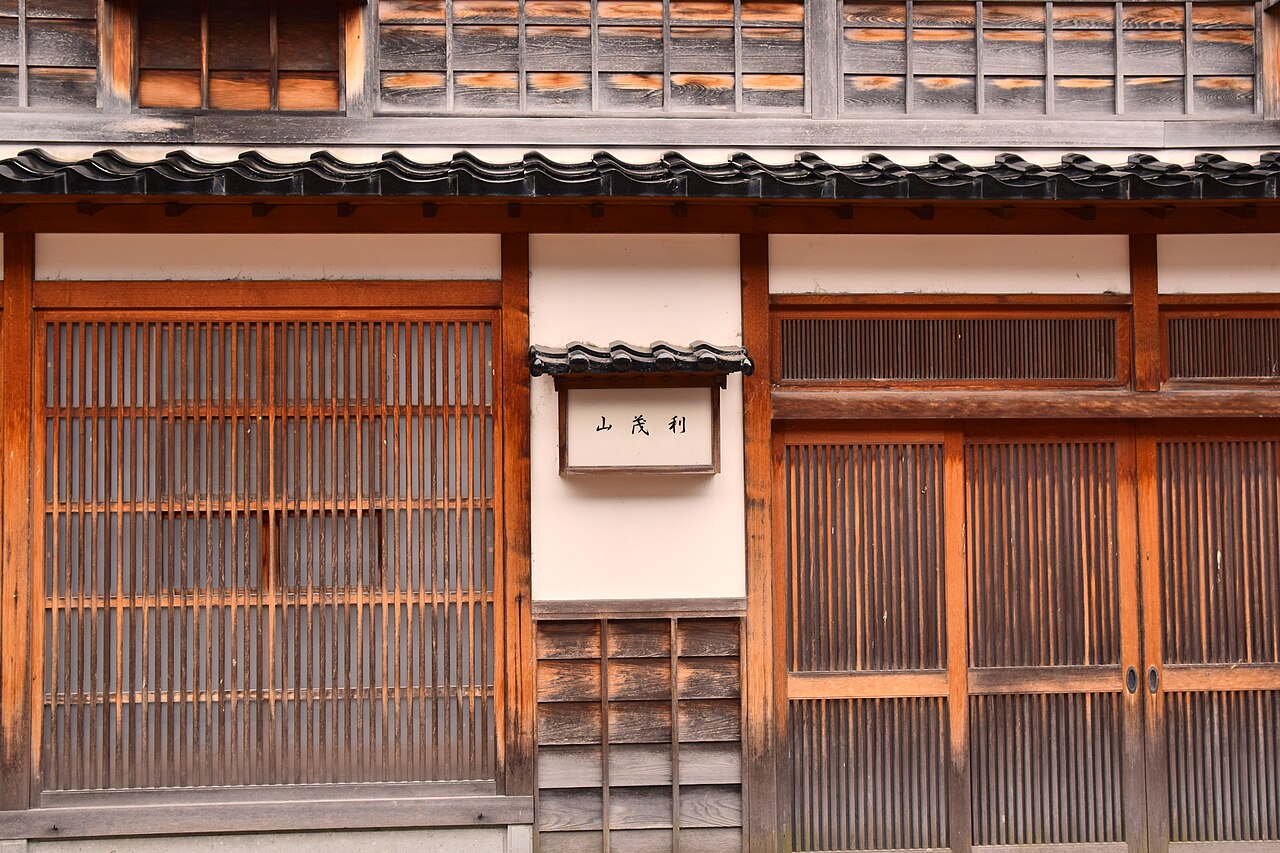
The gosai palette is the throughline that survives every style change. Green, yellow, red, purple, and navy are laid on thickly enough that the enamel has visible depth, almost like glass. That maximalist instinct is everywhere in Kanazawa’s decorative culture — you can see the same love of ornament and gold in the city’s preserved teahouse districts.
What “still being made here” means today is straightforward: Kutani is a living craft, not a museum piece. Working kilns and independent painters continue to produce overglaze porcelain across the old Kaga heartland — Kanazawa, Komatsu, Nomi — and a hand-painted guinomi from one of them is a current product, not a reproduction. Because each cup is painted by hand, no two are identical, which is part of the appeal and part of the caveat.
For the international reader, the cultural fit is easy: a Kutani guinomi is made for sake, and it pairs naturally with the cold, clean junmai styles that the Hokuriku region’s rice and water are known for. It also sits comfortably as a display object the rest of the year.
Price snapshot across stores
Only the Amazon JP Global Store listing was referenced for this guide, and a live price was not captured at the time of writing. JPY (¥) is the authoritative currency for the specific item; any USD figure would be an approximate estimate at a ¥150/USD baseline. The data suggests you should treat all figures below as “verify before buying.”
| Store | Item / variant | Price (JPY + USD est.) | Notes |
|---|---|---|---|
| 🇺🇸 Amazon US (search) | Browse Japanese Kutani & sake cups | varies (USD) | Best if you are shopping from the US — Prime shipping, USD pricing, no international customs. Amazon US carries Japanese porcelain and sake sets from various makers; the specific Kutani piece in this guide is sourced from Japan (next row). |
| 🇯🇵 Amazon JP Global Store | Kutani gosai guinomi (ASIN B09BFT1TDN) | Price on listing — not captured | Ships internationally from Japan to most major destinations. This is the sourced listing for the exact item. |
| Maker direct | Individual kiln / painter pieces | Varies — Unconfirmed | Many Kutani kilns and Kanazawa galleries sell directly; selection and authentication are best, but international shipping is case-by-case. |
| Proxy services (Buyee / Tenso) | Japan-only listings, forwarded | Item price + forwarding fee | Useful when a piece is only sold within Japan; adds a service fee and a second shipping leg. Factor in customs for orders over local thresholds. |
What it does well
Weaknesses and things to verify before buying
- No live price was captured. The fetched data did not include a price; confirm the current figure on the Amazon JP Global Store listing before ordering.
- Pattern varies by piece. Because the decoration is hand-painted, the cup you receive will not match the listing photo exactly. If you need a specific motif, ask the seller first.
- Dimensions and capacity are unconfirmed. A guinomi is small by design; check the stated size if you want a particular volume.
- Care claims need checking. Overglaze enamel can be sensitive to abrasion and heat; do not assume dishwasher or microwave safety unless the listing states it. Hand-washing is the safe default.
- International shipping and customs. Confirm the JP Global Store ships to your country, estimate $15–$40 shipping to the US or EU, and budget for possible customs duties above local thresholds.
- Authentication. “Kutani-style” is sometimes used loosely. If provenance matters to you, verify the kiln or painter, ideally via maker-direct or a reputable gallery.
Conclusion — which buyer type are you?
Other ways to approach this purchase
🏆 Editor’s Pick
❓ Frequently Asked Questions
What is the difference between a guinomi and an ochoko?
A guinomi is generally a little larger than an ochoko and is sized for sipping sake neat, while an ochoko is the smallest standard sake cup. In product listings the two terms are often used interchangeably, so check the stated dimensions if size matters to you.
What makes Kutani ware different from other Japanese sake cups?
Kutani is overglaze-enamel porcelain decorated in the bold gosai (five-color) palette of green, yellow, red, purple, and navy. That sets it apart from the iron- and ash-glazed stoneware cups of Tamba, Karatsu, and Satsuma, which favor muted, rustic surfaces.
Can I put a Kutani guinomi in the dishwasher or microwave?
Do not assume so. Overglaze enamel can be sensitive to abrasion and heat, and the source listing did not confirm dishwasher or microwave safety. Hand-washing is the safe default unless the maker states otherwise.
Will the cup look exactly like the photo?
Not exactly. Because the decoration is painted by hand, each piece varies in pattern detail and color. This variation is part of the appeal; if you need a specific motif, contact the seller before ordering.
Does it ship internationally, and what about customs?
The Amazon JP Global Store ships many household items internationally to most major destinations. Expect roughly $15–$40 shipping to the US or EU and budget for possible customs duties if your order exceeds local thresholds. Confirm shipping to your country on the listing.
How much does it cost?
A live price was not captured at the time of writing. The JPY price shown on the Amazon JP Global Store listing is authoritative; any USD figure is an approximate estimate at a ¥150/USD baseline. Always verify the current price at the retailer before purchasing.
jpmono.com is curated by a Japan-based editorial team (working out of Toyama in the Hokuriku region and Nara in Kansai) and is independent. We do not take payment from the makers we feature; income comes from affiliate links. We do not physically test every product — we read maker specs and source listings.
This article was prepared with AI assistance and reviewed against the source listing data. Facts are drawn from the provided data and established craft history; where data was thin, that is noted in the text rather than filled with guesses.
Affiliate disclosure: jpmono.com may earn a commission on qualifying purchases made through links on this page, at no additional cost to you.