![Kaga Hamono Hand-Forged Nakiri Knife: Kanazawa Blade Craft [2026]](https://jpmono.com/wp-content/uploads/2026/05/japan-map-regions-and-prefectures-800x1050.png)
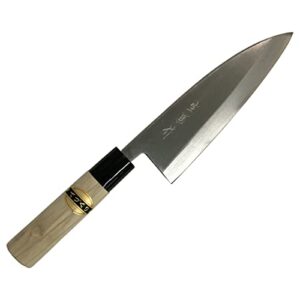
A nakiri (菜切り, “vegetable cutter”) is the quietest knife in a Japanese kitchen. It does one job — slicing greens and root vegetables — and it does that job with a flat, double-edged blade that meets the cutting board along its whole length, so a head of cabbage or a daikon falls apart in clean push-cuts rather than the rocking motion a Western chef’s knife wants. The piece covered here is a hand-forged nakiri from the Kaga hamono (加賀刃物, “Kaga bladeware”) lineage of Kanazawa, in Ishikawa Prefecture: a carbon or blue-steel cutting core, a magnolia-wood handle, and a 165 mm edge.
What makes a Kanazawa blade worth a closer look is the history behind the hands that forge it. Under the Maeda lords, the Kaga domain was the wealthiest feudal house in Japan, assessed at roughly one million koku of rice, and the Maeda spent that wealth on craft rather than on armies. Kanazawa became a metalworking capital — gold leaf, inlaid sword fittings, and the blacksmiths who forged the domain’s tools. When the demand for sword fittings collapsed after the samurai era, that forging skill flowed into agricultural tools and kitchen knives. A Kaga nakiri is a descendant of that shift.
This guide is written for cooks outside Japan who are weighing a hand-forged Japanese vegetable knife and want to understand what they are paying for, how a nakiri differs from the santoku and single-bevel knives already on this site, where the craft comes from, and the most reliable ways to buy one internationally. Because hand-forged Kaga pieces are rarely stocked individually on amazon.com, the buying path here is US search first and Amazon Japan Global Store second.
·
·
⏱️ Read time: about 11 minutes
ℹ️ Data note: hand-forged Kaga nakiri are made by small workshops and are rarely listed in standardized catalog form, so live pricing and current stock vary by retailer. Pricing and stock below are described as variable rather than quoted, and you should confirm the current figure at the retailer before buying.
- Who this is for — and who should skip it
- Product overview (from published specs)
- Where this comes from — place, era, and the craft tradition
- Buying options
- What it does well
- Weaknesses and things to verify before buying
- Conclusion — which buyer type are you?
- Other ways to approach this purchase
- ❓ Frequently Asked Questions
Who this is for — and who should skip it
- Prep a lot of vegetables and want clean, full-length push-cuts rather than a rocking chop
- Prefer a double-edged blade you can use ambidextrously, unlike single-bevel deba or yanagiba
- Appreciate a hand-forged carbon or blue-steel core and will keep it dry and lightly oiled
- Want a knife rooted in a documented regional craft lineage, not a generic factory blade
- Are comfortable buying from Amazon Japan Global Store and waiting for international shipping
- Want one do-everything knife — a santoku or gyūto handles meat and fish better
- Will not hand-wash and dry a carbon blade after each use (it will rust if neglected)
- Need a dishwasher-safe, fully stainless, low-maintenance tool
- Want to cut meat on the bone or break down whole fish (that is deba territory)
- Need it next week with a guaranteed price — international stock and pricing fluctuate
Product overview (from published specs)
The table below summarizes the category specifications for a hand-forged Kaga hamono nakiri. Spec sheets indicate a flat double-edged profile, a carbon or blue-steel (aogami) cutting core, and a magnolia-wood handle. Exact figures vary between individual smiths, so treat these as the typical build rather than a single guaranteed unit.
| Attribute | Detail (per category specs) |
|---|---|
| Type | Nakiri — flat, double-edged vegetable knife |
| Edge length | 165 mm (typical) |
| Blade steel | Carbon steel / blue steel (aogami) core |
| Bevel | Double bevel (ambidextrous) |
| Handle | Magnolia wood (hō), Japanese (wa) style |
| Construction | Hand-forged, Kaga hamono lineage |
| Origin | Kanazawa, Ishikawa Prefecture, Japan |
Sources for this overview include documented maker-category specifications and public craft references. Current price and availability can vary, so treat them as changeable details rather than fixed features of the craft.
📖 Glossary — key terms used in this guide
- Nakiri (菜切り) — a flat, double-edged knife made specifically for vegetables; its straight edge contacts the board along its full length.
- Hamono (刃物) — “bladeware”; the general Japanese term for forged cutting tools, here the Kaga (Kanazawa) lineage.
- Aogami (青紙, “blue paper / blue steel”) — a high-carbon tool steel prized for edge retention; named for the blue paper its maker wraps it in.
- Hō (朴, magnolia) — a light, water-tolerant wood traditionally used for Japanese knife handles and saya sheaths.
- Zōgan (象嵌) — metal inlay; Kaga zōgan decorated sword fittings and armor under Maeda patronage.
- Kinpaku (金箔, gold leaf) — beaten gold; Kanazawa produces close to 99% of Japan’s national output.
- Koku (石) — an Edo-period measure of rice (about 180 liters) used to rank a domain’s wealth; the Kaga domain was rated at roughly one million.
Other knives and Ishikawa crafts on jpmono.com worth weighing against this nakiri:
 🔪 Echizen forged santoku
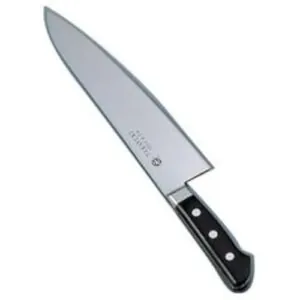 🔪 Sakai gyūto
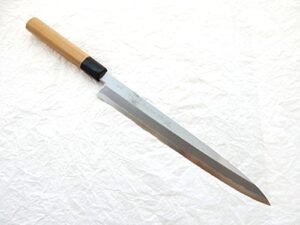 🔪 Tsukiji yanagiba
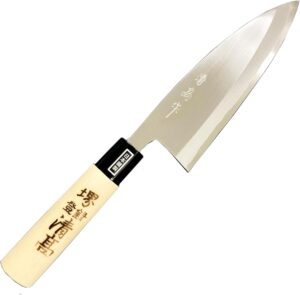 🔪 Sakai deba
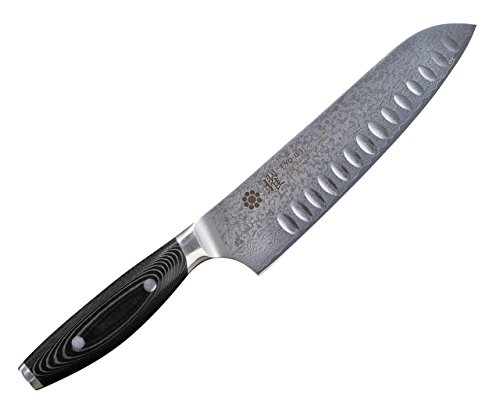 🔪 Seki Damascus santoku
 🪵 Ishikawa: Yamanaka lacquer cup
🪵 Ishikawa: Wajima lacquer cups
 🧣 Ishikawa: Kaga Yūzen scarf
Where this comes from — place, era, and the craft tradition

Kanazawa is the capital of Ishikawa Prefecture, a port-and-castle city on the Sea of Japan side of central Honshū, in the region called Hokuriku. It lies between two rivers, the Sai and the Asano, in a basin that catches heavy winter snow off the Sea of Japan. That geography mattered: a wealthy, defensible inland castle town with reliable water and a captive market of samurai households is exactly the kind of place where specialized crafts can take root and stay.
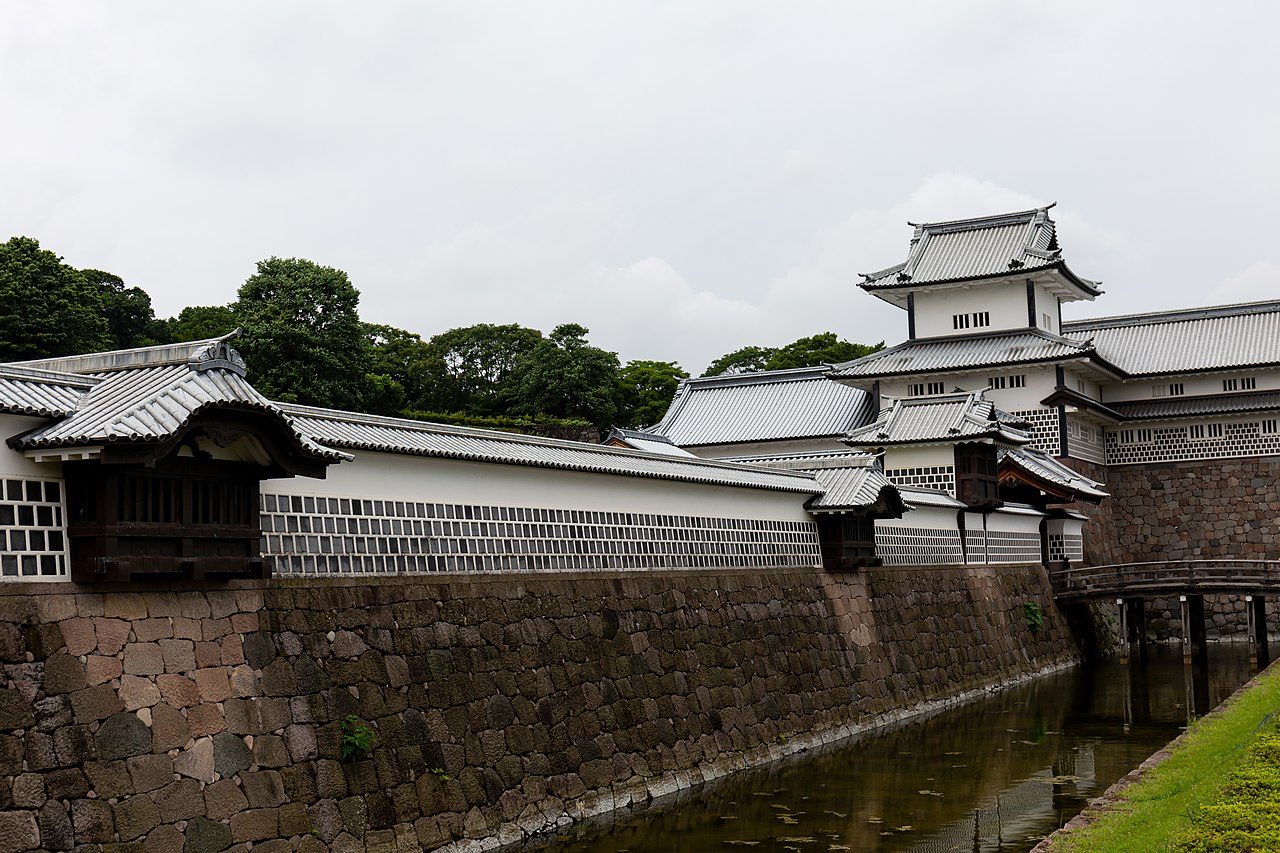
The historical anchor here is the Maeda house. Maeda Toshiie took Kanazawa in 1583, and over the following decades his successors consolidated the Kaga domain into the single richest fief in Tokugawa Japan — assessed at roughly one million koku of rice, far above any other non-shogunal house. Crucially, the Maeda chose a strategy: instead of building military strength that would alarm the shogunate, they poured the domain’s surplus into culture and craft. Tea, Noh, gold leaf, lacquer, dyeing, inlay, and metalwork all received sustained patronage.
- 1583 — Maeda Toshiie enters Kanazawa, founding Maeda rule over the Kaga domain.
- 1600s — The domain, rated near one million koku, invests its wealth in craft rather than arms.
- 17th–19th c. — Kaga zōgan inlay and gold leaf flourish; blacksmiths forge the domain’s blades and tools.
- 1871 — The domains are abolished in the Meiji reforms; the samurai class dissolves and demand for sword fittings collapses.
- Late 19th–20th c. — Forging skill carries over into farm tools and kitchen knives — the Kaga hamono lineage.
- 1977 — Kanazawa gold leaf (kinpaku) recognized as a traditional craft; the city makes close to 99% of Japan’s output.
- Today — Kanazawa workshops still forge double-edged kitchen blades in the Kaga tradition.
That patronage is the reason Kanazawa became a metalworking capital. The city still produces close to 99% of Japan’s gold leaf, and Kaga zōgan — the inlay of gold and silver into iron — once decorated the sword fittings and armor of Maeda retainers. Behind the decorative trades stood the blacksmiths who actually forged steel: the tool-makers and blade-makers who supplied a domain of farmers and warriors.
“When the swords were no longer needed, the hammers did not stop — they turned to the kitchen.”
This is the continuity case for a Kaga nakiri. When the samurai era ended in 1871, the market for sword fittings vanished almost overnight, but the forging knowledge did not. It migrated into agricultural implements — sickles, hoes, billhooks — and then into the kitchen knives that share the same heat-treatment and edge-grinding logic. A Kanazawa nakiri is not a costume revival of an old craft; it is the same lineage of metalworking redirected to a tool that a modern household actually uses every day.
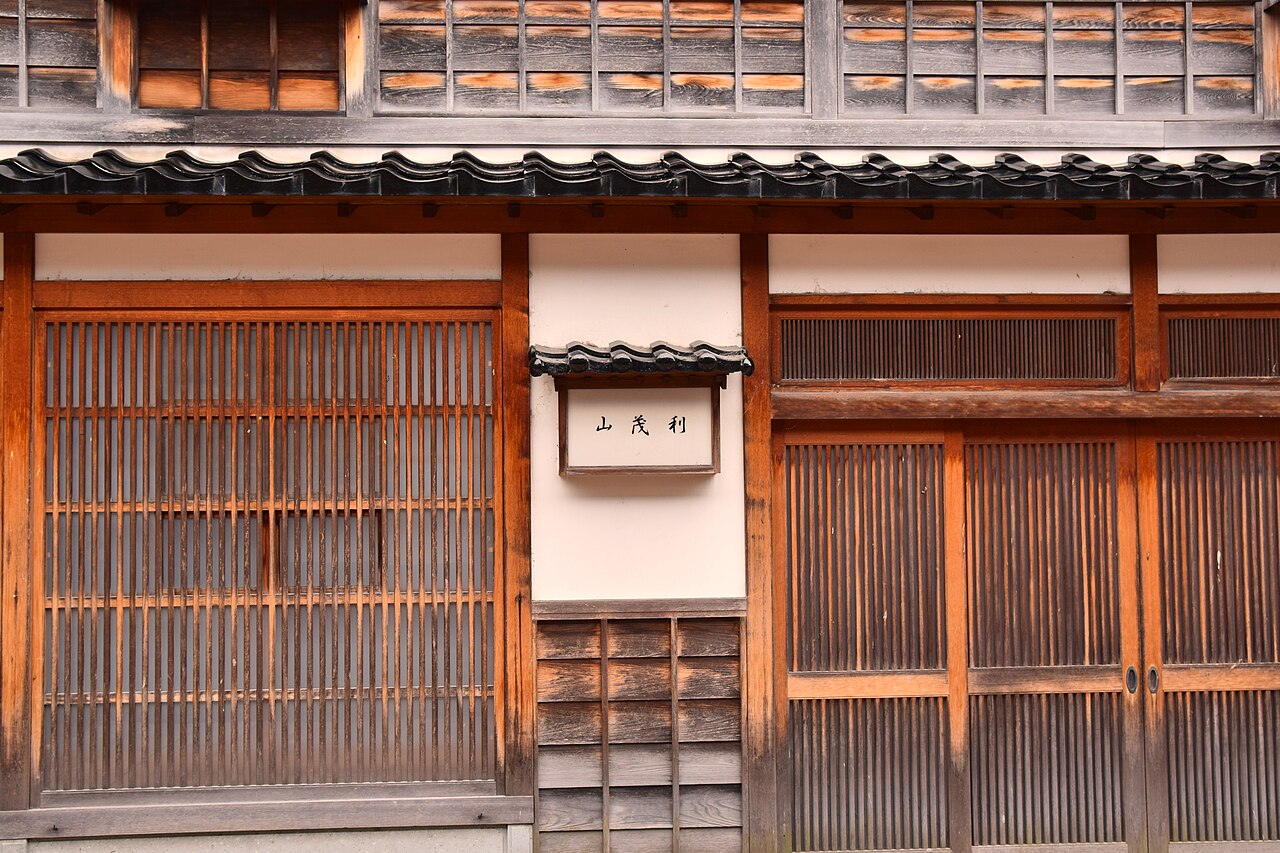
For a cook, the practical upshot is the steel. A traditional Kaga blade uses a carbon or blue-steel (aogami) core, which takes a keener edge and holds it longer than soft stainless, in exchange for needing care — it must be wiped dry and will develop a patina. The magnolia (hō) handle is the same light, water-tolerant wood Japanese makers have long used because it resists swelling. None of this is marketing language; it is the standard build of a hand-forged Japanese kitchen knife, and the Kaga lineage is one of several regional traditions that still produces it.
Buying options
The table below lists the buying paths in priority order. Because hand-forged Kaga pieces are sold by a mix of Kanazawa workshops, regional knife retailers, and import-focused online shops, current pricing varies accordingly. Confirm current figures at the retailer before purchasing.
| Store | Item / variant | Price | Notes |
|---|---|---|---|
| 🇺🇸 Amazon US (search) | Browse Japanese vegetable knives (nakiri) | varies (USD) | Best if you are shopping from the US — Prime shipping, USD pricing, no international customs. Amazon US carries hand-forged Japanese nakiri and santoku from several makers, useful for comparing steel and geometry. This exact Kaga piece is sourced from Japan (next row). |
| 🇯🇵 Amazon JP Global Store | Kaga hamono nakiri 165 mm · | price varies (¥; USD ≈ ¥×1/150) | Ships internationally from Japan to most major destinations; expect customs duties above local thresholds. |
| Maker direct | Kanazawa blade workshops / Kaga hamono retailers | — | Some Kanazawa smiths sell through their own or specialty knife sites; international shipping is case-by-case. Verify the maker before ordering. |
| Proxy services (Buyee / Tenso) | Forwarding from Japan-only sources | item + fee + forwarding | Use when direct international shipping is unavailable. Adds a service fee and a second shipping leg; confirm that bladed goods are accepted to your destination. |
Currency note: JPY (¥) is the authoritative price for the specific listed item. USD figures are approximate estimates at a ¥150/USD baseline as of mid-2026 and depend on the current exchange rate. Prices in USD are approximate.
What it does well
Weaknesses and things to verify before buying
- Carbon steel rusts. The blade must be hand-washed, dried immediately, and lightly oiled if stored long-term. It is not dishwasher-safe and will discolor with use (a patina, not a defect).
- It is a specialist, not an all-rounder. A nakiri is poor at meat, fish, and anything requiring a tip or a rocking cut. If you want one knife, a santoku or gyūto fits better.
- Purchase terms vary. Confirm the current offer from Amazon Japan or the maker page before ordering.
- Hand-forged units vary. Exact dimensions, weight, and finish differ between individual blades and smiths; the specs here are typical, not a guaranteed single SKU.
- International logistics add cost and time. Shipping from Japan, customs duties above local thresholds, and possible bladed-goods restrictions all apply. Check that knives can be imported to your country.
- Sharpening is on you. A carbon edge benefits from whetstone maintenance; if you will not learn basic stone sharpening, a low-maintenance stainless knife may serve you better.
Conclusion — which buyer type are you?
Other ways to approach this purchase
❓ Frequently Asked Questions
What is a nakiri actually for?
A nakiri is a vegetable knife. Its flat, double-edged blade contacts the cutting board along its full length, so it excels at clean push-cuts through cabbage, leafy greens, and root vegetables. It is not made for meat, fish, or rocking cuts.
How is a nakiri different from a santoku?
A santoku has a gently curved, rounded edge and is a general-purpose knife for vegetables, meat, and fish. A nakiri has a straight, flat edge dedicated to vegetables. If you want one all-rounder, choose a santoku; for dedicated vegetable prep, the nakiri is cleaner.
Does the carbon blade rust, and how do I care for it?
Yes. A carbon or blue-steel blade can rust if left wet. Hand-wash it, dry it immediately, and apply a thin film of food-safe oil for long-term storage. It will develop a darker patina with use, which is normal and not a defect. Do not put it in a dishwasher.
Can this ship outside Japan?
International buyers should confirm that bladed goods can be imported to their country. Where a workshop or shop does not ship directly, a proxy service such as Buyee or Tenso can forward the purchase.
Why does the buy button send me to an Amazon US search instead of the exact product?
Hand-forged Kaga pieces are rarely listed individually outside Japan, so the realistic purchase paths are either ordering through a Kanazawa-based knife retailer that ships internationally, contacting the maker directly through their Japanese sales channel, or using a proxy forwarder such as Buyee or Tenso to consolidate shipments from Japanese craft platforms.
Is the price shown reliable?
jpmono.com is curated by a Japan-based editorial team (working out of Toyama in the Hokuriku region and Nara in Kansai) and is independent. We do not take payment from the makers we feature; income comes from affiliate links. We do not physically test every product — we consult maker specifications and public craft references. Read more about our editorial standards.
🤖 This article was prepared with AI assistance and reviewed against published specifications and public-domain references. Where information was incomplete, the gaps are stated plainly rather than filled with estimates.
Affiliate disclosure: jpmono.com may earn a commission on qualifying purchases made through links on this page, at no additional cost to you.