![Beppu Take-zaiku Bamboo Basket: Oita’s Hand-Woven Madake Kago [2026]](https://jpmono.com/wp-content/uploads/2026/06/beppu-take-zaiku-bamboo-basket-where-to-buy-2026-featured.jpg)
Beppu take-zaiku (別府竹細工, “Beppu bamboo work”) is a hand-woven basketry tradition from the city of Beppu in Oita Prefecture, on the eastern coast of Kyūshū. The piece covered in this guide is a hand-woven madake (真竹, “true bamboo”) kago (籠, “basket”) — a hexagonal mutsume-ami / tortoiseshell-weave vessel made to hold flowers or fruit. Oita is the heart of Japanese bamboo craft, producing the large majority of the nation’s bamboo work, and it is also the country’s top producer of madake, the long, supple culm prized for fine weaving.
What makes Beppu work internationally notable is not a marketing story but a documented supply chain of skill: the Oita Prefectural Beppu Industrial Arts Research Institute is Japan’s only public bamboo-craft training school, and Beppu produced the first bamboo artist ever named a Living National Treasure. The craft was designated a traditional craft (dentōteki kōgeihin) by Japan’s Ministry of Economy, Trade and Industry (METI) in 1979. A basket like this is built from a split, dyed, and smoke-finished madake frame using one of eight base weaving patterns.
This guide is written from a Japan-based editor’s perspective, working out of Toyama and Nara. It is for readers weighing a genuine regional craft basket against decorative imports, and it covers material, weave structure, sourcing paths from outside Japan, honest weaknesses, and how this piece compares to other Japanese bamboo and craft objects. Note up front: the product data available for this specific listing is thin — at the time of writing, live pricing for the ASIN could not be retrieved, so price figures below are marked unavailable rather than guessed.
📅 Published:
🔄 Updated:
⏱️ Read time: ~10 min

- Who this is for — and who should skip it
- Product overview (from published specs)
- Where this comes from — place, era, and the craft tradition
- 📦 Shipping & where to buy from outside Japan
- Price snapshot across stores
- What it does well
- Weaknesses and things to verify before buying
- Conclusion — which buyer type are you?
- Other ways to approach this purchase
- 🏆 Editor’s Pick
- ❓ Frequently Asked Questions
Who this is for — and who should skip it
- Want a genuine regional craft object with a verifiable tradition, not a decorative import
- Appreciate hand-weaving and the geometry of openwork (mutsume-ami, kikkou-ami)
- Need a flower or fruit basket that doubles as a quiet display piece
- Value natural materials — split, dyed, and smoke-finished madake bamboo
- Are comfortable buying a sourced-from-Japan item and verifying current price and stock
- Need a sealed, waterproof container — open bamboo weave is not watertight
- Want a heavy-duty utility basket for rough daily loads
- Expect machine-perfect symmetry; hand-woven work shows natural variation
- Are shopping purely on lowest price — mass-produced rattan is cheaper
- Cannot accommodate the international shipping and customs that JP sourcing implies
Product overview (from published specs)
Available structured data for this specific listing is limited. The table below records what is confirmed (the item identity and weave family) and explicitly marks what could not be verified at the time of writing. Specs not present in the source data are shown as “Unconfirmed — check listing” rather than estimated.
| Attribute | Detail | Source |
|---|---|---|
| Craft | Beppu take-zaiku (Beppu bamboo work), METI-designated traditional craft (1979) | Maker tradition / METI |
| Material | Madake (true bamboo), split, dyed, and smoke-finished | Craft tradition |
| Weave | Hexagonal mutsume-ami / kikkou-ami (tortoiseshell) openwork | Listing description |
| Use | Flower basket (hanakago) or fruit basket | Listing description |
| Origin | Beppu, Oita Prefecture, Kyūshū | Maker direct |
| Dimensions / weight | Unconfirmed — check listing | — |
| ASIN | B01MTZK9HK | Amazon JP Global Store |
| Price | Unavailable at time of writing — verify at listing | — |
Store rows referenced in this article: Amazon US (search) as the primary path (moonill-20 tag), Amazon JP Global Store as the secondary, sourced-listing path (moonill-22 tag), plus maker-direct and proxy services where relevant. Only the Amazon JP listing snapshot exists for the specific item; live pricing may have shifted since the writing date.
📖 Glossary — key terms
- Take-zaiku (竹細工) — bamboo craft / bamboo work.
- Madake (真竹) — “true bamboo,” the long, supple culm prized for fine splitting and weaving.
- Kago (籠) — a woven basket.
- Hanakago (花籠) — a flower basket, often used in ikebana and tea settings.
- Mutsume-ami (六つ目編み) — hexagonal “six-eye” weave; the open lattice seen here.
- Kikkou-ami (亀甲編み) — tortoiseshell weave, a hexagonal pattern named for its resemblance to a turtle’s shell.
- Yotsume-ami (四つ目編み) — square “four-eye” weave, another of the base patterns.
- Meshi-kago (飯籠) — a rice-washing / rice-airing basket; one of the craft’s original everyday forms.
- Dentōteki kōgeihin (伝統的工芸品) — a craft officially designated “traditional” by METI.
- Living National Treasure (人間国宝) — a holder of Important Intangible Cultural Property status.
Related jpmono guides — other Oita makers, and other Japanese bamboo and natural-material crafts worth weighing against this basket.
Where this comes from — place, era, and the craft tradition

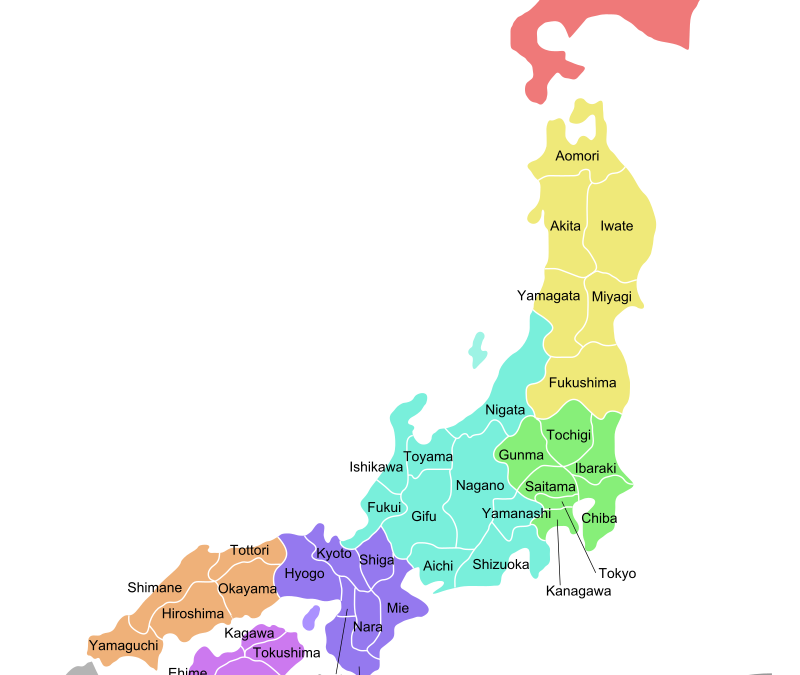
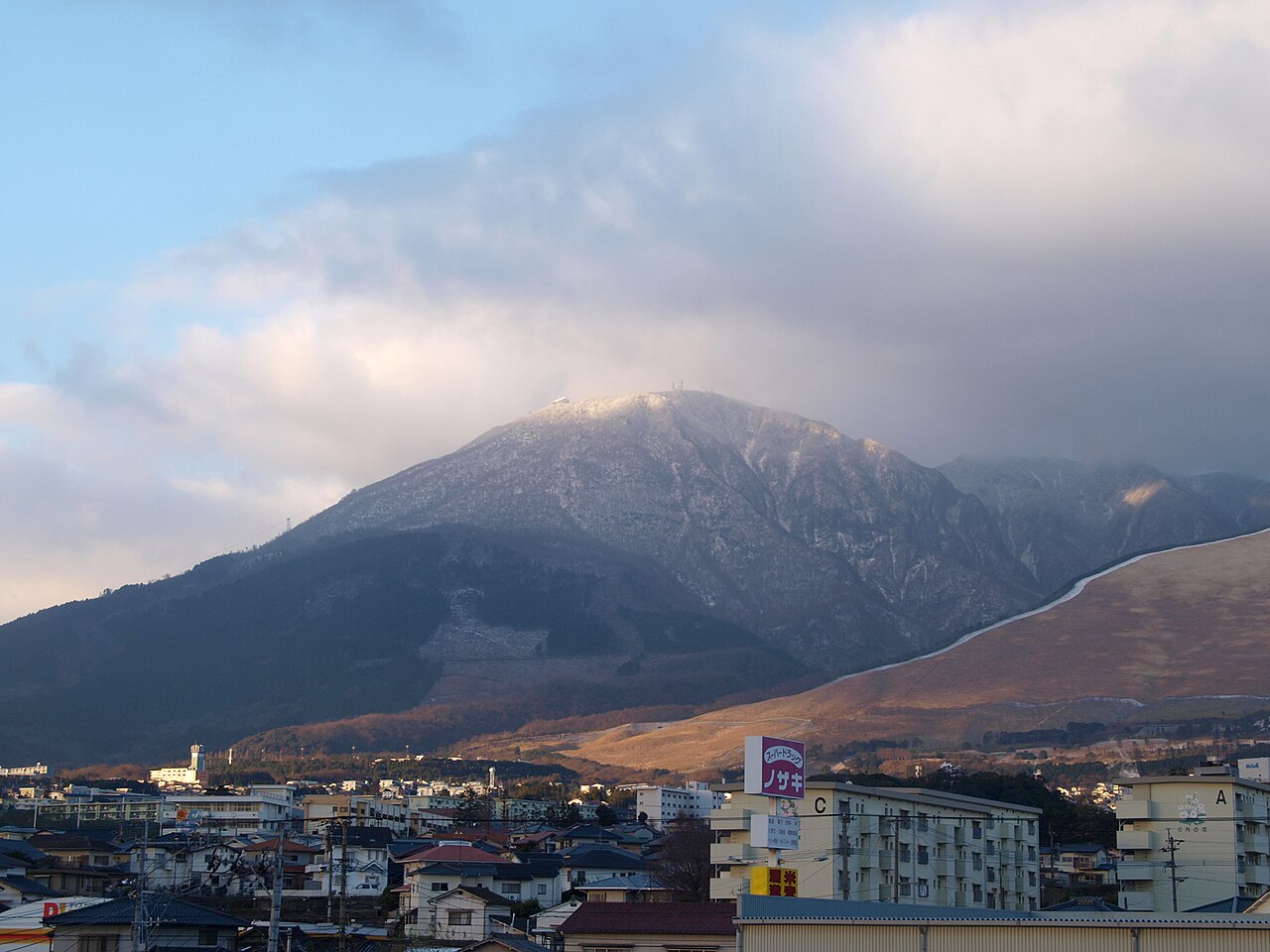
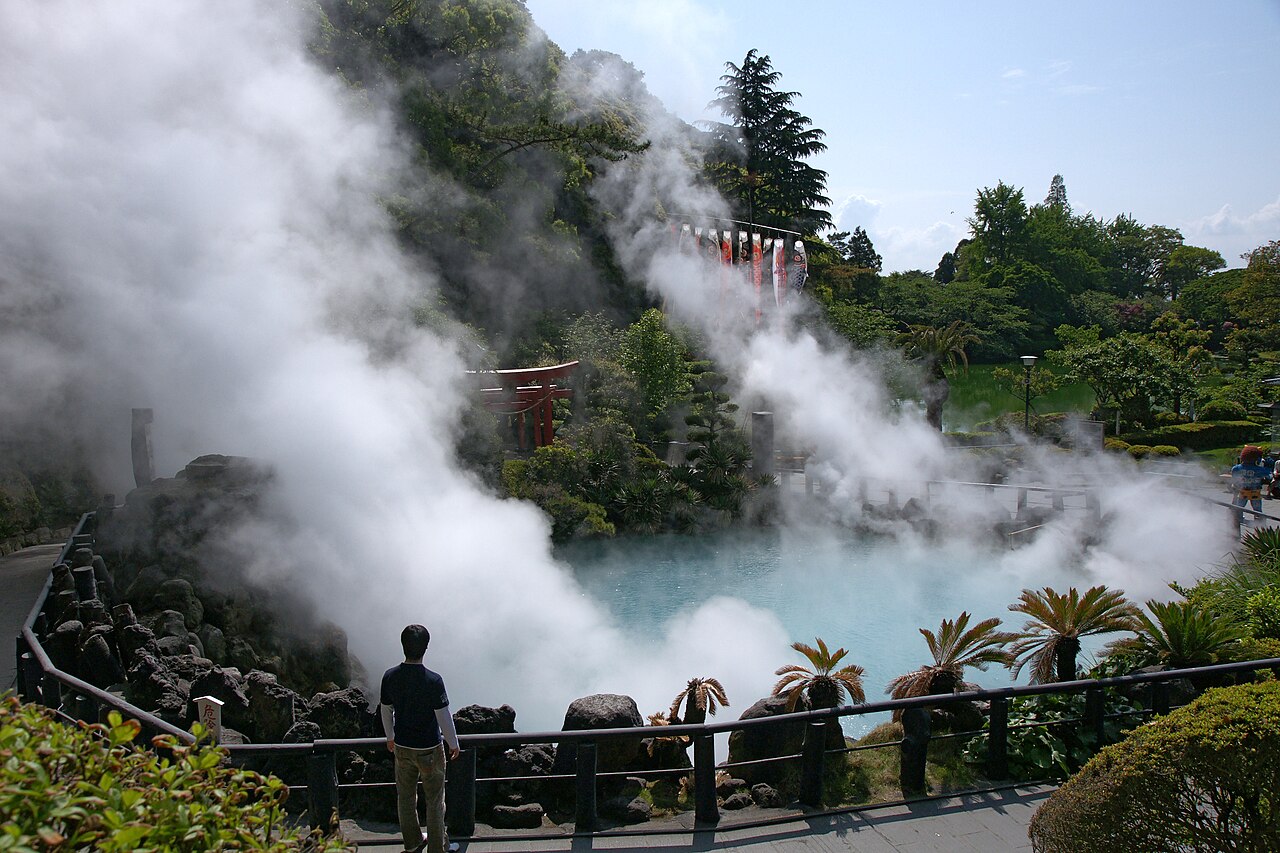
Beppu sits on the eastern shoulder of Kyūshū, the southwesternmost of Japan’s four main islands, facing Beppu Bay. The city is best known worldwide for its onsen (hot springs) — it discharges more thermal water than anywhere else in Japan — but for craft historians it matters as the center of gravity for Japanese bamboo work. Oita Prefecture produces the large majority of the nation’s bamboo craft, and it is the country’s leading source of madake, the tall, straight, fine-grained culm that splits cleanly into the thin, even strips that fine weaving requires.
That material base is not an accident of marketing. The Oita hills, including the slopes around Mount Tsurumi above the city, carry the bamboo groves that supply weaving-grade culm, and the warm, humid climate suits its growth and curing. The continuity case for Beppu is unusually concrete: the Oita Prefectural Beppu Industrial Arts Research Institute is Japan’s only public bamboo-craft training school, which means the master-to-apprentice line here is institutionally maintained rather than left to chance.
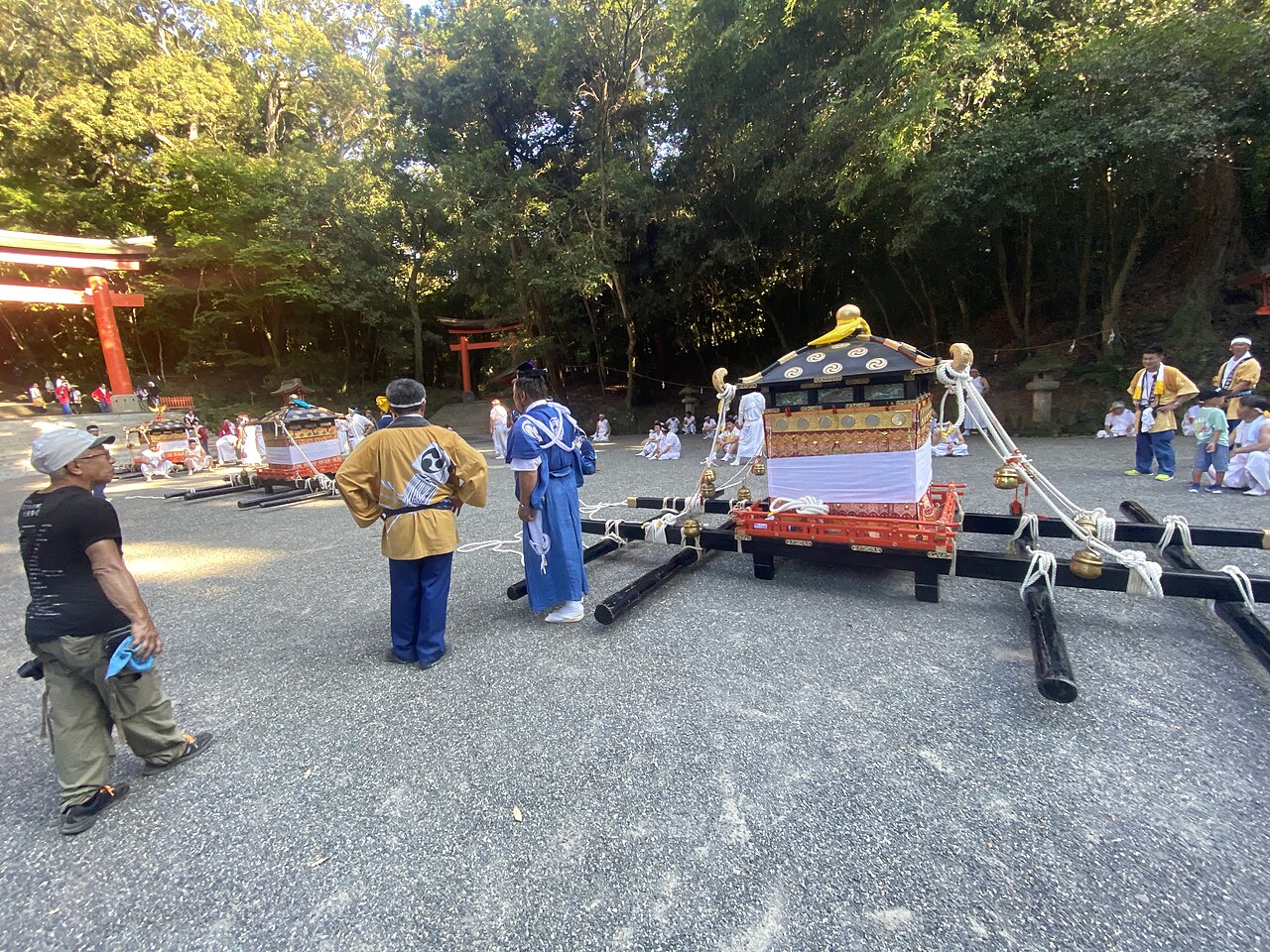
The historical anchor has two layers. By tradition, the craft is traced to basket orders associated with Yamato Takeru and the era of Emperor Keikō — a folk-legendary origin that should be read as cultural memory rather than documented fact. The practical rise of the craft, however, came much later and is well understood: during the Edo period, Beppu’s growth as a hot-spring destination created steady demand for meshi-kago (rice-washing baskets) and travel baskets. Bathers and pilgrims needed them as daily tools, and many bought them as souvenirs to carry home. The craft thus became both a working utensil tradition and an early tourist trade at the same time.
- Keikō-era legend (traditionally ~1st–2nd c.) — Folk origin tied to basket orders associated with Yamato Takeru (cultural memory, not documented record).
- Edo period (1603–1868) — Beppu Onsen tourism drives demand for meshi-kago and travel baskets, as both daily tools and souvenirs.
- Modern era — The Oita Prefectural Beppu Industrial Arts Research Institute is established as Japan’s only public bamboo-craft training school.
- Shōwa era — Shōno Shōunsai of Beppu becomes the first bamboo artist named a Living National Treasure.
- 1979 — METI designates Beppu take-zaiku a traditional craft (dentōteki kōgeihin).
- 2026 — Beppu remains Japan’s leading bamboo-craft region, supplied by Oita’s madake groves.
The “still being made here” question — the part that separates a living craft from a heritage label — is answered well in Beppu. The combination of a dedicated public training institute, a METI designation, and the first-ever bamboo Living National Treasure means the line from current weavers back to the founding-era practice is institutionally documented, not merely asserted. The eight base weaving patterns — yotsume-ami (square), mutsume-ami (hexagonal), kikkou-ami (tortoiseshell), gozame, and others — are still the working vocabulary, applied over a split, dyed, and smoke-finished madake frame.
“Beppu’s baskets were born twice — first as the rice-washing tools of a working town, and again as the souvenirs of a hot-spring city that the whole country came to visit.”
📦 Shipping & where to buy from outside Japan
The specific basket in this guide is sourced from an Amazon JP Global Store listing (ASIN B01MTZK9HK), which ships internationally to most major destinations. International shipping to the US and EU typically runs in the $15–$40 range for an item of this size and weight class, though a bulky-but-light basket can sometimes incur dimensional-weight surcharges — verify the quoted shipping at checkout.
- Amazon US (search) — the easiest path for US/EU/AU readers to compare Japanese baskets in USD with domestic shipping.
- Amazon JP Global Store — where this exact item is sourced; ships internationally from Japan.
- Maker direct / Beppu craft cooperatives — for commissioned or signed pieces, though many do not ship abroad directly.
- Proxy services (Buyee / Tenso) — useful when a listing does not ship to your country; they re-forward from a Japanese address.
Customs note: orders above your country’s de minimis threshold (for example, roughly $800 in the US, or €150 in much of the EU) may attract duties or VAT on import. A single basket is unlikely to cross the US threshold but can attract VAT in the EU/UK. Bamboo is a plant product; a handful of countries apply phytosanitary rules to raw plant material, though finished, treated bamboo craft is generally accepted — check your local import rules if unsure. Prices in USD are approximate and depend on the current exchange rate.
Price snapshot across stores
| Store | Item / Variant | Price (JPY + USD est.) | Notes |
|---|---|---|---|
| 🇺🇸 Amazon.com (US) | Browse Japanese bamboo baskets & kago | varies (USD) | Best if you’re shopping from the US — Prime shipping, USD pricing, no international customs. Amazon US carries Japanese-style bamboo and rattan baskets useful for comparing weave, size, and price tiers; the specific Beppu piece is sourced from Japan (next row). |
| 🇯🇵 Amazon JP Global Store | Beppu take-zaiku madake basket (ASIN B01MTZK9HK) | Unavailable at time of writing — verify at listing | Ships internationally from Japan. This is the sourced listing for the exact item. |
| Maker direct | Beppu craft cooperatives / individual weavers | Varies; signed work priced higher | Best for commissioned or artist-signed pieces; many do not ship abroad directly. |
| Proxy services (Buyee / Tenso) | Re-forwarding from Japanese listings | Item price + service fee + reshipping | Use when a listing does not ship to your country. |
JPY is the authoritative price for the specific listed item; USD figures are approximate at a ¥150/USD baseline as of mid-2026. Pricing for this ASIN could not be retrieved at the time of writing — always confirm at the retailer before purchasing.
What it does well
Weaknesses and things to verify before buying
- Thin listing data. At the time of writing, dimensions, weight, and live price for this ASIN could not be verified. Confirm all of these on the listing before buying — do not assume a size from the photo.
- Not watertight. Open bamboo weave will not hold water or fine debris; for cut flowers, use a separate liner or inner vessel.
- Hand-made variation. Color, weave tension, and exact dimensions vary piece to piece. This is expected in hand-woven work, not a defect.
- Humidity and sunlight. Natural bamboo can dry, lighten, or develop mold if stored in extremes. Keep it out of prolonged direct sun and damp.
- Load limits. A fine display basket is not a heavy-duty utility carrier; do not overload it with weight it was not woven for.
- Shipping and customs. International shipping, possible VAT/duties, and (rarely) plant-material import rules add cost and time over a domestic purchase.
Conclusion — which buyer type are you?
Other ways to approach this purchase
🏆 Editor’s Pick
❓ Frequently Asked Questions
Does Amazon JP ship this Beppu basket internationally?
Yes. The item is sourced from the Amazon JP Global Store (ASIN B01MTZK9HK), which ships to most major international destinations. Shipping for a basket of this size typically falls in the $15–$40 range to the US and EU, but confirm the quote at checkout.
What is “mutsume-ami” weave?
Mutsume-ami is a hexagonal “six-eye” weave — an open lattice of bamboo strips forming a honeycomb pattern. It belongs to the same hexagonal family as kikkou-ami (tortoiseshell weave) and is one of the eight base patterns used in Beppu take-zaiku.
Can I use it for fresh cut flowers?
Yes, but the open weave is not watertight. Place a separate waterproof liner or inner vessel inside to hold water, and keep the bamboo from sitting wet for long periods.
How do I care for a bamboo basket?
Keep it out of prolonged direct sunlight and damp environments, wipe dust with a dry or barely-damp cloth, and let it dry fully if it gets wet. Treated madake ages well; the main risks are mold from damp and drying-out from heat.
Is this a real Beppu craft or a generic import?
This guide covers a Beppu take-zaiku basket — a craft designated by METI in 1979 and centered in Oita, Japan’s largest bamboo-craft region. Generic look-alikes exist; if provenance matters to you, confirm the listing names Beppu take-zaiku or buy maker-direct.
Will I pay customs duties?
A single basket is unlikely to exceed the US de minimis threshold (about $800), but VAT can apply in the EU and UK on lower-value imports. Check your country’s import rules; finished, treated bamboo craft is generally accepted, though a few countries regulate raw plant material.
Why is no price shown for the exact item?
Live pricing for this ASIN could not be retrieved at the time of writing, so we mark it unavailable rather than guess. Use the Amazon JP Global Store link to see the current price and stock.
jpmono.com is curated by a Japan-based editorial team (working out of Toyama in the Hokuriku region and Nara in Kansai) and is independent. We don’t take payment from the makers we feature; income comes from affiliate links. We focus on items with verifiable craft heritage and clear international shipping paths, and we read maker’s specs and source listings rather than physically testing every product.
This article was prepared with AI assistance and reviewed against the available product data. Specifications, pricing, and availability can change after publication; always confirm details at the retailer before purchasing.
Affiliate disclosure: jpmono.com may earn a commission on qualifying purchases made through links on this page, at no additional cost to you.