![Nachiguro Sohonpo Black-Sugar Candy (那智黒, individually wrapped bag) — Kumano’s pilgrimage drop named for the polished black stone of Nachi [2026 Guide for International Readers]](https://jpmono.com/wp-content/uploads/2026/09/nachiguro-sohonpo-kokuto-candy-where-to-buy-2026-featured.jpg)
- What it is: a glossy jet-black hard candy of kokuto (unrefined cane sugar) and starch syrup, molded to look like a polished black Kumano stone, sold as individually twist-wrapped drops in a sealed bag.
- Made in: Nachikatsuura, Higashimuro District, Wakayama — by Nachiguro Sohonpo (那智黒総本舗), a souvenir confectioner founded in 1877 on the Kumano pilgrimage route.
- Price band: inexpensive souvenir confectionery — the kind of item bought by the bag rather than the piece (see the live listing; our data snapshot carried no price).
- Best for: readers who want one edible souvenir of Kumano that will survive an international parcel without refrigeration.
- Skip if: you want soft, fresh wagashi, or you dislike the molasses edge of unrefined sugar.
- Shipping: shelf-stable food, ships internationally from Amazon Japan’s Global Store to many destinations — jump to our pick ↓
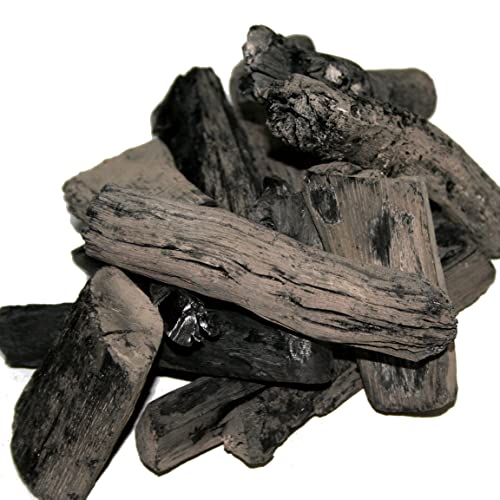
On the Kii Peninsula, where the Kumano Kodo pilgrimage routes come down out of the mountains toward Nachi Falls, a confectioner has been selling the same black lozenge to travelers since 1877. It does not look like candy. It looks like a game piece — a small domed disc, jet-black and glossy, the deliberate imitation of nachiguro-ishi (那智黒石), the dense black stone of the Kumano district that is worked into go stones, inkstones, and ornaments.
The imitation is the whole product. Nachiguro Sohonpo (那智黒総本舗) named its candy after the stone, shaped it like the stone, and colored it to match, and the joke has held for close to a century and a half of souvenir trade. What is inside is plainer than the conceit: kokuto (黒糖, Okinawan-style unrefined cane sugar) boiled with mizuame (水飴, starch syrup) and sugar until it sets glassy, carrying the faint smoke-and-molasses depth that refining strips out of white sugar. There is no chocolate, no dairy, no filling — nothing that softens in transit.
This guide is written for readers outside Japan who want a piece of Kumano they can actually get home. Hard candy is about as durable as confectionery gets, which makes this one of the few genuinely mailable souvenirs from a region whose other famous export is fresh tuna. We cover what it tastes like, where it comes from, which format to buy, how it ships, and the specific things to verify on the listing before you order.
🔄 Last updated:
⏱️ Read time: about 11 minutes

ℹ️ Live pricing and several listing specs were not in our snapshot — the linked listing is authoritative, and unconfirmed attributes are marked as such below.
- Who this is for — and who should skip it
- Product overview (from published specs)
- 📍 Where this comes from — place, era, and the craft tradition
- 📌 How does it compare?
- 📦 Shipping & where to buy from outside Japan
- Price snapshot across stores
- What it does well
- Weaknesses and things to verify before buying
- Conclusion — which buyer type are you?
- Other ways to approach this purchase
- 🏆 Editor’s Pick
- ❓ Frequently Asked Questions
Who this is for — and who should skip it
- Want a souvenir of the Kumano Kodo that survives a multi-week international parcel route at room temperature.
- Like the molasses-and-smoke register of unrefined cane sugar — think dark muscovado rather than caramel.
- Need something to hand out: individually twist-wrapped pieces are easy to share at an office or a classroom.
- Avoid dairy, egg, and gelatin, and want a hard candy whose stated ingredient list is short and plant-based (verify the current allergen statement on the listing).
- Collect the object as much as the flavor — the stone-imitation shaping is the point of the product.
- Are shopping for fresh wagashi — this is a boiled sweet, not a soft, short-life confection.
- Dislike hard candy generally, or cannot suck on a sweet slowly (there is no soft center to bite through).
- Want variety in one order: this is one flavor, repeated.
- Live somewhere consistently humid with no dry storage — boiled sweets go tacky in damp air.
- Are buying for a recipient who avoids sugar entirely; unrefined cane sugar is still cane sugar, and we make no dietary claims for it.
Product overview (from published specs)
The table below combines the article spec brief with what the Amazon listing states. Our automated snapshot for this item returned no Amazon US results and no price field, so price and exact net weight must be read from the live listing rather than from us.
| Attribute | Value | Source |
|---|---|---|
| Product | 那智黒 (Nachiguro) black-sugar hard candy, individually wrapped, bagged | Maker direct / listing |
| Maker | 那智黒総本舗 Nachiguro Sohonpo, founded 1877 | Maker direct |
| Origin | Nachikatsuura, Higashimuro District, Wakayama (Kii Peninsula) | Maker direct |
| Type | Hard boiled candy — glossy black, domed lozenge | Spec brief |
| Stated ingredients | Unrefined cane sugar (黒糖), starch syrup (水飴), sugar | Spec brief — confirm on listing |
| Contains | No dairy, egg, gelatin, or chocolate per the spec brief — the current allergen statement on the listing is the authority | Spec brief |
| Packaging | Each drop twist-wrapped individually, inside a sealed bag | Spec brief |
| Net weight | Roughly a 130–150 g class bag per the brief — confirm the exact figure on the listing | Spec brief (approximate) |
| Shelf life | Months at room temperature against a printed 賞味期限 (best-by date) | Spec brief |
| ASIN | B09CYLQWQM | 🇯🇵 Amazon JP Global Store |
| Price | Unconfirmed — not present in our data snapshot; check the live listing | 🇺🇸 Amazon US (search) / 🇯🇵 Amazon JP Global Store |
📖 Glossary — the Japanese terms in this article
- nachiguro-ishi (那智黒石) — a fine-grained black, slate-like stone associated with the Kumano district, historically quarried there and worked into go stones, inkstones, and ornaments. The candy is named and shaped after it.
- kokuto (黒糖) — unrefined cane sugar, Okinawan in style, in which the molasses fraction is retained rather than separated out. A processing and flavor difference, nothing more.
- mizuame (水飴) — clear starch syrup used in Japanese confectionery; in boiled sweets it controls crystallization so the candy sets glassy instead of grainy.
- Kumano Kodo (熊野古道) — the network of pilgrimage routes across the Kii Peninsula leading to the Kumano shrines; inscribed by UNESCO in 2004 as part of “Sacred Sites and Pilgrimage Routes in the Kii Mountain Range.”
- Kumano Nachi Taisha (熊野那智大社) — one of the three grand Kumano shrines, beside Nachi Falls, in Nachikatsuura.
- shōmikigen (賞味期限) — the printed “best-by” date on Japanese packaged food, indicating best quality rather than a hard safety cutoff.
- tokuyō-bukuro (徳用袋) — a “value bag,” the larger economy format of the same product.
- keshōbako (化粧箱) — a presentation box; the gift-format packaging of a souvenir confection.
📍 Where this comes from — place, era, and the craft tradition

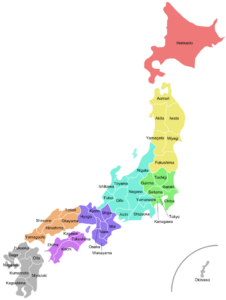
The region on the map. Wakayama occupies the western flank of the Kii Peninsula, the broad mountainous block that hangs off the Pacific side of Kansai below Osaka and Nara. Nachikatsuura sits near its southern end, on a coast of deep inlets, where steep forested ridges run almost directly into the ocean. That geography explains both of the town’s trades: the drowned-valley harbor at Kii-Katsuura made it a major tuna port, and the same mountains behind it carry the pilgrimage roads that made it a destination.
It also explains the candy. A port whose signature product is fresh fish produces very few souvenirs a visitor can carry home, and almost none that can be mailed. A dry, sealed, room-temperature sweet fills a gap that the local economy could not otherwise fill.
The historical anchor. The Kumano Kodo are not one road but a network of routes converging on the Kumano shrines, and the stretch through Nachikatsuura ends at Kumano Nachi Taisha beside Nachi Falls. In 2004, UNESCO inscribed these routes together with the wider sacred landscape as “Sacred Sites and Pilgrimage Routes in the Kii Mountain Range” — one of only a small number of pilgrimage-route properties on the World Heritage list.
-
1603–1868 — Edo period. The routes later known as the Kumano Kodo carry travelers across the Kii Peninsula to the Kumano shrines and Nachi Falls (era background, not maker-specific). -
1868 — The Meiji era opens. -
1877 — Nachiguro Sohonpo is founded at Nachikatsuura, selling to pilgrims and visitors bound for Kumano Nachi Taisha and Nachi Falls. -
1912 — The Meiji era closes after 44 years; by that point the shop has been trading for 35 of them. -
2004 — UNESCO inscribes “Sacred Sites and Pilgrimage Routes in the Kii Mountain Range,” including the Kumano Kodo routes through Nachikatsuura. -
2026 — The individually wrapped bag (ASIN B09CYLQWQM) is listed on Amazon Japan’s Global Store; this guide was written on September 15, 2026.
The stone the candy imitates. Nachiguro-ishi is a dense, fine-grained black stone of the Kumano district, historically quarried there and cut into go stones, inkstones, and small carved ornaments. Its appeal is its evenness: it takes a deep polish and reads as a solid, matte-to-glossy black rather than a mottled one, which is precisely the quality a confectioner would want to copy in boiled sugar.
One point of honesty here. The Kumano district straddles the Wakayama–Mie prefectural boundary, and the stone’s quarrying area and the confectioner’s shop are in neighboring parts of that district rather than the same town. We have not independently confirmed a specific quarry town against the maker’s own pages, so this guide does not assert one — the stone is a Kumano material, the candy is a Nachikatsuura product, and the relationship between them is one of homage.
“The conceit is complete: a sweet that pretends to be a stone from the mountains the pilgrims walked through — and then tastes of molasses instead.”
What “still being made here” means. Nachiguro Sohonpo has operated from Nachikatsuura since 1877, which places its founding within the first decade of the Meiji era and roughly a century and a quarter before the UNESCO inscription that brought a new wave of international walkers to the same routes. The product sold to those walkers today is the one the shop is named for. That continuity — one house, one town, one signature item — is the case for buying this particular bag rather than a generic kokuto candy.
How it fits the year. Hard candy is a cold-weather and travel confection in Japanese practice: something kept in a coat pocket, a car, or a bag. On a pilgrimage route where sections run for hours between villages, a sealed sweet that does not melt, crumble, or stain is a practical object as much as a sentimental one. That is also exactly why it makes the trip to Toronto, Manchester, or Melbourne intact.
📌 How does it compare?
Shelf-stable Japanese food is the easiest category to import. These guides cover the sealed teas and baked snacks that travel on the same logic as this candy.
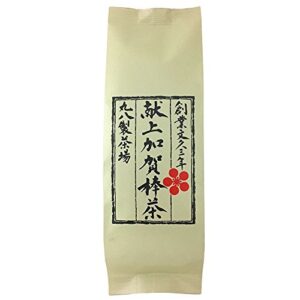
 Maruhachi Seichajo Kenjo Kaga Bocha (献上加賀棒茶, sealed bag/tin)
 Hoshino Seichaen Yame Matcha (星野製茶園 八女抹茶, sealed 30–40g tin)
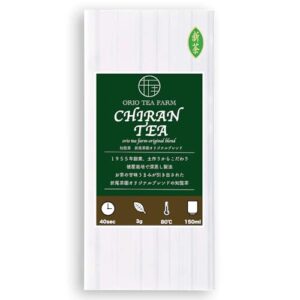
 Chiran-cha Deep-Steamed Sencha (知覧茶 深蒸し煎茶, sealed 100g bag)
 Ooigawa Chaen Fukamushi Sencha (大井川茶園 深蒸し煎茶, sealed foil bag)
🍵Kenichi Shizen Noen Yamato-cha Sencha (健一自然農園 大和茶 煎茶, sealed)
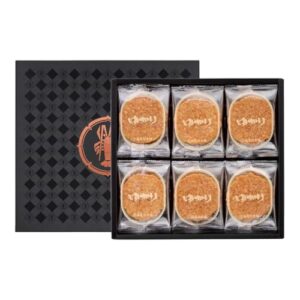
 Bankaku Sohonpo Yukari Ebi Senbei (坂角総本舗 ゆかり, individually sealed)
📦 Shipping & where to buy from outside Japan
This is a shelf-stable packaged food, which is the easiest class of Japanese product to import and also the class with the most destination-specific rules. The item is listed on Amazon Japan’s Global Store, which ships to 65+ countries — including Canada, the UK, and Australia — and estimates import fees at checkout for most destinations. Confectionery is generally straightforward, but food eligibility is decided per destination, so the AmazonGlobal International Shipping eligibility shown at checkout for your own country is the only authority.
Practical guidance: order in small personal quantities rather than case lots. Personal-use amounts of sealed, ambient-temperature confectionery attract far less scrutiny than commercial-looking volumes, and a bag of hard candy has no cold-chain requirement to break.
Destination-specific notes for our largest non-US readerships are collected in our country guides for Canada, the UK, and Australia. Where the Global Store will not ship a food item to your address, proxy forwarders such as Buyee or Tenso are the usual workaround — they buy domestically in Japan and re-ship, though they add their own fees and their own food-handling restrictions.
- 🌡️ Storage: room temperature — no refrigeration is required, and refrigeration is not recommended for boiled sweets.
- 💧 Humidity: keep the bag sealed and dry. Damp air makes boiled candy tacky and can fuse unwrapped pieces; this is a texture issue, not a safety one, and the individual twist wrappers exist largely to prevent it.
- 📅 Best-by: a 賞味期限 (best-by) date is printed on the pack — read it on arrival and note that it indicates best quality, not a hard safety cutoff.
- 🍬 Eating: a hard drop meant to dissolve slowly; there is no soft center, and biting it is how people chip teeth on boiled sweets.
- 🎁 Gifting: the individual wrappers make it easy to split one bag among many recipients without repackaging.
Price snapshot across stores
Our snapshot returned no price for this item, so every figure below must be read live. JPY is the authoritative currency for the Japanese listing; any USD figures you compute from it are approximate at a ¥150/USD baseline as of mid-2026.
| Store | Item / Variant | Price | Notes |
|---|---|---|---|
| 🇺🇸 Amazon US (search) | Browse Japanese candy & sweets | varies (USD) | Best if you are shopping from the US — Prime shipping, USD pricing, no international customs. Amazon US carries Japanese hard candy, kokuto sweets, and senbei from various makers, useful for comparing formats and pack sizes. Nachiguro Sohonpo’s own bag ships from Japan (next row). |
| 🇯🇵 Amazon JP Global Store | 那智黒 individually wrapped bag (ASIN B09CYLQWQM) | see live listing (¥, authoritative) | Ships internationally from Japan to 65+ countries — including Canada, the UK, and Australia — with import fees estimated at checkout. This is the sourced listing for the exact product in this guide. |
| Maker direct | Full line including 徳用袋 (value bag) and 化粧箱 (gift box) | Unconfirmed — check maker site | Nachiguro Sohonpo’s own channels carry formats that do not always appear on Amazon. International shipping from a small regional confectioner is generally domestic-only; treat this as a reference for what exists rather than a buying path. |
| Proxy services (Buyee / Tenso) | Any domestic Japanese listing | Item price + service fee + forwarding | The fallback when the Global Store will not ship food to your address. Confirm the forwarder’s own food-handling policy before ordering; fees typically make sense only for larger combined orders. |
What it does well
Weaknesses and things to verify before buying
- No price in our data. The automated snapshot for this item returned no Amazon US results and no price field at all. Everything about cost in this guide points at the live listing; treat any figure you see elsewhere as unverified.
- Net weight is approximate here. The brief describes a roughly 130–150 g class bag. Bag weights on souvenir confectionery change between production runs and between the standard and 徳用 formats — read the gram figure on the listing page before assuming piece count.
- Allergen and ingredient statements must be re-read. We can report what the brief states, but manufacturing lines and stated shared-facility warnings change. If someone in your household has a serious allergy, the pack’s own current statement is the only acceptable source.
- One flavor, many pieces. There is no assortment inside the bag. For a recipient who wants variety, this is the wrong shape of gift, and mixed 熊野土産 souvenir sets are a poor workaround because they bundle shorter-life items alongside the candy.
- Humidity is the real enemy. Boiled sweets go tacky in damp storage, and a bag opened in a humid kitchen degrades in texture well before its best-by date. The individual wrappers mitigate this but do not eliminate it.
- Hard candy is a texture commitment. It is meant to dissolve slowly. Readers buying for children, for anyone with dental work, or for anyone who habitually chews candy should factor that in.
- Food shipping eligibility is per-destination. Confectionery is usually fine, but the Global Store decides eligibility at checkout by destination, and a country that accepts sealed candy today may not accept a given listing tomorrow. Verify at checkout rather than assuming.
- The stone-and-quarry story is deliberately hedged here. The quarrying district and the confectioner’s town are adjacent but not identical, and we did not confirm a specific quarry town against the maker’s own pages. If that detail matters to you, check the maker’s site directly.
Conclusion — which buyer type are you?
Other ways to approach this purchase
🏆 Editor’s Pick
❓ Frequently Asked Questions
Does Nachiguro candy ship internationally from Japan?
It is listed on Amazon Japan’s Global Store, which ships to 65+ countries including Canada, the UK, and Australia, and estimates import fees at checkout. Food eligibility is decided per destination, so confirm that the item is shippable to your address at checkout before assuming it will go. Where it will not, a proxy forwarder such as Buyee or Tenso is the usual alternative.
What does it actually taste like?
Unrefined cane sugar boiled with starch syrup, so the register is molasses rather than caramel — dark, faintly smoky, with a slight bitterness behind the sweetness that refined sugar does not have. There is no chocolate and no fruit; the flavor is the sugar itself, undisguised.
Does it contain dairy, egg, or gelatin?
Per the spec brief, the ingredients are unrefined cane sugar, starch syrup, and sugar, with no dairy, egg, gelatin, or chocolate. Because manufacturing details and shared-line warnings change, read the current allergen statement on the listing or the pack itself rather than relying on this article for a serious allergy.
How long does it keep, and will it survive a long parcel route?
Hard candy is low-moisture and keeps for months at room temperature against a printed 賞味期限 (best-by) date. Nothing in it requires refrigeration, and the individual twist wrappers keep pieces from fusing if the parcel gets warm in transit. Keep it dry after arrival — humidity makes boiled sweets tacky, which is a texture problem rather than a safety one.
Bag or gift box — which should I buy?
Buy the sealed bag of individually wrapped drops for personal use or for sharing out piece by piece. Buy the 化粧箱入り (gift box) if it is a present, since presentation packaging is what distinguishes a gift from a souvenir in Japanese practice. The 徳用袋 (value bag) is the same candy in a larger pack for volume distribution.
Is the candy related to the black go stones from Kumano?
By imitation, not by material. Nachiguro-ishi (那智黒石) is a fine-grained black stone of the Kumano district that is worked into go stones, inkstones, and ornaments; the candy is molded and colored to resemble a polished piece of it. The quarrying area and the confectioner’s shop are in neighboring parts of the Kumano region rather than the same town, and this guide does not assert a specific quarry town.
Why is a candy the standard souvenir of a tuna port?
Kii-Katsuura is a major tuna port, and fresh fish cannot be carried home by a walker or mailed abroad. Nachikatsuura also sits on the Kumano Kodo pilgrimage routes, inscribed by UNESCO in 2004 as part of “Sacred Sites and Pilgrimage Routes in the Kii Mountain Range,” which brings a steady flow of travelers who need something durable to take away. A sealed, shelf-stable sweet fills that gap.
jpmono.com is curated by a Japan-based editorial team (working out of Toyama in the Hokuriku region and Nara in Kansai) and is independent. We do not take payment from the makers we feature, and we do not physically test every product — we read maker specifications and source listings. Income comes from affiliate links.
🤖 This article was drafted with AI assistance from maker specifications and source listings, then reviewed by a human editor. Product data reflects listings as of September 15, 2026; prices, stock, packaging, and ingredient statements change without notice — the linked listing is authoritative.
Affiliate disclosure: jpmono.com may earn a commission on qualifying purchases made through links on this page, at no additional cost to you.