![Kishu Negoro-nuri Lacquer Sake Cup: Where to Buy Vermillion Urushi Sakazuki [2026]](https://jpmono.com/wp-content/uploads/2026/06/kishu-negoro-nuri-lacquer-sake-cup-where-to-buy-2026-featured.jpg)
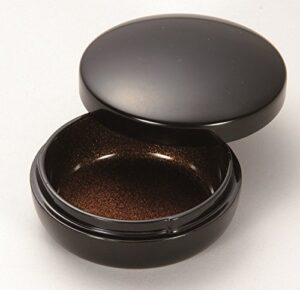
A Kishu Negoro-nuri (紀州根来塗, “Negoro lacquer from the Kishu region”) sakazuki is a flat ceremonial sake cup finished in vermillion urushi laid over a black ground. The look is deliberately plain — no maki-e gold, no inlay — and that plainness is the point. The cup covered here is a Kishu Shikki Negoro-nuri sakazuki made in Kuroe, the lacquer district of Kainan city in Wakayama Prefecture, the modern heart of a tradition that began inside a warrior-monk temple nearly nine hundred years ago.
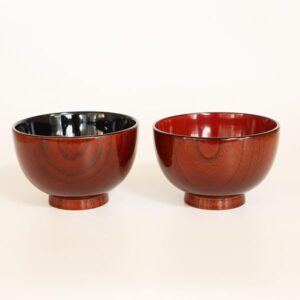
What makes Negoro lacquer internationally recognizable is how it ages. The red wears thin at the rim and the points of contact, and the black underneath surfaces through it. On most lacquerware that would read as damage; on Negoro it is the entire aesthetic, an accidental beauty the Japanese tea world later named and prized. A new Negoro cup is uniformly red. A well-used one is a map of where hands and lips have touched it.
This guide is written for international readers deciding whether — and from where — to buy one. We cover what the published listing actually states, how the Negoro finish differs from translucent Shunkei lacquer and from glazed sake ware, where it comes from historically, the realistic shipping paths from Japan, and which kind of buyer it suits. One caveat up front: the data snapshot we pulled for this article carries no live price, so figures below are flagged rather than invented.
🔄 Updated:
⏱️ Read time: ~11 min
- Who this is for — and who should skip it
- Product overview (from published specs)
- Price snapshot across stores
- What it does well
- Weaknesses and things to verify before buying
- Where this comes from — place, era, and the craft tradition
- Conclusion — which buyer type are you?
- Other ways to approach this purchase
- 🏆 Editor’s Pick
- ❓ Frequently Asked Questions
Who this is for — and who should skip it
- Want lacquerware whose surface is meant to change and age over years of use
- Prefer a plain, ritual form (a flat sakazuki) over decorated or glossy sake ware
- Value a documented craft lineage — temple origin, METI-designated region
- Drink sake at ceremonies, New Year toasts, or formal pours and want the right vessel
- Are comfortable with natural urushi and its care requirements
- Want a dishwasher- and microwave-safe everyday cup
- Expect a deep tumbler — a sakazuki is shallow and holds only a small pour
- Dislike the idea of red wearing away to black (you want it to stay pristine)
- Have a confirmed urushi (lacquer-sap) skin sensitivity
- Need fast, low-cost domestic shipping and cannot wait on an international order
Product overview (from published specs)
The data we have is thin. Only the Amazon JP Global Store listing snapshot is available, and it carries no live price; live pricing and stock may have shifted since the writing date. The table below states what the listing identifies and marks everything unconfirmed as such rather than guessing. Spec sheets for traditional lacquer rarely publish exact gram weights or millimeter dimensions, so treat the physical figures as “verify on the listing.”
| Attribute | Detail (per listing snapshot) | Source |
|---|---|---|
| Item | Kishu Shikki Negoro-nuri sakazuki (flat sake cup) | Amazon JP Global Store |
| Craft / finish | Negoro-nuri — vermillion urushi over a black ground, ages to reveal black | Maker tradition + listing |
| Origin | Kuroe, Kainan city, Wakayama (Kishu Shikki) | Maker direct / region |
| Material | Wood core with natural/applied urushi lacquer — base spec unconfirmed; check manufacturer site | Unconfirmed |
| Diameter / weight | — (not stated in snapshot; verify on listing) | Unconfirmed |
| Price | Not present in fetched snapshot — verify on the listing | Amazon JP Global Store |
| ASIN | B086H9BYDC | Amazon JP Global Store |
The order of sources here, and in the price table further down, is consistent: Amazon US (search) as the consumer-facing first stop, then Amazon JP Global Store as the sourced listing for this specific cup, then maker direct, then proxy services where relevant.
📖 Glossary — key terms
Negoro-nuri (根来塗) — a lacquer style of vermillion urushi applied over a black ground. With use, the upper red wears through to show the black beneath; this aged surface is the prized look.
Urushi (漆) — natural lacquer refined from the sap of the urushi tree, brushed in thin coats and hardened in humidity. Durable and food-safe once cured, but reactive to raw sap before curing.
Sakazuki (盃 / 杯) — a flat, shallow ceremonial sake cup, distinct from the deeper guinomi or the small ochoko. Used for toasts, weddings, and Shintō ritual.
Kishu Shikki (紀州漆器) — “Kishu lacquerware,” the lacquer industry centered on Kuroe in Kainan, Wakayama; one of Japan’s major lacquer regions and a METI-designated traditional craft.
Shunkei-nuri (春慶塗) — by contrast, a translucent amber lacquer that shows the wood grain through it. Negoro is opaque red-over-black; Shunkei is see-through amber. The two are often confused.
Wabi (侘び) — an aesthetic of restrained, weathered, imperfect beauty; the worn Negoro surface became a textbook example of it in the tea world.
Related lacquer and sake-vessel guides on jpmono — for cross-shopping by craft region, finish, and use.
Price snapshot across stores
JPY (¥) is the authoritative price for the specific listed cup; USD figures, where shown, are estimates at a ¥150/USD baseline as of mid-2026. The snapshot we pulled carried no live price, so the JPY cell below reads “not in snapshot.” Confirm the current figure on the listing before buying.
| Store | Item / variant | Price (JPY + USD est.) | Notes |
|---|---|---|---|
| 🇺🇸 Amazon.com (US) | Browse Japanese lacquer sake cups & sakazuki | varies (USD) | Best if you’re shopping from the US — Prime shipping, USD pricing, no international customs. Amazon US carries Japanese lacquer and sake-ware from various makers, useful for comparing finishes and price tiers. This exact Kuroe Negoro cup is sourced from Japan (next row). |
| 🇯🇵 Amazon JP Global Store | Kishu Shikki Negoro-nuri sakazuki (ASIN B086H9BYDC) | Not in snapshot — verify on listing | The sourced listing for this specific cup. Ships internationally from Japan to most major destinations. |
| Maker direct (Kishu Shikki / Kuroe) | Negoro-nuri sakazuki and matched sets | varies | Kuroe workshops and the Kishu Shikki cooperative sell directly; some sites are Japanese-only and may not ship abroad without a proxy. |
| Proxy services (Buyee / Tenso) | Any Japan-only listing forwarded abroad | item price + forwarding fee | Use when a maker or marketplace will not ship internationally. Adds a handling fee plus consolidated forwarding; expect customs duty above local thresholds. |
Prices in USD are approximate and depend on the current exchange rate. Stock and pricing fluctuate; the affiliate links above carry the current figures.
What it does well
The red-over-black design means use improves the look. Wear is the feature, not a flaw — the cup records its own history.
A finish traceable to a named temple origin and a METI-designated craft region — verifiable heritage, not marketing language.
A flat sakazuki is the correct vessel for toasts and ceremony — New Year’s, weddings, formal pours — where a tumbler would feel wrong.
Lacquer over a wood core is light and not cold to the touch the way glass or porcelain is — a different drinking feel.
“A new Negoro cup is uniformly red; a well-used one is a map of where hands and lips have touched it. The wearing-away is not damage — it is the finished work, completed by its owner.”
Weaknesses and things to verify before buying
- No live price in our snapshot. The fetched listing carried no current price; do not assume a figure — confirm it on the listing before committing.
- Not dishwasher- or microwave-safe. Like nearly all urushi lacquerware, it needs hand washing in lukewarm water and gentle drying. Heat, abrasives, and prolonged soaking damage the surface.
- Dimensions and weight unconfirmed. A sakazuki is shallow and small by design; verify the exact diameter and capacity on the listing if you need a specific size.
- The red will change. If you want a permanently bright, unworn cup, Negoro is the wrong choice — its appeal depends on the red thinning to reveal black over time.
- Urushi sensitivity. Fully cured lacquer is inert and food-safe, but people with a known urushi/lacquer-sap allergy should be cautious; reactions are rare with cured pieces but documented.
- International shipping adds cost and time. Buying from Japan via the Global Store or a proxy means longer transit and possible customs duty above your local threshold.
- Handmade variation. Color depth and the starting red can vary piece to piece; the photo is representative, not an exact match.
Where this comes from — place, era, and the craft tradition

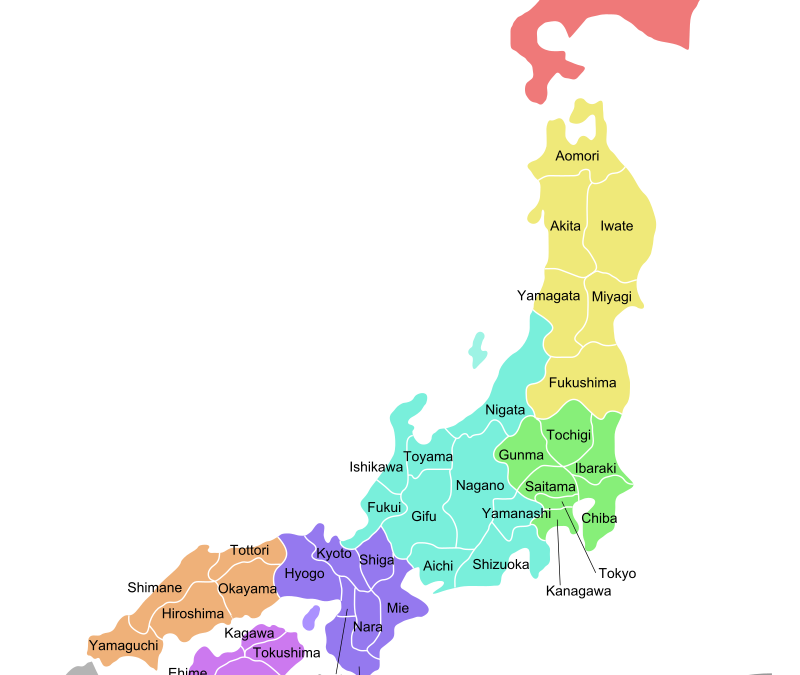
Wakayama Prefecture occupies the southern half of the Kii Peninsula, the mountainous spur of land that juts into the Pacific south of Osaka and Nara. It is one of the wettest, most heavily forested parts of Honshu — terrain that for centuries supplied the timber and the humid climate that lacquer work needs, since urushi cures by absorbing moisture from the air rather than drying out. The lacquer district of Kuroe lies in Kainan city, on the prefecture’s coastal plain, and is the heart of what is sold today as Kishu Shikki.
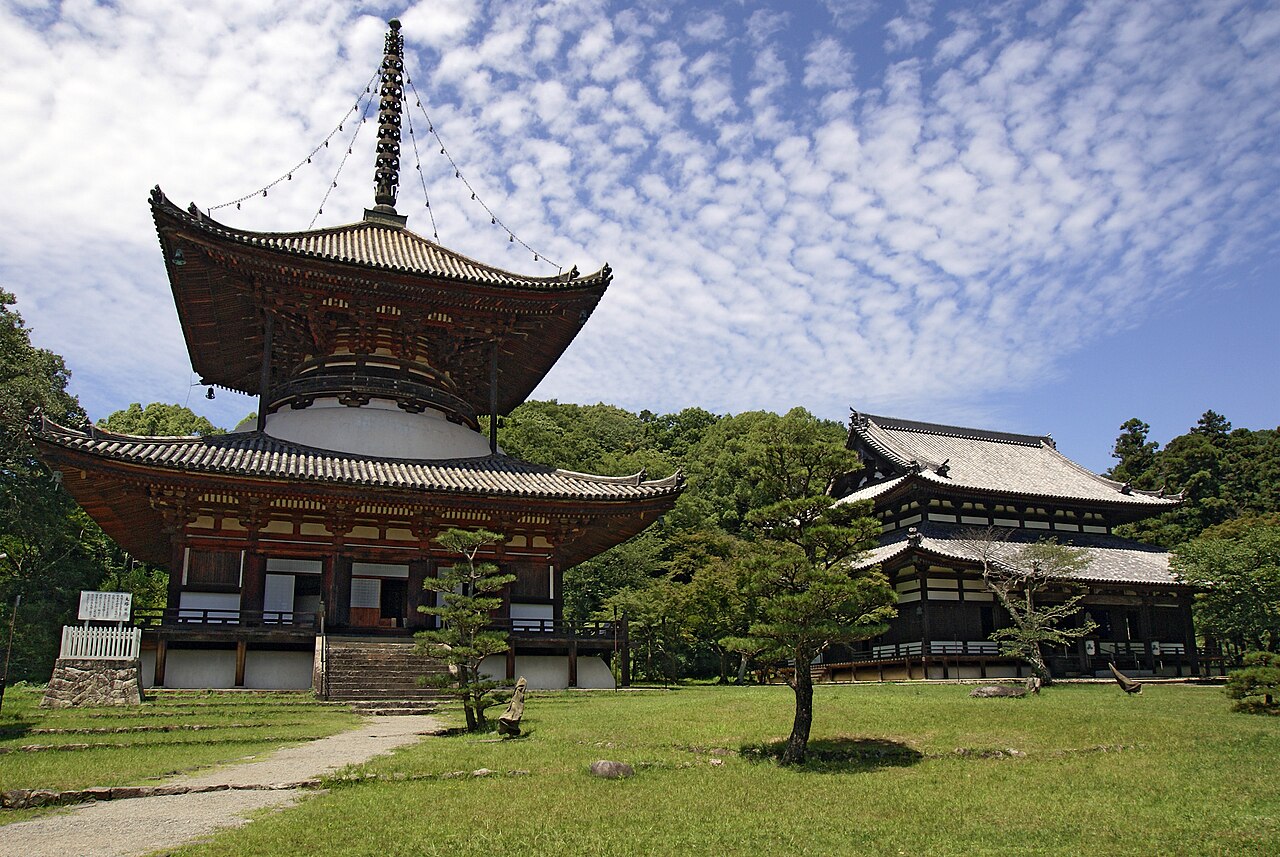
The story begins not in a workshop but in a temple. In the 1130s the priest Kakuban (覚鑁), a major reformer of esoteric Shingon Buddhism, established a temple complex on Mount Negoro in northern Wakayama. Negoro-ji grew over the following centuries into a vast, semi-independent monastic city — at its height home to thousands of warrior-monks (sōhei). From the Kamakura period onward, the monks lacquered their own everyday utensils: bowls, trays, and cups finished in vermillion urushi laid over a black ground. These were working objects, made for daily use, not for sale.
That daily use is what created the style. As the monks handled the wares year after year, the soft upper layer of red wore thin at the rims and contact points, and the harder black ground showed through. Centuries later, when the tea ceremony elevated restrained, weathered surfaces into a formal aesthetic, this accidental wearing-away was recognized as a model of wabi beauty and given a name: Negoro, after the temple where it had quietly happened on its own.
- 1130s — Priest Kakuban founds Negoro-ji on Mount Negoro, northern Wakayama.
- Kamakura period (13th c.) — Monks lacquer their daily wares in red over black; the Negoro look emerges through wear.
- 1585 — Toyotomi Hideyoshi burns Negoro-ji; its artisans scatter across the region.
- Edo period — The technique consolidates in Kuroe (Kainan); the Kishu Tokugawa domain fosters the lacquer trade.
- 20th c. — Kuroe’s Kishu Shikki recognized as a METI-designated traditional craft (dentōteki kōgeihin).
- 2026 — Negoro-nuri sakazuki still produced in Kuroe, carrying the temple lineage forward.
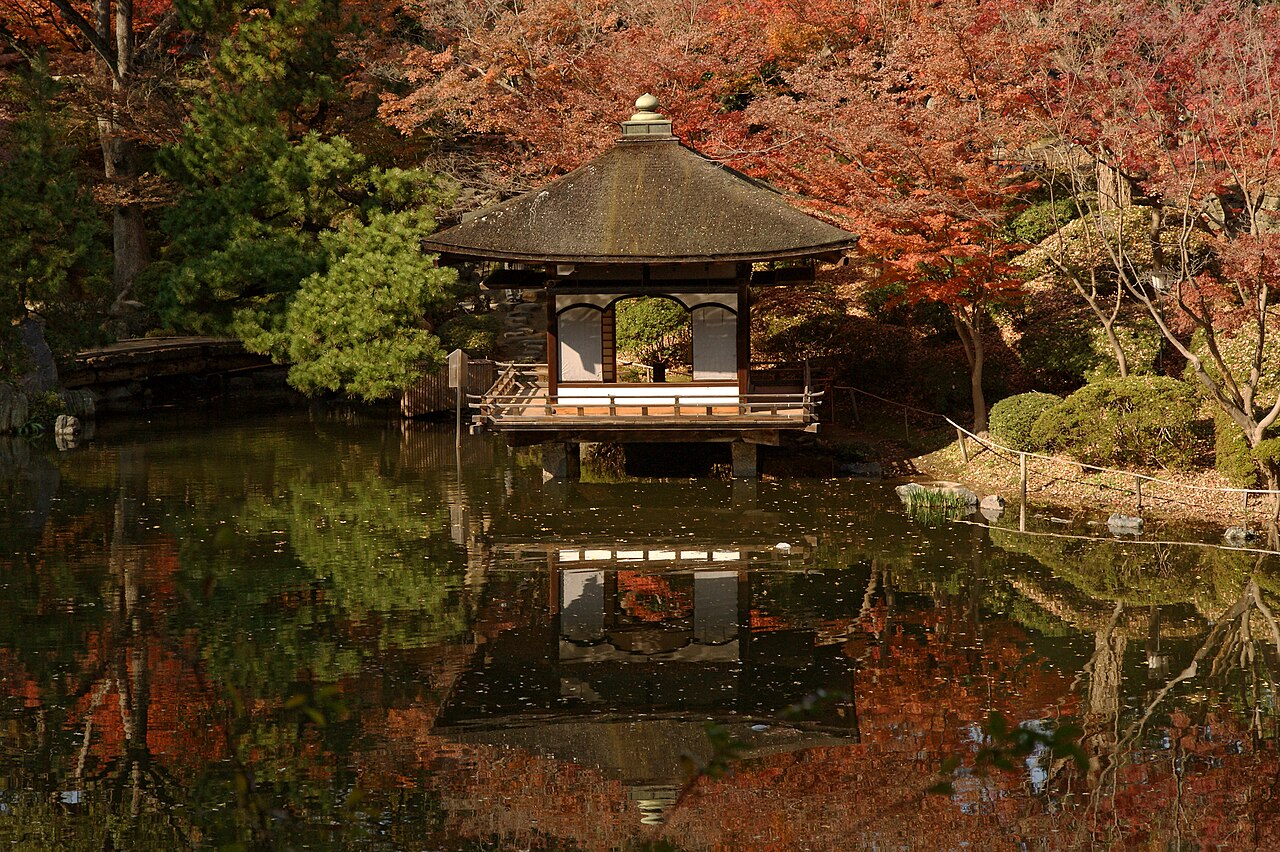
The temple’s end came in 1585, when Toyotomi Hideyoshi — consolidating control over the region — attacked and burned Negoro-ji, scattering its warrior-monks and artisans. The buildings were lost, but the lacquer knowledge was portable, and it survived in the hands of the craftspeople who dispersed. Over the Edo period that knowledge gathered in Kuroe, a coastal district of what is now Kainan city, where the local Kishu Tokugawa domain — one of the three senior branches of the Tokugawa family — encouraged the lacquer trade. What had been a temple’s private craft became a regional industry.
This is the continuity case for Kishu Shikki: an unbroken line from a 12th-century temple, through a violent rupture in 1585, into a domain-supported Edo industry, and on to the present-day Kuroe workshops. Today Kishu Shikki is counted among Japan’s major lacquerware regions and is a METI-designated traditional craft, and the Negoro sakazuki is one of its signature ritual forms — a flat ceremonial cup that still wears its red over black exactly as the monks’ wares did.
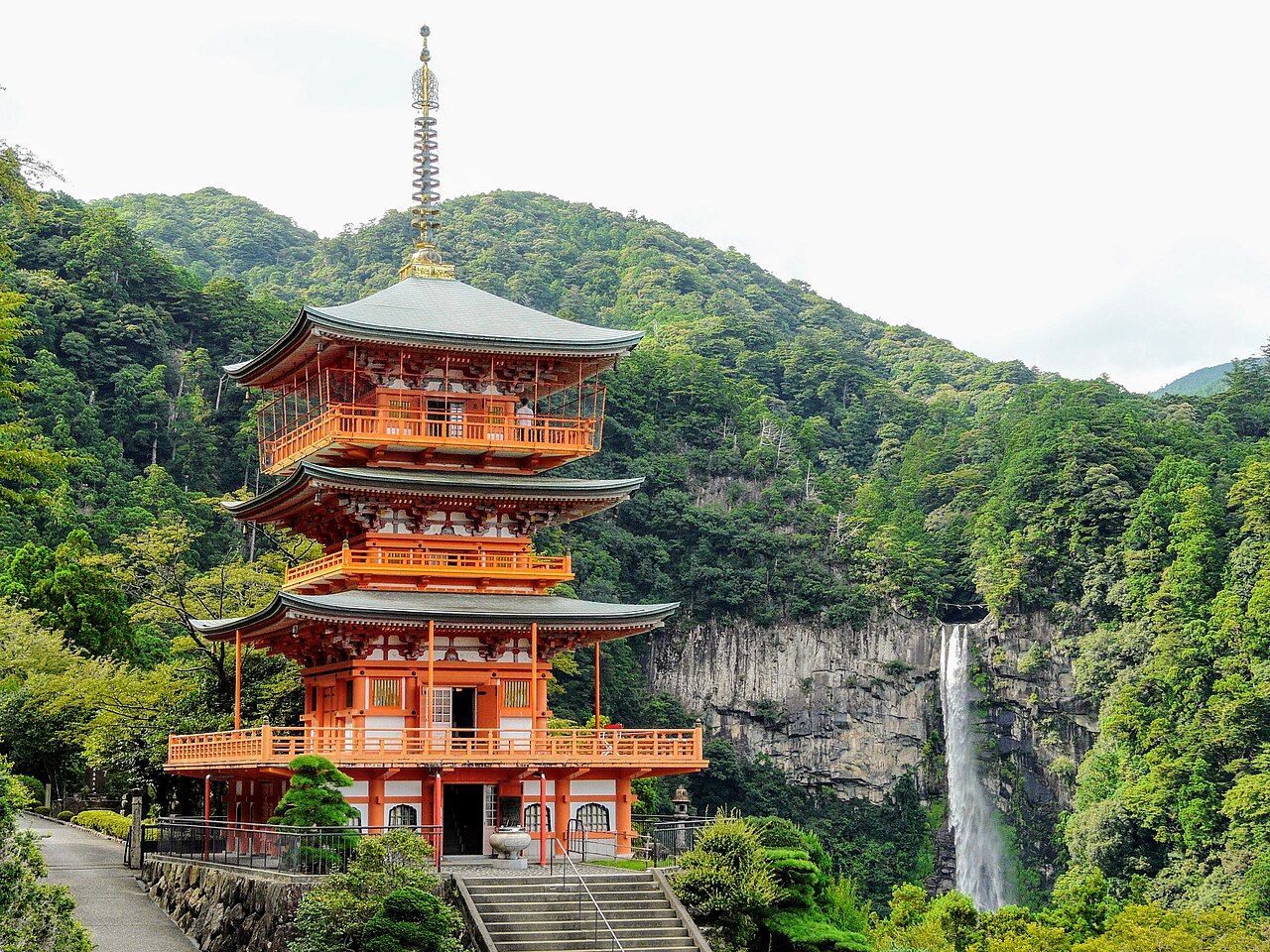
It helps to picture the wider landscape that produced this craft. Wakayama is the land of Kumano — the sacred mountains and the Kumano Kodō pilgrimage routes that drew emperors and commoners south for centuries — and of Nachi Falls, Japan’s tallest single-drop waterfall, beside the three-storied pagoda of Seiganto-ji. This is a prefecture defined by temples, shrines, and forest, the kind of place where Buddhist institutions commanded the resources and the steady demand that a lacquer tradition needs to take root and last.
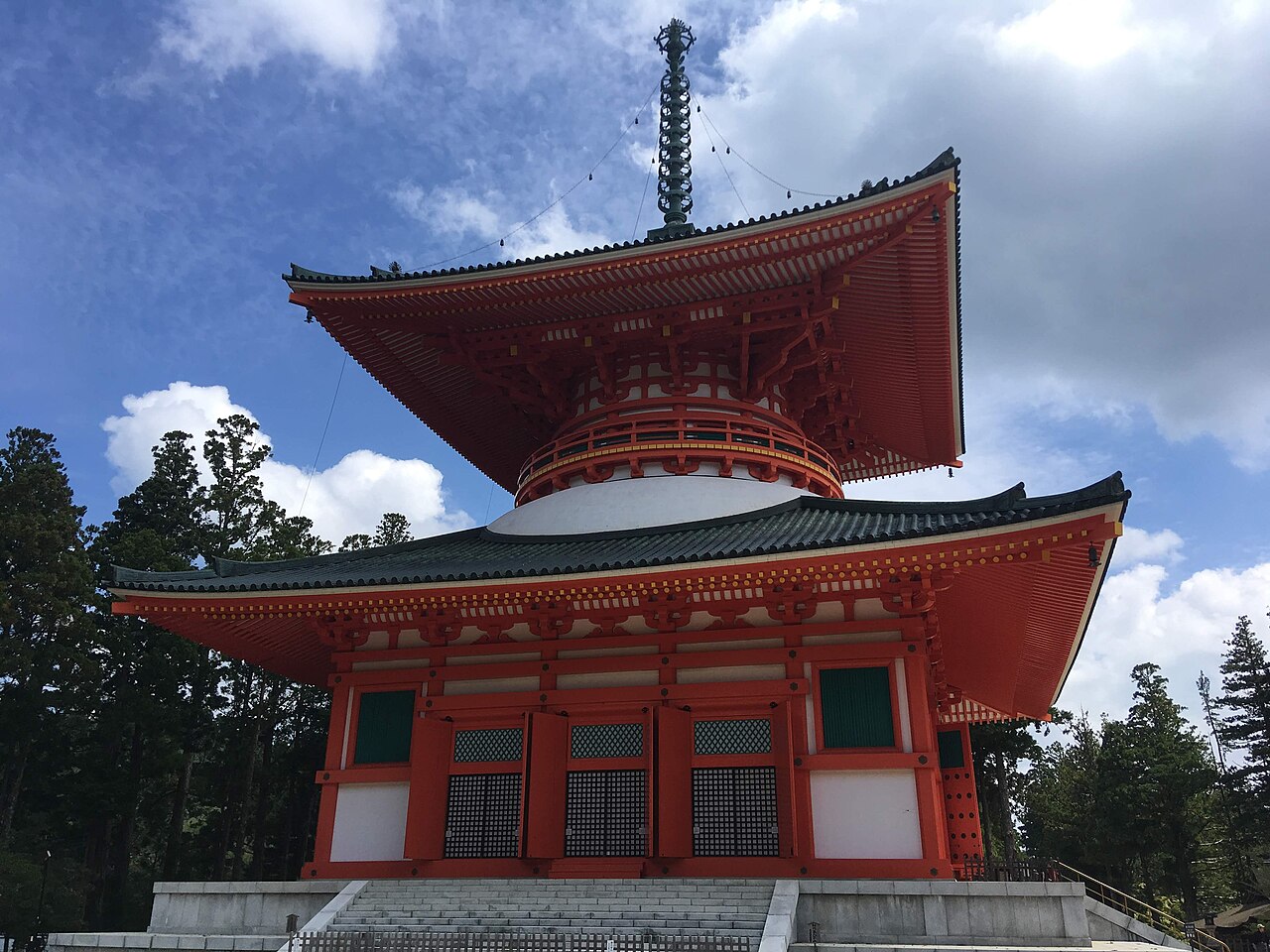
Koyasan (Mount Kōya), the headquarters of Shingon Buddhism that the priest Kūkai established in the 9th century, sits in the same Wakayama highlands. It is no coincidence that a lacquer tradition with a temple origin grew up here: the dense Buddhist culture of the Kii Peninsula meant a constant demand for ritual vessels, altar wares, and the daily utensils of large monastic communities. Negoro-nuri is one thread of that culture that happened to outlive the temple it came from, and the sakazuki is the form in which an international buyer can most easily hold a piece of it.
Conclusion — which buyer type are you?
You want a documented, named-region piece and may step up to a matched set or maker-direct order. Buy the authentic Kuroe Negoro and let it age.
You want one good ceremonial cup that ships reliably. The Amazon JP Global Store listing is the straightforward path — confirm the current price first.
If price is the constraint, browse Japanese lacquer sake cups on Amazon US for lower-cost comparable pieces, accepting they may not be Kuroe Negoro.
If you need a dishwasher-safe daily tumbler, or you want a cup that stays bright and unworn, this is not your object. Choose glass or glazed ware.
Other ways to approach this purchase
Craft lacquer rarely deep-discounts, but Global Store pricing and exchange rates move. Watch the listing if you are flexible on timing.
Kuroe workshops and the Kishu Shikki cooperative sell directly, sometimes with sets unavailable elsewhere. Confirm whether they ship abroad.
If you buy regularly through Amazon, applying accumulated points or a rewards card offsets the international-shipping premium.
For Japan-only listings, Buyee or Tenso forward the parcel abroad for a fee. Useful when a maker will not ship to your country directly.
🏆 Editor’s Pick
❓ Frequently Asked Questions
Does Amazon JP ship this Negoro sake cup internationally?
Why does the red wear away — is that a defect?
How do I care for a Negoro lacquer cup?
How is Negoro-nuri different from Shunkei lacquer?
Is a sakazuki the same as a guinomi or ochoko?
Is lacquer safe to drink from if I have a sensitivity?
What is the price, and why isn’t it shown here?
jpmono.com is curated by a Japan-based editorial team (working out of Toyama in the Hokuriku region and Nara in Kansai) and is independent. We do not take payment from the makers we feature; income comes from affiliate links. We do not physically test every product — we read maker specs and source listings — and we flag thin data plainly, as with the missing price here.
🤖 This article was prepared with AI assistance and reviewed against the source listing snapshot. Specifications, pricing, and availability should be confirmed on the retailer’s page before purchase.
Affiliate disclosure: jpmono.com may earn a commission on qualifying purchases made through links on this page, at no additional cost to you.