![Ooigawa Chaen Fukamushi Sencha (大井川茶園 深蒸し煎茶, sealed foil bag) — deep-steamed green tea from the Oigawa river terraces of Shizuoka [2026 Guide for International Readers]](https://jpmono.com/wp-content/uploads/2026/07/ooigawa-chaen-fukamushi-sencha-where-to-buy-2026-featured.jpg)
- What it is: Loose-leaf fukamushi sencha (deep-steamed Japanese green tea) in a sealed, nitrogen-flushed foil bag.
- Made in: Shimada (Kanaya, Oigawa river basin), Shizuoka — the prefecture that has led Japanese tea production for generations.
- Price band: Everyday, supermarket-tier Shizuoka sencha — budget-friendly for daily drinking (see the live listing for the current figure).
- Best for: Readers who want an easy, mellow, low-astringency daily green tea that travels and stores well.
- Skip if: You are chasing a single-cultivar, competition-grade shincha or a matcha-ceremony tea — this is a workhorse, not a showpiece.
- Shipping: ships internationally from Amazon Japan — jump to our pick ↓
Steam a green-tea leaf for about thirty seconds and you get ordinary sencha; steam it two to three times longer and the leaf begins to break apart, and that single change of timing is the whole story of fukamushi sencha (深蒸し煎茶, “deep-steamed sencha”). The longer steaming softens the leaf’s cell structure, shatters it into finer particles, and produces a cup that pours out deep green and slightly cloudy rather than clear and pale. It is the house style of Shizuoka, and it is the style that Ooigawa Chaen (大井川茶園), a tea house based in Shimada along the Oigawa river, has built its everyday catalog around.
Shizuoka has been the beating heart of Japanese green tea for a very long time, and the Oigawa river basin — with its gravelly terraces and morning river mist — is one of the region’s classic sencha-growing corners. Ooigawa Chaen is not a rarefied single-estate label; it is one of the recognizable, dependable names that put this Shizuoka tradition into a foil bag and onto the shelves of Amazon Japan, which is exactly why it is a sensible entry point for an international reader who wants the real thing without navigating a Japanese-only specialty shop.
This guide is written for readers outside Japan who want to understand what they are actually buying: what deep-steaming does to the leaf, how the Oigawa terroir fits into Shizuoka’s tea map, how to brew the tea so it tastes the way it should, and how to order the sealed bag through the Amazon Japan Global Store while checking their own country’s shipping eligibility at checkout. We cover taste, craft, place, storage, and buying paths — not health claims.
🔄 Last updated: July 12, 2026
⏱️ Read time: ~8 min

- Who this is for — and who should skip it
- Product overview (from published specs)
- 📍 Where this comes from — place, era, and the craft tradition
- 🍵 Brewing & storage
- Which finish should you choose?
- Price snapshot across stores
- 📦 Shipping & where to buy from outside Japan
- What it does well
- Weaknesses and things to verify before buying
- Conclusion — which buyer type are you?
- Other ways to approach this purchase
- 🏆 Editor’s Pick
- ❓ Frequently Asked Questions
Who this is for — and who should skip it
- Want a mellow, rounded, low-astringency green tea for everyday drinking.
- Prefer a deep-green, full-bodied cup over a clear, delicate one.
- Value a shelf-stable, dry, light pantry item that survives a suitcase or a long shipment.
- Are new to Japanese loose-leaf tea and want a forgiving, reliable starting point.
- Like the idea of a recognizable Shizuoka name you can actually re-order.
- Are hunting a single-cultivar, competition-grade or named-estate shincha.
- Want matcha for whisked tea-ceremony use — this is leaf sencha, not powder.
- Dislike cloudy infusions and want a crystal-clear, pale cup.
- Need a certified organic or single-origin traceability document.
- Want a gift-grade wooden box presentation rather than an everyday foil bag.
Product overview (from published specs)
ℹ️ Live pricing and some specs were not in our snapshot — the linked Amazon Japan listing is authoritative; unconfirmed attributes are marked below.
Ooigawa Chaen Fukamushi Sencha (大井川茶園 深蒸し煎茶, sealed foil bag)
大井川茶園 茶工場のまかない 緑茶 320g
在庫あり。 · Sold by Amazon.co.jp · ASIN B004GJHFNQ
Price and availability as of 2026-08-31 02:30 JST. The Amazon listing at the time of purchase is authoritative. jpmono.com earns a commission on qualifying purchases at no extra cost to you.
| Attribute | Detail | Source |
|---|---|---|
| Product | Ooigawa Chaen fukamushi sencha (deep-steamed green tea), loose leaf | Amazon JP Global Store listing |
| Type | Fukamushi sencha — steamed roughly 2–3× longer than standard (asamushi) sencha | Maker style / general tea reference |
| Origin | Shizuoka Prefecture; brand based in Shimada, Oigawa river basin | Maker direct |
| Format | Sealed, nitrogen-flushed foil bag (resealable leaf pack); shelf-stable, room-temperature | Amazon JP listing |
| Net weight | Unconfirmed — check the live listing (bag size varies by pack) | — |
| Brewing guidance | Roughly 70–80°C water, about 1 minute for standard sencha | General sencha reference |
| Price | Not captured in our snapshot — see the live listing (do not rely on a quoted figure here) | — |
📖 Glossary — key tea terms
- Sencha (煎茶): The most common Japanese green tea — leaves grown in full sun, steamed, rolled, and dried.
- Fukamushi (深蒸し, “deep steaming”): Steaming the leaf 2–3× longer than usual, breaking it into finer particles for a deeper-green, mellower, less astringent cup.
- Asamushi (浅蒸し, “light steaming”): The standard, shorter steam — a clearer, brighter, more delicate infusion. The counterpart to fukamushi.
- Chaen (茶園): Literally “tea garden”; here it forms part of the maker’s name, Ooigawa Chaen.
- Shincha (新茶): “New tea” — the celebrated first flush of the season. This everyday product is not sold as shincha.
- Terroir: The soil, water, and climate of a growing area that shape a tea’s character — here, the Oigawa river’s gravelly terraces and mist.
📍 Where this comes from — place, era, and the craft tradition

Shizuoka sits along the Pacific coast of central Japan, in the Chūbu region, with Mount Fuji rising over its eastern edge and the Oigawa river cutting down out of the southern Japanese Alps toward the sea. Shimada straddles that river; Kanaya, on its west bank, climbs onto the Makinohara plateau. The combination that makes this good tea country is specific: well-drained, gravelly river-terrace soils, a mild coastal climate, and river mist that softens the morning sun on the gardens. Tea has been grown across this landscape for centuries, and Shizuoka has long led the country in the volume of tea it produces.
The historical arc behind that leadership is worth sketching, because it explains why an everyday bag of Shimada tea carries real lineage. Tea culture in Japan is traditionally traced to Zen monks returning from China, and Shizuoka’s own cultivation is traditionally credited to a medieval priest who is said to have spread tea in the region. The decisive modern chapter came after the fall of the shogunate: former Tokugawa retainers, left without a lord, cleared the vast Makinohara plateau around Shimada and Kanaya into tea gardens, turning a warrior class into a farming one and building the industrial scale Shizuoka is now known for.
-
1191 — The Zen monk Eisai returns from China with tea seeds and practice, traditionally credited with seeding Japanese tea culture. -
13th century — Tea cultivation in Shizuoka is traditionally attributed to a medieval priest said to have spread the plant across the region. -
1869–1870s — Former Tokugawa retainers clear the Makinohara plateau near Shimada and Kanaya into large-scale tea gardens. -
Early 20th century — Kanaya becomes a hub of national tea research, cementing the Oigawa basin’s technical role in the industry. -
Mid-20th century (postwar Shōwa) — Deep-steaming (fukamushi) develops in central Shizuoka to mellow robust lowland leaf into a rounder, sweeter cup. -
2026 — Shizuoka remains Japan’s leading tea prefecture; Ooigawa Chaen of Shimada sells fukamushi sencha nationwide and via Amazon Japan.
Deep-steaming itself is the region’s signature technical answer to its own leaf. Lowland Shizuoka tea can grow robust and a little sharp; steaming it longer breaks the leaf down, mutes the astringency, and pulls more color and body into the cup. The trade-off is that the tea clouds — those fine particles pass straight through the strainer — and it brews fast. A fukamushi sencha is forgiving of a heavy hand with the leaf but unforgiving of a long steep.
“Fukamushi is not a fancier sencha — it is a different answer to the same leaf: steam it longer, and a sharp lowland tea turns deep, cloudy, and round.”
What “still being made here” means, in practice, is continuity of an entire regional industry rather than a single artisan’s bench. Shizuoka’s tea sector spans thousands of growers, cooperatives, and blending houses, and brands like Ooigawa Chaen sit at the accessible end of that chain — buying, blending, and finishing regional leaf into consistent everyday packs. That is a strength for an international buyer: the tea is reproducible and re-orderable, not a one-off lot you will never see again.
🍵 Brewing & storage
- 🌡️ Water temperature: roughly 70–80°C — cooler than boiling, so let a fresh kettle rest a couple of minutes first.
- ⏱️ Steep time: about 1 minute; fukamushi brews fast, so start short and adjust rather than over-steeping.
- 🫙 Storage: keep the foil bag sealed and away from heat, light, moisture, and strong odors; it is shelf-stable and stays at room temperature.
- 🔁 Re-steeps: leaf sencha typically gives a second (and often third) shorter infusion — raise the temperature slightly for later steeps.
Which finish should you choose?
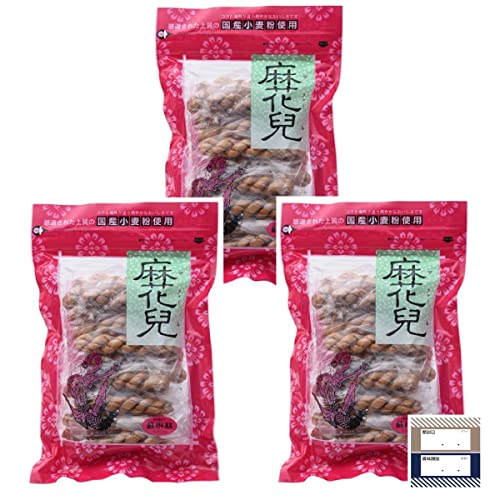
This piece is listed in 3 options. The photos below are the actual サイズ options on the listing right now — pick the one you want and confirm it on the product page before ordering, since hand-finished wares vary slightly piece to piece.
![Ooigawa Chaen Fukamushi Sencha (大井川茶園 深蒸し煎茶, sealed foil bag) — deep-steamed green tea from the Oigawa river terraces of Shizuoka [2026 Guide for International Readers] — 320グラム (x 5) finish](https://m.media-amazon.com/images/I/41XQQNmC0CL._SL500_.jpg)
![Ooigawa Chaen Fukamushi Sencha (大井川茶園 深蒸し煎茶, sealed foil bag) — deep-steamed green tea from the Oigawa river terraces of Shizuoka [2026 Guide for International Readers] — 320グラム (x 2) finish](https://m.media-amazon.com/images/I/41HWygN486L._SL500_.jpg)
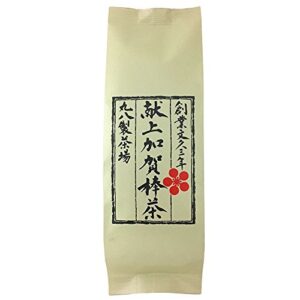

Maruhachi Seichajo Kenjo Kaga Bocha (献上加賀棒茶, sealed bag/tin)

Hoshino Seichaen Yame Matcha (星野製茶園 八女抹茶, sealed 30–40g tin)
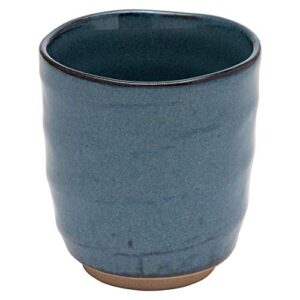

Shitoro-yaki Yunomi: Shizuoka’s Enshu Seven Kilns Tea Cup
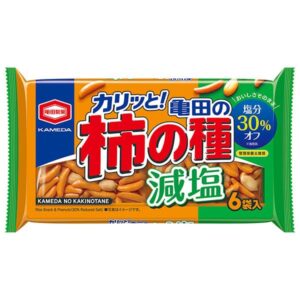

Kameda Kaki no Tane (亀田の柿の種, 6-bag box) — Niigata’s rice-cracker classic
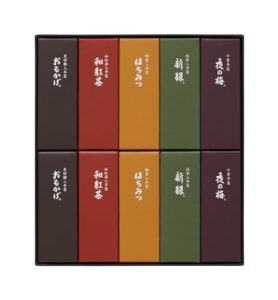

Toraya Small Yokan (Ko-gata Yōkan, 10-Bar Assorted Box)
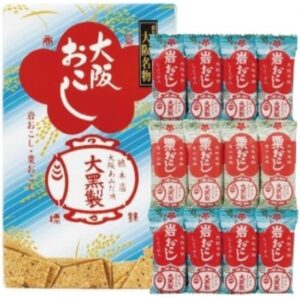

Amidaike Daikoku Awa-okoshi (あみだ池大黒 粟おこし, boxed assortment)
Price snapshot across stores
| Store | Item / Variant | Price | Notes |
|---|---|---|---|
| 🇺🇸 Amazon.com (US) | Browse Japanese green tea & sencha | varies (USD) | Best if you are shopping from the US — Prime shipping, USD pricing, no international customs. Amazon US carries sencha and matcha from Ito En, Yamamotoyama and other makers, useful for comparing steaming styles and price tiers. Ooigawa Chaen’s exact bag ships from Japan (next row). |
| 🇯🇵 Amazon JP Global Store | Ooigawa Chaen fukamushi sencha, sealed foil bag (the item in this guide) | See live listing (JPY) | Ships internationally from Japan to 65+ countries — including Canada, the UK and Australia — with import fees estimated at checkout. |
| Maker direct (Ooigawa Chaen) | Full leaf / tea-bag range | varies (JPY) | Japanese-language retail; typically domestic-focused, so a proxy service may be needed from abroad. |
| Proxy services (Buyee / Tenso) | Forwarded from Japanese retailers | item + forwarding fee | Useful only if a specific pack is not on the Global Store; adds a handling fee and a second shipping leg. |
Prices in USD are approximate and depend on the current exchange rate (¥150/USD baseline as of mid-2026). The JPY figure on the live listing is the authoritative one. No verified price was captured in our snapshot, so we quote none here — check the listing before ordering.
📦 Shipping & where to buy from outside Japan
Loose-leaf green tea is one of the most travel-friendly Japanese pantry items there is: fully shelf-stable, dry, light, plant-based, and free of any melt or refrigeration worry. In its sealed, nitrogen-flushed foil bag it is exactly the kind of food item that moves easily across borders in small personal quantities.
Amazon Japan’s Global Store ships to 65+ countries including Canada, the UK, and Australia, not only the United States. Amazon estimates and collects any import fees at checkout for most destinations, so the customs picture is usually settled before you pay. As a food item kept at room temperature with a best-by date, it is intended for small personal quantities, and eligibility for your specific country is confirmed at checkout — always verify that step before ordering.
Typical international shipping for a light bag like this runs on the order of $15–$40 to the US, EU, Canada, the UK, and Australia, depending on speed and basket size. If a particular pack is not offered on the Global Store, a proxy forwarder such as Buyee or Tenso can buy from a Japanese retailer and re-ship it to you, at the cost of an extra handling fee.
What it does well
Weaknesses and things to verify before buying
- No verified price in our snapshot. We did not capture a live figure, so confirm the current JPY price and pack size on the listing before ordering.
- Bag weight is unconfirmed. Fukamushi sencha ships in a range of pack sizes; check grams so you know how many cups you are actually buying.
- The cup is cloudy by design. Fine deep-steamed particles pass through the strainer; if you want a clear, pale infusion, an asamushi (light-steamed) sencha suits you better.
- It over-steeps easily. Because it brews fast, a long steep or water that is too hot turns it bitter — this is not a set-and-forget teabag experience.
- It is an everyday blend, not a named single-origin. Do not expect estate-level traceability, organic certification, or shincha first-flush character at this tier.
- It is not matcha. This is leaf tea for steeping, not powder for whisking — a different product for a different ritual.
Conclusion — which buyer type are you?
Other ways to approach this purchase
🏆 Editor’s Pick
❓ Frequently Asked Questions
What is fukamushi sencha, and how is it different from regular sencha?
Fukamushi sencha is green tea leaf that has been steamed roughly two to three times longer than standard (asamushi) sencha. The extended steaming breaks the leaf into finer particles, producing a deep-green, slightly cloudy cup with a rounder, mellower, less astringent character.
Does Amazon Japan ship this tea to my country?
The Amazon Japan Global Store ships to 65+ countries, including Canada, the UK, and Australia as well as the US and EU. It is a shelf-stable food item intended for small personal quantities; your country’s eligibility and any import fees are confirmed at checkout, so verify that step before ordering.
How should I brew it?
Use water around 70–80°C — cooler than boiling — and steep for about one minute. Fukamushi brews fast, so start short and adjust; water that is too hot or a steep that is too long will turn it bitter. The leaf usually gives a good second infusion.
Why is the brewed tea cloudy?
The cloudiness is normal for deep-steamed tea. Longer steaming breaks the leaf into fine particles that pass through the strainer into the cup, which is exactly what gives fukamushi its deep color and full body. If you prefer a clear, pale infusion, choose a light-steamed (asamushi) sencha instead.
How long does it keep, and how should I store it?
Sealed loose-leaf tea is dry and shelf-stable at room temperature, with a best-by date on the pack. Keep the foil bag closed and away from heat, light, moisture, and strong odors, and it will hold its character until you open and work through it.
Is this the same as matcha?
No. This is leaf sencha that you steep and strain, not the stone-ground powder used for whisked matcha. If you want tea for ceremonial whisking, look at a matcha product instead — for example the Yame matcha guide linked in the comparison box above.
jpmono.com is curated by a Japan-based editorial team (working out of Toyama in the Hokuriku region and Nara in Kansai) and is independent. We do not take payment from the makers we feature; income comes from affiliate links. We focus on items with verifiable craft heritage and clear international shipping paths.
Note: This article was prepared with AI assistance and reviewed against the linked source listing. Specifications, pricing, and availability should be confirmed on the retailer’s page before purchase.
Affiliate disclosure: jpmono.com may earn a commission on qualifying purchases made through links on this page, at no additional cost to you.