![Odawara Chochin: Collapsible Washi Paper Lantern from Kanagawa [2026]](https://jpmono.com/wp-content/uploads/2026/06/odawara-chochin-collapsible-paper-lantern-where-to-buy-2026-featured.jpg)
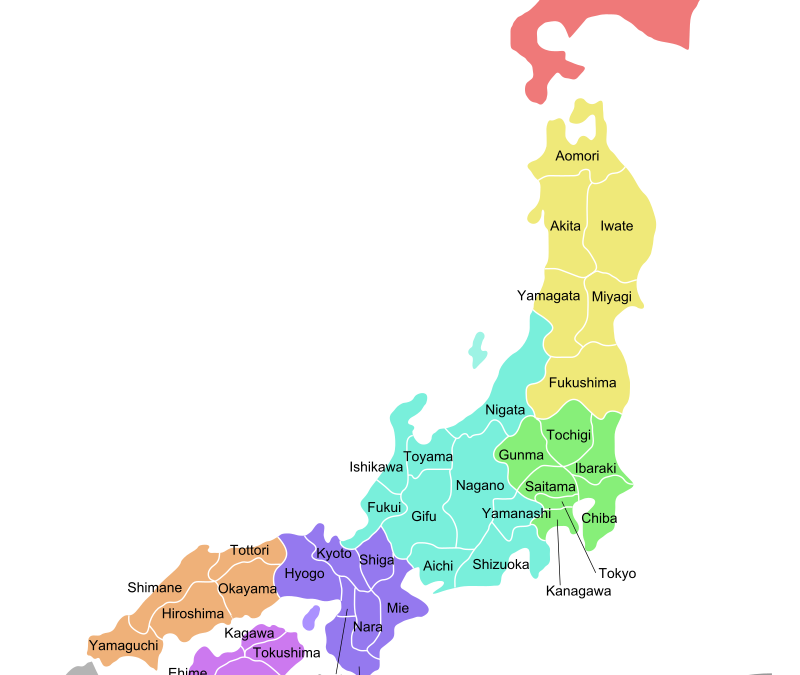
The Odawara chochin (小田原提灯, “Odawara lantern”) is a washi-and-bamboo lantern built around one unusual idea: it collapses flat. Where most Japanese paper lanterns are fixed forms, the Odawara type compresses down into a thin disk and springs back into a cylinder when you need light. The design is attributed to an Edo-period craftsman remembered by the name Jinbei, working in the castle town of Odawara, in present-day Kanagawa Prefecture.
It is, in the most literal sense, a travel object. Odawara sat on the Tōkaidō — the great coastal highway between Edo (now Tokyo) and Kyoto — and was the last major post station before the Hakone checkpoint and the steep mountain barrier beyond it. A lantern that folded into a traveler’s pack, took up almost no room, and resisted the damp of the mountain passes was a practical answer to a practical problem. That is the design language the modern object still carries.
This guide is written for an international reader deciding whether an Odawara chochin is worth importing — what it actually is, how it differs from the better-known egg-shaped Gifu lanterns, who it suits, and the realistic paths to buying one from outside Japan. A note up front: the source data captured for this article was thin. Only the Amazon JP listing reference (ASIN B0GG9ZCS6C) was available; no live pricing or product photography was in the snapshot, so price and stock figures here should be verified at the listing before you buy.
🔄 Last updated:
⏱️ Read time: ~10 min
![Odawara Chochin: Collapsible Washi Paper Lantern from Kanagawa [2026]](https://m.media-amazon.com/images/I/31a7Cje6QPL._SL500_.jpg)
- Who this is for — and who should skip it
- Product overview (from published specs)
- Price snapshot across stores
- What it does well
- Weaknesses and things to verify before buying
- Conclusion — which buyer type are you?
- Other ways to approach this purchase
- Where this comes from
- 🏆 Editor’s Pick
- ❓ Frequently Asked Questions
Who this is for — and who should skip it
- Want a Japanese paper lantern that stores flat in a drawer or suitcase
- Value the documented Tōkaidō / post-town history over pure decoration
- Prefer a plain cylindrical utility form to an ornate ceremonial shape
- Are buying a portable lantern for travel, camping ambiance, or display
- Appreciate handmade washi over bamboo ribs and accept its natural variability
- Want the rounded, painted, festival-style look of a Gifu bon-chochin
- Need a weatherproof outdoor fixture for permanent installation
- Expect to burn a real flame indoors without ventilation or care
- Need confirmed pricing and stock right now (this snapshot lacked both)
- Want a mass-produced lantern and do not value the handmade washi finish

Product overview (from published specs)
The data suggests a deliberately simple object: handmade washi paper pasted over a continuous spiral of split bamboo, with wooden rings top and bottom so the body concertinas down to a flat disk. The table below records what the listing reference indicates and flags everything that was not confirmed in the captured snapshot.
Odawara Chochin
銅製携帯用提灯提 ちょうちん 小田原提灯 折りたたみ式時代提灯 手持ち行灯
通常6~7日以内に発送します。 · Sold by AKINAI 倉庫 · ASIN B0GG9ZCS6C
Price and availability as of 2026-08-31 02:30 JST. The Amazon listing at the time of purchase is authoritative. jpmono.com earns a commission on qualifying purchases at no extra cost to you.
| Attribute | What the data indicates | Source |
|---|---|---|
| Craft | Odawara chochin — Kanagawa traditional craft | Maker direct |
| Materials | Washi paper over split-bamboo spiral ribs; wooden end rings | Maker direct |
| Form | Plain cylindrical; collapses flat into a disk | Maker direct |
| Origin | Odawara, Kanagawa Prefecture, Japan | Maker direct |
| Dimensions / weight | Unconfirmed — check manufacturer / listing | — |
| Light source | Unconfirmed — candle vs. LED insert not specified in snapshot | — |
| Listing reference | Amazon JP Global Store — ASIN B0GG9ZCS6C | Amazon JP Global Store |
| Price | Unconfirmed at time of writing — verify on the live listing | — |
Per the captured snapshot as of June 1, 2026: only the Amazon JP listing reference was available; live pricing may have shifted since the writing date, and dimensions were not recorded. Treat unconfirmed rows as prompts to check the listing, not as omissions.
📖 Glossary — key terms
- chochin (提灯) — a collapsible Japanese lantern of paper stretched over a bamboo or wire frame.
- washi (和紙) — traditional Japanese paper made from long plant fibers (kozo / mulberry and others); strong and translucent.
- bon-chochin (盆提灯) — the rounded, often painted lantern associated with the Obon festival; the Gifu type is the famous example.
- Tōkaidō (東海道) — the Edo-period coastal highway linking Edo (Tokyo) and Kyoto, lined with 53 post stations.
- sekisho (関所) — a checkpoint or barrier station; the Hakone sekisho controlled movement along the Tōkaidō.
- shukuba / -juku (宿場) — a post town providing lodging and supplies to travelers on the highway.

Price snapshot across stores
Order of usefulness for an overseas buyer: Amazon US first for fastest local delivery on comparable goods, then the Amazon JP Global Store for this specific sourced item, then maker-direct and proxy routes. No live price was captured for the JP listing, so the JPY/USD cells read “verify on listing” rather than a fabricated number.
| Store | Item / Variant | Price (JPY + USD est.) | Notes |
|---|---|---|---|
| 🇺🇸 Amazon.com (US) | Browse Japanese paper lanterns & chochin | varies (USD) | Best if you are shopping from the US — Prime shipping, USD pricing, no international customs. Amazon US carries washi paper lanterns from various makers; the exact Odawara piece in this guide ships from Japan (next row). |
| 🇯🇵 Amazon JP Global Store | Odawara chochin (ASIN B0GG9ZCS6C) | Verify on listing (no price in snapshot) | The sourced listing for this specific item. Ships internationally from Japan to most major destinations. |
| Maker direct | Odawara workshop lanterns | Unconfirmed — check workshop site | A handful of Odawara workshops still produce these; direct purchase may not ship overseas. Email to confirm. |
| Proxy services (Buyee / Tenso) | Forwarding from JP-only sellers | Item price + forwarding fee | Use when a seller ships only within Japan. Adds a service fee and a second shipping leg. |
Prices in USD are approximate and depend on the current exchange rate (¥150/USD baseline as of mid-2026). The JPY price is authoritative for the specific listed item. Prices and stock fluctuate — confirm at the affiliate link before purchasing.
What it does well
The defining feature — it concertinas into a thin disk, so it stores in a drawer or packs into a suitcase without crushing.
A designated Kanagawa traditional craft with a clear Tōkaidō / post-town origin, not a generic souvenir lantern.
Paper hand-pasted over split-bamboo ribs gives the warm, even glow that distinguishes washi from plastic diffusers.
Designed from the start for travel, it suits camp ambiance, pop-up display, and small-apartment storage.
“A lantern that folds into a disk is not a novelty — it is what a traveler crossing the Hakone barrier actually needed, four centuries before collapsible meant camping gear.”
Weaknesses and things to verify before buying
- Price and stock were not in the snapshot. The captured data lacked a live price and inventory state for ASIN B0GG9ZCS6C. Confirm both on the listing before ordering — do not assume the figures here.
- Dimensions unconfirmed. Size and folded thickness were not recorded. If you need it to fit a specific nook or pack, check the listing’s measurements first.
- Light source unclear. Whether it is sold for a real candle, a battery LED, or no light element at all was not specified. Paper and open flame are a fire risk — an LED insert is the safer indoor choice; verify what is included.
- Not weatherproof. Washi and bamboo are not built for permanent outdoor exposure. Rain, sustained humidity, and UV will degrade the paper. Treat it as an indoor or sheltered object.
- Handmade variation. Color, paper texture, and any lettering vary piece to piece. That is intrinsic to the craft, not a defect — but it means your unit may not match a catalog photo exactly.
- Repair and replacement parts. Torn washi is repairable by specialists but not casually; replacement paper for this specific form is unlikely to be available outside Japan.
Conclusion — which buyer type are you?
Seek a maker-direct or workshop-signed piece; ask about lettering and provenance. The Amazon listing is a starting point, not the ceiling.
The Amazon JP Global Store listing (B0GG9ZCS6C) is the path of least friction — international shipping handled, one checkout.
Browse comparable washi lanterns on Amazon US to set a price expectation, then decide if the Odawara heritage premium is worth it.
If you want a weatherproof outdoor fixture or the round festival look, this plain folding utility lantern is the wrong object.
Other ways to approach this purchase
Cross-border listings re-price with the exchange rate. If the yen weakens, the USD-equivalent cost drops without any seller discount.
A handful of Odawara workshops still make these. Direct contact may get you a specific motif, though overseas shipping is not guaranteed.
If buying through Amazon JP Global Store, stack any card or Amazon points you already hold; for JP-only sellers, a proxy may pool rewards.
If price and dimensions cannot be confirmed and you need certainty, hold off rather than ordering blind — the snapshot here was incomplete.
Where this comes from

Odawara is a coastal city in southwestern Kanagawa Prefecture, on Sagami Bay in the Kantō region. It lies at the foot of the Hakone mountains, where the Tōkaidō — the Edo period’s principal highway between Edo and Kyoto — turned inland and climbed. That geography is the whole story of the lantern: Odawara was the last well-supplied town before travelers faced the pass and the checkpoint beyond it.
The city’s importance predates the highway. Odawara was the seat of the Late Hōjō clan, who ruled much of the Kantō plain from Odawara Castle through the late 15th and 16th centuries. The castle town that grew up around their stronghold concentrated craftspeople and merchants — the kind of dense artisan base from which a specialized trade like lantern-making could emerge.
- c. 1495 — The Late Hōjō clan establishes its rule from Odawara Castle, making the town a Kantō power center.
- 1590 — Toyotomi Hideyoshi’s siege ends Late Hōjō rule; the region passes into the Tokugawa orbit.
- 1601 — The Tōkaidō is formalized with post stations; Odawara-juku becomes a key stop before Hakone.
- 1619 — The Hakone checkpoint (sekisho) is set up on the highway, tightening control of mountain passage.
- Edo period — A craftsman remembered as Jinbei devises the collapsible chochin for travelers crossing the barrier.
- Modern — The Odawara chochin is recognized as a Kanagawa traditional craft; a small number of workshops keep producing it.
The collapsible design is the local innovation. According to the traditional account, an Edo-period Odawara craftsman remembered by the name Jinbei worked out how to paste washi onto a continuous spiral of split bamboo so the body could compress flat into a disk and spring open again. A folded lantern took almost no room in a traveler’s bundle, resisted the damp better than an open frame, and could be readied in seconds at dusk — exactly the qualities a Tōkaidō traveler bound for the Hakone barrier wanted.
That difference is the cleanest way for a newcomer to place the object. The Odawara type is the workaday cousin: cylindrical, usually undecorated, engineered for the road. Production continues today in only a handful of Odawara workshops, which keeps it firmly in craft territory rather than mass manufacture — and is part of why it carries its Kanagawa traditional-craft designation.
🏆 Editor’s Pick
For a first purchase, the Amazon JP Global Store listing (ASIN B0GG9ZCS6C) is the most direct path: it is the sourced piece, it ships internationally from Japan, and it spares you the proxy-forwarding overhead. The data suggests a plain cylindrical washi-over-bamboo lantern in the original collapsible form — the closest thing to the object a Tōkaidō traveler actually carried.
- Folds flat — packs and stores where a rigid lantern cannot
- Designated Kanagawa traditional craft with documented Tōkaidō origin
- One-checkout international shipping via Amazon JP Global Store
Note: no live price was captured in the source snapshot — confirm the current figure at the listing before buying.
❓ Frequently Asked Questions
Does the Odawara chochin really fold flat?
Yes — that is its defining feature. The washi is pasted over a continuous spiral of split bamboo with wooden end rings, so the body concertinas down into a thin disk and springs back into a cylinder. The collapsible design is the local Edo-period innovation attributed to the craftsman remembered as Jinbei.
How is it different from a Gifu chochin?
The Gifu bon-chochin is the rounded, egg-shaped, often painted festival lantern made from Mino washi. The Odawara type is a plain cylindrical travel and utility lantern that folds flat — different prefecture, different maker tradition, and a different purpose. The Odawara form prioritizes portability and damp resistance over ornament.
Can I use a real candle, or only an LED?
The captured listing did not specify the intended light source. Washi paper and an open flame are a fire risk, so a battery-powered LED insert is the safer indoor choice. Confirm with the seller what, if anything, is included before assuming a candle is intended.
Does Amazon JP Global Store ship internationally?
The Amazon JP Global Store ships many household goods to most major destinations, with international shipping and any import fees shown at checkout. Availability for a specific item and destination can change, so verify the shipping line for your country on the listing (ASIN B0GG9ZCS6C) before ordering.
How do I care for the washi and bamboo?
Keep it dry, away from sustained humidity and direct sunlight, and dust gently. Washi is strong but tears if snagged; fold and unfold along its natural creases rather than forcing it. Treat it as an indoor or sheltered object.
Can I use it outdoors?
Only in a sheltered, short-term way. It is not weatherproof — rain, prolonged humidity, and UV will degrade the paper. It suits a covered porch or camp table for an evening, not permanent outdoor installation.
Is this a genuine traditional craft?
Yes. The Odawara chochin is a designated Kanagawa traditional craft with a documented origin in the Tōkaidō post town of Odawara, and production continues in a small number of local workshops. That limited workshop base is part of what keeps it in craft territory rather than mass manufacture.
jpmono.com is curated by a Japan-based editorial team (working out of Toyama in the Hokuriku region and Nara in Kansai) and is independent. We do not take payment from the makers we feature; income comes from affiliate links. We do not physically test every product — we read maker specs and source listings. Read more about our editorial standards.
🤖 This article was prepared with AI assistance and reviewed against the source listing data. Where the data was incomplete — notably live price, dimensions, and product imagery for ASIN B0GG9ZCS6C — the gaps are flagged in the text rather than filled with estimates.
Affiliate disclosure: jpmono.com may earn a commission on qualifying purchases made through links on this page, at no additional cost to you.