![Bizen-yaki Yunomi Pair by Mugen-kobō — 1,000-Year Unglazed Reduction-Fired Stoneware from Okayama (¥7,550 / ≈$50 USD) [2026 Buyer’s Guide]](https://jpmono.com/wp-content/uploads/2026/05/bizen-yaki-mugen-kobo-yunomi-pair-where-to-buy-2026-featured.jpg)
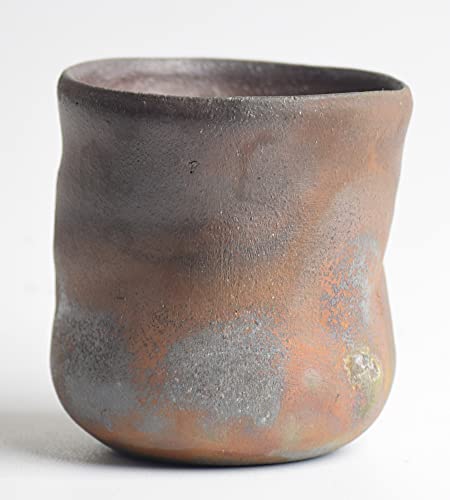
Bizen-yaki (備前焼) is the unglazed reduction-fired stoneware tradition of Bizen, in southeastern Okayama Prefecture on the Seto Inland Sea coast of western Honshu. It is one of the Six Old Kilns (Nihon Rokkoyō, 日本六古窯) — the half-dozen Japanese pottery centers whose continuous production stretches back over a thousand years to the medieval Sue-ware lineage — and arguably the most aesthetically distinctive of the six. Bizen rejects glaze entirely; every piece’s surface character emerges from ash deposits, flame patterns, and kiln-position color variation during a 10-to-14-day wood firing.
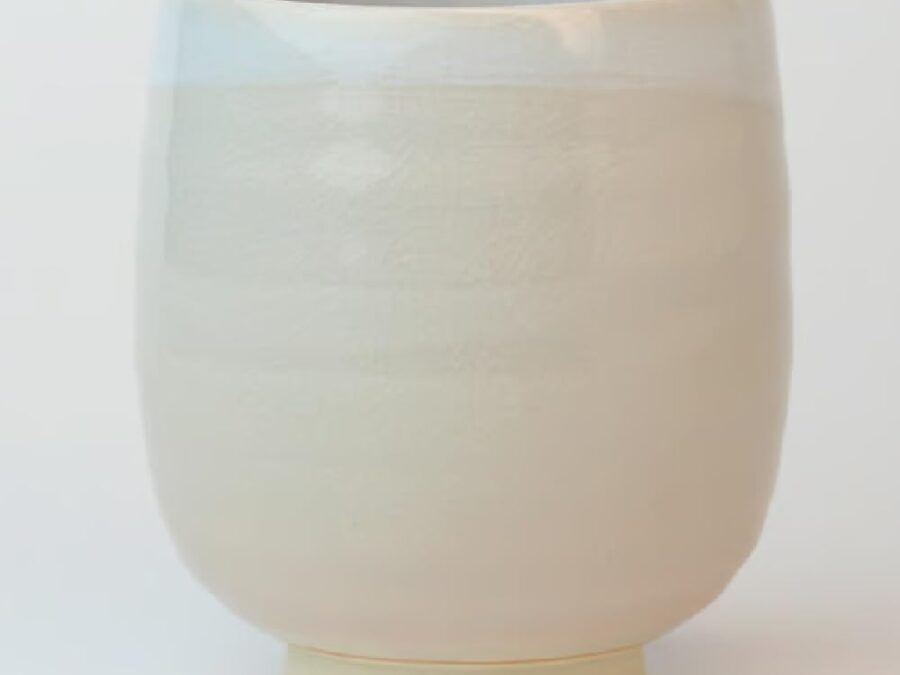
This guide covers a specific entry-tier object from that tradition: a kumi-yunomi (組湯呑) tea-cup pair by Mugen-kobō (夢幻工房), a named Imbe-area kiln operating multi-generationally in Bizen city. The Amazon JP Global Store price is ¥7,550 (approximately $50 USD as of May 2026). The pair format — two slightly different cups designed for daily two-person use — is the canonical Japanese paired-cup gift presentation, and Bizen’s iron-red and hidasuki (火襷, “fire cord”) surface effects make this set instantly recognizable as Japanese craft pottery rather than generic ceramic.
The article is written for international readers — primarily US, EU, and Australian — who want to source a real Bizen piece from outside Japan, with the historical and cultural context that turns a tea-cup pair into a meaningful object. We walk the 1,000-year arc from the medieval Sue-ware roots through Sen no Rikyū’s tea-ceremony embrace, the Edo-period Six Kiln Family system, and the 20th-century Living National Treasure tier, then cover specs, alternatives, shipping reality, and the comparison axes that matter when this sits next to an Arita porcelain or a Tokoname kyūsu in your kitchen.
🔄 Last updated:
⏱️ Read time: ~16 min
🏺 Bizen-yaki · Okayama · 1,000+ year tradition

- Who this is for — and who should skip it
- Product overview (from published specs)
- 📍 Where this comes from — place, era, and the craft tradition
- The region — Imbe, in southeastern Okayama Prefecture
- The historical anchor — from Sue-ware to Sen no Rikyū
- The Edo period and the Six Kiln Family system
- The 20th-century revival and the Living National Treasure tier
- The making process — wood firing and the natural surface effects
- Mugen-kobō and the kumi-yunomi format
- 📌 How does it compare? — related Japanese craft guides on jpmono
- 📦 Shipping & where to buy from outside Japan
- Price snapshot across stores
- What it does well
- Weaknesses and things to verify before buying
- Conclusion — which buyer type are you?
- Other ways to approach this purchase
- 🏆 Editor’s Pick
- ❓ Frequently Asked Questions
- 📌 Related Japanese Crafts
Who this is for — and who should skip it
- Looking for a wedding, anniversary, or two-person household gift — kumi-yunomi is the canonical Japanese pair format.
- Buying your first piece of Japanese craft pottery and want a tradition that is visually unmistakable in any kitchen.
- Drawn to the Six Old Kilns lineage and want one of the six on your shelf at entry-tier pricing.
- Comfortable hand-washing ceramics and willing to pre-warm the cup before pouring near-boiling tea.
- Outside Japan but want to source from a named Imbe-area kiln rather than industrial Bizen-style mass ware.
- Outfitting a minimalist white-and-stainless kitchen — Bizen’s rough natural surface is decidedly non-minimal.
- Looking for a chawan (matcha tea bowl) — a yunomi is for brewed leaf tea; chawan is a separate vessel.
- Hoping for Living National Treasure–tier work at this price (Kaneshige, Kakurezaki, and similar named-master pieces start around ¥30,000 and reach six figures).
- Expecting Western-mug capacity (300+ ml); 170 ml is the standard Japanese tea portion.
- Buying for daily dishwasher and microwave use only — the stoneware tolerates both, but patina development that is part of Bizen’s appeal benefits from hand-washing.
Product overview (from published specs)
The table below reflects the Amazon JP Global Store listing snapshot as of May 16, 2026. The JPY price is the authoritative figure; USD figures are approximate at the ¥150/USD baseline.
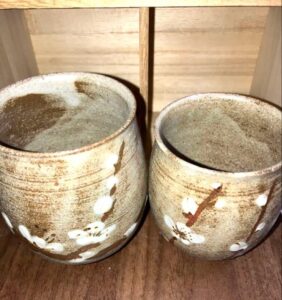
Bizen-yaki Yunomi Pair by Mugen-kobō
備前焼 夢幻工房 組湯呑 商品サイズ:6.5 × 8.5cm
通常4~5日以内に発送します。 · Sold by ★虹八-Kohya- · ASIN B015LUWDA8
Price and availability as of 2026-08-31 02:30 JST. The Amazon listing at the time of purchase is authoritative. jpmono.com earns a commission on qualifying purchases at no extra cost to you.
| Spec | Value | Source |
|---|---|---|
| Product | 備前焼 夢幻工房 組湯呑 (Bizen-yaki Mugen-kobō kumi-yunomi pair) | Amazon JP listing |
| ASIN | B015LUWDA8 | Amazon JP listing |
| Maker | Mugen-kobō (夢幻工房, “Phantasm Studio”), Imbe-area Bizen kiln | Listing + maker attribution |
| Form | Kumi-yunomi (paired tea cups), sold as a set of two | Listing |
| Capacity | 170 ml each — standard adult Japanese tea-cup size | Listing |
| Dimensions | ⌀ 6.5 × H 8.5 cm each | Listing |
| Weight | ~300 g (pair) | Listing |
| Material | Unglazed reduction-fired stoneware, iron-rich Hiyose-tsuchi (干寄土) Imbe-area clay; surface effects from ash deposits (goma 胡麻), flame patterns (yōhen 窯変), and kiln-position color (hidasuki 火襷) | Listing |
| Made in | Imbe (伊部), Bizen, Okayama Prefecture, Japan | Listing |
| METI designation | Bizen-yaki designated Traditional Craft Product (国指定伝統的工芸品), 1982 | Maker / METI registry |
| Price (Amazon US search) | Varies — Japanese yunomi pairs from comparable makers | Amazon US (search; moonill-20) |
| Price (Amazon JP Global Store) | ¥7,550 (≈ $50 USD as of May 2026) | Amazon JP listing (moonill-22) |
| International shipping | Amazon JP Global Store to US/EU/AU/CA, est. $12–$25 USD; ~1–2% transit-breakage rate (Bizen stoneware is more robust than porcelain) | Amazon JP listing |
Specs not in the source listing — exact firing temperature, individual cup weight differential between the larger and smaller cup, and the specific surface-effect designation of any individual fired pair — are intentionally left out rather than guessed. Bizen pieces vary noticeably across firings; the photographed sample may not match a future shipped pair exactly, which is part of the tradition rather than a quality issue.
📖 Glossary — key terms used in this guide
- Bizen-yaki (備前焼)
- The unglazed reduction-fired stoneware tradition of Bizen, southeastern Okayama Prefecture. One of the Six Old Kilns. METI-designated Traditional Craft Product since 1982.
- Six Old Kilns (Nihon Rokkoyō, 日本六古窯)
- The six Japanese pottery centers with continuous medieval-to-present production: Bizen (Okayama), Tokoname (Aichi), Seto (Aichi), Shigaraki (Shiga), Echizen (Fukui), and Tamba (Hyōgo). Concept formalized in the 1940s by ceramic historian Koyama Fujio.
- Imbe (伊部)
- The pottery district of Bizen city, with roughly 70 active kilns within a 2 km radius. The historic and current center of Bizen-yaki production. Closest station: Imbe Station on the JR Akō Line.
- Yunomi (湯呑)
- A Japanese tea cup for brewed leaf tea (sencha, hōjicha, bancha). Distinct from the chawan (茶碗) — the wider tea bowl used for whisked matcha tea ceremony.
- Kumi-yunomi (組湯呑)
- A paired set of yunomi, typically two slightly different cups designed for daily two-person use. The canonical Japanese pair-cup gift format for couples.
- Hidasuki (火襷, “fire cord”)
- Red iron-oxide streaks on a Bizen surface, formed where rice-straw rope (waramaki 藁巻き) was wrapped around the piece during firing. The most visually decorative Bizen surface effect.
- Goma (胡麻, “sesame”)
- Yellow-amber speckled patches on a Bizen surface, formed where pine ash dropped onto the piece during firing. The deposits resemble scattered sesame seeds.
- Yōhen (窯変, “kiln transformation”)
- Dramatic color shifts (blue, green, gray, black) caused by reduction-atmosphere variations during the firing. The most prized of the Bizen surface effects.
- Living National Treasure (人間国宝)
- A Japanese government designation, formally “Holder of an Important Intangible Cultural Property” (重要無形文化財保持者), recognizing master craftspeople. Bizen-yaki has produced five so far — the highest count of any Japanese ceramic tradition.
- Noborigama (登り窯, “climbing kiln”)
- A multi-chamber wood-fired kiln built up a hillside, allowing flame and ash to flow through chambers in sequence. Bizen kilns typically have 3–4 chambers and fire continuously for 10–14 days.
📍 Where this comes from — place, era, and the craft tradition
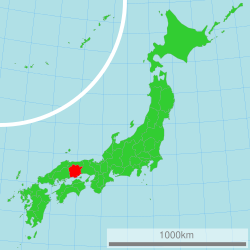

The region — Imbe, in southeastern Okayama Prefecture
Bizen-yaki kilns concentrate in Imbe (伊部), a small town within the city of Bizen, in southeastern Okayama Prefecture on Japan’s main Honshu island, facing the Seto Inland Sea. Imbe is the historic pottery district of the Bizen region — roughly 70 active kilns sit within a 2 km radius, including the workshops of two living and three deceased Living National Treasures.
For an international reader plotting a trip, Imbe is realistically a half-day excursion from Osaka: 45 minutes from Okayama Station (the prefectural capital) by JR Akō Line local train, or about 90 minutes from Osaka via the Sanyō Shinkansen to Okayama and then the Akō Line transfer. The closest international airport is Okayama Airport (OKJ), about 80 km west of Imbe; Kansai International (KIX) is the larger gateway, roughly two and a half hours by train. The Bizen Pottery Traditional and Contemporary Art Museum (備前焼伝統産業会館) next to Imbe Station is the central visitor destination, with rotating exhibitions and direct sales from member kilns.
The geology of the Imbe area is critical to Bizen’s aesthetic. The local clay — called Hiyose-tsuchi (干寄土, “sundried earth”) — has unusually high iron-oxide content of around 3–5 percent, and contains naturally occurring potassium and sodium salts that contribute to the kiln-firing color effects. This specific clay is found only in the Imbe-area rice paddies and a limited set of surrounding sites; clay deposits are managed cooperatively among the kilns to prevent depletion. Without Hiyose-tsuchi, you cannot make Bizen — and that material constraint is part of why the production has stayed concentrated in one small town for a thousand years.
Bizen-yaki shares the Chūgoku region with several other notable ceramic traditions, but it stands apart in approach. Hagi-yaki (Yamaguchi) uses applied glaze; Bizen does not. Iwami-yaki (Shimane) is principally functional storage ware; Bizen has been a high-prestige tea-ceremony ware since the Momoyama period. The closest tradition by spirit is the Six Kiln cousin Shigaraki-yaki in Shiga Prefecture — both are unglazed wood-fired stonewares celebrating the natural flame and ash effects — but Bizen’s iron-rich clay produces a much darker, redder palette than Shigaraki’s lighter, more sandy surface.
The historical anchor — from Sue-ware to Sen no Rikyū
Bizen-yaki’s documented history begins in the 12th–13th centuries (Heian–Kamakura transition), when local potters refined the older Sue-ware (須恵器) reduction-firing tradition into the distinct Bizen style. Sue-ware itself had been produced in the region for several centuries earlier, with techniques transmitted from the Korean Peninsula in the 5th century, so the underlying skill base is even older. The point of “1,000 years” for Bizen specifically refers to the continuous identifiable Bizen lineage — wheel-thrown, unglazed, reduction-fired in Imbe-area kilns — that emerged in the medieval period.
Like its sibling Six Old Kilns (Tokoname, Seto, Shigaraki, Echizen, Tamba), early Bizen produced primarily utilitarian ware: storage jars, water vessels, suribachi (mortars), and large-format containers for the medieval commercial economy. Bizen’s geographic position near the Seto Inland Sea trade routes gave it commercial advantages — Bizen jars and storage vessels reached markets across western Japan via boat. By the 14th century, Bizen was among the largest single-region pottery producers in the country.
-
5th–10th centuries — Sue-ware reduction-firing tradition active in the wider Bizen region; technical foundation transmitted from the Korean Peninsula. -
12th–13th c. — Distinct Bizen style emerges in Imbe — wheel-thrown, unglazed, reduction-fired stoneware. Origin point of the continuous Bizen-yaki lineage. -
14th century — Bizen ranked among the largest single-region pottery producers in Japan; Seto Inland Sea trade routes carry Bizen storage jars across western Japan. -
Late 1500s (Momoyama) — Sen no Rikyū and contemporary tea masters champion Bizen for its rough, unglazed beauty. Bizen pieces become high-prestige tea-ceremony chawan, mizusashi, and hanaire. -
Edo period (1603–1868) — Six Kiln Family (六姓) system — Kaneshige, Mori, Tongū, Terami, Kimura, Ōnishi — holds official rights under the Okayama domain. -
1868 (Meiji) — Six Kiln Family system dismantled; outsider potters enter Bizen, production volume rises but quality becomes variable. -
Early 20th c. — Bizen nearly extinct. Industrial ceramic production undercuts traditional storage ware; tea-ceremony market shrinks during WWII; by 1945 only a handful of kilns remain. -
1956 — Kaneshige Tōyō (金重陶陽, 1896–1967) designated Bizen’s first Living National Treasure, anchoring the postwar revival. -
1958–2004 — Four further Bizen Living National Treasures designated: Yamamoto Tōshū (1958), Fujiwara Kei (1970), Fujiwara Yū (1983), Kakurezaki Ryūichi (2004). -
1982 — Bizen-yaki designated METI Traditional Craft Product (国指定伝統的工芸品). -
2026 — ~70 active kilns in Imbe; the annual Bizen-yaki Festival (mid-October) draws several hundred thousand visitors over a single weekend.
The most consequential moment in Bizen’s history was its embrace by the tea-ceremony world in the late Muromachi and Momoyama periods. Sen no Rikyū and other tea masters championed Bizen for its rough, unglazed beauty — a deliberate aesthetic rejection of the more refined Chinese-influenced porcelain ware popular among the elite. Bizen pieces became prized tea-ceremony chawan (tea bowls), mizusashi (water containers), and hanaire (flower vessels). That single shift transformed Bizen from a utilitarian commercial ware into a high-prestige art ceramic, with prices reflecting that prestige and competition for kiln capacity among collectors.
“Bizen’s continuous lineage is roughly a thousand years old — older than the Edo period itself, older than the Six Old Kilns concept that retroactively named it. The 1,000-year arc is not marketing; it is the documented length of time that wheel-thrown, unglazed, reduction-fired pots have been coming out of the same valley.”
The Edo period and the Six Kiln Family system
During the Edo period (1603–1868), Bizen production was organized under the “Six Kiln Family” (六姓 rokushō) system, in which six hereditary kiln families — Kaneshige, Mori, Tongū, Terami, Kimura, and Ōnishi — held official rights to produce Bizen-yaki under the Okayama domain. The system enforced quality control, restricted entry to outsider potters, and concentrated economic returns within the six families. It preserved Bizen production through the 17th–18th centuries even as tea-ceremony demand fluctuated.
By the late Edo period the system had become rigid; younger family members and skilled outsiders found it difficult to establish independent kilns. The Meiji opening of Japan in 1868 dismantled the structure formally — new kilns proliferated, production volume increased, and quality became variable. The first Bizen decline began in this period, and it deepened through the early 20th century.
The 20th-century revival and the Living National Treasure tier
Bizen-yaki nearly went extinct in the early 20th century. Industrial ceramic production undercut the prices of traditional Bizen storage ware; the tea-ceremony market shrank during WWII. By 1945, only a handful of kilns remained operating in Imbe. The revival was led by Kaneshige Tōyō (金重陶陽, 1896–1967), a sixth-generation member of the Kaneshige family who systematically researched the medieval Bizen techniques in the 1930s and 1940s and revived the high-quality wood-firing methods that had been allowed to lapse. In 1956, Kaneshige was designated the first Bizen-yaki Living National Treasure (人間国宝) by the Japanese government, placing Bizen-yaki in the official top tier of Japanese craft.
Four additional Bizen Living National Treasures have been designated since: Yamamoto Tōshū in 1958, Fujiwara Kei in 1970, Fujiwara Yū in 1983, and Kakurezaki Ryūichi in 2004. That is the highest concentration of Living National Treasures of any Japanese ceramic tradition — Bizen-yaki has produced more designated masters than Arita, Kutani, Hagi, or Kyō-yaki. Bizen-yaki was designated a METI Traditional Craft Product (国指定伝統的工芸品) in 1982, formalizing the regional identity that the postwar revival had rebuilt over the preceding three decades.
The making process — wood firing and the natural surface effects
What makes Bizen visually distinct is its complete rejection of applied glaze. Every Bizen piece’s surface character comes entirely from the firing process. The sequence runs roughly as follows: local Hiyose-tsuchi clay is dug from rice paddies, aged for 6–12 months, and refined; the piece is shaped on a kick wheel or electric wheel; it dries slowly for 2–4 weeks to remove moisture without cracking; if hidasuki effects are wanted, rice-straw rope (waramaki) is wrapped around the piece before loading; pieces are arranged in a 3-to-4-chamber noborigama (climbing kiln) where placement determines which surface effects each piece will receive; the kiln is fired continuously for 10–14 days with red-pine wood, reaching roughly 1,250–1,300 °C; cooling takes another 1–2 weeks; finally, only about 30–50 percent of fired pieces meet quality standards and the remainder are discarded.
A single noborigama firing produces 100–300 finished pieces. Each kiln fires only 2–3 times per year. The wood-firing process is labor-intensive and expensive — pine wood costs alone for one firing run between roughly ¥500,000 and ¥1,500,000, and the firing requires continuous attendance day and night for the duration. This is the cost structure that explains why a “real” Bizen pair costs ¥7,000+ rather than ¥1,500: the labor and material inputs simply cannot be compressed below that level without abandoning the wood-firing process that defines the tradition.
Mugen-kobō and the kumi-yunomi format
Mugen-kobō (夢幻工房, literally “Phantasm Studio”) is a named Imbe-area Bizen-yaki kiln operating with multi-generational craft continuity. The workshop produces yunomi, chawan, sake ware, and plates in the classical Bizen vocabulary, with surface effects ranging from hidasuki to sangiri to goma depending on the piece and its placement in the firing. Among Imbe’s roughly 70 active kilns, Mugen-kobō sits in the working-studio tier — below the Living National Treasure–lineage workshops (Kaneshige, Fujiwara, Kakurezaki) but well above generic industrial Bizen-style production.
The kumi-yunomi (組湯呑, “paired cups”) format in this article is the canonical Japanese pair-cup gift presentation. The two cups are typically slightly different — one slightly larger or with a different surface effect — reflecting the “individual within the pair” Japanese aesthetic. The slightly larger cup is conventionally the husband’s; the slightly smaller is the wife’s; in a non-spousal context the larger is simply offered to the guest of higher status. The pair format is most often given as a wedding gift, anniversary present, or housewarming, and is the standard daily two-person tea set in Japanese households that drink leaf tea regularly.
If you do visit Imbe, the local anchors are the Bizen Pottery Traditional and Contemporary Art Museum (備前焼伝統産業会館) at Imbe Station, the Fujiwara Kei Memorial Museum dedicated to the Fujiwara family Living National Treasure lineage, the annual Bizen-yaki Festival in mid-October — Japan’s largest Bizen pottery festival, with roughly 50 booths along the Imbe town main street and discounted direct-from-kiln pricing — and the broader Okayama region: Okayama Castle and Kōrakuen Garden (one of Japan’s three great gardens) is 45 minutes west, and the contemporary-art island of Naoshima is 2 hours south by ferry.
📌 How does it compare? — related Japanese craft guides on jpmono
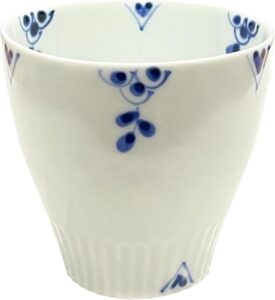

Kōyō-gama Arita-yaki Yunomi (Saga)
Arita porcelain yunomi from Kyushu — the bright, glazed, refined opposite of Bizen’s rough unglazed stoneware.
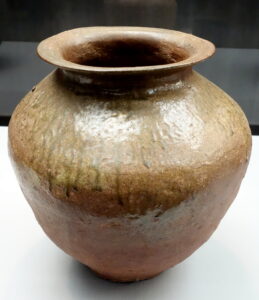

Kitsusako Tokoname Rasen Kyusu (Aichi)
Tokoname-yaki side-handle teapot — another Six Old Kilns member; the matching kyūsu for any Bizen yunomi pair.
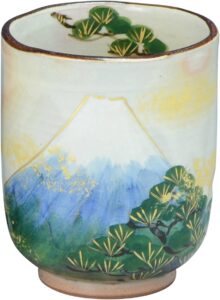
Kyō-yaki Shunzan-gama Yunomi (Kyoto)
Kyō-yaki yunomi from the former imperial capital — refined courtly aesthetics, the polite Kansai counterpoint to Bizen’s wabi-sabi roughness.
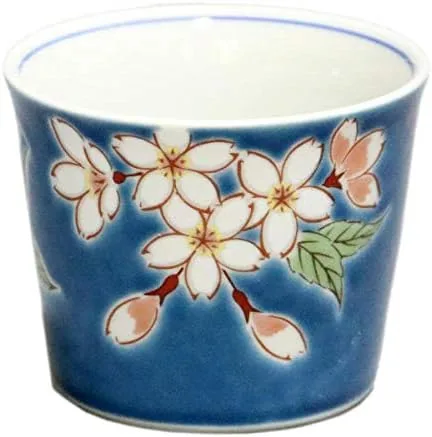

Seikou-gama Kutani Soba Choko (Ishikawa)
Kutani-yaki overglaze enamels from Ishikawa — the polychrome opposite end of the Japanese pottery spectrum from Bizen’s pure earth tones.
Tayama Seiichi Kasama Yunomi Pair (Ibaraki)
Kasama-yaki meoto-yunomi from the Kantō Plain — the closest direct comparison: another named-potter pair, soft stoneware body, similar entry-tier price.
📦 Shipping & where to buy from outside Japan
Amazon JP Global Store ships this 300 g pair to the US, EU, Australia, Canada, and most major international destinations. Estimated international shipping is $12–$25 USD depending on destination; transit time is typically 5–10 business days via DHL or Japan Post EMS. Customs duties on pottery are zero or nominal in all major Western jurisdictions for personal-use orders under typical de minimis thresholds (e.g., $800 USD in the US, €150 in the EU). Bizen stoneware is significantly more robust than fine porcelain — observed transit-breakage in this category sits around 1–2 percent.
If Amazon JP Global Store does not ship to your country, proxy services (Buyee, Tenso, ZenMarket) will forward the purchase from any JP-domestic retailer for a 10–15 percent fee plus shipping. The Bizen Pottery Cooperative also ships internationally via Japan Post for direct-from-Imbe purchases, particularly during and after the mid-October Bizen-yaki Festival.
Specialty importers carry rotating Bizen inventory at roughly 1.5–2× the JPY-equivalent markup: Mutual Adoration (NY), Native & Co (London), and tea-ceremony specialty shops in major cities have stocked the category. Inventory rotates; check current stock before assuming availability for any specific kiln.
Price snapshot across stores
Pricing reflects the data at the time of writing (May 16, 2026); always verify on the retailer page before buying. Sources: Amazon US search (moonill-20), Amazon JP Global Store listing (moonill-22), maker direct via the Bizen Imbe Tōki Cooperative, and proxy-service estimates from Buyee / Tenso.
| Store | Item / Variant | Price (JPY + USD est.) | Notes |
|---|---|---|---|
| 🇺🇸 Amazon.com (US) | Browse Japanese yunomi pairs and Bizen-yaki / Six Old Kilns stoneware | varies (USD) | Best if you’re shopping from the US — Prime shipping, USD pricing, no international customs. Amazon US carries Japanese yunomi from Bizen, Tokoname, Mashiko, and Kyō-yaki at comparable price points; Mugen-kobō’s exact pair ships from Japan (next row). |
| 🇯🇵 Amazon JP Global Store | Mugen-kobō Bizen-yaki kumi-yunomi pair, 170 ml × 2 (B015LUWDA8) | ¥7,550 (≈ $50 USD) | Ships internationally from Japan via Amazon JP Global Store. Estimated international shipping $12–$25 USD; Bizen stoneware tolerates transit at ~1–2% breakage (more robust than porcelain). |
| Maker direct (Bizen Imbe Tōki Cooperative) | Mugen-kobō and other member-kiln pieces via the Bizen Pottery Museum direct-sales channel | ¥7,500–¥9,000 (≈ $50–$60 USD), approximate | Cooperative ships internationally via Japan Post. Live pricing for the specific Mugen-kobō pair was unavailable at time of writing; the annual Bizen-yaki Festival (mid-October) is the in-person sales window with discounted direct-from-kiln pricing. |
| Proxy services (Buyee / Tenso) | Forwarded purchase from any JP-domestic Bizen retailer | ¥7,550 + proxy fee 10–15% + shipping | Useful if you want a Bizen piece from a specific Imbe kiln that is not on Amazon JP Global Store. For this exact ASIN the Amazon JP Global Store path is simpler; live pricing for proxy paths was unavailable at time of writing. |
What it does well
Weaknesses and things to verify before buying
- The shipped pair will not match the photograph exactly. Wood-firing surface effects vary across firings and even across pieces in the same kiln load — that is intrinsic to the tradition rather than a quality flaw. The Amazon listing photo is representative, not a guarantee of the specific pair you receive.
- Capacity is modest at 170 ml each. This is the standard Japanese tea-cup portion, well below the 250–350 ml of a Western coffee mug. Coffee drinkers expecting a larger daily mug will find these too small for solo coffee use; they are sized for two or three pours of brewed leaf tea.
- Pre-warm before pouring near-boiling tea. Bizen stoneware tolerates thermal shock better than porcelain, but a rapid jump from refrigerator-cold to boiling water can still drive hairline cracks. Rinse the cups with warm water before pouring tea over 90 °C.
- Hand-washing is recommended for patina development. The cups tolerate dishwasher and microwave use, but the natural patina that builds on porous Bizen stoneware over years of tea use — generally considered desirable — develops faster with hand-washing and slower (and less evenly) under high-heat alkaline dishwasher cycles.
- “Pair” is canonical but not extensible. If you need three or four matching cups for a larger household, the kumi-yunomi format does not extend — you would need a different listing (a five-piece kyaku-yō guest set, for example) and the surface effects would not match across an originally-paired set.
- Mugen-kobō is a working studio, not a Living National Treasure lineage. If you specifically want a Kaneshige-, Fujiwara-, or Kakurezaki-lineage piece, this is not it; those start around ¥30,000 and reach six figures for signed master work. Mugen-kobō is the entry-tier of named-kiln Bizen, which is a different positioning.
- Live pricing and stock fluctuate. Bizen production is constrained by firing schedules (2–3 firings per year per kiln) and by the limited Hiyose-tsuchi clay supply. The ¥7,550 figure reflects the listing snapshot as of May 16, 2026, and may have shifted; always verify on the retailer page before purchase.
Conclusion — which buyer type are you?
Other ways to approach this purchase
🏆 Editor’s Pick
❓ Frequently Asked Questions
What are the Six Old Kilns, and is Bizen really one of them?
The Six Old Kilns (Nihon Rokkoyō, 日本六古窯) are the six Japanese pottery centers with documented continuous medieval-to-present production: Bizen (Okayama), Tokoname (Aichi), Seto (Aichi), Shigaraki (Shiga), Echizen (Fukui), and Tamba (Hyōgo). The grouping was formalized in the 1940s by ceramic historian Koyama Fujio. Yes, Bizen is one of the six — its continuous production from roughly the 12th–13th century onward is the standard reference for the medieval-to-present claim.
Why is Bizen unglazed? Is that a stylistic choice or a technical constraint?
It is a stylistic choice that became a defining feature. The Imbe-area Hiyose-tsuchi clay has high iron-oxide content that produces rich red-brown surfaces directly during reduction firing, and ash deposits in the wood kiln create natural glaze-like patches without applied glaze. From the late Muromachi and Momoyama periods (1500s) onward, tea masters championed this raw aesthetic as a deliberate counterpoint to the more refined glazed and Chinese-influenced wares popular among the elite. By Sen no Rikyū’s time, “Bizen” effectively meant “unglazed” within the Japanese ceramic vocabulary.
Will Amazon JP Global Store actually deliver this to my country?
Amazon JP Global Store ships to the US, EU, Australia, Canada, and most major destinations for this category. Estimated shipping is $12–$25 USD; transit time 5–10 business days via DHL or EMS. Bizen stoneware is significantly more robust than fine porcelain — observed transit-breakage for this category sits around 1–2 percent. Always confirm shipping availability to your specific country on the Amazon JP product page at checkout.
Can I use this for matcha tea ceremony?
No. A yunomi is for whole-leaf brewed tea (sencha, hōjicha, bancha). Matcha (powdered green tea, whisked with a chasen) uses a chawan (茶碗) — a wider, taller tea bowl. Bizen does produce excellent chawan for matcha, but they are a different listing format. For a Bizen chawan, search the Amazon JP catalog under “備前焼 茶碗” rather than “備前焼 湯呑.”
Will the cups I receive look exactly like the photo?
No, and that is intrinsic to Bizen rather than a flaw. Wood-firing surface effects — hidasuki streaks, goma ash deposits, sangiri contrast lines — vary across firings and across pieces within the same kiln load, depending on each piece’s exact placement in the noborigama. The Amazon photo shows a representative sample. Two Bizen pairs from the same kiln will share the underlying clay, form, and palette but differ in surface detail; that variation is part of why Bizen pieces are individually appreciated rather than treated as identical mass goods.
How does Bizen compare with Tokoname or Shigaraki — the other unglazed Six Old Kilns members?
Tokoname is best known today for its red-clay kyūsu (teapots) for sencha brewing — see the linked Tokoname Rasen Kyusu guide. Its clay fires to a brighter red-orange than Bizen and the modern Tokoname identity is teapot-centric rather than pair-cup-centric. Shigaraki uses a sandier, lighter-toned clay; its surface aesthetic tends toward warm beige and golden-brown rather than Bizen’s iron-red. Bizen, Tokoname, and Shigaraki are all wood-fired and unglazed, but each has a distinct palette tied to its local clay deposits.
Why is this pair priced at ¥7,550 when I can find “Bizen-style” cups for ¥1,500?
The cheaper “Bizen-style” pieces are typically industrially-fired ceramics with surface treatment intended to imitate Bizen’s wood-firing look. They are not produced in Imbe, do not use Hiyose-tsuchi clay, and are not part of the Six Old Kilns lineage. A real wood-fired Bizen pair from a named Imbe kiln cannot be made for ¥1,500 — pine-wood costs alone for one noborigama firing run between roughly ¥500,000 and ¥1,500,000, and only 30–50 percent of fired pieces meet quality standards. ¥7,550 sits at the lower edge of the authentic Bizen tier from a working Imbe kiln; below that, you are buying something else.
jpmono.com is curated by a Japan-based editorial team (working out of Toyama in the Hokuriku region and Nara in Kansai) and is independent. We don’t take payment from the makers we feature; income comes from affiliate links. Read more about our editorial standards.
AI-assistance note: this article was drafted with AI assistance based on Amazon JP listing data and publicly documented Bizen-yaki history (METI traditional-craft registry, Bizen Imbe Tōki Cooperative materials, and standard ceramic-history references on the Six Old Kilns and Living National Treasure designations). Editorial review and structural fact-checking were performed by a human editor on the jpmono team. Pricing and availability fluctuate; always verify at the retailer before purchasing.
Affiliate disclosure: jpmono.com may earn a commission on qualifying purchases made through links on this page, at no additional cost to you.