![Takamatsu Hariko Hoko-san Papier-Mache Doll: Sanuki Talisman Folk Art [2026]](https://jpmono.com/wp-content/uploads/2026/06/takamatsu-hariko-hokosan-papier-mache-doll-where-to-buy-2026-featured.jpg)
Takamatsu Hariko (高松張子, “Takamatsu papier-mache”) is the folk-toy tradition of Takamatsu, the old castle town that served as the Matsudaira clan’s seat in Sanuki — the historical province that is today Kagawa Prefecture, on the island of Shikoku. Its best-known piece is the Hoko-san (奉公さん, “the servant girl”), a small seated doll in a red robe, built up by hand from layered washi paper pressed over a wooden mold and then painted. It is not a decorative novelty. It began life as a protective charm.
What makes Hoko-san notable to an international reader is the legend bound into its shape. The doll is said to portray a faithful young servant named Oyo, who — as the story is traditionally told — took on the fatal illness of the child she cared for and died in her mistress’s place. Dolls in her likeness were afterward made and given to children as talismans to ward off sickness. That devotional origin, rather than any technical flourish, is what separates a Takamatsu Hariko doll from a generic souvenir, and it is why the object still circulates in Kagawa today as a quiet, hand-formed folk piece distinct from the prefecture’s better-traveled fans and thread balls.
This guide is written for collectors of Japanese folk toys (kyodo-gangu), gift-buyers looking for a meaningful charm rather than a mass-produced keepsake, and readers who want to understand the Sanuki castle-town culture that produced it. We cover what the object is, where it comes from, how to buy it from outside Japan, and — honestly — the limits of the data available on any single listing, because workshops are few and output is made in small hand-formed batches rather than at factory volume.
🔄 Updated:
⏱️ Read time: about 11 minutes

- Who this is for — and who should skip it
- Product overview (from published specs)
- 📦 Shipping & where to buy from outside Japan
- Where this comes from — place, era, and the craft tradition
- What it does well
- Weaknesses and things to verify before buying
- Conclusion — which buyer type are you?
- Other ways to approach this purchase
- 🏆 Editor’s Pick
- ❓ Frequently Asked Questions
Who this is for — and who should skip it
- Collect Japanese folk toys (kyodo-gangu) and want a piece with a documented regional legend.
- Are looking for a protective-charm gift for a child, a new parent, or someone recovering from illness.
- Value hand-formed objects over factory-finished uniformity, and accept the small irregularities that come with paper craft.
- Want a Kagawa craft that is quieter and less common abroad than Marugame fans or Sanuki temari.
- Are building a shelf of engimono (縁起物, “auspicious objects”) and want a Shikoku entry.
- Want a precisely repeatable, identical product — each doll is hand-painted and varies.
- Need a durable toy for active handling; papier-mache is light and fragile.
- Expect guaranteed stock and fast shipping; workshops are small and batches are limited.
- Are price-sensitive about international shipping on a small, low-cost item.
- Prefer functional tableware or tools rather than a symbolic folk object.
Product overview (from published specs)
The data available for this specific listing is thin. The fetched search snapshot returned no live price or detailed attribute table at the time of writing, so the specifications below describe the Takamatsu Hariko Hoko-san tradition as documented, not a guaranteed per-unit spec sheet. Treat dimensions and finish as typical rather than exact, and confirm against the live listing before purchase.
Takamatsu Hariko Hoko-san Papier-Mache Doll
高松張子 奉公さん 郷土玩具 約21cm 大型 インテリア 置物 工芸品
通常7~8日以内に発送します。 · Sold by ちはやshop · ASIN B0H2ZDWJZF
Price and availability as of 2026-08-31 02:30 JST. The Amazon listing at the time of purchase is authoritative. jpmono.com earns a commission on qualifying purchases at no extra cost to you.
| Attribute | Detail (as documented for the tradition) |
|---|---|
| Object | Hoko-san (奉公さん) seated girl talisman doll |
| Craft tradition | Takamatsu Hariko (高松張子) — papier-mache folk toy |
| Material | Layered washi paper over a wooden mold, hand-painted |
| Finish | Traditionally a red robe; painted facial features (varies by hand) |
| Origin | Takamatsu, Kagawa Prefecture, Shikoku (former Sanuki province) |
| Use | Protective charm against childhood illness; engimono / gift |
| Item ID (Amazon) | B0H2ZDWJZF |
| Size / weight | Unconfirmed — check the live listing |
| Price | Unconfirmed at time of writing — verify on Amazon JP / maker |
Sources: Amazon US search (primary, moonill-20) + Amazon JP Global Store (secondary, moonill-22, sourced listing) + maker direct. Where a value could not be verified from the fetched data, it is marked “Unconfirmed.”
📖 Glossary — key terms
- Hariko (張子) — papier-mache; layered washi paper pasted over a mold, dried, removed, and painted.
- Hoko-san (奉公さん) — literally “the one in service”; the seated servant-girl talisman doll of Takamatsu.
- Washi (和紙) — traditional Japanese paper, strong and fibrous, used in layers for the doll’s body.
- Sanuki (讃岐) — the historical province corresponding to modern Kagawa Prefecture.
- Kyodo-gangu (郷土玩具) — regional folk toys, often tied to local legend and ritual.
- Engimono (縁起物) — an auspicious object kept or given to invite good fortune or ward off misfortune.
- Matsudaira (松平) — the clan that ruled the Takamatsu domain from 1642; a branch of the Mito Tokugawa.
Related Kagawa and Shikoku crafts, plus folk pieces from elsewhere in Japan covered on jpmono.
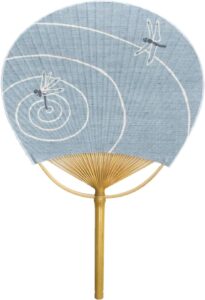 Marugame Uchiwa fan (Kagawa)
 Sanuki Kinma lacquer (Kagawa)
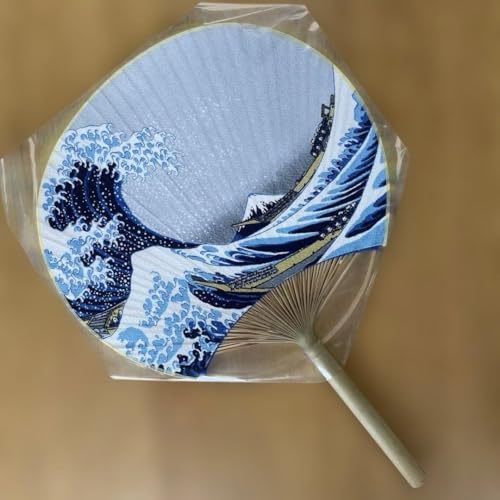 Boshu Uchiwa fan
Iyo Sudare (Ehime)
Awa Aizome (Tokushima)
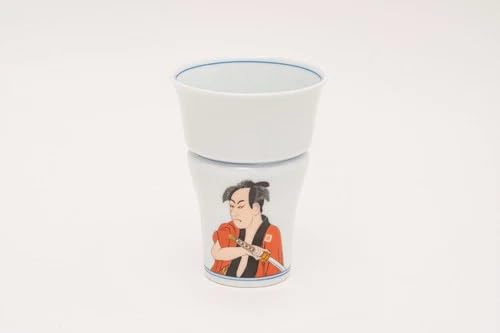 Otani-yaki (Tokushima)
 Nagasaki Poppen glass
 Suruga bamboo wind chime
📦 Shipping & where to buy from outside Japan
Because this is a small, low-cost folk object made in limited hand-formed batches, the practical buying question is less about price and more about availability and shipping economics. The specific item is sourced from an Amazon JP listing; the Amazon JP Global Store ships many household and craft goods internationally to most major destinations, though stock on small-workshop items can lapse.
International shipping on a single light item typically runs in the $15–$40 range to the US and EU, and more to other regions — which can exceed the cost of the doll itself. Buyers outside Japan often consolidate it with other purchases, or use a proxy service (Buyee / Tenso) to forward a domestic-only listing. Customs duties are generally negligible for an item of this value, but always check your local import threshold.
“Hoko-san was never meant to be admired from a distance — it was meant to be placed beside a sick child, a paper stand-in for a girl who gave her life so a child could keep theirs.”
| Store | Item / variant | Price (JPY + USD est.) | Notes |
|---|---|---|---|
| 🇺🇸 Amazon.com (US) | Browse Japanese folk dolls & papier-mache toys | varies (USD) | Best if you’re shopping from the US — Prime shipping, USD pricing, no international customs. Amazon US carries assorted Japanese folk dolls and daruma; this exact Takamatsu Hariko piece is sourced from Japan (next row). |
| 🇯🇵 Amazon JP Global Store | Hoko-san seated doll (ASIN B0H2ZDWJZF) | Price unconfirmed at time of writing — verify on listing | Ships internationally from Japan. This is the sourced listing for the specific item. |
| Maker direct | Takamatsu Hariko workshop pieces | Varies; often domestic-only | Small workshops; may not ship abroad directly. Confirm producer and stock before ordering. |
| Proxy services (Buyee / Tenso) | Forwarding for domestic-only listings | Item price + service fee + forwarding | Useful when the doll is sold only on a Japan-domestic shop. Adds handling cost. |
USD figures are approximate (¥150/USD baseline as of mid-2026). JPY is the authoritative price. Prices and stock fluctuate; verify at the retailer via the affiliate link before purchasing.
Where this comes from — place, era, and the craft tradition

Takamatsu sits on the northern coast of Shikoku, the smallest of Japan’s four main islands, facing the Seto Inland Sea. Kagawa Prefecture — historical Sanuki province — is the smallest prefecture in Japan by area, a mild, low-rainfall plain hemmed by the sea on one side and rounded hills on the other. The city grew as a port and a castle town, a hinge between Honshu and Shikoku, and that role as a crossing-point shaped its merchant and artisan economy long before the railways and the great Seto bridges arrived.
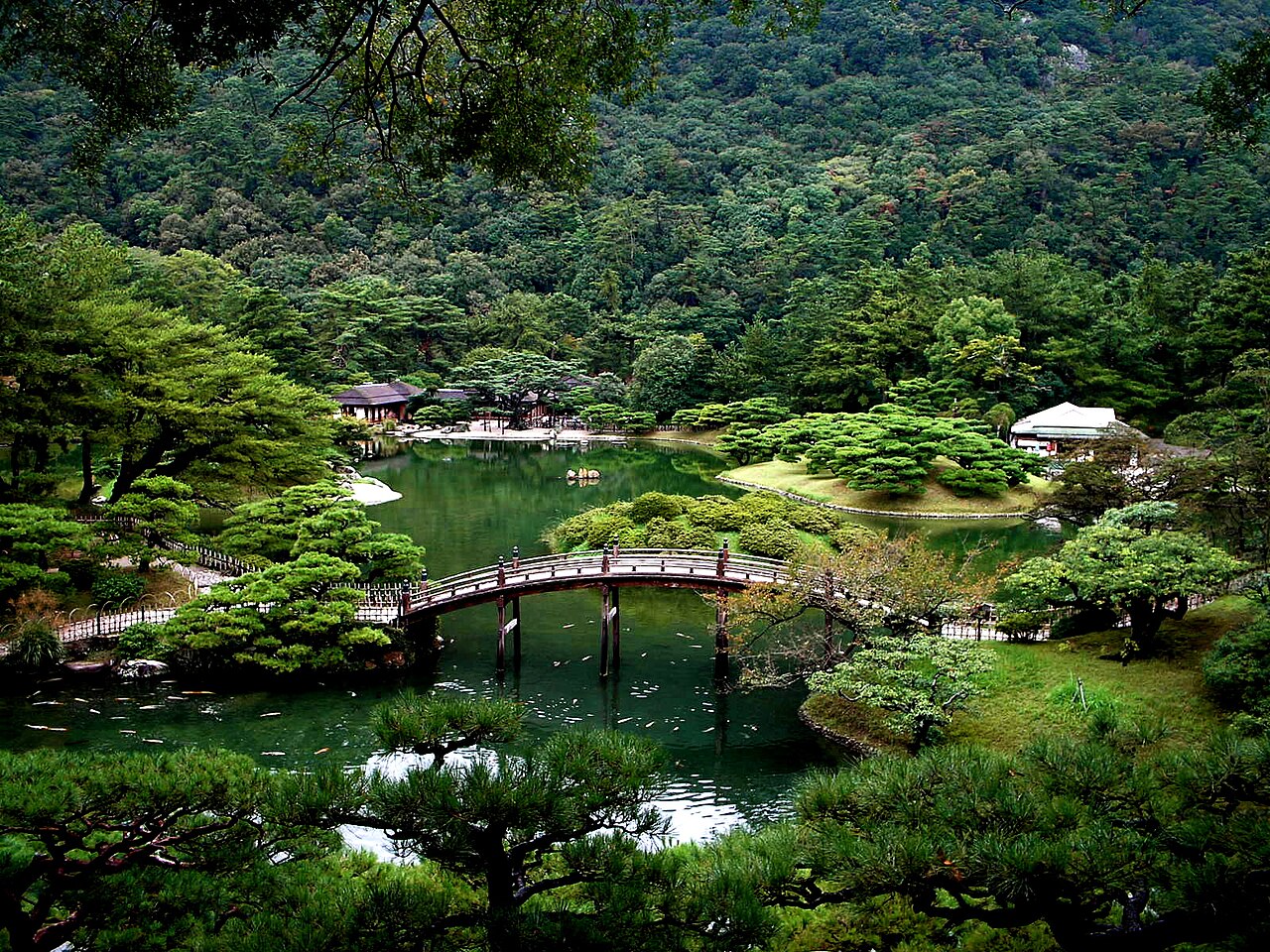
The historical anchor is the domain itself. From 1642 Takamatsu was ruled by the Matsudaira clan — a branch of the Mito Tokugawa, one of the senior cadet houses of the ruling family — and a domain capital governed by so close a Tokugawa relative drew the kind of settled, patronage-fed artisan culture that produces refined folk objects. The Matsudaira laid out Ritsurin Garden over generations into one of the great strolling gardens of Japan, and held the seawater-moated Tamamo-jo (Takamatsu Castle) at the water’s edge. Around that court, toymakers, lacquerers, fan-makers, and paper craftsmen found steady work.
- 1588 — Ikoma clan begins building Takamatsu Castle, founding the early castle town.
- 1642 — The Matsudaira clan, a Mito Tokugawa branch, takes over the Takamatsu domain.
- 1745 — Ritsurin Garden largely completed after generations of Matsudaira expansion.
- Edo period — Sanuki folk-toy and devotional-charm culture flourishes around the castle town and Konpira pilgrimage; Hoko-san circulates as a child’s talisman.
- 1884 — Tamamo-jo’s keep dismantled in the Meiji era; the seawater-moated grounds survive as a landmark.
- 20th c. — Takamatsu Hariko continues as a regional folk craft alongside Marugame uchiwa and Sanuki kagari-temari.
- 2026 — A small number of workshops still hand-paste and paint Hoko-san dolls in limited batches.
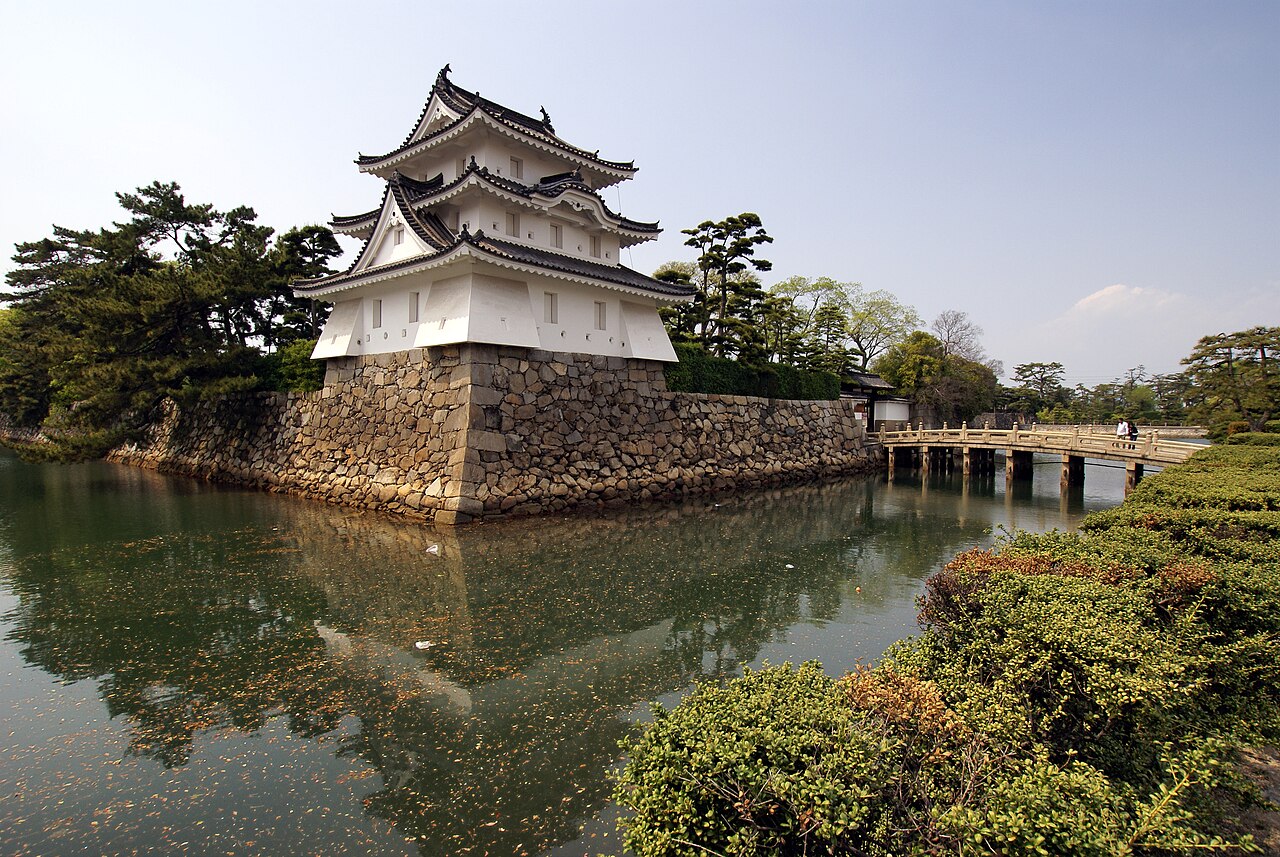
The doll’s meaning is best understood against the devotional traffic that ran through Sanuki. Kagawa was, and is, the home of Konpira-san (Kotohira-gu), one of the most visited pilgrimage shrines in pre-modern Japan; the roads to it carried steady streams of travelers who bought charms, toys, and keepsakes along the way. In that market for protective objects, Hoko-san had a clear place: a paper talisman that a household placed beside a child to draw illness away. The legend of Oyo — the servant who, as the story is traditionally told, took her mistress’s sickness upon herself — gives the object a face and a debt of gratitude rather than an abstract blessing.
What “still being made here” means, in 2026, is modest and honest: a small number of workshops continue to paste layered washi over wooden molds, dry it, remove the form, and paint each doll by hand. This is not factory production, and there is no large export operation behind it. Output is small, batches vary, and a given face is the work of a specific hand on a specific day. That is precisely why no two Hoko-san look identical, and why stock can be intermittent. Folk-traditional claims here — the legend, the charm’s protective role — are traditionally believed, not historically documented in the way a castle’s founding date is, and we mark them as such.

What it does well
Weaknesses and things to verify before buying
- Fragility. Papier-mache is light but easily dented or crushed; it is a display object, not a handling toy, and ships best well-padded.
- Variation between pieces. Because each doll is hand-painted, the face and robe will differ from the listing photo. If you want an exact match, that is not how this craft works.
- Thin listing data. At the time of writing, no live price, dimensions, or weight were confirmed from the fetched data. Verify size and price on the live listing before committing.
- Stock is intermittent. Workshops are few and batches small; a listing that shows in-stock today may lapse. Confirm availability before planning a gift around it.
- Producer / marketplace uncertainty. Confirm the exact maker and that the seller is the Amazon JP Global Store (or a verified shop) before ordering from abroad.
- Shipping can exceed item cost. For a small, low-value item, international freight or a proxy fee may be larger than the doll’s price — consolidate with other purchases where possible.
- Folk claims are traditional, not proven. The Oyo legend and the doll’s protective power are traditionally believed; treat them as cultural heritage, not verified fact.
Conclusion — which buyer type are you?
Other ways to approach this purchase
🏆 Editor’s Pick
❓ Frequently Asked Questions
What is Hoko-san, and what is it for?
Hoko-san is the signature papier-mache doll of the Takamatsu Hariko tradition in Kagawa: a seated girl in a red robe. It is traditionally a protective charm, said to ward illness away from children, tied to the legend of a servant girl named Oyo who is believed to have taken on her young mistress’s fatal illness in her place.
How is it made?
Layers of washi (Japanese paper) are pasted over a wooden mold, dried, then removed from the form and hand-painted. This is the hariko (papier-mache) method. Because the painting is done by hand, each doll is slightly different.
Can I buy it from outside Japan?
Often yes, through the Amazon JP Global Store, which ships many craft items internationally. If a particular piece is sold only on a Japan-domestic shop, a proxy service such as Buyee or Tenso can forward it. Shipping on a small light item typically runs about $15–$40 to the US or EU.
Why is the price not listed here?
At the time of writing, the fetched data returned no confirmed live price for this listing. Rather than guess, we direct you to verify the current price on the Amazon JP Global Store listing; the JPY price there is the authoritative one for the specific item.
How is it different from other Kagawa crafts?
Kagawa is also known for Marugame uchiwa (round fans) and Sanuki kagari-temari (decorative thread balls). Takamatsu Hariko is a separate tradition — a hand-pasted paper folk doll with a devotional purpose, rather than a fan or a stitched ball. It is also less commonly exported.
Is it a good gift?
It suits gifts tied to a child’s health, a new baby, or recovery, given its talisman role. Because stock can be intermittent and international shipping takes time, order well ahead of the occasion.
How should I care for it?
Treat it as a fragile display object. Keep it dry and out of direct sunlight to protect the paper and paint, and avoid handling that could dent the papier-mache body.
jpmono.com is curated by a Japan-based editorial team (working out of Toyama in the Hokuriku region and Nara in Kansai) and is independent. We do not take payment from the makers we feature; income comes from affiliate links. We do not physically test every product — we read maker’s specs and source listings.
This article was researched and drafted with AI assistance and reviewed against the available source data before publication. Where listing data was incomplete, the gaps are noted in the text rather than filled by guesswork.
Affiliate disclosure: jpmono.com may earn a commission on qualifying purchases made through links on this page, at no additional cost to you.