![Sekishū Washi Scroll Paper by Kamimon — UNESCO-Designated 1,300-Year Shimane Papermaking (¥6,600 / ≈$44 USD) [2026 Buyer’s Guide]](https://jpmono.com/wp-content/uploads/2026/05/kamimon-sekishu-washi-makigami-where-to-buy-2026-featured-1400x1050.jpg)
Sekishū-washi (石州和紙) is the handmade paper tradition of the Iwami region in western Shimane Prefecture — one of three Japanese washi traditions inscribed on UNESCO’s Representative List of the Intangible Cultural Heritage of Humanity in 2014, alongside Hosokawa-shi of Saitama and Honminoshi of Gifu. Documentary evidence of “Iwami paper” appears in 8th-century imperial records, which places the local craft tradition at roughly thirteen centuries of continuous production. Modern Sekishū production concentrates in Hamada City and the surrounding Misumi area, where roughly fifteen to twenty active workshops continue to use 100% kōzo (paper mulberry) and the traditional nagashi-zuki cascade-pull technique.
This guide covers a specific Amazon JP listing: a single sheet of premium-grade “sekihan” scroll paper (巻紙, makigami) distributed by Kamimon (かみもん), a Tokyo-based washi specialist retailer that aggregates Sekishū output for Japan-domestic and Amazon Global Store distribution. The listed price is ¥6,600 (approximately $44 USD as of May 2026) for one sheet, marketed as archival-grade material suitable for scroll-mounting, formal calligraphy practice, or long-form correspondence.
The audience this article is written for: international stationery buyers, calligraphers (shodō and Western), bookbinders, archivists, and collectors who already understand that ¥6,600 buys one sheet of paper — and who want to know whether this sheet, from this tradition, is the right fit. We compare it against other Japanese paper-craft listings, lay out the geography and history of Sekishū-washi, and note plainly where the data is thin.
🔄 Last updated: May 16, 2026
⏱ Read time: ~12 min
🇯🇵 jp_craft series
- Who this is for — and who should skip it
- Product overview (from published specs)
- 📍 Where this comes from — place, era, and the craft tradition
- Which finish should you choose?
- Price snapshot across stores
- What it does well
- Weaknesses and things to verify before buying
- Conclusion — which buyer type are you?
- Other ways to approach this purchase
- 🏆 Editor’s Pick
- ❓ Frequently Asked Questions
- 📌 Related Japanese Crafts
Who this is for — and who should skip it
- Already practice shodō, sumi-e, or Western calligraphy and want a UNESCO-inscribed kōzo paper to benchmark against.
- Mount scrolls (kakejiku) or do bookbinding / paper-repair work that needs archival-grade washi.
- Collect named-retailer Japanese papers and recognize Kamimon as a curated Sekishū source.
- Need a single test sheet before committing to a multi-sheet workshop order.
- Are buying as a gift for a craft-literate recipient and want a verifiable provenance line (UNESCO + METI).
- Need everyday practice paper — ¥6,600 for one sheet is not a beginner’s price point.
- Want a goshuincho (御朱印帳) or other bound book; this is a single loose sheet.
- Expect a specific size; the listing describes “scroll paper” without committing to standardized dimensions.
- Want printer-compatible washi — this is hand-made nagashi-zuki, not inkjet-coated stock.
- Need fast US Prime delivery; the item ships from Japan via Amazon JP Global Store.
Product overview (from published specs)
The table below pulls directly from the Amazon JP listing snapshot. Live pricing may have shifted since the writing date — verify at the retailer before purchase.
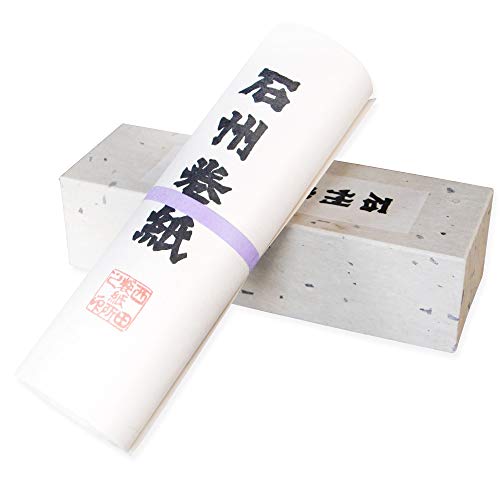
Sekishū Washi Scroll Paper by Kamimon
かみもん 石州和紙 巻紙 1枚入り sekihan
通常2~3日以内に発送します。 · Sold by 京のもん 京都の名店・名品・良品 · ASIN B08CGHL8MZ
Price and availability as of 2026-08-31 02:30 JST. The Amazon listing at the time of purchase is authoritative. jpmono.com earns a commission on qualifying purchases at no extra cost to you.
| Field | Value (per Amazon JP listing, May 16 2026) |
|---|---|
| Item | Kamimon Sekishū-washi makigami (巻紙), scroll-paper grade “sekihan”, 1 sheet |
| ASIN | B08CGHL8MZ |
| Brand / Retailer | かみもん (Kamimon) — Tokyo-based washi specialist |
| Producer | Sekishū-washi cooperative workshops, Hamada / Misumi, Shimane |
| Material | 100% kōzo (paper mulberry), nagashi-zuki hand-made |
| Dimensions | Scroll-paper sheet (size varies per piece — listing does not commit to fixed dimensions) |
| Weight | ~50 g per sheet |
| Origin | Hamada / Misumi, Shimane, Japan |
| Heritage | UNESCO Intangible Cultural Heritage (2014); METI Traditional Craft (1969) |
| Price | ¥6,600 (≈ $44 USD as of May 2026) |
| International shipping | Ships internationally via Amazon JP Global Store; paper is unrestricted for personal import to most destinations |
| Source | Amazon JP listing snapshot, 2026-05-16; verify current state at retailer |
📖 Glossary — key terms in this article
Sekishū-washi (石州和紙) — Handmade paper from the Sekishū / Iwami region of western Shimane Prefecture. Documented from the 8th century. “Sekishū-banshi” specifically refers to the UNESCO-inscribed sub-tradition.
Washi (和紙) — Japanese hand-made paper, traditionally produced from kōzo, mitsumata, or gampi bast fibers. Distinct from Western wood-pulp paper in fiber length, sheet formation, and longevity.
Kōzo (楮) — Paper mulberry (Broussonetia kazinoki). Long-fibered bast plant; the most common base material for premium washi.
Nagashi-zuki (流し漉き) — The cascade-pull sheet-formation technique that distinguishes Japanese washi from Western paper. The papermaker tilts a bamboo screen (“su”) through a fiber-and-mucilage slurry in repeated layered passes; the fibers cross-weave for strength.
Tame-zuki (溜め漉き) — The contrasting “accumulation” technique used elsewhere; the slurry is left to drain rather than swirled. UNESCO-recognized washi traditions use nagashi-zuki.
Makigami (巻紙) — Literally “rolled paper” / “scroll paper.” A long, narrow sheet historically used for letter-writing, calligraphy practice, and scroll-mounting (kakejiku).
Sekihan (赤判) — Within Kamimon’s grading vocabulary, the “red stamp” tier — a premium scroll-paper grade. Different makers and retailers use different grading systems; sekihan is not an industry-wide standard.
Kakejiku (掛軸) — Hanging scroll (calligraphy or painting) mounted on washi backing and silk borders.
Shodō (書道) — Japanese calligraphy; the practice of brush-and-ink writing as art.
METI Traditional Craft (経済産業大臣指定伝統的工芸品) — A Japanese government designation administered by the Ministry of Economy, Trade and Industry. Sekishū-washi was designated in 1969.
UNESCO Representative List of the Intangible Cultural Heritage of Humanity — A multinational inscription. “Washi, craftsmanship of traditional Japanese hand-made paper” was added in 2014, covering Sekishū-banshi (Shimane), Hosokawa-shi (Saitama), and Honminoshi (Gifu).
📍 Where this comes from — place, era, and the craft tradition

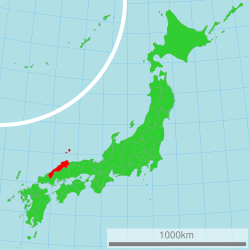
Shimane Prefecture occupies the Sea of Japan coast of western Honshū, in the Chūgoku region. The historic name for its western half is Iwami (石見) — and Sekishū (石州) is the on-yomi reading of the same place-name in its formal, administrative register. “Sekishū paper” therefore reads simply as “paper of the Iwami region.” Hamada City, the modern administrative center, and the Misumi area immediately south together form the production heartland; the surrounding hills supply the kōzo, and the Misumi-gō river historically provided the cold, clean winter water that the paper-making process demands.
The historical anchor is documentary rather than archaeological: Iwami paper appears in the Engishiki (延喜式), the imperial-court regulations compiled in 927 CE and based on practice well into the previous century. The court treated paper as a tax-payable commodity, and Iwami’s tribute paper is named alongside contributions from a handful of other provinces. This places written evidence of Sekishū papermaking at roughly thirteen centuries — older than the Edo period by a factor of two, older than European movable-type printing by more than five centuries.
“Iwami paper was already an imperial tax commodity when the Heian court was at its height. The hands that pull a sheet of Sekishū-washi today are working a craft that the 10th-century imperial bureaucracy already considered established practice.”
-
8th century — First documentary references to “Iwami paper” in court records. -
927 — The Engishiki imperial regulations codify Iwami paper as a tax-payment commodity. -
Heian–Kamakura periods — Sekishū paper continues as a court tribute item; production diffuses through Iwami villages. -
Edo period (1603–1868) — Sekishū-han households use winter paper-making as a supplement to rice farming; a stable household paper economy develops. -
1969 — METI designates Sekishū-washi as a Traditional Craft Product (伝統的工芸品). -
2014 — UNESCO inscribes “Washi, craftsmanship of traditional Japanese hand-made paper,” covering Sekishū-banshi (Shimane), Hosokawa-shi (Saitama), and Honminoshi (Gifu). -
2026 — Roughly 15–20 active workshops remain in Hamada / Misumi; Sekishū-washi continues to ship internationally through specialist retailers including Kamimon.
The Edo-period household pattern is the part most often missed by outside readers. Sekishū-han villages did not run “factories”; paper-making was a seasonal supplement to the agricultural year. Rice was harvested in autumn, and from late autumn through winter the same families soaked, steamed, and beat kōzo bark, then pulled sheets in cold river-fed water — the cold being functional, not romantic, because it inhibits bacterial action in the slurry and keeps the kōzo fibers dispersed. That household pattern shaped the craft’s continuity: when industrial paper-making arrived in the Meiji era and threatened most Japanese paper traditions, the Sekishū villages had survived precisely because paper-making was woven into a rural subsistence economy that did not collapse all at once.
“Still being made here” today, in concrete terms: roughly fifteen to twenty active Sekishū workshops continue to operate in the Hamada / Misumi area, almost all of them small family-run ateliers using 100% kōzo and the traditional nagashi-zuki technique. The UNESCO inscription specifically names Sekishū-banshi (石州半紙) — a 60×91 cm “half-sheet” format — as the protected sub-tradition; the broader Sekishū-washi designation includes related papers in other sizes and grades. The scroll-paper variant covered in this article is part of that broader tradition, not the precise UNESCO-named sheet.
Which finish should you choose?
This piece is listed in 2 options. The photos below are the actual サイズ options on the listing right now — pick the one you want and confirm it on the product page before ordering, since hand-finished wares vary slightly piece to piece.
![Sekishū Washi Scroll Paper by Kamimon — UNESCO-Designated 1,300-Year Shimane Papermaking (¥6,600 / ≈$44 USD) [2026 Buyer's Guide] — 料紙おてがみ finish](https://m.media-amazon.com/images/I/41UU0PeXKNL._SL500_.jpg)
Price snapshot across stores
Only the Amazon JP listing snapshot is available for the specific Kamimon sekihan sheet; live pricing may have shifted since the writing date. USD figures are approximate at the ¥150/USD baseline.
| Store | Item / Variant | Price (JPY + USD est.) | Notes |
|---|---|---|---|
| 🇺🇸 Amazon US (search) | Browse Japanese washi paper, scroll paper, and calligraphy supplies | varies (USD) | Best if you are shopping from the US — Prime shipping, USD pricing, no international customs. Amazon US carries Japanese washi from several makers and retailers; Kamimon’s exact sekihan sheet is sourced from Japan (next row). |
| 🇯🇵 Amazon JP Global Store | Kamimon Sekishū-washi makigami, sekihan, 1 sheet (ASIN B08CGHL8MZ) | ¥6,600 (≈ $44 USD) | Authoritative listing for this specific sheet. Ships internationally from Japan; shipping $5–10 USD to common destinations. |
| Maker direct (Kamimon) | Full Kamimon catalog of Sekishū and other washi | varies (JPY) | Wider format and grade selection than the Amazon listing. Japanese-language site; international shipping availability varies — check current policy at the retailer. |
| Proxy services (Buyee / Tenso) | Forward-shipping for Japan-only listings | item price + service fee + shipping | Useful if Amazon JP Global Store stops listing the item, or if you want a multi-sheet workshop order from a Japan-only retailer. Adds 10–20% in service fees plus international shipping. |
What it does well
Sekishū-banshi joined the UNESCO Representative List in 2014. Spec sheets indicate the Kamimon sheet is produced by Hamada-area cooperative workshops working within that tradition.
No wood-pulp blend. Long-fibered paper mulberry, formed by the layered cascade-pull technique that gives washi its characteristic tear strength and longevity.
Kamimon is a specialist washi retailer with its own grading vocabulary (“sekihan”). The listing is more traceable than a generic “Japanese paper” Amazon SKU.
Buying one sheet before committing to a multi-sheet workshop order is a sensible way to evaluate Sekishū-washi against your own use case — calligraphy ink behavior, mounting, archival storage.
Weaknesses and things to verify before buying
- The listing does not commit to fixed dimensions. “Scroll paper, size varies per piece” is the literal description. If you need precise sheet dimensions for a kakejiku mount or a frame, ask the seller for actual measurements before ordering — or buy two so you can match a pair.
- “Sekihan” is Kamimon’s internal grading, not an industry standard. Different Sekishū workshops use different grade names. Cross-comparing Kamimon’s sekihan against another retailer’s “premium” grade is not apples-to-apples.
- This is Sekishū-washi, not specifically Sekishū-banshi. The UNESCO inscription names Sekishū-banshi (60×91 cm half-sheet format). The scroll-paper sheet is part of the broader Sekishū tradition but is not the UNESCO-named format itself; the heritage line applies to the tradition, not to this specific format.
- ¥6,600 buys one sheet — not a quire. For shodō practice volume, that price-per-sheet is impractical. Use this only for finished work, mounting, or as a reference sheet.
- International shipping is from Japan. Amazon JP Global Store handles customs paperwork well, but transit is 5–14 days typically. Plan accordingly if you need it for a specific deadline.
- Storage matters and is on you. Washi is hygroscopic. Store flat, away from direct sun and high humidity. If you do not have an archival sleeve or flat file, the value of buying archival paper is partially wasted.
- Live pricing and stock fluctuate. The ¥6,600 figure is the listing snapshot for May 16, 2026. Verify at the retailer before purchase.
Conclusion — which buyer type are you?
You already collect named-retailer Japanese papers, value the UNESCO / METI provenance, and treat ¥6,600 for a single archival sheet as reasonable. Buy the Kamimon sekihan and pair it with a verified archival storage sleeve.
You are a calligrapher or bookbinder evaluating Sekishū-washi against other washi. The single-sheet sekihan is a sensible test purchase before a multi-sheet workshop order.
Skip this listing — at ¥6,600 per sheet it is the wrong economic unit. Look instead at hanshi practice packs from machine-made or mixed-fiber suppliers and reserve a Sekishū sheet for finished work.
This is a loose, variable-dimension scroll sheet. If you need a bound goshuincho, a precise sheet size, or printer-compatible washi, this is not the listing — look at our Echizen washi goshuincho guide instead.
Other ways to approach this purchase
Hand-made washi listings go in and out of stock seasonally. If the listing is unavailable, watch the Amazon JP page or check Kamimon’s own site rather than substituting a different retailer’s “premium” sheet.
The Sekishū-washi cooperative in Hamada / Misumi sells direct in formats and sizes that Amazon JP does not list. Site is Japanese-language; a proxy buyer or forwarding service may be needed for international orders.
If you hold Amazon JP Points or have a Prime International account, routing through Amazon JP Global Store may give marginal savings versus a third-party retailer. Verify points eligibility at checkout — many Global Store items earn fewer or no points.
If you do not have a defined use — a scroll project, a calligraphy benchmark, a specific archival need — wait. A premium washi sheet sitting in a drawer is not a craft purchase, it is a souvenir at five times the right price.
🏆 Editor’s Pick
Kamimon Sekishū-washi Makigami — sekihan grade, 1 sheet
A single archival-grade scroll sheet from the UNESCO-inscribed Sekishū-washi tradition, distributed by a named Tokyo washi retailer. The right buy for calligraphers, bookbinders, and collectors who want one verifiable Sekishū sheet to benchmark — not the right buy for volume practice or for buyers who need fixed dimensions.
- Heritage: UNESCO Intangible Cultural Heritage (2014); METI Traditional Craft (1969).
- Material: 100% kōzo, hand-made via nagashi-zuki in Hamada / Misumi, Shimane.
- Price: ¥6,600 (≈ $44 USD as of May 2026) for one sheet — verify live pricing at the retailer.
❓ Frequently Asked Questions
Is Sekishū-washi the same as Sekishū-banshi?
Does Amazon JP Global Store ship Sekishū-washi internationally?
What is the actual size of the sheet?
Is this paper suitable for sumi-e and shodō calligraphy?
How does this compare to Echizen washi from Fukui?
How should I store the sheet once it arrives?
Who is Kamimon, and why does the retailer name matter?
jpmono.com is curated by a Japan-based editorial team working out of Toyama (Hokuriku region) and Nara (Kansai region), and is independent. We do not take payment from the makers we feature; income comes from affiliate links. Read more about our editorial standards on our About page.
🤖 Editorial note: this article was drafted with AI assistance and reviewed by the jpmono editorial team before publication. All product specs, prices, and heritage claims are drawn from the Amazon JP listing snapshot dated 2026-05-16 and from publicly documented sources on Sekishū-washi; no first-person testing of the specific sheet is claimed.
Affiliate disclosure: jpmono.com may earn a commission on qualifying purchases made through links on this page, at no additional cost to you.