![Shōdai-yaki Rim Plate by Chihiro-Gama — 400-Year Kumamoto Reduction-Fired Stoneware (¥2,244 / ≈$15 USD) [2026 Buyer’s Guide]](https://jpmono.com/wp-content/uploads/2026/05/shodai-yaki-chihiro-rim-plate-where-to-buy-2026-featured.jpg)
Shōdai-yaki (小代焼) is the reduction-fired stoneware tradition of Arao, a quiet town in northwestern Kumamoto Prefecture on the western edge of Kyūshū. The kiln line traces continuously to 1632, when Lord Hosokawa Tadatoshi of the newly relocated Higo-Kumamoto domain invited two Korean-trained potters — Genshichi (源七) and Hachizaemon (八左衛門) — to open a kiln on the slopes of Mount Shōdai. Nearly four centuries later, roughly ten active kilns still work the same iron-rich local clay; in 2003 the Ministry of Economy, Trade and Industry designated Shōdai-yaki a Traditional Craft Product.
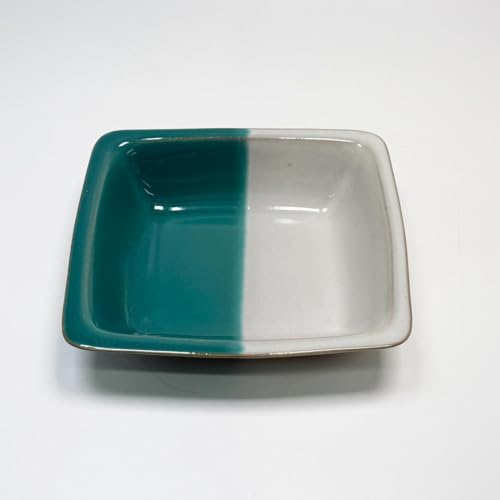
The piece this guide covers is a small rim plate by Shōdai Honya Chihiro-Gama (小代本谷ちひろ窯), listed on Amazon JP Global Store at ¥2,244 (≈$15 USD as of May 2026). It is daily ware, not a museum piece: a ~15 cm reduction-fired stoneware plate with the wood-ash nagashi-gake (流し掛け, “poured-drip”) glaze that has been the visual signature of Shōdai-yaki since the Edo period. “Shōdai-honya (小代本谷)” refers to the founding cluster of kilns around the original site — the named potters working out of this area carry the longest unbroken thread of the tradition.
This article is written from a Japan-based editor’s desk (working out of Toyama in the Hokuriku region and Nara in Kansai) for an international reader. We compare on price, what reduction firing actually changes about the clay surface, how Chihiro-Gama’s drip pattern reads next to other Kyūshū wares, who this entry-tier plate suits, and how to get it shipped outside Japan.
🔄 Updated: May 16, 2026
⏱️ ~10 min read

- Who this is for — and who should skip it
- Product overview (from published specs)
- 📍 Where this comes from — Arao, Kumamoto, and 400 years of reduction-fired stoneware
- Price snapshot across stores
- What it does well
- Weaknesses and things to verify before buying
- Conclusion — which buyer type are you?
- Other ways to approach this purchase
- 🏆 Editor’s Pick
- ❓ Frequently Asked Questions
- 📌 Related Japanese Crafts
Who this is for — and who should skip it
- Want a named-potter Kyūshū piece under ¥3,000 — Shōdai-yaki rarely surfaces at this price abroad.
- Like the abstract, vertical drip aesthetic of wood-ash glaze over iron-rich clay.
- Are building a daily-use stoneware set (small plate slot — bread, pickles, side dishes, fruit).
- Appreciate folk-craft (mingei) aesthetics over factory-uniform porcelain.
- Are happy to hand-wash and let the surface patina with use.
- Need dishwasher-safe, oven-safe, perfectly identical pieces — this is hand-thrown, hand-glazed stoneware.
- Want a large dinner plate; this listing is small-format (~15 cm).
- Expect color and drip pattern to match a photo exactly — every piece varies.
- Want translucent porcelain (Arita, Hasami) — this is matte, earth-toned stoneware.
- Cannot accommodate international shipping cost (~$8–$15 to US/EU on top of item price).
Product overview (from published specs)
Spec sheet below is drawn from the Amazon JP listing for ASIN B0DF4WMHB8 as of May 16, 2026. Only the Amazon JP listing snapshot is available; live pricing may have shifted since the writing date.

Shōdai-yaki Rim Plate by Chihiro-Gama
取り皿 小代焼 小代本谷ちひろ窯 リム皿 小皿 3種類から選べる 調味料入れ 陶器 食器 作家 おしゃれ 器 和食器 かわいい 可愛い (緑クロス柄)
通常2~3日以内に発送します。 · Sold by Reboot Life · ASIN B0DF4WMHB8
Price and availability as of 2026-08-31 02:30 JST. The Amazon listing at the time of purchase is authoritative. jpmono.com earns a commission on qualifying purchases at no extra cost to you.
| Attribute | Detail |
|---|---|
| Item | Rim plate (取り皿 / リム皿), small format |
| Tradition | Shōdai-yaki (小代焼) — METI Traditional Craft Product, designated 2003 |
| Maker | Shōdai Honya Chihiro-Gama (小代本谷ちひろ窯), Arao, Kumamoto |
| Material | Reduction-fired iron-rich Shōdai stoneware |
| Glaze | Wood-ash nagashi-gake (流し掛け, “poured-drip”) signature pattern |
| Dimensions | ~15 cm diameter (size varies; each piece is hand-thrown) |
| Weight | ~250 g |
| Country of origin | Arao, Kumamoto Prefecture, Japan |
| Listing price | ¥2,244 (≈$15 USD as of May 2026) |
| Listed on | Amazon JP Global Store (ships internationally; ASIN B0DF4WMHB8) |
| Care | Hand-wash with hot water; avoid thermal shock; surface patinas with use |
📖 Glossary — key terms used in this article
- Shōdai-yaki (小代焼)
- Reduction-fired stoneware tradition from Arao, Kumamoto. Iron-rich body, wood-ash drip glazes. METI-designated traditional craft (2003).
- Nagashi-gake (流し掛け)
- Literally “poured drip-glazing.” A ladle of wood-ash glaze is poured over the rim and allowed to run vertically; firing locks in the trail. Signature of Shōdai-yaki.
- Reduction firing
- Kiln atmosphere starved of oxygen during firing. Iron in the clay reads darker and richer; wood ash on the surface fluxes into glassy runs. Common across Kyūshū stoneware.
- Mingei (民芸)
- “Folk craft.” A 1920s–30s aesthetic movement (Yanagi Sōetsu, Hamada Shōji) that re-valued anonymous everyday-use ware. Shōdai-yaki was embraced by this movement in the Shōwa era.
- Shōdai-honya (小代本谷)
- The “main-valley” Shōdai area — the founding cluster of kilns near the original 1632 site at Mount Shōdai. A maker name beginning “Shōdai Honya…” indicates origin in this founding area.
- Hosokawa (細川)
- Edo-period daimyō family. Hosokawa Tadatoshi was transferred to govern the Higo-Kumamoto domain in 1632 and brought a Korean-pottery lineage with him — the founding act of Shōdai-yaki.
- METI Traditional Craft Product
- Designation under Japan’s Ministry of Economy, Trade and Industry (経済産業省) for crafts that meet continuity, material, technique, and regional-concentration criteria. Shōdai-yaki was designated in 2003.
📍 Where this comes from — Arao, Kumamoto, and 400 years of reduction-fired stoneware

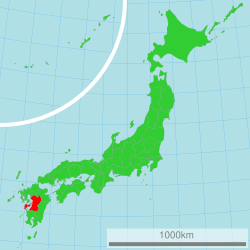
Arao sits on the Ariake Sea coast at the very northwestern corner of Kumamoto Prefecture, where the prefecture meets Fukuoka. Mt. Shōdai (小岱山, 501 m) rises just inland from the town — a low forested ridge whose slopes hold the iron-rich clay seams the founding potters of 1632 came here to work. The Ariake tidal flats, the Kuma River basin further south, and the active volcano of Aso (~110 km east) frame a prefecture that has, for a thousand years, traded across the narrow Genkai-nada strait toward the Korean Peninsula. That trade route is the reason a Higo-Kumamoto kiln was founded by Korean-trained potters and not by, say, Kyoto-trained ones.
The historical anchor is 1632. The Hosokawa family was transferred from Kokura to govern the Higo-Kumamoto domain that year, and Lord Hosokawa Tadatoshi (細川忠利) invited two potters in his service — Genshichi (源七) and Hachizaemon (八左衛門) — to set up a domain kiln near Mt. Shōdai. Both had trained in the Korean-style high-fire stoneware lineage that had already taken root in northern Kyūshū through the late Sengoku and early Edo period (the same lineage that produced Karatsu, Hagi, and the Arita porcelains a generation later). What set Shōdai apart was the local clay: heavier in iron than the Saga/Nagasaki clays to the north, and a good match for wood-ash glazes poured directly down the side of the pot.
-
1632 — Hosokawa Tadatoshi transferred to Higo-Kumamoto; invites Korean-trained potters Genshichi & Hachizaemon to open a kiln at Mt. Shōdai. -
17th c. — Edo-period Hosokawa-domain patronage; nagashi-gake drip glaze becomes the recognizable Shōdai surface. -
18th–19th c. — Village-scale production for the domain and local markets; the work stays daily ware, not export ware. -
1920s–30s — The Shōwa-era mingei (folk-craft) movement re-values anonymous everyday ware; Shōdai-yaki is championed for its rustic functional aesthetic. -
2003 — METI (Ministry of Economy, Trade and Industry) designates Shōdai-yaki a Traditional Craft Product. -
2020s — ~10 active kilns continue around Arao; Chihiro-Gama and other named Shōdai-honya potters list daily ware on Amazon JP for domestic and international buyers.
The continuity case is straightforward: roughly ten active kilns work the Arao district today, almost all of them named workshops carrying on the wood-ash glaze technique that has not fundamentally changed since the Edo period. Shōdai Honya Chihiro-Gama is one of those named kilns — “Shōdai-honya” identifies its location in the founding cluster, “Chihiro-Gama (ちひろ窯)” the modern potter line. A small rim plate from this kiln is therefore not a souvenir interpretation of the tradition; it is the tradition, in its entry-tier daily-ware format.
“The Shōdai-yaki kiln line is older than Edo’s transition out of warring-state politics — it began in the same decade that the Tokugawa shogunate closed the country to most foreign trade. Four centuries later the same Mt. Shōdai clay still goes into the wheel.”
One cultural extension worth knowing: in Kumamoto and across Kyūshū, the small rim plate (取り皿, tori-zara) is a workhorse format. It sits next to the rice bowl at a home meal to hold whatever is being shared from a central dish — grilled fish, simmered greens, pickles, the local karashi-renkon (mustard-stuffed lotus root) at New Year. The piece is sized and weighted for that role; it is not a Western “side plate” recast in stoneware.
Price snapshot across stores
The piece is sourced specifically from Amazon JP Global Store. Amazon US carries comparable Japanese stoneware from other Kyūshū makers (Arita, Hasami, Karatsu lineages) but does not individually list this exact Chihiro-Gama plate. The first row below is for US-based readers who want to browse the broader category in USD; the second is the actual listing for this article’s piece.
| Store | Item / variant | Price | Notes |
|---|---|---|---|
| 🇺🇸 Amazon.com (US) | Browse Japanese stoneware plates | varies (USD) | Best if you are shopping from the US — Prime shipping, USD pricing, no international customs. Amazon US carries hand-thrown Japanese stoneware from Arita, Hasami, Karatsu, and Mino lineages — useful for comparing glaze styles and price tiers. Chihiro-Gama’s exact Shōdai-yaki piece ships from Japan (next row). |
| 🇯🇵 Amazon JP Global Store | Chihiro-Gama Rim Plate (B0DF4WMHB8) | ¥2,244 (≈$15 USD) | Ships internationally from Japan. ~250 g item; expect $8–$15 USD international shipping on top of item price, plus possible customs duties depending on order subtotal. |
| Maker direct | Chihiro-Gama workshop / Kumamoto gallery channels | Unconfirmed — check workshop site | Named Shōdai-honya kilns occasionally sell directly through Kumamoto and Fukuoka craft galleries; a Japanese-language address and JP-card or bank transfer are typically required, and international shipping handling is case-by-case. |
| Proxy services (Buyee / Tenso) | Forwarding for JP-only listings | ¥2,244 + proxy fee + shipping | Useful if you find a non-Global-Store JP listing of a Chihiro-Gama variant. Buyee and Tenso act as forwarders; expect a service fee on top of the item price and JP→destination shipping. |
Prices in USD are approximate at a ¥150/USD baseline and depend on current exchange rates. JPY is the authoritative price for the listed item.
What it does well
Weaknesses and things to verify before buying
- Each piece is unique — photo will not match exactly. Drip placement, glaze pooling, and tonal balance vary from plate to plate. The Amazon listing image shows one example, not the piece you’ll receive. If you require visual uniformity across a multi-plate set, hand-thrown stoneware is the wrong category.
- Small format — confirm the size against your intended use. “Rim plate (取り皿)” in Japan typically means a ~13–16 cm side-plate role next to the rice bowl. Spec listing says ~15 cm. It is not a dinner plate. For a main plate slot, look at larger Shōdai-yaki formats from the same maker family.
- Hand-wash only, and the surface will patina. Care notes specify hot-water hand wash and avoidance of thermal shock. Reduction-fired stoneware also takes on subtle staining and tonal deepening over years of use — that is desired behavior in the mingei aesthetic, but it is not what buyers of factory porcelain expect.
- International shipping cost is meaningful relative to item price. Amazon JP Global Store typically lists $8–$15 USD shipping for a ~250 g ceramic item to the US, and rates climb for EU and other destinations. A ¥2,244 (≈$15) plate with $12 shipping is effectively a ~$27 buy, and customs duties may apply at higher order subtotals.
- Listing snapshot is dated — verify before purchase. Only the Amazon JP listing snapshot from May 16, 2026 is available; live pricing, stock, and exact variant (the title references a “green cross pattern”) may have shifted since. Always confirm current price and stock on the retailer page before purchase.
- Microwave and dishwasher behavior unconfirmed. Listing does not state dishwasher- or microwave-safety. Treat as hand-wash only and avoid microwave heating unless the maker confirms otherwise.
Conclusion — which buyer type are you?
Other ways to approach this purchase
🏆 Editor’s Pick
❓ Frequently Asked Questions
Does Amazon JP Global Store ship this plate to my country?
Amazon JP Global Store ships many ceramics internationally to most major destinations. For a ~250 g item, expect roughly $8–$15 USD shipping to the US and somewhat higher to EU, AU, and other regions. Customs duties may apply depending on your country’s import thresholds and the total order subtotal. Verify the destination is supported at checkout before paying.
Will my plate look exactly like the listing image?
No — and this is intentional. Each piece is hand-thrown and hand-glazed at Chihiro-Gama, and the wood-ash nagashi-gake drip is poured by hand. The listing image is one example. Drip placement, glaze pooling, and tonal readout will vary. If you need matching pieces across a set, hand-thrown stoneware is the wrong category.
Is this plate dishwasher- or microwave-safe?
The Amazon JP listing does not state dishwasher- or microwave-safety. Care notes specify hand-wash with hot water and avoidance of thermal shock. Treat as hand-wash only and do not microwave unless the maker confirms otherwise. Reduction-fired stoneware can also patina with use, which is desired behavior in the mingei aesthetic.
What is Shōdai-yaki, and how is it different from Karatsu or Hagi ware?
Shōdai-yaki is the reduction-fired stoneware tradition of Arao in northwestern Kumamoto, founded in 1632 under Hosokawa-domain patronage. It shares the Korean-trained high-fire stoneware lineage with Karatsu (Saga) and Hagi (Yamaguchi), but the local Mt. Shōdai clay is more iron-rich, and the signature surface is the wood-ash nagashi-gake drip — a vertical poured trail of glaze across the body. Karatsu emphasizes brushwork and varied glazes; Hagi emphasizes pale glaze crackle developed for tea ceremony. METI designated Shōdai-yaki a Traditional Craft Product in 2003.
Who is Chihiro-Gama, and what does “Shōdai-honya” mean?
Chihiro-Gama (ちひろ窯) is the workshop name of a modern Shōdai-yaki potter based in the Shōdai-honya (小代本谷, “Shōdai main-valley”) area of Arao — the founding cluster of kilns around the original 1632 site at Mt. Shōdai. A maker name prefixed “Shōdai Honya…” indicates origin in this founding district. Roughly ten active kilns work in Arao today.
How does it ship — is the plate well packed for international transit?
Amazon JP Global Store fulfills with cushioned packaging appropriate for fragile items, and the ~250 g rim plate is a low-risk format compared with large bowls or teapots. That said, ceramics are not zero-risk in transit; if you intend to gift it, factor in time to inspect on arrival before wrapping.
Is ¥2,244 a reasonable price for a Shōdai-yaki plate?
For a small-format daily-ware rim plate from a named Shōdai-honya kiln, ¥2,244 is on the entry tier. Larger formats and signature pieces from established Shōdai potters routinely sit above ¥5,000–¥10,000 at gallery prices. Live pricing may have shifted since the writing date — confirm on the listing page before purchase.
jpmono.com is curated by a Japan-based editorial team (working out of Toyama in the Hokuriku region and Nara in Kansai) and is independent. We do not take payment from the makers we feature; income comes from affiliate links. Read more about our editorial standards.
🤖 This article was drafted with AI assistance and reviewed by the jpmono editorial team against the Amazon JP listing snapshot for ASIN B0DF4WMHB8 captured on May 16, 2026.
Affiliate disclosure: jpmono.com may earn a commission on qualifying purchases made through links on this page, at no additional cost to you.