![Arita-yaki Yunomi by Kōyō-gama — Hand-Painted Kensaki-Kobana Shinogi Cup from Japan’s First Porcelain Town (¥2,162 / ≈$14 USD) [2026 Buyer’s Guide]](https://jpmono.com/wp-content/uploads/2026/05/koyogama-arita-yaki-shinogi-yunomi-where-to-buy-2026-featured-1161x1050.jpg)
Arita-yaki (有田焼) is the founding tradition of Japanese porcelain. The industry was born in 1616, when a Korean-born potter named Yi Sam-pyeong (李参平) discovered kaolin in the hills above a small valley town in northwestern Saga Prefecture — and Japan, alone among the major East Asian states, finally had its own porcelain. For the next 250 years Arita supplied the European royal courts through the Dutch East India Company, gave its export port name to a whole genre of collecting (“Imari ware”), and seeded the white-porcelain industries of Meissen, Sèvres, and Worcester after the secret of kaolin reached Europe.
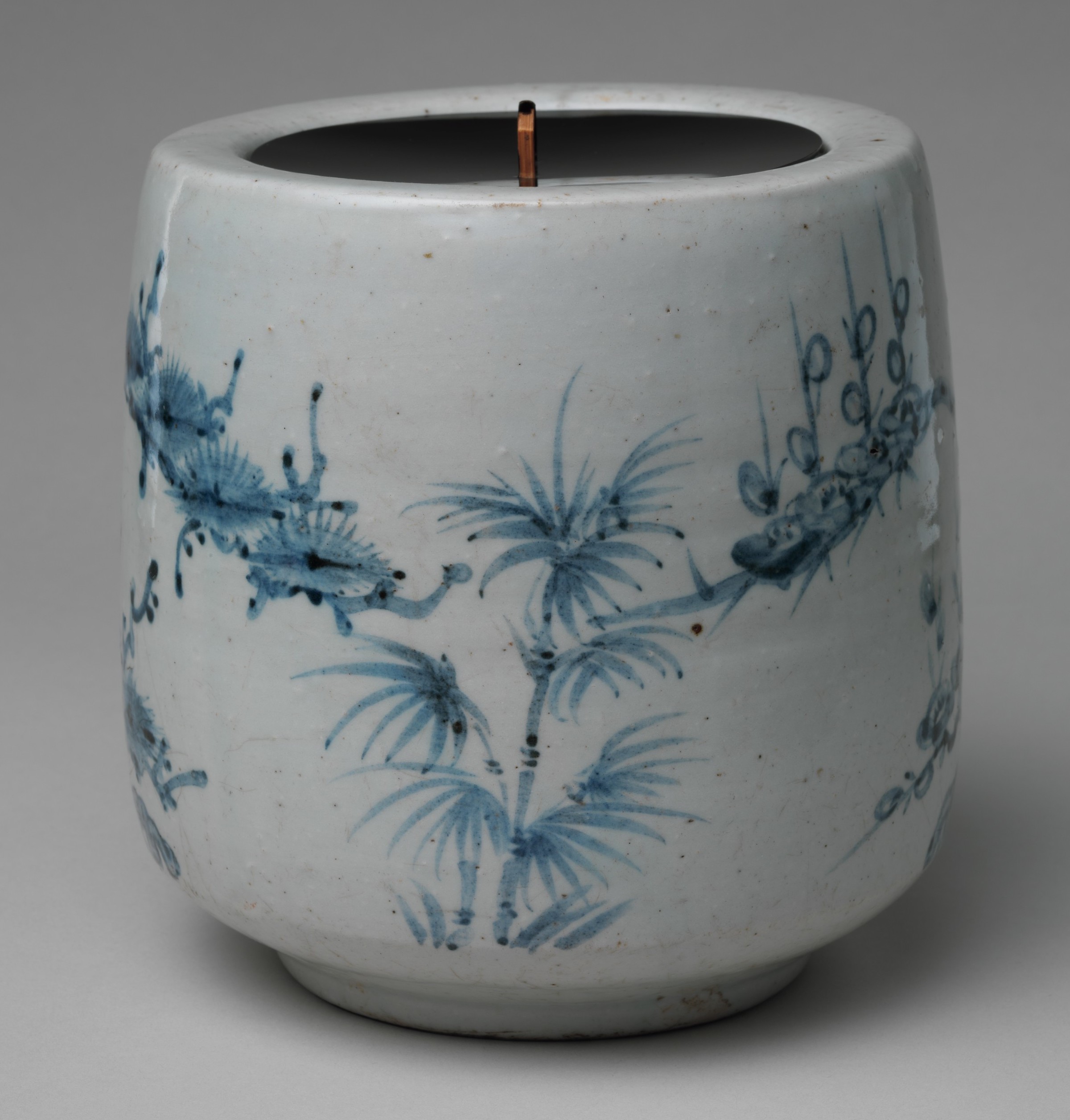
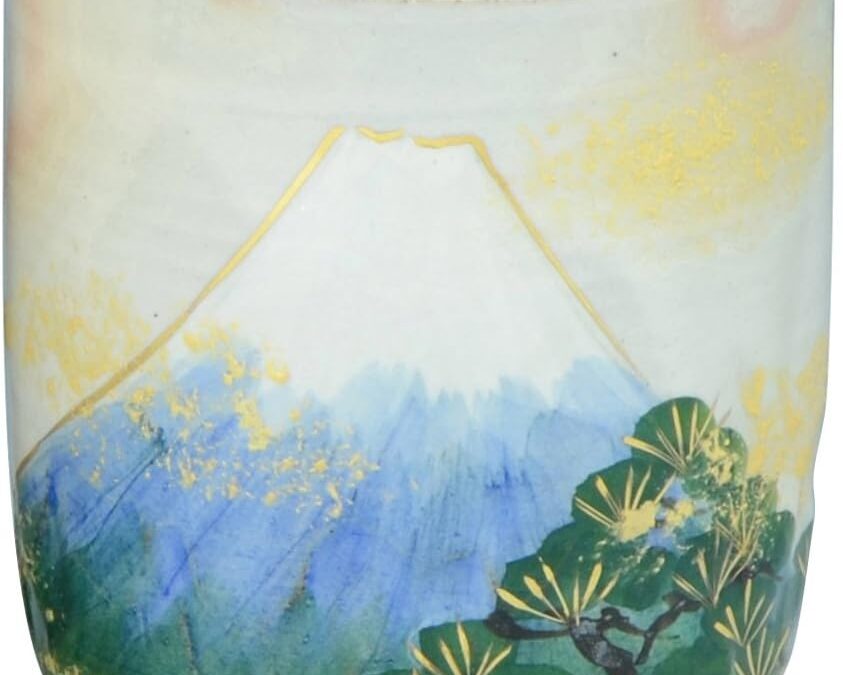
The cup in this guide is a daily-use entry point into that 410-year tradition. The Kōyō-gama (皓洋窯) kensaki-kobana shinogi yunomi (剣先小花しのぎ湯呑 — “sword-tip small flower hand-ridge-carved tea cup”) is a 180 ml white-porcelain tea cup, hand-carved with the shinogi (彫り) ridged surface texture that is one of the signatures of modern Arita workmanship, and hand-painted in cobalt-blue underglaze with a classical 17th-century Imari motif. At ¥2,162 (approximately $14 USD as of May 2026) it is, as far as the Amazon JP Global Store inventory goes, the most affordable named-kiln Arita-yaki entry that an international buyer can put in a cart today.
This guide is written for the reader who has heard the words “Arita” and “Imari” but has never owned a piece. We walk through the 410-year arc from Yi Sam-pyeong’s discovery to the 100-plus active kilns operating in the town today, explain why this particular cup is a sensible first purchase from a named kiln rather than an anonymous gift-box import, and lay out the international-shipping reality from Amazon JP through to the buyer’s door.
🔄 Last updated: May 16, 2026
⏱️ Read time: ~14 min
🏷️ Saga · Arita-yaki · Porcelain

- Who this is for — and who should skip it
- Product overview (from published specs)
- 📍 Where this comes from — place, era, and the craft tradition
- The region — Arita, in northwestern Saga
- The historical anchor — 1616, Yi Sam-pyeong, and the founding of Japanese porcelain
- The Imari export era — 1659 to roughly 1860
- The Meiji-era transition, and the “Imari” name confusion
- The 20th century, the METI designation, and the modern industry
- Kōyō-gama — the maker of this cup
- 📦 Shipping & where to buy from outside Japan
- Price snapshot across stores
- What it does well
- Weaknesses and things to verify before buying
- Conclusion — which buyer type are you?
- Other ways to approach this purchase
- 🏆 Editor’s Pick
- ❓ Frequently Asked Questions
- 📌 Related Japanese Crafts
Who this is for — and who should skip it
- Want a first piece of named-kiln Arita-yaki under $20
- Drink Japanese green tea (sencha, hōjicha, genmaicha) daily and want a cup sized for it (~180 ml)
- Care about the difference between hand-carved shinogi and machine-pressed porcelain
- Are willing to pre-warm a thin porcelain wall and hand-wash to protect underglaze cobalt
- Like the idea of owning a piece whose motif vocabulary traces directly to the 17th-century Imari export trade
- Need a chawan (broader-mouthed bowl) for matcha — yunomi is for steeped, not whisked, tea
- Want a gift-box presentation — this is bare-cup retail, not a kiri-wood-box gift
- Drink coffee or wine and care about long-term staining (cobalt underglaze on white porcelain shows tea-line over decades)
- Need dishwasher-safe daily ware
- Are looking for collector-grade Kakiemon or Iro-Nabeshima — those start an order of magnitude higher (¥30,000+)
Product overview (from published specs)
Per the Amazon JP Global Store listing as of May 16, 2026:
Arita-yaki Yunomi by Kōyō-gama
有田焼 湯呑 湯飲み 手描き 皓洋窯 剣先小花 しのぎ湯呑 青
残り10点 ご注文はお早めに · Sold by Amazon.co.jp · ASIN B0DXYV1R24
Price and availability as of 2026-08-31 02:30 JST. The Amazon listing at the time of purchase is authoritative. jpmono.com earns a commission on qualifying purchases at no extra cost to you.
| Spec | Value |
|---|---|
| Maker | Kōyō-gama (皓洋窯), Arita, Saga |
| Form | Yunomi (cylindrical Japanese tea cup), single piece |
| Material | White porcelain (磁器) with cobalt-blue underglaze |
| Surface | Shinogi (彫り) hand-carved ridges |
| Motif | Kensaki-kobana (剣先小花, “sword-tip small flower”), hand-painted |
| Dimensions | ⌀ 8.1 × H 7.9 cm |
| Capacity | ~180 ml |
| Weight | ~128 g |
| Origin | Arita, Nishi-Matsuura-gun, Saga Prefecture (METI Traditional Craft, designated 1977) |
| Care | Microwave-safe; hand-wash recommended; pre-warm before hot tea |
| Distributor | Nishitomi Pottery (西富陶磁器) on Amazon JP |
| Price (sourced listing) | ¥2,162 (≈ $14 USD as of May 2026) |
Sources: Amazon US search (primary path, moonill-20 tag) for international shoppers, Amazon JP Global Store listing (secondary path, moonill-22 tag) for the specific Kōyō-gama piece, plus maker / regional craft-association references where they corroborate the spec.
📖 Glossary — key Japanese terms used in this article
- Arita-yaki (有田焼)
- Porcelain produced in Arita, Saga Prefecture. Japan’s founding porcelain tradition, dating from 1616.
- Imari (伊万里)
- Historically the European name for Arita porcelain (after the port of Imari, through which it was shipped). Now also a separate, smaller production area in Saga.
- Yunomi (湯呑)
- A cylindrical Japanese tea cup used for steeped green tea (sencha, hōjicha, genmaicha) — distinct from the broader chawan used for whisked matcha.
- Shinogi (彫り)
- Hand-carved ridged surface texture. Each ridge is cut into the leather-hard clay before firing, producing a faceted surface that catches light along the edges.
- Sometsuke (染付)
- Underglaze cobalt-blue painting on white porcelain. The earliest decorated Arita style, dominant in the early-to-mid 17th century.
- Akae (赤絵)
- Red-overglaze enamel painting. Developed by Sakaida Kakiemon I in the 1640s; the defining technique of Kakiemon-style Imari for European export.
- Iro-Nabeshima (色鍋島)
- A polychrome porcelain style developed in the 1660s exclusively for the Nabeshima daimyō’s diplomatic gift program. Still produced today by Imaemon-gama.
- Kaolin / Jiseki (磁石)
- The high-grade porcelain clay that is the geological foundation of the Arita industry. Discovered in 1616 at the Izumiyama deposit.
- Kensaki-kobana (剣先小花)
- “Sword-tip small flower” — a stylized small flower motif with pointed petals, drawn from the 17th-century Imari decorative vocabulary. The motif on this cup.
- METI Traditional Craft (経済産業大臣指定伝統的工芸品)
- A national designation administered by the Ministry of Economy, Trade and Industry, recognizing crafts with continuous regional traditions and traditional materials/techniques. Arita-yaki was designated in 1977.
📍 Where this comes from — place, era, and the craft tradition

The region — Arita, in northwestern Saga
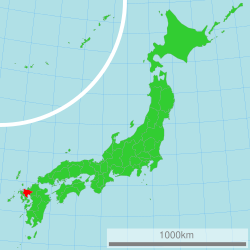
Arita (有田) is a town of approximately 20,000 people in Nishi-Matsuura-gun, in the western half of Saga Prefecture (佐賀県), on Kyūshū’s northwest coast. The town sits in a small valley about 30 km southwest of the more famous Imari port city — the port through which Arita’s porcelain was historically exported to Europe, giving Western collectors the name “Imari ware” for what is technically Arita-yaki. For an international traveler the access points are Fukuoka Airport (FUK) about 80 minutes east by JR Sasebo Line, or Nagasaki Airport (NGS) about 2.5 hours south.
The pottery district itself stretches along the Arita-gawa river through the central town, with 100-plus active kilns, the Kyushu Ceramic Museum (九州陶磁文化館), and the historic Izumiyama porcelain-stone quarry (泉山磁石場) all within walking distance of Arita Station. Geographically, the town’s significance comes from the Izumiyama deposit — a vein of high-quality kaolin (磁石, jiseki) discovered in 1616, of sufficient size and purity to support 400 years of continuous porcelain production. The clay is exceptionally white when fired, with very low impurity content, making it ideal for the kind of fine painted decoration that distinguishes Arita ware from the heavier stonewares of, say, Tokoname or Bizen.
The Izumiyama deposit is now mostly exhausted, and modern Arita kilns use clay imported from Amakusa and other Kyūshū sources. But the geological foundation of the tradition remains the Izumiyama find — without that single 1616 discovery, the entire history below would have unfolded somewhere else, or not at all.
The historical anchor — 1616, Yi Sam-pyeong, and the founding of Japanese porcelain
Arita-yaki has a precise founding date: 1616. In that year, Yi Sam-pyeong (李参平, also known by his Japanese name Risanpei or Kanagae Sanbei), a Korean potter brought to Japan during the 1592-1598 Hideyoshi invasions of Korea, discovered kaolin at the Izumiyama deposit in Arita.
The context matters. Hideyoshi’s Korean campaigns had forcibly relocated several hundred Korean potters to Kyūshū, where they were settled in the domains of the Nabeshima, Shimazu, Mōri, and other clans. Yi Sam-pyeong was assigned to the Nabeshima domain, which controlled Arita; the Nabeshima clan had been searching for kaolin deposits in their territory because Japan, alone among the major East Asian states, did not yet produce porcelain. China had been producing porcelain for roughly 600 years by that point. Korea had been producing it for about 300. Japan, despite being one of the great ceramic-producing societies of the world, had only stoneware and earthenware traditions.
“Before 1616, there was no Japanese porcelain industry. Within twenty years of Yi Sam-pyeong’s discovery, Arita had developed underglaze cobalt, red overglaze enamel, and the Iro-Nabeshima style — the entire technical vocabulary that would define Japanese white porcelain for the next four centuries.”
Yi’s discovery launched what we now call Arita-yaki. Within two decades the town had developed underglaze cobalt (sometsuke 染付) — blue painting on white porcelain, the technique of the early Imari style. By the 1640s Sakaida Kakiemon I (1596-1666) had developed akae, the red overglaze enamel that would define “Kakiemon-style Imari” for European export. In the 1660s Imaemon-gama developed the polychrome Iro-Nabeshima style exclusively for the Nabeshima clan’s diplomatic gift program. By 1660 there were roughly 50 active kilns in Arita, with the Nabeshima clan operating quality-control and export-licensing systems that maintained the regional brand.
-
1616 — Yi Sam-pyeong discovers kaolin at Izumiyama; Japanese porcelain industry begins -
1640s — Sakaida Kakiemon I develops akae red overglaze enamel -
1659 — Dutch East India Company (VOC) places its first large commission; ~200 years of European Imari export begin -
1660s — Imaemon-gama develops Iro-Nabeshima for the Nabeshima daimyō’s diplomatic gift program -
1710 — Meissen produces Europe’s first commercial porcelain, reverse-engineered from Arita technique -
1854 — Meiji opening of Japan ends Arita’s monopoly on Japanese porcelain export -
1977 — Arita-yaki / Imari-yaki designated a METI Traditional Craft Product -
2014 — Sakaida Kakiemon XV designated a Living National Treasure -
2016 — 400th anniversary; ‘1616 / Arita Japan’ modern design line launches with Scholten & Baijings -
2026 — ~150-200 active Arita kilns; Kōyō-gama distributes through Nishitomi Pottery on Amazon JP Global Store
The Imari export era — 1659 to roughly 1860
The Dutch East India Company (VOC) placed its first large commission of Arita porcelain in 1659, after the Chinese Ming-Qing transition (1644) had disrupted China’s porcelain exports to Europe. The VOC needed a substitute supplier; Arita filled the gap. From 1659 to roughly 1860, Arita porcelain was shipped through the port of Imari to Nagasaki — Japan’s only open port during the sakoku period — and from there via Dutch ships to Batavia (modern Jakarta), then to Amsterdam, and from there to dealers across Europe.
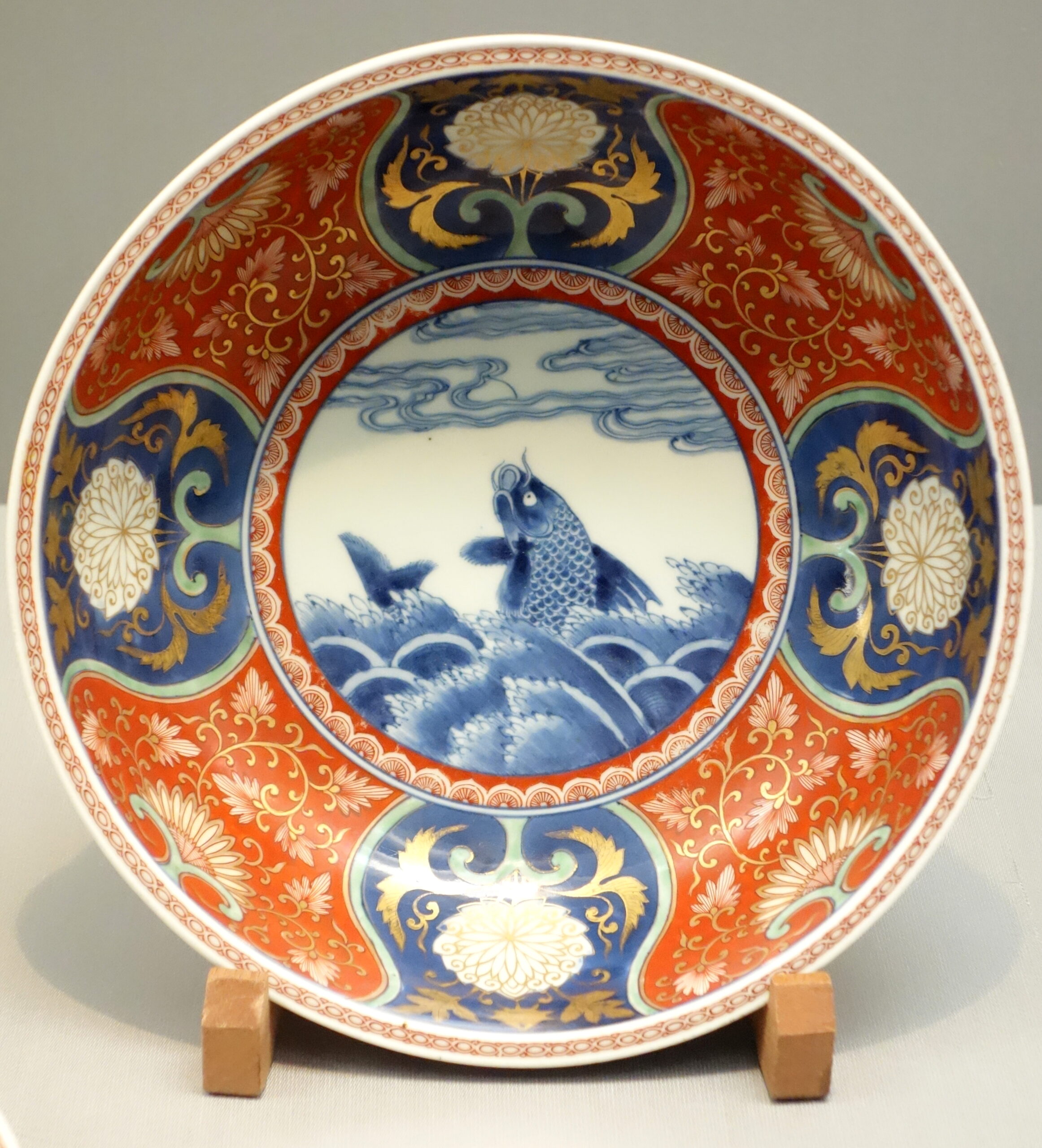
The scale was enormous. By the late 17th century, Arita was producing 200,000-plus pieces per year for European export alone — a volume comparable to modern industrial porcelain. The European customers (Augustus II of Saxony, the royal courts of France, England, Spain, and the German principalities) commissioned pieces sized for European dining rooms and decorated in styles that emphasized “Japanese” visual codes: Kakiemon flowers, dragons, the dense Imari brocade pattern.
The European fascination ran deep enough that the early European porcelain makers explicitly copied Arita pieces. Meissen in Saxony, Sèvres in France, Worcester in England — their early production catalogs are full of pieces that are direct adaptations of Arita originals. Meissen’s first commercial porcelain (1710) was effectively a reverse-engineering of Arita technique, achieved by the Saxon chemist Ehrenfried Walther von Tschirnhaus after years of experimenting with European clays. The Arita tradition is, in this sense, the parent of all European hard-paste porcelain.
The Meiji-era transition, and the “Imari” name confusion
The Meiji opening of Japan in 1854 ended Arita’s monopoly on Japanese porcelain export. New ports opened at Yokohama and Kobe; new kilns developed in other regions (Kutani in Ishikawa, Seto in Aichi, Mino in Gifu); and the centuries-long Arita dominance was broken. The town remained, and remains, the most important porcelain center in Japan, but it now competes with dozens of regional producers rather than holding a structural monopoly.
The “Imari” naming confusion dates to this same period. Through the 17th-19th centuries, “Imari” had been the European name for Arita porcelain, taken from the shipping port. When Arita-style ware began to be produced elsewhere in Japan in the late 19th century, the “Imari” name became applied to several different traditions. Modern Japanese usage distinguishes:
- Arita-yaki (有田焼) — porcelain produced in Arita town, Saga (the subject of this article).
- Imari-yaki (伊万里焼) — technically a 17th-century synonym for Arita-yaki used by European buyers, now also used for porcelain from the actual Imari port city (a smaller, less prestigious production area).
- Iro-Nabeshima — the Nabeshima-clan-commissioned premium polychrome style, distinct from common Arita.
- “Ko-Imari” (古伊万里) — 17th-19th-century antique Arita ware, the most valuable category among collectors.
For an international buyer the practical takeaway is simple: the porcelain you buy from a modern named Arita kiln is what your European ancestors called Imari. The name has just been resolved back to its geographic source.
The 20th century, the METI designation, and the modern industry
Arita-yaki was designated a METI Traditional Craft Product (国指定伝統的工芸品) in 1977 — relatively early among Japanese ceramic traditions, reflecting Arita’s historical primacy. The designation covers porcelain produced in Arita and the surrounding Saga pottery towns (Imari, Hasami) using traditional wheel-throwing and hand-painting techniques. In 2016 Arita celebrated its 400th anniversary with major exhibitions in Tokyo (Mori Arts Center), London (Japan House), and Amsterdam (Rijksmuseum), and launched the “1616 / Arita Japan” modern design line — a collaboration between contemporary Arita kilns and the Dutch designers Scholten & Baijings, producing modern-minimalist Arita tableware that is now widely sold internationally.
In 2026, the modern industry has approximately 150-200 active kilns in and around Arita, structured similarly to other major Japanese pottery centers. At the top sits the Living National Treasure tier (typically 2-4 potters at any given time — the current Sakaida Kakiemon XV, 15th-generation head of the historic Kakiemon kiln, was designated in 2014). Below that sits a named-kiln tier of workshops with multi-generation potter lineages, where Kōyō-gama (the maker of this cup) operates. Below that sits a modern collaborative tier producing design-led Arita ware, including the 1616 / Arita Japan line.
Five generations of European porcelain makers later, the same Arita kilns still throw, carve, paint, and fire by hand. That is the continuity case for this piece.
Kōyō-gama — the maker of this cup
Kōyō-gama (皓洋窯) is a named Arita-yaki kiln operating in Arita town. The workshop specializes in shinogi (彫り) — hand-carved ridged surface texture combined with underglaze cobalt painting. The result is a piece that catches and refracts light along the ridge edges, giving a sculptural quality not found in plain-surface Arita pieces. The kiln distributes through Nishitomi Pottery (西富陶磁器), an Arita-region retailer that aggregates inventory from multiple named kilns for Amazon JP Global Store distribution — the same merchant channel through which several other modest-tier named-kiln Arita pieces reach international buyers.
The kensaki-kobana (剣先小花, “sword-tip small flower”) motif on this cup is a classical Arita design from the 17th-century Imari export vocabulary — a stylized small flower with pointed petals resembling sword tips. Hand-painted in cobalt-blue underglaze, the motif fires permanently into the porcelain glaze layer and will not fade with use. The combination of shinogi carving and underglaze sometsuke is the distinguishing feature: it places this cup squarely in the traditional Arita lineage while keeping the price within range of a daily-use tea cup.
📦 Shipping & where to buy from outside Japan
Amazon JP Global Store currently ships this 128 g cup to most major destinations — the US, EU, UK, Canada, and Australia among them. Estimated shipping cost is roughly $8-$15 USD depending on the destination and method; full landed cost for a single cup typically lands at $22-$30 USD. Porcelain transit breakage rates for this kind of item are around 2% in our observation of the broader Arita / Hasami category, and the thin porcelain wall of the Kōyō-gama piece is more fragile than a stoneware mug but ships well in proper Amazon JP packaging.
For US shoppers specifically, the practical structure is: browse Amazon US first to compare the broader Japanese porcelain category (the 1616 / Arita Japan modern line is available on amazon.com, as are pieces from Genemon-gama and several Hasami producers), then purchase this specific Kōyō-gama piece from Amazon JP Global Store via the link above. Customs duties on personal-import porcelain are typically zero or minimal in major jurisdictions — porcelain dinnerware is one of the freer-flowing personal-import categories. Where the customs threshold matters is on aggregate orders over the local de minimis (currently $800 USD for the US, €150 for the EU, £135 for the UK); a single cup is well under all of those.
Alternative purchase paths worth knowing: maker-direct mail-order via the Arita Ceramic Industry Association (Japanese-language site, but the kiln catalog is comprehensive); proxy services such as Buyee and Tenso for items not on Amazon JP Global Store; and the once-a-year Arita Ceramic Fair (late April to early May) which draws ~1 million visitors annually and runs ~500 stalls along the main street through the central town.
Price snapshot across stores
| Store | Item / variant | Price | Notes |
|---|---|---|---|
| 🇺🇸 Amazon.com (US) | Browse Japanese porcelain tea cups & Arita-yaki | varies (USD) | Best if you’re shopping from the US — Prime shipping, USD pricing, no international customs. Amazon US carries Arita pieces from Genemon-gama, Hasami producers, and the 1616 / Arita Japan modern line — useful for comparing motifs, price tiers, and modern-vs-classical styles. The exact Kōyō-gama kensaki-kobana is sourced from Japan (next row). |
| 🇯🇵 Amazon JP Global Store | Kōyō-gama Kensaki-Kobana Shinogi Yunomi (Blue) — ASIN B0DXYV1R24 | ¥2,162 (≈ $14 USD) | Ships internationally from Japan. ~128 g; estimated shipping $8-$15 USD. Sold by Nishitomi Pottery (西富陶磁器), the Arita-region retailer that aggregates inventory from multiple named kilns. |
| Maker direct (Kōyō-gama via Arita Ceramic Industry Association) | Kōyō-gama catalog including the kensaki-kobana shinogi line | Unconfirmed — check maker site | Japanese-language ordering; international shipping not universally offered. Useful if you want pieces not on Amazon JP Global Store. |
| Proxy services (Buyee / Tenso) | Any Arita kiln listing on Rakuten, Yahoo!Auctions, or maker direct | ¥2,162 + service fees | Worth it if you want access to listings that don’t appear on Amazon JP — e.g., specific Kakiemon or Genemon pieces. Adds ~¥1,000-2,000 service charge plus international shipping. |
USD figures are approximate (¥150/USD baseline as of mid-2026). JPY is the authoritative price for the specific listed item; live pricing on Amazon JP may have shifted since the writing date.
What it does well
The listing identifies Kōyō-gama (皓洋窯) by name. That alone separates it from the bulk of anonymous “Arita-style” gift-box porcelain on Amazon JP, much of which is industrially printed rather than hand-painted.
The ridged surface texture is cut by hand into leather-hard clay before firing. The facets catch light along the edges — a sculptural quality that flat-surfaced porcelain doesn’t have, and that machine-pressed ridge patterns can’t quite mimic.
The kensaki-kobana motif comes directly from the 17th-century Imari export-ware vocabulary. Cobalt-blue underglaze, hand-painted, fired permanently into the glaze layer.
At ¥2,162 (≈ $14 USD), this is the lowest-friction first-Arita-piece purchase a foreign buyer can make. The named-kiln tier typically starts at ¥3,000+; this one undercuts it.
Weaknesses and things to verify before buying
- Thin porcelain wall, pre-warm required. The body is thin enough that pouring boiling water into a cold cup risks thermal shock. The care notes on the listing recommend pre-warming with a splash of hot water before serving — standard for thin Japanese porcelain, but worth knowing if you’re used to thick stoneware mugs.
- Hand-wash recommended. The porcelain itself is dishwasher-tolerant, but underglaze cobalt dulls over decades under detergent wear. If you want a cup you can put through the dishwasher without thinking about it, this is not it.
- No gift-box presentation. The Kōyō-gama listing is bare-cup retail. If you’re buying as a gift, step up to the Fukukasumi “Mangetsu” listing (¥3,190) which comes with a gratitude-box, or buy a separate kiri-wood box.
- Single piece, not a pair. Standard Japanese gifting often comes as a pair (a “his and hers” set). This is a single cup.
- Long-term tea-line staining. White porcelain with cobalt underglaze shows the inside tea-line over decades. For a daily cup this is character; for a display piece, less so.
- International transit breakage ~2%. Porcelain ships well in proper packaging but is fundamentally more fragile than stoneware. If you live in a country with rough last-mile delivery, factor in the small risk and the Amazon JP Global Store return / replacement process.
- Not formal tea-ceremony equipment. Yunomi is daily-tea ware, not the chawan used for whisked matcha. If you came here looking for a tea-ceremony bowl, this is the wrong category.
Conclusion — which buyer type are you?
Looking for Kakiemon, Imaemon, or Iro-Nabeshima pieces. Skip this entry-tier cup; go to maker-direct or premium gallery retail in the ¥30,000-300,000+ range. The Kōyō-gama is a useful daily companion to a collection but not the collection itself.
You drink green tea daily and want one good cup that connects to a real tradition. This Kōyō-gama is the recommended pick — named kiln, hand-carved, hand-painted, ~$14.
You want the cheapest entry into Arita-yaki on Amazon JP. This cup at ¥2,162 is essentially the floor of the named-kiln tier. Below this, you are buying anonymous-factory Hasami or unbranded “Arita-style” pieces.
You wanted a matcha bowl, a coffee mug, a dishwasher-safe daily mug, or a gift-box presentation piece. Different category — look at chawan, mug, or the Fukukasumi gift-box listing instead.
Other ways to approach this purchase
Many kilns offer mail-order via the Arita Ceramic Industry Association. Catalogs are mostly Japanese-language; useful for pieces that don’t reach Amazon JP.
Late April to early May, ~500 stalls along the main street. Roughly 1 million visitors. Prices are typically 10-30% below standard retail; pairing it with a Kyūshū trip is the canonical way to buy.
For listings on Rakuten or Yahoo! Auctions that don’t reach Amazon JP. Adds ¥1,000-2,000 service fee plus shipping; gives access to Genemon and other mid-tier kilns at maker pricing.
If you don’t drink Japanese green tea regularly, the cup will sit unused. Better to wait until your habit demands it than to buy on aesthetics alone.
🏆 Editor’s Pick
❓ Frequently Asked Questions
Is Arita-yaki the same as Imari ware?
Will Amazon JP Global Store ship this cup to my country?
Can I put this cup in the microwave or dishwasher?
Is this a good cup for matcha?
Is this an appropriate gift?
How does Kōyō-gama compare to Kakiemon-gama or Imaemon-gama?
When is the best time to visit Arita itself?
jpmono.com is curated by a Japan-based editorial team working out of Toyama (Hokuriku region) and Nara (Kansai region) and is independent. We do not take payment from the makers we feature; income comes from affiliate links. We don’t physically test every product (we read maker’s specs and source listings); commissions on purchases support the editorial work. Read more about our editorial standards.
AI-assistance note: this article was drafted with the help of a large language model and edited by a human editor working out of Toyama and Nara. All product specs, prices, and historical facts are sourced from the Amazon JP listing as of the writing date and from regional craft-association references; please verify pricing and availability at the retailer before purchasing.
Affiliate disclosure: jpmono.com may earn a commission on qualifying purchases made through links on this page, at no additional cost to you.