![Murakami Kibori Tsuishu Carved Lacquer Tea Saucer (Chataku): Where to Buy [2026]](https://jpmono.com/wp-content/uploads/2026/05/murakami-kibori-tsuishu-chataku-tea-saucer-where-to-buy-2026-featured.jpg)
Murakami Kibori Tsuishu (村上木彫堆朱, “Murakami carved-wood vermilion lacquer”) is the carved lacquerware of Murakami, a former castle town in the far north of Niigata Prefecture. A chataku (茶托) is the small saucer that sits under a teacup in Japanese service — a quiet, functional object that, in this tradition, becomes a piece of relief sculpture. The wood base is chiseled with a pattern first; only then are coat after coat of urushi (Japanese lacquer) built up over the carving, so the raised design shows through the polished surface rather than being painted on top of it.
What makes Murakami’s version distinct internationally is the finish. Where Kamakura-bori from Kanagawa carves basswood and lays comparatively thin lacquer, Murakami’s hallmark is a deep, matte, hand-rubbed surface that ages toward a soft luster with years of handling. It was designated a National Traditional Craft (伝統的工芸品) by Japan’s Ministry of Economy, Trade and Industry in 1976. This is everyday luxury in the most literal sense: sturdy carved wood under repeated urushi coats, meant to be used and to deepen in color the longer you keep it.
This guide is written for international buyers weighing a set of five Murakami Tsuishu chataku (ASIN B0FM7BZSVW) — what the craft actually is, who it suits, where it comes from, and the realistic paths to buy it from outside Japan. A note on data up front: the Amazon dataset available at the time of writing returned no live pricing, no product imagery, and no alternate variants for this listing, so several cells below read “not stated — verify at the listing.” We do not fabricate those values.
🔄 Last updated:
⏱️ Read time: ~9 min
![Murakami Kibori Tsuishu Carved Lacquer Tea Saucer (Chataku): Where to Buy [2026]](https://m.media-amazon.com/images/I/51aqCMn1G4L._SL500_.jpg)
- Who this is for — and who should skip it
- Product overview (from published specs)
- Where this comes from — place, era, and the craft tradition
- How does it compare?
- Price snapshot across stores
- What it does well
- Weaknesses and things to verify before buying
- Conclusion — which buyer type are you?
- Other ways to approach this purchase
- 🏆 Editor’s Pick
- ❓ Frequently Asked Questions
Who this is for — and who should skip it
- Want a daily-use object with verifiable craft heritage, not a decorative trinket
- Appreciate a deep, matte, hand-rubbed urushi surface that changes with age
- Serve tea (or small sweets) often enough that a set of five earns its place
- Already own related lacquerware and want a coherent carved-lacquer collection
- Are comfortable hand-washing and avoiding dishwashers and microwaves
- Want dishwasher- and microwave-safe tableware for hard daily turnover
- Need confirmed dimensions and price before ordering (listing data was thin)
- Prefer a single saucer rather than committing to a set of five
- Expect glossy, painted-on color rather than carved relief under lacquer
- Are not set up to receive an international shipment with possible customs duty

Product overview (from published specs)
The table below reflects what the source listing and the spec brief actually state. Cells marked “not stated” were absent from the dataset at the time of writing; treat the live Amazon listing as authoritative for those.
Murakami Kibori Tsuishu Carved Lacquer Tea Saucer (Chataku)
元箱 村上木彫堆朱 村上堆朱 工芸 牡丹唐草 茶托 5客セット
通常6~7日以内に発送します。 · Sold by JIMMY Online Shop · ASIN B0FM7BZSVW
Price and availability as of 2026-08-31 02:30 JST. The Amazon listing at the time of purchase is authoritative. jpmono.com earns a commission on qualifying purchases at no extra cost to you.
| Attribute | Detail (per available data) |
|---|---|
| Item | Chataku (tea saucer), set of 5 |
| Craft | Murakami Kibori Tsuishu (村上木彫堆朱) — carved-wood base, built-up vermilion urushi |
| Material | Carved wood base finished with layered Japanese lacquer (urushi) |
| Origin | Murakami, Niigata Prefecture, Japan |
| Designation | National Traditional Craft (METI), designated 1976 |
| Dimensions / weight | Not stated in dataset — verify at the listing |
| Price | Not returned by the dataset at the time of writing — verify at the listing |
| ASIN (Amazon JP) | B0FM7BZSVW |
| Source | Amazon JP Global Store listing (sourced); Amazon US (search, comparable goods) |
Per the dataset as of May 31, 2026: only the ASIN and craft description were confirmed; live price, dimensions, and product imagery were unavailable. Specs and stock fluctuate — follow the affiliate link for current data.
📖 Glossary — Japanese craft terms used here
- Chataku (茶托) — the small saucer placed under a teacup (yunomi) in Japanese tea service; the equivalent of a coaster, but part of the formal serving set.
- Urushi (漆) — Japanese lacquer, the refined sap of the lacquer tree. Applied in thin coats and cured in humidity; it hardens into a durable, water-resistant film.
- Tsuishu (堆朱) — “piled vermilion”: layers of red urushi built up over a carved base so the relief reads through the surface.
- Tsuikoku (堆黒) — the black-over-vermilion variant of the same built-up carved-lacquer technique.
- Kibori (木彫) — wood carving; in Murakami, the pattern is chiseled into the wood base before lacquering, not into the lacquer itself.
- Dentō Kōgeihin (伝統的工芸品) — “National Traditional Craft,” a formal designation by Japan’s Ministry of Economy, Trade and Industry (METI).

Where this comes from — place, era, and the craft tradition

Murakami sits at the northern edge of Niigata Prefecture, on the Sea of Japan coast of central Japan’s Chūbu region, close to the Yamagata border. This is snow country: long, wet winters and a humid coastal climate. Humidity matters for this craft, because urushi cures — hardens — in moist air rather than dry, so a damp regional climate is an asset to lacquer work rather than an obstacle. The town grew as a castle town under its own domain in the Edo period, and domain patronage is the recurring reason crafts like this one took root and stayed.
The historical anchor is the Edo period (1603–1868), when local urushi tapping flourished around Murakami and the domain encouraged the craft. The defining technical move belongs to Murakami’s carvers: working under the domain, relief artisans chiseled patterns directly into a wood base, then built up layers of vermilion (tsuishu) or black-over-vermilion (tsuikoku) urushi so the carving shows through the finished, polished surface. That sequence — carve first, lacquer after — is the opposite of painting a design onto smooth lacquer, and it is what gives Murakami pieces their tactile, sculptural depth.
- Jōmon period — Lacquer (urushi) is already worked in Japan; some of the world’s oldest lacquered artifacts are Jōmon-era (national context, not Murakami-specific).
- Edo period (1603–1868) — Urushi tapping flourishes around Murakami; the castle town’s domain patronizes local lacquer work.
- Edo period — Relief carvers chisel patterns into a wood base, then pile vermilion (tsuishu) or black-over-vermilion (tsuikoku) urushi so the carving reads through the surface.
- 1976 — Murakami Kibori Tsuishu is designated a National Traditional Craft (伝統的工芸品) by Japan’s METI.
- Today (2026) — Murakami workshops continue the deep, matte hand-rubbed finish that ages toward a soft luster.
The continuity case here is the carving-then-lacquering method itself: it is a labor sequence that has not been mechanized away, because the relief and the layered coats are what define the product. A chataku is a fitting entry point to the tradition — small, useful, and made by the same logic as the larger trays and boxes the town is known for.
“In Murakami the pattern is carved into the wood first, and the lacquer is built up afterward — so the design is part of the object, not painted on its skin.”

How does it compare?
Carved-lacquer cousins, other regional lacquerware, and Niigata neighbors worth comparing before you commit.
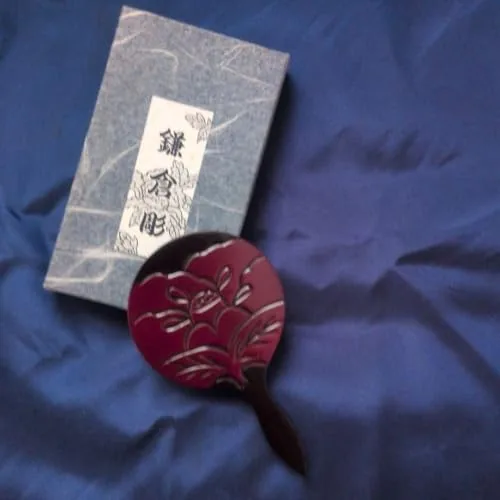 Carved lacquer cousin: Kamakura-bori →
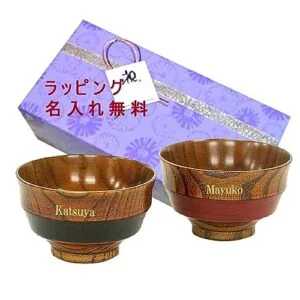 Echizen lacquer soup bowl →
Wajima Nuri sake cup pair →
Kawatsura Akita lacquer bowl →
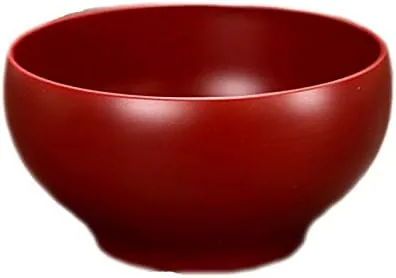 Aizu Nuri soup bowl →
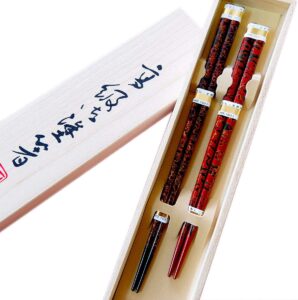 Tsugaru Nuri chopsticks →
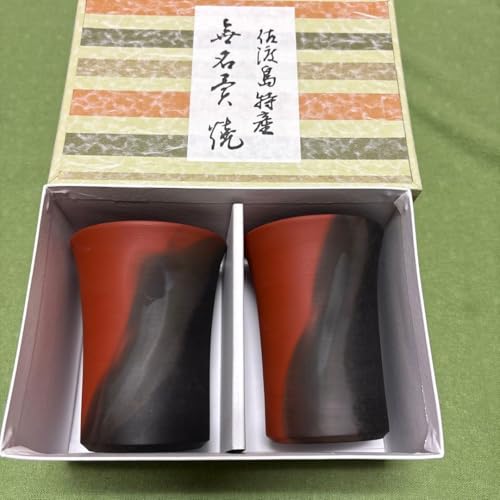 Niigata neighbor: Mumyoi-yaki yunomi →
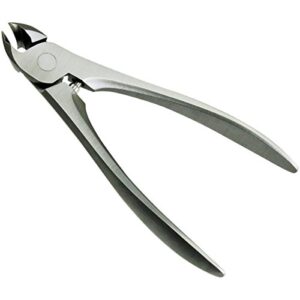 Niigata neighbor: Suwada nipper →
Price snapshot across stores
USD figures are approximate estimates at a ¥150/USD baseline as of May 2026; the JPY price for the specific item is the authoritative one. The dataset did not return a live JPY price for this listing, so the JPY/USD cells read “verify at listing.”
| Store | Item / Variant | Price (JPY + USD est.) | Notes |
|---|---|---|---|
| 🇺🇸 Amazon.com (US) | Browse Japanese lacquerware & tea accessories | varies (USD) | Best if you are shopping from the US — Prime shipping, USD pricing, no international customs. Amazon US carries Japanese lacquer trays, coasters, and tea sets from various makers for comparison; the exact Murakami Tsuishu piece is sourced from Japan (next row). |
| 🇯🇵 Amazon JP Global Store | Murakami Tsuishu chataku, set of 5 (ASIN B0FM7BZSVW) | Verify at listing (not returned by dataset) | The sourced listing for the exact item. Ships internationally from Japan to most major destinations; customs duty may apply on arrival. |
| Maker direct | Murakami workshop / regional craft cooperative | Varies; not in dataset | Murakami workshops sell through regional craft channels; most do not ship internationally directly. Useful for confirming authenticity and variant range. |
| Proxy services (Buyee / Tenso) | Forwarding from Japan-only sellers | Item price + forwarding fee | Use only if a domestic-only Japanese listing is cheaper or carries a variant the Global Store lacks; adds a service fee and a second shipping leg. |
What it does well
Weaknesses and things to verify before buying
- No price in the dataset. The source listing returned no live JPY price at the time of writing. Confirm the current price at the listing before ordering — do not assume.
- No confirmed dimensions or weight. Saucer diameter was not stated. If you need a specific size to match your cups, verify on the listing page.
- No product photograph was available in the dataset. The title card above is representative, not the item image. Check the actual photo and the vermilion/black variant at the retailer.
- Care is restrictive. Urushi lacquerware is hand-wash only. No dishwasher, no microwave, and avoid prolonged soaking, abrasive scrubbing, and direct sunlight.
- International shipping and customs. The item ships from Japan via the Global Store; shipping to the US/EU commonly runs roughly $15–$40, and orders over your country’s de-minimis threshold may incur import duty and tax.
- Set, not single. This is a set of five. If you only want one saucer, this listing is not the right format.
- Urushi and sensitivity. Fully cured urushi is inert, but a small number of people are sensitive to raw lacquer. Reputable finished pieces are cured; this is noted only for completeness.
Conclusion — which buyer type are you?
Other ways to approach this purchase
🏆 Editor’s Pick
❓ Frequently Asked Questions
What exactly is a chataku, and how is it used?
A chataku (茶托) is the small saucer placed under a teacup (yunomi) in Japanese tea service. It catches drips, protects the table, and signals a moment of hospitality when serving guests. A set of five is the standard guest-service quantity in Japan.
How is Murakami Tsuishu different from Kamakura-bori?
Both are “carved lacquer.” Murakami Kibori Tsuishu (Niigata) chisels the pattern into the wood base and then builds up many urushi coats for a deep, matte, hand-rubbed finish. Kamakura-bori (Kanagawa) carves basswood with comparatively thinner lacquer over the relief. See the cross-link to the Kamakura-bori hand mirror to compare.
Does it ship internationally, and what about customs?
The Amazon JP Global Store listing ships from Japan to most major destinations. Shipping to the US or EU commonly runs about $15–$40, and orders above your country’s de-minimis threshold may incur import duty and tax on arrival. Confirm the shipping quote and delivery estimate at checkout.
How do I care for urushi lacquerware?
Hand-wash with mild soap and a soft cloth, then dry promptly. Do not use a dishwasher or microwave, avoid prolonged soaking and abrasive scrubbing, and keep the piece out of prolonged direct sunlight. Treated this way, the finish deepens toward a soft luster over time.
Why is no price shown in this guide?
The dataset available at the time of writing did not return a live price for this listing. Rather than guess, we direct you to the affiliate link for the current JPY price. The JPY figure at the listing is the authoritative one; any USD figures elsewhere are estimates at a ¥150/USD baseline.
Is it safe for everyday food and drink contact?
Fully cured urushi is a stable, water-resistant, food-safe film, which is why lacquerware has been used for tableware in Japan for millennia. A chataku mostly holds the cup rather than food directly. A small minority of people are sensitive to raw (uncured) lacquer; finished pieces are cured.
jpmono.com is curated by a Japan-based editorial team (working out of Toyama in the Hokuriku region and Nara in Kansai) and is independent. We do not take payment from the makers we feature; income comes from affiliate links. We do not physically test every product — we read maker’s specs and source listings.
This article was prepared with AI assistance and reviewed against the available source listing data. Specifications, prices, and availability were not all confirmable from the dataset at the time of writing; verify current details at the retailer before purchasing.
Affiliate disclosure: jpmono.com may earn a commission on qualifying purchases made through links on this page, at no additional cost to you.