![Oshima Tsumugi Silk Stole: Amami’s Mud-Dyed Kasuri Weave Guide [2026]](https://jpmono.com/wp-content/uploads/2026/05/oshima-tsumugi-silk-stole-where-to-buy-2026-featured.jpg)
Oshima Tsumugi (本場大島紬, honba ōshima tsumugi) is a silk cloth woven on Amami Ōshima — a subtropical island roughly halfway between Kyūshū and Okinawa — and on the Kagoshima mainland. Its color does not come from a dye vat in the usual sense. The thread is steeped in a tannin-rich decoction of sharinbai (車輪梅, the local “Teechi-gi” shrub), then kneaded by hand in iron-rich mud paddies until it turns the deep, supple brownish-black that is the textile’s signature. The result is one of the most labor-intensive silk weaves anywhere in the world.
For an international reader, a mud-dyed silk stole is an unusually approachable entry point into a textile that is normally encountered as a full kimono. It is light, it resists creasing, and it carries warmth without bulk — a natural fit for a scarf or shawl rather than another necktie. Oshima Tsumugi is counted among Japan’s three great tsumugi silks, alongside Yūki and Ushikubi, and under the Satsuma domain it was a prized tribute and export cloth.
This guide is written for readers choosing an authentic mud-dyed (dorozome) silk stole from outside Japan. We cover what separates genuine honba cloth from imitations, the dyeing and weaving terms you will see in listings, how the format compares to its tsumugi siblings, and the realistic paths to buy one and have it shipped internationally. Note up front: only the Amazon JP Global Store listing reference (ASIN B0GJMVG4D4) was available for this article; live pricing and stock were unavailable at the time of writing, so verify both at the retailer before purchasing.
🔄 Updated:
⏱️ Read time: ~12 min
![Oshima Tsumugi Silk Stole: Amami's Mud-Dyed Kasuri Weave Guide [2026]](https://m.media-amazon.com/images/I/31bui1g0ZuL._SL500_.jpg)
- Who this is for — and who should skip it
- Product overview (from published specs)
- 📍 Where this comes from — place, era, and the craft tradition
- 📌 How does it compare?
- Price snapshot across stores
- What it does well
- Weaknesses and things to verify before buying
- Conclusion — which buyer type are you?
- Other ways to approach this purchase
- 🏆 Editor’s Pick
- ❓ Frequently Asked Questions
Who this is for — and who should skip it
- Want a piece of a recognized Japanese traditional craft you can actually wear daily, not display
- Value natural mud-and-plant dyeing over synthetic color
- Appreciate kasuri (絣) pattern precision and are willing to pay for hand labor
- Prefer a lightweight, crease-resistant silk that travels well
- Are comfortable buying from Japan and verifying authenticity marks before purchase
- Want a bright, saturated color — mud dyeing trends earthy and dark
- Need a budget accessory; genuine honba silk is priced for its labor
- Cannot tell honba from machine-printed imitation and will not check the certification mark
- Expect machine-washable, hard-wearing fabric — this is delicate silk
- Need it shipped instantly with no customs paperwork

Product overview (from published specs)
Source data for this piece was thin. The table below draws on the Amazon JP Global Store listing reference and on the documented characteristics of honba Oshima Tsumugi; cells we could not confirm from the supplied data are marked plainly rather than guessed.
Oshima Tsumugi Silk Stole
大島紬 ストール 黒 シルク
通常5~6日以内に発送します。 · Sold by スタイルノート · ASIN B0GJMVG4D4
Price and availability as of 2026-08-31 02:30 JST. The Amazon listing at the time of purchase is authoritative. jpmono.com earns a commission on qualifying purchases at no extra cost to you.
| Attribute | Detail | Source |
|---|---|---|
| Item | Honba Oshima Tsumugi silk stole / shawl (ASIN B0GJMVG4D4) | Amazon JP listing ref. |
| Material | Silk | Craft definition |
| Dyeing | Dorozome (泥染め) — sharinbai tannin + iron-mud kneading | Craft definition |
| Patterning | Shimebata (締機) resist kasuri — woven, dyed, unwoven, re-woven | Craft definition |
| Origin | Amami Ōshima & Kagoshima mainland, Kyūshū / Satsunan | Craft definition |
| Format | Stole / shawl (wearable, vs. full kimono cloth) | Article spec |
| Dimensions / weight | Unconfirmed — check listing before buying | Not in supplied data |
| Price | Live price unavailable at time of writing — verify at retailer | Not in supplied data |
📖 Glossary — key terms (tap to open)
Tsumugi (紬) — silk woven from spun, often hand-twisted yarn, giving a softer, more textured cloth than smooth filament silk. Historically an everyday and merchant-class silk rather than formal court silk.
Honba (本場) — literally “the genuine production area.” On a label it signals cloth made in the authentic district by certified process, as opposed to imitation or out-of-region weaving.
Dorozome (泥染め, “mud dyeing”) — the Amami dye method: silk is first soaked in a tannin decoction of sharinbai, then worked into iron-rich mud, where tannin and iron react to fix a deep brownish-black.
Sharinbai / Teechi-gi (車輪梅, Rhaphiolepis) — the evergreen shrub whose bark and wood supply the tannin for the first dye bath.
Shimebata (締機) — the resist process unique to this craft: pattern threads are first tightly woven into a temporary “kasuri mushiro,” dyed, then unwoven and re-woven into the finished cloth so the undyed points line up into a pattern.
Kasuri (絣) — ikat; a pattern made by dyeing the yarn before weaving so the design emerges from the alignment of the threads, not from printing on finished cloth.

📍 Where this comes from — place, era, and the craft tradition

Amami Ōshima lies in the Satsunan island chain, the stepping stones between Kyūshū and Okinawa, washed by the warm Kuroshio current. The climate is subtropical and humid, the hills are laced with iron-rich mud fields, and the sharinbai shrub grows readily. Those three things — silk thread, tannin-bearing wood, and iron mud — are exactly the raw materials the dyeing tradition needs, which is a large part of why the craft took root here and nowhere else in quite the same form.
The textile’s history on the island is traditionally dated back more than 1,300 years. It enters the documented record more sharply under the Satsuma domain, the powerful southern Kyūshū house that brought Amami under its administration in the early 17th century. Oshima Tsumugi became a prized tribute cloth and, later, a sought-after export silk — a luxury whose value rested on the sheer quantity of hand labor folded into every length.
- ~8th century — Silk weaving on Amami traditionally dated to more than 1,300 years ago.
- 1609 — The Satsuma domain brings Amami under its control; the island’s silk becomes a domain tribute cloth.
- Edo period (1603–1868) — Refined as a prized Satsuma tribute and export silk.
- Meiji era onward — The shimebata resist process is refined, raising kasuri precision to its modern level.
- 1975 — Recognized among Japan’s designated traditional crafts (dentō kōgeihin).
- 2026 — Still woven on Amami Ōshima and the Kagoshima mainland; counted among Japan’s three great tsumugi.
The technical heart of the cloth is its inefficiency, and that is meant as praise. In shimebata, the pattern threads are first woven into a temporary mat purely so the right points can be tied off against the dye, then the mat is unwoven and the threads are re-woven into the actual cloth, this time so the undyed points align into the finished kasuri. A single bolt can pass through dozens of separate hand processes and many rounds of mud-dyeing. This is why Oshima Tsumugi is regularly described as one of the most time-consuming silk textiles in the world.
“The color is not painted onto the silk. It is grown into it — tannin from a hillside shrub, reacting with iron from a mud paddy, kneaded in by hand until the thread itself turns black.”

📌 How does it compare?
 Shiro-Satsuma sake cupSame prefecture (Kagoshima)
 Satsuma Kiriko cut glassSame prefecture (Kagoshima)
Yūki Tsumugi silkTsumugi sibling
 Chichibu Meisen silk stoleAnother wearable silk format
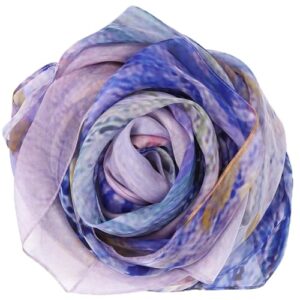 Kaga Yūzen silk scarfDyed (vs. woven) silk
Kiryū-ori silk weavingAnother silk-weaving center
Ryūkyū BingataSouthern-islands textile
Price snapshot across stores
Live pricing was unavailable from our source data, so the figures below describe the buying path rather than a confirmed number. Verify the current price at the retailer before purchasing.
| Store | Item / Variant | Price | Notes |
|---|---|---|---|
| 🇺🇸 Amazon.com (US) | Browse Japanese silk stoles & tsumugi textiles | varies (USD) | Best if you are shopping from the US — Prime shipping, USD pricing, no international customs. Amazon US carries Japanese silk scarves and stoles for comparison; the specific honba Oshima piece ships from Japan (next row). |
| 🇯🇵 Amazon JP Global Store | Honba Oshima Tsumugi mud-dyed silk stole (B0GJMVG4D4) | Price unavailable at writing — verify | The sourced listing for this exact piece. Ships internationally from Japan to most major destinations. |
| Maker direct | Amami / Kagoshima Oshima Tsumugi cooperatives | varies | Often the best authenticity assurance (certification mark) but may not ship abroad directly. |
| Proxy services (Buyee / Tenso) | Domestic-only listings forwarded abroad | item + fees + forwarding | Use when a maker or shop sells only within Japan. Adds service fees and a second shipping leg. |
What it does well
Weaknesses and things to verify before buying
- Authenticity is easy to fake. Machine-printed imitations of the kasuri look exist. Look for the honba certification mark / stamp, and buy from sources that document it.
- Price reflects labor. Genuine hand-woven, mud-dyed silk is not a budget accessory; if a listing is unusually cheap, treat it with suspicion.
- Color is earthy and dark. If you want bright color, this craft will disappoint by design — its identity is the mud-dyed black-brown.
- Delicate care. Silk is not machine-washable; expect hand care or specialist cleaning, and protect it from snags.
- Dimensions were not in our source data. Stole vs. shawl width changes the drape — confirm length and width on the listing before buying.
- Pricing and stock unconfirmed. Only the JP Global Store listing reference was available; live price and availability must be checked at the retailer.
- International shipping and customs. Cross-border orders can attract duties above local thresholds; factor that into the total.
Conclusion — which buyer type are you?
Other ways to approach this purchase
🏆 Editor’s Pick
❓ Frequently Asked Questions
What makes Oshima Tsumugi “mud-dyed,” and is it really mud?
How can I tell a genuine piece from a printed imitation?
Does it ship internationally?
How do I care for a mud-dyed silk stole?
How does it compare to Yūki Tsumugi?
Why was no price shown in this guide?
jpmono.com is curated by a Japan-based editorial team (working out of Toyama in the Hokuriku region and Nara in Kansai) and is independent. We don’t take payment from the makers we feature; income comes from affiliate links. We don’t physically test every product — we read maker specs and source listings. Read more about our editorial standards on our About page.
🤖 This article was drafted with AI assistance and reviewed against the supplied source data. Specifications, pricing, and availability should be confirmed at the retailer before purchase; where our source data was incomplete, we have said so rather than fill the gap with assumptions.
Affiliate disclosure: jpmono.com may earn a commission on qualifying purchases made through links on this page, at no additional cost to you.