![Keijusha Etchu Yatsuo Washi Katazome Card Case: Where to Buy [2026]](https://jpmono.com/wp-content/uploads/2026/05/japan-map-regions-and-prefectures-800x1050.png)
The Keijusha (桂樹舎) card case is a business-card holder — a meishi-ire (名刺入れ, “name-card case”) — made not from leather or metal but from stencil-dyed handmade paper. The paper is Etchū Yatsuo washi (越中八尾和紙), produced in the Yatsuo district of Toyama City on the Sea of Japan coast. Keijusha is the workshop that, more than any other, carries patterned Yatsuo washi into modern everyday goods, and it sits squarely in the lineage of two of the twentieth century’s most important Japanese craft figures: Yanagi Sōetsu, who founded the mingei folk-craft movement, and Serizawa Keisuke, the stencil-dyeing master.
What makes this object worth an international reader’s attention is the combination it represents. Yatsuo washi was historically the wrapping paper for Toyama’s famous traveling medicine peddlers, so it was bred for durability and daily handling rather than for display. Keijusha’s founder, Yoshida Keisuke, studied that workhorse paper through the lens of mingei aesthetics and Serizawa’s katazome (型染め, “stencil dyeing”), and the result is paper goods that are tactile, patterned, and built to be carried — card cases, coin purses, book covers, and tissue boxes among them.
This guide is written for readers deciding whether a washi card case fits how they actually use one, and for those weighing it against the other Japanese paper and craft goods we have covered. We cover what the object is, where it comes from, who it suits, who should skip it, and the realistic paths to sourcing it from outside Japan. Verify the current price and stock at the retailer before purchasing.
📅 Published: · 🔄 Updated: · ⏱️ Read time: ~9 min
- Who this is for — and who should skip it
- Product overview (from published specs)
- 📍 Where this comes from — place, era, and the craft tradition
- 📌 How does it compare?
- Buying options
- What it does well
- Weaknesses and things to verify before buying
- Conclusion — which buyer type are you?
- Other ways to approach this purchase
- ❓ Frequently Asked Questions
Who this is for — and who should skip it
- Want a card case that is light, warm to the touch, and unlike a metal or leather one
- Appreciate the mingei folk-craft tradition and Serizawa-style stencil patterns
- Are buying a thoughtful, conversation-starting gift with a clear regional story
- Already collect Japanese washi goods and want a piece from Toyama specifically
- Carry a modest number of cards and handle them with ordinary care
- Need a waterproof or rigid case that shrugs off being dropped in a bag pocket
- Want to carry a thick stack of cards plus credit cards and coins
- Expect a guaranteed specific color or pattern (these vary by run)
- Are unwilling to treat paper as paper — it will show wear with heavy daily use
- Need same-week delivery and are not willing to wait for international shipping

Product overview (from published specs)
The material and construction of Etchū Yatsuo washi card cases are characteristic of Keijusha’s washi work. Exact dimensions and patterns can vary between pieces, so compare those details before purchase.
| Attribute | Detail | Source |
|---|---|---|
| Item type | Business-card case (meishi-ire) | Spec / category |
| Material | Etchū Yatsuo washi (handmade paper), stencil-dyed | Maker tradition |
| Decoration technique | Katazome (stencil dyeing) | Maker tradition |
| Maker | Keijusha (桂樹舎), Yatsuo, Toyama City | Spec |
| Origin | Toyama Prefecture, Hokuriku region, Japan | Spec |
| Pattern | Varies by production run | Maker line |
| Dimensions / weight | — | — |
📖 Glossary — key terms
- Washi (和紙, “Japanese paper”) — handmade paper made from plant fibers such as kōzo (paper mulberry); stronger and longer-fibered than wood-pulp paper.
- Katazome (型染め, “stencil dyeing”) — a resist-dyeing method in which a paper stencil and rice paste are used to print repeating patterns; the technique Serizawa Keisuke is known for.
- Mingei (民藝, “folk craft”) — the movement, articulated by Yanagi Sōetsu, that found beauty in everyday objects made by anonymous craftspeople for ordinary use.
- Meishi-ire (名刺入れ) — a business-card case; an everyday item in Japanese professional life.
- Etchū (越中) — the old province name for present-day Toyama Prefecture.
- Han-satsu (藩札) — paper currency issued by a feudal domain (han) during the Edo period.
- Kōzo (楮) — paper mulberry, the most common fiber in durable washi.

📍 Where this comes from — place, era, and the craft tradition

Toyama Prefecture occupies a deep bay on the Sea of Japan, ringed on three sides by mountains — the Tateyama range to the east and the Hida highlands to the south. Yatsuo lies on that southern edge, where the Jōganji and Ida river systems carry clean, cold mountain water down toward the plain. Clean running water and cold winters are exactly the conditions paper-making wants: cold water keeps the fibers crisp and slows bacterial growth during the long soaking and beating steps, and the hill country supplied the kōzo mulberry. Yatsuo grew as a market town where mountain and plain met, and paper became one of its defining trades.
The historical engine behind Yatsuo washi, though, was not paper for its own sake — it was medicine.
Toyama’s traveling medicine sellers, the baiyaku (売薬), built one of Edo Japan’s most remarkable distribution networks. Under the patronage of the Maeda lords, peddlers fanned out across the country carrying boxes of household remedies, leaving the medicine with families and collecting payment only for what had been used on the next visit — a “use first, pay later” system that depended on reliable paper to wrap each dose. That demand bred a paper that was tough, foldable, and made by the thousand: a working material, not a luxury one. Yatsuo washi’s everyday-product character comes directly from this.
- 1690 — Toyama’s placement-medicine (baiyaku) trade takes shape under the Maeda domain; Yatsuo washi becomes the wrapping paper for the remedies.
- Edo period — Gokayama paper, in the same prefecture, serves the Kaga Maeda domain as official paper — including for han-satsu currency and koban wrapping.
- 1925–26 — Yanagi Sōetsu coins the term mingei and launches the folk-craft movement, reframing everyday handmade goods as objects of beauty.
- 1956 — Serizawa Keisuke is recognized as a holder of Important Intangible Cultural Property status for katazome stencil dyeing.
- Mid-20th c. — Yoshida Keisuke founds Keijusha in Yatsuo, applying mingei thinking and Serizawa’s dyeing to patterned Yatsuo washi goods.
- 1988 — Etchū washi is designated a National Traditional Craft (METI), spanning the Yatsuo, Taira/Gokayama, and Bikadani districts.
- 2026 — Keijusha continues to produce patterned Yatsuo washi card cases, purses, and book covers in Toyama.
Etchū washi is today a nationally designated traditional craft that spans three Toyama districts: Yatsuo in Toyama City, Taira/Gokayama in Nanto, and Bikadani in Asahi. Each carried a slightly different role. Gokayama paper, deep in the steep-roofed mountain villages later inscribed by UNESCO, served the Kaga Maeda domain as official paper — used for han-satsu domain currency and for wrapping koban gold coins, which demanded a paper of consistent quality and resistance to wear. Yatsuo, by contrast, was the paper of commerce and the road.
Keijusha is the modern face of patterned Yatsuo washi. Its founder, Yoshida Keisuke, studied under the orbit of Yanagi Sōetsu’s mingei movement and learned the katazome stencil dyeing associated with Serizawa Keisuke — the same technique Serizawa used on his celebrated calendars and book covers. Rather than treating washi as a flat surface for art, Keijusha makes it into objects to be carried: card cases, coin purses, book covers, and tissue boxes. The continuity case here is not centuries of an unbroken single family line but something subtler — a craft material with deep regional roots, redirected in the twentieth century into design objects that keep the paper in daily hands.
“The paper that once wrapped a peddler’s medicine now wraps a stranger’s business card — the same tough, foldable Yatsuo washi, asked to do the same quiet job of protecting something small and important.”

📌 How does it compare?
Related guides on jpmono.com — other Toyama crafts, washi paper, and dyeing traditions worth weighing alongside this card case:
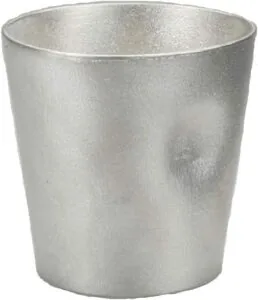 Nousaku Tin Tumbler (Toyama)Takaoka metalcasting from the same region
Echizen Washi GoshuinchoWashi paper goods — different origin
 Awa Awagami Fine Art PaperTokushima washi for art & print
 Sekishu Washi Scroll PaperShimane UNESCO washi
 Gifu Chochin Mino Washi LanternMino washi in a lantern form
 Ise-Katagami Dyeing StencilThe stencil craft behind katazome
 Kanazawa Gold Leaf (Ishikawa)Neighboring Hokuriku craft
Buying options
Prices for handmade washi card cases vary by material, construction, and pattern. Any USD amount is an approximate conversion at a ¥150/USD baseline.
| Store | Item / Variant | Price | Notes |
|---|---|---|---|
| 🇺🇸 Amazon US (search) | Browse Japanese washi paper goods & card cases | varies (USD) | Best if you are shopping from the US — Prime shipping, USD pricing, no international customs. Amazon US carries Japanese washi stationery and paper goods from several makers; Keijusha’s exact Yatsuo washi case is sourced from Japan (next row). |
| 🇯🇵 Amazon JP Global Store | Keijusha Yatsuo washi katazome card case (item B0F67C33DK) | — | International shipping from Japan may be available. |
| Maker direct | Keijusha (桂樹舎), Yatsuo | Varies | The workshop’s own shop carries the broadest pattern selection; international shipping policies vary — confirm before ordering. |
| Proxy services (Buyee / Tenso) | Forwarded from JP retailers | Item price + service fee + forwarding | Useful when a domestic-only option has a pattern you want; adds a handling fee and a consolidation step. |
What it does well
Weaknesses and things to verify before buying
- It is paper. Washi is tougher than ordinary paper, but it is not leather or metal; expect visible wear, softening at the corners, and vulnerability to water with heavy daily use.
- Pattern is not guaranteed. Katazome runs rotate, so the exact pattern and color may differ between production runs. Confirm the pattern and color before purchase.
- Capacity is modest. These cases are sized for business cards, not for doubling as a wallet with credit cards and coins. Verify the dimensions if you carry a thick stack.
- Fit is unconfirmed. Check the card-case capacity before assuming it suits your cards.
- Price not shown here. No live price was retrievable at the time of writing — do not assume a figure; check the retailer.
- International shipping adds time and possibly duties. Buying from Amazon JP Global Store or via a proxy means longer transit and a customs check above local thresholds.
Conclusion — which buyer type are you?
Other ways to approach this purchase
❓ Frequently Asked Questions
Can I buy this from outside Japan?
Yes. Washi card cases of this type are typically available through the Amazon JP Global Store, which ships internationally to most major destinations. If you are in the US, you can also browse comparable Japanese washi paper goods on Amazon US for faster domestic delivery, though Etchū-Yatsuo pieces ship from Japan.
Is washi paper durable enough for a card case used daily?
Washi is far stronger than ordinary wood-pulp paper because of its long plant fibers, and Yatsuo washi was historically bred for the rough handling of the medicine trade. That said, it is still paper: it will soften at the corners and show wear over time, and it is not waterproof. With ordinary care it holds up well for everyday card use.
What is katazome, and how is the pattern made?
Katazome is a resist-dyeing technique in which a cut paper stencil and rice paste are used to print repeating patterns onto the surface. It is the method associated with Serizawa Keisuke, recognized in 1956 as a holder of Important Intangible Cultural Property status, and it is central to Keijusha’s patterned washi.
How is this different from the other washi items on jpmono?
It differs by origin and by product type. Echizen, Awa, Sekishū, Mino, and Tosa washi come from other prefectures and are covered as paper or paper-based objects of their own; this is Toyama’s Etchū Yatsuo washi made into a stencil-dyed card case. The Ise-katagami guide covers the stencil craft behind katazome itself.
How do I care for a washi card case?
Keep it dry, avoid prolonged direct sunlight to prevent the dyes from fading, and do not overstuff it. If it gets damp, let it air-dry flat rather than applying heat. Treated as paper, it ages gracefully rather than failing suddenly.
Why is no price shown in this article?
Is this the same as the Nishijin silk card case?
No. The Nishijin card case is woven silk from Kyoto; this is stencil-dyed washi paper from Toyama. They occupy different material categories, and the choice comes down to whether you prefer woven textile or folk-craft paper.
Affiliate disclosure: jpmono.com may earn a commission on qualifying purchases made through links on this page, at no additional cost to you.