![Shodai-yaki Uchikake Glaze Yunomi: Kumamoto’s Hosokawa-Domain Tea Cup [2026]](https://jpmono.com/wp-content/uploads/2026/06/shodai-yaki-uchikake-glaze-yunomi-where-to-buy-2026-featured.jpg)
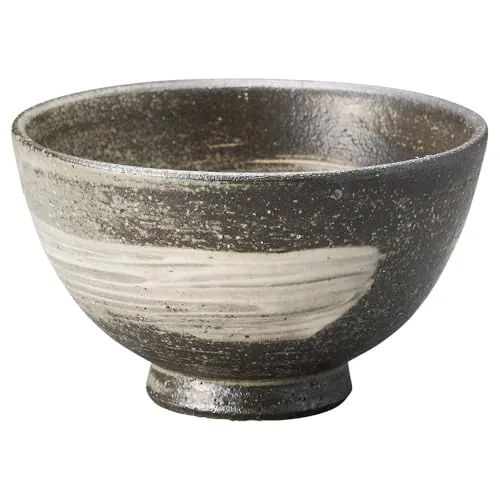
A yunomi (湯のみ, “everyday tea cup”) is the cup a Japanese household actually reaches for — taller than a guinomi, handle-less, sized for green tea poured several times a day. This one comes from Shodai-yaki (小代焼, “Shodai ware”), one of Kyūshū’s oldest folk kilns, founded around 1632 at the foot of Mount Shodai in northern Kumamoto when the Hosokawa lords moved their domain south from Kokura. Its signature is unmistakable: a straw-white glaze, ladled and poured so it streams in spontaneous rivers over an iron-dark body.
What makes Shodai-yaki worth a foreign reader’s attention is not novelty but continuity. The kiln began as an oyogama — a domain kiln under lords who happened to be among Japan’s most serious tea-ceremony patrons — and the poured-glaze technique it settled on nearly four centuries ago is still the one its surviving kilns use today. The result is a cup that is plainly functional, faintly austere, and visually different in every piece.
This guide is written for international buyers deciding whether a Shodai-yaki yunomi belongs in their cupboard. We cover what the data does and does not confirm about this specific listing, how the glaze behaves in daily use, who should skip it, where it sits among other Kyūshū folk ceramics, and the realistic paths to buying it from outside Japan. Written from a Japan-based editor’s desk in Toyama and Nara — not Tokyo.
🔄 Updated:
⏱️ Read time: ~12 min

- Who this is for — and who should skip it
- Product overview (from published specs)
- 📍 Where this comes from — place, era, and the craft tradition
- Which finish should you choose?
- 📌 How does it compare?
- Price snapshot across stores
- What it does well
- Weaknesses and things to verify before buying
- Conclusion — which buyer type are you?
- Other ways to approach this purchase
- 🏆 Editor’s Pick
- ❓ Frequently Asked Questions
Who this is for — and who should skip it
- Want a daily-use Japanese green-tea cup with real regional provenance, not a souvenir replica
- Like the wabi aesthetic of dark clay and a loose, poured white glaze over uniform factory decoration
- Accept — and actually prefer — that every piece is visually unique
- Are buying a gift that carries a documented 17th-century kiln history
- Are comfortable verifying exact size and price on the live listing before ordering
- Need a matched set where every cup is identical in pattern and tone
- Expect glossy, perfectly even porcelain like Arita sometsuke ware
- Want a guaranteed dishwasher-and-microwave-safe item (treat stoneware as hand-wash unless the listing states otherwise)
- Need precise, confirmed dimensions and weight before purchase (the fetched data did not include them)
- Are unwilling to pay international shipping from Japan or use a proxy service
Product overview (from published specs)
The fetched dataset for this listing returned empty for price and dimensions, so the table below states only what is reliably known about Shodai-yaki as a craft category plus the listing identifier. Treat every “verify on listing” cell as a prompt to confirm on the live page before buying.
Shodai-yaki Uchikake Glaze Yunomi
山下工芸(Yamashita kogei) 湯呑み 青白 φ7.5×H8.5cm 日本製 小代焼 湯呑 453448
一時的に在庫切れ; 入荷時期は未定です。 · Sold by Amazon.co.jp · ASIN B07V2GN27V
Price and availability as of 2026-09-01 05:22 JST. The Amazon listing at the time of purchase is authoritative. jpmono.com earns a commission on qualifying purchases at no extra cost to you.
| Attribute | Detail | Source |
|---|---|---|
| Craft | Shodai-yaki (小代焼), Kumamoto folk kiln | Maker / craft record |
| Item type | Yunomi (湯のみ) — handle-less green-tea cup | Listing title |
| Body | Iron-rich dark stoneware, high-fired | Craft record |
| Decoration | Uchikake / nagashi — straw-ash white glaze ladled and poured over the body | Craft record |
| Capacity | Unconfirmed — verify on listing | — |
| Dimensions / weight | Unconfirmed — verify on listing | — |
| Origin | Kumamoto Prefecture, Kyūshū, Japan | Craft record |
| Listing reference | ASIN B07V2GN27V (Amazon JP Global Store) | Spec |
⚠️ Data note: Only the Amazon JP listing reference (ASIN B07V2GN27V) was available; the fetched price and dimension snapshot returned empty at the time of writing. Live pricing, capacity, and exact size may differ — verify on the listing before buying.
📖 Glossary — key terms
- Yunomi (湯のみ) — a handle-less cup for everyday green tea, taller than the small cups used for sake or matcha.
- Shodai-yaki (小代焼) — folk pottery from the Mount Shodai area of northern Kumamoto, made since the early Edo period.
- Uchikake (打掛け) / nagashi (流し) — “thrown-on” / “poured” glazing: a ladle of light straw-ash or rice-husk glaze is poured over a darker body so it runs in irregular streams.
- Oyogama (御用窯) — a “domain kiln” producing wares under the patronage and for the use of a feudal lord’s household.
- Mingei (民芸) — the folk-craft movement that values the beauty of ordinary, handmade, functional objects.
- Higo (肥後) — the historical province name for present-day Kumamoto.
📍 Where this comes from — place, era, and the craft tradition

Kumamoto is one of Kyūshū’s central prefectures, a land defined by water and volcanic earth. Mount Aso — among the largest active calderas on Earth — sits to its east, and the Shira-kawa (“white river”) watershed carries ash-laced sediment down toward the Ariake Sea on the west coast. That geology matters to a potter: the local clay is iron-rich and fires to a dark, sober body, while the surrounding agriculture supplied the rice husks and straw ash that became the raw material for the pale poured glaze. The kiln took root here because the place provided both halves of the cup’s character — dark earth and white ash — within a short cart ride.
The historical anchor is the Hosokawa clan. In 1632 the Tokugawa shogunate transferred the Hosokawa from Kokura in Buzen Province to Higo Province — present-day Kumamoto — and with them came two potters, recorded as Genshichi and Hassen, who had served the family. At the foot of Mount Shodai they established the kiln that would carry the mountain’s name, and it operated as an oyogama, a domain kiln supplying the lord’s household.
- 1600 — After the Battle of Sekigahara, Hosokawa Tadaoki (later known as Sansai) is established with the Kokura domain in Buzen.
- 1632 — The Hosokawa clan is transferred from Kokura (Buzen) to Higo (Kumamoto); potters Genshichi and Hassen found the kiln at the foot of Mount Shodai.
- 17th c. — Shodai-yaki operates as a Hosokawa domain kiln (oyogama), supplying the lord’s household.
- c. 1646 — Death of Hosokawa Sansai, a leading disciple of tea master Sen no Rikyū, whose tea culture shaped Higo’s ceramic taste.
- Edo period — The poured uchikake (nagashi) glaze settles in as the kiln’s defining signature.
- Modern era — Shodai-yaki is designated a National Traditional Craft of Kumamoto.
- 2026 — Surviving kilns such as Fukuda and Chikushi continue firing uchikake yunomi by hand.
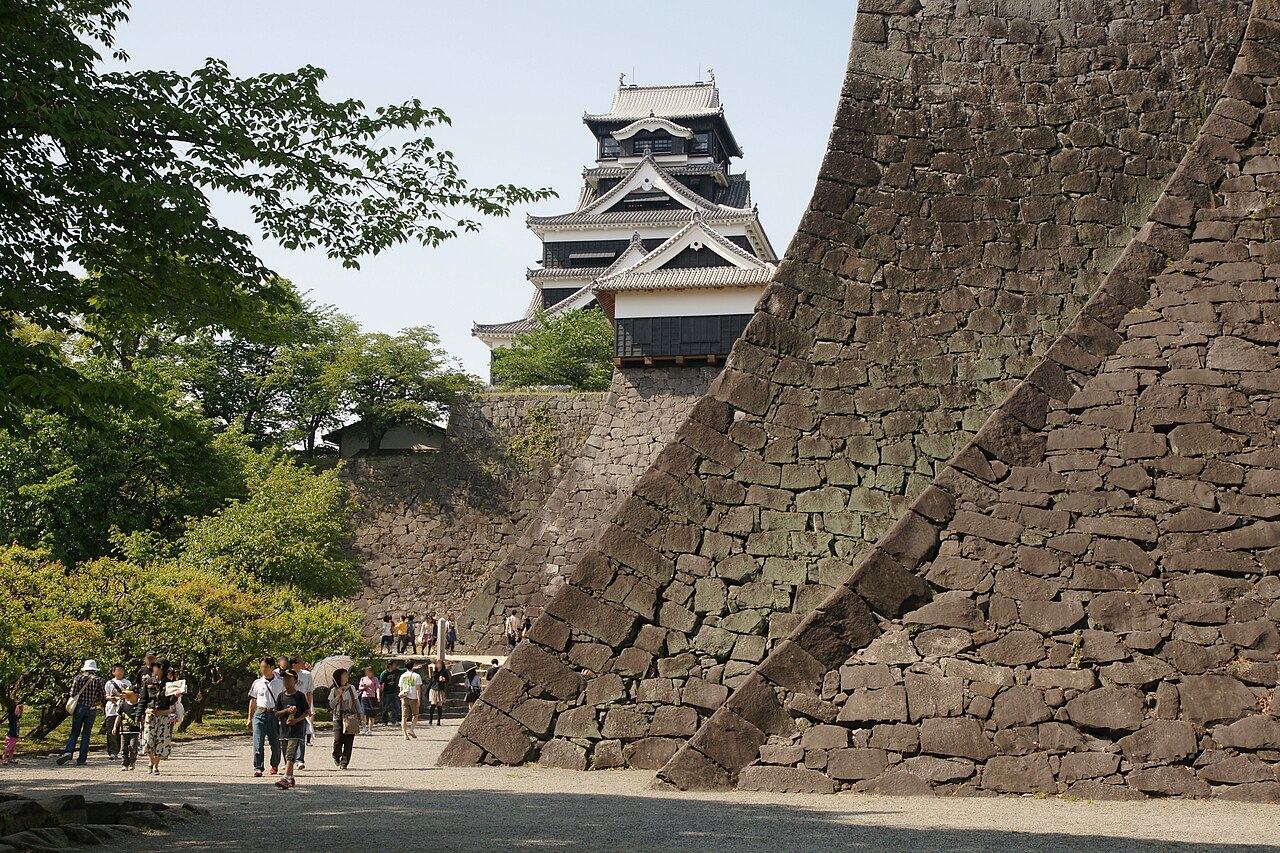
The Hosokawa were not casual patrons. Hosokawa Tadaoki — better known by his tea name, Sansai — was counted among the seven principal disciples of Sen no Rikyū, the figure who codified the austere wabi-cha aesthetic of the tea ceremony. That lineage explains why a regional folk kiln developed such a restrained, deliberately imperfect look: the taste of its patrons ran toward quiet, asymmetrical, earth-toned vessels rather than ornate display ware.
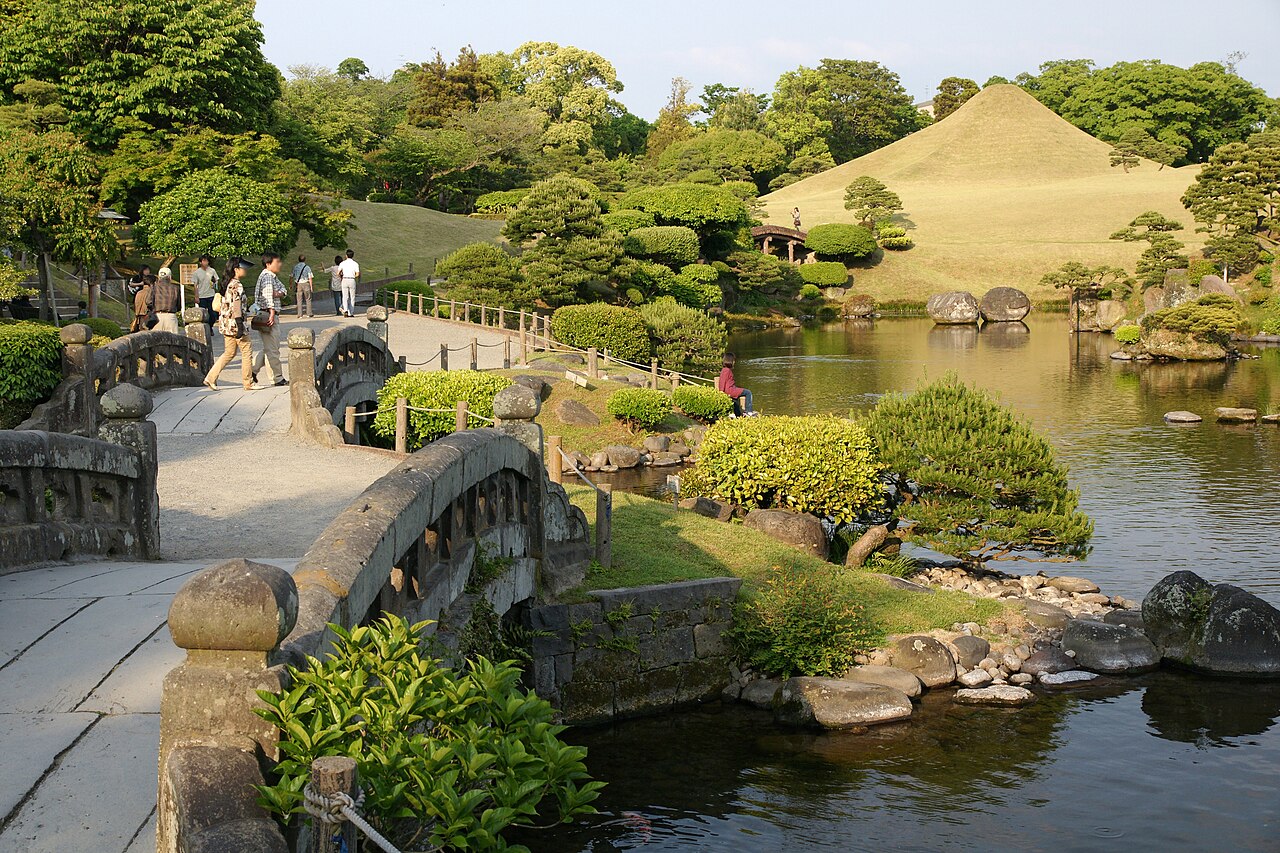
The clay and the landscape are inseparable from the look. Northern Kumamoto’s iron-bearing earth fires to a brown-black ground, and against it the poured straw-white glaze reads almost like snow-melt running down a dark slope. This is what potters mean by fudo — the way a region’s soil, water, and climate end up visible in the object itself.

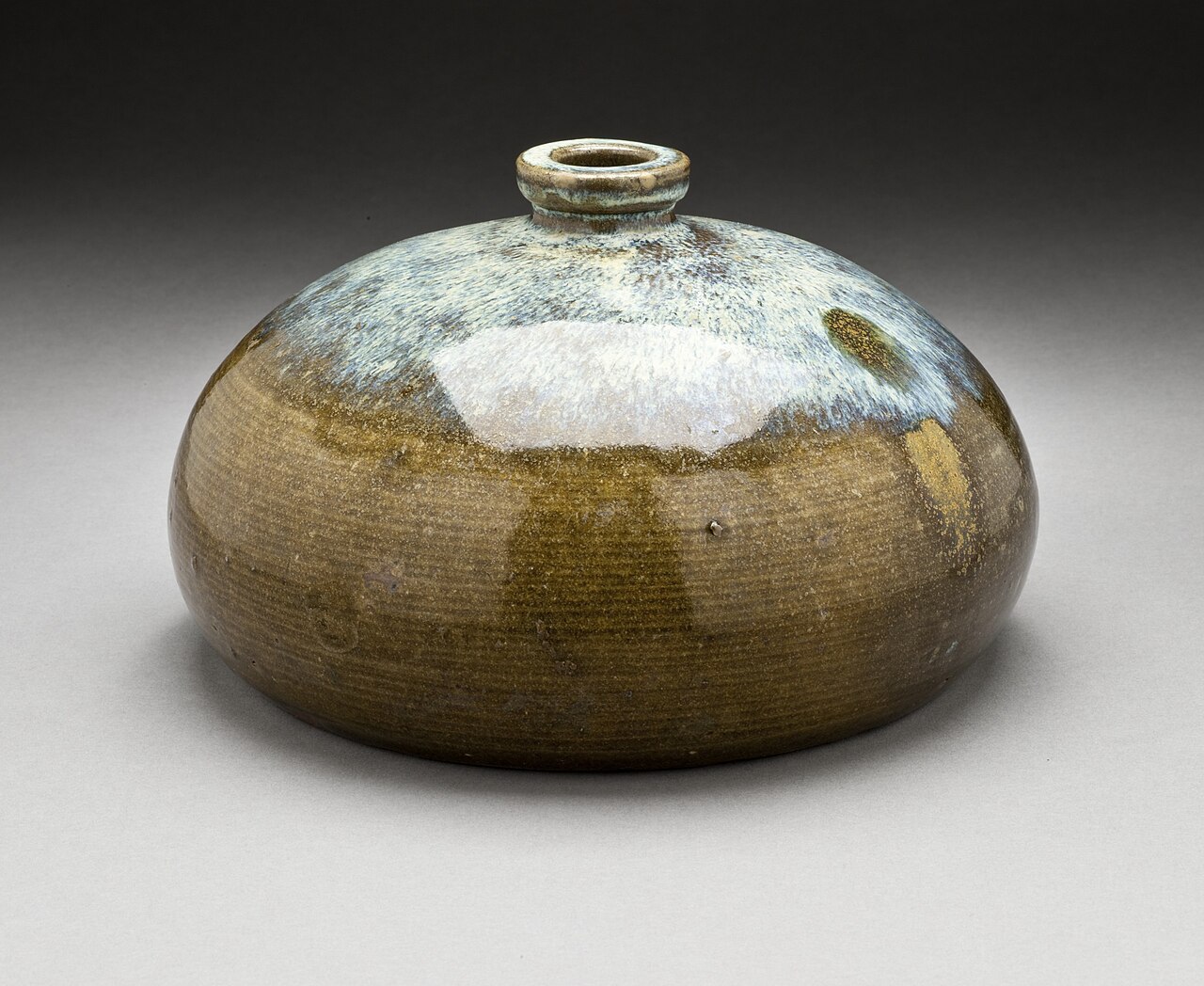
The defining act happens in seconds. A potter takes a ladle of pale glaze and pours it across the rim of a dark, already-glazed body, letting gravity decide where the white runs and pools. No two cups can be identical, because the pour cannot be repeated exactly.
“A single ladle of straw-white glaze, poured once across dark Higo clay — the river it leaves behind has been the kiln’s signature for nearly four centuries, and it has never run the same way twice.”
Which finish should you choose?
Hand-glazed folk ware is sold piece by piece, so the meaningful choices for a Shodai-yaki yunomi are size (a smaller everyday cup versus a larger one for generous pours) and the character of the pour itself — how much of the dark body shows, and whether the straw-white reads as warm cream or a cooler blue-white. Because the glaze is applied by hand, the marketplace’s own listing photos are the only reliable guide to what is actually purchasable right now.
📌 How does it compare?
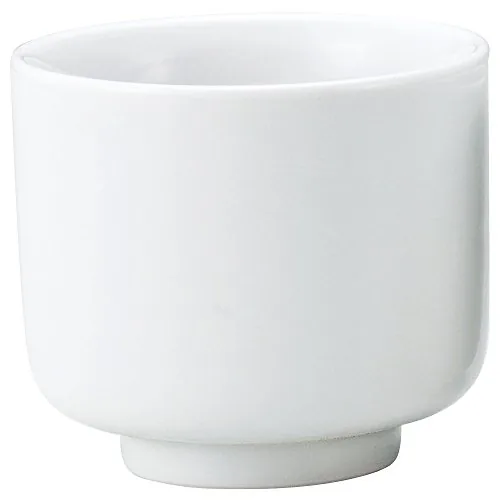
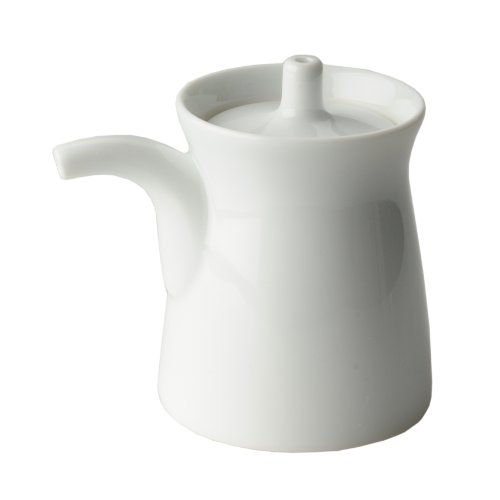
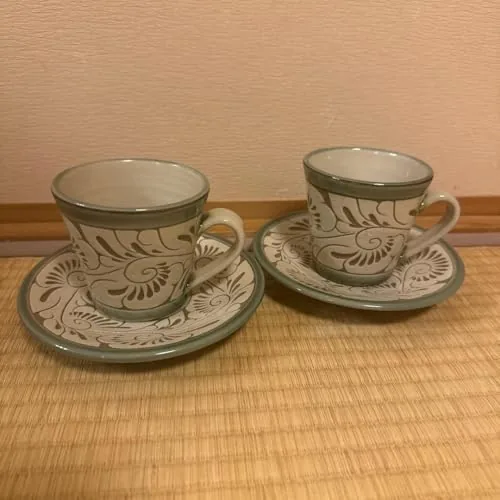
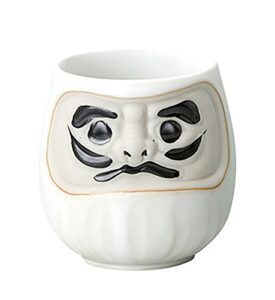
Shodai-yaki is one of several Kyūshū and northern folk kilns we cover. If you are weighing cups across regions, these guides compare directly:
Price snapshot across stores
Pricing was unavailable in the fetched data at the time of writing, so the figures below are marked as such. Confirm the live price before ordering.
| Store | Item / Variant | Price (JPY + USD est.) | Notes |
|---|---|---|---|
| 🇺🇸 Amazon.com (US) | Browse Japanese pottery yunomi tea cups | varies (USD) | Best if you are shopping from the US — Prime shipping, USD pricing, no international customs. Amazon US carries Japanese stoneware and porcelain tea cups from various kilns; this exact Shodai-yaki piece is sourced from Japan (next row). |
| 🇯🇵 Amazon JP Global Store | This Shodai-yaki uchikake yunomi (ASIN B07V2GN27V) | Price unavailable at time of writing — verify on listing | The sourced listing for the specific item. Ships internationally from Japan to most major destinations; expect added shipping and possible customs duty. |
| Maker direct | Shodai folk kilns (e.g., Fukuda Kiln, Chikushi Kiln) | Varies by kiln | Some kilns sell domestically only; international orders may require a proxy. Selection and pour patterns differ kiln to kiln. |
| Proxy services (Buyee / Tenso) | Forwarding from Japan-only shops | Item price + service fee + forwarding | Useful when a kiln or marketplace will not ship abroad directly; adds a handling fee on top of domestic price and shipping. |
JPY is the authoritative price for the sourced item; any USD figures are approximate at a ¥150/USD baseline (mid-2026) and shift with the exchange rate. Prices and availability change — confirm at the retailer before purchasing.
What it does well
The poured uchikake glaze cannot be repeated, so the cup you receive is visually unique — the opposite of mass-produced tableware.
A kiln tradition traceable to a 1632 domain kiln under tea-literate Hosokawa patronage — substance behind the object, not marketing.
A handle-less yunomi is the everyday cup of the Japanese home — the right vessel for sencha, hojicha, or genmaicha, several pours a day.
The dark body with white runs sits comfortably with both Japanese and Western tableware, and reads as restrained rather than flashy.
Weaknesses and things to verify before buying
- Dimensions and capacity are unconfirmed. The fetched data did not include size or volume. If you need a specific capacity, confirm it on the listing first.
- Price was unavailable at time of writing. Do not assume a price band — check the live listing, and factor in international shipping.
- Every piece looks different. The cup in the photo is illustrative; the pour pattern on yours will differ. This is a feature for some buyers and a dealbreaker for others.
- Not a guaranteed matched set. If you want several identical cups, hand-glazed folk ware is the wrong category — expect variation between pieces.
- Care assumptions. Treat high-fired stoneware as hand-wash and avoid thermal shock unless the listing explicitly confirms dishwasher or microwave safety.
- International logistics. Buying from Japan adds shipping cost and possible customs duty; a proxy service may be needed if a seller ships domestically only.
- Glaze tone varies by kiln and firing. “Straw-white” can range from warm cream to cool blue-white depending on the kiln and the firing — judge from the actual listing photos.
Conclusion — which buyer type are you?
You value provenance and one-of-a-kind glazing. Buy the documented Shodai-yaki piece and accept the variation — that is the point.
You want a real Japanese yunomi for everyday green tea. A solid fit — just confirm the size suits your usual pour.
If price plus international shipping matters most, compare against Hasami-yaki or other production cups before committing to hand-glazed folk ware.
If you need identical matched cups, guaranteed dishwasher safety, or exact confirmed specs up front, this is not the right purchase.
Other ways to approach this purchase
Amazon JP Global Store pricing fluctuates with the yen. A weaker yen against your currency can effectively lower the landed cost without any discount.
Folk pottery is durable; gently used pieces and kiln “seconds” (minor glaze irregularities) circulate at lower prices and suit daily use.
If you already hold Amazon points or a rewards card, applying them here softens the international shipping premium on a single cup.
If specs and price are too uncertain today, bookmark the listing and revisit when the page shows confirmed dimensions and a current price.
🏆 Editor’s Pick
❓ Frequently Asked Questions
What is the uchikake (poured) glaze on Shodai-yaki?
Uchikake, also called nagashi, is a technique where a ladle of pale straw-ash or rice-husk glaze is poured over a darker, already-glazed body so it runs in irregular streams. Because the pour is done by hand and cannot be repeated exactly, every cup looks different.
Does Amazon JP Global Store ship Shodai-yaki internationally?
Amazon JP Global Store ships many household items to most major international destinations. Expect added shipping cost and possible customs duty depending on your country’s import thresholds. Confirm shipping eligibility and cost on the listing before ordering.
Will my cup look exactly like the photo?
No. Because the glaze is poured by hand, the pattern, the amount of dark body showing, and the tone of the white will vary from piece to piece. The product photo is illustrative of the style, not an exact preview of the cup you receive.
How should I care for a Shodai-yaki yunomi?
Treat high-fired stoneware as hand-wash, and avoid sudden temperature changes that could thermally shock the body. Do not assume dishwasher or microwave safety unless the listing explicitly states it.
How is Shodai-yaki different from Karatsu or Arita ware?
Arita is fine, even, decorated porcelain; Karatsu is rustic stoneware often with iron painting under glaze. Shodai-yaki sits in the folk-stoneware family like Karatsu but is defined specifically by its poured straw-white glaze over a dark Kumamoto body.
Can I use it for tea other than Japanese green tea?
Yes. A yunomi works for sencha, hojicha, genmaicha, and other loose-leaf teas, and is fine for general hot drinks. It is taller and handle-less, so it is not a substitute for a Western mug if you want a handle.
Is the price shown reliable?
Price was unavailable in the data at the time of writing, so this guide does not quote a figure. The JPY price on the live Amazon JP Global Store listing is the authoritative one; verify it, plus shipping, before buying.
jpmono.com is curated by a Japan-based editorial team (working out of Toyama in the Hokuriku region and Nara in Kansai) and is independent. We do not take payment from the makers we feature; income comes from affiliate links. We do not physically test every product — we read maker’s specs and source listings.
This article was prepared with AI assistance and reviewed against the source listing data. Facts about Shodai-yaki’s history and technique are drawn from the craft record; product specifics are limited to what the fetched listing data confirmed.
Affiliate disclosure: jpmono.com may earn a commission on qualifying purchases made through links on this page, at no additional cost to you.