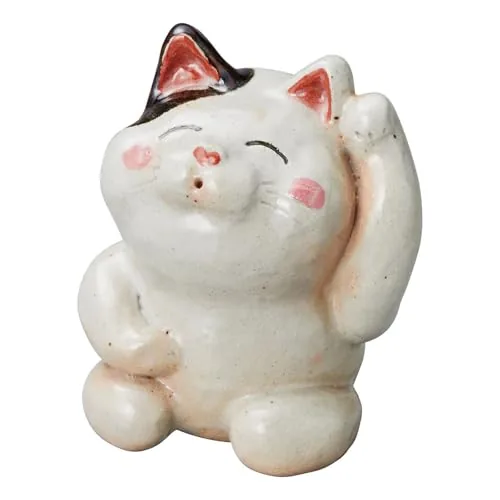
![Kutani-yaki Maneki-neko: Where to Buy the Gold Kinsai Lucky Cat [2026]](https://jpmono.com/wp-content/uploads/2026/07/kutani-yaki-kinsai-maneki-neko-lucky-cat-where-to-buy-2026-featured.jpg)
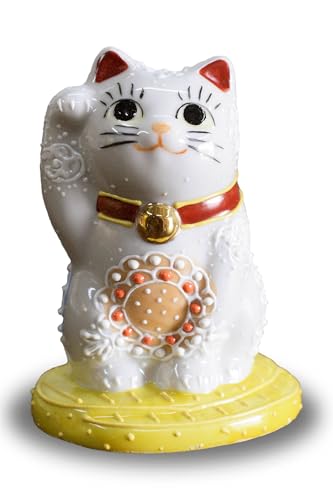
- What it is: a hand-painted porcelain beckoning cat (maneki-neko) finished in Kutani’s five overglaze colors and gold kinsai gilding.
- Made in: the Kutani district of Ishikawa Prefecture (production today centered on Komatsu and Nomi) — one of Japan’s designated traditional crafts.
- Price band: premium for a lucky-cat figurine — this is the gift-grade, gilded end of the category, not a mass-market plastic cat (see live listing).
- Best for: buyers who want a genuine celebratory or business-opening gift with verifiable craft heritage.
- Skip if: you want a cheap novelty ornament or something dishwasher-safe for daily tableware use.
- Shipping: ships internationally from Amazon Japan — jump to our pick ↓
The gold on a Kutani maneki-neko is not paint. It is a second firing — a thin layer of real gold (kinsai, 金彩) fixed over an already-glazed and already-fired porcelain body, so the cat you are looking at has been through the kiln more than once before a single whisker was drawn. That is what separates a Kutani-yaki (九谷焼) lucky cat from the plaster and plastic versions on convenience-store shelves.
Kutani ware comes from the Kaga region of Ishikawa Prefecture, on the Sea of Japan coast, where a porcelain kiln was first opened around 1655 under the Daishoji domain — a cadet branch of the immensely wealthy Kaga Maeda clan. The style that grew there is defined by two things: gosai (五彩), the bold five-color overglaze palette, and, in its most lavish 19th-century form, heavy gilding. The beckoning cat, or maneki-neko (招き猫), became one of the signature high-end products of that gilded tradition — a figurine given to mark a marriage, a new shop, or a new year.
This guide is for international buyers deciding whether a Kutani maneki-neko is worth the premium over a generic lucky cat, and, if so, where to buy one and how to read the quality signals. We cover what the gilding and five-color painting actually mean, the place and history the object comes from, how it compares to other Japanese ceramic and figurine crafts, and the practical shipping picture for buyers in the US, Canada, the UK, Australia, and beyond.
📅 Published:
🔄 Updated:
⏱️ Read time: about 9 minutes
ℹ️ Live pricing and some specs were not in our snapshot — the linked Amazon Japan listing is authoritative; unconfirmed attributes are marked below.

- Who this is for — and who should skip it
- Product overview (from published specs)
- Where this comes from — place, era, and the craft tradition
- 📦 Shipping & where to buy from outside Japan
- Price snapshot across stores
- What it does well
- Weaknesses and things to verify before buying
- Conclusion — which buyer type are you?
- Other ways to approach this purchase
- 🏆 Editor’s Pick
- ❓ Frequently Asked Questions
Who this is for — and who should skip it
- Want a celebratory or business-opening gift with real craft provenance.
- Value hand-painting and genuine gold gilding over mass production.
- Are drawn to the ornate five-color Kutani look rather than minimalist ceramics.
- Want a display piece that reads as a keepsake, not a souvenir.
- Are comfortable buying a sourced Japanese listing that ships internationally.
- Just want an inexpensive novelty cat for a desk or car.
- Need something dishwasher-safe for daily food use — this is decorative.
- Prefer plain, unpainted, or wabi-sabi rustic ceramics.
- Want a guaranteed exact price before ordering (listings fluctuate).
- Cannot accommodate hand-painted, piece-to-piece variation in finish.
Product overview (from published specs)
The item covered here is a Kutani-yaki maneki-neko finished with gold kinsai gilding over the five-color gosai overglaze on an Ishikawa porcelain body, in the right-paw configuration. Because our data snapshot did not return live pricing or a full spec sheet, the values below are drawn from the listing description and the craft tradition; unconfirmed attributes are marked so you can verify them on the listing itself.
Kutani-yaki Maneki-neko
九谷焼 ちび招き猫 金三毛 ペア gold-mike-F
残り5点 ご注文はお早めに · Sold by 和座の蔵 · ASIN B002JYNUF2
Price and availability as of 2026-08-31 02:30 JST. The Amazon listing at the time of purchase is authoritative. jpmono.com earns a commission on qualifying purchases at no extra cost to you.
| Attribute | Detail | Source |
|---|---|---|
| Craft | Kutani-yaki (九谷焼) porcelain | Listing + maker tradition |
| Object | Maneki-neko (beckoning cat) figurine, right paw raised | Amazon JP Global Store (sourced listing) |
| Material | Ishikawa porcelain (jiki) | Listing |
| Decoration | Gold kinsai (金彩) over gosai (五彩) five-color overglaze, hand-painted | Listing + tradition |
| Dimensions / weight | Unconfirmed — check manufacturer / listing | — |
| Origin | Kutani district, Ishikawa Prefecture (Komatsu / Nomi area) | Craft tradition |
| Use | Decorative / celebratory gift — not everyday tableware | Listing |
| Price | Only the Amazon JP listing is authoritative; live pricing was unavailable at time of writing | — |
📖 Glossary — key terms
- Kutani-yaki (九谷焼) — “Kutani ware,” overglaze-painted porcelain from the Kaga region of Ishikawa.
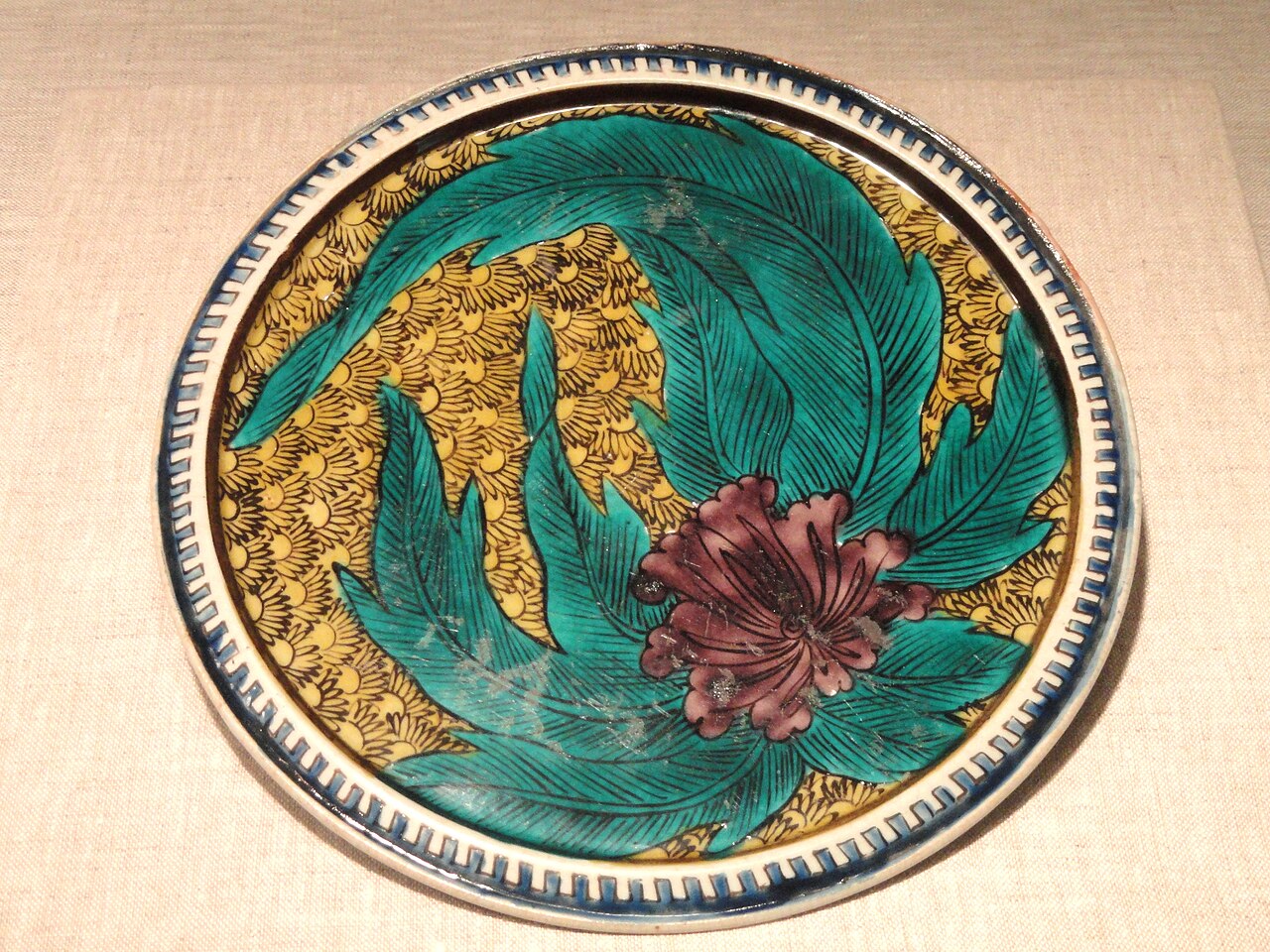
- gosai (五彩) — the “five colors” of the Kutani palette: green, yellow, red, purple, and dark blue.
- kinsai (金彩) — gold decoration applied over the glaze and fixed in a lower-temperature firing.
- aote (青手) — the bold green/yellow/purple “blue-hand” painting style of Old Kutani.
- akae (赤絵) — fine red-line painting, often combined with gold (the Iidaya / Hachiro-de manner).
- Ko-Kutani (古九谷) — “Old Kutani,” the celebrated 17th-century first phase.
- maneki-neko (招き猫) — the “beckoning cat,” traditionally believed to draw fortune or customers.
- hyakuman-goku (百万石) — “one million koku,” shorthand for the wealth of the Kaga domain.
Other Japanese ceramic, lacquer, and figurine crafts we’ve covered — useful for weighing style, material, and price tier.
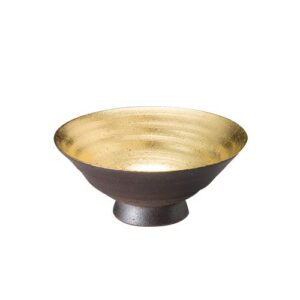 Kanazawa gold-leaf sake cup →
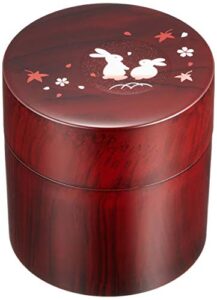 Yamanaka woodturned tea caddy →
Gohara lacquer mulberry bowl →
Arita sometsuke porcelain mug →
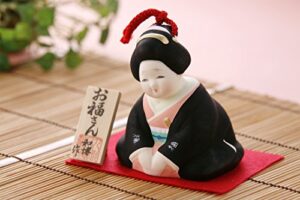 Hakata Ningyo clay figurine →
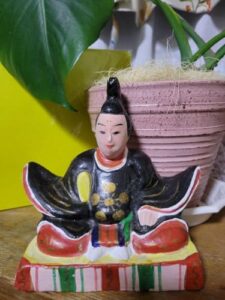 Akita clay doll →
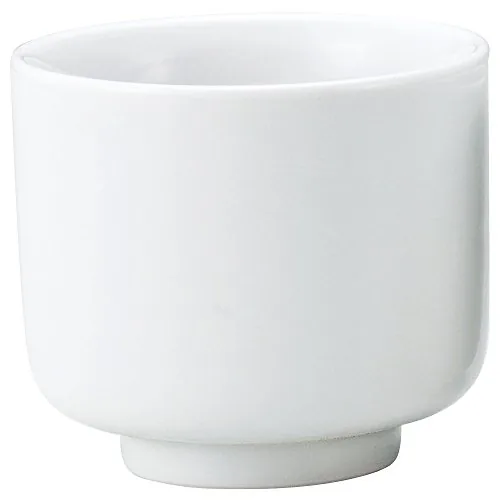 Shiro-Satsuma sake cup →
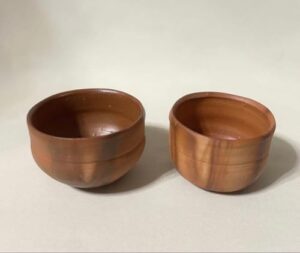 Bizen guinomi sake cup →
Where this comes from — place, era, and the craft tradition

Kutani ware is a product of the Kaga region — the southern part of today’s Ishikawa Prefecture, on the Sea of Japan coast of Japan’s Hokuriku area (administratively part of the larger Chūbu region). The name comes from Kutani village, a mountain settlement inland from the coastal plain, where the story begins with a very specific piece of geology: porcelain stone was found in the local Kutani gold mine. Porcelain needs that stone; a domain with a gold mine and a taste for ornament had both the raw material and the money.
That money was considerable. The Kaga domain, ruled by the Maeda clan from Kanazawa, was the wealthiest in Japan outside the shogunate itself — the “hyakuman-goku” (one-million-koku) domain, a byword for scale. Kaga wealth funded a whole ecosystem of decorative crafts: gold leaf, lacquer, silk dyeing, and porcelain. Kutani-yaki’s ornate, gold-heavy character is not an accident of taste; it is what a rich domain’s patronage looks like when it is turned into glaze.
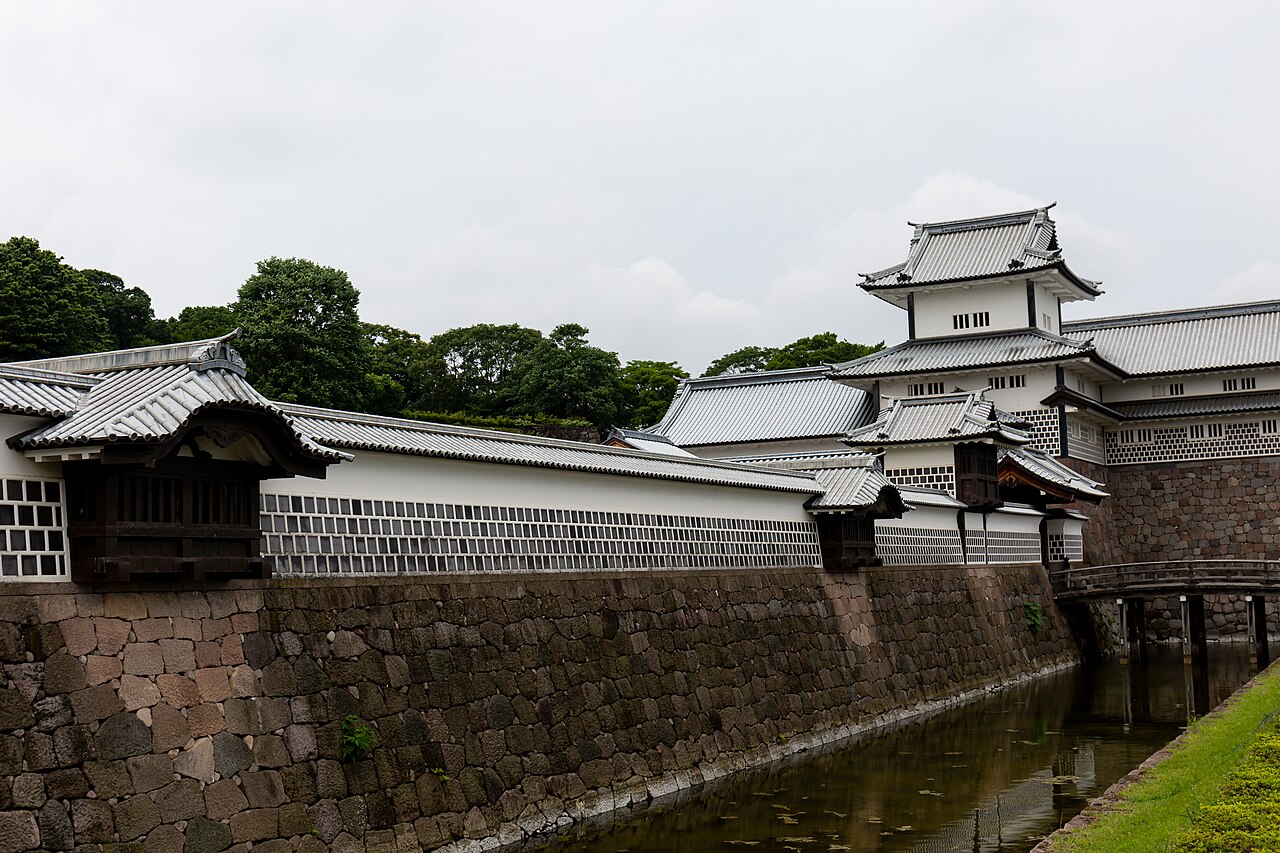
The kiln itself was opened around 1655 under the Daishoji domain, a cadet branch of the Maeda clan. This first phase is the celebrated Ko-Kutani (古九谷, “Old Kutani”), known for bold “aote” painting in green, yellow, and purple — a look prized by collectors ever since. Then, for reasons still debated, the kilns fell silent for roughly a century.
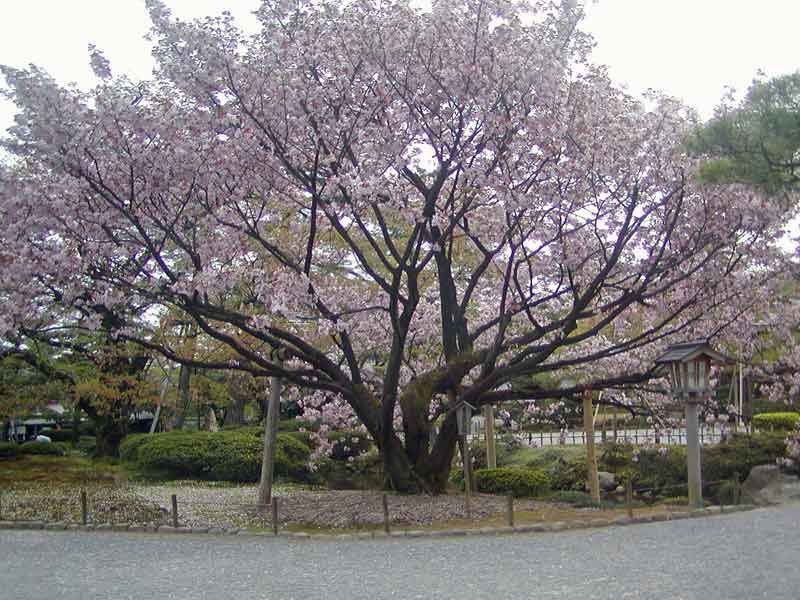
The revival came in the early 1800s, around Kanazawa and Komatsu, and it did not simply copy the old work — it branched into distinct schools. The Yoshidaya kiln revived the five-color “aote” manner; the Iidaya (Hachiro-de) style refined fine red-line painting combined with gold; and a lavish, gold-saturated “kinsai” manner emerged that would come to define Kutani in the Western eye. By the Meiji era, Kutani-yaki — with its five-color gosai overglaze and heavy gilding — had become one of Japan’s flagship porcelain exports.
- c. 1655 — The Daishoji domain opens a kiln at Kutani village after porcelain stone is found in the Kutani gold mine; Ko-Kutani (Old Kutani) begins.
- late 1600s — Ko-Kutani flourishes with bold “aote” green/yellow/purple overglaze painting.
- c. early 1700s — The kilns fall silent for roughly a century.
- early 1800s — Revival kilns open around Kanazawa and Komatsu (“revived Kutani”).
- 1820s–1830s — Distinct styles emerge: Yoshidaya (five-color aote), Iidaya / Hachiro-de (fine red with gold), and the lavish gold kinsai manner.
- Meiji era (1868–1912) — Kutani-yaki becomes a flagship porcelain export of Japan.
- Today — Komatsu and Nomi remain the production heart; the gilded maneki-neko is a signature high-end product.
“Kutani’s gold is not decoration added to a rich domain’s wealth — it is that wealth, fired onto porcelain and handed forward for three and a half centuries.”
What “still being made here” means, in practice, is that the Kutani painting vocabulary has stayed in one place. Production today is centered on Komatsu and Nomi, in southern Ishikawa — the same Kaga region as the original village. The gosai palette and the kinsai gilding on a modern maneki-neko are the direct descendants of the 19th-century revival styles, applied by hand to a form that carries its own folklore: a cat with the right paw raised is traditionally believed to beckon money and fortune, which is why the gilded Kutani version is such a common gift for a wedding, a business opening, or the new year.
📦 Shipping & where to buy from outside Japan
The specific figurine in this guide is sourced from the Amazon Japan Global Store, which ships internationally to 65+ countries — including Canada, the UK, and Australia — with import fees estimated and usually collected at checkout, so there are no surprise customs bills on delivery.
Expect international shipping in roughly the $15–$40 range to the US, EU, Canada, the UK, and Australia, depending on weight and speed; the checkout page is authoritative. As a porcelain figurine, this is a non-electrical decorative item, so there are no voltage or certification concerns. Prices in USD are approximate and depend on the current exchange rate. If the Global Store listing is unavailable in your country, proxy services such as Buyee or Tenso can forward a domestic Japanese purchase, and reputable Kutani makers and galleries sometimes ship directly.
Price snapshot across stores
| Store | Item / variant | Price (JPY + USD est.) | Notes |
|---|---|---|---|
| 🇺🇸 Amazon.com (US) | Browse Japanese maneki-neko & Kutani ware | varies (USD) | Best if you’re shopping from the US — Prime shipping, USD pricing, no international customs. Amazon US carries Japanese lucky cats and porcelain from various makers, useful for comparing styles and price tiers; this exact gilded Kutani piece is sourced from Japan (next row). |
| 🇯🇵 Amazon JP Global Store | This Kutani kinsai maneki-neko (right paw) | See listing (JPY authoritative; USD ≈ JPY ÷ 150) | Ships internationally from Japan to 65+ countries — including Canada, the UK and Australia — with import fees estimated at checkout. This is the sourced listing for the exact item. |
| Maker direct / Kutani galleries | Comparable gilded maneki-neko | Unconfirmed — check maker site | Kilns and galleries in Komatsu / Nomi sometimes sell direct and may ship abroad on request. |
| Proxy services (Buyee / Tenso) | Any domestic JP listing | Item price + forwarding fee | Useful if a listing is not offered to your country directly; adds a handling fee and a consolidation step. |
Prices and availability fluctuate; the linked listings are authoritative. USD figures are approximate at a ¥150/USD baseline as of mid-2026.
What it does well
- 🍽️ Dishwasher: no — this is a decorative figurine, not tableware.
- ♨️ Microwave: no — gilded overglaze and gold should never be heated.
- 🧴 Daily care: dust with a soft, dry (or barely damp) cloth; avoid abrasives and scrubbing, which can wear the gold kinsai over time.
Weaknesses and things to verify before buying
- No confirmed price in our snapshot. Live pricing was unavailable at time of writing; treat the Amazon JP listing as authoritative and check before ordering.
- Dimensions and weight unconfirmed. Maneki-neko come in a wide size range; verify the exact height on the listing so the piece matches its intended shelf or counter.
- Decorative, not functional. This is a display figurine — do not treat it as tableware, and keep it away from dishwashers, microwaves, and heat.
- Hand-painted variation. Because the painting is done by hand, the exact piece you receive may differ slightly from the listing photo — a feature for some buyers, a drawback for those wanting uniformity.
- Gilding needs gentle handling. Real gold kinsai is durable but not indestructible; aggressive cleaning can dull or wear it.
- Paw side matters for meaning. This listing is described as right-paw (traditionally money/fortune); if you specifically want the left-paw “beckon customers” meaning, confirm before buying.
Conclusion — which buyer type are you?
Other ways to approach this purchase
🏆 Editor’s Pick
❓ Frequently Asked Questions
Is the gold on a Kutani maneki-neko real gold?
Kutani kinsai (金彩) is genuine gold decoration applied over the glaze and fixed in a separate lower-temperature firing. That extra firing is why the gilding reads with real depth rather than looking like painted-on paint.
Can I use this as tableware or wash it in the dishwasher?
No. This is a decorative figurine, not tableware. Keep it out of the dishwasher and microwave, and dust it with a soft dry or barely damp cloth — abrasive cleaning can wear the gold over time.
What does the raised right paw mean?
A maneki-neko with the right paw raised is traditionally believed to beckon money and fortune, while a left-raised paw is said to beckon customers or people. These are folk beliefs, not guarantees; this listing is the right-paw form.
Does it ship outside Japan?
Yes. The item is sourced from the Amazon Japan Global Store, which ships to 65+ countries including Canada, the UK, and Australia, with import fees usually estimated and collected at checkout so there are no surprise customs bills.
Why is a Kutani lucky cat more expensive than an ordinary one?
You are paying for hand-painting, real gold gilding, and a documented 350-year porcelain tradition tied to a specific place in Ishikawa — provenance and craftsmanship that a molded, mass-produced novelty cat does not carry.
How is Kutani-yaki different from Arita or Satsuma ware?
All three are painted porcelain traditions, but Kutani is defined by its bold five-color gosai palette and heavy gold kinsai from the Kaga region of Ishikawa. See our Arita sometsuke and Shiro-Satsuma guides in the comparison box above for the contrast in palette and place.
Where in Japan is it actually made today?
Production is centered on Komatsu and Nomi in southern Ishikawa Prefecture — the same Kaga region where the original Kutani kiln opened around 1655.
jpmono.com is curated by a Japan-based editorial team (working out of Toyama in the Hokuriku region and Nara in Kansai) and is independent. We do not take payment from the makers we feature; income comes from affiliate links. Read more about our editorial standards.
This article was prepared with AI assistance and reviewed against the source listing and craft-tradition notes before publication. Facts not present in our data snapshot are marked as unconfirmed.
Affiliate disclosure: jpmono.com may earn a commission on qualifying purchases made through links on this page, at no additional cost to you.