![Yatsushiro Igusa Hanagoza Rush Placemat: Kumamoto Woven Rush [2026]](https://jpmono.com/wp-content/uploads/2026/05/japan-map-regions-and-prefectures-800x1050.png)
A hanagoza (花ござ, “patterned rush mat”) placemat is one of the quietest pieces of craft you can put on a table. It is woven from igusa (い草, “soft rush”) — the same grass that forms the surface of a tatami floor — and almost all of Japan’s domestic igusa is grown in one place: Yatsushiro, a city on the Kuma River delta in southern Kumamoto, on the island of Kyūshū. The standard reference example discussed below is a machine-woven set made from 100% Kumamoto-grown dyed rush on traditional looms.
What makes igusa worth a second look internationally is not decoration but behavior. Rush stalks are hollow and slightly spongy, so a hanagoza mat feels cool to the touch in summer, buffers humidity rather than trapping it, and carries a faint green, hay-like scent that most first-time buyers describe as the most distinctive thing about it. Cultivation here is recorded from around 1505, and the weaving descends directly from tatami-omote (畳表, “tatami facing”) production — so this is a table object with a working floor-covering pedigree behind it.
This guide is written from a Japan-based editor’s perspective for readers buying from outside Japan. It covers who the mat suits and who should skip it, what the published specs do and do not tell you, how it compares with other Japanese woven and tabletop crafts, where the rush comes from and why, and the realistic paths to buy a set internationally. Where the source data is thin, that is stated plainly rather than filled in.
🔄 Updated: June 4, 2026
⏱️ Read time: ~11 min
- Who this is for — and who should skip it
- Product overview (from published specs)
- Where this comes from — place, era, and the craft tradition
- How does it compare?
- Buying options
- What it does well
- Weaknesses and things to verify before buying
- Conclusion — which buyer type are you?
- Other ways to approach this purchase
- ❓ Frequently Asked Questions
Who this is for — and who should skip it
- Want a natural-fiber placemat that feels cool and dry in hot, humid weather
- Like the green, hay-like scent of fresh rush and tatami
- Prefer a thin, flexible, lightweight mat that stacks and stores flat
- Are building a Japanese or minimalist table setting and want authentic Kumamoto-grown igusa
- Appreciate a craft with a documented regional pedigree rather than a generic woven import
- Need a wipe-clean surface for spills — rush absorbs moisture and stains
- Want something machine-washable or dishwasher-safe
- Dislike grassy or “natural fiber” smells
- Expect a thick, padded, heat-insulating trivet rather than a thin mat
- Want a heavily handmade, one-of-a-kind artisan piece (this set is machine-woven on traditional looms)
Product overview (from published specs)
Specifications for a Yatsushiro igusa hanagoza placemat vary between weavers and finish grades, so confirming exact dimensions and rush grade from the information supplied with the individual mat is worth the few minutes it takes. A typical dining placemat runs around 45–50 cm by 30–35 cm, while larger luncheon-mat sizes climb noticeably. If those basic measurements are not provided, ask before ordering rather than assume.
| Attribute | Published / sourced value | Source |
|---|---|---|
| Item | Hanagoza woven-rush placemat set (Ikehiko) | Maker direct |
| Material | 100% igusa (soft rush), Kumamoto-grown, dyed | Amazon JP Global Store |
| Construction | Machine-woven on traditional looms (hanagoza patterned weave, descended from tatami-omote) | Maker direct |
| Origin | Yatsushiro, Kumamoto Prefecture, Kyūshū | data_notes |
| Size / dimensions | — | — |
| Weight | — | — |
| Set count | Sold as a set — exact count varies | Amazon JP Global Store |
| Price | — | — |
📖 Glossary — key terms in this article
- Igusa (い草, “soft rush”) — the fast-growing wetland rush whose dried stalks form tatami surfaces and woven goods. Hollow and slightly spongy, which is why it feels cool and regulates humidity.
- Hanagoza (花ござ, “flower / patterned rush mat”) — a rush mat woven with colored (dyed) stalks to form patterns, as opposed to a plain undyed mat. Descended from tatami-facing weaving.
- Tatami-omote (畳表, “tatami facing”) — the woven rush surface layer of a tatami mat. Hanagoza weaving uses the same loom tradition at a smaller scale.
- Goza (ござ) — a thin, flexible woven rush mat, historically used for sitting and sleeping; the root word behind hanagoza.
- Dorozome (泥染め, “mud dyeing”) — a traditional finishing step in which harvested rush is coated with fine clay slip before drying, which sets the color and evens the surface.
- Higo (肥後) — the historical province corresponding to modern Kumamoto Prefecture, governed in the Edo period by the Hosokawa domain.
Where this comes from — place, era, and the craft tradition

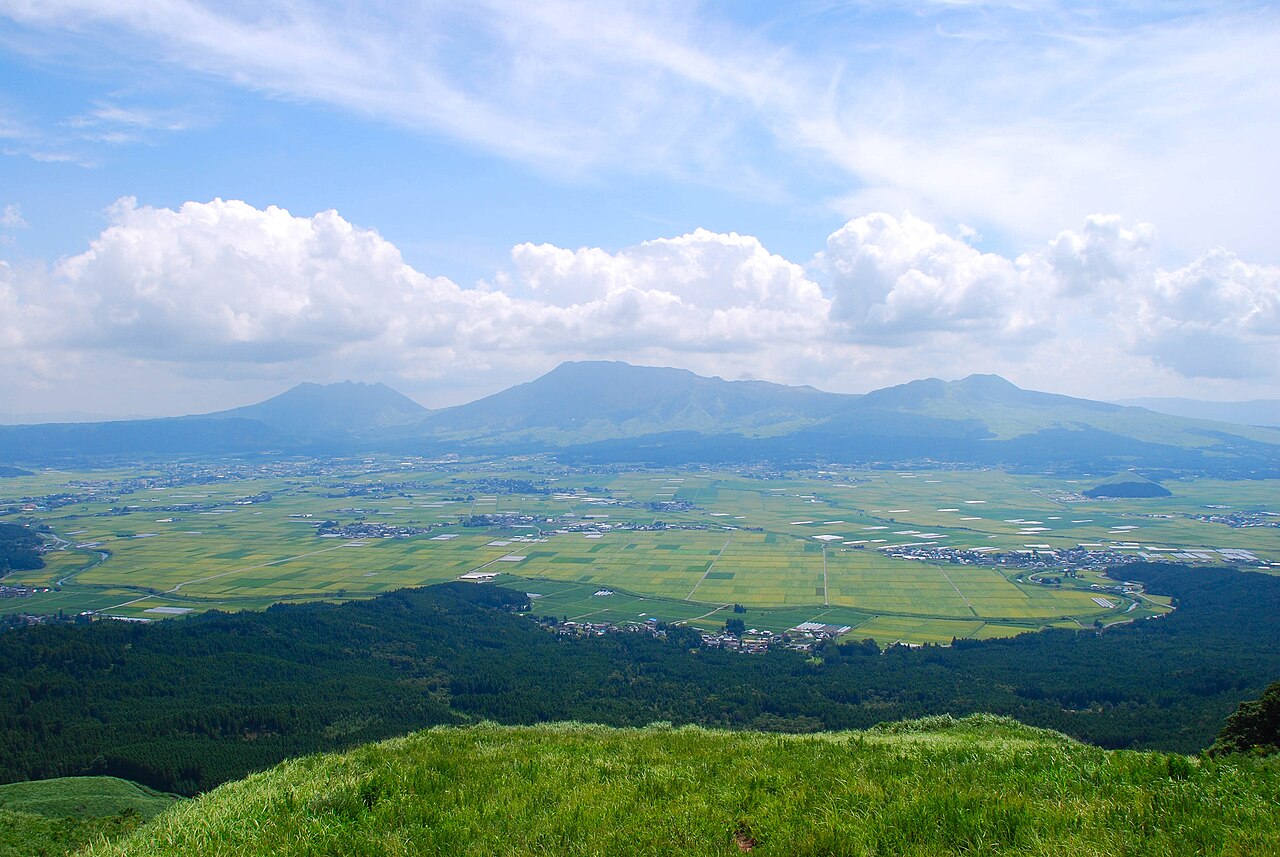
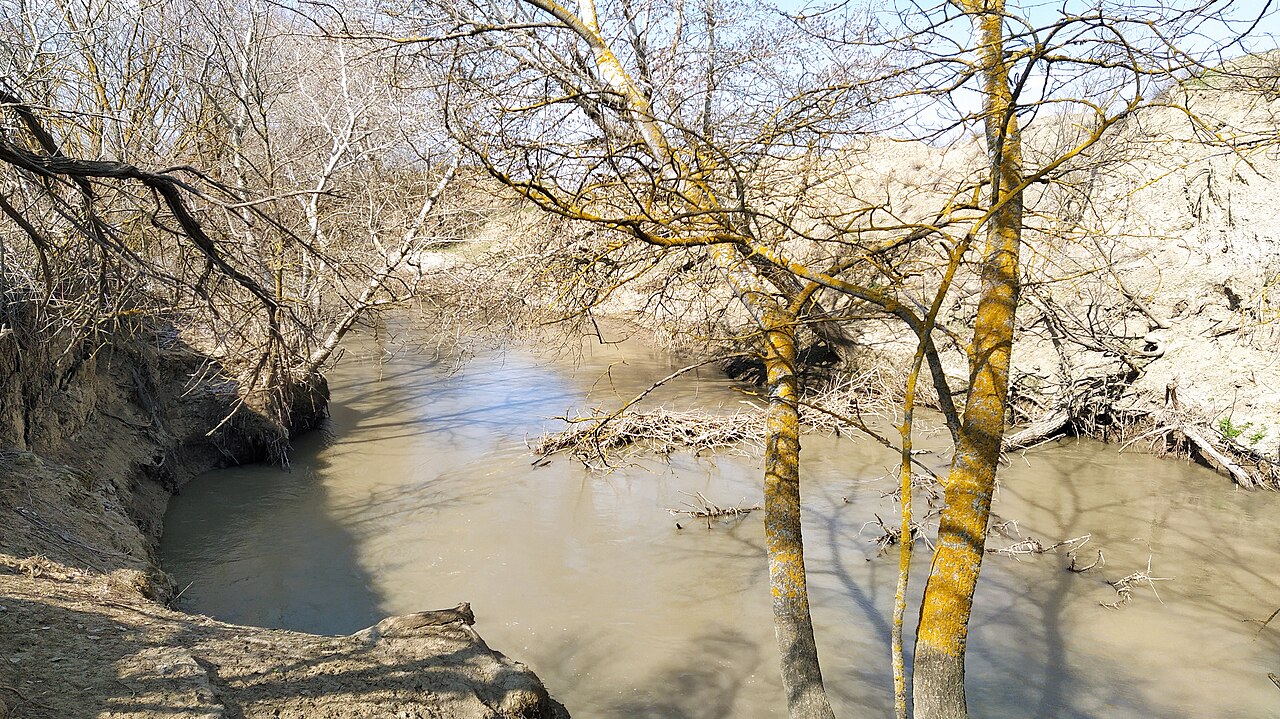
Kumamoto occupies the western center of Kyūshū, Japan’s southwesternmost main island. The landscape is defined by water and volcanic ground: Mount Aso, one of the world’s largest active calderas, sits inland, and its watershed feeds a network of rivers that run down to the Yatsushiro Sea. Yatsushiro city lies at the mouth of the Kuma River, where centuries of sediment have built a flat, fertile, water-saturated delta.
That delta is the reason the rush industry took root here. Igusa is a wetland crop — it wants warm temperatures, standing water, and rich alluvial soil, all of which the Kuma River plain supplies. Cultivation in the area is recorded from around 1505, which makes this one of the oldest continuously documented rush-growing districts in Japan.
- c. 1505 — Igusa rush cultivation first recorded in the Yatsushiro area.
- Edo period (1600s–1800s) — The Higo Hosokawa domain promotes rush growing and tatami-facing weaving as a regional trade.
- Late 1800s (Meiji era) — Yatsushiro consolidates as Japan’s dominant igusa-producing district.
- 20th century — Mechanized looms let hanagoza patterns be woven at scale alongside hand techniques.
- Today (2026) — Yatsushiro still grows the overwhelming majority of Japan’s domestic igusa.
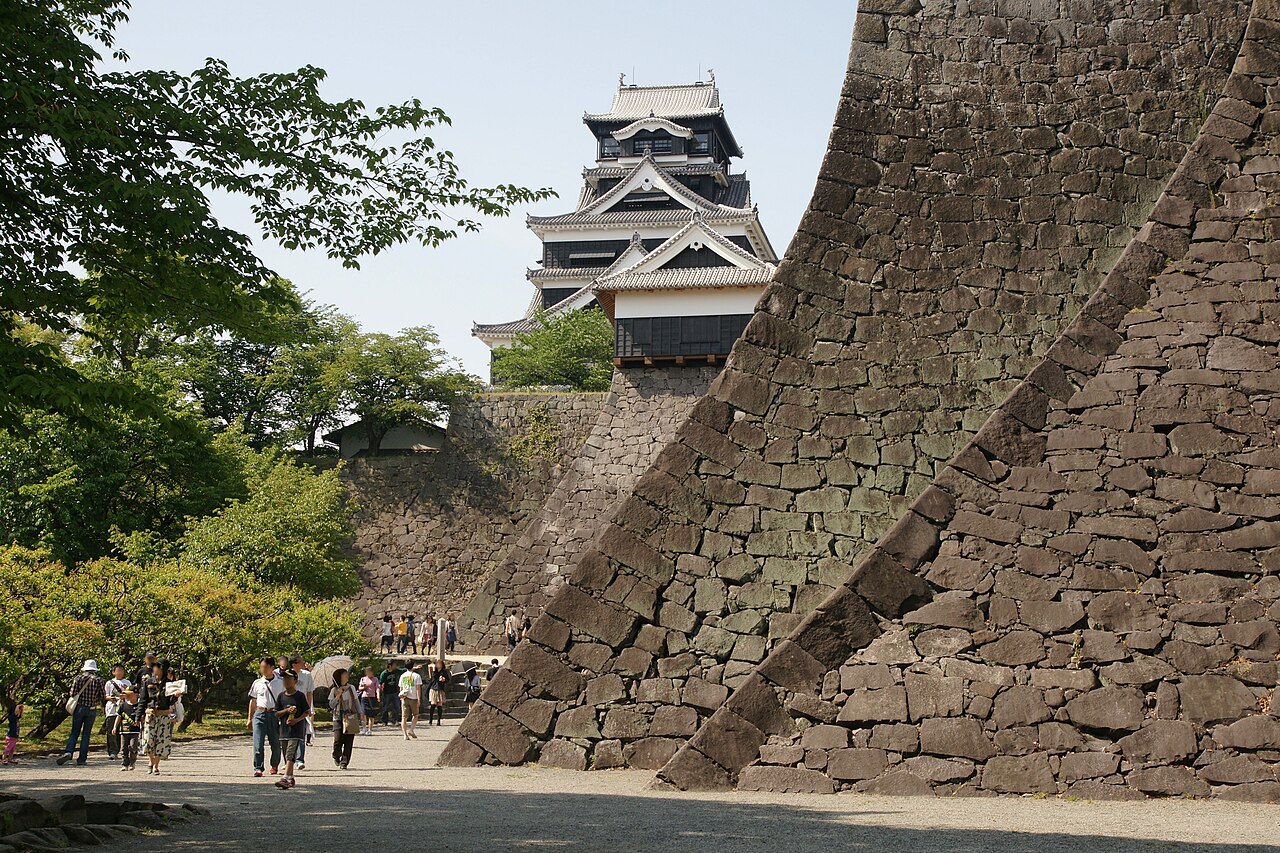
The historical anchor for the industry is the Higo (肥後) domain, which corresponds to modern Kumamoto and was governed for much of the Edo period by the Hosokawa family from Kumamoto Castle. Domain administrations across Japan in this era promoted cash crops and craft trades that could be taxed and traded, and in Higo, rush growing and tatami-facing weaving were among them. That patronage is what turned a local wetland crop into an organized regional industry.
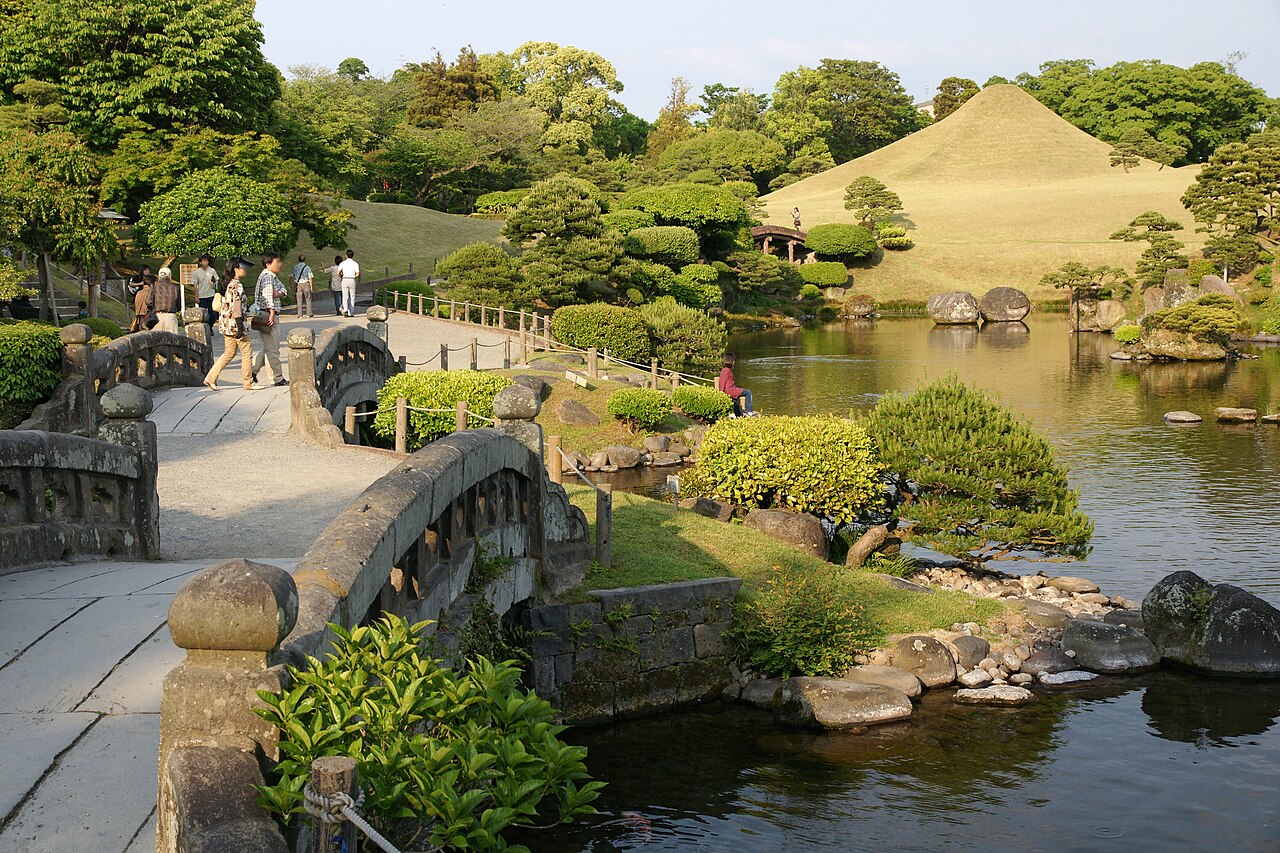
That same cultural continuity is visible in places like Suizenji Jojuen, the Hosokawa family’s strolling garden in Kumamoto. The point for a buyer is not the castle or the garden in themselves, but what they signal: a domain that invested in cultivated landscapes and craft trades, and that kept doing so long enough for the rush industry to outlast it. Yatsushiro did not become the center of Japanese igusa by accident.
“Igusa cultivation here is documented from around 1505 — the rush on this placemat grows from a delta that has been farmed for the same crop for over five centuries.”
What “still being made here” means in practice is that the overwhelming majority of Japan’s domestic igusa still comes out of Yatsushiro. The stalks are harvested, traditionally finished with a clay-slip mud dyeing (dorozome) step that sets color and evens the surface, kiln-dried, and then woven. A hanagoza placemat is the small-format end of that same supply chain — the rush is the same crop that surfaces tatami floors across Japan, scaled down to the table.
Seasonally, igusa belongs to summer. Its cooling, humidity-buffering feel is most appreciated in Japan’s hot, sticky months, which is why rush mats, cushions, and sleeping mats appear in homes as the weather warms. On a table, a hanagoza set reads as a seasonal gesture as much as a functional one — the fresh, grassy scent of new rush is, for many Japanese buyers, the smell of early summer.
How does it compare?
Other Japanese woven and tabletop crafts covered on jpmono — useful for weighing material, region, and table role against this igusa hanagoza set.
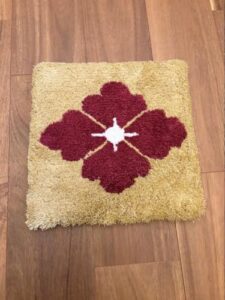 🧵 Nabeshima Dantsu woven mat (Saga)
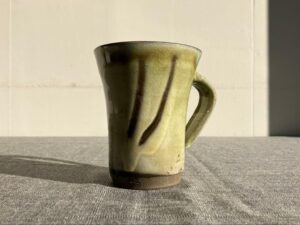 🍵 Onta-yaki mug (Oita)
🔵 Arita sometsuke mug (Saga)
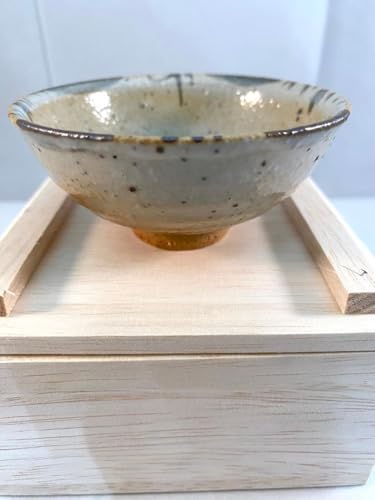 🍶 Karatsu E-Garatsu guinomi (Saga)
 🏺 Shiro-Satsuma sake cup (Kagoshima)
🟦 Awa indigo tenugui (textile)
 🧺 Toyooka willow basket (woven craft)
Buying options
Yatsushiro igusa hanagoza pricing varies with rush quality (the top “1st-grade” tier commands a premium over standard weaving), dye pattern complexity, and whether the mat is hand-finished or machine-woven on traditional looms. As a rough range, a single machine-woven placemat sits well below the cost of a hand-finished artisan piece, while larger placemat sets land noticeably higher. Treat any listed figure as the seller’s current quote rather than a fixed market price.
| Store | Item / variant | Price (JPY + USD est.) | Notes |
|---|---|---|---|
| 🇺🇸 Amazon.com (US) | Browse Japanese igusa rush placemats & table mats | varies (USD) | Best if you are shopping from the US — Prime shipping, USD pricing, no international customs. Amazon US carries igusa and rush table goods from various makers; the exact Ikehiko Yatsushiro set is sourced from Japan (next row). |
| 🇯🇵 Amazon JP Global Store | Ikehiko Yatsushiro igusa hanagoza placemat set | — | Ships internationally from Japan to most major destinations; confirm shipping cost and customs at checkout. |
| Maker direct (Ikehiko) | Full hanagoza / igusa range | Varies (JPY) | Widest pattern selection, but the maker’s own store generally ships within Japan only — pair with a proxy for international delivery. |
| Proxy services (Buyee / Tenso) | Any Japan-only source | Item price + proxy fee + forwarding | Use when a pattern is sold only on a Japan-domestic store. Adds a service fee and a second shipping leg; factor in customs for orders over your local threshold. |
Prices and stock fluctuate. Amazon JP Global Store ships many household items internationally, but availability for a specific rush set can change — confirm on the affiliate link for current data. International shipping to the US or EU typically runs in the $15–$40 range for a light, flat item like this, and orders above your country’s de minimis threshold may incur customs duties.
What it does well
Weaknesses and things to verify before buying
- Not spill-friendly. Rush absorbs moisture and can stain or warp with standing liquid. Wipe spills immediately; this is a dry-table mat, not a wipe-clean surface.
- Not washable. Do not machine-wash or soak. Care is limited to dry wiping and occasional airing; follow the maker’s care guidance.
- The scent is polarizing. The grassy igusa smell is a feature for many buyers and a drawback for others; it is strongest when new and fades over months.
- Color can transfer or lighten. Dyed rush may rub off slightly when brand new and will lighten with sun exposure over time. Keep out of prolonged direct sunlight.
- Set details vary. Confirm how many mats are in the set and whether it suits your table layout before ordering.
- Machine-woven, not artisan one-off. This set is woven on traditional looms by machine. Buyers wanting a hand-individuated artisan object should set expectations accordingly.
Conclusion — which buyer type are you?
Other ways to approach this purchase
❓ Frequently Asked Questions
Does Amazon JP Global Store ship igusa hanagoza placemats internationally?
International shipping for a flat, lightweight rush placemat is often simpler than for bulky goods, but availability and charges vary by destination. Confirm that the chosen shop serves your country before ordering.
How do I care for an igusa rush placemat?
Treat it as a dry-table mat. Wipe spills immediately with a dry or barely-damp cloth, air it occasionally, and keep it out of prolonged direct sunlight to slow fading. Do not soak, machine-wash, or put it in a dishwasher. Follow the maker’s care guidance supplied with the piece.
What causes the grassy scent, and does it fade?
The aroma comes from the natural igusa rush itself — the same smell associated with new tatami. It is strongest when the mat is new and gradually fades over several months of use. Some buyers value it highly; others find it strong at first, so it is worth knowing before you order.
Is this set handwoven or machine-woven?
Standard Yatsushiro hanagoza is woven on traditional looms from 100% Kumamoto-grown dyed rush, which keeps the price consistent and accessible. If you want a hand-finished artisan piece, look to higher-grade Yatsushiro lines or buy directly from the weaver’s workshop.
How is hanagoza different from a tatami mat?
Both use igusa rush woven on the same loom tradition. A tatami mat is a thick floor unit with a firm core under its woven facing; hanagoza is a thin, flexible woven mat — historically for sitting or sleeping, and at table scale, for placemats and runners. Hanagoza specifically uses dyed stalks to form patterns.
Why does this article lead with an Amazon US search link?
For many international readers, a domestic marketplace can simplify shipping, currency handling, and customs. If buying from Japan, check that the chosen shop offers international delivery to your country.
jpmono.com is curated by a Japan-based editorial team (working out of Toyama in the Hokuriku region and Nara in Kansai) and is independent. We do not take payment from the makers we feature; income comes from affiliate links. We do not physically test every product — we consult maker specifications and public craft references.
This article was prepared with AI assistance and reviewed by the jpmono editorial team using craft and maker references. Specifications, pricing, and availability can change; use the information supplied by the chosen shop before purchasing.
Affiliate disclosure: jpmono.com may earn a commission on qualifying purchases made through links on this page, at no additional cost to you.