![Toyooka Willow Basket (Tajima Kiryu-zaiku): Where to Buy [2026]](https://jpmono.com/wp-content/uploads/2026/06/toyooka-willow-basket-tajima-kiryu-zaiku-where-to-buy-2026-featured.jpg)
In the marshy lowlands around Toyooka, in the northern reaches of Hyogo Prefecture, a soft, pale willow called koriyanagi once grew wild along the banks of the Maruyama River. Farmers cut it through the cold off-season and wove it into boxes, trays, and trunks. The craft has a name — Tajima kiryu-zaiku (但馬杞柳細工, “Tajima willow work”) — and a paper trail that runs back more than a thousand years.
This guide looks at a hand-plaited Toyooka willow basket sold through Amazon’s Japan Global Store (ASIN B0HD2HZN8F): a natural, untreated koriyanagi storage piece in the plain, finely ribbed style the region is known for. Willow is not bamboo and not mountain-grape vine; it weaves paler, lighter, and springier, and that difference is the whole point of choosing one of these over a generic basket.
We cover where the craft comes from, what the listing actually tells you (and where the data is thin), how it compares to other Japanese woven and wooden household objects, and the practical question every overseas reader asks first — how to buy it from outside Japan. This is written from a Japan-based editor’s desk, not from a product I claim to have handled.
🔄 Updated:
⏱️ Read time: ~12 min
- Who this is for — and who should skip it
- Product overview (from published specs)
- Where this comes from
- Price snapshot across stores
- What it does well
- Weaknesses and things to verify before buying
- Conclusion — which buyer type are you?
- Other ways to approach this purchase
- 🏆 Editor’s Pick
- ❓ Frequently Asked Questions
Who this is for — and who should skip it
- Want a light, breathable storage basket for shelves, entryways, or a desk
- Prefer a natural, untreated plant fiber over plastic or rattan-look imports
- Care about provenance — a craft with documented Nara-period roots
- Like the paler, springier look of willow over darker bamboo or vine
- Are comfortable buying from Japan and waiting for international shipping
- Need a wipe-clean, waterproof container (untreated willow is neither)
- Want an exact, guaranteed size — the listing data is thin (see below)
- Expect heavy-duty load capacity for tools or firewood
- Are unwilling to pay international shipping and possible customs
- Prefer the darker tone and heft of split-bamboo or yamabudo vine
Product overview (from published specs)
A candid note before the table: the data available for this specific listing is limited. The fetched product feed returned no live price and no structured spec sheet, so the values below are drawn from the craft category and the listing identity rather than a confirmed snapshot. Treat anything not marked confirmed as “verify on the listing.”
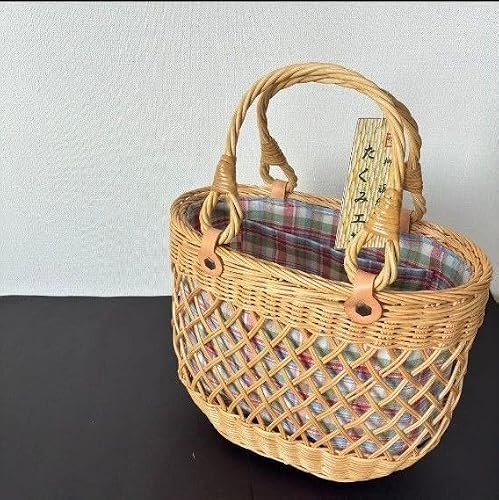
Toyooka Willow Basket (Tajima Kiryu-zaiku)
たくみ工芸 豊岡杞柳細工 かごバック 伝統工芸品 手提げ
通常7~8日以内に発送します。 · Sold by STORE楓 · ASIN B0HD2HZN8F
Price and availability as of 2026-09-01 05:22 JST. The Amazon listing at the time of purchase is authoritative. jpmono.com earns a commission on qualifying purchases at no extra cost to you.
| Attribute | Detail |
|---|---|
| Craft | Tajima kiryu-zaiku (Toyooka willow basketry), Hyogo |
| Material | Koriyanagi willow, hand-plaited, natural untreated finish |
| Form | Storage basket / tray (see live listing for exact form) |
| Dimensions | Unconfirmed — check the listing |
| Weight | Unconfirmed — willow is notably light |
| Origin | Toyooka, Tajima region, Hyogo Prefecture (confirmed by craft) |
| Designation | National Traditional Craft, designated 1992 (confirmed) |
| Listing | Amazon JP Global Store · ASIN B0HD2HZN8F |
Only the Amazon JP listing identity is available; live pricing and exact dimensions may have shifted since the writing date. Confirm both at the retailer before buying.
📖 Glossary — key terms
Tajima (但馬) — the historical name for the northern part of present-day Hyogo Prefecture, facing the Sea of Japan.
Kiryu-zaiku (杞柳細工) — “willow work”; plaited basketry made from koriyanagi willow.
Koriyanagi (杞柳 / コリヤナギ) — a slender willow species traditionally cultivated and gathered on river floodplains for weaving.
Yanagi-gori (柳行李) — a lidded willow trunk used historically for clothing and travel storage.
Shosoin (正倉院) — the 8th-century imperial repository at Todai-ji in Nara, which preserves a willow box recorded as tribute from Tajima.
Related jpmono guides on Japanese woven, wooden, and regional Hyogo crafts — useful for weighing material, weight, and use.
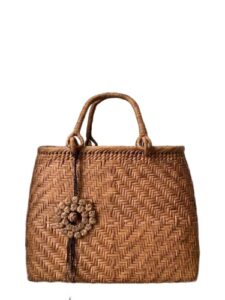 🧺 Yamabudo vine basket bag
Mountain-grape vine — darker, heavier, ages amber
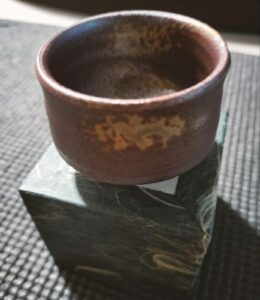 🍶 Tamba-yaki guinomi (Hyogo)
A neighboring Hyogo craft — stoneware sake cup
 🧵 Banshu-ori handkerchief (Hyogo)
Hyogo yarn-dyed cotton textile
 🔪 Higonokami knife (Hyogo)
Miki, Hyogo — folding pocket blade
 🍚 Miyajima wooden rice scoop
Another light, untreated-wood household object
 📦 Kyo Sashimono paulownia box
Joinery storage — the wooden alternative to woven
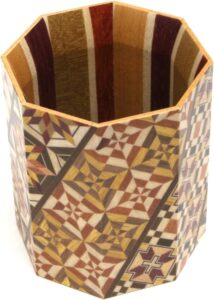 🪵 Hakone Yosegi pen stand
Marquetry woodwork — desktop organizing
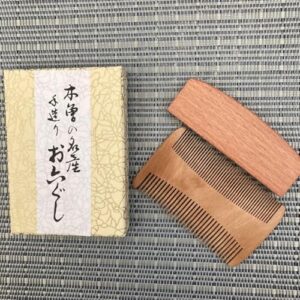 💈 Kiso Oroku-gushi wooden comb
A small, natural-finish Kiso wood craft
Where this comes from

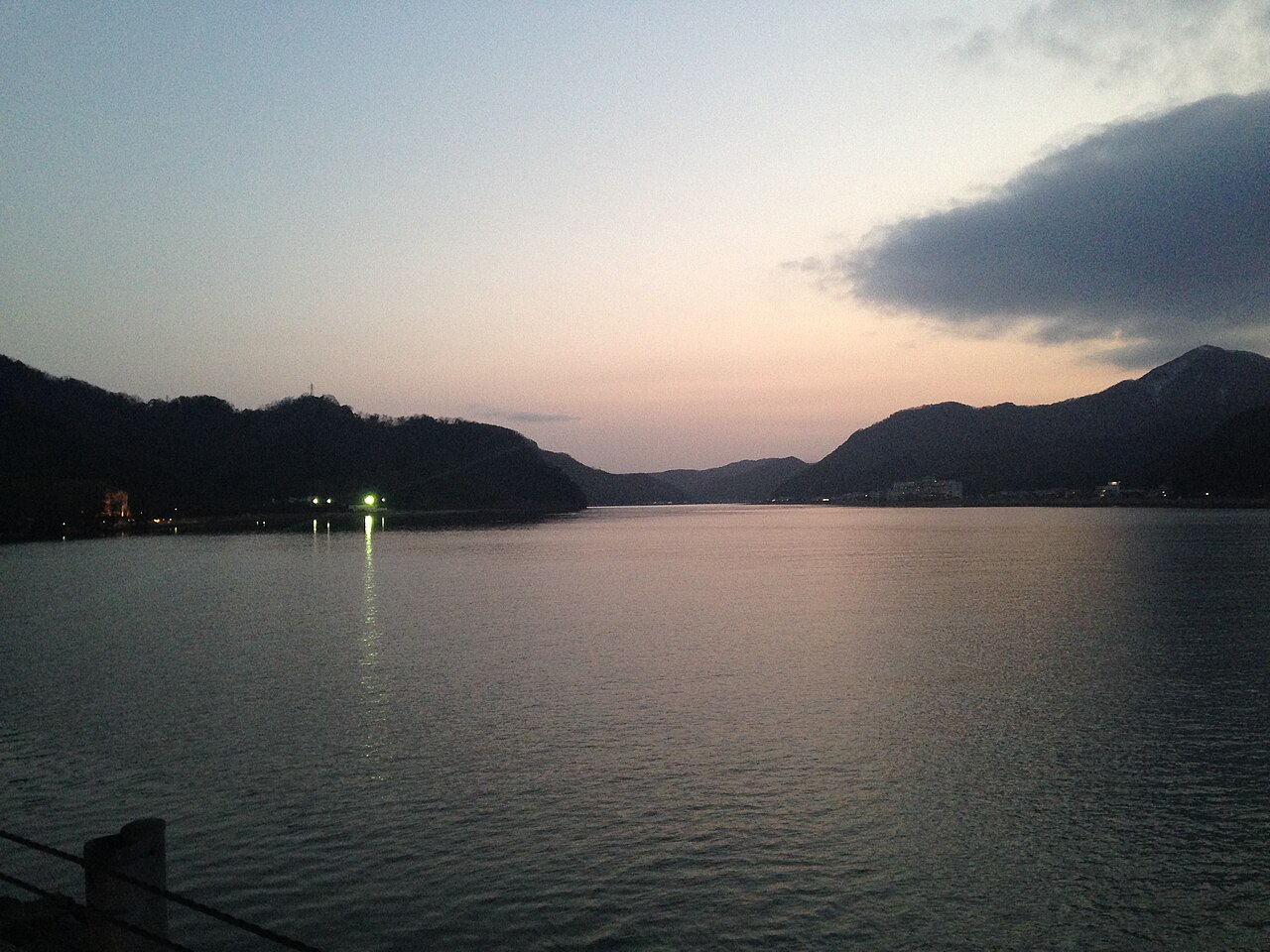
Toyooka is a river city in the Tajima region — the old name for the northern, Sea-of-Japan-facing part of Hyogo Prefecture. The Maruyama River runs slow and wide here before it reaches the coast, and for centuries it left behind a marshy floodplain that flooded easily and farmed poorly. That same wet ground was ideal for one thing: koriyanagi willow, which thrives in soggy soil that defeats most crops.
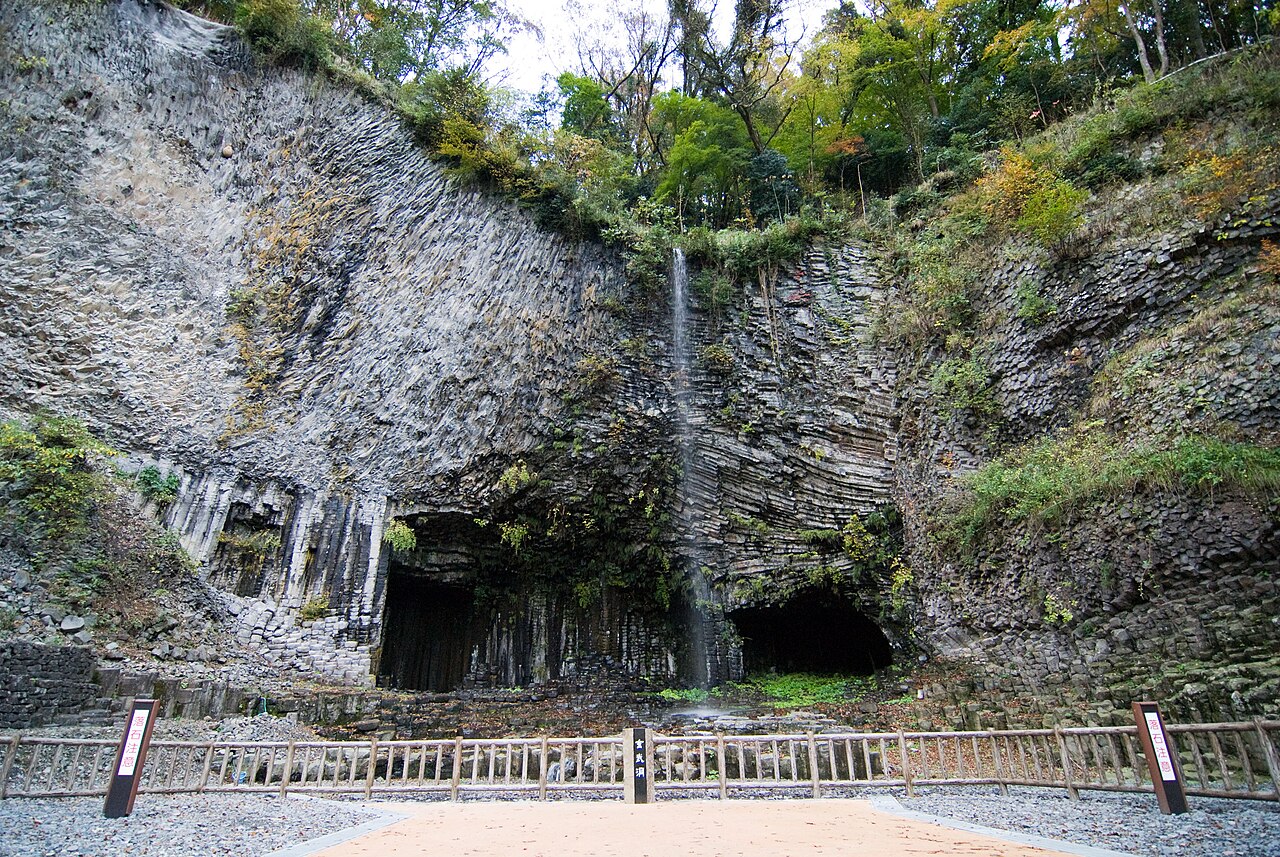
The craft’s documentation runs astonishingly deep. The Shosoin (正倉院) repository in Nara — the 8th-century imperial storehouse at Todai-ji — preserves a willow box, a yanagi-bako, recorded as tribute sent from Tajima. That single object makes Tajima kiryu-zaiku one of the earliest documented plaited-fiber crafts in Japan, with a continuous thread reaching back to the Nara period (710–794), when Nara was Japan’s capital.
“An 8th-century willow box from Tajima still sits in the Shosoin in Nara — the weave in your hands is the same idea, twelve centuries on.”
- 8th century — A willow box (yanagi-bako) from Tajima is recorded as tribute and preserved in the Shosoin, Nara.
- 710–794 — The Nara period: Nara serves as Japan’s capital, the era of the surviving tribute box.
- Edo period (1603–1868) — The Izushi domain promotes the willow trunk (yanagi-gori) as a household and travel-storage staple.
- Meiji era onward — Woven willow goods become prized souvenirs of nearby Kinosaki Onsen.
- 20th century — The same basketry know-how seeds Toyooka’s rise as Japan’s leading bag-making city.
- 1992 — Tajima kiryu-zaiku is designated a National Traditional Craft.
- 2026 — Hand-plaited willow baskets are still woven and sold from the Tajima region.
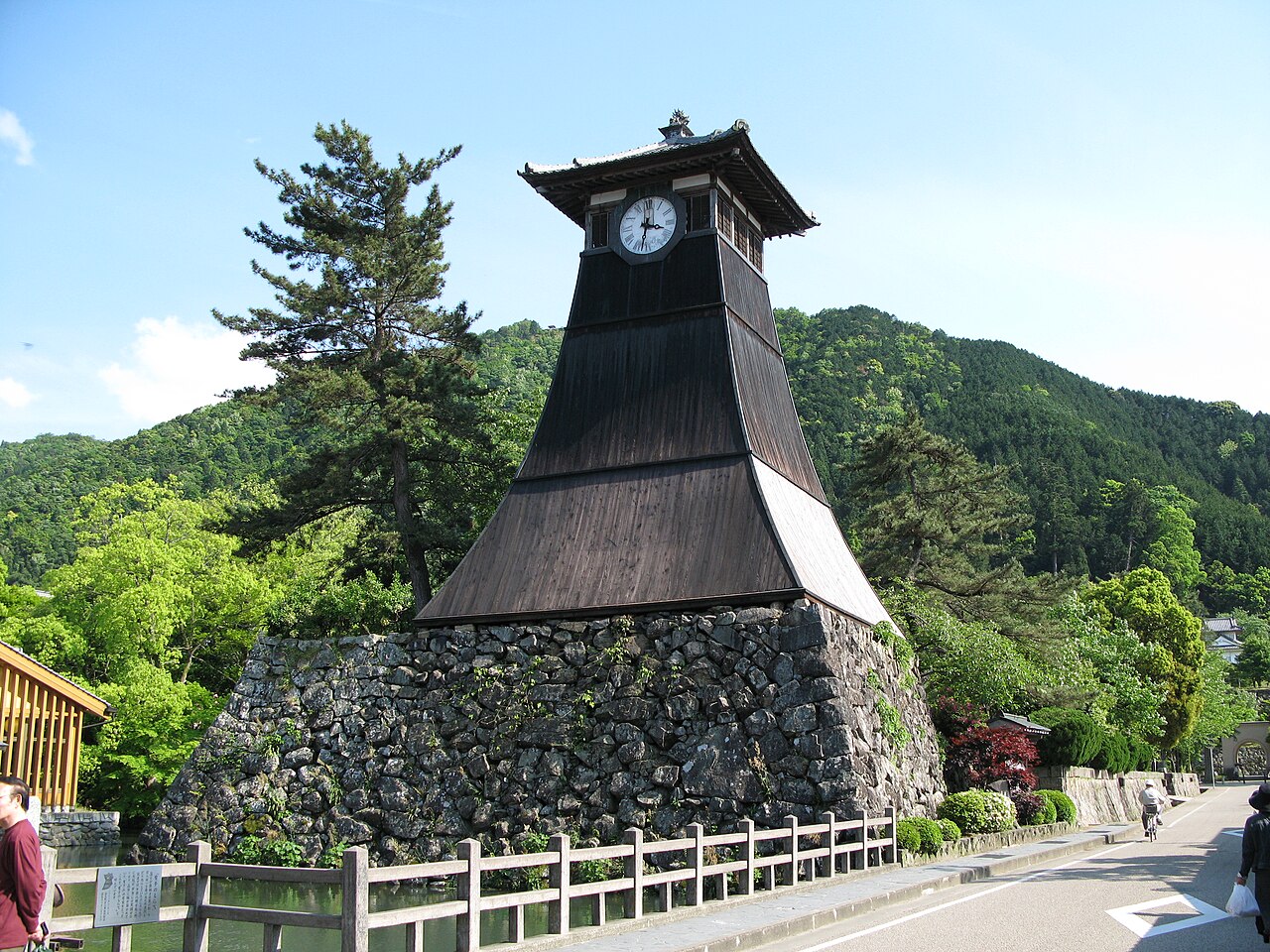
By the Edo period (1603–1868), the willow trunk had become a fixture of daily life. The Izushi domain — centered on the small castle town whose Shinkoro clock tower still stands — promoted the yanagi-gori, a lidded willow chest, as a practical staple for storing clothing and for travel. It was the suitcase of its day, and Tajima made a great many of them. Farmers wove through the snowbound winter, when the floodplain gave them little else to do.
That long basketry tradition did not fade — it changed shape. The hand skills built on willow became the foundation for Toyooka’s modern identity as Japan’s leading bag-making city, the place that turned woven storage into a manufacturing economy. The open willow basket is the older, plainer ancestor of all of it.
Price snapshot across stores
The fetched data did not return a live price for this listing, so the figures below are marked as unconfirmed. Always confirm the current JPY price on the listing itself; the JPY price is the authoritative one, and any USD figure is an estimate at a ¥150/USD baseline.
| Store | Item / variant | Price (JPY + USD est.) | Notes |
|---|---|---|---|
| 🇺🇸 Amazon US (search) | Browse Japanese woven baskets | varies (USD) | Best if you are shopping from the US — Prime shipping, USD pricing, no international customs. Amazon US carries Japanese willow, bamboo, and rattan baskets from various makers; this exact Tajima piece is sourced from Japan (next row). |
| 🇯🇵 Amazon JP Global Store | Toyooka kiryu-zaiku willow basket (ASIN B0HD2HZN8F) | Unconfirmed — check listing | The sourced listing for the specific item. Ships internationally from Japan to most major destinations. |
| Maker direct | Tajima kiryu-zaiku workshops | Varies | Regional cooperatives and Toyooka workshops sell directly; many do not ship overseas, so a proxy may be needed. |
| Proxy services (Buyee / Tenso) | Forwarding for JP-only listings | Item price + fees | Useful when a Japanese seller will not ship abroad; expect service fees plus consolidated forwarding cost. |
USD figures shown alongside JPY are approximate (¥150/USD baseline as of mid-2026); prices and stock fluctuate, so verify at the retailer before purchasing.
What it does well
Weaknesses and things to verify before buying
- Thin listing data. The fetched feed returned no confirmed dimensions, weight, or price. Confirm the exact size and capacity on the listing before you commit — a willow “basket” can mean a tray, a deep bin, or a lidded box.
- Not waterproof. Untreated willow absorbs moisture. It is a dry-storage object, not a container for wet items, fresh produce that weeps, or outdoor use in rain.
- Limited load capacity. Willow is light and springy, not structural. It is unsuited to heavy tools, firewood, or anything that will strain or distort the weave.
- Care matters. Keep it out of prolonged direct sun and away from radiators; dry wood fiber can become brittle. Dust with a dry brush rather than washing.
- International shipping and customs. Buying from Japan adds shipping cost and possible duties above your local threshold. Factor both in before comparing it to a local basket.
- Natural variation. Hand-plaited willow varies slightly in color and weave from piece to piece; the item you receive may differ a little from the photo.
Conclusion — which buyer type are you?
Other ways to approach this purchase
🏆 Editor’s Pick
❓ Frequently Asked Questions
What is Tajima kiryu-zaiku?
How is willow different from bamboo or vine baskets?
Can I buy it from outside Japan?
How do I care for an untreated willow basket?
What size and price is this listing?
Is it a good gift?
jpmono.com is curated by a Japan-based editorial team (working out of Toyama in the Hokuriku region and Nara in Kansai) and is independent. We do not take payment from the makers we feature; income comes from affiliate links. We do not physically test every product — we read maker specs and source listings.
🤖 This article was prepared with AI assistance and reviewed against the available product listing data. Specifications, prices, and availability should be confirmed at the retailer before purchase.
Affiliate disclosure: jpmono.com may earn a commission on qualifying purchases made through links on this page, at no additional cost to you.