![Kunisaki Shittoi Rush-Woven Coaster Set: Oita’s Rare Igusa Craft [2026]](https://jpmono.com/wp-content/uploads/2026/05/japan-map-regions-and-prefectures-800x1050.png)
On the Kunisaki Peninsula in Oita Prefecture, on the eastern shoulder of Kyushu, a triangular rush called shittoi (七島藺, “seven-island rush”) still grows in terraced fields. It is not the ordinary igusa (藺草) round rush used for most modern tatami. Shittoi is a tougher, three-sided sedge that, splitting into strands when worked, was once the prized fiber for the highest grade of goza floor mats and tatami facing. The coaster and trivet set covered here — hand-woven by the Nanatsumugi workshop — carries that Edo-era material into everyday tableware.
What makes shittoi notable internationally is its scarcity. As synthetic and cheaper imported materials took over the floor-covering trade, shittoi cultivation collapsed across Japan. Today the Kunisaki Peninsula is the only place in the country still growing and hand-weaving it. A coaster woven from this rush is, quite literally, made from a fiber that survives in one district and nowhere else.
This guide is written for international readers comparing natural-fiber Japanese tableware: it covers what shittoi is, how the weave behaves, who the set suits and who should skip it, where the craft comes from, and how to buy it from outside Japan. Note up front that the live product data for Kunisaki-area shittoi pieces is thin, and current pricing may have shifted since the writing date.
🔄 Updated: June 11, 2026
⏱️ Read time: about 9 min
- Who this is for — and who should skip it
- Product overview (from published specs)
- Where this comes from — place, era, and the craft tradition
- Buying options
- What it does well
- Weaknesses and things to verify before buying
- Conclusion — which buyer type are you?
- Other ways to approach this purchase
- ❓ Frequently Asked Questions
Who this is for — and who should skip it
- Value natural-fiber tableware over plastic, cork, or silicone
- Want a coaster that genuinely absorbs condensation and deodorizes
- Appreciate buying from a craft that survives in a single district
- Like objects that visibly age — green softening to amber over years
- Are assembling a coherent natural-material table setting
- Want a dishwasher-safe, wipe-clean surface with zero upkeep
- Expect the cheapest possible coaster — this is a hand-woven craft item
- Need a fully waterproof barrier (rush is absorbent, not sealed)
- Dislike natural variation in color, texture, or slight unevenness
- Need guaranteed fast domestic delivery outside Japan
Product overview (from published specs)
Dimensions and piece count vary by the format of handwoven Kunisaki shittoi. Confirm the exact size and number of pieces with the maker or seller before buying.
| Attribute | Detail | Source |
|---|---|---|
| Material | Shittoi (七島藺, seven-island rush), a triangular sedge | Maker direct |
| Maker / workshop | Nanatsumugi (Kunisaki Peninsula) | International retailer |
| Construction | Hand-woven on a loom; split-rush strands | Maker direct |
| Use | Coaster / small trivet (nabeshiki) | International retailer |
| Origin | Kunisaki Peninsula, Oita Prefecture, Kyushu | Maker direct |
| Piece count / size | — | — |
| Weight | Unconfirmed — check manufacturer site | — |
📖 Glossary — key terms
- Shittoi (七島藺, “seven-island rush”) — a triangular sedge, tougher than ordinary round rush, historically prized for top-grade floor mats. The English name “seven-island rush” derives from its old association with the Tokara/Shichitō islands south of Kyushu.
- Igusa (藺草) — the common round rush used for most modern tatami; softer and far more widely grown than shittoi.
- Goza (茣蓙) — a woven rush floor mat; shittoi was used for the highest grades.
- Tatami (畳) — the traditional Japanese rush-faced floor mat.
- Nabeshiki (鍋敷き) — a trivet; a pad set under a hot pot or kettle to protect the table.
- Rokugō Manzan (六郷満山) — the mountain-Buddhism culture of the Kunisaki Peninsula, expressed in its rock-carved Buddhas and ancient temples.
- Kitsuki domain (杵築藩) — the Edo-period domain on the Kunisaki Peninsula under whose administration shittoi cultivation was introduced and encouraged.
Related jpmono guides — same prefecture, neighboring Kyushu crafts, and the wider woven-and-dyed textile genre.
 🔪 Oita Bungo petty knifeSame prefecture
 ☕ Onta-yaki mugOita pottery
🟦 Buaisou indigo tenuguiWoven / dyed textile
🪟 Iyo Sudare reed blindWoven reed craft
 🧵 Nabeshima Dantsu floor textileKyushu (Saga)
 🪓 Miyakonojo nataKyushu neighbor
 🧣 Iwate homespunTextile genre
Where this comes from — place, era, and the craft tradition

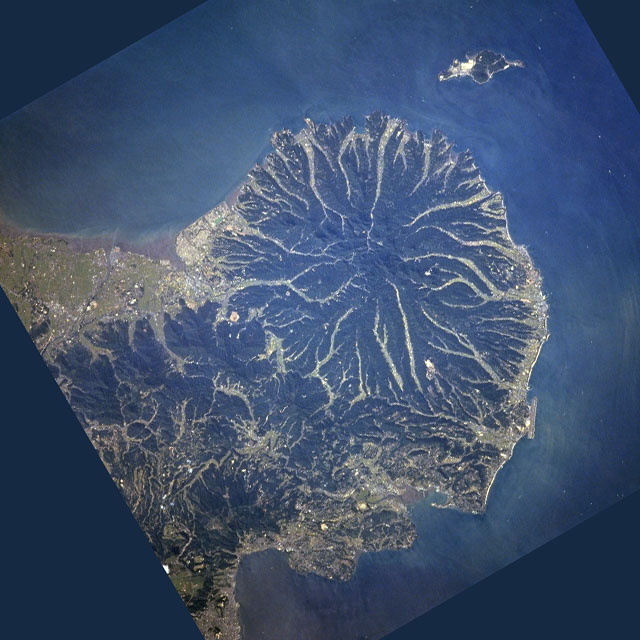
The Kunisaki Peninsula is a near-circular landmass on the eastern shoulder of Kyushu, in the northern part of Oita Prefecture, reaching out into the Seto Inland Sea. Old volcanic activity centered on Mount Futago left a radial pattern of ridges and steep valleys spreading from the interior toward the coast, so that the farmland here is terraced and small-scale rather than broad and flat. That topography matters: shittoi is a labor-intensive crop tended in modest wet fields, and a landscape of small terraced plots tended by hand is precisely the kind of place where such a crop can persist.
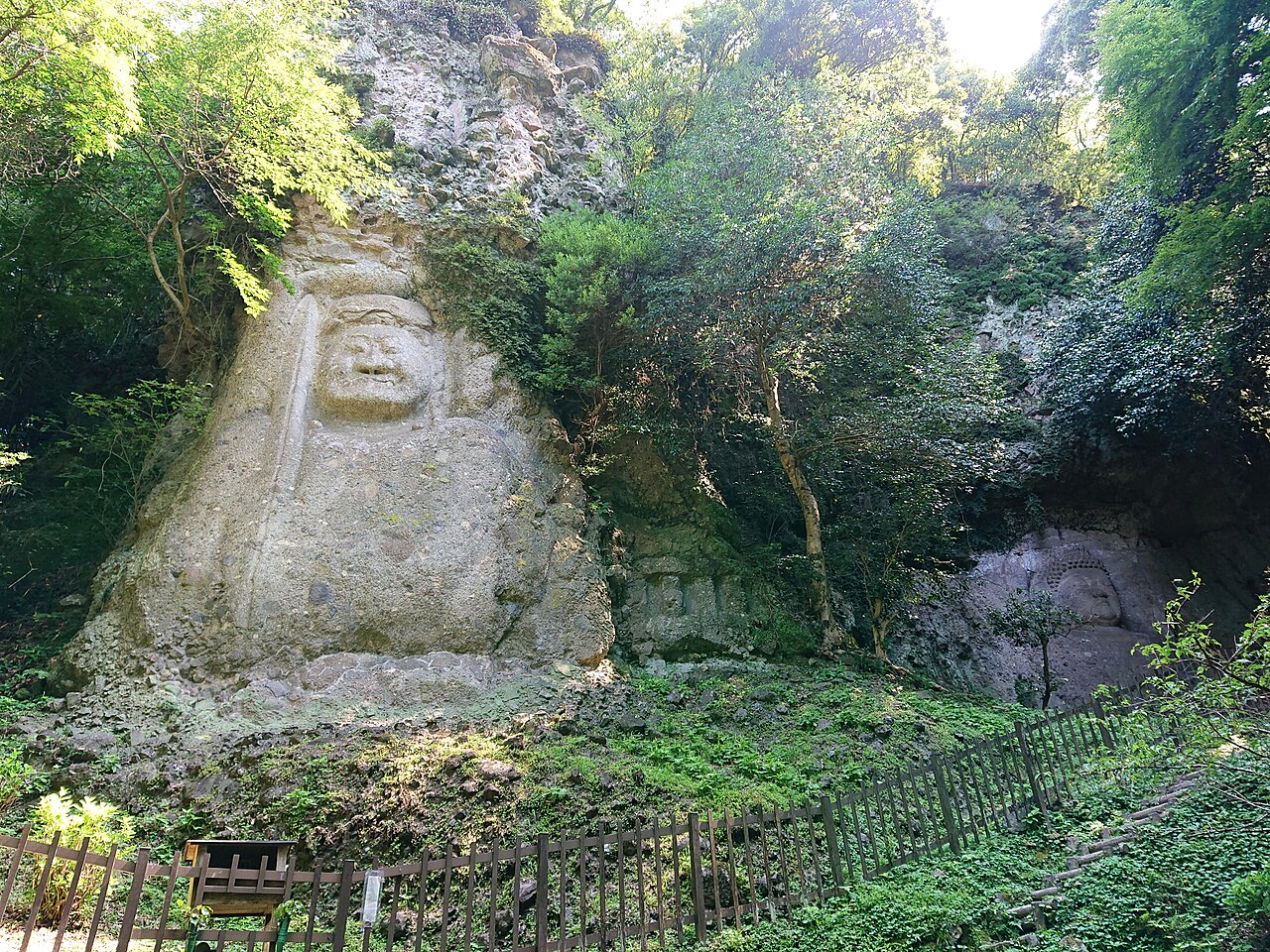
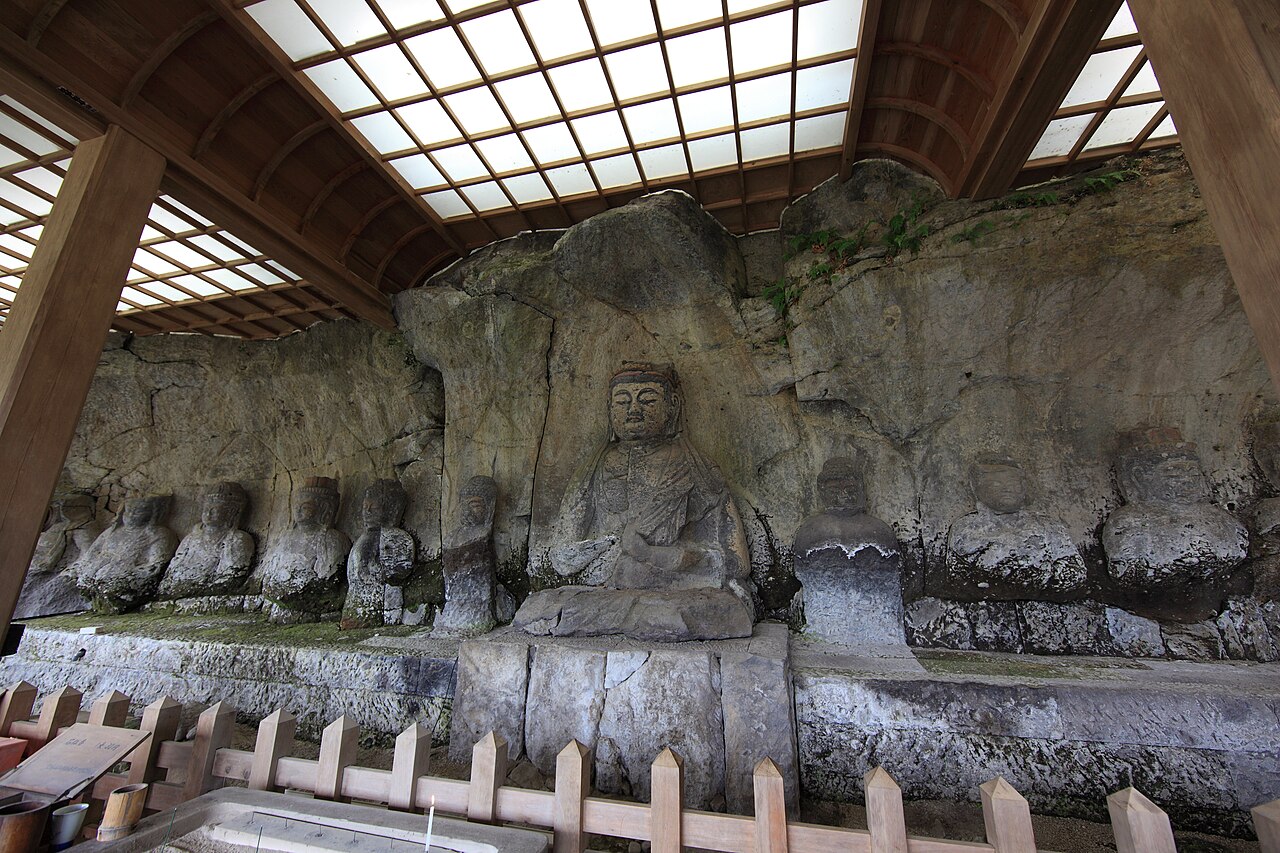
Kunisaki is also one of Japan’s most concentrated landscapes of mountain Buddhism. The peninsula is the heartland of the Rokugō Manzan (六郷満山) culture — a syncretic tradition of mountain temples, pilgrimage routes, and stone carving that took root over a millennium ago. Its rock-carved Buddhas, such as the Kumano Magaibutsu above, and its ancient wooden halls give the region a cultural density unusual for a rural peninsula. The rush craft did not grow up in isolation; it grew up inside this older religious and agricultural landscape.
Shittoi itself entered this landscape in the Edo period. Under the administration of the Kitsuki domain, the triangular rush was introduced and encouraged as a cash crop, and its exceptional toughness made it the fiber of choice for the highest grade of goza mats and tatami facing. For generations it was a premium agricultural product of the peninsula — the rush you wove when you wanted a mat that would outlast ordinary igusa.
- 718 — Rokugō Manzan mountain-Buddhism culture traditionally said to be founded across the Kunisaki Peninsula.
- 12th c. — The Kumano Magaibutsu rock-carved Buddhas attributed to roughly this era (Heian–Kamakura).
- 17th c. (Edo period) — Shittoi introduced and encouraged under the Kitsuki domain; becomes the prized fiber for top-grade goza and tatami facing.
- Early 20th c. — Cultivation widespread across parts of Kyushu as demand for durable rush mats holds.
- Postwar (1950s–60s) — Synthetic materials and cheaper imports displace natural rush; shittoi cultivation collapses nationwide.
- Late 20th–21st c. — The Kunisaki Peninsula becomes the only remaining production area for shittoi in Japan.
- 2026 — Small workshops such as Nanatsumugi continue hand-weaving shittoi into coasters, trivets, and tableware.
Then the market changed. As synthetic flooring and cheaper imported rush spread through the postwar decades, the laborious cultivation of shittoi became uneconomic, and it disappeared region by region. What had been a crop grown across parts of Kyushu narrowed to a single peninsula. Today, the Kunisaki Peninsula is the only place in Japan where shittoi is still grown and hand-woven — a continuity measured not in scale but in survival.
“A shittoi coaster is woven from a rush that, after centuries of cultivation, now survives in exactly one district of Japan — and nowhere else.”
That is the quiet case for the object. Workshops like Nanatsumugi convert the surviving rush into small, useful pieces — coasters and trivets — that keep both the field and the weaving hands at work. Each stalk is split and woven on a hand loom into a firm, dense mat that absorbs moisture and naturally deodorizes, and that shifts over years from fresh green toward a settled amber.
Buying options
Prices for handwoven Kunisaki shittoi vary with weave, size, and finish, so compare current offers with sellers. USD figures, where shown, are approximate (¥150/USD baseline as of mid-2026) and JPY is the reference currency.
| Store | Item / Variant | Price | Notes |
|---|---|---|---|
| 🇺🇸 Amazon US (search) | Browse Japanese rush & igusa coasters | varies (USD) | Best if you are shopping from the US — Prime shipping, USD pricing, no international customs. Amazon US carries natural-fiber Japanese coasters and igusa goods from various makers; the specific Kunisaki shittoi set is sourced from Japan (next row). |
| 🇯🇵 Amazon JP Global Store | Nanatsumugi shittoi coaster / trivet set | — | International shipping from Japan may be available; terms vary by destination. |
| Maker direct | Nanatsumugi workshop | Unconfirmed — check maker site | A small Kunisaki workshop; direct ordering and international shipping availability should be confirmed individually. |
| Proxy services (Buyee / Tenso) | Forwarded from JP retailers | Item price + forwarding fee | Useful if direct shipping is unavailable; adds a service fee and a consolidation step. |
Prices in USD are approximate and depend on the current exchange rate. Amazon JP ships many household items internationally via the Global Store, but coverage and shipping cost (roughly $15–$40 to the US and EU, higher elsewhere) vary by destination; customs duties may apply on orders above your local threshold.
What it does well
Weaknesses and things to verify before buying
- Published information is limited. Confirm the piece count and fit before ordering; avoid assuming details not stated here.
- Not waterproof. Rush is absorbent by design; it manages condensation but is not a sealed barrier. A soaked coaster needs to dry fully before storage.
- Hand-care required. This is not a dishwasher or wipe-clean item. Expect to brush off crumbs, wipe lightly, and air-dry to avoid mildew.
- Natural variation. Color, texture, and slight unevenness vary piece to piece. Buyers wanting perfectly uniform, machine-made consistency may be disappointed.
- Heat limits as a trivet. It can serve as a small nabeshiki, but rush will scorch under very hot cast iron; confirm the maker’s heat guidance and avoid direct flame contact.
- International shipping friction. Availability via Amazon JP Global Store, shipping cost, and customs depend on your country; a proxy service may be needed if direct shipping is unavailable.
- Price uncertainty. Because no live price was captured, budget with a margin and verify at checkout rather than assuming a figure.
Conclusion — which buyer type are you?
Other ways to approach this purchase
❓ Frequently Asked Questions
What is shittoi, and how is it different from ordinary igusa rush?
Shittoi (七島藺, “seven-island rush”) is a triangular sedge, distinct from the common round rush called igusa. It is tougher and more fibrous, which historically made it the fiber for the highest grade of goza mats and tatami facing. It is far rarer than igusa — today it is grown and hand-woven only on the Kunisaki Peninsula in Oita.
Are the coasters durable, and how do I care for them?
Shittoi’s toughness gives a firm, hard-wearing weave. Care is simple but manual: brush off crumbs, wipe lightly when needed, and let the piece air-dry fully before storing. It is not dishwasher-safe, and prolonged dampness can cause mildew, so drying matters.
Will the color change over time?
Yes. Like other natural rush, shittoi shifts from a fresh green toward a settled amber over months and years of use. This is considered part of the appeal — a living patina rather than a defect.
Can I use them as trivets for hot pots?
The set is described as a coaster / small trivet (nabeshiki), so light trivet use is intended. However, rush will scorch under very hot cast iron or direct flame, so confirm the maker’s heat guidance and avoid extreme heat.
Does Amazon JP Global Store ship these internationally?
Amazon JP ships many household items internationally via its Global Store. Coverage and shipping cost (roughly $15–$40 to the US and EU, higher elsewhere) vary by destination, and customs duties may apply above your local threshold. If direct shipping from a Japanese craft retailer is unavailable, a proxy service such as Buyee or Tenso can forward the parcel.
Why is shittoi more expensive than standard igusa coasters?
Shittoi cultivation is labor-intensive and now confined to a single peninsula, so supply is small and weaving is done by hand. That scarcity and handwork, rather than a brand premium, account for the higher price relative to mass-produced igusa coasters.
Is the price shown reliable?
Prices for current Kunisaki shittoi vary with the materials and workmanship. Compare the current amount with the seller before purchasing.
jpmono.com is curated by a Japan-based editorial team (working out of Toyama in the Hokuriku region and Nara in Kansai) and is independent. We do not take payment from the makers we feature; income comes from affiliate links. We do not physically test every product — we read maker specifications and craft references.
🤖 This article was prepared with AI assistance and reviewed against the available craft notes. Specifications and prices reflect the information on hand at the time of writing and should be checked with the maker or seller.
Affiliate disclosure: jpmono.com may earn a commission on qualifying purchases made through links on this page, at no additional cost to you.