![Hakata-ori Silk Kaku-Obi: Where to Buy Fukuoka’s Kenjo Sash [2026]](https://jpmono.com/wp-content/uploads/2026/06/hakata-ori-silk-kaku-obi-where-to-buy-2026-featured.jpg)
A Hakata-ori (博多織, “Hakata weave”) kaku-obi is one of those Japanese objects whose quality you can feel in the hand before you understand the history. The cloth is dense, slightly stiff, and finely ribbed along its length, and a sash woven this way grips itself when you tie it. It does not slowly work loose over an afternoon the way a softer obi can. That single mechanical property is why the same Fukuoka weave that dressed Edo-era townspeople is now bought by people who practice kendo, iaido, and aikido.
The craft is the flagship textile of Fukuoka Prefecture, on the northern coast of Kyūshū. Its story reaches back to 1241, when a Hakata merchant traveled to Song-dynasty China alongside a monk and brought home the weaving knowledge that local families later refined into a thick, tightly warped silk. From around 1600 the ruling Kuroda clan presented the cloth as annual tribute to the shogunate in Edo, which is where the name kenjo Hakata (献上博多, “presented Hakata”) and its distinctive ritual-motif pattern come from.
This guide covers a specific reversible silk kaku-obi carrying the classic kenjo-gara pattern, sourced from Amazon’s Japan Global Store and aimed at international buyers. We cover who it suits, the comparison points against other Japanese silk textiles, where to buy it from outside Japan, and the regional history behind it. A note up front: the live marketplace snapshot for this listing returned only the product identity, so where pricing or fine spec detail is missing, this article says so rather than guessing.
🔄 Updated:
⏱️ Read time: ~10 min

- Who this is for — and who should skip it
- Product overview (from published specs)
- 📍 Where this comes from — place, era, and the craft tradition
- Price snapshot across stores
- What it does well
- Weaknesses and things to verify before buying
- Conclusion — which buyer type are you?
- Other ways to approach this purchase
- 🏆 Editor’s Pick
- ❓ Frequently Asked Questions
Who this is for — and who should skip it
- Practice kendo, iaido, or aikido and want a sash that holds its knot through a session
- Wear men’s kimono or yukata and want an authentic, structured kaku-obi rather than a soft one
- Value a reversible weave that gives you two faces from one obi
- Want a recognized regional craft (kenjo Hakata) with a documented lineage, not a generic sash
- Appreciate the firm, ribbed hand that distinguishes silk Hakata-ori from printed cloth
- Want a soft, drapey obi — the firm Hakata hand is the opposite of that
- Need a women’s wide obi for formal kimono; a kaku-obi is a narrow men’s-style sash
- Are shopping purely on price; entry synthetic sashes cost far less
- Expect same-day domestic shipping — this ships internationally from Japan
- Need an exact dye lot or length confirmed before buying without contacting the seller
Product overview (from published specs)
The data available for this specific listing is thin: the marketplace snapshot returned the product identity (ASIN B0CGRM6Q1L) but not a structured spec sheet or a live price. The table below therefore mixes the listing identity with the established characteristics of a silk kenjo Hakata-ori kaku-obi. Where a value could not be confirmed from the data, it is marked rather than invented.
Hakata-ori Silk Kaku-Obi
[和ごころきもの屋] 博多織 角帯 黒 × 黒 【 メンズ帯 】 博多 献上柄 独鈷柄 黒 日本製 絹 100% 紳士帯 居合用 井上絹織 本場筑前博多織 袋織 紳士 着物 浴衣 ゆかた 男性 男物 通年 献上柄 本袋 絹 シルク リバーシブル 単色 sns-obi-h-26
残り5点 ご注文はお早めに · Sold by 和ごころきもの屋(2営業日以内での発送※水曜日定休)インボイス対応業者 · ASIN B0CGRM6Q1L
Price and availability as of 2026-08-31 02:30 JST. The Amazon listing at the time of purchase is authoritative. jpmono.com earns a commission on qualifying purchases at no extra cost to you.
| Attribute | Detail | Source |
|---|---|---|
| Craft | Hakata-ori (博多織), Fukuoka silk weave | Maker tradition |
| Item type | Kaku-obi (角帯) — narrow men’s / martial-arts sash | Listing identity |
| Pattern | Kenjo-gara — dokko (独鈷) bell & hanazara (華皿) flower-dish motifs | Recommendation hint |
| Construction | Reversible, firm densely-warped weave | Recommendation hint |
| Material | Silk (typical for kenjo Hakata-ori) | Maker tradition |
| Origin | Fukuoka, Fukuoka Prefecture, Kyūshū | Maker tradition |
| ASIN | B0CGRM6Q1L | Listing identity |
| Length / width | Unconfirmed — check listing | Not in data |
| Price | Unconfirmed — check listing (live price unavailable at time of writing) | Not in data |
Data note: only the listing identity was available from the source snapshot; no structured spec sheet or live price was returned. Verify length, width, exact silk content, and current price on the Amazon JP Global Store listing before purchase.
📖 Glossary — key terms in this article
Hakata-ori (博多織) — the silk weaving tradition of Fukuoka/Hakata, characterized by a dense warp and a firm, ribbed surface.
Kaku-obi (角帯) — a narrow, stiff men’s sash worn with kimono and in martial arts, as opposed to the wide, soft women’s obi.
Kenjo Hakata (献上博多) — literally “presented Hakata,” referring to the cloth the Kuroda clan presented as tribute to the Edo shogunate.
Kenjo-gara (献上柄) — the signature pattern built from two Buddhist ritual implements: the dokko (独鈷, a single-pointed ritual pestle) and the hanazara (華皿, a flower-scattering dish).
Iaido / kendo / aikido — Japanese martial arts whose practitioners wear a firm kaku-obi to keep the hakama and uniform secured.
Related jpmono guides — other Kyūshū crafts, other Japanese silk textiles, and the same-city neighbor.
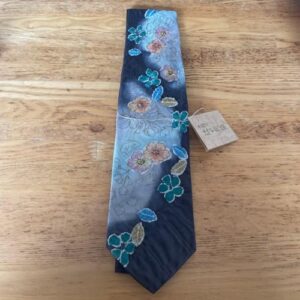 Kiryu-ori silk necktie — Gunma silk, a different product type →
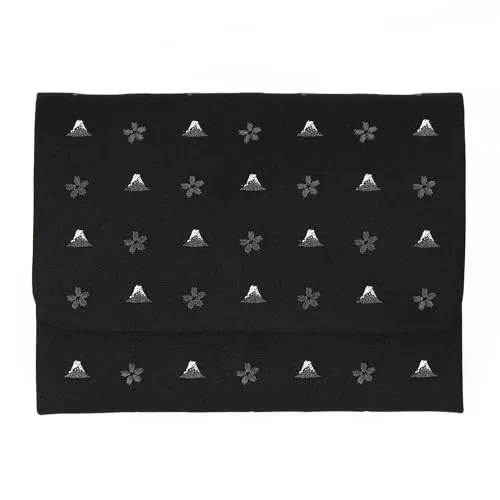 Nishijin-ori silk card case — Kyoto’s figured silk →
 Kaga Yuzen silk scarf — Ishikawa hand-painted silk →
Johana Shike-ginu silk scarf — Toyama slub silk →
 Kyo Yuzen furoshiki — Kyoto wrapping cloth →
 Onta-yaki mug (Kyushu) — Ōita folk pottery →
 Karatsu E-garatsu guinomi (Kyushu) — Saga ware sake cup →
📍 Where this comes from — place, era, and the craft tradition

Fukuoka is the largest city on Kyūshū, the southwesternmost of Japan’s four main islands, and it sits on the Genkai Sea coast facing the Korean peninsula and, beyond it, the Asian mainland. That geography is the whole reason a Chinese weaving technique took root here rather than somewhere else. The city’s old merchant quarter, Hakata, was for centuries Japan’s busiest gateway for continental trade, and goods, monks, and craft knowledge all arrived through its harbor first.
The craft’s origin is conventionally dated to 1241. In that year a Hakata merchant named Mitsuda Yazaemon traveled to Song-dynasty China in the company of the monk Shōichi Kokushi (Enni Ben’en, founder of Kyoto’s Tōfuku-ji and of Hakata’s own Tōchō-ji) and brought home weaving techniques from the mainland. Generations later, Mitsuda’s descendant Hikoemon refined those methods into a thick, densely warped silk cloth unlike anything woven nearby.
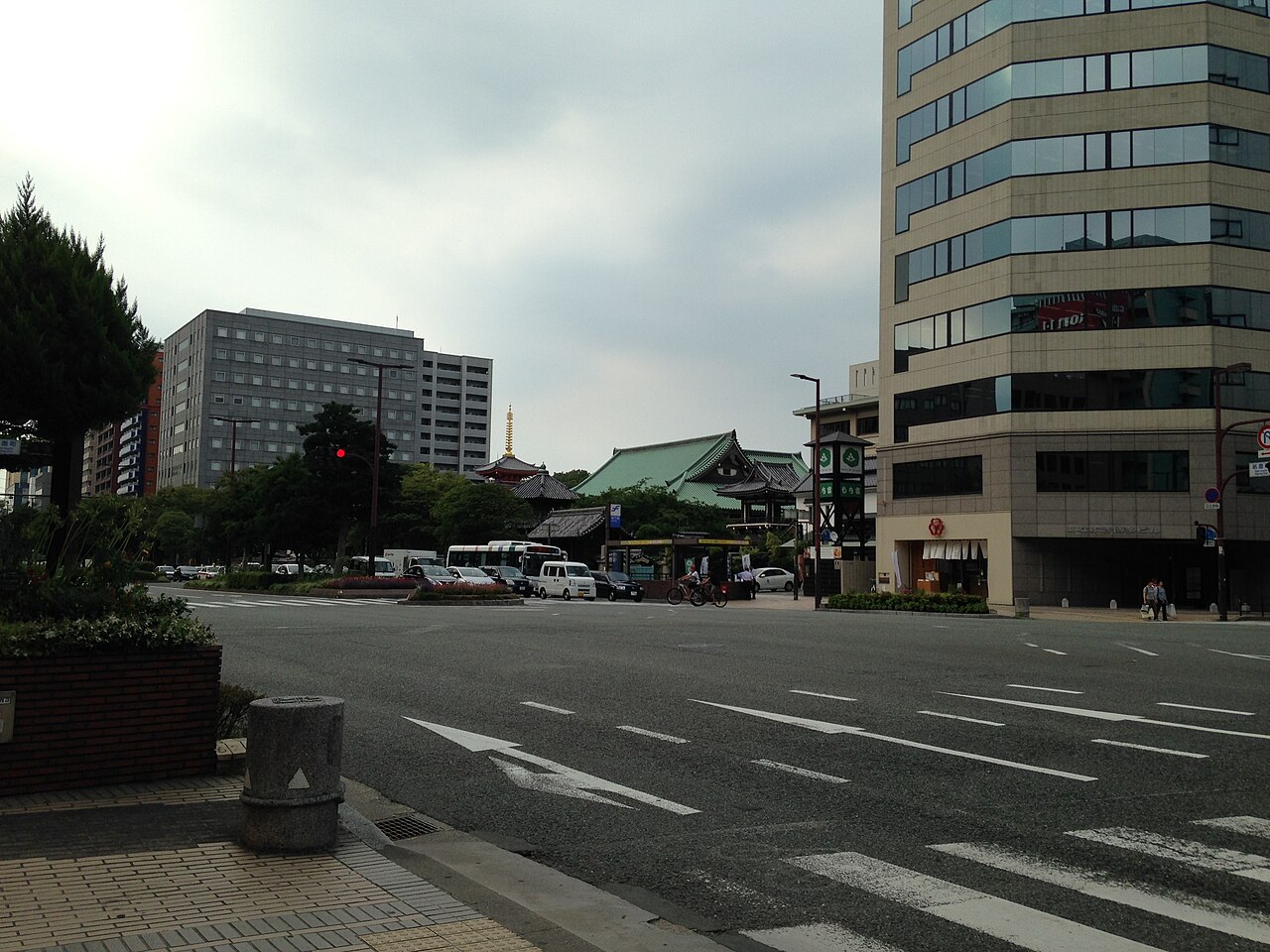
The turn from local specialty to national name came with the domain’s patronage. From around 1600, the Kuroda clan, lords of the Fukuoka domain, presented the cloth to the Tokugawa shogunate in Edo as an annual tribute. That act of presentation gave the weave its enduring name — kenjo Hakata, “presented Hakata” — and fixed its signature design, the kenjo-gara, as the pattern of record. The motifs are not decorative abstractions: the dokko is a single-pointed Buddhist ritual pestle and the hanazara is the dish used to scatter flower petals in temple rites, both drawn from the esoteric Buddhism that the founding monks practiced.
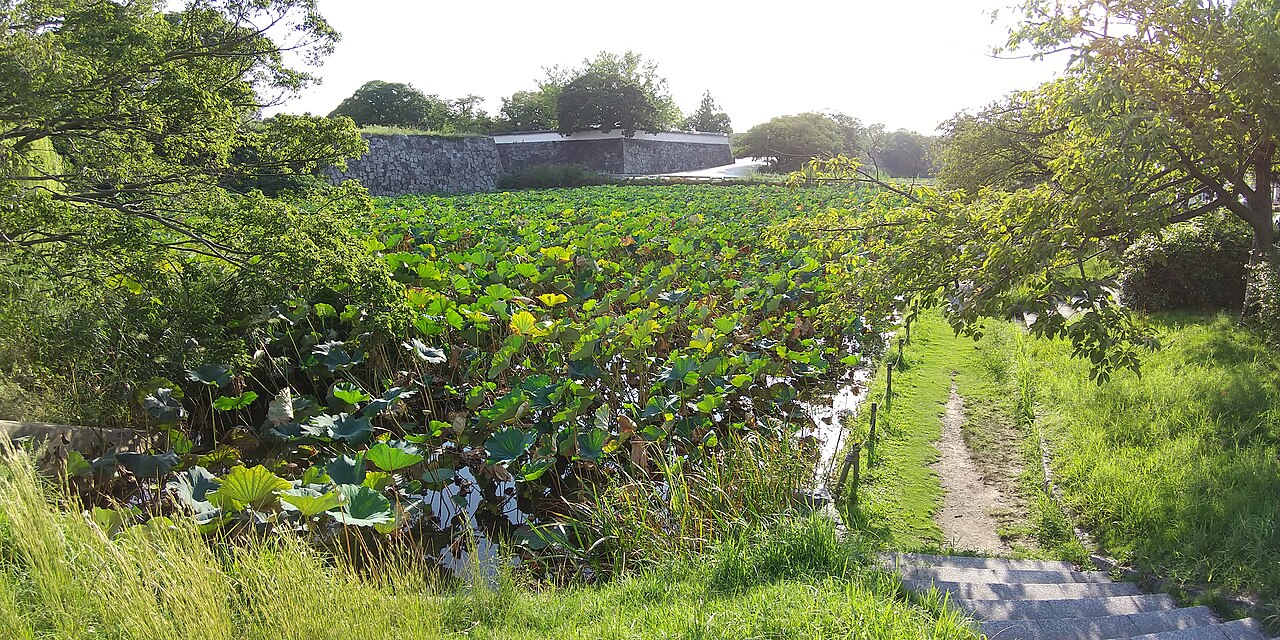
- 1241 — Mitsuda Yazaemon travels to Song China with the monk Shōichi Kokushi and brings home weaving techniques.
- 15th–16th c. — Descendant Hikoemon perfects the thick, densely warped silk cloth.
- c. 1600 — The Kuroda clan begins presenting the cloth to the Edo shogunate; the name “kenjo Hakata” is born.
- Edo period — The kenjo-gara pattern, built from the dokko and hanazara ritual motifs, becomes the weave’s signature.
- Meiji onward — The firm sash finds a second life with martial-arts practitioners who need a knot that holds.
- 1976 — Hakata-ori is designated a Traditional Craft (dentō kōgeihin) by Japan’s METI.
- 2026 — Hakata workshops continue to weave kenjo-gara obi in silk for kimono and budō wear.
“The cloth was prized for the same reason a swordsman prizes it today: a tightly packed warp and a heavily beaten weft make a sash that grips and rarely loosens.”
That mechanical character — stiffness born of weave density rather than starch — is the through-line connecting a feudal tribute cloth to a modern kendo dōjō. The continuity is real: the kenjo-gara is still woven in Hakata, the dokko-and-hanazara layout is still the reference pattern, and the same firmness that made the obi hold its knot under a kimono now keeps a hakama secured during practice. Around this weaving district grew the merchant culture of old Hakata, anchored by Kushida Shrine.
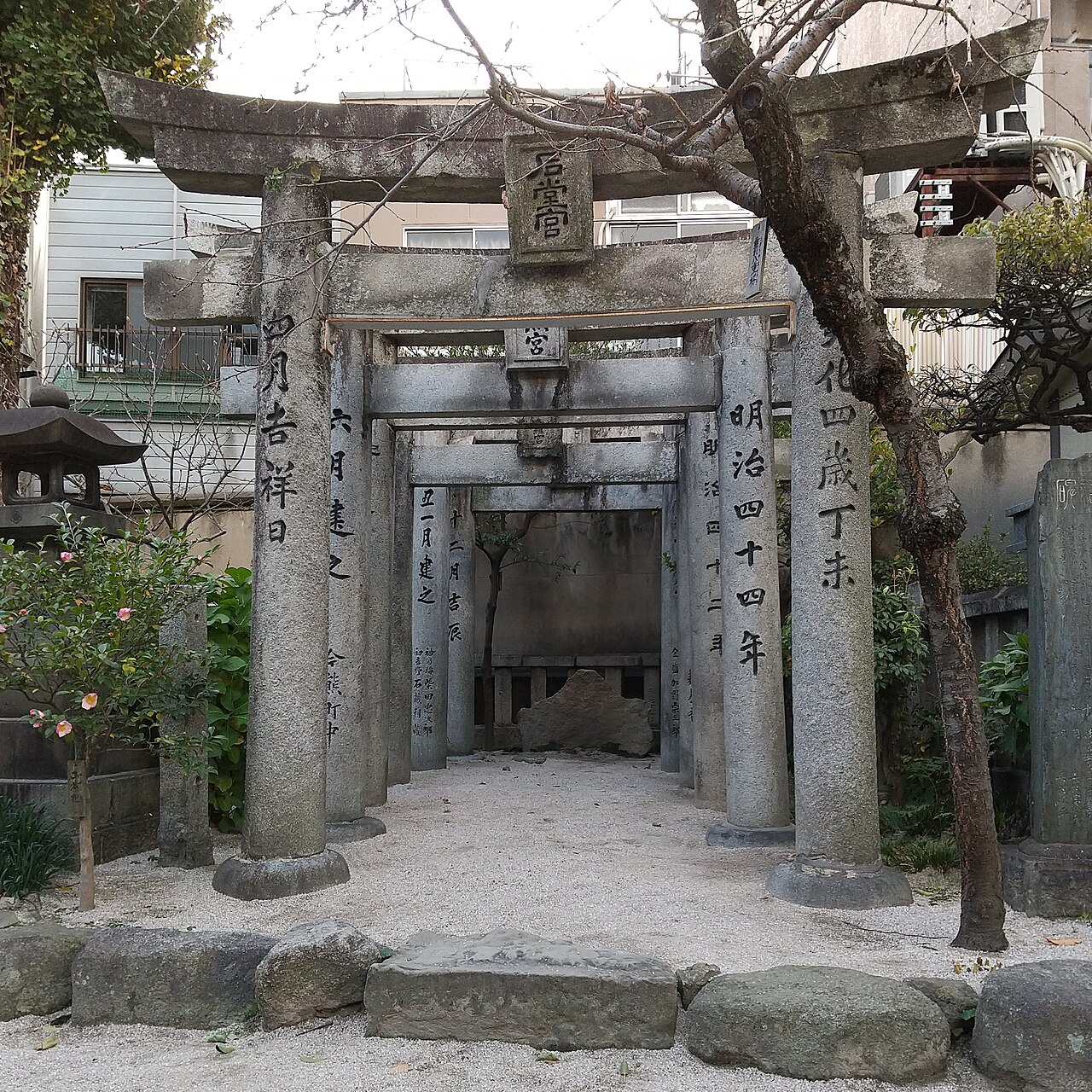
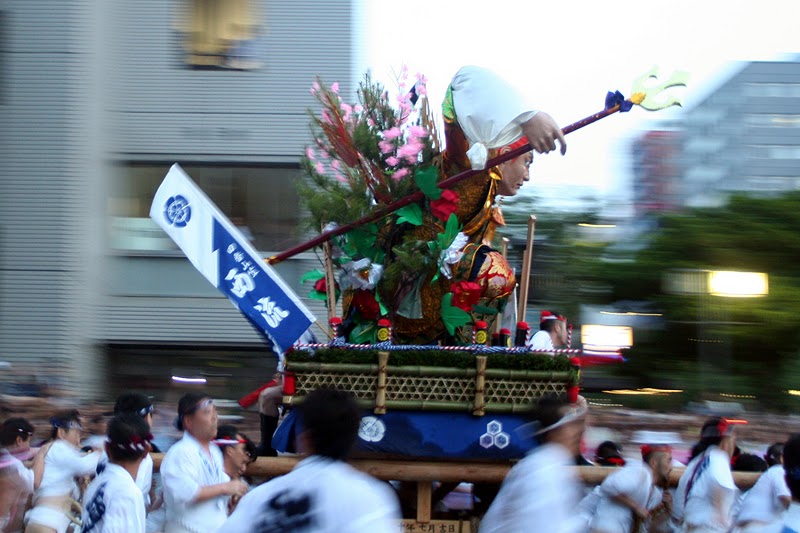
The clearest expression of that merchant Hakata is the Hakata Gion Yamakasa, the July float festival run from Kushida Shrine, in which teams race towering decorated floats through the old town. It is the kind of civic ritual that, for centuries, kept demand high for fine local goods — festival dress, sashes, and the prestige textiles a prosperous port could afford. The weave did not survive as a museum piece; it survived because the city that made it kept wearing it.
Price snapshot across stores
The live price for this specific listing was not returned in the source data, so the JPY figures below are marked as “check listing.” Per the jp_craft currency convention, JPY is the authoritative price and any USD figure shown elsewhere is an approximate estimate at a ¥150/USD baseline as of mid-2026.
| Store | Item / variant | Price (JPY + USD est.) | Notes |
|---|---|---|---|
| 🇺🇸 Amazon.com (US) | Browse Japanese kaku-obi & kimono sashes | varies (USD) | Best if you are shopping from the US — Prime shipping, USD pricing, no international customs. Amazon US carries Japanese kimono sashes and martial-arts obi from various sellers; the exact Hakata-ori piece in this guide is sourced from Japan (next row). |
| 🇯🇵 Amazon JP Global Store | This kenjo-gara silk kaku-obi (ASIN B0CGRM6Q1L) | ¥ check listing (USD est. unavailable) | Ships internationally from Japan. This is the sourced listing for the specific item. Confirm current price and length on the page. |
| Maker direct | Hakata-ori workshop / kimono retailers in Fukuoka | varies (JPY) | Widest pattern and grade selection, but many maker sites ship within Japan only. |
| Proxy services (Buyee / Tenso) | Forward a Japan-only listing abroad | item price + forwarding fee | Useful when a maker or marketplace will not ship internationally; adds a service fee and a consolidation step. |
Prices in USD are approximate and depend on the current exchange rate. Prices and stock fluctuate; follow the affiliate link for current data.
What it does well
Weaknesses and things to verify before buying
- No confirmed price in the data. The source snapshot did not return a live price; treat the listing page as the only authoritative figure and check it before ordering.
- Length and width unconfirmed. Kaku-obi lengths vary, and a martial-arts user and a kimono user may want different sizing. Confirm dimensions on the listing or ask the seller.
- Firm hand is not for everyone. If you want a soft, drapey sash, the stiff Hakata weave is the wrong choice by design.
- Silk requires care. Silk Hakata-ori is not a wash-and-go textile; expect to keep it dry, store it flat or rolled, and avoid machine washing.
- International shipping and customs. Buying from the Japan Global Store means international transit times and possible import duties above your country’s de minimis threshold.
- Pattern and color exactness. Screen color and the exact kenjo-gara layout may differ slightly from photos; if a precise look matters, confirm with the seller first.
Conclusion — which buyer type are you?
Other ways to approach this purchase
🏆 Editor’s Pick
❓ Frequently Asked Questions
What is the difference between a kaku-obi and a regular obi?
Can I use this Hakata-ori obi for kendo, iaido, or aikido?
What does the kenjo-gara pattern mean?
Does Amazon ship this internationally from Japan?
How do I care for a silk Hakata-ori obi?
How much does it cost?
How is Hakata-ori different from Kyoto’s Nishijin-ori or Gunma’s Kiryu-ori?
jpmono.com is curated by a Japan-based editorial team (working out of Toyama in the Hokuriku region and Nara in Kansai) and is independent. We don’t take payment from the makers we feature; income comes from affiliate links. We don’t physically test every product — we read maker’s specs and source listings.
Note: this article was prepared with AI assistance and reviewed against the source listing data. Where the data was incomplete, the gaps are stated explicitly rather than filled by guesswork.
Affiliate disclosure: jpmono.com may earn a commission on qualifying purchases made through links on this page, at no additional cost to you.