![Omi Jofu Ramie Stole: Lake Biwa’s Summer Hemp Weave, Where to Buy [2026]](https://jpmono.com/wp-content/uploads/2026/05/japan-map-regions-and-prefectures-800x1050.png)
Omi Jofu (近江上布, “Omi fine cloth”) is a summer textile woven from ramie (苧麻, choma) and hemp on the humid eastern shore of Lake Biwa, in the Koto region of Shiga Prefecture. The weaving district centers on Echigawa and Aisho-cho in Aichi-gun, where the lake’s moist air keeps the brittle plant fiber supple enough to spin and weave fine. A stole made from this cloth is light, dry to the touch, and built to move air rather than trap heat.
What makes Omi Jofu notable internationally is the chain of people and place behind it. The weave was carried across Edo-era Japan by the Omi merchants (近江商人, Omi shonin), the trading houses famous for their sanpo-yoshi (“three-way-good”) ethic — good for the seller, good for the buyer, good for society. The cloth was designated a National Traditional Craft (伝統的工芸品) by Japan’s Ministry of Economy, Trade and Industry (METI) in 1977. It is, in other words, a textile with a documented regional lineage rather than a generic “linen-look” scarf.
This guide is for readers comparing a genuine bast-fiber summer stole against silk, wool, and cotton alternatives, and for those who want to understand where the cloth comes from before weighing the price. We cover what the cloth does well, where it falls short, how to buy it from outside Japan, and how it stacks up against other Japanese textile pieces we have written about.
🔄 Updated:
⏱️ Read time: ~9 min
Who this is for — and who should skip it
- Want a genuinely breathable summer wrap for hot, humid weather rather than a decorative one
- Prefer a dry, crisp bast-fiber hand over the slip of silk or the warmth of wool
- Value a METI-designated regional craft with a verifiable place of origin
- Like textured, matte cloth that softens with washing and age
- Are shopping for a lightweight, packable travel layer for air-conditioned interiors
- Want winter warmth — ramie is cooling, not insulating
- Dislike a crisp, slightly stiff hand and natural creasing (ramie wrinkles readily)
- Expect a glossy, drapey sheen like silk satin
- Need a low-maintenance piece you can toss in a hot dryer without thought
- Are price-sensitive and would not pay a craft premium over machine-loomed linen
Product overview (from published specs)
Omi jofu ramie stoles are made from bast-fiber cloth, and individual pieces can vary between workshops. The textile’s character is best judged through its weave, finish, and dimensions.
| Attribute | Detail | Source |
|---|---|---|
| Item | Omi Jofu hand-woven stole | Amazon JP Global Store |
| Material | Ramie (苧麻, choma) and hemp — bast plant fibers | METI craft profile |
| Finish | Crisp shibo (crepe) hand-finish; matte surface | METI craft profile |
| Techniques | Kibira raw-ramie weave, kasuri ikat, kushi-oshi comb-print dyeing | METI craft profile |
| Origin | Koto region, Shiga — Echigawa / Aisho-cho, Aichi-gun | METI craft profile |
| Designation | National Traditional Craft (METI), designated 1977 | METI |
| Dimensions / weight | Not specified | Not in fetched data |
| Price | Not specified | Not in fetched data |
📖 Glossary — key terms
- Jofu (上布) — “fine cloth”; a category of high-grade, finely woven bast-fiber summer fabric.
- Choma / ramie (苧麻) — a nettle-family plant whose stem bast yields a strong, cooling, lustrous fiber.
- Kibira (生平) — a weave using raw, hand-spun ramie thread, prized for its crisp, airy body.
- Kasuri (絣) — ikat; threads resist-dyed before weaving so the pattern emerges from the yarn itself.
- Kushi-oshi (櫛押し) — a comb-print dyeing method that applies pattern with a toothed tool.
- Shibo (しぼ) — the fine crepe texture that lifts the cloth off the skin for airflow.
- Omi shonin (近江商人) — the Omi merchants, Edo-era traders known for nationwide distribution networks.
- Sanpo-yoshi (三方よし) — the Omi-merchant ethic: “good for the seller, the buyer, and society.”
Other Japanese textile and regional pieces we have covered — useful for weighing material, season, and region against this ramie stole.
 Chichibu Meisen silk stole
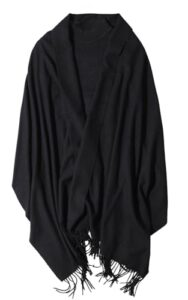 Kishu Nel cotton muffler (Kansai)
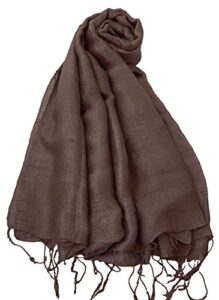 Iwate Homespun wool scarf
Yumihama-gasuri cotton runner
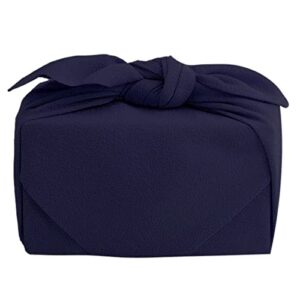 Kyo Yuzen furoshiki (Kansai)
Tateyama Tozan cotton cover
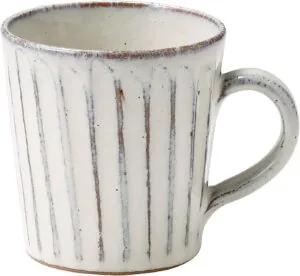 Shigaraki mug (same prefecture, Shiga)
Where this comes from

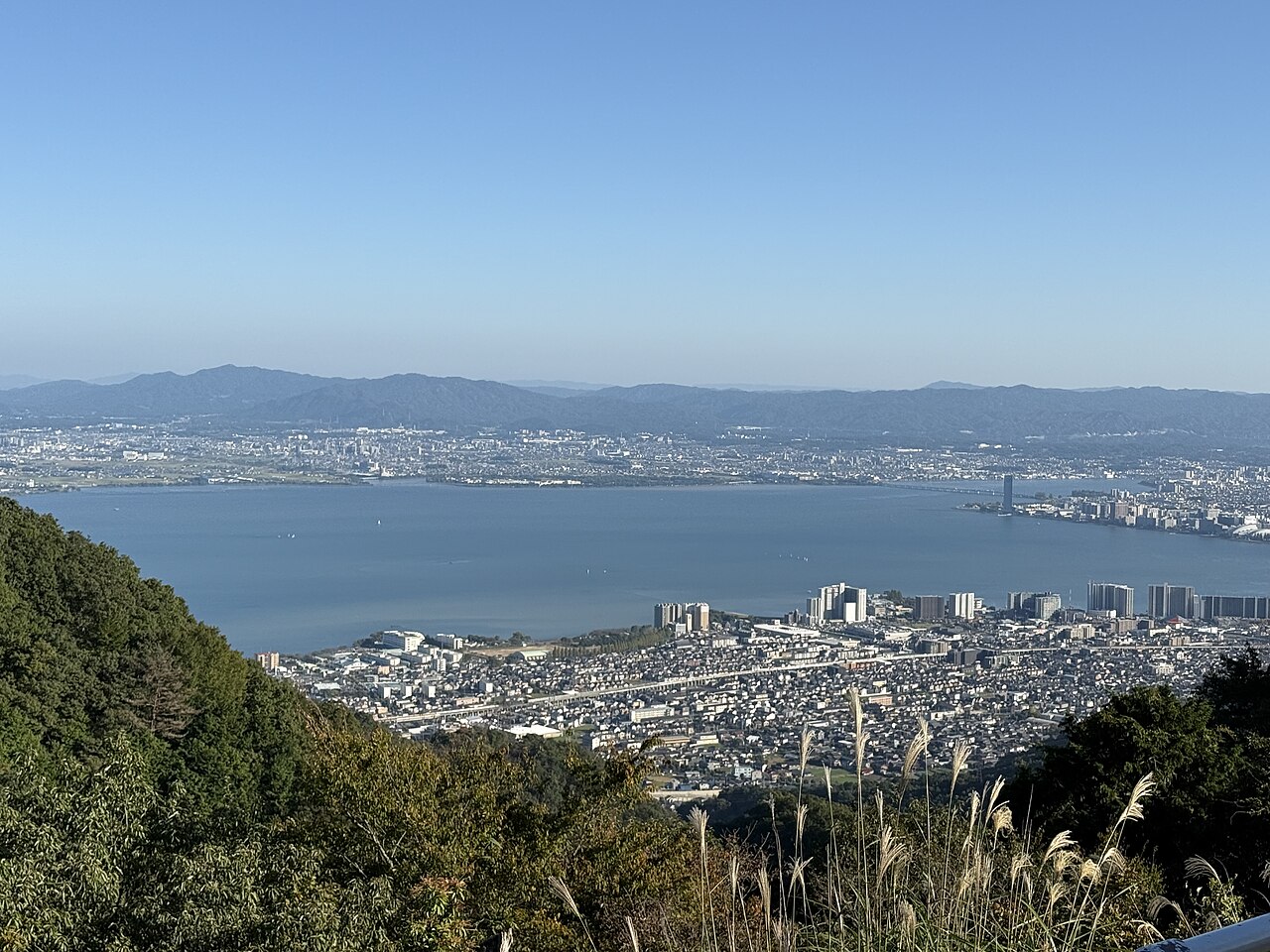
Shiga sits in the center of Honshu, wrapped around Lake Biwa (琵琶湖) — Japan’s largest freshwater lake. The Koto region is the lake’s eastern shore, a band of flat, well-watered farmland running up to the Suzuka mountains. The weaving district centers on the Echigawa river valley and Aisho-cho in Aichi-gun, downstream of Hikone, the old castle town of the Ii clan. This is Kansai’s quiet inland edge: not Kyoto’s temples, not Osaka’s commerce, but the agricultural and trading corridor that connected them.
The reason a fine summer cloth took root here is climate. Ramie thread is strong but brittle when dry, and it snaps under tension in arid air. Lake Biwa’s humidity keeps the fiber pliable through spinning and weaving, which is exactly why the basin became Japan’s premier ground for fine bast-fiber summer cloth.
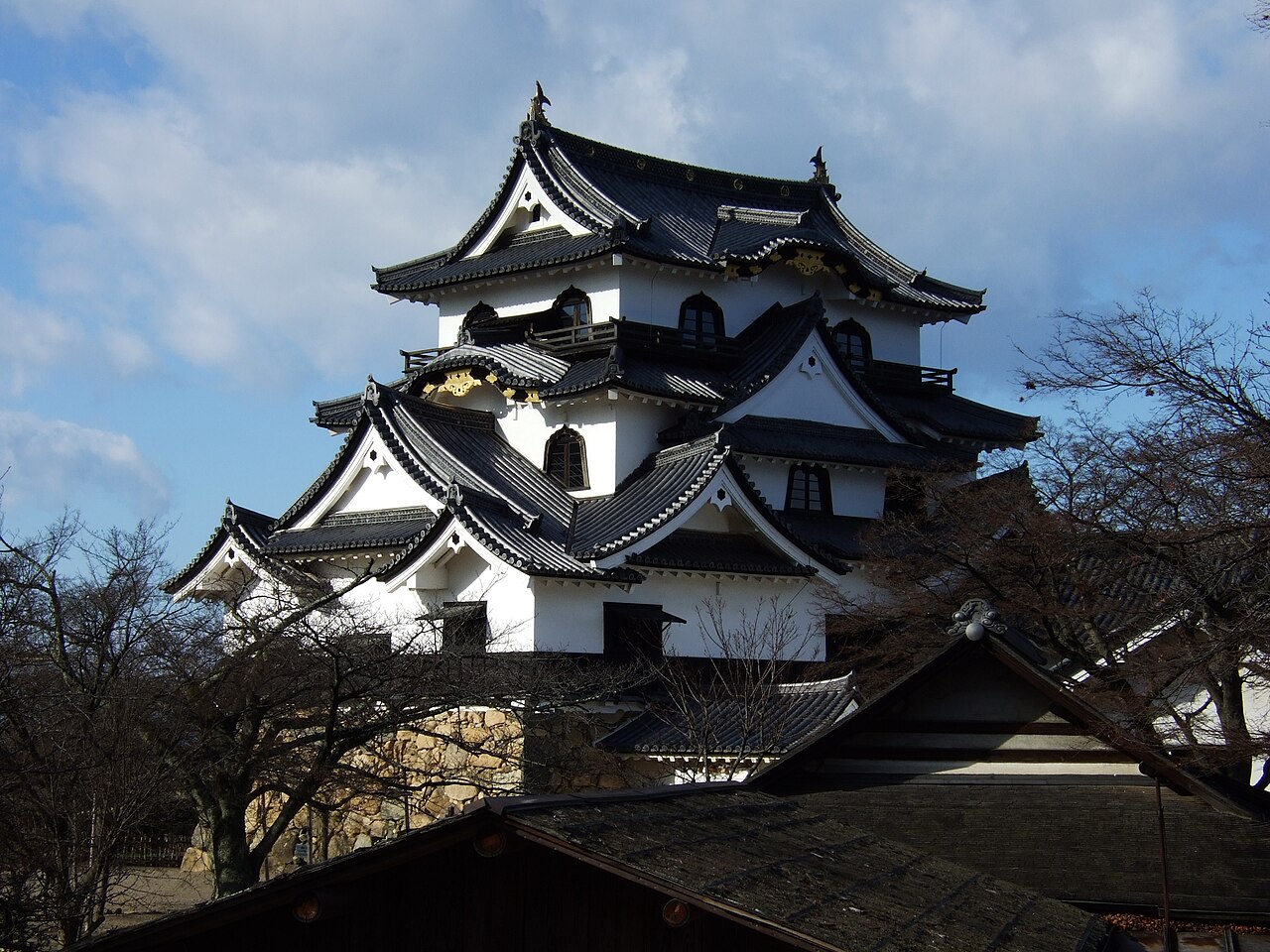
The historical anchor runs deep. Weaving of ramie and hemp in old Omi province (近江国, the former name for Shiga) dates to the Kamakura–Muromachi era. Under the Edo bakufu the cloth flourished as a summer staple, and the Hikone domain, governed from Hikone Castle by the Ii clan, sat at the administrative heart of the Koto district through those centuries. METI recognized Omi Jofu as a National Traditional Craft in 1977 — the formal acknowledgment of a tradition that was already several centuries old.
- 1185–1333 — Kamakura era; ramie and hemp weaving documented in old Omi province.
- 1336–1573 — Muromachi era; Koto-district weaving consolidates around the Echigawa valley.
- 1622 — Hikone Castle completed; the Ii clan governs the Koto region through the Edo period.
- 1603–1868 — Edo period; the cloth flourishes and the Omi merchants carry it nationwide under sanpo-yoshi.
- 1977 — METI designates Omi Jofu a National Traditional Craft.
- 2026 — Still hand-woven in Echigawa and Aisho-cho, Aichi-gun.
The distribution story is as important as the weaving. The Omi merchants built one of Edo Japan’s great trading networks from this corner of Shiga, traveling out with local goods — Omi Jofu among them — and returning with goods to sell on. Their sanpo-yoshi creed, weighing the seller, the buyer, and society together, is still cited in Japanese business ethics today, and it is why a summer cloth from a small river valley reached customers the length of the country.

“The same humidity that ruins paper and rusts iron is exactly what lets Lake Biwa spin a thread fine enough to weave summer air.”
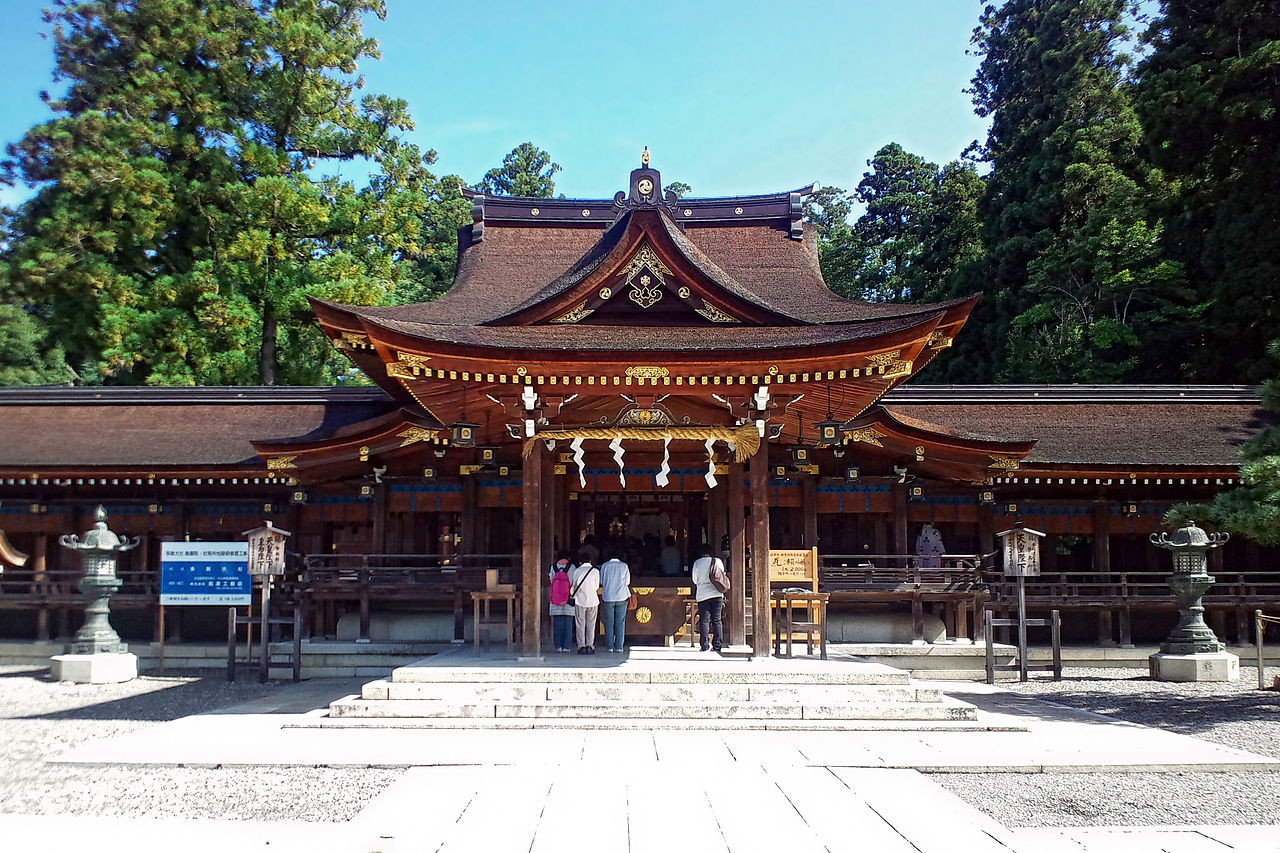
The Koto district remains the cultural heart of eastern Omi. Taga Taisha, the great shrine north of the weaving villages, has drawn pilgrims from across the region for centuries and marks the spiritual center of the area the cloth hails from. Today the weave is still produced in Aichi-gun by a small number of workshops — a continuity that is the reason a piece bought now connects directly to the Edo-era trade.
Where to buy
No live price was present in the fetched data, so the figures below are marked as such; verify the current price at the retailer before buying. JPY (¥) is the authoritative currency for the specific listed item — USD figures, where shown elsewhere, are approximate estimates at a ¥150/USD baseline as of mid-2026.
| Store | Item / Variant | Price | Notes |
|---|---|---|---|
| 🇺🇸 Amazon US (search) | Browse Japanese ramie & summer stoles | varies (USD) | Best if you are shopping from the US — Prime shipping, USD pricing, no international customs. Amazon US carries Japanese ramie and linen-blend scarves and stoles for comparing weight and price tiers; this exact Omi Jofu piece is sourced from Japan (next row). |
| 🇯🇵 Amazon JP Global Store | Omi Jofu hand-woven stole | See seller details | Ships internationally from Japan to most major destinations. |
| Maker direct | Koto-district workshop pieces | Varies | Some Aichi-gun weavers sell through regional craft outlets; international shipping is not guaranteed. |
| Proxy services (Buyee / Tenso) | Any Japan-only order | Item + fee + forwarding | Useful when a piece is listed only on JP-domestic stores; adds a service fee and a forwarding leg. |
What it does well
Weaknesses and things to verify before buying
- It wrinkles. Ramie creases readily; if you want a crisp, pressed look, expect to steam or iron it, and accept some natural rumple in wear.
- It is cooling, not warm. This is summer cloth. It will not serve as a cold-weather layer the way wool or cotton flannel does.
- The hand is crisp, not silky. Buyers expecting the slip and sheen of silk satin will find ramie comparatively dry and stiff, especially when new.
- Seller details vary. Confirm the piece’s intended fit before ordering.
- Care needs attention. Hand-woven bast-fiber pieces generally favor gentle washing and air-drying over a hot machine dryer; follow the maker’s care guidance.
- Hand-woven variation is normal. Slubs, slight irregularities, and color variation between pieces are inherent to the craft, not defects.
- International shipping adds cost and time. Buying from Japan means cross-border shipping and possible customs duty above local thresholds.
Conclusion — which buyer type are you?
Other ways to approach this purchase
❓ Frequently Asked Questions
What exactly is Omi Jofu made of?
Omi Jofu is woven from ramie (choma) and hemp — bast plant fibers prized for being strong, cooling, and quick to dry. The cloth is finished with a crisp shibo (crepe) hand that lifts it off the skin for airflow.
Does Amazon JP ship an Omi Jofu stole internationally?
Omi jofu ramie stoles are typically carried on the Amazon JP Global Store, which delivers to most major international destinations. Expect cross-border shipping fees and possible customs duty above your country’s threshold. If a piece is listed only on JP-domestic stores, a proxy service such as Buyee or Tenso can forward it.
How do I care for a ramie stole?
Hand-woven bast-fiber cloth generally favors gentle washing and air-drying over a hot machine dryer. Ramie wrinkles readily, so light steaming or ironing can restore a crisp look.
Why is it woven near Lake Biwa specifically?
Ramie thread is brittle in dry air and snaps under tension. Lake Biwa’s high humidity keeps the fiber supple through spinning and weaving, which made the Koto region — the lake’s eastern shore — Japan’s premier ground for fine summer cloth.
How is it different from a plain linen scarf?
A machine-loomed linen scarf gives similar airflow at lower cost. Omi Jofu adds a verifiable Koto-region origin, hand-weaving, traditional techniques such as kasuri ikat and kushi-oshi comb-printing, and METI craft designation. If provenance and craft matter to you, that is the difference you are paying for.
Is it a good gift?
Yes, for a recipient who appreciates natural-fiber textiles and summer wear. It is light, packable, and carries a clear story of place. For someone who prefers warm or glossy fabrics, choose a wool or silk piece instead.
Why does my piece look slightly different from the photo?
Slubs, minor irregularities, and color variation between pieces are inherent to hand-weaving and are not defects. Each length of cloth differs slightly, which is part of the character of a hand-woven craft.
jpmono.com is curated by a Japan-based editorial team working out of Toyama in the Hokuriku region and Nara in Kansai, and is independent. We do not take payment from the makers we feature; income comes from affiliate links. We do not physically test every product.
Affiliate disclosure: jpmono.com may earn a commission on qualifying purchases made through links on this page, at no additional cost to you.