![Kishu Nel Brushed Cotton Flannel Muffler from Wakayama [2026]](https://jpmono.com/wp-content/uploads/2026/05/japan-map-regions-and-prefectures-800x1050.png)
A nel muffler is one of those everyday objects that quietly explains a place. The word “nel” is the Japanese contraction of “flannel,” and in Japan one prefecture has been the heart of cotton-flannel weaving for well over a century: Wakayama, on the Kii Peninsula. The Kishu nel muffler covered here is a soft, double-brushed cotton scarf — light, casual, and built for daily wear rather than the formal drawer.
What makes it notable to an international reader is not luxury but lineage. Wakayama was the former Kii Province, seat of the Kishū Tokugawa — one of the three gosanke branch houses of the Tokugawa shogunate — and cotton was farmed across the Kinokawa river plain through the Edo period. When Western flannel weaving and the napping (brushing) process arrived in the Meiji 20s, the region already had the raw-cotton handling base to adopt them quickly, and it became Japan’s dominant producer of cotton flannel. That textile lead later carried into knitwear, where the prefecture still ranks first nationally.
This guide is for readers deciding whether a Japanese-made cotton-flannel muffler is worth sourcing from abroad. It covers what nel actually is, how it differs from Japan’s silk, wool, and ramie scarf traditions, where Wakayama sits on the map, and the practical question of where — and at what cost — an international buyer can actually purchase one.
🔄 Last updated: June 7, 2026
⏱️ Read time: ~12 min
- Who this is for — and who should skip it
- Product overview (from published specs)
- Where this comes from — place, era, and the craft tradition
- 📦 Shipping & where to buy from outside Japan
- Buying options across stores
- What it does well
- Weaknesses and things to verify before buying
- Conclusion — which buyer type are you?
- Other ways to approach this purchase
- ❓ Frequently Asked Questions
Who this is for — and who should skip it
- Want a soft, lightweight scarf for indoor-to-mild-outdoor use rather than deep-winter insulation
- Prefer cotton next to the skin and avoid wool because of itch or allergy
- Like casual, washable neckwear you can fold into a bag and wear with everyday clothes
- Appreciate buying from a region with a documented textile specialty rather than a generic import
- Are building a small collection of Japanese regional textiles and want a non-silk, non-wool entry
- Need maximum warmth for sub-freezing climates — wool or cashmere will out-insulate cotton
- Want a formal, drapey silk scarf for dress occasions
- Expect a named designer piece or certified traditional-craft (dentō kōgei) mark — nel is industrial cloth, not a registered craft
- Dislike the slight “shedding” of fine brushed fibers when a napped cotton is brand new
- Need confirmed fiber percentages before buying — the product information is limited
Product overview (from published specs)
A note on specifications before the table: Kishu nel cloth is a cotton flannel, and fiber details or measured dimensions can vary by maker and format. The values below therefore describe Kishu nel in general terms; exact figures should be confirmed with the maker or seller before buying.
| Attribute | Amazon US (search) | International store option | Maker direct |
|---|---|---|---|
| Material | Browse: Japanese cotton flannel scarves | Brushed cotton flannel (nel) — exact blend unconfirmed | Cotton, double-napped |
| Construction | varies by maker | Woven cotton flannel, brushed both faces | Woven and napped in Wakayama |
| Dimensions | varies | — | Muffler/scarf length, narrow |
| Origin | — | Wakayama, Japan (Kishu nel) | Wakayama Prefecture |
| Care | — | Cotton — typically gentle machine/hand wash | Washable cotton |
Kishu nel mufflers can vary in dimensions, finish, and price between makers. Confirm the details of an individual piece before purchase.
📖 Glossary — key terms
Nel (ネル) — the Japanese contraction of “flannel.” In the Japanese textile trade it specifically means cotton flannel: a plain or twill-woven cotton cloth that is brushed (napped) on one or both faces to raise a soft fuzz.
Kishu (紀州) — the historical name for Kii Province, today’s Wakayama Prefecture and part of Mie. “Kishu nel” therefore means flannel woven in the Wakayama region.
Napping / brushing (起毛, kimō) — the finishing step in which fine wire brushes raise the surface fibers of woven cloth, trapping a layer of air that gives flannel its warmth and softness.
Gosanke (御三家) — the three senior Tokugawa branch houses (Owari, Kishū, Mito) eligible to supply a shogun. The Kishū Tokugawa ruled from Wakayama Castle.
Muffler (マフラー) — in Japanese usage, a long narrow scarf worn for warmth, as distinct from a square scarf or a wide stole.
Related jpmono guides — other Japanese regional textiles and Kishu/Wakayama crafts worth weighing against a cotton-flannel muffler.
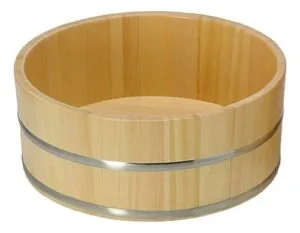 Kishu Hinoki Bath Bucket
Another Wakayama (Kishu) household craft
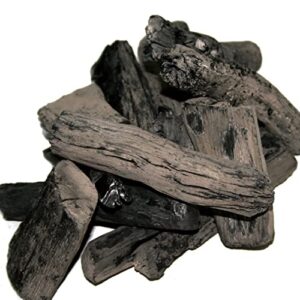 Kishu Binchotan Charcoal
Wakayama’s most famous export craft
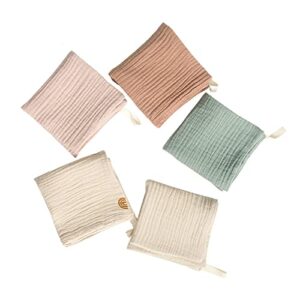 Banshu-ori Cotton Handkerchief
Another cotton textile, yarn-dyed weave
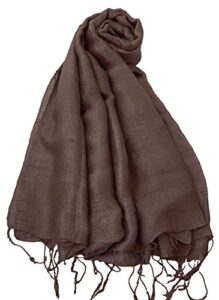 Iwate Homespun Wool Scarf
The warmer wool alternative
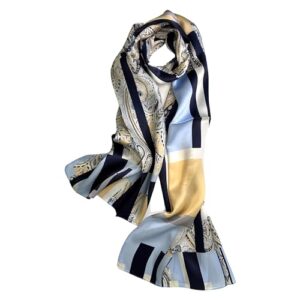 Arimatsu Shibori Scarf
Tie-dyed textured neckwear
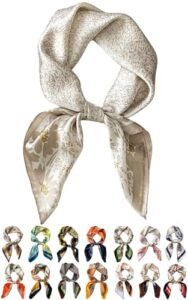 Chichibu Meisen Silk Stole
The silk, dressier alternative
 Yokohama Silk Scarf
Printed silk, formal end of the range
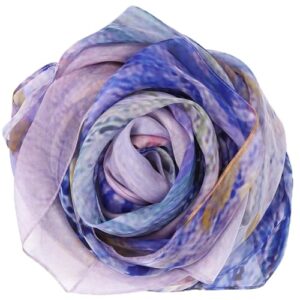 Kaga Yuzen Silk Scarf
Hand-painted silk, the luxury contrast
Where this comes from — place, era, and the craft tradition

Wakayama City sits at the mouth of the Kinokawa river, on the western edge of the Kii Peninsula — the large landmass that hangs south of the Osaka–Nara–Kyoto triangle into the Pacific. This is the old province of Kii, a region of warm coastline, river plains, and steep forested mountains that rise quickly inland toward Kōya-san and the Kumano pilgrimage routes. The combination that mattered for textiles was simple: flat, workable river-plain land for growing cotton, and a port-and-river network that could move bales of it.
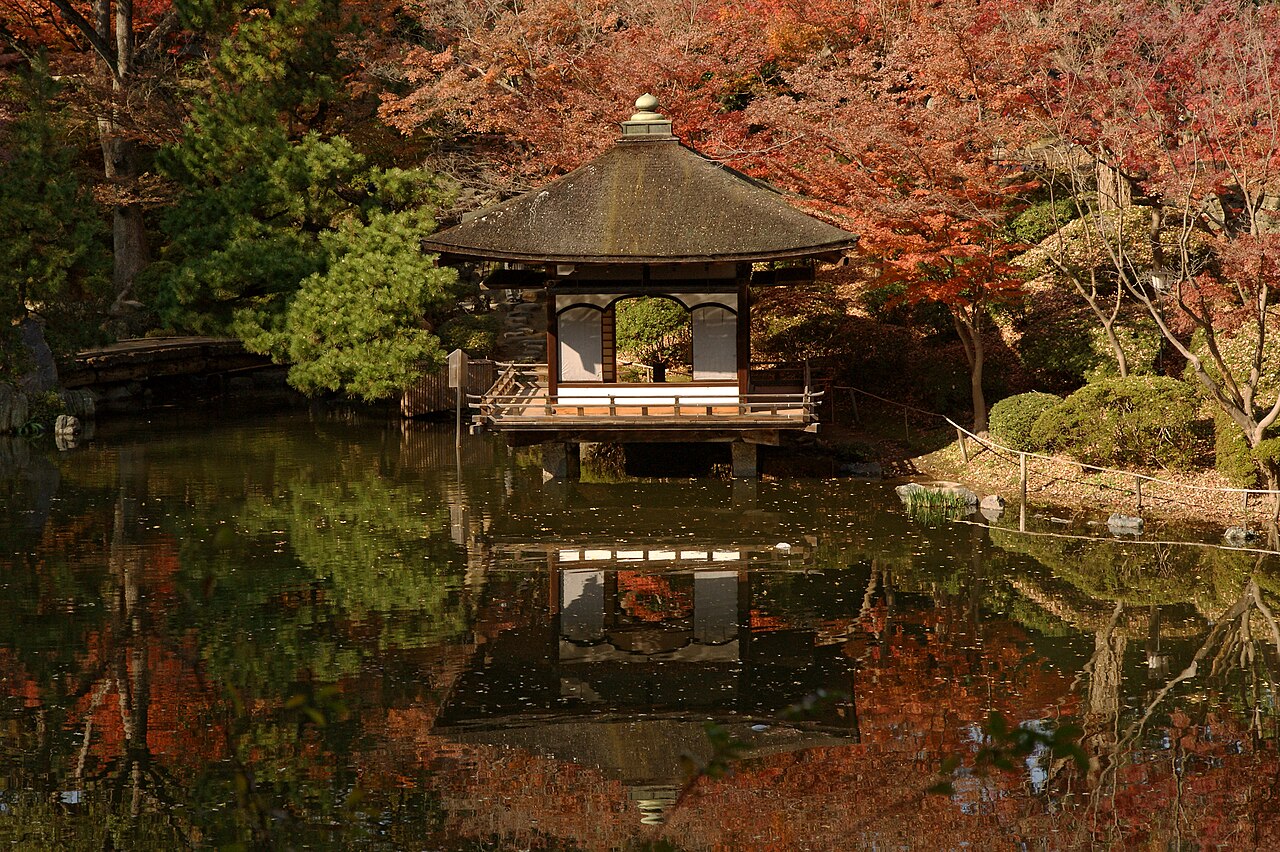
The historical anchor is the Kishū Tokugawa. Wakayama Castle became the seat of one of the three gosanke — the senior branch houses of the Tokugawa shogunate — and the domain’s stable governance through the Edo period supported a cotton-growing economy across the Kinokawa plain. By the time Japan opened to Western industry in the Meiji era, the region had generations of accumulated skill in handling, spinning, and weaving cotton.
That base is what let Wakayama pivot fast. From around 1887 (Meiji 20), local mills adopted Western flannel weaving and the napping process, and within a generation Wakayama had become Japan’s dominant producer of cotton flannel — “nel.” The same industrial textile cluster later extended into knitwear, and the prefecture still ranks first in Japan for knit goods today.
- 1619 — The Kishū Tokugawa house is established at Wakayama Castle, one of the three gosanke branches.
- 17th–19th c. — Cotton is cultivated across the Kinokawa river plain, building a deep regional cotton-handling base.
- c. 1887 (Meiji 20) — Wakayama adopts Western flannel weaving and the napping (brushing) process; cotton-flannel (“nel”) production begins.
- Late Meiji–Taishō — The region becomes Japan’s leading producer of cotton flannel.
- 20th century — The textile cluster extends its lead into knitwear.
- 2026 — Wakayama still ranks first nationally in knit goods; nel weaving and napping continue.

What “still being made here” means in practice is a living industrial specialty rather than a single famous workshop. Wakayama’s strength is the concentration of weaving and napping capacity that keeps cotton-flannel and knit production in the prefecture, supplying domestic brands and direct-to-consumer makers alike. This is the honest framing: nel is a regional manufacturing tradition, not a registered traditional craft with a named master line.
“Nel’s double-brushed surface traps a thin layer of air against the skin — that, not heavy yarn, is where its quiet warmth comes from.”
The cultural placement is worth keeping straight for an international reader. Japan’s celebrated scarf and stole traditions tend to be silk (Kaga yūzen, Yokohama, Chichibu meisen), wool (Iwate homespun), or ramie (Echigo). Kishu nel sits deliberately apart from all of them: it is casual, washable, everyday cotton cloth — the textile equivalent of a worn-in shirt rather than formalwear.
📦 Shipping & where to buy from outside Japan
A cotton muffler is light and generally not import-restricted, so it is usually straightforward to ship internationally. Delivery charges and customs treatment vary by destination; check them before ordering.
Orders above your country’s de minimis threshold may incur customs duty or import VAT/GST on arrival — for a single muffler this is usually small or nil, but check your local limit. If a Japanese maker does not ship abroad, a Japan-based proxy service such as Buyee or Tenso can forward a domestic order, and some makers sell direct.
Buying options across stores
| Store | Item / Variant | Price (JPY + USD est.) | Notes |
|---|---|---|---|
| 🇺🇸 Amazon.com (US) | Browse Japanese cotton-flannel scarves & mufflers | varies (USD) | Best if you are shopping from the US — Prime shipping, USD pricing, no international customs. Amazon US carries Japanese cotton scarves and mufflers from various makers, useful for comparing weight and price tiers. The exact Kishu nel piece is sourced from Japan (next row). |
| 🇯🇵 Amazon JP Global Store | Kishu nel brushed-cotton muffler | — | Ships internationally from Japan. |
| Maker direct | Wakayama nel weavers / knit makers | varies | Some Wakayama textile makers sell direct; international shipping varies by maker. |
| Proxy services (Buyee / Tenso) | Any domestic Japanese option | product + forwarding fee | Use when an option does not ship to your country directly; adds a service fee and a consolidation step. |
USD figures are approximate (¥150/USD baseline as of mid-2026); where shown, the JPY price is authoritative. Live prices and stock fluctuate — verify at the retailer via the affiliate link before purchasing.
What it does well
The double-napped surface traps air, giving soft warmth without the bulk or weight of wool — comfortable for indoor-to-mild-outdoor wear.
An all-cotton flannel is a sound choice for people who find wool itchy or react to animal fibers.
Cotton flannel is generally washable and low-fuss, suiting a scarf you wear often rather than reserve for occasions.
Made in Wakayama, Japan’s cotton-flannel heartland since the Meiji era — a genuine regional specialty, not a generic import.
Weaknesses and things to verify before buying
- Not a cold-climate scarf. Cotton flannel is warm for its weight but will not match wool or cashmere for sub-freezing insulation.
- Initial fiber shedding. Freshly napped cotton can shed fine fibers (lint) for the first few washes; this settles but is worth expecting.
- Not a registered traditional craft. Kishu nel is an industrial regional specialty, not a certified dentō kōgei piece with a named maker line — buyers seeking a designer or craft-mark product should look elsewhere.
- Possible shrinkage and pilling. As with most brushed cotton, expect mild shrinkage on first wash and some pilling with heavy use; follow the care label and wash gently.
- Color rendering. Marketplace photos vary; if exact color matters, treat on-screen color as approximate.
Conclusion — which buyer type are you?
Want hand-painted heritage textile? Choose a silk piece (Kaga yūzen, Yokohama) instead — nel is everyday cloth, not luxury.
Want a soft, washable, daily cotton muffler with real regional provenance? This is the sweet spot — buy the Kishu nel.
Cost-sensitive and shopping from the US? Compare Japanese cotton scarves on Amazon US first to avoid international shipping.
Need maximum cold-weather warmth or a formal dress scarf? A cotton-flannel muffler is the wrong tool — pass.
Other ways to approach this purchase
Textiles cycle through seasonal markdowns; autumn-to-winter is when mufflers are most discounted.
Some Wakayama nel and knit makers sell direct, occasionally with more color and size options than the marketplace.
If you already hold Amazon points or card rewards, a low-cost textile is an easy way to redeem them.
If you need deep-winter warmth, redirect the budget to a wool or cashmere scarf instead.
❓ Frequently Asked Questions
What exactly is “nel”?
Is a cotton-flannel muffler warm enough for winter?
Can I have it shipped outside Japan?
How do I care for it?
How is it different from a silk or wool Japanese scarf?
Is this a certified traditional craft?
Why does Wakayama make cotton flannel in the first place?
jpmono.com is curated by a Japan-based editorial team (working out of Toyama in the Hokuriku region and Nara in Kansai) and is independent. We don’t take payment from the makers we feature; income comes from affiliate links. We don’t physically test every product — we read maker specifications and regional textile sources.
🤖 This article was prepared with AI assistance and reviewed against maker specifications and regional textile sources. Specifications, prices, and availability can vary; confirm current details before purchase.
Affiliate disclosure: jpmono.com may earn a commission on qualifying purchases made through links on this page, at no additional cost to you.