![Yonezawa-ori Benibana Silk Stole: Where to Buy Yamagata Silk [2026]](https://jpmono.com/wp-content/uploads/2026/06/yonezawa-ori-benibana-silk-stole-where-to-buy-2026-featured.jpg)
Yonezawa-ori (米沢織, “Yonezawa weave”) is the silk that, by most accounts, saved a bankrupt feudal domain. It is woven in and around the city of Yonezawa in southern Yamagata Prefecture, in the Tōhoku region of northern Japan, and its most distinctive pieces are colored with benibana (紅花, “safflower”) — the warm, organic red that Yamagata farmers once shipped all the way to Kyoto to dye the court’s textiles.
The stole covered in this guide is a plant-dyed silk wrap: a soft, draping accessory woven on Yamagata looms, often with a quiet jacquard pattern, and finished in the muted reds and pinks that safflower yields. Internationally, what makes Yonezawa-ori worth a second look is not novelty but provenance — this is a textile whose existence is tied directly to one of the most studied economic-recovery stories in Japanese history.
This article is written for readers shopping from outside Japan who want a real plant-dyed Japanese silk stole rather than a generic “silk scarf,” and who want to understand what they are paying for. We cover what the listing shows, how to buy it from abroad, how it compares to other Japanese silk accessories on this site, and who should pass.
🔄 Updated:
⏱️ Read time: ~10 min

- Who this is for — and who should skip it
- Product overview (from published specs)
- Where this comes from — Yonezawa, Yamagata, and the silk that saved a domain
- Price snapshot across stores
- What it does well
- Weaknesses and things to verify before buying
- Conclusion — which buyer type are you?
- Other ways to approach this purchase
- 🏆 Editor’s Pick
- ❓ Frequently Asked Questions
Who this is for — and who should skip it
- Want a genuinely region-specific Japanese silk, not a generic “silk scarf”
- Are drawn to plant dyes (safflower) over synthetic color
- Prefer a lightweight stole that drapes rather than a stiff, structured wrap
- Appreciate buying an object with a documented historical backstory
- Are comfortable ordering from Japan and verifying details before checkout
- Need a machine-washable, low-maintenance everyday accessory
- Want a bold, saturated, color-fast print (plant dyes are softer and shift over time)
- Are price-sensitive and view scarves as disposable fashion
- Require a confirmed exact size, weight, and color before any purchase
- Cannot accept that fiber content and dimensions vary by individual listing
Product overview (from published specs)
A note on data, up front: at the time of writing, only the Amazon listing reference for this item was available, and the live data snapshot returned no detailed spec fields, US search results, or confirmed price. The table below therefore states what can be verified from the listing reference and the craft’s documented characteristics, and marks everything else as unconfirmed. Always open the listing for the authoritative size, fiber content, and price.
Yonezawa-ori Benibana Silk Stole
米沢 紅花染 ショール ストール
通常9~10日以内に発送します。 · Sold by sailストア · ASIN B0FH2HN88T
Price and availability as of 2026-08-31 02:30 JST. The Amazon listing at the time of purchase is authoritative. jpmono.com earns a commission on qualifying purchases at no extra cost to you.
| Attribute | Detail | Source |
|---|---|---|
| Craft | Yonezawa-ori (米沢織) — Yamagata silk weave | Maker tradition |
| Item type | Stole / shawl (wrap accessory) | Listing reference |
| Dye | Benibana (safflower) plant dye — warm reds / pinks | Craft tradition |
| Weave | Jacquard-patterned silk, soft drape | Recommendation hint |
| Origin | Yonezawa, Yamagata Prefecture, Tōhoku, Japan | Craft tradition |
| Item ID (ASIN) | B0FH2HN88T | Amazon JP Global Store |
| Exact dimensions | Unconfirmed — check listing | — |
| Exact fiber content / % | Unconfirmed — check listing | — |
| Price | Not available in data snapshot — check listing | — |
Store paths used in this article: Amazon US (search, primary, tag moonill-20) → Amazon JP Global Store (secondary, tag moonill-22, the sourced listing) → maker direct → proxy services where relevant.
📖 Glossary — key terms
- Yonezawa-ori (米沢織) — silk-weaving tradition centered on Yonezawa, Yamagata; grew out of the domain’s 18th-century industrial reforms.
- benibana (紅花) — safflower; its petals yield a warm red pigment used as a natural textile dye.
- Mogami benibana (最上紅花) — safflower grown in the Mogami River basin of Yamagata, historically prized as a premium red dye.
- stole — a long, lightweight wrap worn over the shoulders; softer and more draping than a structured shawl.
- koku (石) — Edo-period unit of domain assessed value, roughly the rice to feed one person for a year; used to rank feudal domains.
- Kitamaebune (北前船) — the Edo-era coastal cargo ships that linked the Sea of Japan ports to Kyoto and Osaka.
- Uesugi Yōzan (上杉鷹山) — the reformer-lord (Harunori) whose recovery program seeded Yonezawa’s silk and safflower industries.
Where this comes from — Yonezawa, Yamagata, and the silk that saved a domain

Yamagata sits on the Sea-of-Japan side of the Tōhoku region, the long northern stretch of Japan’s main island. Yonezawa itself lies in a basin near the prefecture’s southern edge, ringed by mountains and fed by the upper waters of the Mogami River system. It is a cold-winter, snow-heavy place — exactly the kind of agrarian domain where, in the Edo period, a feudal economy could tip from solvent to desperate within a generation.
That is essentially what happened. After the Battle of Sekigahara in 1601, the victorious Tokugawa side moved the Uesugi clan to Yonezawa and slashed its assessed holdings from the 1.2-million-koku Aizu fief to roughly 300,000 koku — later cut again to about 150,000. The clan, however, kept thousands of retainers. A domain with a fraction of its former income and the same number of mouths to feed drifted toward bankruptcy.
- 1601 — After Sekigahara, the Uesugi clan is moved to Yonezawa and cut from 1.2M koku (Aizu) to ~300,000 koku.
- 17th c. — Holdings later reduced to ~150,000 koku while thousands of retainers remain, pushing the domain toward insolvency.
- Late 18th c. — The 9th lord, Uesugi Yōzan (Harunori), launches a sweeping recovery program.
- Late 18th c. — Sericulture, weaving, lacquer, and safflower are promoted as cash industries; Yonezawa shifts from ramie (aoso) cloth toward silk.
- Edo period — Mogami benibana is carried down the Mogami River and by Kitamaebune ships to Kyoto to dye court textiles.
- 19th–20th c. — Yonezawa matures into a recognized silk-weaving region, with jacquard patterning and plant dyes.
- 2026 — Yonezawa-ori silk is still woven in Yamagata; benibana plant-dyeing continues alongside it.
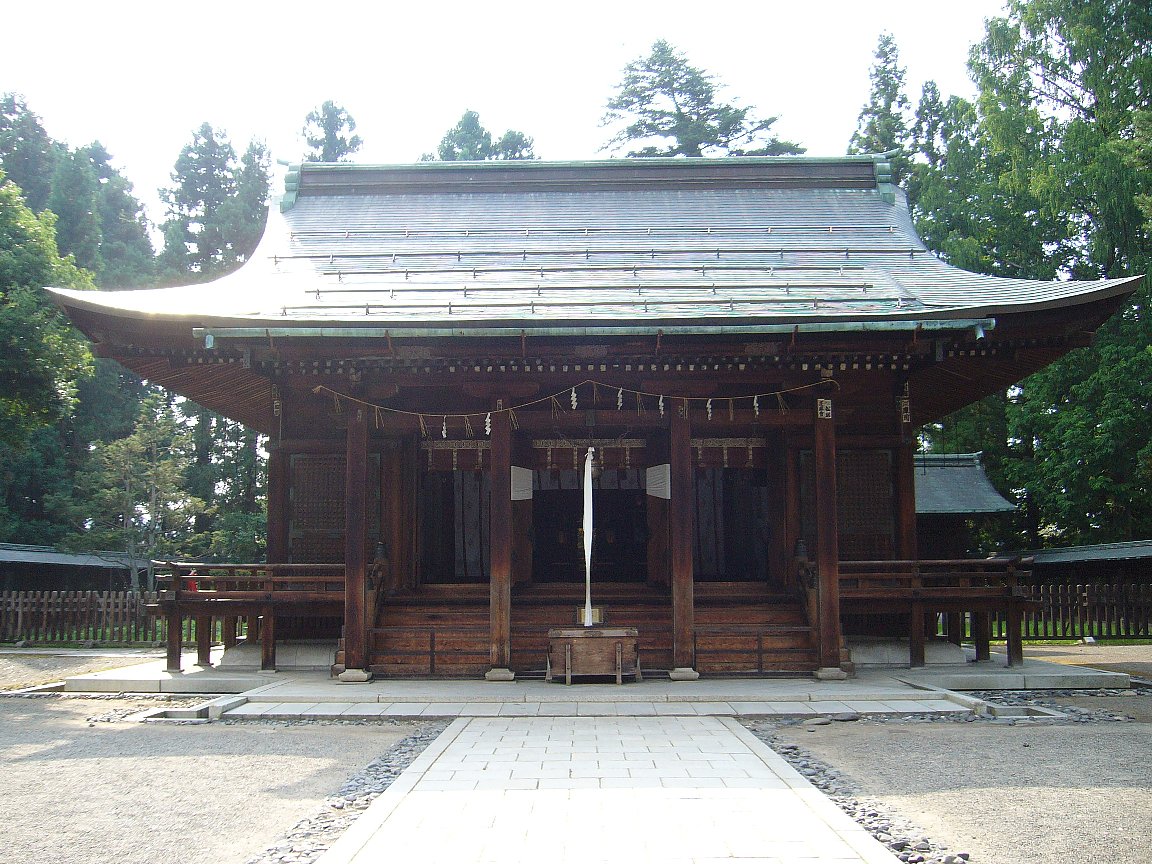
The turnaround is credited to the 9th lord, Uesugi Yōzan (Harunori), who took over in the late 18th century and is today one of Japan’s most celebrated reformer-daimyō. His program cut household spending, reclaimed land, and — crucially for this stole — pushed sericulture, weaving, lacquer, and safflower as cash industries. Yonezawa, which had leaned on ramie (aoso) cloth, was steered toward becoming a silk-weaving center. That is the origin of Yonezawa-ori.

The red is its own story. Yamagata’s Mogami benibana — safflower grown in the Mogami River basin — was a prized dye, and the river was its highway. Petals processed into pigment moved downstream and then aboard Kitamaebune coastal ships bound for Kyoto, where the safflower red colored the textiles of the court. A Yonezawa-ori stole dyed with benibana therefore folds together three threads at once: a domain’s economic-recovery history, a river-and-ship trade route, and a plant dye that is genuinely distinct from the indigo and yūzen pieces elsewhere on this site.

“Yonezawa-ori is, almost literally, a textile woven out of necessity — the cloth a near-bankrupt domain made to stay alive, colored with the red its rivers carried to Kyoto.”
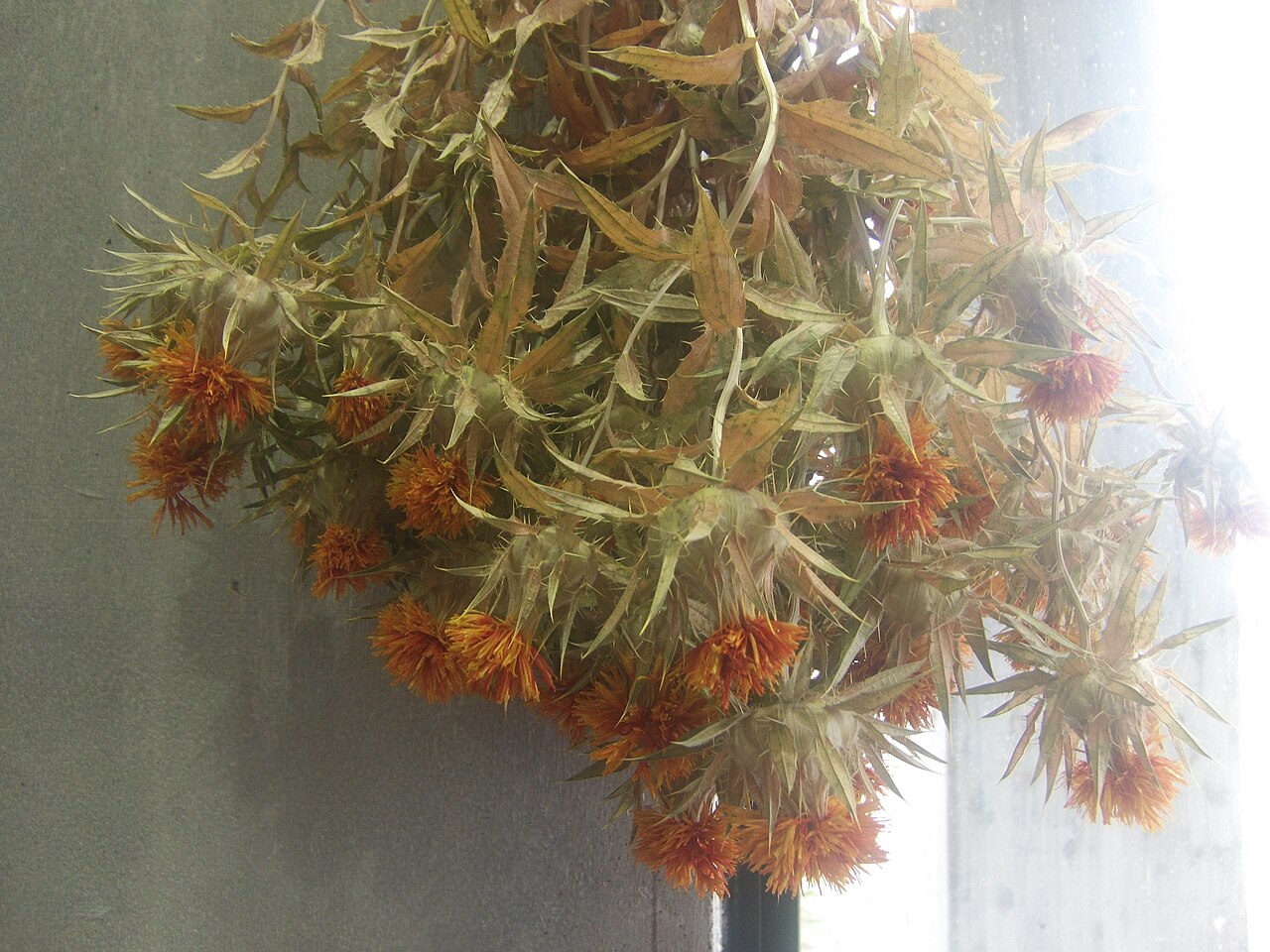
What does “still being made here” mean today? Yonezawa remains an active silk-weaving district in Yamagata, where weaving houses continue to produce jacquard silk and where benibana plant-dyeing persists as a regional specialty rather than a museum demonstration. The exact size of the workshop community shifts year to year and is not stated in the data snapshot for this listing, so we will not put a number on it — but the tradition is current, not reconstructed.
Other Japanese silk and woven accessories we have covered — useful for comparing region, dye method, and price tier before you commit.
 Chichibu Meisen silk stoleSaitama ikat-style silk →
 Kaga Yuzen silk scarfIshikawa hand-painted dye →
Johana Shike-Ginu silk scarfToyama textured raw silk →
 Kiryu-ori silk necktieGunma woven silk →
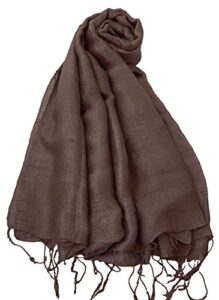 Iwate homespun wool scarfTōhoku hand-spun wool →
Hirosaki Kogin-sashi coastersAomori sashiko embroidery →
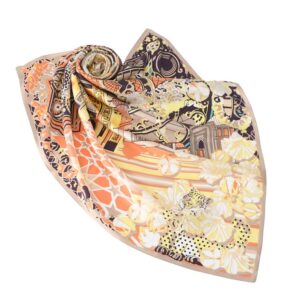 Yokohama silk scarfKanagawa printed (nassen) silk →
Price snapshot across stores
Pricing for this specific stole was not present in the data snapshot, so the JPY figure below is shown as “check listing” rather than guessed. Currency rule: where a JPY price appears, the yen figure is authoritative and any USD figure is an approximate estimate at a ¥150/USD baseline as of mid-2026.
| Store | Item / Variant | Price (JPY → USD est.) | Notes |
|---|---|---|---|
| 🇺🇸 Amazon US (search) | Browse Japanese silk stoles & scarves | varies (USD) | Best if you are shopping from the US — Prime shipping, USD pricing, no international customs. Amazon US carries Japanese silk scarves and stoles from various makers for comparing weave and price tiers; this exact Yonezawa-ori piece is sourced from Japan (next row). |
| 🇯🇵 Amazon JP Global Store | This exact stole (ASIN B0FH2HN88T) | Check listing → USD est. at checkout | The sourced listing for this item. Ships internationally from Japan to most major destinations; price and stock fluctuate, so confirm at the listing. |
| Maker direct | Yonezawa weaving houses | Varies — often JP-only | Some Yonezawa-ori houses sell direct, but many ship within Japan only; a proxy may be required from abroad. |
| Proxy services (Buyee / Tenso) | Any JP-only listing | Item price + service fee + forwarding | Useful when a maker or marketplace will not ship abroad directly; adds a handling fee and a second shipping leg. |
USD figures are approximate and depend on the current exchange rate. The JPY price shown on the listing is the authoritative one.
What it does well
This is Yamagata-woven Yonezawa-ori, a named regional silk with a documented history — not an unattributed “silk scarf.”
Benibana (safflower) gives a warm, organic red that reads differently in daylight than printed color, and ties the piece to Yamagata’s dye history.
As a stole, the form is meant to drape softly over the shoulders rather than sit stiff — versatile across seasons as a layering accessory.
The domain-recovery backstory makes this an easy gift to explain and contextualize, which matters more for craft objects than for fashion.
Weaknesses and things to verify before buying
- No confirmed price in the data snapshot. At the time of writing, the live data returned no price for this ASIN. Treat any figure you see elsewhere as provisional and confirm at the listing before ordering.
- Exact dimensions are unconfirmed. Stole length and width were not in the data; if you have a size preference, verify the measurements on the listing page first.
- Exact fiber content is unconfirmed. “Silk” is the tradition, but blend percentages vary by individual product; check the materials line rather than assuming 100% silk.
- Plant dyes shift and are light-sensitive. Safflower color is softer than synthetic dye and can fade with prolonged sun exposure; this is inherent to natural dyeing, not a defect.
- Care is higher-maintenance. Silk stoles generally need gentle hand washing or dry cleaning; this is not a toss-in-the-machine accessory.
- Color on screen may not match. Listing photos and real safflower reds can differ by monitor; if exact color matters (e.g., matching an outfit), expect some variance.
- Cross-border logistics. Buying from Japan means possible customs duties above your local threshold and longer shipping than a domestic order.
Conclusion — which buyer type are you?
You want documented plant-dyed Yonezawa-ori and will verify fiber and dye details. Buy the sourced JP listing, or contact a maker direct for higher-end pieces.
You want a beautiful, giftable Japanese silk stole with a real story. This piece fits well — confirm size and price, then order from the JP Global Store.
You like the look but prioritize cost. Compare Japanese silk scarves on Amazon US for Prime pricing first; plant-dyed Yonezawa-ori sits at a craft, not fast-fashion, tier.
You need machine-washable, color-fast, exactly-sized accessories. A plant-dyed silk stole bought from abroad is the wrong tool — look elsewhere.
Other ways to approach this purchase
Japanese textiles rarely discount steeply, but seasonal sales and Amazon events occasionally trim prices. If you are flexible, watch the listing for a few weeks.
Japanese silk accessories turn up secondhand. Condition and dye-fade are harder to judge from photos, so buy from sellers with clear images and return terms.
If you already use an Amazon ecosystem, card points or gift balances can offset the cost — effectively a discount on an item that seldom goes on sale.
If unconfirmed size, fiber, and price are deal-breakers for you, it is reasonable to wait until the listing publishes complete specs before committing.
🏆 Editor’s Pick
❓ Frequently Asked Questions
What is Yonezawa-ori?
Yonezawa-ori is a silk-weaving tradition centered on the city of Yonezawa in Yamagata Prefecture. It grew out of the Uesugi domain’s late-18th-century industrial reforms under Uesugi Yōzan, which promoted sericulture, weaving, and safflower as cash industries.
What does benibana (safflower) dye look like?
Benibana yields warm reds and pinks. As a plant dye, the color tends to be softer and more organic than synthetic print, and it can shift gently over time, especially with prolonged sun exposure.
Can I buy it from outside Japan?
Yes. The sourced listing is on the Amazon JP Global Store, which ships internationally to most major destinations. If you prefer USD pricing and Prime, you can also browse comparable Japanese silk scarves and stoles on Amazon US.
How do I care for a silk stole?
Silk stoles generally need gentle hand washing or dry cleaning, and plant-dyed pieces should be kept out of prolonged direct sun to limit fading. Always follow the care label on the specific item.
Why does the article not show a fixed price?
At the time of writing, the data snapshot for this ASIN returned no confirmed price. Rather than guess, we direct you to the live listing, where the JPY price is authoritative and any USD figure is an estimate.
How is this different from a Kaga Yūzen or Chichibu Meisen scarf?
They are different regions and methods. Kaga Yūzen is hand-painted dyeing from Ishikawa, and Chichibu Meisen is an ikat-style woven silk from Saitama. Yonezawa-ori’s distinguishing feature here is the benibana (safflower) plant dye from Yamagata.
jpmono.com is curated by a Japan-based editorial team (working out of Toyama in the Hokuriku region and Nara in Kansai) and is independent. We do not take payment from the makers we feature; income comes from affiliate links. We do not physically test every product — we read maker specs and source listings.
🤖 This article was prepared with AI assistance and reviewed against the available product data and the site’s editorial standards. Specifications, prices, and availability should be verified at the retailer before purchase.
Affiliate disclosure: jpmono.com may earn a commission on qualifying purchases made through links on this page, at no additional cost to you.