![Sasebo Koma Spinning Top: Where to Buy Nagasaki’s Battling Top [2026]](https://jpmono.com/wp-content/uploads/2026/06/sasebo-koma-spinning-top-where-to-buy-2026-featured.jpg)
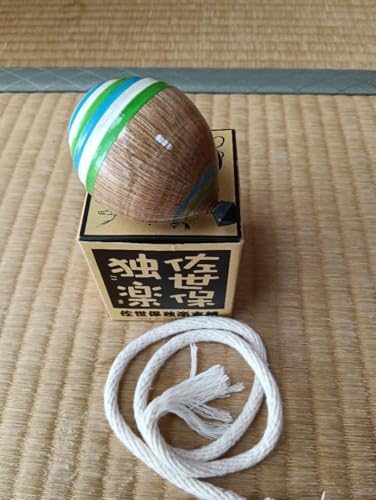
The Sasebo koma (佐世保独楽, “Sasebo spinning top”) is one of Japan’s heavier fighting tops: a squat, hand-turned wooden body cut from ubame oak, shod with an iron tip, and banded in spirals of red, yellow, and green. It comes from the Sasebo–Hirado area on the northwestern edge of Nagasaki Prefecture, in Kyūshū, where the Hirado domain’s Edo-period port trade and castle-town economy sustained a small cluster of toy- and turnery-makers. The shape has not changed much. The tops are still cut on a hand rokuro (轆轤, “lathe”), and production today rests on a handful of family workshops — the Tsuji line foremost among them.
What makes the Sasebo koma notable to an international reader is not novelty but density, in the literal sense. Ubame-gashi (姥目樫, Quercus phillyraeoides) is one of the densest oaks in Japan — the same wood prized for high-grade binchōtan charcoal — and that mass, combined with an iron foot, is exactly why these tops were valued for kenka-goma (喧嘩独楽, “top-battling”), a competitive children’s game in which one top is launched to knock another out of the ring. A Sasebo top is built to win that collision.
This guide is written for buyers outside Japan who want an authentic, hand-made example rather than a mass-produced souvenir top. We cover what the piece actually is, how to judge real Hirado-port craftsmanship, where it sits among related Japanese tops and crafts, and the realistic paths to buying one from abroad — primarily Amazon US for comparable goods, and the Amazon JP Global Store for this specific sourced listing.
🔄 Updated:
⏱️ Read time: ~11 min
- Who this is for — and who should skip it
- Product overview (from published specs)
- 📦 Shipping & where to buy from outside Japan
- Price snapshot across stores
- What it does well
- Weaknesses and things to verify before buying
- Where this comes from — place, era, and the craft tradition
- Conclusion — which buyer type are you?
- Other ways to approach this purchase
- 🏆 Editor’s Pick
- ❓ Frequently Asked Questions
Who this is for — and who should skip it
- Want a genuine hand-turned wooden top with documented regional roots, not a generic souvenir
- Value dense hardwood and an iron-shod tip built for real kenka-goma play
- Collect Japanese folk toys (kyōdo-gangu) and want a Kyūshū / Nagasaki example
- Like the idea of an object still made by a few family workshops rather than a factory
- Are comfortable confirming stock and price at purchase time, since output is small
- Want a precision-engineered metal “skill toy” top for long single-spin times
- Expect a low-cost bulk party item — these are made in small numbers
- Need guaranteed fast domestic shipping and predictable stock
- Dislike hand-finished variation in banding, balance, or grain
- Want a top for a very young child without supervision (the iron tip is hard and sharp-ish)
Product overview (from published specs)
Based on the listing and the verified craft notes, the core attributes are below. Note the data caveat: only the product identifier and the editorial craft notes were available at the time of writing — no live Amazon pricing or measured weight snapshot was fetched, so several rows are marked unconfirmed and should be checked on the listing.
Sasebo Koma Spinning Top
佐世保独楽こま 伝統工芸品 民芸品 佐世保こま
通常6~7日以内に発送します。 · Sold by いろとりどりショップ · ASIN B0G4FCLLG4
Price and availability as of 2026-08-31 02:30 JST. The Amazon listing at the time of purchase is authoritative. jpmono.com earns a commission on qualifying purchases at no extra cost to you.
| Attribute | Detail (per craft notes / listing) |
|---|---|
| Object | Sasebo koma — lathe-turned wooden battling top (kenka-goma) |
| Body material | Ubame-gashi (Quercus phillyraeoides), an exceptionally dense evergreen oak |
| Tip / foot | Driven iron core tip (gives weight and durability for collision play) |
| Finish | Painted spiral bands in characteristic red, yellow, and green |
| Making method | Cut on a hand rokuro (lathe); hand-finished |
| Origin | Sasebo–Hirado area, Nagasaki Prefecture, Kyūshū |
| Maker | Small family workshops; notably the Tsuji line |
| Size / weight | Unconfirmed — check the listing (varies by piece; hand-made) |
| ASIN | B0G4FCLLG4 |
| Price | Not available in fetched data — verify on Amazon JP Global Store at purchase |
Sources: Amazon US search (primary, moonill-20) for comparable Japanese tops; Amazon JP Global Store (secondary, moonill-22) for this sourced listing; maker-direct and proxy paths where relevant. The data suggests a small-batch handcraft item; specs not present in the fetched JSON are marked unconfirmed rather than guessed.
📖 Glossary — Japanese terms used in this article
- koma (独楽) — a spinning top; here, a wooden one wound and launched with a string.
- kenka-goma (喧嘩独楽) — “fighting top”; a game where tops are spun into a ring to collide and knock each other out.
- ubame-gashi (姥目樫) — bead-tree oak (Quercus phillyraeoides), an unusually dense, heavy evergreen oak; also the wood of premium binchōtan charcoal.
- rokuro (轆轤) — a turning lathe, used here to cut the round wooden body by hand.
- kyōdo-gangu (郷土玩具) — regional folk toys, a recognized category of Japanese craft collectible.
- monozukuri (ものづくり) — the culture and ethic of skilled making; used for a region’s craft “ecosystem.”
- han (藩) — a feudal domain in the Edo period; the Hirado han was governed by the Matsura clan.
Related jpmono guides — other Japanese tops, Nagasaki crafts, and wooden household objects worth weighing against this one.
 🌀 Hakata Koma top
Fukuoka’s precision spinning top — compare turning traditions
 🍶 Mikawachi Hirado porcelain
Same Sasebo-area domain craft cluster, in porcelain
 🔔 Nagasaki Poppen glass
Another Nagasaki folk plaything — glass, not wood
 🪞 Nagasaki Maki-e mirror
Nagasaki’s lacquer trade craft for contrast
 🕯️ Nagasaki bronze candlestick
Nagasaki’s cast-metal temple-trade lineage
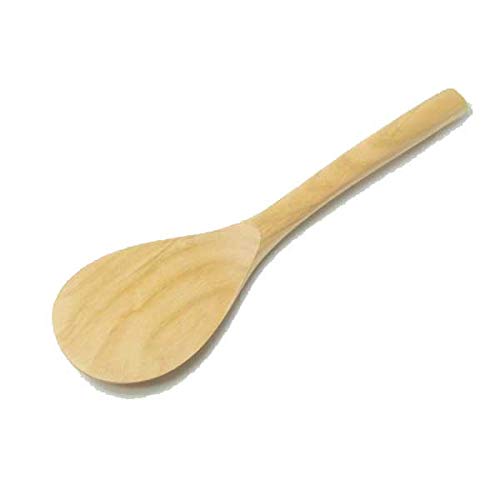 🍚 Miyajima shamoji
Another Kyūshū-adjacent wooden everyday object
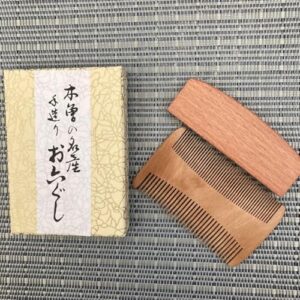 🪮 Kiso Oroku comb
Hardwood hand-turnery from another craft region
📦 Shipping & where to buy from outside Japan
This specific Sasebo koma is sourced from the Amazon JP Global Store, which ships internationally to most major destinations. Because output is small and stock can lapse, confirm availability on the listing before counting on a delivery date.
For readers in the US, EU, or Australia, expect international shipping in roughly the $15–$40 range for a small, light wooden item, plus possible customs duties if your order exceeds your country’s de-minimis threshold (for example, the US threshold is generally higher than the EU’s). Alternative paths include the maker direct (if a workshop site is active) and proxy services such as Buyee or Tenso, which forward domestic-only Japanese listings abroad.
This is not an electrical product, so there are no voltage concerns. The only handling note is the iron tip: it is hard and intended for collision play, so it is not a soft toy for an unsupervised toddler.
Price snapshot across stores
| Store | Item / variant | Price (JPY + USD est.) | Notes |
|---|---|---|---|
| 🇺🇸 Amazon.com (US) | Browse Japanese wooden spinning tops | varies (USD) | Best if you are shopping from the US — Prime shipping, USD pricing, no international customs. Amazon US carries Japanese koma and folk-toy tops from various makers, useful for comparing size and price tiers; this exact Sasebo top ships from Japan (next row). |
| 🇯🇵 Amazon JP Global Store | Sasebo koma (Tsuji workshop), ubame oak, iron tip | Not in fetched data — check listing | Ships internationally from Japan. This is the sourced listing for the specific item in this guide. Price was unavailable at time of writing — verify before purchase. |
| Maker direct | Tsuji-line workshop pieces | Unconfirmed — check workshop site | A few family workshops remain; direct ordering may require Japanese-language contact and domestic shipping. |
| Proxy services (Buyee / Tenso) | Domestic-only listings forwarded abroad | Item price + proxy fee + forwarding | Useful when a top is listed only on Japan-domestic stores; adds a service fee and a second shipping leg. |
JPY is the authoritative price for the specific listed item. USD figures are approximate estimates at a ¥150/USD baseline (mid-2026) and depend on the current exchange rate. Prices and stock fluctuate; verify at the retailer via the affiliate link.
What it does well
Ubame oak is among the densest Japanese woods, giving the top real mass and momentum rather than the lightness of cheap pine souvenirs.
The driven iron core tip is what made Sasebo tops a regional standard for kenka-goma — they are designed to take and deliver impact.
The red, yellow, and green spiral bands are a visual signature, blurring into bright rings at speed — distinctive on a shelf and in motion.
Still hand-turned by a few family workshops, it carries documented Sasebo–Hirado roots rather than anonymous factory origin.
Weaknesses and things to verify before buying
- No measured specs in the data. Exact diameter, height, and weight were not in the fetched listing. If size matters to you, confirm on the product page before ordering.
- Price was unavailable at time of writing. Treat any figure you see as current-only; small-batch crafts reprice and sell out without notice.
- Hand-made variation. Banding alignment, balance, and grain differ piece to piece. This is normal for a turned wooden top, but it means no two are identical.
- Limited stock. Output rests on a handful of workshops, so listings can lapse; have a proxy-service backup (Buyee / Tenso) in mind.
- Skill required to spin it. A string-launched fighting top is not a press-button toy. Beginners — especially outside Japan, where these are unfamiliar — need practice to wind and throw it cleanly.
- The iron tip is hard. It is part of the design, but it makes the top unsuitable as an unsupervised toy for very young children, and it can mark soft floors.
- Not a long-spin “skill toy.” If your goal is maximum single-spin duration, engineered metal tops outperform a traditional wooden battling top.
Where this comes from — place, era, and the craft tradition

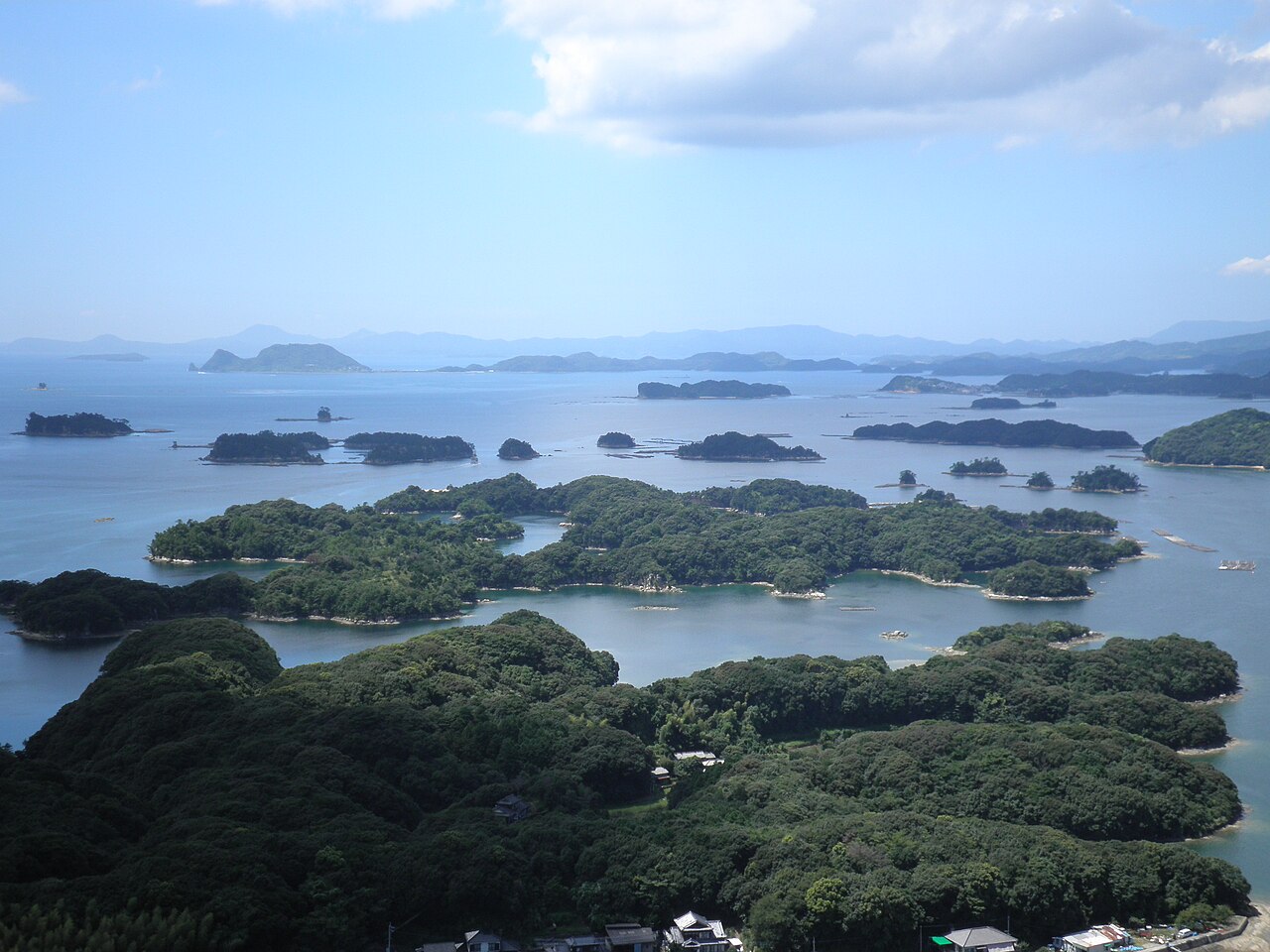
Sasebo sits on the northwestern shoulder of Kyūshū, in Nagasaki Prefecture, along a famously broken coastline of bays and islands — the Kujukushima (“ninety-nine islands”) seascape is its emblem. The deep, sheltered harbors that later made Sasebo an important naval port were, in earlier centuries, simply good places to trade and to work wood and clay. The surrounding hills supplied hardwood, including the dense ubame oak that the koma is turned from, and the proximity to Hirado plugged the area into one of Japan’s oldest foreign-trade circuits.
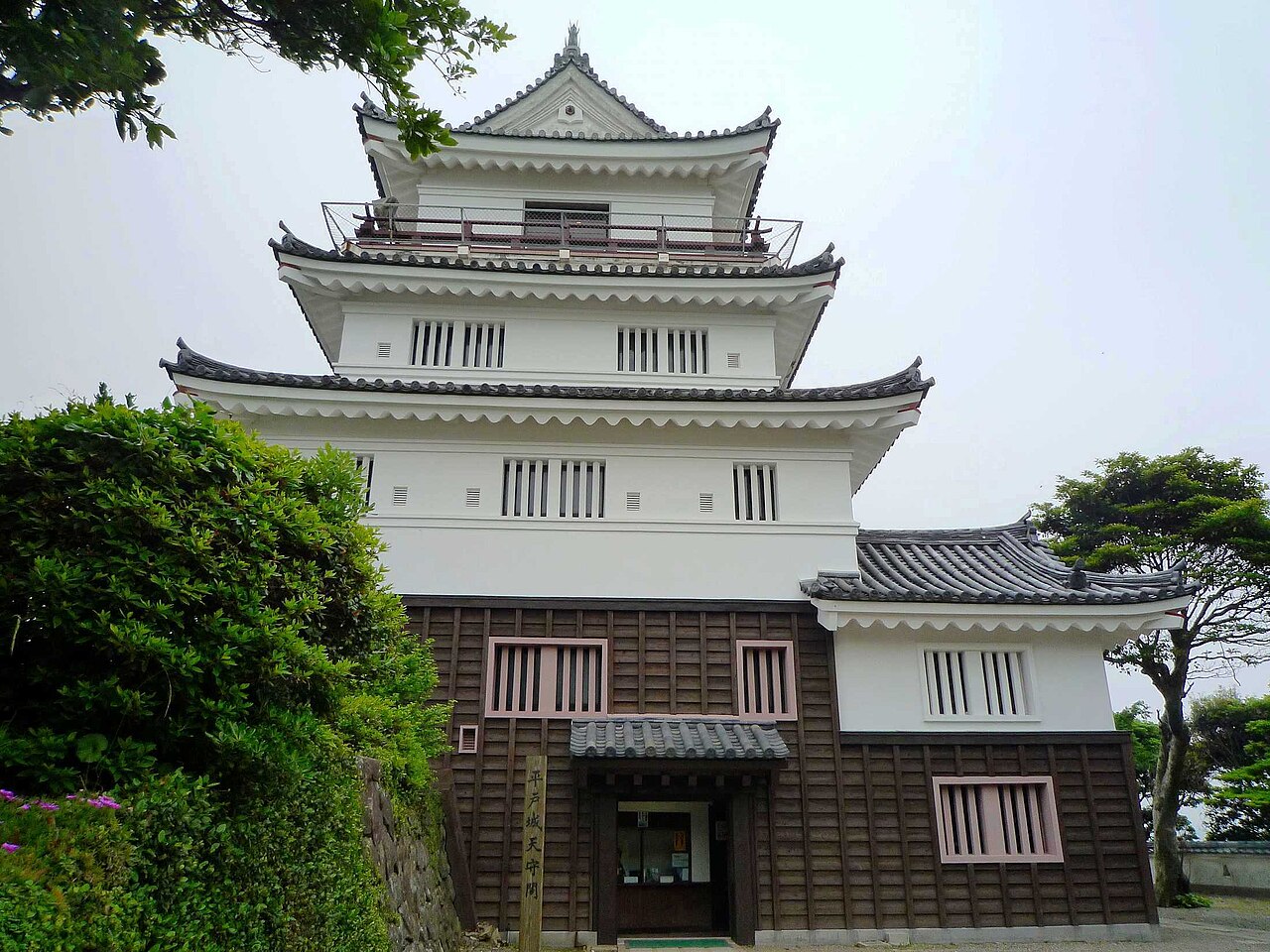
The historical anchor here is the Hirado han (domain), governed by the Matsura clan. From the mid-16th century, Hirado was one of the first Japanese ports where European ships called, and that trade — Portuguese, then Dutch and English — funneled wealth and demand through the castle town before the Tokugawa shogunate concentrated foreign commerce at Nagasaki’s Dejima. A trading port supports more than merchants: it supports the carpenters, turners, potters, and toy-makers who serve a cash economy. The Sasebo koma is documented from the Edo period (1603–1868) as part of exactly that castle-town craft cluster.
- 1550 — Portuguese trading ships begin calling at Hirado, seeding the Matsura domain’s foreign-trade economy.
- 1609 — The Dutch establish a trading factory at Hirado, deepening the castle town’s cash economy.
- 1641 — Foreign trade is consolidated at Nagasaki’s Dejima; the wider region’s craft economy continues under the domain.
- Edo period — Mikawachi (Hirado) porcelain kilns develop under domain patronage; lathe-turned wooden koma are documented among local toy crafts.
- 1889 — Sasebo is established as an Imperial Navy base, and the harbor town grows rapidly.
- 20th c. — Kenka-goma is widespread children’s play; heavy iron-tipped Sasebo tops are regionally prized for it.
- 2026 — A handful of family workshops, notably the Tsuji line, still hand-turn ubame-oak koma.
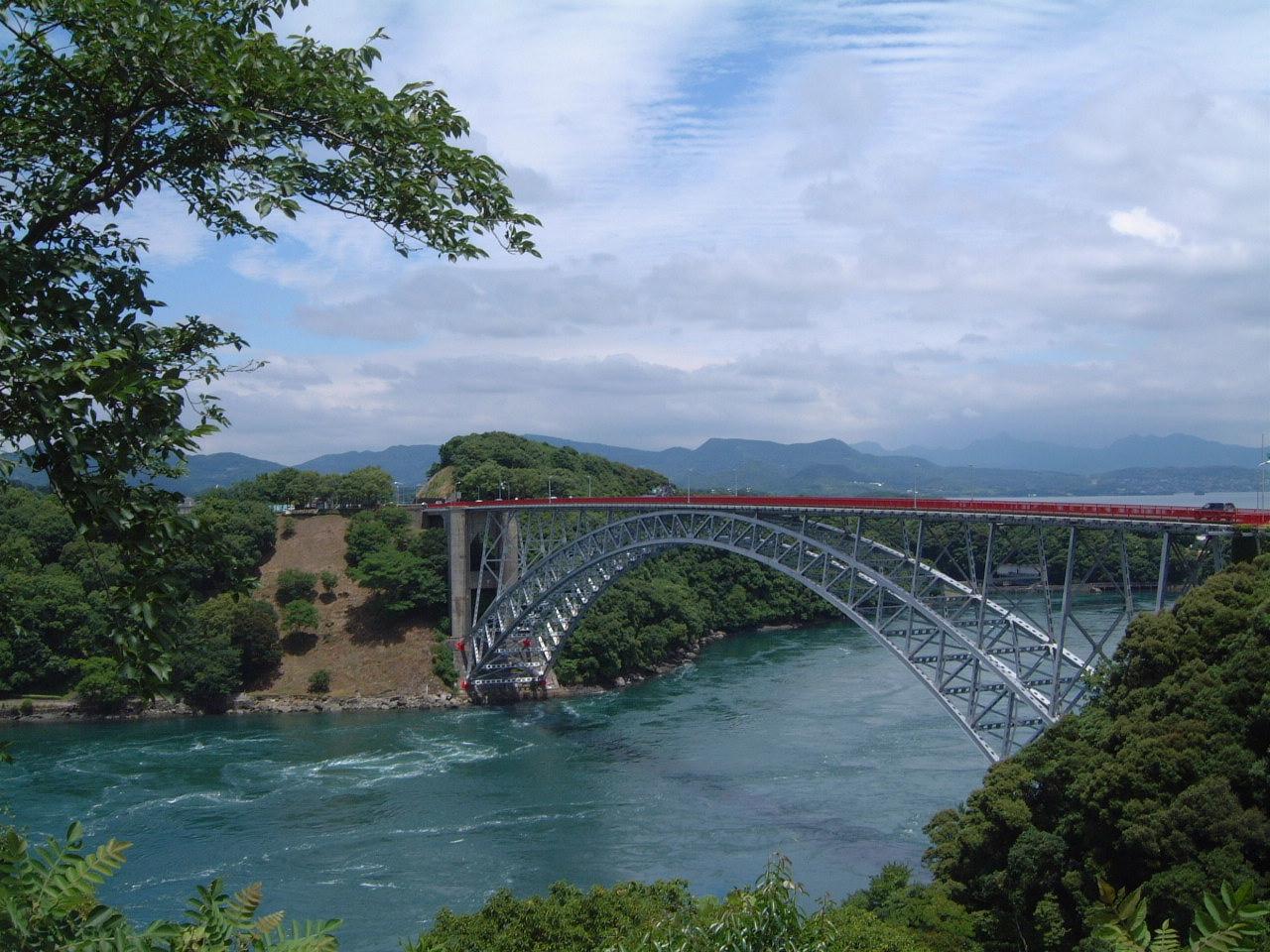
What does “still made here” mean in practice? It means a small number of family workshops — the Tsuji line is the one most often named — continuing to cut tops on a hand lathe rather than stamping them out by machine. The continuity is real but narrow: this is folk-toy craft, not a large designated industry, so the honest picture is a few makers and modest annual output. That is also why availability is mostly domestic and stock should be confirmed at purchase.
“A trading port supports more than merchants — it supports the carpenters, turners, and toy-makers who serve a cash economy. The Sasebo koma is what that prosperity left behind in the hands of children.”
The wider monozukuri context matters because it makes the koma legible. Mikawachi — today part of Sasebo — was the kiln district behind Hirado porcelain, a refined ware made under the same domain’s patronage. A region that could sustain fine porcelain for the daimyō’s gifts could also sustain skilled turners making humble objects for everyday play. The Sasebo koma and Mikawachi porcelain are two ends of one craft economy: one for the lord’s table, one for the schoolyard ring. Seeing them together is the point of treating this top as heritage rather than as a trinket.
Conclusion — which buyer type are you?
You want documented provenance and the Tsuji-line piece itself. Buy the specific listing via the JP Global Store; accept that price and stock vary.
You want an authentic, attractive Japanese top for a gift. This fits well — just confirm shipping time and that it suits the recipient’s age.
You mainly want a top to spin. Compare general Japanese tops on Amazon US first; a hand-turned Sasebo piece may cost more than you need.
You want a long-spin engineered metal top or a cheap bulk party item. A traditional wooden battling top is the wrong tool — look elsewhere.
Other ways to approach this purchase
Small-workshop output is intermittent. If the listing is out of stock, set an alert rather than overpaying a reseller.
A workshop may sell directly, sometimes with more sizes — but expect Japanese-language contact and domestic-only shipping.
Buyee or Tenso can forward Japan-only listings abroad. Adds a fee and a second shipping leg, but widens your options.
If you only need a top to spin and provenance is irrelevant, a generic top from Amazon US is cheaper and faster.
🏆 Editor’s Pick
❓ Frequently Asked Questions
What is a Sasebo koma?
It is a traditional wooden spinning top from the Sasebo–Hirado area of Nagasaki, Kyūshū. It is lathe-turned from dense ubame oak, fitted with an iron core tip, and painted in red, yellow, and green spiral bands. Its weight and iron foot made it a regional favorite for kenka-goma, the top-battling game.
Does it ship internationally?
Yes. The specific item is sourced from the Amazon JP Global Store, which ships to most major destinations. Expect shipping of roughly $15–$40 for a small wooden item, plus possible customs duties depending on your country’s threshold. If a top is listed only on Japan-domestic stores, a proxy service such as Buyee or Tenso can forward it.
How much does it cost?
A live price was not available in the data at the time of writing, so we do not quote one here. Because these are small-batch handcrafts, pricing and stock change without notice — check the current figure on the Amazon JP Global Store listing before buying.
Why is it made of ubame oak?
Ubame-gashi (Quercus phillyraeoides) is one of the densest oaks in Japan — the same wood used for premium binchōtan charcoal. That density gives the top mass and momentum and lets it survive the impacts of battling play, which lighter woods cannot.
Is it safe for young children?
It is a traditional toy, but the iron tip is hard and the top is launched with a string, so it suits older children and adults and warrants supervision for younger ones. It is not a soft toy for an unsupervised toddler, and the iron foot can mark soft floors.
How is it different from a Hakata koma?
Both are traditional Kyūshū wooden tops, but they come from different traditions — the Hakata koma from Fukuoka, the Sasebo koma from Nagasaki. The Sasebo top emphasizes mass and an iron tip for collision play; see our Hakata koma guide in the comparison box to weigh the turning styles side by side.
Who makes it today?
Production is small and rests on a handful of family workshops, with the Tsuji line the one most often named. Because output is limited, availability is mostly domestic and stock should be confirmed at the time of purchase.
jpmono.com is curated by a Japan-based editorial team (working out of Toyama in the Hokuriku region and Nara in Kansai) and is independent. We do not take payment from the makers we feature; income comes from affiliate links. We do not physically test every product — we read maker’s specs and source listings.
🤖 This article was prepared with AI assistance and reviewed against the source listing and verified craft notes. Specifications not present in the source data are marked unconfirmed rather than guessed.
Affiliate disclosure: jpmono.com may earn a commission on qualifying purchases made through links on this page, at no additional cost to you.