![Kasama-yaki Ceramic Coffee Dripper: Ibaraki’s Oldest Kanto Stoneware [2026]](https://jpmono.com/wp-content/uploads/2026/05/japan-map-regions-and-prefectures-800x1050.png)
Kasama-yaki (笠間焼, “Kasama ware”) is the oldest pottery tradition in Japan’s Kantō region — the wide plain around Tokyo — and it has been fired in the town of Kasama, Ibaraki Prefecture, since the 1770s. The piece covered in this guide is a handmade ceramic pour-over coffee dripper: a single-cup cone, thrown and glazed in the iron-rich local clay, that sits on top of a mug or carafe and holds the paper filter while you brew.
What makes a Kasama dripper more than a generic ceramic cone is the lineage behind it. A potter trained in Kasama later went on to found neighboring Mashiko-yaki in Tochigi — the kiln town that the mingei (folk-craft) master Shōji Hamada would make world-famous. In other words, Kasama is effectively the parent kiln behind one of Japan’s most internationally recognized pottery movements. The iron-bearing clay, the varied ash-and-iron glazes, and a postwar openness that welcomed potters of every style make Kasama a living contemporary-craft town rather than a museum piece.
This article is written for the international reader who wants a daily-ritual object with genuine craft provenance — and who wants to know exactly where to buy one from outside Japan, what to verify before paying, and how it compares to other Japanese stoneware. We cover provenance, the practical brewing question, shipping paths, and honest caveats.
🔄 Last updated:
⏱️ Read time: ~10 min
- Who this is for — and who should skip it
- Product overview (from published specs)
- Where to buy
- Where this comes from — place, era, and the craft tradition
- What it does well
- Weaknesses and things to verify before buying
- Conclusion — which buyer type are you?
- Other ways to approach this purchase
- ❓ Frequently Asked Questions
Who this is for — and who should skip it
- Brew pour-over coffee at home and want the vessel itself to carry craft provenance
- Prefer ceramic to plastic or metal for its heat retention and quiet aesthetics
- Appreciate the mingei (folk-craft) lineage and want an object tied to a real kiln town
- Like that each handmade piece varies slightly in glaze tone and weight
- Are buying a meaningful, usable gift rather than a mass-produced one
- Need a guaranteed, standardized filter geometry (handmade cones vary)
- Brew large batches — this is a single-cup vessel
- Want the lightest, most packable travel gear (ceramic is heavier and breakable)
- Expect exact color matching to a product photo (glaze tone differs piece to piece)
- Are unwilling to pay international shipping from Japan or check filter-size fit
Product overview (from published specs)
Kasama-yaki coffee drippers are handmade ceramic ware, and the cone is thrown by hand; dimensions can therefore be approximate and vary by piece.
| Attribute | Detail | Source |
|---|---|---|
| Item type | Single-cup ceramic pour-over coffee dripper | Maker direct |
| Craft | Kasama-yaki (笠間焼), iron-glaze stoneware | Maker direct |
| Material | Iron-rich local clay, stoneware-fired; ash / iron glaze | Maker direct |
| Origin | Kasama, Ibaraki Prefecture, Kantō region, Japan | Maker direct |
| Production | Handmade (wheel-thrown); each piece varies | Maker details |
| Dimensions / weight | Not specified | — |
| Filter size fit | Unconfirmed — verify cone vs. trapezoid before buying | — |
Because the cone is thrown by hand, treat any single dimension as approximate; handmade ceramics may also vary in price.
📖 Glossary — key terms
- Kasama-yaki (笠間焼) — pottery made in Kasama, Ibaraki; the oldest ceramic tradition in the Kantō region.
- mingei (民芸) — the “folk-craft” movement that celebrated everyday handmade objects; closely tied to neighboring Mashiko.
- yakishime / stoneware — high-fired ceramic, dense and durable, suited to daily use.
- ash / iron glaze — glazes derived from wood ash and iron-bearing minerals, giving brown, amber, and gray-green tones characteristic of Kasama clay.
- Kantō (関東) — the eastern plain of Honshū surrounding Tokyo; Ibaraki sits on its northeastern edge.
- Inari (稲荷) — Shintō deity of harvest and prosperity; Kasama Inari is one of Japan’s three great Inari shrines.
Other Japanese stoneware and Kantō crafts we have covered — useful for weighing kiln lineage, glaze character, and price tier.
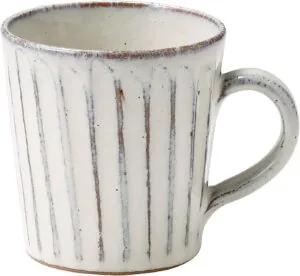 Shigaraki parent-kiln stonewareThe Shigaraki tradition that guided Kasama’s first kiln
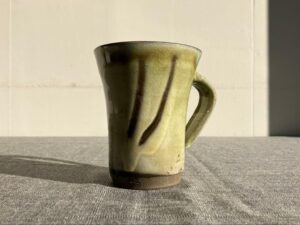 Onta folk-craft mugA mingei-lineage cousin to the Kasama/Mashiko line
Bizen unglazed stonewareSix Ancient Kilns ware, unglazed counterpoint
 Tamba Six Ancient Kiln wareAnother medieval kiln lineage for comparison
 Kantō craft: Kiryu silkNeighboring Kantō textile tradition
Kantō craft: Takasaki darumaA Kantō folk-craft icon in cast brass
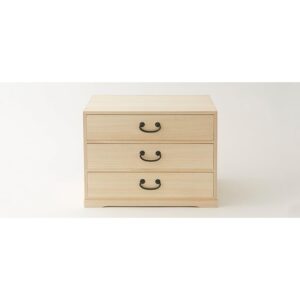 Kantō craft: Kasukabe paulowniaPaulownia woodwork from neighboring Saitama
Where to buy
| Store | Item / Variant | Price (JPY + USD est.) | Notes |
|---|---|---|---|
| 🇺🇸 Amazon.com (US) | Browse Japanese ceramic coffee drippers | varies (USD) | Best if you are shopping from the US — Prime shipping, USD pricing, no international customs. Amazon US carries ceramic pour-over drippers from Hario, Kinto, and other Japanese makers, useful for comparing cone geometry and price tiers. The exact Kasama-yaki handmade piece is sourced from Japan (next row). |
| 🇯🇵 Amazon JP Global Store | Kasama-yaki handmade dripper | Varies by seller | Ships internationally from Japan. |
| Maker direct | Individual Kasama studios / pottery-town shops | Unconfirmed — check studio site | Kasama has many independent kilns; direct purchase may not ship abroad without a proxy. |
| Proxy services (Buyee / Tenso) | Forwarded from domestic Japanese orders | Item price + forwarding fee | Use when a studio or domestic shop does not ship internationally; adds a service fee and consolidated shipping. |
Prices in USD are approximate and depend on the current exchange rate (¥150/USD baseline as of mid-2026). The JPY price is the authoritative one. Prices and stock fluctuate — verify at the affiliate link for current data.
Where this comes from — place, era, and the craft tradition

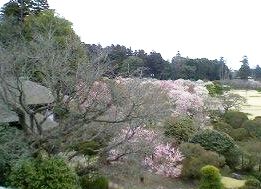
Kasama sits in southern-central Ibaraki Prefecture, on the northeastern shoulder of the Kantō plain — the broad lowland that surrounds Tokyo. It is a town of low hills and river valleys, and those hills are the reason the craft exists: the surrounding ground yields an iron-rich clay that fires into dense, durable stoneware with warm brown and amber tones. Good clay, abundant firewood for the kilns, and a position on overland routes toward Edo (old Tokyo) gave the town everything a pottery industry needs.
The Kantō region is not where most people picture Japanese ceramics — the famous old kilns sit further west, around Kyoto, Shiga, and the Inland Sea. That is precisely what makes Kasama notable: it is the oldest pottery center in Kantō, and it became one by importing western know-how at the right moment.
The craft began in the 1770s, when Kuno Hanemon of the village of Hakoda opened a kiln with guidance from Chōzaemon, a potter from Shigaraki — one of Japan’s medieval “Six Ancient Kilns.” That Shigaraki connection matters: it means Kasama’s founding pottery DNA came from one of the oldest continuous ceramic traditions in the country. The local Kasama domain, ruled by the Makino clan, then adopted the ware as official domain pottery, giving it patronage and a market.
- 1770s — Kuno Hanemon of Hakoda opens the first kiln with guidance from the Shigaraki potter Chōzaemon.
- Late 1700s — The Makino clan of the Kasama domain adopts Kasama-yaki as official domain ware.
- 19th century — Ōtsuka Keizaburō, trained at Kasama, founds neighboring Mashiko-yaki in Tochigi.
- Early 20th century — Mashiko becomes a center of the mingei folk-craft movement under Shōji Hamada.
- Postwar era — A “no single style is the style” openness draws young potters from across Japan to Kasama.
- Today — Kasama remains a living contemporary-craft town centered on Kasama Inari.
The most striking fact about Kasama is what one of its potters went on to do. Ōtsuka Keizaburō, trained in Kasama, later founded Mashiko-yaki just across the prefectural line in Tochigi. Mashiko became, in the 20th century, the home kiln of Shōji Hamada and a beating heart of the mingei movement — the folk-craft philosophy that prized honest, everyday, handmade objects. Trace that line back and Kasama is the parent kiln behind the Mashiko/mingei lineage.
“Kasama is the older relative no one outside Japan talks about — the kiln that taught the kiln that the world came to know.”
What “still being made here” means in Kasama is unusual. Many Japanese craft towns are defined by a single signature style enforced over generations. Kasama took the opposite path: after the war, the town embraced an openness in which no single style was mandated, and that drew young potters from across the country who wanted room to experiment. The result is a living contemporary-craft town with a wide range of glazes, forms, and hands at work — which is exactly why a modern object like a pour-over coffee dripper fits naturally into the tradition rather than feeling like a gimmick.
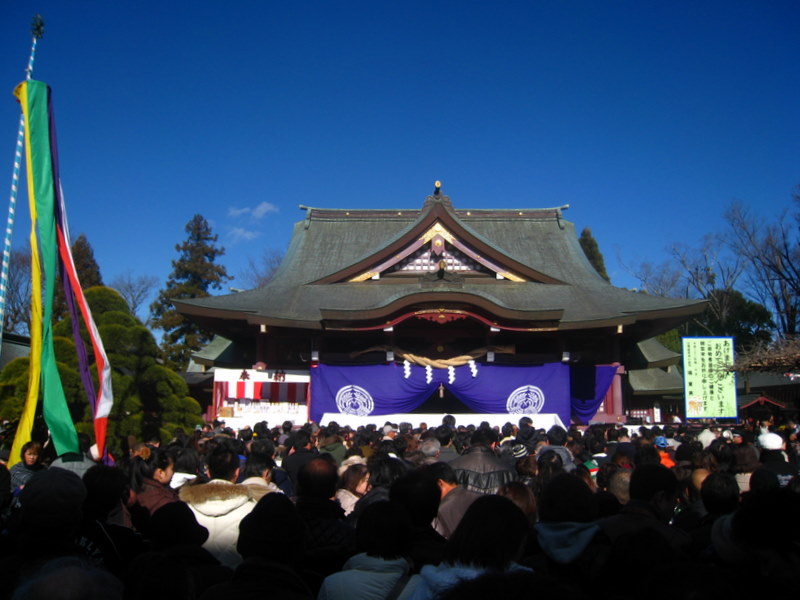
The town’s cultural center of gravity is Kasama Inari, one of Japan’s three great Inari shrines, dedicated to the deity of harvest and prosperity. Pottery markets and kiln-town festivals cluster around it, and the shrine’s long patronage is part of why so many independent kilns survive in one small place. For a coffee ritual, an iron-glazed Kasama cone carries that whole backstory into an ordinary morning.
What it does well
Weaknesses and things to verify before buying
- Filter size and shape are unconfirmed in the data. Verify whether the cone takes V-shaped (cone) or trapezoid filters, and which size, before ordering.
- Seller details vary. Compare the available options before paying.
- Handmade variation. Glaze tone, exact dimensions, and weight differ from piece to piece; the product photo is representative, not exact.
- Single-cup capacity. This is not the tool for brewing a full carafe for several people at once.
- Fragility and weight in transit. Ceramic can chip or crack; confirm protective packaging for international shipping, and expect more weight than a plastic dripper.
- International shipping and customs. Costs and import duties vary by destination; factor them into the total before committing.
Conclusion — which buyer type are you?
Other ways to approach this purchase
❓ Frequently Asked Questions
Does Amazon JP Global Store ship this to my country?
Amazon JP Global Store ships many household ceramics internationally to most major destinations. Confirm your country is listed at checkout, and budget roughly $15–$40 in shipping to the US or EU, with customs duties possible above local thresholds.
What filter size does it take?
Filter size and shape can vary; check whether the dripper takes cone or trapezoid filters before buying.
How do I care for a Kasama-yaki ceramic dripper?
Rinse with water after each use and avoid thermal shock. Hand washing is the safe default for handmade glazed stoneware; dishwasher suitability depends on the maker’s instructions.
Why is Kasama-yaki significant?
It is the oldest pottery tradition in the Kantō region, founded in the 1770s with guidance from a Shigaraki potter. A Kasama-trained potter later founded Mashiko-yaki, making Kasama the parent kiln behind the Mashiko/mingei lineage of Shōji Hamada.
Is each piece identical to the photo?
No. Because the dripper is handmade and the glazes are ash- and iron-based, tone and exact dimensions vary from piece to piece. The product image is representative rather than exact.
Is it a good gift?
For a coffee drinker who appreciates craft, yes — it is a daily-use object with a clear story. Confirm shipping time and protective packaging if it is going abroad as a present.
jpmono.com is curated by a Japan-based editorial team working out of Toyama in the Hokuriku region and Nara in Kansai, and is independent. We do not take payment from the makers we feature; income comes from affiliate links. We do not physically test every product.
Affiliate disclosure: jpmono.com may earn a commission on qualifying purchases made through links on this page, at no additional cost to you.