![Omi Jofu Ramie Indigo Kasuri Noren: Shiga’s Linen Doorway Curtain [2026]](https://jpmono.com/wp-content/uploads/2026/06/omi-jofu-ramie-indigo-noren-where-to-buy-2026-featured.jpg)
Omi Jofu (近江上布, “Ōmi fine cloth”) is the flagship ramie textile of the Kotō plain — the flat farmland east of Lake Biwa in Shiga Prefecture, centered on Echigawa and Notogawa. It is woven from hand-twisted ramie (a crisp bast fiber close to linen), and its two signatures are a fine crepe texture called shibo and indigo kasuri (絣, ikat) patterning. Shaped into a noren (暖簾) — the split doorway curtain that hangs in Japanese homes, shops, and kitchens — it becomes a breathable, warm-weather furnishing that filters light and air rather than blocking them.
Hemp and ramie weaving in Ōmi reaches back to the Kamakura and Muromachi periods, and under the Edo-period Hikone domain of the Ii clan the cloth was protected and refined into a renowned summer-kimono fabric. It traveled the country not on the back of a single famous merchant house but through the broad distribution networks of the Ōmi merchants (近江商人) and their sanpō-yoshi creed — “good for the seller, good for the buyer, good for society.” In 1977 it was designated a Traditional Craft by Japan’s Ministry of Economy, Trade and Industry (METI).
This guide is for readers shopping from outside Japan who want a genuine Shiga ramie noren rather than a generic printed curtain. It explains what the cloth is, how it compares to other Japanese indigo textiles, where to buy it from abroad, and which buyer it suits — and which it does not. Where information is limited, it is stated plainly.
🗓️ Published:
🔄 Updated:
⏱️ Read time: ~11 min
- Who this is for — and who should skip it
- Product overview (from published specs)
- Buying options compared
- What it does well
- Weaknesses and things to verify before buying
- Where this comes from — place, era, and the craft tradition
- Conclusion — which buyer type are you?
- Other ways to approach this purchase
- ❓ Frequently Asked Questions
Who this is for — and who should skip it
- Want a breathable warm-weather doorway curtain that filters light and air rather than sealing a room
- Appreciate the crisp hand and crepe shibo texture of real ramie over soft printed cotton
- Value a METI-designated traditional craft with a documented regional origin
- Like indigo kasuri patterning and natural-fiber irregularity
- Are comfortable buying from Japan and verifying size and pattern before ordering
- Want a room-darkening or insulating curtain — ramie noren is intentionally airy
- Need a machine-wash, tumble-dry, wrinkle-free textile (ramie creases and wants care)
- Expect a fixed, identical print — kasuri and hand-weaving vary piece to piece
- Are on a tight budget; hand-woven ramie costs well above printed polyester noren
- Need a guaranteed exact dimension — listed noren sizes vary, so confirm first
Product overview (from published specs)
The table below draws on published Omi Jofu craft records and the craft description in this guide. Details not established here are marked accordingly.
| Attribute | Detail | Source |
|---|---|---|
| Craft | Omi Jofu (近江上布) — ramie/hemp jōfu fine cloth | Craft record |
| Material | Ramie (苧麻, chōma) bast fiber; some pieces blend hemp | Craft record |
| Signature texture | Hand-twisted yarn yielding crepe shibo surface | Craft record |
| Pattern | Indigo kasuri (絣, ikat) dyeing | Craft record |
| Form | Noren (暖簾) split doorway curtain | Seller |
| Origin | Kotō plain, Shiga — Echigawa (Echi-gun) & Notogawa | Craft record |
| Designation | METI Traditional Craft, designated 1977 | Craft record |
| Dimensions | Unconfirmed — varies by seller; confirm before buying | — |
| Price | Unconfirmed — live pricing was unavailable at time of writing | — |
The values above describe Omi Jofu; exact dimensions and current prices may change over time. The craft discussion draws on published Omi Jofu records.
📖 Glossary — key terms
- Jōfu (上布) — “fine cloth,” a high-grade plain-woven ramie/hemp textile prized for summer wear.
- Ramie / chōma (苧麻) — a bast fiber from the nettle family, crisp and cool like linen, with strong moisture-wicking.
- Shibo (シボ) — the fine crepe surface created when hard-twisted yarns relax, giving the cloth a textured, non-clingy hand.
- Kasuri (絣) — ikat; yarns are resist-dyed before weaving so the pattern emerges with soft, feathered edges.
- Noren (暖簾) — a split fabric curtain hung in a doorway to mark a threshold, filter light, and soften airflow.
- Aizome (藍染) — natural indigo dyeing, the traditional blue of Japanese folk textiles.
- Sanpō-yoshi (三方よし) — the Ōmi merchants’ ethic: a sale should benefit seller, buyer, and society alike.
Related jpmono guides — other Shiga crafts and Japanese indigo / dyed textiles worth weighing against this noren.
 Shiga: Aito Kyoyaki Yunomi →
Yumihama-gasuri Indigo Runner →
 Iyo-Gasuri Indigo Coin Purse →
Buaisou Aizome Indigo Tenugui →
 Kyoto Yuzen Furoshiki →
Ryukyu Bingata Placemat →
 Hamamatsu Chusen Tenugui →
Buying options compared
JPY (¥) is the authoritative price for the specific listed item; USD figures are approximate estimates at a ¥150/USD baseline as of mid-2026. Live pricing was unavailable in the fetched data, so confirm at the retailer before purchasing.
| Store | Item / Variant | Price (JPY + USD est.) | Notes |
|---|---|---|---|
| 🇺🇸 Amazon US (search) | Browse Japanese ramie & indigo noren curtains | varies (USD) | Best if you’re shopping from the US — Prime shipping, USD pricing, no international customs. Amazon US carries Japanese noren and linen-style doorway curtains for comparing size and price tiers; the specific Omi Jofu piece is sourced from Japan (next row). |
| 🇯🇵 Amazon JP Global Store | Omi Jofu ramie indigo kasuri noren | Check current availability | Ships internationally from Japan to most major destinations. |
| Maker direct | Echigawa / Notogawa weavers & the Omi Jofu craft association | Varies | Some Shiga weavers and craft-association shops sell direct; selection and English support vary. Confirm international shipping case by case. |
| Proxy services (Buyee / Tenso) | Japan-only sellers with forwarding abroad | Item price + fee + forwarding | Useful when a piece is sold only on Japan-domestic shops. Adds a service fee and consolidated international shipping. |
What it does well
“A ramie noren does not block a doorway — it breathes across it, turning a hot summer threshold into moving air and filtered light.”
Weaknesses and things to verify before buying
- Ramie wrinkles and wants care. Like linen, it creases readily; expect to steam or press it, and treat it gently rather than tumble-drying.
- It is intentionally airy. If you want a room-darkening or insulating curtain, this is the wrong textile — a noren filters, it does not seal.
- Each piece varies. Kasuri and hand-weaving mean the indigo pattern and texture differ slightly from any catalog photo; that is the nature of the craft, not a defect.
- Indigo can release color early on. Natural-indigo textiles may bleed on first washes; wash separately in cool water and keep away from light-colored fabrics.
- Price sits well above printed polyester. Hand-woven ramie is a premium material; budget shoppers will find machine-made noren far cheaper.
- International shipping and customs add cost. Buying from Japan means forwarding fees or Global Store shipping, plus possible duties above your local threshold.
Where this comes from — place, era, and the craft tradition

Omi Jofu is woven on the Kotō plain (湖東, “east of the lake”), the flat farmland that spreads from the eastern shore of Lake Biwa toward the Suzuka mountains. The old province name was Ōmi — hence “Omi Jofu” — and the modern prefecture is Shiga, in the Kansai region. The weaving centers on Echigawa in Echi-gun and on Notogawa, towns now within the city of Higashiōmi and its neighbors. Lake Biwa, the largest freshwater lake in Japan, governs the whole region’s water and climate, and the mountain snowmelt that feeds the plain’s rivers was historically used to bleach and finish the cloth.

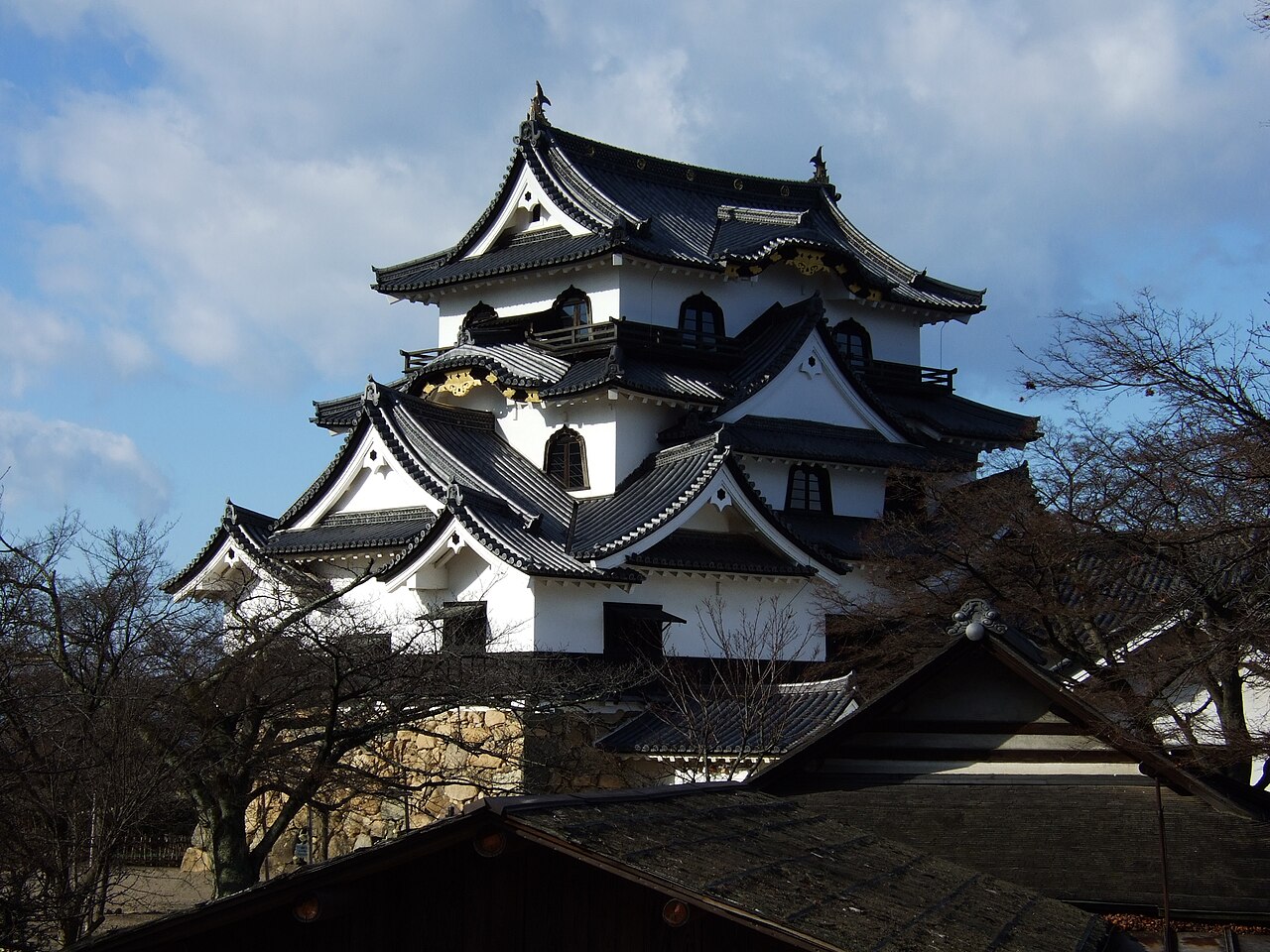
Hemp and ramie weaving in Ōmi is old. The craft’s roots reach back to the Kamakura and Muromachi periods, when bast-fiber cloth was already a regional product. The decisive refinement came in the Edo period under the Hikone domain, ruled by the Ii clan from Hikone Castle on the lake’s eastern shore. Domain patronage encouraged and protected the weaving, and the cloth matured into a renowned jōfu — a high-grade summer-kimono fabric prized for its coolness against the skin. In 1977, METI designated Omi Jofu a Traditional Craft of Japan.
- Kamakura–Muromachi eras — Hemp and ramie weaving established as a regional product of Ōmi province.
- 1603–1868 (Edo period) — Hikone domain (Ii clan) protects and refines the cloth into a famed summer-kimono fabric.
- Edo period — Ōmi merchants carry the cloth along their nationwide trade routes under the sanpō-yoshi ethic.
- 19th century — Hand-twisted yarn and indigo kasuri become the cloth’s defining signatures.
- 1977 — Designated a Traditional Craft by Japan’s METI.
- 2026 — Still woven on the Kotō plain, now reaching international buyers as home textiles like noren.
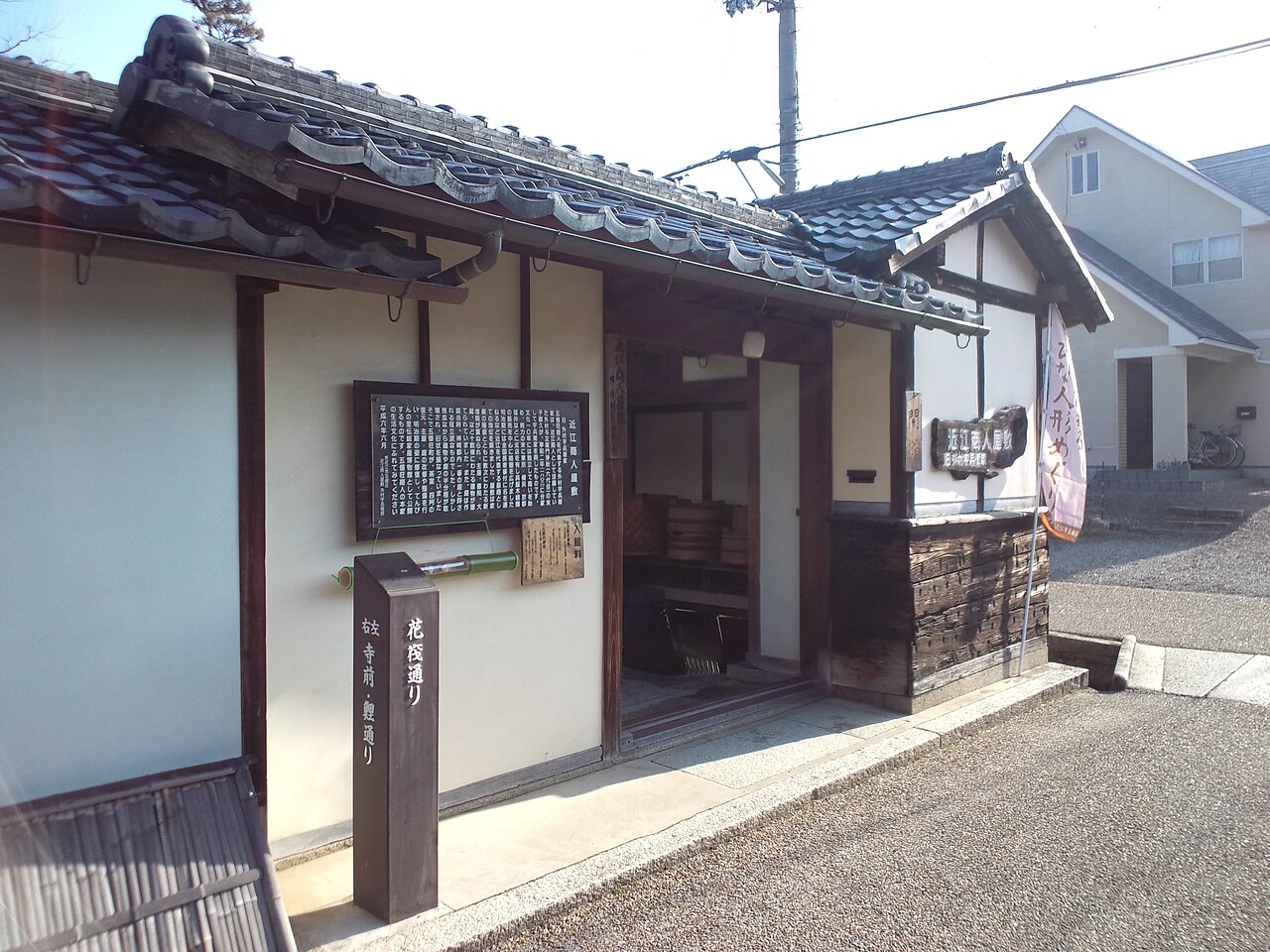
The cloth’s reach owed much to the Ōmi merchants (近江商人), the trading families who fanned out from this very plain across Edo-period Japan. They are remembered for sanpō-yoshi — the principle that a sale should be good for the seller, good for the buyer, and good for society. Ōmi textiles, including jōfu, rode those routes to markets far from Lake Biwa, which is part of why the cloth became known nationally rather than staying a local specialty.

That commercial culture and the craft endure together on the same ground. The merchant houses preserved in districts like Gokashō, in Higashiōmi, are physical reminders of the trading wealth the regional textile economy helped build — the same plain, the same towns, where weavers still produce ramie cloth today. Omi Jofu is no longer a daily summer kimono for most households, but the weaving lineage persists, and home furnishings such as the noren keep the cloth in continuous use.
Seasonally, the cloth belongs to summer. Ramie was the fiber of choice for the hot, humid Japanese months precisely because it is cool, crisp, and quick to release moisture — the reason a ramie noren reads as a warm-weather furnishing. Hung in a doorway between a kitchen and a hall, or across a shop entrance, it moves with the air and softens the light without shutting a space off, which is the quiet practicality the Kotō weavers built into the cloth in the first place.
Conclusion — which buyer type are you?
Other ways to approach this purchase
❓ Frequently Asked Questions
Does Amazon JP ship an Omi Jofu noren internationally?
Many Japanese textile and home items ship to most major destinations, including the US and EU. Availability can vary by retailer and country, so check the shipping options before ordering. For Japan-only shops, a proxy service like Buyee or Tenso can forward the item.
How do I wash and care for ramie noren?
Treat it like fine linen. Hand-wash or use a gentle cycle in cool water, wash separately at first because natural indigo can bleed, and avoid tumble drying. Ramie creases readily, so steaming or light pressing keeps it looking crisp. Always follow the care label on the specific item.
Why is the price higher than a regular noren?
Omi Jofu is hand-woven ramie with hand-twisted yarn and indigo kasuri dyeing — labor-intensive steps that machine-made printed cotton or polyester noren skip. You are paying for the material, the craft, and a METI-designated lineage rather than a printed pattern.
Will every piece look exactly like the photo?
No. Kasuri ikat and hand-weaving produce slight variation in pattern and texture from piece to piece, and natural indigo varies in tone. Treat any example image as representative rather than exact — the irregularity is a feature of the craft.
Is a ramie noren suitable for winter?
It is best understood as a warm-weather furnishing. Ramie is cool and breathable by design, so it filters air and light rather than insulating a room. Households often hang ramie noren in summer and switch to heavier cloth in colder months.
What size should I expect, and will it fit my doorway?
Noren dimensions vary by piece. Measure your doorway width and the drop you want, then confirm the dimensions before buying. Noren are typically hung from a rod through a top sleeve.
jpmono.com is curated by a Japan-based editorial team (working out of Toyama in the Hokuriku region and Nara in Kansai) and is independent. We do not take payment from the makers we feature; income comes from affiliate links. We do not physically test every product — we read maker specifications and craft references.
Affiliate disclosure: jpmono.com may earn a commission on qualifying purchases made through links on this page, at no additional cost to you.