![Kawashiri Usuba Vegetable Knife: Kumamoto’s Port-Town Forged Blade [2026]](https://jpmono.com/wp-content/uploads/2026/05/japan-map-regions-and-prefectures-800x1050.png)
The Kawashiri usuba is a single-bevel vegetable knife forged in Kawashiri (川尻), a former river port at the mouth of the Midorikawa that is now part of Kumamoto City’s Minami ward. For centuries the town’s blacksmiths worked iron that arrived by boat across the Ariake Sea, first into farm tools, ship fittings, and swords, and later into the kitchen blades that carry the Kawashiri Uchihamono (川尻刃物, “Kawashiri edged tools”) name — a Kumamoto Prefecture designated traditional craft.
An usuba is not a general-purpose knife. It is the professional’s vegetable blade: ground on one side only, with a thin, flat edge built for straight-down cuts, precise peeling, and the kind of paper-thin katsuramuki work that Japanese cuisine treats as a basic skill. The single bevel is what makes it accurate and what makes it demanding — it rewards a cook who is willing to learn its geometry and to maintain a carbon-steel edge.
This is the first Kumamoto knife on our list, and it comes from a blade lineage distinct from the metal-inlay Higo Zogan tradition that shares the same Hosokawa-domain heritage. Below we cover who the knife suits, what the published specs actually say, how it compares to other Japanese single-bevel and forged blades we have written up, and every practical path to buying one from outside Japan.
🔄 Updated:
⏱️ Read time: ~9 min
- Who this is for — and who should skip it
- Product overview (from published specs)
- 📍 Where this comes from — place, era, and the craft tradition
- Buying options across stores
- What it does well
- Weaknesses and things to verify before buying
- Conclusion — which buyer type are you?
- Other ways to approach this purchase
- ❓ Frequently Asked Questions
Who this is for — and who should skip it
- Do a lot of vegetable prep and want straight, clean cuts rather than a rocking motion
- Already own and maintain single-bevel or carbon-steel knives, or want to learn
- Value a hand-forged blade with a documented regional lineage over a factory brand
- Will dry the blade after use and accept a natural patina on carbon steel
- Want a Kumamoto craft object with a clear, verifiable Higo blacksmith heritage
- Want one do-everything knife — a double-bevel santoku or gyuto suits you better
- Are left-handed and buying a stock right-hand-bevel blade (single-bevels are handed)
- Will leave the knife wet in a sink or run it through a dishwasher
- Prefer stainless steel and zero maintenance
- Expect confirmed purchase terms; the product information here is limited
Product overview (from published specs)
The specifications below reflect the general Kawashiri Uchihamono usuba category and the maker’s published description of the craft rather than fabricated measurements.
| Attribute | Detail | Source |
|---|---|---|
| Type | Usuba (薄刃) — single-bevel vegetable knife | Maker direct |
| Edge geometry | Single bevel (kataba), flat profile for straight-down cuts | Maker direct |
| Blade steel | Carbon steel edge (typically aogami/shirogami) forge-welded to soft iron body | Maker direct |
| Construction | Hand-forged (uchihamono), two-layer hard/soft laminate | Maker direct |
| Origin | Kawashiri, Minami ward, Kumamoto City, Kumamoto Prefecture | Maker direct |
| Tradition | Kawashiri Uchihamono — Kumamoto Prefecture designated traditional craft | Maker direct |
| Price | Not confirmed in the available product information — check the current product page | Amazon JP Global Store |
Prices in USD, where shown elsewhere in this article, are approximate and depend on the current exchange rate; the ¥150/USD baseline is for orientation only.
📖 Glossary — key terms
Usuba (薄刃) — literally “thin blade.” A single-bevel vegetable knife used professionally for peeling and precise straight cuts. The Kansai (Kamagata) and Kanto (square-tipped) shapes differ regionally.
Uchihamono (打刃物) — “struck/forged edged tools.” Blades made by hand-forging rather than stamping, the defining method of regional Japanese knife towns.
Kataba (片刃) — “single bevel.” The blade is ground on one face only, giving thinner, more accurate cuts but making the knife handed (right- or left-hand versions).
Aogami / Shirogami (青紙・白紙) — “blue paper / white paper” carbon steels from Hitachi Metals, named for the wrapper color. Prized for taking a very keen edge; they require drying to avoid rust.
Higo (肥後) — the old province name for present-day Kumamoto. The Higo blacksmith trades were nurtured under the Kato and later Hosokawa domain lords.
Higo Zogan (肥後象嵌) — Kumamoto’s damascene metal-inlay craft. It shares the Hosokawa-domain heritage but is a distinct lineage from the Kawashiri blade tradition.
Katsuramuki (桂剥き) — rotary peeling a vegetable such as daikon into one continuous paper-thin sheet; the classic test of usuba control.
📍 Where this comes from — place, era, and the craft tradition

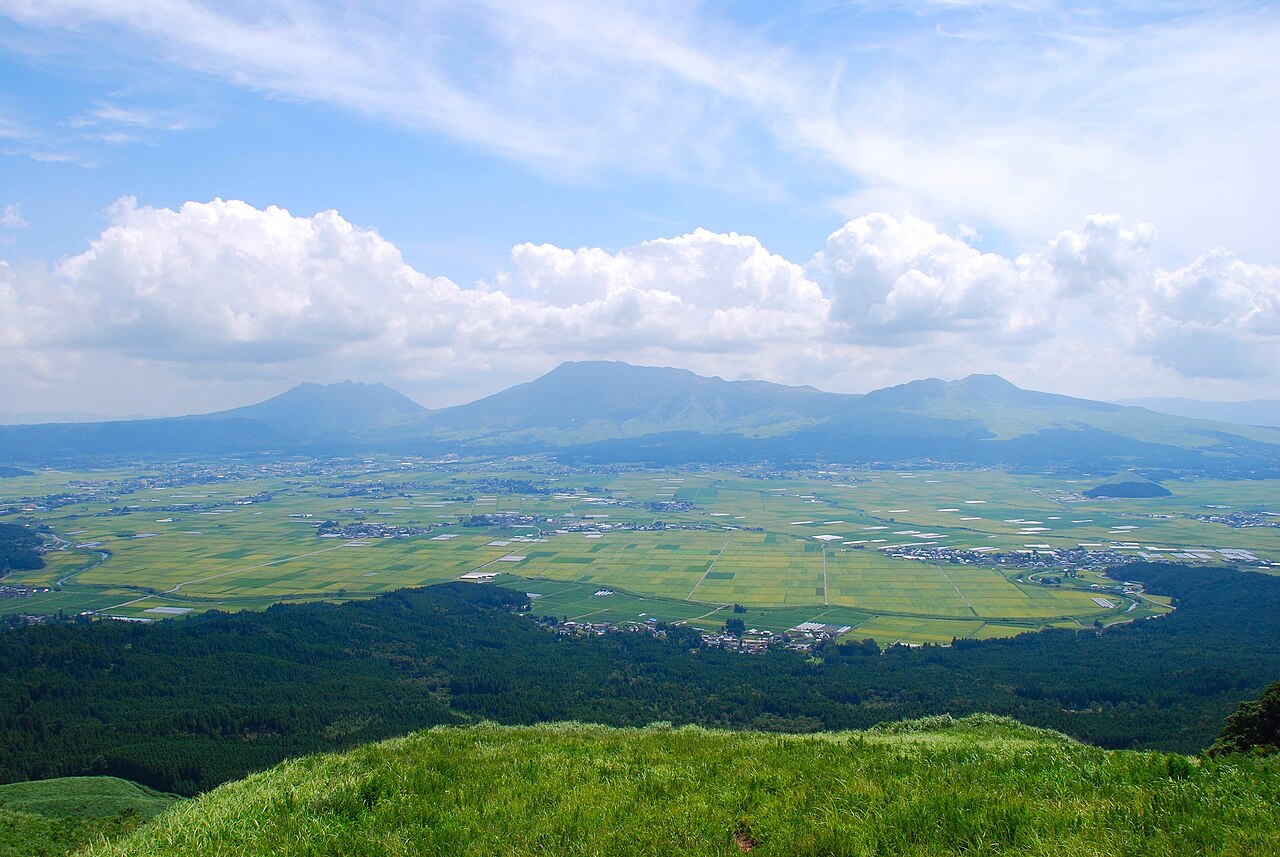
Kumamoto sits near the center of Kyūshū, Japan’s southwestern main island. Its landscape is defined by two facts of geography: the vast caldera of Mount Aso to the east, one of the largest active volcanic craters in the world, and the flat, water-rich Ariake Sea plain to the west, cut by the Midorikawa (緑川, “Green River”). That combination — volcanic uplands feeding clean rivers down to a shallow tidal sea — shaped both the farming and the trade that a blacksmith town depends on.
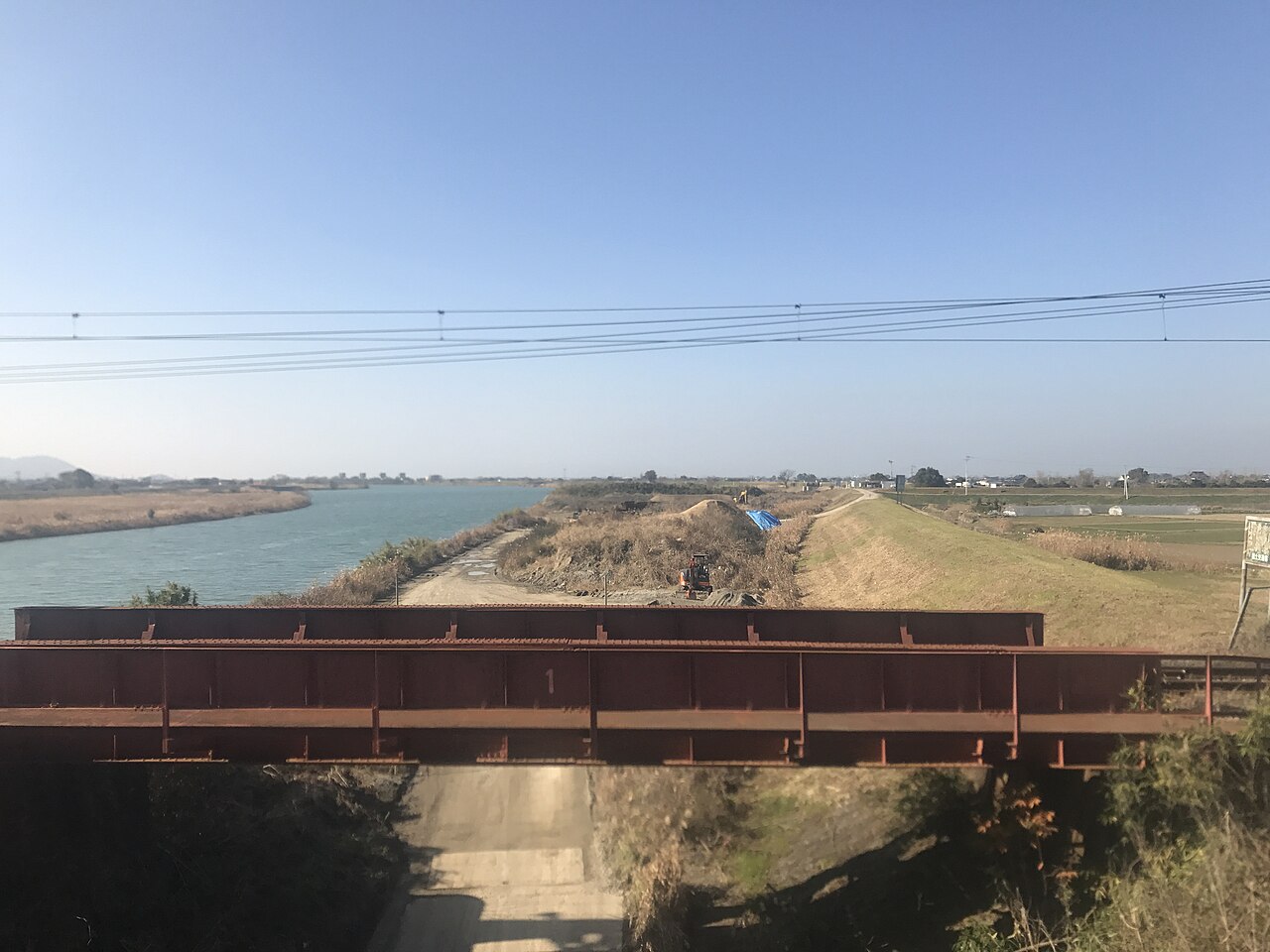
Kawashiri grew up at the mouth of the Midorikawa, where the river meets the Ariake Sea. From the Kamakura and Muromachi periods it was one of Higo province’s great river ports — a transshipment point where iron, rice, salt, and timber moved between the sea lanes and the interior. Ports concentrate two things a blade town needs: raw metal arriving cheaply by boat, and a steady market of farmers, boatwrights, and merchants who need tools. Kawashiri’s smiths supplied all three of the trades a medieval port demanded — agricultural implements, ship fittings, and swords.
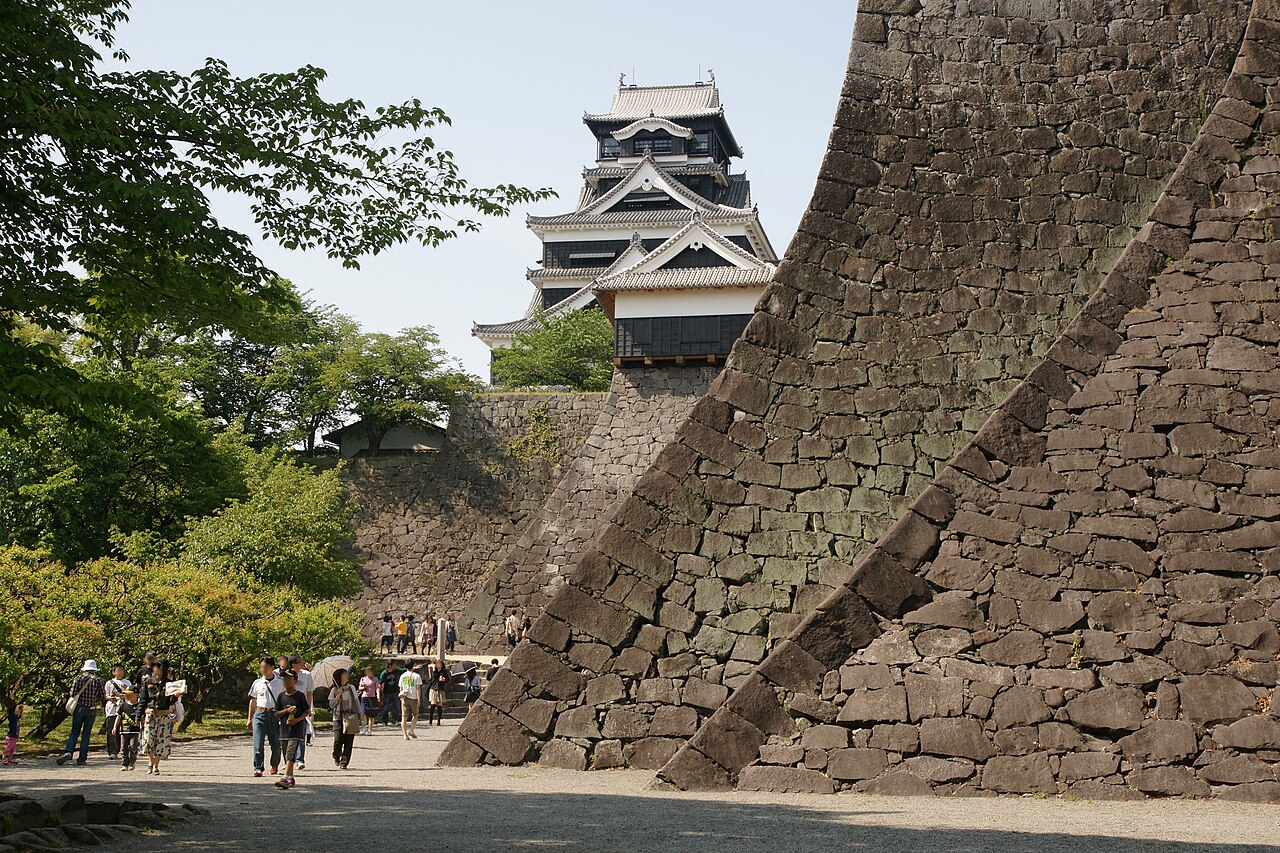
The town’s ironwork gained its most important patrons in the early modern period. When Katō Kiyomasa took Higo after 1588 and built Kumamoto Castle (completed 1607), and when the Hosokawa clan succeeded to the domain in 1632, the local metal trades were protected and organized under domain oversight. A castle and its retainers need swordsmiths and armorers; a productive plain needs sickles and hoes; a busy port needs nails and fittings. Under that patronage Kawashiri’s forges consolidated into the tradition now recognized as Kawashiri Uchihamono, a Kumamoto Prefecture designated traditional craft.
- 13th–14th c. — Kawashiri develops as a Midorikawa river port under Kamakura- and Muromachi-period Ariake Sea trade.
- 15th–16th c. — Local blacksmiths supply farm tools, ship fittings, and swords to the port economy.
- 1607 — Katō Kiyomasa completes Kumamoto Castle; the domain concentrates metal trades.
- 1632 — The Hosokawa clan takes Higo and continues to patronize Kawashiri ironwork.
- Edo period — Sword and armor demand gives way to farm and kitchen blades as the peace holds.
- Modern era — Kawashiri Uchihamono is recognized as a Kumamoto Prefecture designated traditional craft.
- 2026 — A handful of Kawashiri forges still hand-forge kitchen blades, the usuba among them.
What “still being made here” means in Kawashiri is a small number of working forges rather than a large industry. The single-bevel usuba is one of the trade’s most demanding products because the laminate must be forge-welded and then ground true on one face — the same hard-edge-on-soft-body method that produced the town’s swords, adapted to the kitchen. The technique is continuous with the Higo blacksmith line; the tools have simply changed with the times.
“The iron that once arrived by boat to be beaten into swords and ship nails is now beaten into the thin, honest edge of a vegetable knife — the port is gone, but the hammer is not.”
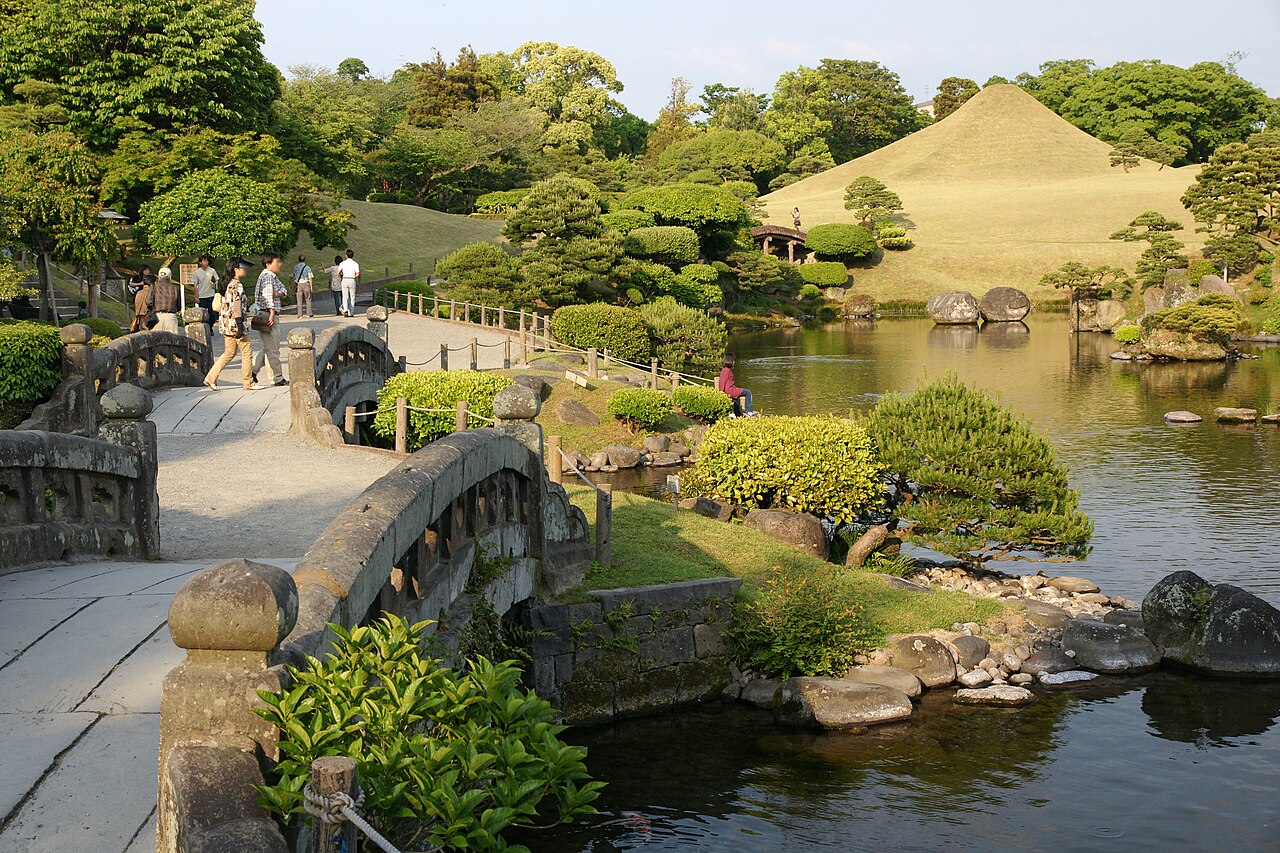
Kumamoto’s craft identity did not stop at the forge. The Hosokawa lords, cultured patrons as well as warriors, laid out Suizenji Jōjuen — a strolling garden begun in the 17th century whose miniature landscape includes a small “Mount Fuji.” The same domain continuity that preserved a garden also preserved a blade town, and both belong to the broader Higo heritage that also produced the Higo Zogan metal-inlay craft. The knife and the inlay share a lord; they do not share a workshop.
Other hand-forged Japanese blades we have covered — useful for comparing shapes, steels, and price tiers before committing to a single-bevel usuba.
 Saga Hizen ajikiri knife →
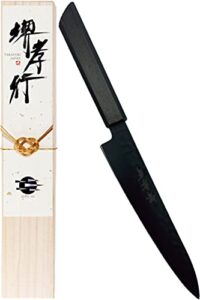 Oita Bungo petty knife →
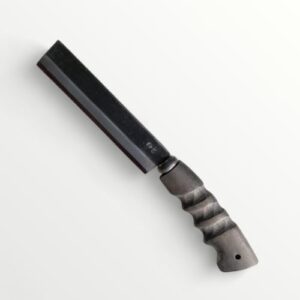 Miyakonojo nata hatchet →
Hakata Hasami scissors →
Okinawa kitchen knife →
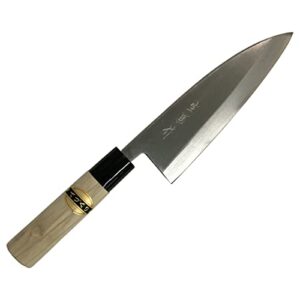 Echizen santoku →
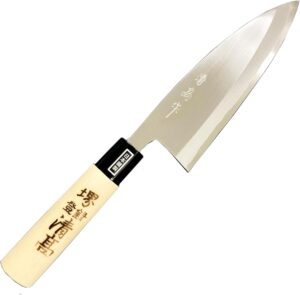 Sakai deba knife →
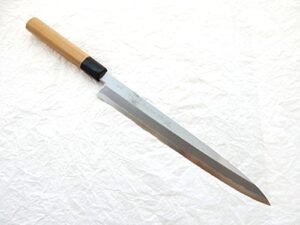 Tsukiji yanagiba →
Buying options across stores
The table below is a routing guide to buying paths, not a live price sheet; prices for hand-forged Kawashiri usuba knives vary by maker and retailer.
| Store | Item / Variant | Price (JPY / USD est.) | Notes |
|---|---|---|---|
| 🇺🇸 Amazon.com (US) | Browse Japanese kitchen knives | varies (USD) | Best if you are shopping from the US — Prime shipping, USD pricing, no international customs. Amazon US carries hand-forged Japanese kitchen knives from many makers, useful for comparing geometry and steel types. This exact Kawashiri usuba is sourced from Japan (next row). |
| 🇯🇵 Amazon JP Global Store | Kawashiri usuba — | Check the current product page for details | Ships internationally from Japan to most major destinations. This is the product page for the knife in this guide. |
| Maker direct | Kawashiri Uchihamono workshops | Varies (JPY) | Some Kawashiri forges sell direct or through Kumamoto craft outlets; most sites are Japanese-language and may not ship abroad. |
| Proxy services (Buyee / Tenso) | Japan-only purchases, forwarded | Item + fee + forwarding | Use when a purchase does not ship internationally; adds a service fee and a forwarding leg. Additional shipping and customs costs may apply. |
What it does well
Weaknesses and things to verify before buying
- Single-bevel is handed. Stock usuba are ground for right-handed use; left-handed cooks need a left-hand version, which is usually special-order and costs more. Confirm handedness before buying.
- Carbon steel rusts. Aogami/shirogami will stain and can corrode if left wet. It must be dried immediately after washing and given a light oil film for storage; it is not dishwasher-safe.
- Not a general-purpose knife. An usuba excels at vegetables and struggles with proteins and hard items. It is a specialist, best paired with a santoku or deba rather than used alone.
- Learning curve. The single bevel steers the blade; without practice, cuts can drift. Skills like katsuramuki take time to develop.
- Sharpening skill required. A single-bevel edge is maintained differently from a Western knife — flat on a whetstone with attention to the back (uraoshi). Pull-through sharpeners will damage it.
- Availability needs confirmation. Size, exact steel, and current availability should all be confirmed with the seller before ordering.
- International shipping and customs. Availability via Amazon JP Global Store and duties above local thresholds vary by country; verify the item ships to your destination before checkout.
Conclusion — which buyer type are you?
Other ways to approach this purchase
❓ Frequently Asked Questions
What is an usuba, and how is it different from a santoku?
Does the Kawashiri usuba ship internationally?
How do I care for the carbon-steel blade?
Is this suitable for a left-handed cook?
Where exactly is Kawashiri, and how does it relate to Higo Zogan?
Why does the article not list a firm price?
jpmono.com is curated by a Japan-based editorial team (working out of Toyama in the Hokuriku region and Nara in Kansai) and is independent. We do not take payment from the makers we feature; income comes from affiliate links. We do not physically test every product — we review maker specifications and craft references.
🤖 This article was drafted with AI assistance and edited against the maker’s published craft description. Specifications and history are drawn from that craft information; where data was thin, the limitation is stated in the text.
Affiliate disclosure: jpmono.com may earn a commission on qualifying purchases made through links on this page, at no additional cost to you.