![Onta-yaki Tobikanna Serving Plate: Oita Mingei Folk Pottery Guide [2026]](https://jpmono.com/wp-content/uploads/2026/05/japan-map-regions-and-prefectures-800x1050.png)
Onta-yaki (小鹿田焼, “Onta ware”) is not a brand so much as a village. In the mountain hamlet of Sarayama, above the city of Hita in Oita Prefecture, roughly ten family kilns have been turning the same local clay since 1705, passing the craft strictly from father to eldest son. A tobikanna (飛び鉋, “jumping plane”) serving plate from these kilns carries a rhythm you can read with your fingers — a ring of fine chatter marks cut into the spinning clay by a springy steel blade.
What makes Onta-yaki notable internationally is that it is a living folk-pottery tradition, not a revival staged for tourists. The philosopher Yanagi Soetsu praised it in 1931, the British potter Bernard Leach worked at the village in 1954 and again in 1964, and in 1995 the technique was designated an Important Intangible Cultural Property. The clay is still crushed by river-driven wooden mortars — karausu — whose slow thud is listed among Japan’s “100 Soundscapes.”
This guide is written from a Japan-based editor’s perspective for readers buying from outside Japan. It covers what the tobikanna plate is, how to recognize genuine handwork, how to use and care for it, and how it compares with other folk-pottery and Kyushu craft traditions.
🔄 Updated: July 3, 2026
⏱ Read time: ~11 min
- Who this is for — and who should skip it
- Product overview (from published specs)
- 📍 Where this comes from — place, era, and the craft tradition
- Where to buy
- What it does well
- Weaknesses and things to verify before buying
- Conclusion — which buyer type are you?
- Other ways to approach this purchase
- ❓ Frequently Asked Questions
Who this is for — and who should skip it
- Want a genuine mingei (民藝, “folk craft”) piece with a documented, unbroken lineage
- Like tactile surface decoration — the tobikanna rhythm reads by touch, not just sight
- Serve food often and want a sturdy everyday stoneware plate, not a display-only object
- Appreciate small variation between pieces as a feature, not a defect
- Value provenance: one family, one kiln, father-to-son
- Expect machine-perfect symmetry and identical repeat pieces
- Need a guaranteed exact size, weight, or glaze color before buying
- Want dishwasher-and-microwave-certified tableware with printed marks
- Are shopping purely on lowest price rather than provenance
- Cannot accommodate international shipping times or possible customs handling
Product overview (from published specs)
Onta-yaki is sold by kiln and by piece, not by a uniform product code. Each plate is hand-thrown and hand-decorated, so size and pattern vary rather than following a mass-produced standard. The table below focuses on the general characteristics of the craft and its designation.
| Attribute | Value (per available data) |
|---|---|
| Craft | Onta-yaki (小鹿田焼) stoneware, Sarayama, Hita, Oita |
| Item type | Serving plate / dish, hand-thrown |
| Decoration | Tobikanna chatter-marking; some pieces also show hakeme brushwork or nagashi-gake poured glaze |
| Body | Iron-rich local clay, reddish-to-brown tone (varies by kiln and firing) |
| Size / weight | Unconfirmed — varies by piece |
| Origin / lineage | Founded 1705; Important Intangible Cultural Property (1995) |
Because each plate is handmade, dimensions, pattern, and price can vary from one piece to another. Treat unconfirmed details as individual rather than universal.
📖 Glossary — key terms
- Onta-yaki (小鹿田焼) — folk pottery made in the Sarayama hamlet of Hita, Oita, since 1705.
- Tobikanna (飛び鉋, “jumping plane”) — decoration made by holding a springy steel blade against the spinning clay so it skips and cuts a ring of rhythmic chatter marks.
- Hakeme (刷毛目, “brush marks”) — sweeping white slip applied with a coarse brush, leaving visible strokes.
- Nagashi-gake (流し掛け, “pouring”) — glaze ladled and poured over the piece so it runs in bands.
- Karausu (唐臼) — river-driven wooden tilt-hammer that crushes raw stone into clay; the sound is listed among Japan’s 100 Soundscapes.
- Mingei (民藝, “folk craft”) — the movement, named by Yanagi Soetsu, that values beauty in ordinary handmade objects.
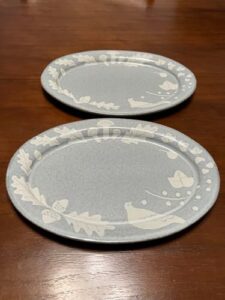
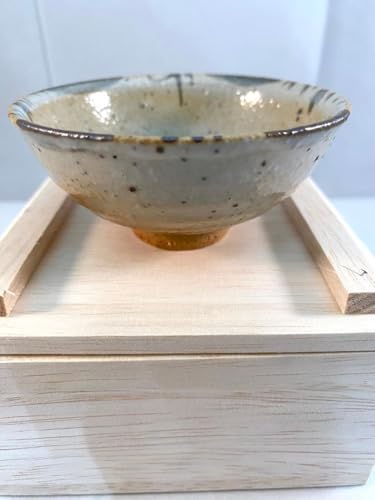
Related pieces we have covered — same kilns, same prefecture, and other folk-pottery and Kyushu craft to compare against.
📍 Where this comes from — place, era, and the craft tradition

Oita sits on the eastern side of Kyūshū, Japan’s southwestern main island, facing the Seto Inland Sea toward Shikoku. It is a province of volcanic highlands and hot springs — Beppu and Yufuin are its most famous — and that geology matters here: the same iron-rich, mineral-heavy ground that feeds the hot springs also produces the ferruginous clays that fire to Onta-yaki’s characteristic reddish-brown. Sarayama itself is not on the coast or in a city. It is a small hamlet folded into the hills above Hita, chosen centuries ago precisely because it had the three things a folk kiln needs: usable clay in the hillside, a stream fast enough to power stone-crushing mortars, and wood to fire the kilns.
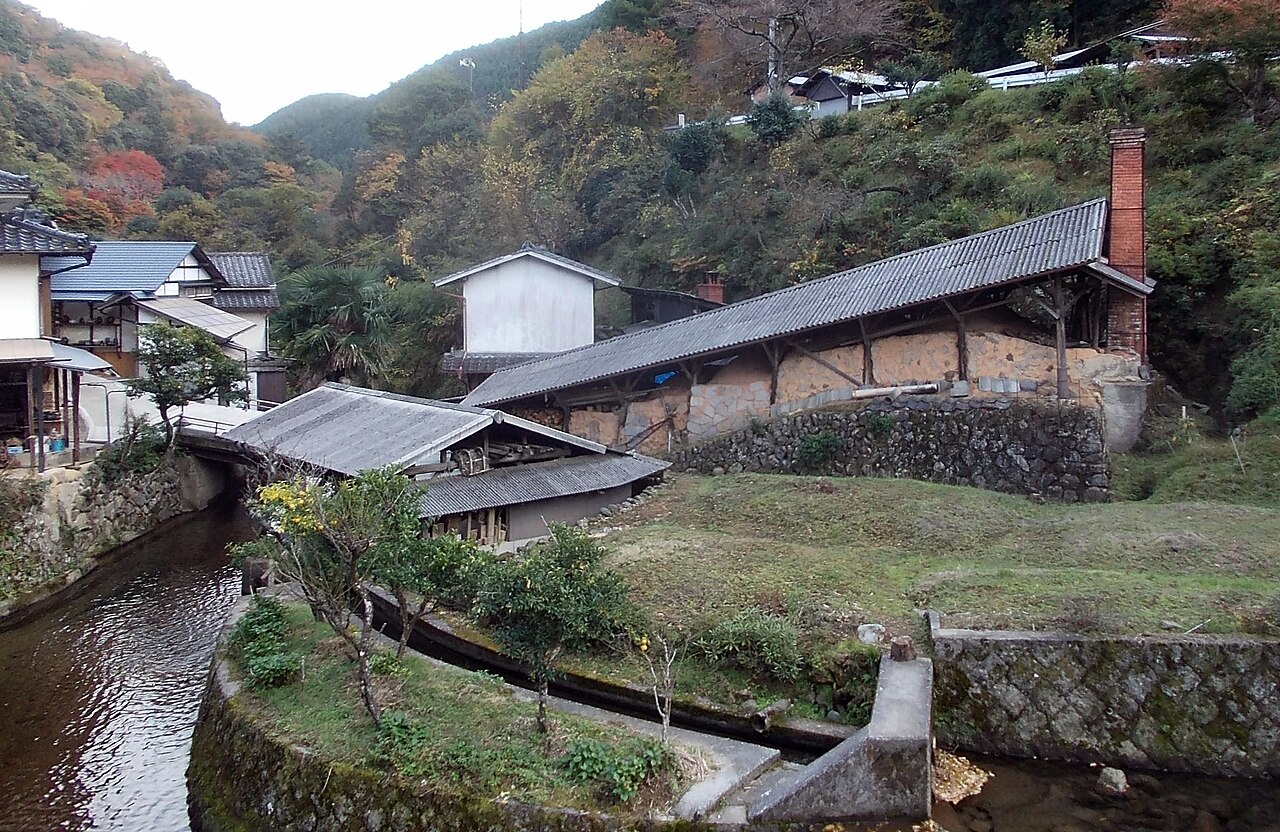
The kiln line began in 1705, when a potter named Kuroki Jubei was brought over from the Koishiwara kilns just across the prefectural border in Fukuoka to open a pottery at Sarayama. That parent-and-child relationship between Koishiwara and Onta still shows in the shared decorative vocabulary — tobikanna, hakeme, and nagashi-gake belong to both. What sets Onta apart is how little the village has industrialized. The raw stone is still broken down by karausu, river-driven wooden tilt-hammers that rise and fall with the stream, and the low, patient thud of those hammers is registered among Japan’s official “100 Soundscapes.” The technique passes strictly from father to eldest son, which is one reason the roster of kilns has stayed at roughly ten families for generations rather than expanding.
- 1705 — Kuroki Jubei, brought from the Koishiwara kilns of Fukuoka, opens a pottery at Sarayama, Hita.
- Edo period — The village settles into ~10 family kilns, technique passed father-to-eldest-son, clay crushed by river-driven karausu.
- 1931 — Yanagi Soetsu praises Onta-yaki in his mingei writings, drawing national attention to the village.
- 1954 — British potter Bernard Leach works at the village, then returns in 1964, spreading its fame internationally.
- 1995 — The Onta-yaki technique is designated an Important Intangible Cultural Property.
- 2026 — The same ~10 families still throw and decorate by hand in Sarayama.
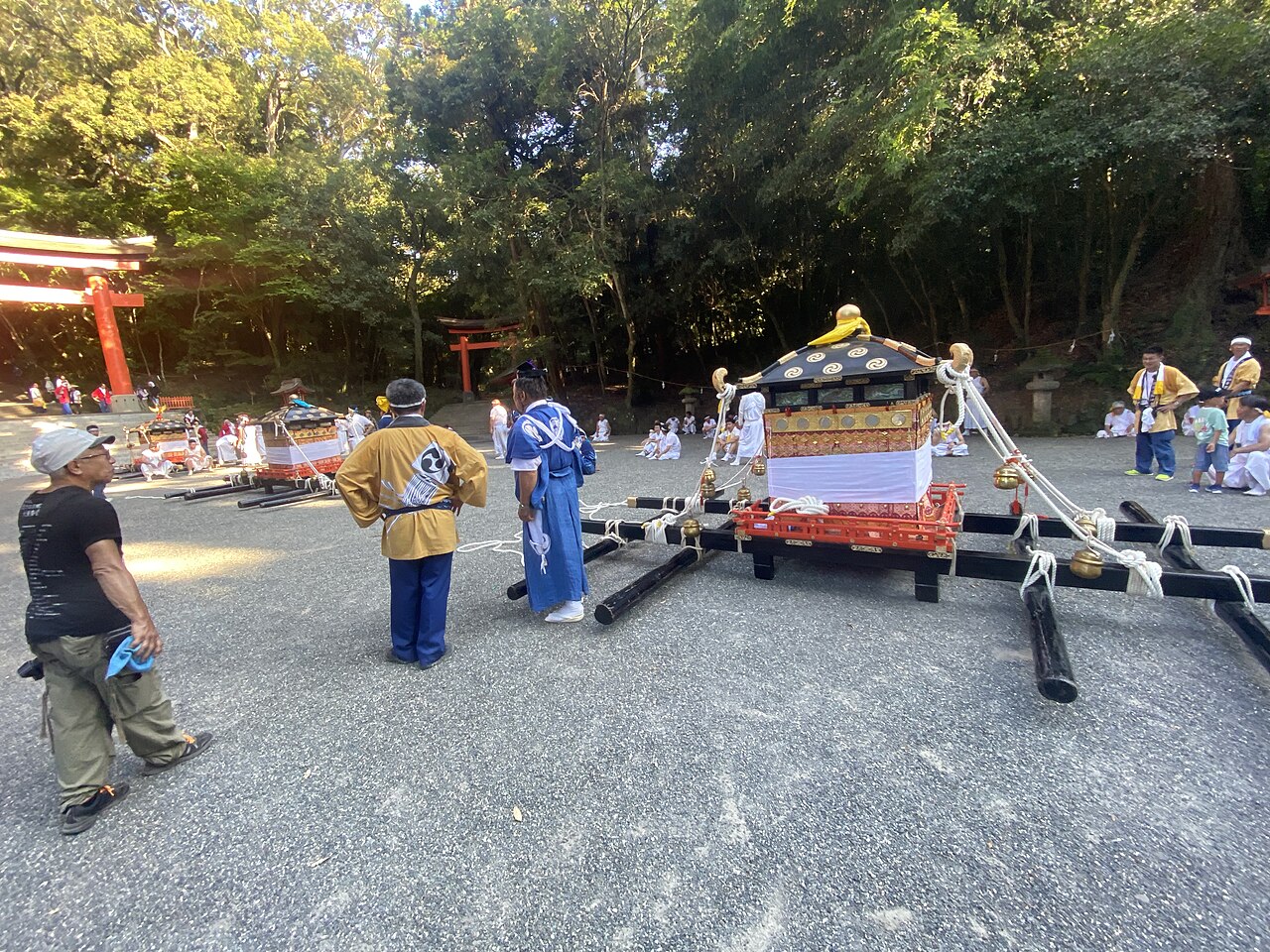
Oita’s cultural continuity runs far deeper than the kilns. Usa Jingu, in the north of the prefecture, is the head shrine of Japan’s tens of thousands of Hachiman shrines, a religious anchor that has drawn pilgrims to this corner of Kyūshū for well over a millennium. That long, settled history is part of why a village craft could survive here uninterrupted — Onta was never a boomtown that rose and fell, but a stable rural district within an old, continuously inhabited province.
“The clay is crushed by the river, thrown by hand, and marked with a blade that skips on its own rhythm — the plate is a record of a place, not a product of a factory.”
The volcanic highlands that define Oita — the same forces that steam through Beppu and rise as Mount Yufu over Yufuin — are also the terroir of the craft. The clays that fire reddish and iron-dark come from this mineral-heavy ground, and the abundant firewood and fast mountain streams gave the village its karausu power and its kiln fuel. To understand why Onta-yaki looks the way it does, it helps to picture the landscape it is dug from.
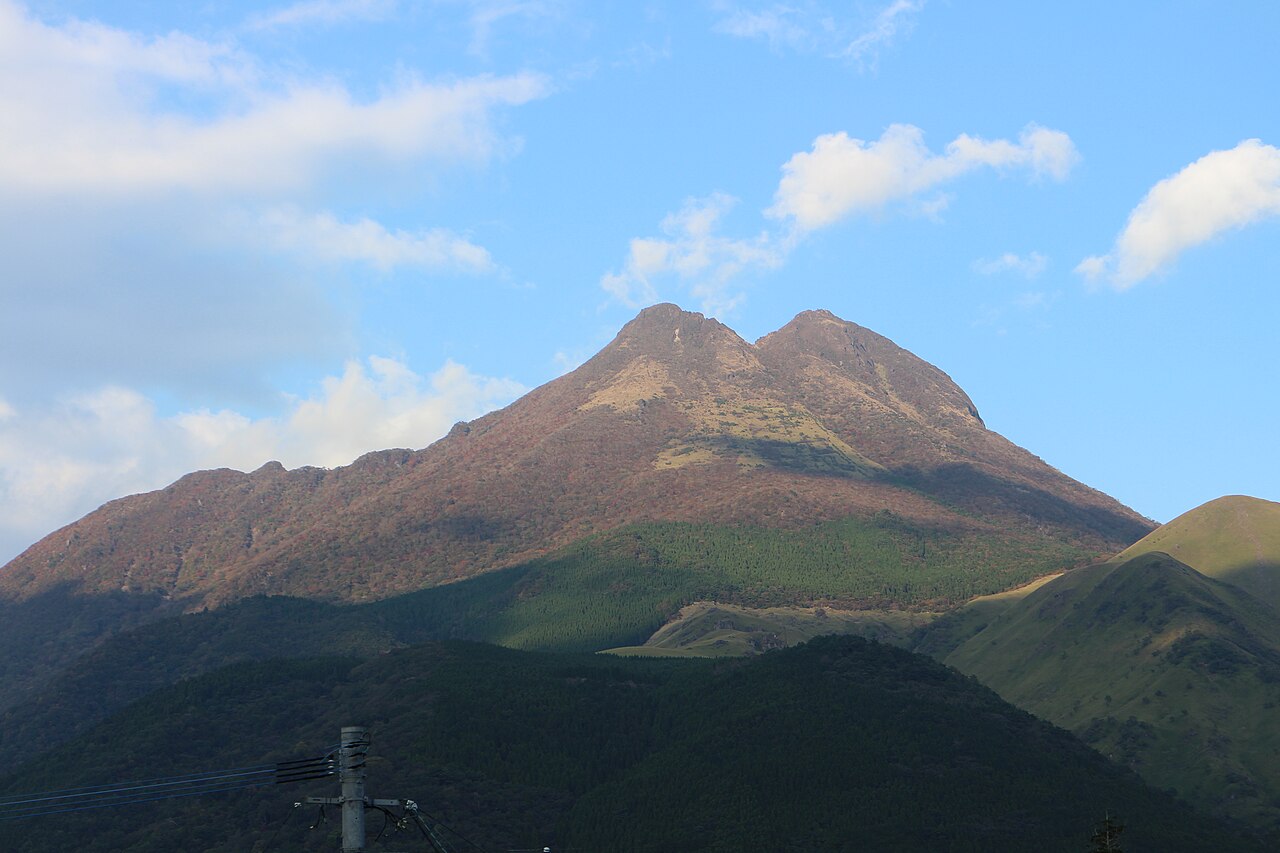
For the international buyer, the practical takeaway is this: an Onta-yaki plate is one of the few household objects you can own where the entire supply chain — the clay, the water power, the hand, the family, the kiln — sits inside a single mountain hamlet, and has for three centuries. That is what “still being made here” actually means.
Where to buy
Prices and stock for hand-thrown folk pottery move frequently, and the fetched data returned no confirmed live price for this craft. JPY is the authoritative currency; USD figures below are approximate estimates at a ¥150/USD baseline as of mid-2026. Always confirm the current figure on a retailer before buying.
| Store | Item / Variant | Price (JPY + USD est.) | Notes |
|---|---|---|---|
| 🇺🇸 Amazon.com (US) | Browse Japanese folk-pottery serving plates | varies (USD) | Best if you are shopping from the US — Prime shipping, USD pricing, no international customs. Amazon US carries Japanese stoneware and folk-pottery plates from various makers for comparing style and price tiers; the specific Onta-yaki piece here is sourced from Japan (next row). |
| Amazon JP Global Store | Onta-yaki tobikanna serving plate | — | Where this specific item is sourced. Ships internationally from Japan to most major destinations. |
| Maker direct | Individual Sarayama kilns | Varies by kiln | The ~10 family kilns sell on-site and through regional galleries; most do not ship overseas directly. Best for in-person visits. |
| Proxy services (Buyee / Tenso) | Japan-only stores with forwarding | Item price + forwarding fee | Useful when a piece is listed only on Japan-domestic shops. Adds a handling fee and a consolidation step; customs may apply above local thresholds. |
Prices in USD are approximate and depend on the current exchange rate. Amazon JP Global Store ships many household items internationally; shipping to the US and EU commonly runs roughly $15–$40 depending on size and speed, and customs duties may apply above local thresholds.
What it does well
Weaknesses and things to verify before buying
- Sizes vary by piece. Choose a diameter suited to your intended use.
- Price was not confirmed. Compare current offers; availability may change.
- Every plate differs. Color tone, mark spacing, and glaze runs vary piece-to-piece. If you need matched sets, buy them together and expect some variation even then.
- Care is hand-first. As with most hand-thrown reduction-fired stoneware, treat it as hand-wash and avoid sudden thermal shock and microwave use unless the seller states otherwise; dishwasher and microwave certification is not documented here.
- International logistics add cost and time. Global Store shipping, possible customs duties, and slower delivery all apply when buying from outside Japan.
- Supply is small by design. With only about ten kilns, specific pieces may sell out and restocking is not guaranteed.
Conclusion — which buyer type are you?
Other ways to approach this purchase
❓ Frequently Asked Questions
Is Onta-yaki dishwasher and microwave safe?
With most hand-thrown reduction-fired stoneware, hand-wash and avoid sudden temperature changes unless the maker explicitly confirms dishwasher or microwave use.
Will each plate look exactly like the photo?
No. Each piece is hand-thrown and hand-decorated, so tone, mark spacing, and glaze runs vary. That variation is a feature of folk pottery, not a defect. If you want a matched set, buy the pieces together.
Can I buy it from outside Japan?
Hand-thrown pottery should be packed with care for international shipping. Carrier charges and customs duties vary by destination, and Japan-only makers may require a proxy service.
What is tobikanna, exactly?
Tobikanna (“jumping plane”) is a decoration made by holding a springy steel blade against the clay as it spins, so the blade skips and cuts a ring of rhythmic chatter marks. It is Onta-yaki’s signature technique, shared with the neighboring Koishiwara kilns of Fukuoka.
Why is Onta-yaki considered important?
It is a rare surviving folk-pottery village where about ten families still crush clay with river-driven karausu mortars and pass the craft father-to-son. Yanagi Soetsu praised it in 1931, Bernard Leach worked there in 1954 and 1964, and the technique was designated an Important Intangible Cultural Property in 1995.
How much does it cost?
Onta-yaki pieces in this style vary in price with kiln, size, glaze, and handwork. Compare those factors in JPY; any USD conversion is only an exchange-rate estimate.
How is it different from the Onta-yaki mug you covered?
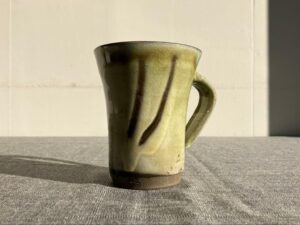
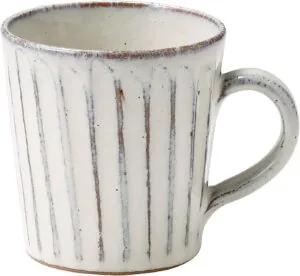
Both come from the same Sarayama kilns and share the tobikanna vocabulary. The difference is form and use: the plate is a flat serving surface that shows the radial chatter-marking across an open face, while the mug is a drinking vessel. Compare them via the cross-link box above.
jpmono.com is curated by a Japan-based editorial team working out of Toyama in the Hokuriku region and Nara in Kansai, and is independent. We do not take payment from the makers we feature; we work from maker specifications and documented craft history.
This article was drafted with AI assistance and reviewed against documented craft history. Dimensions, prices, and care details can vary by kiln and piece.
Affiliate disclosure: jpmono.com may earn a commission on qualifying purchases made through links on this page, at no additional cost to you.