![Sato-ya Noshiume Plum Jelly Sheets (乃し梅, 8-piece box) — Yamagata’s Edo-Era Castle-Town Sweet from the Safflower Trade Route [2026 Guide for International Readers]](https://jpmono.com/wp-content/uploads/2026/05/japan-map-regions-and-prefectures-800x1050.png)
- What it is: A paper-thin sheet of ume plum cooked with sugar and agar, set firm, cut into strips, and sandwiched between two slips of dried bamboo sheath — a sweet, not a pickle.
- Made in: Yamagata City, Yamagata Prefecture (Tōhoku) — by Noshiume Honpo Sato-ya (乃し梅本舗 佐藤屋), founded 1821 and now in its eighth generation.
- Price band: Boxed 8-piece gift format; per-piece cost is lower than the 5-piece box.
- Best for: Readers who want a genuinely sour-first wagashi that survives international post — shelf-stable, flat, individually wrapped.
- Skip if: You want a soft, chewy, candy-sweet fruit snack; noshiume is sharp, firm, and closer to mizu-yōkan in body.
- Shipping: Ships internationally from Amazon Japan to 65+ countries including Canada, the UK, and Australia — jump to our pick ↓
Yamagata’s confectionery tradition was paid for by a dye plant. Safflower — benibana (紅花) — grew in the Mogami River basin, was shipped downriver to the port of Sakata, and travelled on by Kitamae-bune coastal freighter to Kyoto and Osaka, where it colored the textiles of the Kamigata merchant class. The boats did not come back empty. Sugar came north. So did refined confectionery technique and Kamigata taste, which is the reason a northern castle town, several hundred kilometers from the sweet-making capitals of Japan, developed a sophisticated wagashi culture of its own.
Noshiume (乃し梅) is what survived. It is ume plum pulp cooked with sugar and agar, spread thin, set, and cut into rectangles — each sheet traditionally pressed between two pieces of dried bamboo sheath (竹皮) that you peel away before eating. It has been made in the castle town of Yamagata since the early Edo period. Noshiume Honpo Sato-ya has made it there since 1821, in the Bunsei era, and the shop still sits near the former Yamagata Castle grounds under the eighth generation of the same family.
This guide is for international readers deciding whether a Japanese sweet is worth importing at all. Noshiume is an unusually strong candidate: it is shelf-stable at room temperature, sealed piece by piece, entirely plant-based, and flat — a form factor that survives a long postal journey without deforming the way a filled or molded confection would. Below we cover what it actually tastes like, how it differs from the salted umeboshi that most non-Japanese readers have met first, the regional history that produced it, and the practical shipping picture from Yamagata to your door.
🔄 Last updated: July 21, 2026
⏱️ Read time: about 11 minutes
ℹ️ Satoya noshiume is a regional Yamagata plum jelly; shelf life and other details should be confirmed with the maker.
- Who this is for — and who should skip it
- Product overview (from published specs)
- 📌 How does it compare?
- 📍 Where this comes from — place, era, and the craft tradition
- What it does well
- Weaknesses and things to verify before buying
- 📦 Shipping & where to buy from outside Japan
- Where to buy
- Conclusion — which buyer type are you?
- Other ways to approach this purchase
- ❓ Frequently Asked Questions
Who this is for — and who should skip it
- Want a wagashi that leads with sourness rather than sugar — the ume acidity arrives first, the sweetness second.
- Are shipping a food gift internationally and need something shelf-stable at room temperature with a best-by date, not a chilled item.
- Avoid dairy, egg, chocolate, and gelatin — the ingredients are ume, sugar, starch syrup, and agar.
- Prefer a firm, translucent jelly with a clean snap over a soft chew.
- Are building a Japanese tea-time set and want a sweet that stands up to strong sencha or matcha.
- Expected something like a Western fruit leather or gummy — the texture is closer to mizu-yōkan and the acidity is much sharper.
- Dislike sour food. This is not a mild sweet, and buyers who want gentle flavor consistently find it too tart.
- Want a long-hold pantry item. Shelf life is typically around 90 days from manufacture, which international transit consumes part of.
- Are shopping for umeboshi. Noshiume is a confection; salted pickled plum is a different product entirely.
- Need nutrition and allergen labeling in English before purchase — the package is Japanese-language.
Product overview (from published specs)
| Attribute | Detail |
|---|---|
| Product | Noshiume (乃し梅), 8-piece boxed set |
| Maker | Noshiume Honpo Sato-ya (乃し梅本舗 佐藤屋), founded 1821 (Bunsei era) |
| Origin | Yamagata City, Yamagata Prefecture, Tōhoku — near the former Yamagata Castle grounds |
| Ingredients | Ume (Japanese plum), sugar, starch syrup, agar — plant-based; no dairy, egg, chocolate, or gelatin |
| Form | Thin rectangular sheet, sandwiched between two pieces of dried bamboo sheath (竹皮), peeled off before eating |
| Texture | Firm, translucent amber jelly — closer in body to mizu-yōkan than to a Western fruit leather |
| Box sizes offered | 5-piece and 8-piece; this guide covers the 8-piece |
| Shelf life | Typically around 90 days from manufacture, at room temperature; individually wrapped |
| Net weight / dimensions | — |
The table summarizes the maker’s product line and the characteristics of Yamagata plum jelly. Where a detail can vary by batch or package, it is described as unconfirmed rather than estimated.
📖 Glossary — the Japanese terms in this article
- Noshiume (乃し梅) — literally “stretched plum.” Ume pulp cooked with sugar and agar, spread thin, set, and cut into sheets.
- Ume (梅) — the Japanese plum, botanically closer to an apricot. Intensely sour when unprocessed; used for both sweets and pickles.
- Umeboshi (梅干し) — salted pickled plum. Savory, salty, and emphatically not what this product is.
- Wagashi (和菓子) — traditional Japanese confectionery, typically plant-based and served with tea.
- Yōkan (羊羹) / mizu-yōkan (水羊羹) — firm and softer agar-set jellied sweets, usually bean-based. Noshiume shares their body, not their flavor.
- Kanten (寒天) — agar, the seaweed-derived gelling agent that sets at room temperature and gives noshiume its clean snap.
- Take-kawa (竹皮) — dried bamboo sheath, the traditional wrapper pressed against each sheet.
- Benibana (紅花) — safflower, the red dye crop that made the Mogami basin wealthy in the Edo period.
- Kitamae-bune (北前船) — the Edo- and Meiji-era coastal freighters that ran cargo between the Sea of Japan ports and Kamigata.
- Kamigata (上方) — the Kyoto–Osaka cultural region, the reference point for refined confectionery technique.
- Bunsei (文政) — the Japanese era spanning 1818–1830, during which Sato-ya was founded in 1821.
📌 How does it compare?
Noshiume is a tea sweet before it is anything else, and it comes from a prefecture with its own pottery tradition. These guides cover what goes next to it on the tray.
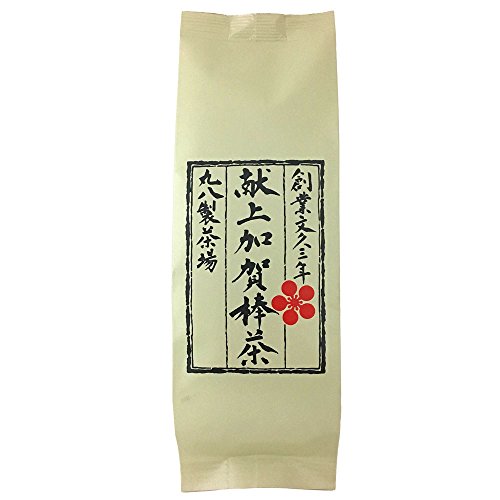
 Maruhachi Seichajo Kenjo Kaga Bocha (献上加賀棒茶, sealed bag/tin)
 Hoshino Seichaen Yame Matcha (星野製茶園 八女抹茶, sealed 30–40g tin)
 Chiran-cha Deep-Steamed Sencha (知覧茶 深蒸し煎茶, sealed 100g bag)
 Ooigawa Chaen Fukamushi Sencha (大井川茶園 深蒸し煎茶, sealed foil bag)
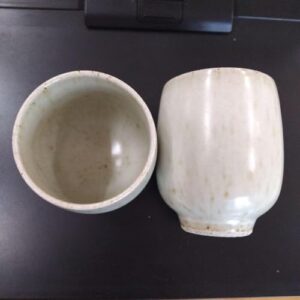 Hirashimizu-yaki Zankin Glaze Yunomi: Yamagata Pottery Tea Cup
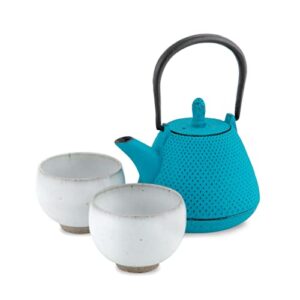 Hirashimizu-yaki Nashi-Seiji Celadon Teapot: Yamagata Kyusu
📍 Where this comes from — place, era, and the craft tradition

Yamagata City sits inland in northern Honshū, in a basin drained by the Mogami River. That river is the whole explanation for why a sweet like this exists here. Before railways, the Mogami was the region’s highway: goods went downstream northwest to Sakata on the Sea of Japan coast, and from Sakata the Kitamae-bune freighters carried them around the coast to the commercial centers of Kyoto and Osaka.
What went down that river, in the Edo period, was safflower.
Benibana (紅花) is a thistle-like plant whose florets yield a red dye, and the Mogami basin grew it in quantity. Dye was a luxury commodity, and the Kamigata textile trade paid for it. The wealth that came back upstream was not only cash. Sugar — expensive, imported, and tightly held in the south — travelled north along the same shipping lane, as did the confectionery techniques and the refined Kamigata palate that used it. A merchant class in a northern castle town found itself with both the money and the raw material to build a sweets tradition, and it did.
- Early Edo period — Noshiume begins to be made in the castle town of Yamagata.
- Edo period — Safflower from the Mogami River basin is shipped downriver to Sakata, then by Kitamae-bune to Kyoto and Osaka.
- Edo period, return leg — Sugar, refined confectionery technique, and Kamigata taste travel back north along the same route.
- 1821 (Bunsei era) — Noshiume Honpo Sato-ya is founded in Yamagata, near the former castle grounds.
- Modern era — The shop remains family-run and reaches its eighth generation, still on the same ground.
- 2026 — Noshiume ships in 5- and 8-piece boxes, individually wrapped, shelf-stable at room temperature.
Noshiume Honpo Sato-ya opened in 1821, during the Bunsei era, and the shop stands near the former Yamagata Castle grounds. It is still family-run, and it is now in its eighth generation. That is the continuity case in one sentence: the same family, the same town, and the same sweet that gives the shop its name.
“A dye plant paid for the sugar. The sugar built a confectionery tradition in a town that had no business having one. Two centuries later, the shop that carries the sweet’s name in its own name is still run by the same family.”
The agricultural fit matters too. Yamagata is one of Japan’s major fruit prefectures — cherries, pears, and ume among them — so a fruit-based confection is not an imported idea grafted onto the region. It is what the surrounding farmland actually produces, processed with technique that arrived by boat.
What it does well
The ume acidity arrives before the sugar does. Among wagashi — a category that skews sweet and bean-forward — this is a genuinely different flavor axis, and it is why noshiume holds its own against strong green tea.
Shelf-stable at room temperature, sealed piece by piece, and flat. The sheet form has no filling to leak and no molded shape to crush, which is more than can be said for most Japanese sweets sent abroad.
Ume, sugar, starch syrup, and agar. No dairy, no egg, no chocolate, and no gelatin — the set comes from kanten (agar), which is seaweed-derived. That covers a wide range of dietary restrictions in one product.
The 8-piece box keeps the bamboo-sheath sandwich intact and individually wrapped, in a presentation box. It works as a gift without repackaging, and the per-piece cost is lower than the 5-piece box.
- 🌡️ Storage: room temperature — this is a shelf-stable food with a best-by date, not a refrigerated item.
- 📅 Shelf life: typically around 90 days from manufacture; international transit consumes part of that window.
- 🎋 Before eating: peel away the two pieces of dried bamboo sheath. The sheath is packaging, not food.
- 🍵 Serving: individually wrapped, so a box can be opened piece by piece over weeks; conventionally served alongside green tea.
- 🚫 Allergens: contains no dairy, egg, chocolate, or gelatin per the stated ingredients (ume, sugar, starch syrup, agar).
Weaknesses and things to verify before buying
- The sourness is not a garnish. Noshiume leads with ume acidity, and readers expecting a mild, candy-like plum sweet regularly find it sharper than anticipated. If gentle flavor is the requirement, this is the wrong purchase.
- Roughly 90-day shelf life, minus transit. International shipping from Japan can take a meaningful slice of that window. Check the best-by date on arrival and plan to eat it within a few weeks rather than storing it as a long-term pantry item.
- Package details vary. Check the product information before ordering.
- Japanese-language labeling. Ingredient and allergen information on the physical package is in Japanese. Buyers with severe allergies should confirm details independently.
- The bamboo sheath confuses first-time eaters. Each sheet is pressed between two slips of dried bamboo sheath that must be peeled off. It is not edible, and it is not obvious to someone unfamiliar with the format.
- Food import rules vary by destination. Shelf-stable confectionery in small personal quantities is generally straightforward, but eligibility is confirmed at checkout and rules differ by country. Verify before assuming your address qualifies.
- Availability changes over time. Check current product information before ordering.
📦 Shipping & where to buy from outside Japan
Noshiume is shelf-stable at room temperature, which is the single most important fact for anyone importing it. Yamagata-made Noshiume is commonly sold via the Amazon Japan Global Store, which ships to 65+ countries — including Canada, the UK, and Australia — with import fees estimated and generally collected at checkout.
Two things to check before you order. First, confirm AmazonGlobal International Shipping eligibility for your specific country at checkout — this is a food item, and food eligibility is narrower than for general household goods. Second, keep the order to a small personal quantity; that is the framing under which shelf-stable confectionery normally passes customs without complication.
International shipping on small parcels from Japan commonly runs in the $15–$40 range to the US and EU, and similar to Canada, the UK, and Australia, though the figure depends on weight, destination, and shipping speed. Proxy services such as Buyee or Tenso are an alternative route if the Global Store does not serve your address, though they add handling fees and a second leg of transit — which matters more than usual for a product with a roughly 90-day shelf life.
Where to buy
| Store | Item / Variant | Price | Notes |
|---|---|---|---|
| 🇺🇸 Amazon.com (US) | Browse Japanese sweets & wagashi | varies (USD) | Best if you’re shopping from the US — Prime shipping, USD pricing, no international customs. Amazon US carries yōkan, mochi, and other Japanese confectionery from various makers, useful for comparing formats and price tiers. Sato-ya’s noshiume itself ships from Japan (next row). |
| 🇯🇵 Amazon JP Global Store | Sato-ya Noshiume, 8-piece box | — | Ships internationally from Japan to 65+ countries — including Canada, the UK and Australia — with import fees estimated at checkout. |
| Maker direct | Noshiume Honpo Sato-ya — 5-piece and 8-piece boxes | Unconfirmed — check maker site | The full line, including the shop’s other confections. Direct international shipping from the maker varies. |
| Proxy services (Buyee / Tenso) | Japanese-domestic products forwarded abroad | Item price + handling + forwarding | A fallback if the Global Store does not serve your address. Adds fees and a second transit leg, which matters for a ~90-day shelf life. Confirm the service accepts food shipments to your country. |
Prices and stock fluctuate. JPY is the authoritative currency for the listed item; any USD figure elsewhere on this site is an approximate conversion at a ¥150/USD baseline as of mid-2026. Follow the links for current data.
Conclusion — which buyer type are you?
Take the 8-piece box. It arrives in presentation form with the bamboo-sheath sandwich intact, needs no repackaging, and carries a 200-year-old maker’s name — which is the part that travels well as a gift.
If you drink Japanese tea and want a sweet to go with it, the 8-piece is the sensible default: lower per-piece cost than the 5-piece, individually wrapped so it opens gradually, and shelf-stable in the meantime.
The 5-piece box exists and is the cheaper entry point if you only want to find out whether you like the flavor. Note that shipping cost from Japan does not scale down with the box, so per-piece economics favor the 8-piece.
If you dislike sour food, wanted a soft chewy texture, or need a pantry item that keeps for a year, this is not the right purchase. The acidity and the ~90-day window are both structural to the product.
Other ways to approach this purchase
Because plum jelly has a roughly 90-day shelf life, freshness matters when choosing a batch. Store it according to the maker’s guidance and avoid keeping it beyond the stated period.
The confectionery equivalent of buying refurbished: the 5-piece box lets you test a sharply sour, unfamiliar flavor before committing to the larger format or to a gift purchase.
If you are already ordering other shelf-stable goods from the Japan Global Store, consolidating into one shipment spreads the international freight cost across more items — usually a larger saving than any promotion.
If your household does not drink Japanese tea and no one there likes sour flavors, an imported sweet with a three-month clock is a poor fit. A Yamagata teacup from the linked guides above may serve better.
❓ Frequently Asked Questions
Is noshiume the same as umeboshi?
No. Noshiume is a confection — ume pulp cooked with sugar and agar, set into a firm sheet and eaten as a sweet with tea. Umeboshi is a salted pickled plum, savory and salty, eaten with rice. They share a fruit and nothing else.
What does it taste and feel like?
Sharply sour first, then sweet. The texture is a firm, translucent amber jelly with a clean snap — closer in body to mizu-yōkan than to a Western fruit leather or a gummy chew.
Do I eat the bamboo sheath?
No. Each sheet is traditionally sandwiched between two pieces of dried bamboo sheath (竹皮), which you peel away before eating. The sheath is packaging, not food.
Does it need refrigeration, and how long does it keep?
It is shelf-stable at room temperature and individually wrapped. Shelf life is typically around 90 days from manufacture, so check the best-by date on arrival — international transit uses part of that window.
Does it contain dairy, egg, or gelatin?
The stated ingredients are ume, sugar, starch syrup, and agar — plant-based, with no dairy, egg, chocolate, or gelatin. The set comes from kanten (agar), which is seaweed-derived. Package labeling is in Japanese, so buyers with severe allergies should verify independently.
Can it be shipped to my country?
It ships via the Amazon Japan Global Store, which serves 65+ countries including Canada, the UK, and Australia. Because this is a food item, confirm AmazonGlobal International Shipping eligibility for your specific country at checkout, and keep the order to a small personal quantity. Customs and eligibility are confirmed at checkout.
Why does a northern castle town have a refined sweets tradition?
Safflower. The Mogami River basin grew benibana (紅花), a red dye crop shipped downriver to Sakata and onward by Kitamae-bune to Kyoto and Osaka. Sugar and refined confectionery technique travelled back along the same route, giving Yamagata’s merchant houses both the money and the materials to develop wagashi.
jpmono.com is a Japan-based curation site, with editorial centers in Toyama (Hokuriku region) and Nara (Kansai region), introducing Japanese household objects and regional foods to international readers. We focus on items with verifiable heritage and clear craft or regional-food context. We do not physically test every product, and we do not take payment from the makers we feature; income comes from affiliate links.
This article was prepared with AI assistance and reviewed by a human editor before publication. Descriptions reflect the maker’s stated characteristics and regional-food context.
Affiliate disclosure: jpmono.com may earn a commission on qualifying purchases made through links on this page, at no additional cost to you.