![Hirashimizu-yaki Zankin Glaze Yunomi: Yamagata Pottery Tea Cup [2026]](https://jpmono.com/wp-content/uploads/2026/05/hirashimizu-yaki-zankin-yunomi-where-to-buy-2026-featured.jpg)
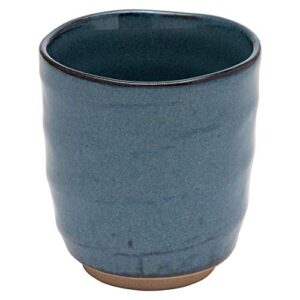
Hirashimizu-yaki (平清水焼, “Hirashimizu ware”) is a stoneware pottery made in the Hirashimizu district at the foot of Mt. Chitose, on the edge of Yamagata City in the Tōhoku region. The kilns there dig iron-rich clay straight out of the mountain, then fire it under a pale celadon glaze. As the pot heats, iron in the body melts up through the glaze and surfaces as fine brown-black speckles — the effect the kilns call nashiji-yu (梨地釉, “pear-skin glaze”). The yunomi (湯のみ, everyday tea cup) covered here is a working example of that body, made by Seiryu-gama (青龍窯), one of the district’s surviving kilns.
What makes this piece interesting to an international reader is not luxury — it is everyday-ware honesty. The companion glaze, zankin-ji, is a celadon whose dark flecks rising through pale green are meant to read like 残雪 (zansetsu), snow lingering on bare earth at the end of a Tōhoku winter. That image is the whole point: a cup that carries its region’s climate on its surface. Yamagata is far better known abroad for cast-iron kettles and Tendō wooden shogi pieces, so a Yamagata pottery is genuinely uncommon outside Japan.
This guide is written for readers deciding whether a Hirashimizu yunomi is worth importing — what the body and glaze actually are, where the craft sits in Yamagata’s history, how it compares to other Japanese yunomi already covered on this site, and the honest gaps in the available data. The fetched product feed for this item came back empty, so pricing and exact dimensions are flagged as unconfirmed throughout rather than guessed.
🔄 Updated:
⏱️ Read time: ~8 min
![Hirashimizu-yaki Zankin Glaze Yunomi: Yamagata Pottery Tea Cup [2026]](https://m.media-amazon.com/images/I/41PMQGQSLVL._SL500_.jpg)
- Who this is for — and who should skip it
- Product overview (from published specs)
- 📌 How does it compare?
- Price snapshot across stores
- What it does well
- Weaknesses and things to verify before buying
- Where this comes from
- Conclusion — which buyer type are you?
- Other ways to approach this purchase
- 🏆 Editor’s Pick
- ❓ Frequently Asked Questions
Who this is for — and who should skip it
- Like everyday stoneware with visible iron speckling, not flawless porcelain
- Want a yunomi from a region (Yamagata pottery) rarely exported
- Drink Japanese green tea daily and want a cup that fits the hand
- Appreciate the nashiji “pear-skin” and zankin “lingering snow” surface story
- Are comfortable buying from the Amazon JP Global Store and waiting for cross-border shipping
- Want guaranteed uniform color — handmade speckling varies cup to cup
- Need confirmed capacity, weight, and dishwasher/microwave specs before buying (these were not in the data)
- Expect firm pricing today — the live feed returned no price
- Want the “famous” Yamagata craft (that is cast iron or Tendō woodwork, not this)
- Are unwilling to handle customs or fragile-ceramic shipping risk

Product overview (from published specs)
The table below is built from the spec brief and the item identifier. Where the fetched listing returned nothing, the cell reads “Unconfirmed” rather than a guessed value. Only the Amazon JP listing reference (ASIN B0FQTWJ78F) was available; live pricing and dimensions were not present at the time of writing.
Hirashimizu-yaki Zankin Glaze Yunomi
平清水焼 青龍窯 残雪 湯呑 ペアセット
通常6~7日以内に発送します。 · Sold by JIMMY Online Shop · ASIN B0FQTWJ78F
Price and availability as of 2026-08-31 02:30 JST. The Amazon listing at the time of purchase is authoritative. jpmono.com earns a commission on qualifying purchases at no extra cost to you.
| Attribute | Detail | Source |
|---|---|---|
| Craft | Hirashimizu-yaki (平清水焼) stoneware | Spec brief |
| Form | Yunomi (湯のみ) — everyday tea cup | Spec brief |
| Body | Iron-rich clay dug at the foot of Mt. Chitose | Spec brief |
| Glaze | Nashiji-yu (pear-skin) / zankin-ji celadon, iron-speckle | Spec brief |
| Kiln | Seiryu-gama (青龍窯), Hirashimizu district | Spec brief |
| Origin | Hirashimizu, Yamagata City, Yamagata Pref., Tōhoku | Spec brief |
| Capacity / dimensions | Unconfirmed — check listing | — (absent from data) |
| Care (dishwasher/microwave) | Unconfirmed — check manufacturer/listing | — (absent from data) |
| Item ID | ASIN B0FQTWJ78F | Spec brief |
| Price | Unavailable at time of writing — verify on listing | — (empty feed) |
Sources for this overview: Amazon US search (primary, moonill-20), Amazon JP Global Store (secondary, moonill-22 — the sourced listing), and maker-direct kiln information. The Amazon US search path carries comparable Japanese yunomi from other makers; the specific Seiryu-gama piece is sourced from Japan.
📖 Glossary — key terms in this article
- Yunomi (湯のみ) — a tall, handleless Japanese tea cup for everyday green tea, distinct from the shallow chawan used in formal tea ceremony.
- Hirashimizu-yaki (平清水焼) — stoneware made in the Hirashimizu district of Yamagata City, using iron-rich local clay.
- Nashiji-yu (梨地釉, “pear-skin glaze”) — a glaze where iron in the clay surfaces as fine brown-black speckles through a pale ground, resembling the skin of a Japanese pear.
- Zankin-ji — the kilns’ celadon glaze whose speckled green surface evokes 残雪 (zansetsu), snow lingering on dark earth.
- Celadon (seiji, 青磁) — a pale blue-green glaze colored by iron under reduction firing; a classic East Asian glaze family.
- Stoneware — clay fired hot enough to vitrify into a dense, durable body, between earthenware and porcelain.
- Benibana (紅花, safflower) — the safflower-dye crop whose Edo-period trade wealth funded much of Yamagata’s craft culture.
- Seiryu-gama (青龍窯) — “Blue Dragon Kiln,” one of the main surviving Hirashimizu kilns and the maker of this yunomi.

📌 How does it compare?
Already covered on jpmono — related Yamagata crafts and other Japanese yunomi to weigh against this one:
 Yonezawa-ori silk (Yamagata)
Same prefecture, textile tradition
 Yamagata cast-iron tetsubin
The famous Yamagata craft, for tea
Tendo shogi pieces (Yamagata)
Yamagata woodwork tradition
 Shitoro-yaki yunomi
Another regional stoneware cup
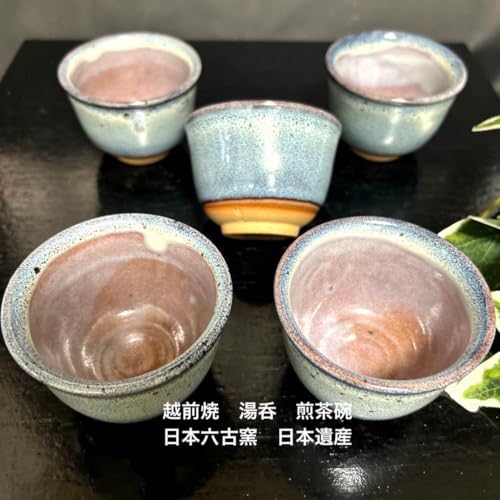 Echizen-yaki yunomi
Six Ancient Kilns stoneware
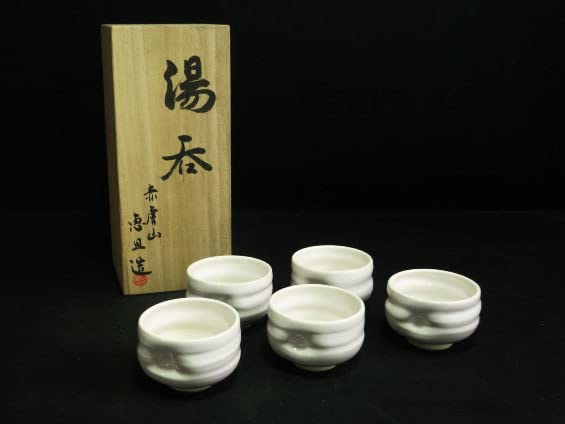 Akahada-yaki yunomi
Nara painted-ware cup
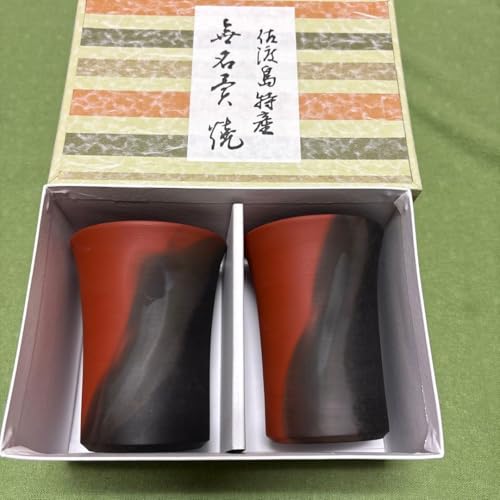 Mumyoi-yaki red-clay yunomi
Iron-rich Sado island clay
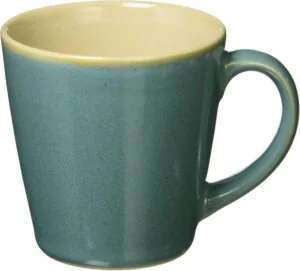 Mashiko celadon mug
Celadon glaze comparison
Price snapshot across stores
JPY is the authoritative price for the specific item; USD figures elsewhere are estimates at a ¥150/USD baseline (mid-2026). At the time of writing the live feed returned no price for this listing, so the JPY cell below is marked unconfirmed — verify on the listing before buying.
| Store | Item / Variant | Price (JPY + USD est.) | Notes |
|---|---|---|---|
| 🇺🇸 Amazon.com (US) | Browse Japanese yunomi tea cups | varies (USD) | Best if you’re shopping from the US — Prime shipping, USD pricing, no international customs. Amazon US carries Japanese yunomi and tea cups from other makers; the exact Seiryu-gama Hirashimizu piece is sourced from Japan (next row). |
| 🇯🇵 Amazon JP Global Store | Seiryu-gama Hirashimizu yunomi (ASIN B0FQTWJ78F) | Unconfirmed — verify on listing | Ships internationally from Japan. This is the sourced listing for the exact item; price was not present in the fetched data. |
| Maker direct (Seiryu-gama / Hirashimizu kilns) | Kiln & local pottery shops | Unconfirmed | Hirashimizu district kilns sell on-site and at Yamagata craft outlets; most do not ship abroad directly. |
| Proxy services (Buyee / Tenso) | Forward from JP domestic shops | item price + forwarding fee | Useful if a particular kiln glaze is only sold on a JP-domestic shop; adds a forwarding and consolidation fee. |
What it does well
Weaknesses and things to verify before buying
- No confirmed price. The fetched feed returned no price for ASIN B0FQTWJ78F. Treat every figure as “verify on listing” until you open the live page.
- Capacity, weight, and dimensions are unconfirmed. If you need a specific volume (e.g., a larger sencha cup), confirm on the listing — these were absent from the data.
- Care specs unknown. Microwave and dishwasher suitability were not stated. Hand-washing is the safe default for speckled stoneware until the maker confirms otherwise.
- Handmade variation. Iron speckling and glaze tone shift from cup to cup; the one you receive will not match a catalog photo exactly.
- Lesser-documented craft. Hirashimizu-yaki is far less written-about in English than Yamagata’s cast iron or Tendō woodwork, so cross-checking specs is harder.
- Cross-border fragility and customs. Ceramics break in transit; factor in protective packing, possible customs duties above your local threshold, and slower international delivery.
Where this comes from

Yamagata City lies in a mountain-ringed basin in southern Yamagata Prefecture, in the Tōhoku region of northern Honshū. Hirashimizu is a district on the city’s edge, at the foot of Mt. Chitose. The craft took root here for the most direct reason a pottery can: the raw material is in the ground. The kilns dig iron-rich clay straight from the mountain, and that iron is what later surfaces through the glaze as the ware’s signature speckle.
The region’s craft economy was built on water and trade. The Mogami River, which drains the Yamagata basin toward the Sea of Japan, carried goods out of a landlocked province; the river trade and the wealth of benibana (safflower) dye — Yamagata’s great Edo-period cash crop — funded a dense local culture of artisanship under the Yamagata domain.
- Bunka era (1804–1818) — Hirashimizu kiln district established at the foot of Mt. Chitose, late Edo period.
- Edo period — Kilns prosper under the Yamagata domain; benibana (safflower) trade wealth funds the region’s craft culture.
- Edo–Meiji — Mogami River trade links the landlocked basin to the Sea of Japan, moving Yamagata goods to market.
- 19th–20th c. — Nashiji-yu (pear-skin) and zankin-ji celadon become the district’s recognized signature glazes.
- Today (2026) — Seiryu-gama (青龍窯) and Heikichi-gama remain the main working kilns, making yunomi, mugs, and ceramic coffee drippers.
The historical anchor here is everyday, not imperial. Hirashimizu-yaki was never court ware or a daimyo’s prestige kiln; it was a working district pottery that grew alongside a thriving dye-and-river economy. The exact founding is recorded as the Bunka era of the late Edo period — early 1800s — rather than a single documented year, so this guide gives the era rather than inventing a date.
“The iron that darkens the glaze was never added — it was always in the mountain, and the fire only brings it to the surface.”
What “still being made here” means is modest and concrete: two main kilns, Seiryu-gama and Heikichi-gama, still working the same Mt. Chitose clay into everyday tableware. They have adapted the line to modern kitchens — alongside yunomi and mugs, the kilns now make ceramic coffee drippers — which is exactly how a working folk pottery survives. It stays useful. This is a pottery counterpart to Yamagata’s better-known cast iron and Tendō woodwork: same prefecture, same domain heritage, different material.
Seasonally, the zankin “lingering snow” glaze is not an accident of marketing. Tōhoku winters are long and snow-deep, and a celadon whose dark flecks surface through a pale ground genuinely echoes the look of late-season snow thinning over dark earth — the kind of regional image a Yamagata maker would recognize on sight.
Conclusion — which buyer type are you?
Other ways to approach this purchase
🏆 Editor’s Pick
❓ Frequently Asked Questions
What is the difference between nashiji-yu and zankin-ji?
Both glazes draw iron from the same Hirashimizu clay. Nashiji-yu (pear-skin) shows dense brown-black speckles over a warm earthen ground; zankin-ji is a pale celadon green where those speckles read like dark stones surfacing through lingering snow. Same body, different firing result.
Does it ship internationally?
The item is sourced from the Amazon JP Global Store, which ships many household goods to most major destinations. As a ceramic, it ships fragile — expect protective packing, possible customs duties above your local threshold, and slower delivery than domestic orders.
How much does it cost?
At the time of writing, the fetched listing returned no price for ASIN B0FQTWJ78F, so this guide does not quote one. Check the Amazon JP Global Store link for the current price; JPY is the authoritative figure, and any USD estimate is at a ¥150/USD baseline.
Is it microwave and dishwasher safe?
Care specifications were not present in the data, so we cannot confirm. Hand-washing is the safe default for speckled stoneware. Verify microwave and dishwasher suitability on the listing or with the maker before assuming either.
Will my cup look exactly like the photo?
No. Hirashimizu-yaki is handmade, and the iron speckling and glaze tone vary cup to cup. That variation is intrinsic to the ware, not a defect; if you need uniform color, this is not the right piece.
How is this different from other Yamagata crafts?
Yamagata is best known abroad for cast-iron tetsubin and Tendō wooden shogi pieces. Hirashimizu-yaki is the prefecture’s pottery counterpart — same domain heritage, different material — and on this site it is the only Yamagata pottery and the only nashiji iron-speckle celadon body covered.
Who makes it today?
Seiryu-gama (青龍窯) and Heikichi-gama are the two main surviving kilns in the Hirashimizu district, still working the local Mt. Chitose clay into yunomi, mugs, and ceramic coffee drippers. This yunomi is a Seiryu-gama piece.
jpmono.com is curated by a Japan-based editorial team (working out of Toyama in the Hokuriku region and Nara in Kansai) and is independent. We do not take payment from the makers we feature; income comes from affiliate links.
🤖 This article was drafted with AI assistance and reviewed against the source listing data before publication. Where the data was thin or absent, that is stated plainly rather than filled in by guesswork.
Affiliate disclosure: jpmono.com may earn a commission on qualifying purchases made through links on this page, at no additional cost to you.