![Soshurin Yoriyori Twisted Fried Dough Sticks (よりより / 麻花, boxed bag) — Nagasaki Chinatown’s Fujian-Rooted Hard Snack [2026 Guide for International Readers]](https://jpmono.com/wp-content/uploads/2026/09/soshurin-yoriyori-nagasaki-where-to-buy-2026-featured.jpg)
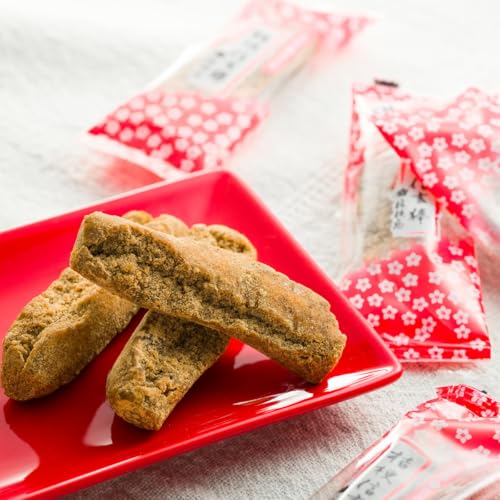
- What it is: Yoriyori (よりより / 麻花) — a rope of wheat dough twisted by hand, deep-fried, and left to set into a dense, glassy-hard stick with a faint caramel sweetness.
- Made in: Nagasaki city, Nagasaki Prefecture — Soshurin (蘇州林) is a confectioner long associated with the Shinchi Chinatown district.
- Price band: everyday regional-snack pricing, sold as sealed bags or gift boxes — check the live listing for the current figure.
- Best for: readers who want a genuinely shelf-stable Japanese sweet that survives a slow international parcel, eaten in small broken pieces with tea.
- Skip if: you dislike very hard textures, have dental work that hard candy or biscotti would threaten, or need a wheat-free snack.
- Shipping: shelf-stable at room temperature and shipped from Amazon Japan to most major destinations — jump to our pick ↓
Bite a yoriyori the way you would bite a cookie and you will regret it. The standard method in Nagasaki is to hold the twisted stick in both hands and snap it — it breaks with a dry crack, into shards rather than crumbs, and those shards are what you eat, slowly, with tea. The hardness is not a manufacturing accident or a sign of a stale package. It is the defining property of the snack, and it is the reason a confection that arrived with Chinese merchants centuries ago is still sold in the same shape today.
Yoriyori descends from Chinese mahua (麻花, “twisted hemp flower”), carried into Japan by Fujian merchants who settled in Nagasaki. During the Edo period, Nagasaki was the country’s sole licensed window onto foreign trade, and the Tōjin Yashiki (唐人屋敷, the walled Chinese residence quarter) concentrated a Chinese community — and its food — inside a single Japanese city. The snack embedded itself in local culture and, unusually, never softened into a modern confection. Soshurin (蘇州林), a confectioner rooted in the Shinchi Chinatown district, still sells it in plain sealed bags and gift boxes rather than reformulating it into something friendlier.
For an international reader, the appeal is practical as much as historical. Yoriyori is essentially wheat flour, sugar, oil, and salt; it holds no moisture, melts at no temperature, and carries a long best-by window, which makes it one of the very few Japanese sweets that genuinely survives a slow cross-border parcel. This guide covers what the texture is actually like, how it compares with softer karinto, the allergen and storage points to verify on the listing yourself, and the two purchase paths — an Amazon.com search for readers shopping domestically in the US, and the Amazon Japan Global Store listing where this specific item is sourced.
🔄 Updated:
⏱️ Read time: about 11 minutes
✍️ Japan-based editors (Toyama & Nara)

ℹ️ Live pricing, pack count, and the exact best-by window were not in our data snapshot — the linked listing is authoritative, and unconfirmed attributes are marked as such below.
- Who this is for — and who should skip it
- Product overview (from published specs)
- Which finish should you choose?
- 📍 Where this comes from — place, era, and the trade route that carried it
- 📦 Shipping & where to buy from outside Japan
- Price snapshot across stores
- What it does well
- Weaknesses and things to verify before buying
- Conclusion — which buyer type are you?
- Other ways to approach this purchase
- 🏆 Editor’s Pick
- ❓ Frequently Asked Questions
Who this is for — and who should skip it
- Want a Japanese sweet that actually arrives intact after two or three weeks in transit — no melting, no refrigeration, no moisture to spoil.
- Enjoy hard, dry textures: biscotti, hard pretzels, Chinese mahua, or rock-style candy.
- Drink tea and want something that holds up to it rather than dissolving into sweetness.
- Are interested in the Chinese-Japanese food lineage that Nagasaki produced, and want an edible example of it rather than a museum caption.
- Need a gift that is inexpensive, regional, and unlikely to duplicate whatever else the recipient has been given.
- Have crowns, veneers, braces, or any dental work that hard candy would put at risk — this is genuinely hard, not “crisp.”
- Avoid wheat or gluten. Yoriyori is a wheat-flour product with no wheat-free version.
- Expect a soft, chewy, or glazed sweet in the karinto or dorayaki register — the texture is the opposite end of the scale.
- Are buying for young children or elderly recipients who would find breaking and chewing it difficult.
- Want an elaborate presentation box; the standard pack is deliberately plain.
Product overview (from published specs)
The table below separates what the product category reliably is from what only the live listing can confirm. Per our data snapshot for this article, no price, pack weight, or piece count was retrievable, so those cells are marked rather than guessed.
| Attribute | Detail | Source |
|---|---|---|
| Product | Yoriyori (よりより), also written 麻花 or 唐人巻 — hand-twisted wheat-dough stick, deep-fried and hardened | Maker direct / category |
| Maker | Soshurin (蘇州林), long associated with Nagasaki’s Shinchi Chinatown | Maker direct |
| Origin | Nagasaki city, Nagasaki Prefecture, Kyūshū | Maker direct |
| Typical ingredients | Wheat flour, sugar, vegetable oil, salt, yeast. No dairy, no egg, no meat, no chocolate | Category standard — verify the listing’s own ingredient panel |
| Texture | Very hard and dry; eaten by snapping into small pieces, not bitten whole | Category standard |
| Storage | Room temperature, sealed bag or gift box; holds no moisture and does not melt | Category standard |
| Best-by window | Long relative to fresh wagashi; the exact printed date varies by pack format — read it on the listing | Unconfirmed in our snapshot |
| Pack weight / piece count | Unconfirmed — varies between bag and boxed formats | Unconfirmed in our snapshot |
| Allergens | Wheat-based; may be produced on lines also handling sesame and other allergens — check the listing’s allergen table | Listing (reader must verify) |
| Reference item ID | B09WMTKC6J | Amazon JP Global Store |
| Price | Not available in our snapshot — see the live listing (JPY is the authoritative currency; any USD figure is an approximation at roughly ¥150/USD) | Amazon JP Global Store |
“Almost every regional Japanese sweet has been softened, glazed, or shrunk for the modern palate. Yoriyori was left alone — and the hardness that makes it awkward is exactly what lets it cross an ocean.”
📖 Glossary — terms used in this article
- Yoriyori (よりより) — the Nagasaki name for the snack, from a local verb sense of “twisted.” The package may also print 麻花 or 唐人巻.
- Mahua (麻花) — the Chinese twisted fried dough stick from which yoriyori descends; still widely eaten in China in both savory and sweet forms.
- Tōjin Yashiki (唐人屋敷) — the walled Chinese residence quarter established in Nagasaki during the Edo period, where Chinese merchants and their households were required to live.
- Shinchi Chūkagai (新地中華街) — Nagasaki’s Chinatown, built on reclaimed land originally used for Chinese cargo warehouses; one of Japan’s three historic Chinatowns.
- Karintō (かりんとう) — the better-known Japanese fried dough snack, coated in brown sugar syrup. Softer and sweeter than yoriyori; the two are frequently confused.
- Wagashi (和菓子) — traditional Japanese confectionery as a category. Most wagashi are moist and short-lived; yoriyori is a rare shelf-stable outlier.
- Amazon JP Global Store — Amazon Japan’s international shipping program, which quotes shipping and estimated import fees at checkout for eligible destinations.
Which finish should you choose?
This piece is listed in 4 patterns. The photos below are the actual pattern options on the listing right now — pick the one you want and confirm it on the product page before ordering, since hand-finished wares vary slightly piece to piece.
![Soshurin Yoriyori Twisted Fried Dough Sticks (よりより / 麻花, boxed bag) — Nagasaki Chinatown's Fujian-Rooted Hard Snack [2026 Guide for International Readers] — ソフトマファール15本×3袋セット finish](https://m.media-amazon.com/images/I/51WH1EXFKmL._SL500_.jpg)
![Soshurin Yoriyori Twisted Fried Dough Sticks (よりより / 麻花, boxed bag) — Nagasaki Chinatown's Fujian-Rooted Hard Snack [2026 Guide for International Readers] — マファール15本×2袋セット finish](https://m.media-amazon.com/images/I/51MWkQzmbpL._SL500_.jpg)
![Soshurin Yoriyori Twisted Fried Dough Sticks (よりより / 麻花, boxed bag) — Nagasaki Chinatown's Fujian-Rooted Hard Snack [2026 Guide for International Readers] — マファール15本+ソフトマファール15本 finish](https://m.media-amazon.com/images/I/51JXcAgVe0L._SL500_.jpg)
📍 Where this comes from — place, era, and the trade route that carried it

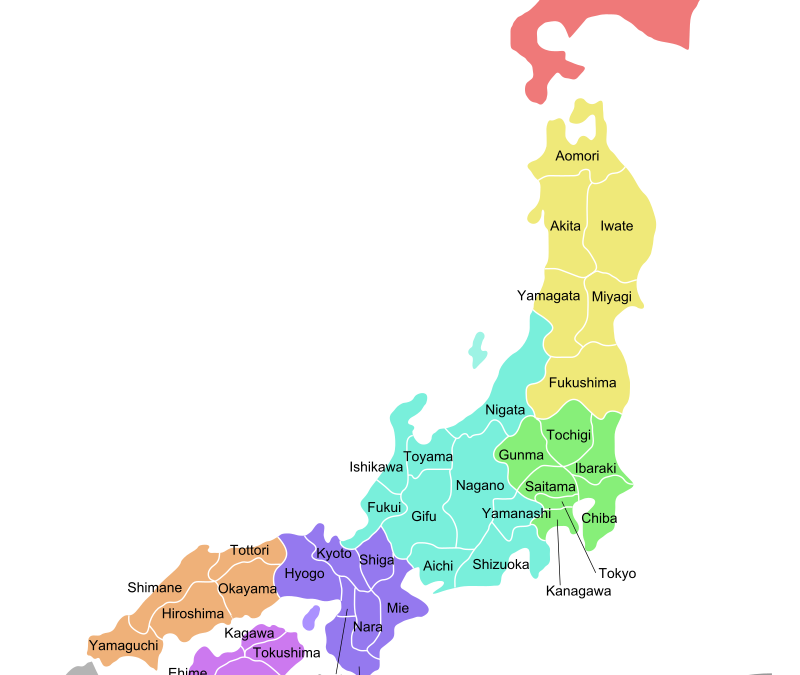
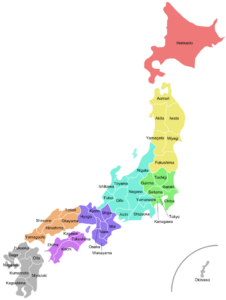
Nagasaki sits at the end of a long, narrow inlet on the western coast of Kyūshū, Japan’s southwestern main island. The harbor is deep, sheltered, and easy to defend, which is why it became the country’s designated foreign-trade port rather than a larger city on the Pacific side. Geography did the rest: from Nagasaki, the sea route to the Chinese coast is short, and the Fujian ports at the other end of that route supplied most of the merchants who came.
That single fact — a short crossing to Fujian, and a Japanese government that permitted foreign trade in exactly one place — is the whole explanation for why a Chinese fried-dough snack became a Nagasaki specialty and not a Tokyo one.
During the Edo period, Nagasaki was Japan’s sole licensed window onto foreign trade. Dutch merchants were confined to the artificial island of Dejima; the far larger Chinese community was eventually concentrated in the Tōjin Yashiki, a walled residence quarter with its own kitchens, temples, and festivals. Chinese food was not being adapted for Japanese tastes there — it was being cooked for Chinese residents, by Chinese residents, inside a Japanese city. What leaked out into local food culture leaked out in something close to its original form.
-
1571 — Nagasaki opens as a trading port, beginning its career as Japan’s contact point with the outside world. -
1636 — Dejima is completed in the harbor; foreign trade is progressively restricted to Nagasaki alone. -
1689 — The Tōjin Yashiki, the walled Chinese residence quarter, is established — the community whose kitchens carried mahua into Japan. -
1702 — The Shinchi (“new land”) reclamation is built to warehouse Chinese cargo — the ground the modern Chinatown now stands on. -
1859 — Nagasaki opens to general foreign trade; the Chinese community moves out of the walled quarter and settles around Shinchi. -
20th century — Shinchi takes shape as one of Japan’s three historic Chinatowns; yoriyori settles in as a standard local souvenir. -
2026 — Soshurin still sells it in sealed bags and plain gift boxes, in the same twisted shape and the same uncompromising hardness.
Shinchi Chinatown today occupies a compact grid of a few blocks, entered through four ornate gates, and it is small enough to walk end to end in several minutes. Soshurin is one of the confectioners rooted in this district, and yoriyori is the product most closely tied to its name. We deliberately do not state a founding year or a market ranking here: those claims circulate widely online and are not confirmed in our sources, and “long associated with Nagasaki’s Chinatown” is the honest version.
What matters more for a buyer is that the recipe was never modernized. The dough is still twisted by hand into its rope shape and fried slowly enough to drive the moisture out entirely rather than leaving a soft center. That process is the reason the snack keeps for months at room temperature, and it is also the reason it is hard enough to surprise people.
The pairing is tea, and locally that means something plain enough not to fight the snack: sencha, hōjicha, or Chinese oolong. The dryness of yoriyori is what makes tea feel necessary rather than optional — this is a sweet designed around a drink, not one that stands alone on a plate.
Yoriyori is built to be eaten with tea. These are the teas and the teapot we have covered elsewhere on jpmono — all of them shelf-stable and international-shipping friendly in the same way this snack is.
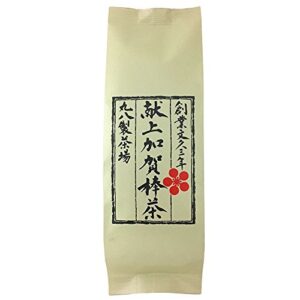

Maruhachi Seichajo Kenjo Kaga Bocha (献上加賀棒茶, sealed bag/tin)

Hoshino Seichaen Yame Matcha (星野製茶園 八女抹茶, sealed 30–40g tin)
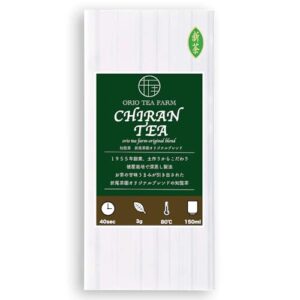

Chiran-cha Deep-Steamed Sencha (知覧茶 深蒸し煎茶, sealed 100g bag)

Ooigawa Chaen Fukamushi Sencha (大井川茶園 深蒸し煎茶, sealed foil bag)
🍵
Kenichi Shizen Noen Yamato-cha Sencha (健一自然農園 大和茶 煎茶, sealed)
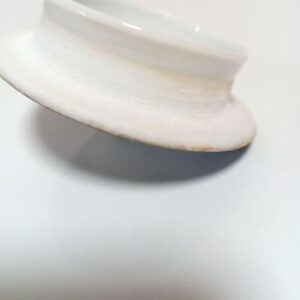

Mikawachi-yaki Karako-e Porcelain Kyusu Teapot: Where to Buy
The Mikawachi teapot is the closest neighbor on this list geographically — Mikawachi is in the same Nagasaki Prefecture, and its karako-e (Chinese-children) painted motif comes out of the same Chinese-contact history described above.
📦 Shipping & where to buy from outside Japan
Yoriyori is close to an ideal candidate for international ordering. It is shelf-stable at room temperature, contains no moisture, and does not melt, so it is unaffected by the summer heat and long warehouse delays that ruin chocolate, fresh wagashi, and anything cream-based. The realistic risk is breakage in transit, and given that the snack is meant to be snapped into pieces anyway, broken sticks are a cosmetic problem rather than a ruined order.
The Amazon Japan Global Store ships to 65+ countries, including Canada, the UK, and Australia — this is not a US-only path. We maintain separate country guides for Canada, the UK, and Australia covering customs thresholds and typical delivery times for each.
Two caveats specific to food. First, food items are the category most often restricted by destination country, so eligibility must be confirmed at checkout rather than assumed — Amazon flags ineligible items for your address before payment. Second, order in small personal quantities: a bag or two reads as personal consumption, while a bulk order can attract commercial-import scrutiny at the border.
- 🌡️ Storage: room temperature, away from direct sunlight and humidity. No refrigeration needed, and refrigeration is not an improvement.
- 🥢 How to eat it: hold with both hands and snap into small pieces. Do not bite a whole stick — this is the single most common mistake first-time buyers make.
- 🍵 Pairing: tea. Sencha, hōjicha, or oolong all work; the snack is dry by design and expects a drink alongside it.
- 📅 Best-by: printed on the pack and long relative to fresh wagashi, but the exact window varies by format — read the date on the listing or the package.
- 🔒 After opening: reseal or transfer to an airtight container. Nothing spoils quickly, but the hardness dulls slightly if it absorbs humidity.
- ⚠️ Allergens: wheat-based, and production lines may also handle sesame and other allergens. Read the listing’s allergen table yourself before ordering.
Price snapshot across stores
| Store | Item / variant | Price | Notes |
|---|---|---|---|
| 🇺🇸 Amazon US (search) | Browse Japanese hard snacks & traditional sweets | varies (USD) | Best if you are shopping from the US — Prime shipping, USD pricing, no international customs. Amazon US stocks a rotating selection of Japanese and Chinese fried-dough snacks, useful for comparing formats and pack sizes. Soshurin’s own yoriyori is sourced from Japan (next row). |
| 🇯🇵 Amazon JP Global Store | Soshurin yoriyori (麻花), sealed bag / boxed format — item B09WMTKC6J | See live listing (JPY authoritative; USD is an estimate at roughly ¥150/USD) | Ships internationally from Japan to 65+ countries — including Canada, the UK, and Australia — with import fees estimated at checkout. This is the specific item covered in this guide. Food eligibility is confirmed for your address before payment. |
| 🏭 Maker direct | Full Soshurin line, including gift-box formats | Unconfirmed | Nagasaki confectioners of this size typically sell domestically only. Assume a Japanese-language checkout and a domestic-only address field unless the site states otherwise. |
| 📦 Proxy services (Buyee / Tenso) | Any Japanese retailer’s stock, forwarded abroad | Item price + service fee + forwarding | Worth it only if you want a format the Global Store does not carry. Proxies add handling time, which eats into the best-by window, and food shipments through forwarders face the same destination restrictions with less pre-checkout warning. |
Prices and stock fluctuate. The figures shown on the linked listings at the time you read this are the authoritative ones. Prices in USD are approximate and depend on the current exchange rate.
What it does well
Weaknesses and things to verify before buying
- It is genuinely hard — harder than most people expect. Closer to biscotti or hard candy than to a cookie. Readers with crowns, veneers, braces, or recent dental work should treat this as a real risk, not a caution label. If you dislike the texture, you will dislike it immediately, and no amount of context makes it enjoyable.
- Wheat, with no alternative version. There is no gluten-free yoriyori. If wheat is off the table, this article’s product is not for you and no variant solves it.
- Allergen cross-contact is possible. The core ingredients are simple, but production lines may also handle sesame and other allergens. The listing’s own allergen table is the authority — read it rather than relying on this summary.
- Pack contents are not standardized. Bag versus boxed formats differ in piece count and weight, and our data snapshot did not confirm either for this item. Check the pack weight on the listing before assuming quantity, especially if buying as a gift.
- The best-by window is long, not indefinite. It comfortably outlasts international shipping, but the printed date varies by format. Confirm it on the listing, and factor in the transit weeks if you are ordering ahead for an occasion.
- Food shipments are the most restriction-prone category. Eligibility depends on your destination country’s import rules and is confirmed at checkout. Order in small personal quantities; a bulk order is more likely to be stopped.
- Breakage in transit is normal. Sticks arrive cracked reasonably often. Because the snack is eaten in pieces this is cosmetic, but it does undercut the visual impact if the box is meant to be presented intact.
- No live price was in our snapshot. Only the item reference and the category profile were retrievable; pricing may have shifted since this article’s writing date. Treat the linked listing as the single source of truth.
Conclusion — which buyer type are you?
Other ways to approach this purchase
🏆 Editor’s Pick
❓ Frequently Asked Questions
How hard is yoriyori, really?
Hard enough that biting a whole stick is a bad idea. The standard method in Nagasaki is to hold it in both hands and snap it into small pieces, then eat those pieces with tea. Comparisons to biscotti or hard candy are closer than comparisons to a cookie. If you have crowns, veneers, braces, or recent dental work, treat this as a genuine caution.
Will it survive international shipping?
Better than almost any other Japanese sweet. Yoriyori holds no moisture, contains no dairy or chocolate, does not melt, and is sold sealed at room temperature with a long best-by window, so heat and transit delays do not degrade it. The realistic risk is sticks cracking in the box, which is cosmetic given that the snack is eaten in pieces anyway.
Can it be shipped to Canada, the UK, or Australia?
The Amazon Japan Global Store ships to 65+ countries including all three, but food is the category most often restricted by destination, so eligibility is confirmed at checkout for your specific address before payment. Order in small personal quantities; import fees are estimated at checkout for most destinations.
What is the difference between yoriyori and karintō?
They are both fried wheat-dough snacks and they are frequently confused, but they behave differently. Karintō is Japanese, formed as short sticks and coated in brown-sugar syrup, so it is distinctly sweet and yields when you bite it. Yoriyori descends from Chinese mahua, is twisted into a rope, has no syrup coating, tastes only faintly of caramel, and is hard enough to require snapping.
What is in it, and what about allergens?
The core ingredients are typically wheat flour, sugar, vegetable oil, salt, and yeast, with no dairy, egg, meat, or chocolate. It is a wheat product with no gluten-free version. Production lines may also handle sesame and other allergens, so read the allergen table on the listing itself rather than relying on a general description.
Why is this snack associated with Nagasaki rather than the rest of Japan?
Because during the Edo period Nagasaki was Japan’s only licensed foreign-trade port. Fujian merchants who settled there — concentrated in the walled Tōjin Yashiki quarter and later around Shinchi Chinatown — brought Chinese mahua with them, and it took root in local food culture. The same trade access that produced Nagasaki’s other Chinese-influenced foods produced yoriyori.
How should I store it, and what should I drink with it?
Keep it at room temperature away from sunlight and humidity; refrigeration is unnecessary and does not help. Reseal or transfer to an airtight container after opening, since absorbed humidity dulls the texture. Tea is the intended pairing — sencha, hōjicha, or Chinese oolong all suit it, and the dryness of the snack is what makes the drink feel necessary.
jpmono.com is a Japan-based curation site with editorial centers in Toyama (Hokuriku region) and Nara (Kansai region), introducing Japanese household objects and regional foods to international readers. We focus on items with verifiable regional heritage and clear international shipping paths. We do not physically test every product — we read maker specifications and source listings — and we do not take payment from the makers we feature; income comes from affiliate links.
This article was prepared with AI assistance under human editorial review. Product facts are drawn from source listings and maker information available at the time of writing; unverified attributes are marked as unconfirmed rather than estimated. Nutritional, allergen, and shelf-life information on the retailer’s listing takes precedence over any summary here.
Affiliate disclosure: jpmono.com may earn a commission on qualifying purchases made through links on this page, at no additional cost to you.