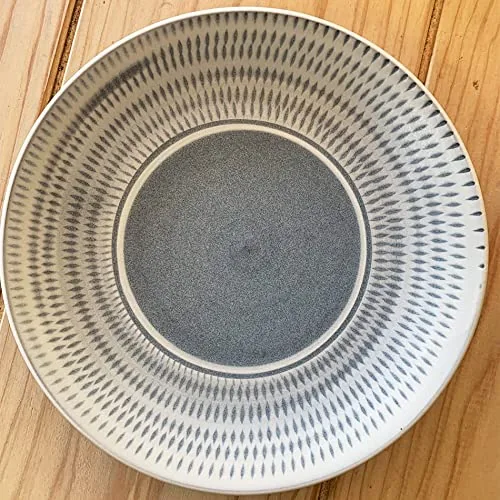
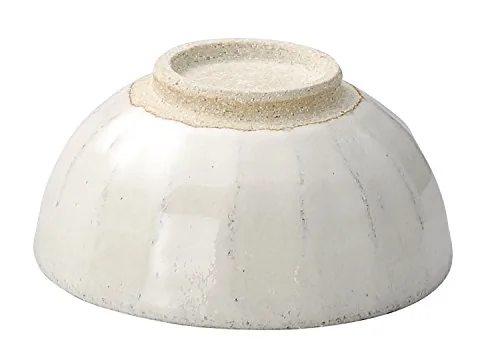
![Mikawachi-yaki Karako-e Porcelain Kyusu Teapot: Where to Buy [2026]](https://jpmono.com/wp-content/uploads/2026/07/mikawachi-yaki-karako-e-porcelain-kyusu-where-to-buy-2026-featured.jpg)
- What it is: A white-porcelain Japanese side-handle teapot (kyusu) of roughly 300 ml, hand-painted in cobalt blue with the karako-e motif and fitted with a ceramic mesh strainer.
- Made in: Mikawachi, Sasebo — Nagasaki Prefecture, Kyushu. The kiln district became the Hirado domain’s official kiln in 1650.
- Price band: Upper-mid for a hand-painted porcelain kyusu — the live listing is authoritative; our snapshot carried no price.
- Best for: Loose-leaf tea drinkers who want a painted heritage porcelain pot that is still a working brewing vessel, not a display piece.
- Skip if: You brew large batches — 300 ml is roughly two small Japanese cups, and it is not a Western-style four-cup teapot.
- Shipping: ships internationally from Amazon Japan to 65+ countries including Canada, the UK, and Australia — jump to our pick ↓
In 1650 the Matsura lords of Hirado took a valley of Korean-descended potters and made it their official domain kiln, which meant the pots fired there were no longer for sale. They were tribute — presentation goods for the shogunate. A kiln released from the market is a kiln released from cost control, and Mikawachi spent the next two centuries chasing thinness, whiteness, and the finest cobalt line a brush could hold.
Mikawachi-yaki (三川内焼, also called Hirado ware) is the porcelain that came out of that arrangement. Its signature is karako-e (唐子絵) — Chinese children at play beneath a pine tree, drawn in transparent cobalt on a body so white it reads slightly blue. The number of children was not decorative whimsy. Three, five, or seven encoded the rank of the person receiving the piece.
This guide looks at one specific object: a hand-painted karako-e kyusu of approximately 300 ml with a ceramic mesh strainer, sourced from a Japanese listing and shippable worldwide. We cover what the specs actually confirm, what they do not, where the ware comes from, how it compares to the other Kyushu porcelains we have written about, and which buyers should pass on it entirely.
ℹ️ Live pricing and several dimensional specs were not in our data snapshot — the linked listing is authoritative, and unconfirmed attributes are marked as such below.
🔄 Last updated: July 22, 2026
⏱️ Read time: about 11 minutes

- Who this is for — and who should skip it
- Product overview (from published specs)
- 📍 Where this comes from — place, era, and the craft tradition
- 📦 Shipping & where to buy from outside Japan
- Price snapshot across stores
- What it does well
- Weaknesses and things to verify before buying
- Conclusion — which buyer type are you?
- Other ways to approach this purchase
- 🏆 Editor’s Pick
- ❓ Frequently Asked Questions
Who this is for — and who should skip it
- Brew Japanese green tea for one or two people and want the pot sized honestly to that habit.
- Prefer a built-in ceramic strainer over a removable stainless basket, which changes how the leaf sits in the water.
- Value hand-painting and accept the small brush-to-brush differences that come with it.
- Are building a collection by kiln district and do not yet have a Nagasaki piece.
- Want a gift object with a documented lineage rather than a generic “Japanese teapot.”
- Need a pot for three or more drinkers — 300 ml will not stretch.
- Brew Western black tea with a bag or a large infuser; the side handle and fine mesh are built around loose Japanese leaf.
- Want dishwasher certainty. Hand-painted porcelain of this type is safest hand-washed, and our snapshot did not confirm a dishwasher rating.
- Are price-sensitive. Domain-kiln porcelain with hand-drawn gosu painting sits well above machine-transferred porcelain.
- Expect identical copies. Painted line weight varies piece to piece by definition.
Product overview (from published specs)
Mikawachi-yaki Karako-e Porcelain Kyusu Teapot
三川内焼 平戸松山 蓋付湯呑み 急須 茶器セット 煎茶道具 唐子絵
現在在庫切れです。 · ASIN B0H8B318LH
Price and availability as of 2026-08-31 02:30 JST. The Amazon listing at the time of purchase is authoritative. jpmono.com earns a commission on qualifying purchases at no extra cost to you.
| Attribute | Value | Source |
|---|---|---|
| Ware | Mikawachi-yaki (Hirado ware), white porcelain | Listing description |
| Form | Kyusu (side-handle teapot) | Listing description |
| Decoration | Hand-painted sometsuke (underglaze cobalt) karako-e design | Listing description |
| Strainer | Integrated ceramic mesh (no metal basket) | Listing description |
| Capacity | Approximately 300 ml | Listing description |
| Item ID (ASIN) | B0H8B318LH | Amazon JP Global Store |
| Exterior dimensions / weight | Unconfirmed — check the live listing | Not in snapshot |
| Dishwasher / microwave rating | Unconfirmed — check the live listing | Not in snapshot |
| Price | Unavailable in our snapshot — see the listing for current JPY pricing | Not in snapshot |
Only a listing snapshot was available at the time of writing, and it carried no live price. The attributes marked “Unconfirmed” above are genuinely absent from our data rather than omitted for brevity, and we have not filled them in from memory.
📖 Glossary — the terms used in this article
- Mikawachi-yaki (三川内焼) — porcelain from the Mikawachi valley in Sasebo, Nagasaki Prefecture. Also called Hirado ware after the domain that patronized it.
- Kyusu (急須) — a Japanese teapot with a handle set at right angles to the spout, held from the side rather than over the top.
- Sometsuke (染付) — underglaze blue painting. The cobalt is applied to the raw body, then covered with clear glaze and fired, so the line can never wear off.
- Gosu (呉須) — the cobalt pigment itself. Mikawachi is known for an unusually fine, transparent gosu line.
- Karako-e (唐子絵) — “Chinese children picture.” Boys at play beneath a pine, the signature Mikawachi motif.
- Ohan-gama (御藩窯) — an official domain kiln, producing for the lord and for presentation rather than for open sale.
- Sukashi-bori (透かし彫り) — openwork carving, cutting through the porcelain wall before firing. A Mikawachi specialty.
- Sakoku (鎖国) — Japan’s closed-country policy, roughly 1639–1854, during which Nagasaki was the sole authorized channel to Europe.
📍 Where this comes from — place, era, and the craft tradition

Nagasaki Prefecture is the far western corner of Japan, and Sasebo sits on its northwestern coast facing the East China Sea. The Mikawachi valley lies inland from that shoreline. Two facts of geography explain why a porcelain industry took root in this specific fold of hills rather than anywhere else in Kyushu: the porcelain stone of Amakusa, unusually white and workable, was reachable by sea, and the harbors that could carry finished goods away were equally close.
Porcelain requires a stone, not a clay. That distinction decides where kilns can exist.
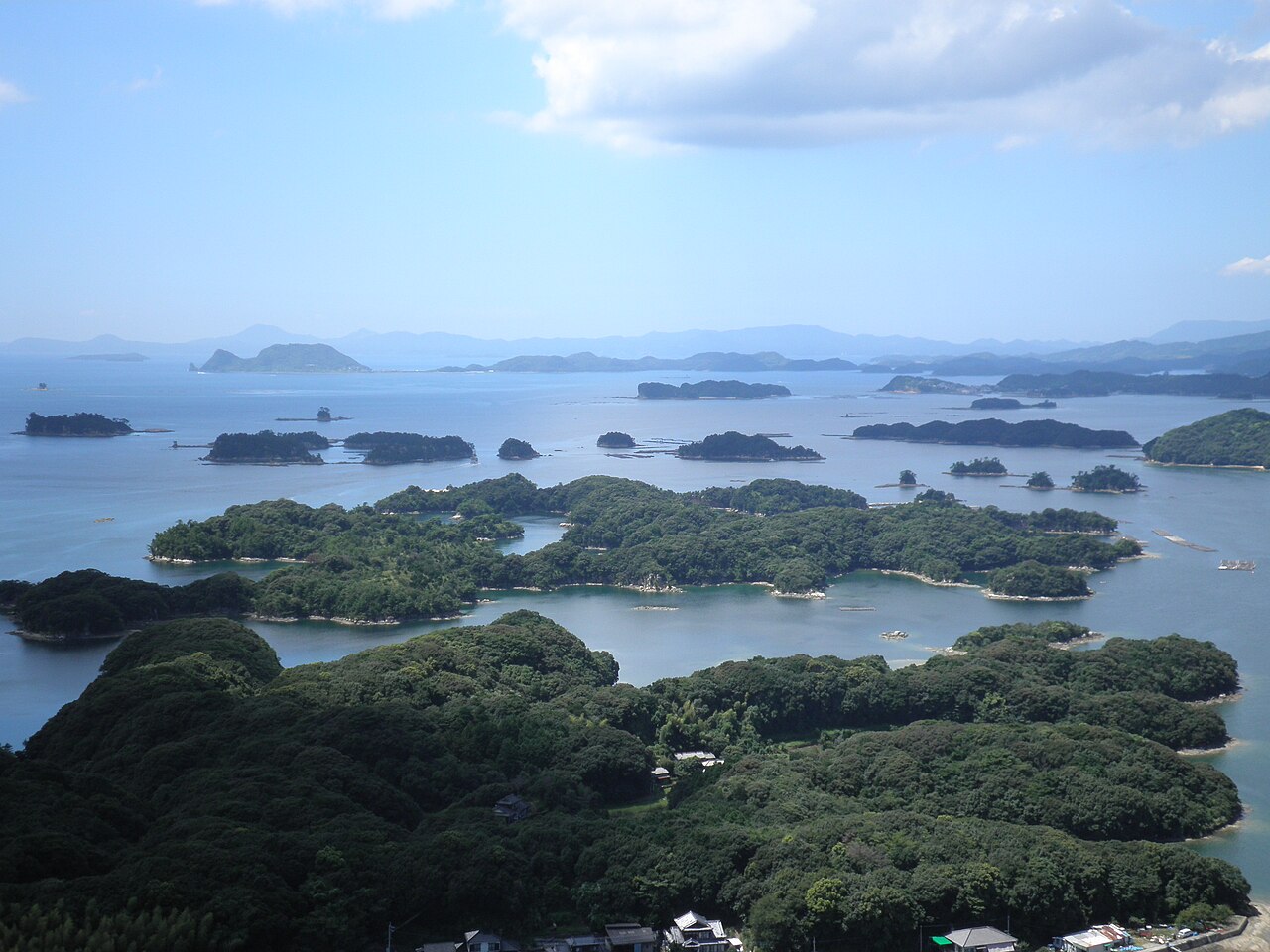
The human origin of the kiln is dated to around 1598, when Korean potters brought back to Japan by the Matsura clan of the Hirado domain settled in the valley. This is the same displacement that seeded several Kyushu porcelain districts, and it is why the technical vocabulary of the region traces to the Korean peninsula rather than to central Japan.
In 1650 the Matsura made Mikawachi their ohan-gama — the domain’s official kiln. From that year the potters were no longer making goods for a market. They were making presentation wares for the shogunate, and the consequence of that shift is visible in every surviving piece: bodies thinned until they pass light, an ultra-white Amakusa stone body, a cobalt line drawn fine enough to require a specialist painter, and sukashi-bori openwork carved through the wall of the vessel.
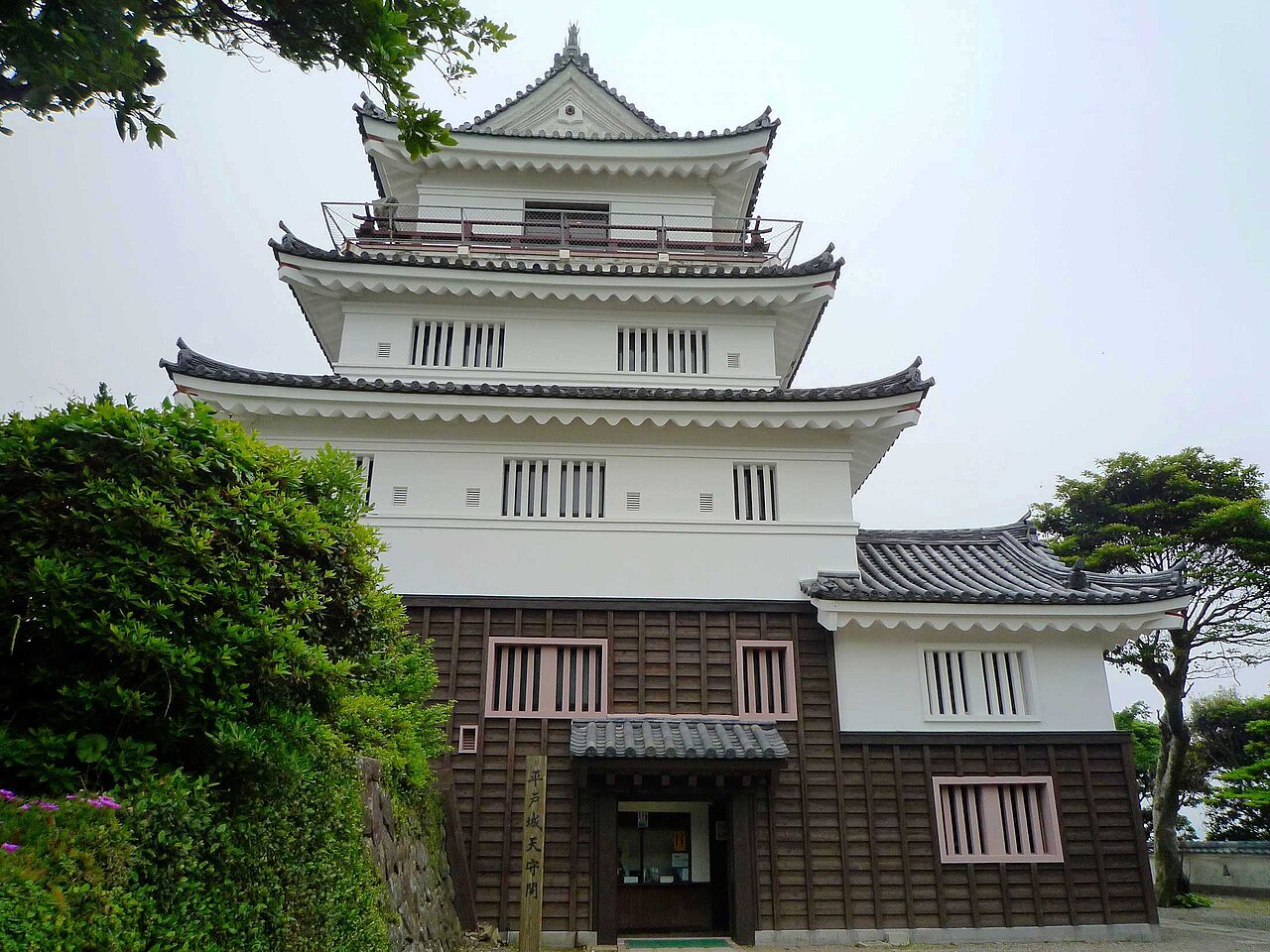
“A kiln that does not have to sell anything can afford to make things that would never survive a price negotiation.”
- c. 1598 — Korean potters brought back by the Matsura clan of Hirado settle in the Mikawachi valley.
- 1650 — Mikawachi is designated the Hirado domain’s official kiln (ohan-gama), producing presentation wares rather than market goods.
- Edo period — Karako-e becomes the signature motif; the number of children (three, five, seven) encodes the rank of the recipient.
- Sakoku era — Hirado, then Dejima in Nagasaki, serve as Japan’s only authorized window to Europe; Nagasaki porcelain reaches Dutch buyers through this channel.
- Meiji era — The abolition of the domains removes the kiln’s patron; Mikawachi turns to export to survive.
- 1873 — Medal at the Vienna World Exposition.
- 1900 — Medal at the Paris Exposition Universelle.
- 2026 — Karako-e is still painted by hand in the Mikawachi district, on pots like the one covered here.
Nagasaki’s role as Japan’s single open port is the reason this ware reads the way it does. Hirado, and later the artificial island of Dejima, were the only authorized channels to Europe during sakoku. Mikawachi porcelain traveled that route to Dutch buyers well before the Meiji expositions gave it medals. The result is a ware with two audiences built into it — a Chinese-derived visual vocabulary aimed at a Japanese court, carried out through a harbor pointed at Europe.
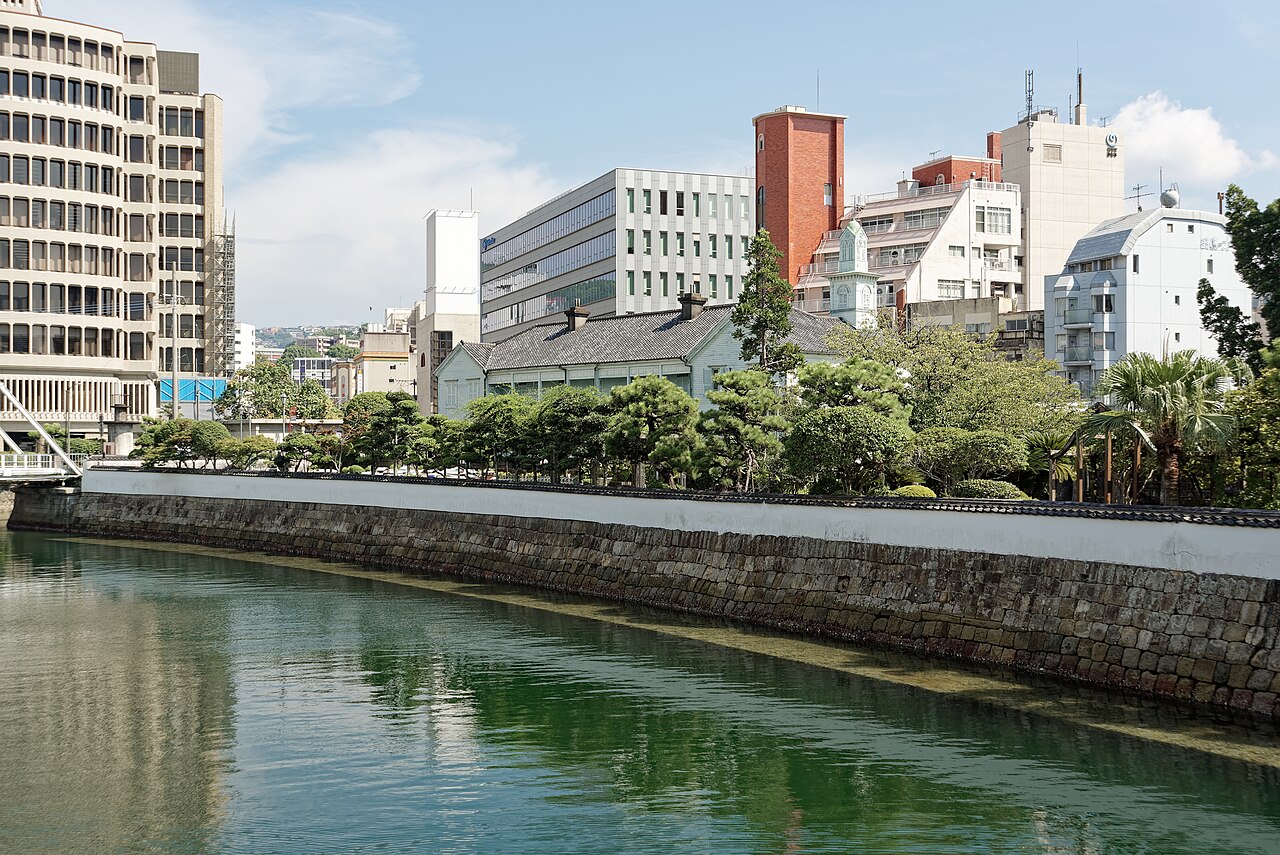
The karako motif itself belongs to a wider Chinese cultural layer that settled over Nagasaki more thickly than over anywhere else in Japan. Chinese children under a pine were not an imported curiosity here; they were part of the local visual grammar, alongside the dragon dances still performed at the Nagasaki Kunchi festival. Reading the motif as generic chinoiserie misses that it arrived through a port that had genuine Chinese traffic for centuries.
The rank-encoding detail is worth pausing on, and it is traditionally understood rather than documented as a rule: three children for one tier of recipient, five for another, seven for the highest. A buyer today is unlikely to be sorted by shogunal rank. The convention survives as a design habit, and the count on a given pot is simply what the painter drew.
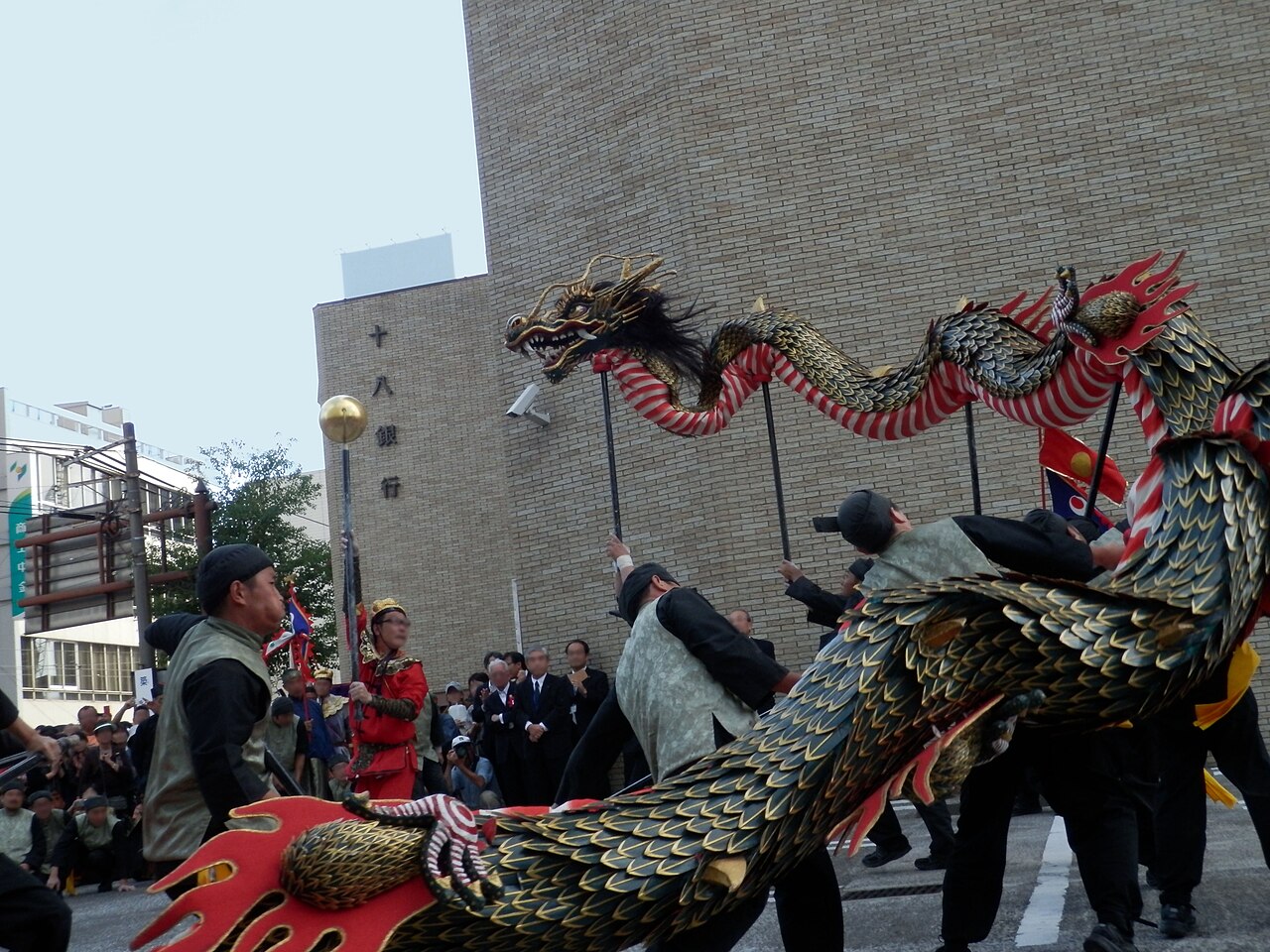
What “still made here” means for Mikawachi is narrower than it was in 1650 and more precarious than the medals of 1873 and 1900 suggest. The kiln district lost its patron once and rebuilt around export; the painting itself, the fine gosu line that the domain era paid for, is the part that has to be transmitted by hand from one painter to the next. That is the continuity a buyer is actually paying into.
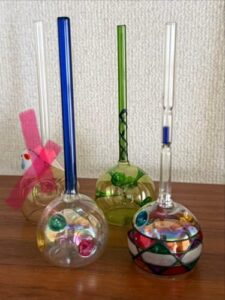 🔗 Nagasaki Poppen glass — the other Nagasaki craft shaped by the Dutch trade
🔗 Arita sometsuke mug — the neighboring Saga porcelain, same cobalt technique
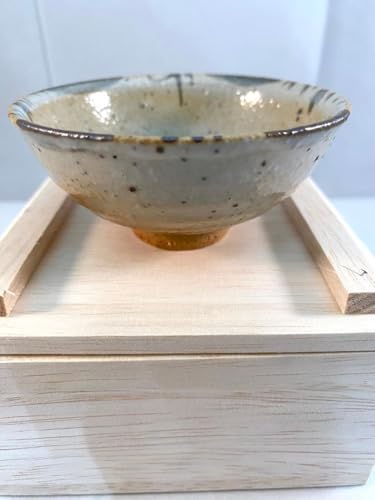 🔗 Karatsu e-garatsu guinomi — stoneware rather than porcelain, for contrast
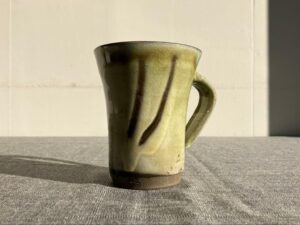 🔗 Onta-yaki mug — the unpainted, folk-craft end of Kyushu ceramics
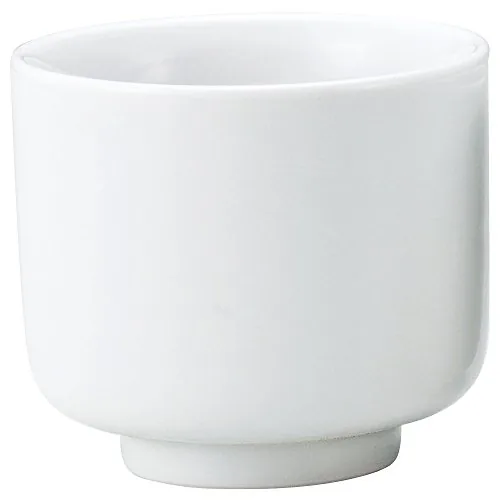 🔗 Shiro-Satsuma sake cup — another domain-patronized Kyushu ware
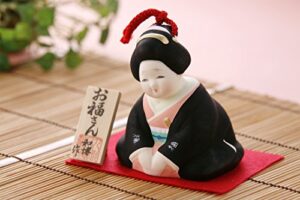 🔗 Hakata Ningyo figurine — hand-painted Kyushu ceramic in figure form
🔗 Another Japanese teapot — Kobushi-yaki, Hokkaido, glazed rather than painted
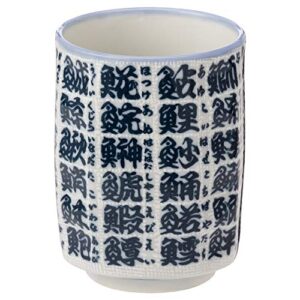 🔗 Odo-yaki sometsuke yunomi — the cup to drink from, in the same blue-and-white idiom
📦 Shipping & where to buy from outside Japan
The specific pot in this guide is sourced from a Japanese listing, and the Amazon Japan Global Store ships it internationally to 65+ countries — including Canada, the UK, and Australia. This is not a US-only path, and it is not a fallback: it is the primary route to this exact object from anywhere outside Japan.
Expect international shipping in the range of $15–$40 to North America, Europe, and Oceania for an item of this size and weight, though the checkout figure is the only one that binds. Amazon estimates and usually collects import fees at checkout for most destinations, which removes the unpleasant surprise of a customs invoice arriving after the parcel.
Proxy services such as Buyee and Tenso remain an option if the Global Store listing goes out of stock, since they can reach Japanese domestic retailers that do not ship abroad. They add a service fee and a consolidation step, so they are worth the friction mainly when the direct route is unavailable.
Price snapshot across stores
| Store | Item / variant | Price | Notes |
|---|---|---|---|
| 🇺🇸 Amazon.com (US) | Browse Japanese porcelain teapots & kyusu | varies (USD) | Best if you are shopping from the US — Prime shipping, USD pricing, no international customs. Amazon US carries Japanese porcelain and stoneware kyusu from Arita, Tokoname, and Hasami makers, useful for comparing capacity and strainer types. The Mikawachi karako-e pot itself is sourced from Japan (next row). |
| 🇯🇵 Amazon JP Global Store | Mikawachi-yaki karako-e kyusu, approx. 300 ml (ASIN B0H8B318LH) | See listing — no price in our snapshot | Ships internationally from Japan to 65+ countries — including Canada, the UK, and Australia — with import fees estimated at checkout. This is the exact item covered in this guide. |
| Maker direct | Mikawachi kiln shops and the district’s cooperative outlets | Unconfirmed — check the kiln’s own site | Often the widest selection of karako-e pieces and painter variations, but many Mikawachi workshops sell domestically only. |
| Proxy services (Buyee / Tenso) | Any Japanese-domestic listing | Item price plus service and forwarding fees | Worth using when the Global Store listing is out of stock. Adds a fee layer and a consolidation step; fragile porcelain benefits from requesting reinforced packing. |
Prices in USD are approximate and depend on the current exchange rate (¥150/USD baseline as of mid-2026). JPY is the authoritative currency for the listed item. Prices and stock fluctuate; the linked listing carries current data.
What it does well
- 🍽️ Dishwasher: not confirmed for this listing — hand-washing is the safe default for hand-painted ware.
- ♨️ Microwave: not confirmed for this listing — check the live listing before microwaving.
- 🧴 Daily care: rinse the integrated ceramic mesh from the inside after each use so fine leaf particles do not accumulate in it; the underglaze cobalt is sealed beneath the glaze and will not fade with washing.
- 🔧 Repairs: porcelain of this type is a candidate for kintsugi (golden-joinery repair) rather than replacement; no maker repair program is stated in our data.
Weaknesses and things to verify before buying
- No price in our snapshot. We could not verify a current figure at the time of writing, so treat the listing as the only authority on cost. Do not budget from this article.
- Capacity is small by Western standards. Approximately 300 ml is roughly two small Japanese cups. Households that brew a pot for a table will find it inadequate, and nothing about the design compensates for that.
- Dishwasher and microwave ratings are unconfirmed. These were absent from our data. If either matters to your daily routine, confirm before purchasing rather than after.
- Dimensions and weight are unconfirmed. Side-handle pots vary considerably in how they balance when full; without a weight figure we cannot tell you how it will feel in the hand.
- Hand-painting means piece-to-piece variation. Line weight, the exact posture of the karako figures, and the number of children shown may differ from the photograph. This is intrinsic to the technique, not a defect.
- Ceramic mesh is harder to deep-clean than a lift-out basket. There is no part to remove and scrub. Fine leaf can lodge in the mesh and needs rinsing from inside the pot.
- Porcelain is a shipping risk. A thin-walled painted pot crossing an ocean depends entirely on packing quality. Inspect on arrival and document any damage promptly for the return window.
- Motif symbolism is traditional, not certified. The three/five/seven rank convention is traditionally understood. Do not buy expecting a documented rank marking on a modern piece.
Conclusion — which buyer type are you?
Other ways to approach this purchase
🏆 Editor’s Pick
❓ Frequently Asked Questions
Does the Amazon Japan Global Store ship this teapot outside Japan?
Yes. The Global Store ships to 65+ countries, including Canada, the UK, and Australia as well as the US and most of the EU. Import fees are estimated and usually collected at checkout for major destinations, so a separate customs bill is uncommon.
What does the karako-e design actually depict?
Chinese children playing beneath a pine tree, painted in cobalt under the glaze. It is the signature Mikawachi motif. Traditionally, the number of children shown — three, five, or seven — encoded the rank of the person the piece was presented to during the domain-kiln era.
Is 300 ml enough for daily use?
For one or two people drinking Japanese green tea, yes — that style of brewing uses small volumes and repeated short infusions. For three or more drinkers, or for Western-style single-pot brewing, it is too small and you should look for a larger pot.
Can it go in the dishwasher or microwave?
Our data snapshot did not confirm either rating, so we cannot state one. Hand-washing is the safe default for hand-painted porcelain. Check the live listing before assuming dishwasher or microwave compatibility.
How is Mikawachi-yaki different from Arita ware?
Both are Kyushu blue-and-white porcelains using underglaze cobalt, but they are separate kiln districts in separate prefectures — Mikawachi in Nagasaki, Arita in Saga. Mikawachi was the Hirado domain’s official kiln from 1650, producing presentation goods rather than market goods, which pushed it toward very thin, very white bodies, fine transparent cobalt line, and openwork carving.
Will the pot I receive look exactly like the photograph?
Not exactly. The painting is done by hand, so line weight, the posture of the figures, and potentially the number of children vary between pieces. This is a property of the technique rather than a quality problem.
Why does a Nagasaki porcelain look Chinese and sell to Europeans?
Because of where Nagasaki sat in Japanese history. Hirado, and later Dejima, were Japan’s only authorized window to Europe during the sakoku period, while Nagasaki also carried genuine Chinese traffic for centuries. Mikawachi porcelain reached Dutch buyers through that channel long before it won medals at the Vienna Exposition in 1873 and the Paris Exposition in 1900.
jpmono.com is curated by a Japan-based editorial team, working out of Toyama in the Hokuriku region and Nara in Kansai, and is independent. We introduce Japanese household objects to international readers, focusing on items with verifiable craft heritage and clear international shipping paths. We do not physically test every product — we read maker specifications and source listings — and we take no payment from the makers we feature. Income comes from affiliate links.
🤖 This article was drafted with AI assistance and reviewed by a Japan-based human editor. Factual claims are drawn from the source listing snapshot and documented craft history; specifications not present in our source data are marked as unconfirmed rather than estimated.
Affiliate disclosure: jpmono.com may earn a commission on qualifying purchases made through links on this page, at no additional cost to you.