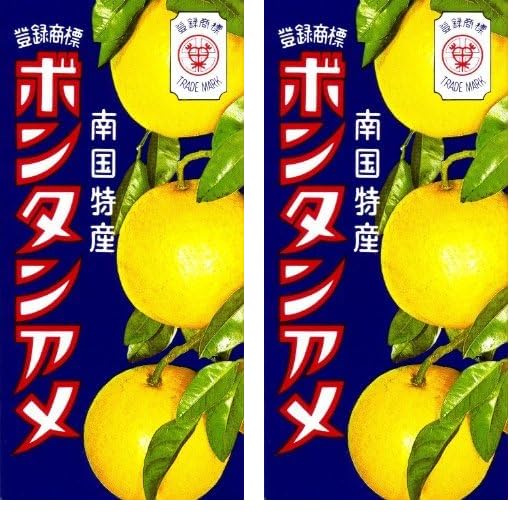
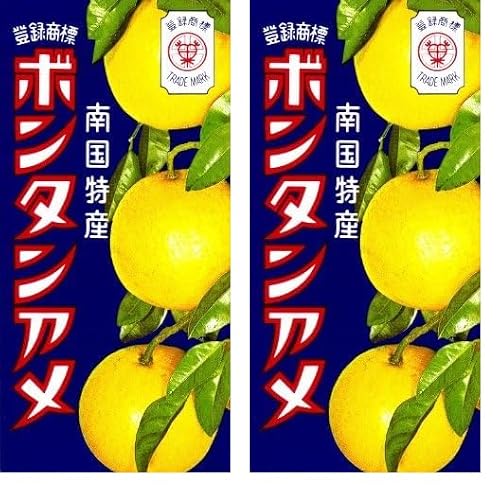
- What it is: a soft, chewy citrus candy — 14 pieces in a box, each one wrapped in an edible starch sheet
- Made in: Kagoshima City, Kagoshima Prefecture, Kyushu — by Seika Foods, a Kagoshima confectioner
- Price band: an everyday, low-cost candy rather than a gift-box luxury — the live listing is the only reliable figure
- Best for: readers who want a small, distinctly regional Japanese sweet to try or to tuck into a parcel
- Skip if: you are avoiding soy, or you need a confirmed English ingredient panel and a guaranteed overseas listing before you buy
- Shipping: availability and international delivery are set by the seller, not the maker — jump to our pick ↓
The candy is soft enough that the wrapper disappears with it.
Bontan Ame (ボンタンアメ) is a small, pale, chewy sweet sold by Seika Foods, a confectioner based in Kagoshima City on the southern coast of Kyushu. Each piece is individually wrapped not in plastic film but in oblaat — a thin, edible sheet the manufacturer describes as being made from potato and sweet-potato starch. You eat the wrapper along with the candy, which is the first thing most people notice and the detail that makes the sweet hard to confuse with anything else.
The flavor comes from citrus. The maker’s published ingredient list for the 14-piece box includes bontan juice and concentrated Satsuma mandarin juice, alongside syrup, sugar, maltose, glutinous rice, starch, flavoring, annatto color and a soybean-derived emulsifier. The result is a mild, aromatic sweetness rather than a sharp one, and the texture is closer to a firm jelly than to a hard boiled sweet. It is a everyday candy in Japan, sold in small boxes at ordinary shops rather than in department-store confectionery halls.
This guide looks at what the maker and retailers actually publish about the 14-piece box: its ingredients, its wrapping, its stated shelf life, how it should be stored, and the practical questions that come up when someone outside Japan wants to buy one. It also covers what is not confirmed — pricing, a specific overseas listing, and shipping eligibility — because those change and should be checked at the point of sale.
Updated: October 21, 2026
Read time: about 9 minutes
- Who this is for — and who should skip it
- Product overview (from published specs)
- 📍 Where this comes from — Kagoshima, Kyushu
- 📌 How does it compare?
- Price snapshot across stores
- 📦 Shipping & where to buy from outside Japan
- What it does well
- Weaknesses and things to verify before buying
- 🧼 Care & everyday use
- Conclusion — which buyer type are you?
- Other ways to approach this purchase
- 🏆 Editor’s Pick
- ❓ Frequently Asked Questions
Who this is for — and who should skip it
- You want to try a regional Japanese candy that is not a chocolate or a hard sweet.
- The idea of eating an edible starch wrapper appeals to you more than it worries you.
- You are putting together a small parcel of Japanese groceries and want a low-cost, lightweight item.
- You like citrus flavors that are aromatic and gentle rather than sour.
- You are curious about a confection with a documented history going back a century.
- You have a soy allergy — the maker lists a soybean-derived emulsifier.
- You need an English ingredient panel in hand before ordering, not a Japanese one you have to translate.
- You dislike chewy, soft-set textures and prefer candy you can crunch.
- You want a guaranteed, currently confirmed overseas shipping option before you commit.
- You are buying a gift that must look formal — this is a shop-counter sweet, not a presentation box.
“The wrapper is part of the candy — which is either the most charming thing about Bontan Ame or the detail that decides the purchase for you.”
Product overview (from published specs)
ℹ️ Our snapshot of the marketplace listing carried no price and no ASIN — the linked listing is authoritative, and anything unconfirmed is marked as such below.
The table below collects only what the manufacturer’s product page for the 14-piece box and retailer product information state. Where a point is not published, it is marked unconfirmed rather than estimated. The candy is a simple thing, so the specification is short: what it is made of, how it is wrapped, how long it keeps, and how it should be stored.
| Item | Seika Foods Bontan Ame (ボンタンアメ), 14-piece box |
|---|---|
| Type | Soft, chewy citrus candy |
| Pieces per box | 14, individually wrapped |
| Wrapper | Edible oblaat, described by the maker as a sheet made from potato and sweet-potato starch |
| Ingredients (as published) | Syrup, sugar, maltose, glutinous rice, oblaat, bontan juice, concentrated Satsuma mandarin juice, starch, flavoring, annatto color, soybean-derived emulsifier |
| Allergen listed | Soy |
| Best-before | 10 months, excluding the production date (the maker’s stated period; not converted to a day count) |
| Storage | Room temperature, away from direct sunlight and from high heat and humidity (retailer product information) |
| Maker | Seika Foods, Kagoshima City, Kagoshima Prefecture |
| Price | Unconfirmed — no price in our snapshot; check the live listing |
📖 Glossary — the words on the package
- Bontan (ボンタン)
- A large citrus fruit, often rendered into English as pomelo. It gives the candy its name and part of its aroma.
- Ame (飴)
- The Japanese word for candy or a sweet. It covers hard sweets, soft sweets and chewy ones alike.
- Oblaat (オブラート)
- A thin edible film of starch, used here as the individual wrapper. It is not plastic and is not removed before eating.
- Maltose (水あめ, mizuame)
- A syrupy sugar that gives chewiness and body. It appears in the ingredient list alongside sugar and syrup.
- Satsuma mandarin
- A small, seedless-ish mandarin variety widely grown in Japan. The concentrated juice is listed as an ingredient; it is a different fruit from bontan.
- Annatto
- A plant-derived colorant used for a warm yellow-orange tone. It appears in the list as “annatto color.”
📍 Where this comes from — Kagoshima, Kyushu
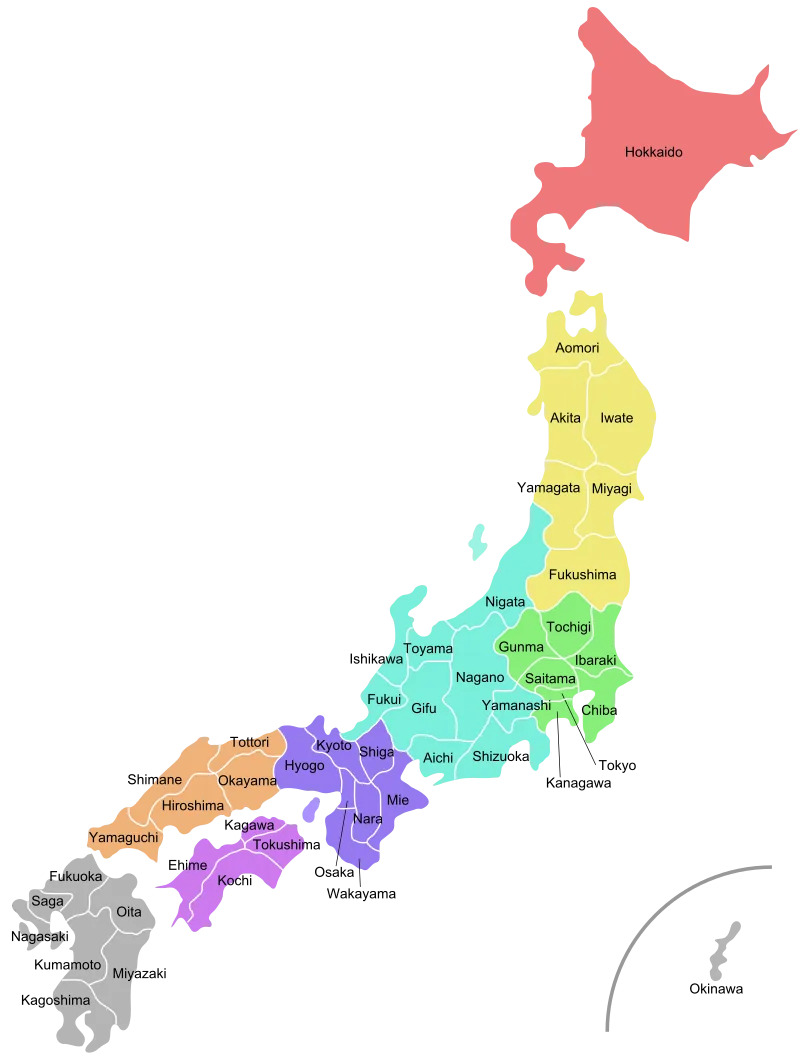
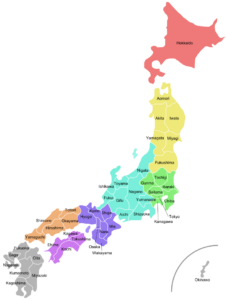
Kagoshima Prefecture occupies the southern end of Kyushu, the southernmost of Japan’s four main islands. Kagoshima City, where Seika Foods is based, sits on the western shore of Kagoshima Bay — a deep inlet that gives the city its harbor and its weather. Across the bay stands Sakurajima, one of Japan’s most active volcanoes; its ash is a familiar part of daily life in the city, and the volcano is visible from much of the waterfront. The city is the administrative and commercial center of the prefecture and the rail terminus for the southern stretch of Kyushu.
That geography matters for a candy in a modest way. A port city at the southern edge of the archipelago has always been a place where goods arrive and leave, and food manufacturing there served both the local market and shipping routes. Seika Foods describes itself as a Kagoshima company, and the bontan and mandarin juices in the ingredient list tie the product to the citrus that grows in the warmer parts of Kyushu and neighboring regions. The candy is not a protected regional product with a designation attached to it; it is simply a confection that has been made in the same city for a long time.
-
1912 — The Taisho era begins, the period in which the candy’s start date falls. -
1925 (Taisho 14) — The maker states that production and sales of Bontan Ame began. -
1926 — The Showa era begins, the year after the candy’s documented start. -
1989 — The Heisei era begins; the candy is already decades into production. -
2019 — The Reiwa era begins. -
2023 — The maker issues a correction that supersedes the earlier 1924 date for the start of production and sales. -
2026 — The 14-piece box is still the everyday format described on the maker’s product page.
The date deserves one careful note, because it is the kind of detail that gets copied wrongly across the internet. For years, the start of Bontan Ame production was given as 1924. The manufacturer now states 1925, or Taisho 14, and describes the 2023 correction as superseding the earlier figure. So the commonly repeated older date is not the one the company currently stands behind. Beyond that, the company’s published account is short: production and sales began, and the candy has been made in Kagoshima since. No founder biography, no workshop anecdote, and no claim about how the recipe was devised is published in the material available, so none is asserted here.
What is documented is the continuity of the format. A candy that has been sold since the 1920s and is still sold in a small box at ordinary shops belongs to a different category from a craft object with a designation and a museum label. Its value is ordinary: it is the sweet a lot of people in southern Kyushu have eaten since childhood, and the fact that the maker has kept the oblaat wrapping rather than switching to a plastic film is the most distinctive thing about it.
📌 How does it compare?
If you are assembling an order of Japanese staples, these guides cover tea and pantry items with the same approach: what the maker publishes, what is unconfirmed, and how to check shipping.

Chiran-cha Deep-Steamed Sencha (知覧茶 深蒸し煎茶, sealed 100g bag)

Maruhachi Seichajo Kenjo Kaga Bocha (献上加賀棒茶, sealed bag/tin)

Katagi Kokoen Asamiya-cha Sencha (朝宮茶 煎茶, sealed 100g loose-leaf)
🍵
Suzuki Seicha Honkaku Ise Cha (鈴木製茶 本格伊勢茶, sealed bag)

Hoshino Seichaen Yame Matcha (星野製茶園 八女抹茶, sealed 30–40g tin)
🍃
Marushichi Seichajo Sayama Sencha (丸七製茶場 狭山茶 煎茶, 100g sealed)
Price snapshot across stores
No price is reproduced here, because the snapshot this article was built from contained none. That is not a dodge — quoting a figure from memory or from a different pack size would be worse than sending you to the listing. What the table can do is set out where the candy is sold, what each path actually gives you, and what to check before paying.
| Store | Item / variant | Price (JPY, USD est.) | Notes |
|---|---|---|---|
| 🇺🇸 Amazon US (search) | Search results for Seika Foods Bontan Ame — availability varies by seller | Varies (USD) — check each result | Best if you are shopping from the US: USD pricing, Prime where offered, no international customs. Japanese candy is carried by third-party sellers, so confirm pack size and seller before ordering. |
| 🇯🇵 Amazon JP Global Store | Seika Foods Bontan Ame, 14-piece box — no specific listing confirmed in our snapshot | Unconfirmed — no price in our snapshot | Ships internationally from Japan to 65+ countries — including Canada, the UK and Australia — with import fees estimated at checkout where the listing offers international delivery. Verify the seller ships to your address. |
| Maker direct | 14-piece box, via the maker’s own site or listed stockists | Unconfirmed — check the maker’s site | The manufacturer publishes product information; direct online sales and overseas dispatch from the factory are not confirmed in our materials. |
| Proxy services (Buyee / Tenso) | Buy from a Japanese retailer, then forward or consolidate | Item price plus proxy fee plus international shipping — not quoted here | Useful when a Japanese seller will not ship abroad. Fees and consolidation rules differ by service; check the current schedule before ordering. |
USD figures, where they appear, are approximate and depend on the current exchange rate. Prices and stock fluctuate; the JPY figure on the live listing is the authoritative one.
📦 Shipping & where to buy from outside Japan
Whether a particular box of Bontan Ame can reach you depends on the seller, not on the candy. Amazon Japan’s Global Store program ships many food and household items to more than 65 countries, including Canada, the UK and Australia, but individual listings opt in or out, and food rules differ by country. A listing that ships to one address may refuse another.
Expect shipping in the range of roughly $15–$40 for a small parcel to the US or EU, with similar costs to Canada, the UK and Australia, depending on speed and consolidation. Because a 14-piece box is light, shipping usually costs far more than the candy itself — which is why it makes sense to order it alongside other items rather than on its own. Amazon estimates and collects import fees at checkout for most destinations; where it does not, duty and tax are collected by the carrier or customs on arrival.
Two practical cautions. First, confectionery is a regulated import in some countries, and a seller’s refusal is usually about the destination’s rules rather than the product. Second, heat is the enemy of this candy: oblaat softens and the pieces can deform in a hot delivery van or a mailbox in summer. If you are ordering in warm weather, choose a faster shipping option where one is offered and arrange for the parcel to be received rather than left outside.
What it does well
Weaknesses and things to verify before buying
- No live price or confirmed listing in our snapshot. Any figure you see elsewhere, including in a screenshot, may be out of date. Check the listing itself.
- Soy is a listed allergen. The ingredient list includes a soybean-derived emulsifier. If soy is a concern in your household, read the panel on the actual package.
- The ingredient panel is published in Japanese. Translations circulate online, but the package text is the reference. If you need certainty about a specific additive, ask the seller for a photo of the label.
- Shipping eligibility is not guaranteed. The 14-piece box is not confirmed as an item that every Amazon Japan seller will ship to every country; food import rules vary.
- Heat sensitivity. The maker’s storage guidance is room temperature, away from direct sunlight and high heat and humidity. A candy that is soft at room temperature will not improve in a hot mailbox; no claim that it never melts should be relied on.
- Unverified packaging claims. Statements that the box is sealed, that the wrapping prevents sticking, or that the packaging is plastic-free are not established by the sources available. The edible oblaat wrapping of individual pieces is confirmed; the rest is not.
- Texture is a matter of taste. Chewy sweets divide people. If you dislike soft, slightly sticky candy, the format rather than the flavor will be the problem.
🧼 Care & everyday use
- 🗄️ Storage: room temperature, away from direct sunlight and from high heat and humidity (retailer product information). A cool, dry cupboard is the simple reading of that.
- 📅 Best-before: 10 months excluding the production date, as stated by the maker. Check the date printed on the box rather than counting from your order date.
- 🍬 Wrapping: individual pieces are wrapped in edible oblaat. Do not unwrap them; the sheet is part of the candy.
- 🌡️ In transit: if the parcel arrives warm, let it return to room temperature before opening, and expect the pieces to have softened slightly.
Conclusion — which buyer type are you?
That is the decision in one line: buy it for the format and the citrus, not for a bargain. The candy is small, the shipping is the real cost, and the listing — not this article — is where the price and the delivery promise live.
Other ways to approach this purchase
🏆 Editor’s Pick
❓ Frequently Asked Questions
Is Bontan Ame actually mochi?
Do I eat the wrapper?
Does it contain any allergens?
How long does it keep?
Can it be shipped to the US, Canada, the UK or Australia?
Is the 14-piece box a good size for a first try?
Where is it made?
jpmono.com is curated by a Japan-based editorial team (working out of Toyama in the Hokuriku region and Nara in Kansai) and is independent. We don’t take payment from the makers we feature; income comes from affiliate links. Read more about our editorial standards.
This article was drafted with AI assistance and checked against published manufacturer and retailer product information by the jpmono editorial team. Product details, packaging and availability can change; the package and the live listing are the reference.
Affiliate disclosure: jpmono.com may earn a commission on qualifying purchases made through links on this page, at no additional cost to you.