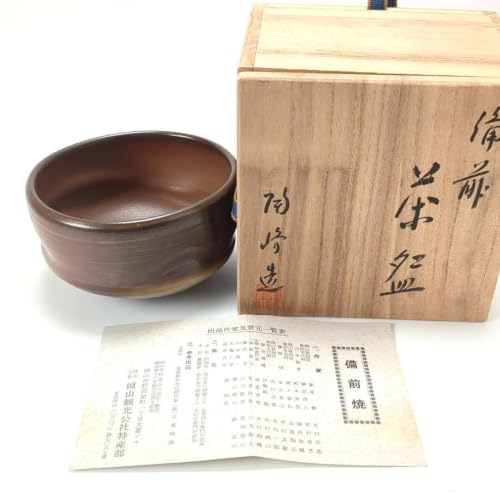
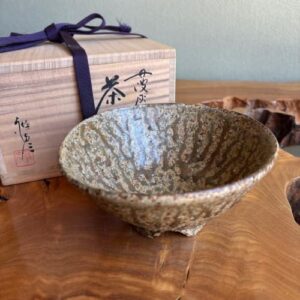
- What it is: one unglazed Bizen-yaki matcha bowl, listed with a wooden tomobako box and a paper slip.
- Made in: Imbe, Bizen City, Okayama Prefecture — wood-fired stoneware with no glaze, from one of Japan’s six ancient kilns.
- Price band: ¥9,680 (about $65 USD) for a single bowl with its box — mid-range for a wood-fired matcha chawan.
- Best for: a drinker who wants a bowl whose color comes from flame, ash and straw rather than from a painted glaze.
- Skip if: you need a uniform surface, an exact size before you order, or a potter’s name printed on the page.
- Shipping: ships internationally from Amazon Japan — jump to our pick ↓
Straw burns away, but on a Bizen bowl it leaves a mark. A rice stalk tied against the clay during firing leaves a red-orange line behind, and no glaze goes anywhere near the piece before or after. The bowl discussed here is a matcha chawan (抹茶碗) from Imbe, the potting district of Bizen City in Okayama Prefecture, listed on Amazon Japan as 備前焼 茶碗 抹茶碗 共箱 栞付 茶道具 for ¥9,680 (about $65 USD at ¥150 to the dollar), with a wooden tomobako box and an accompanying paper slip.
Bizen is one of the small number of Japanese ceramic traditions that never used glaze as a starting point. The clay is dug locally, shaped, dried, and sent into a wood-fired kiln for days at a time; the surface that comes out is whatever the fire, the ash and the stacking arrangement made of it. That is why museum collections hold Bizen pieces from the Edo period next to work fired last month without much visual contradiction, and why two bowls from the same kiln load can look like they came from different workshops.
This guide is written for a reader outside Japan who is considering a first proper matcha bowl and wants to know what the listing actually promises, what it leaves unsaid, and what a bowl like this costs once shipping and import fees are added. The comparison axes are simple: stated specifications, surface and firing character, the box and its paperwork, care, and the practical question of getting a fragile object from Okayama to North America, Europe or Australia in one piece.
Last updated
☕ 9 min read

- Who this is for — and who should skip it
- Product overview (from published specs)
- 📍 Where this comes from — Imbe, Bizen, and a thousand years of unglazed firing
- 📌 How does it compare?
- Price snapshot across stores
- 📦 Shipping & where to buy from outside Japan
- What it does well
- Weaknesses and things to verify before buying
- Conclusion — which buyer type are you?
- Other ways to approach this purchase
- 🏆 Editor’s Pick
- ❓ Frequently Asked Questions
Who this is for — and who should skip it
- You already make matcha at home and want a bowl that is not a glazed souvenir.
- You accept that the surface you receive will differ from the photograph, because the kiln decided it.
- You want the object to arrive with its own storage box, not in a plastic sleeve.
- You are buying a first tea bowl for yourself and can live without a named artist.
- You are comfortable ordering from Japan and waiting a week or two.
- You need to know the diameter and weight before you pay — this listing gives neither.
- You want a specific potter’s name, kiln mark or certificate of authenticity.
- You expect a smooth, sealed, dishwasher-safe surface.
- You are shopping for a gift that must look identical to its product photo.
- You want a bowl for everyday soup or cereal rather than for tea.
The distinction matters more than it sounds. A glazed bowl is a manufactured surface; a Bizen bowl is a record of one firing. Buyers who enjoy that are usually happy with what arrives. Buyers who expect the photograph are frequently the ones who return it.
Product overview (from published specs)
ℹ️ Only the Amazon JP listing snapshot is available; live pricing may have shifted since the writing date. Attributes the listing does not state are marked as not stated rather than guessed.
Bizen-yaki Matcha Chawan
備前焼 茶碗 抹茶碗 共箱 栞付 茶道具
通常6~7日以内に発送します。 · Sold by ぽぽななショップ · ASIN B0HMNTW3K9
Price and availability as of 2026-10-22 11:15 JST. The Amazon listing at the time of purchase is authoritative. jpmono.com earns a commission on qualifying purchases at no extra cost to you.
| Attribute | What the source states |
|---|---|
| Item | Matcha bowl (抹茶碗), single piece — 備前焼 茶碗 抹茶碗 共箱 栞付 茶道具 |
| Craft | Bizen-yaki (備前焼), unglazed wood-fired stoneware |
| Origin | Imbe, Bizen City, Okayama Prefecture, Japan |
| Surface | No glaze; color from clay, flame, ash and straw contact |
| Set contents | Bowl, wooden tomobako box (共箱), paper slip (栞付) |
| Dimensions / weight | Not stated in the listing |
| Potter / workshop | Not stated in the listing |
| Condition | New |
| Price | ¥9,680 (about $65 USD) as of October 22, 2026 |
| Seller / dispatch | ぽぽななショップ; usually ships within 6–7 days |
A matcha bowl is judged in the hand, and this listing asks you to buy before that moment. The practical workaround is to treat the box and the seller’s answers as the specification: what the piece measures, how it sits in the palm, and whether the bowl in the photograph is the one that ships.
📖 Glossary — the words that actually matter here
Bizen-yaki (備前焼) — unglazed stoneware fired around Imbe in Bizen City, Okayama. No glaze, no painted decoration; the surface is the firing.
Chawan (茶碗) — the bowl used for whisking and drinking matcha. Proportions differ from a rice bowl: wider mouth, thicker wall, a foot ring that sits comfortably in the palm.
Hidasuki (緋襷) — the reddish-orange trace left where rice straw was tied around a piece before firing. The straw burns away; the clay beneath records it.
Botamochi (牡丹餅) — a round, pale patch where another potted piece rested against the surface in the kiln, blocking ash and flame.
Sangiri (桟切) — gray-to-blue flashing on a surface shielded from the fire, often where a piece sat close to the kiln wall.
Tomobako (共箱) — the wooden box made for a specific piece, usually inscribed on the lid by the potter. It travels with the object as part of its record.
Noborigama / anagama — climbing and tunnel-like wood-fired kilns. Firing runs for days, and someone has to keep feeding wood the whole time.
📍 Where this comes from — Imbe, Bizen, and a thousand years of unglazed firing
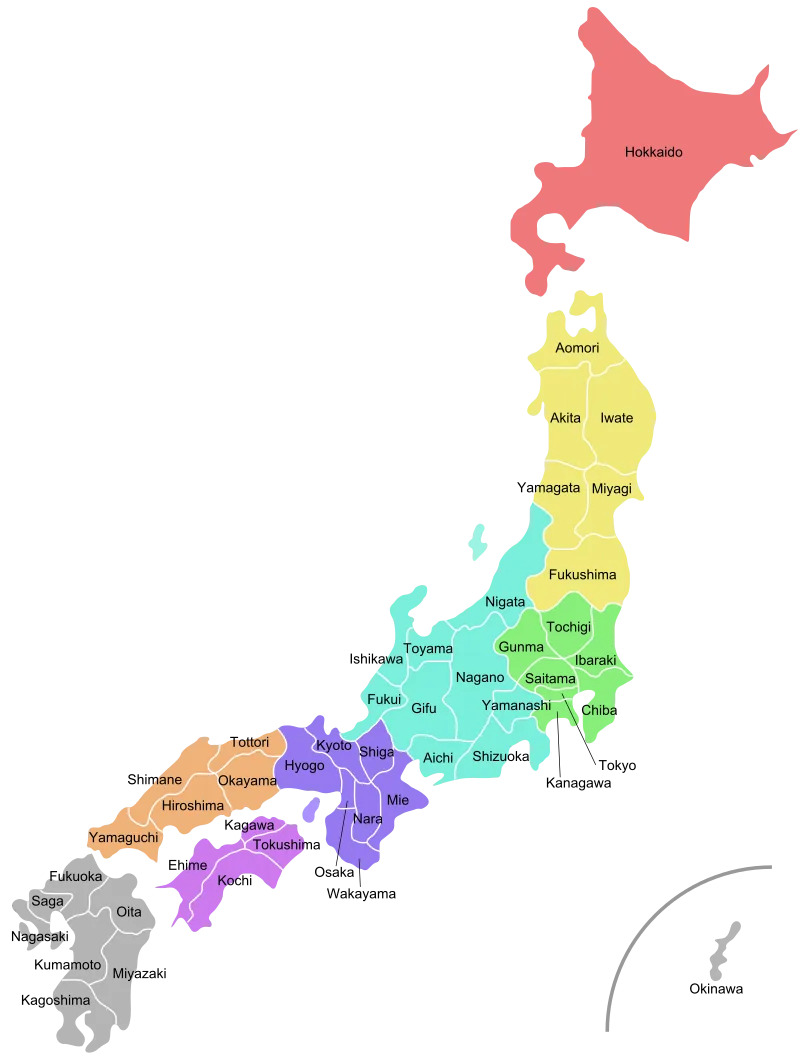
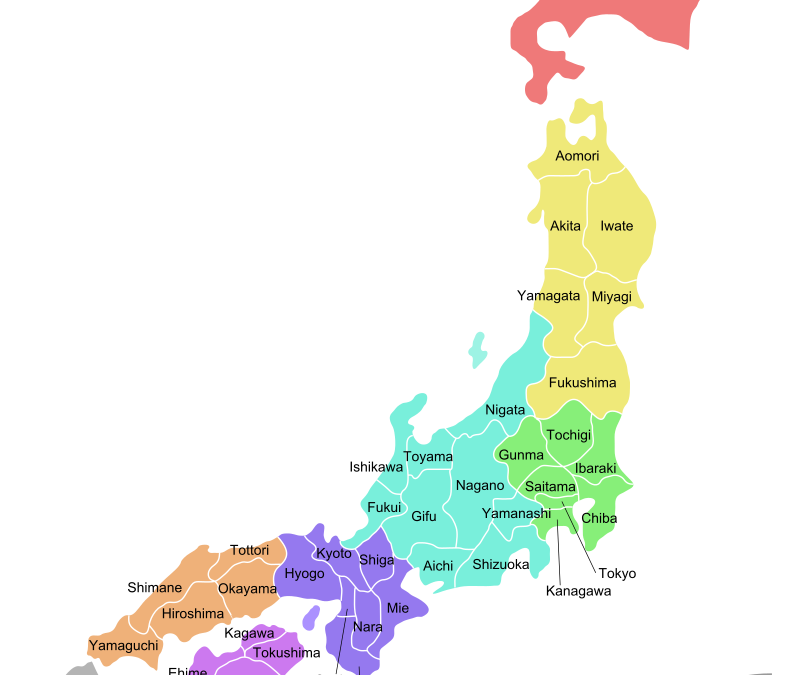
Imbe sits on the coastal plain where the Yoshii River reaches the Seto Inland Sea, in the part of western Honshu called Chūgoku. The Inland Sea is the sheltered water between Honshu, Shikoku and Kyushu, and its climate is mild and comparatively dry — the surrounding hills stay warm, the air is bright, and rain is less frequent than on the Japan Sea side. For a pottery district, that combination was practical rather than picturesque. Clay came out of the local hills, pine from the same hills fed the kilns, and the sea carried finished work to markets in Osaka, Kyoto and beyond.

The commonly told story is that potting on these hills goes back roughly a thousand years, to Sue-ware potters working in the Heian period. Bizen is counted among Japan’s six ancient kilns, the group of medieval ceramic centers that kept firing through the centuries while newer, glazed traditions rose and fell around them. What survived from that long run is a technical conservatism that reads, to a modern eye, as confidence: no glaze, no slip, no painted line. Everything the potter wants to say has to be said through clay preparation, shaping, and the decision of where a piece sits inside the kiln.
- Heian period (794–1185) — the kilns around Imbe are commonly traced to Sue-ware roots, roughly a thousand years back.
- Late 16th century (Momoyama) — tea masters prize unglazed Bizen utensils for the tea room.
- 1603–1868 (Edo period) — the kilns keep working while Okayama Castle serves as the seat of the Ikeda lords.
- 1868 — the Edo period ends and the domain order dissolves; the potting districts carry on as workshops.
- 20th century — Bizen-yaki is formally designated a traditional craft of Japan, with the unglazed method protected as the craft’s definition.
- 2026 — potters around Imbe still fire without glaze, in wood-burning kilns, for days at a time.
The historical turning point for Bizen as tea ware was the Momoyama period, in the late 16th century, when tea masters began to value utensils that looked like they had come out of the ground rather than out of a decorator’s studio. Unglazed stoneware answered that taste directly: it was quiet, it aged visibly, and it changed with use. Through the Edo period the kilns around Imbe kept firing, in a province whose castle at Okayama was held by the Ikeda family, lords of most of Bizen. The wares moved by sea, and the district’s reputation traveled with them.


What “still made here” means in practice is a firing schedule. A wood kiln is loaded, lit, and fed for days; the potter cannot open it early to check, and cannot correct a piece afterwards, because there is nothing to correct with. Position inside the kiln decides almost everything. A bowl near the firebox takes ash and flame on one side; a bowl wrapped in straw comes out with hidasuki lines; a bowl shielded by another piece keeps a pale botamochi patch; a bowl close to a wall can pick up the gray-blue flush called sangiri. The vocabulary of Bizen surface is, in effect, a map of the kiln.

“A Bizen bowl is finished by the fire, not by a brush. The potter’s last decision is where to put it in the kiln.”
The tea-room side of this is not incidental. A chawan is handled constantly during a tea gathering: lifted, turned, examined, set down. Unglazed stoneware warms quickly, sits heavily in the palm, and develops a dark sheen along the rim where hands and tea repeatedly meet it. Tea people call that change part of the bowl’s life rather than wear. For a buyer outside Japan, it is also the honest argument for the object: what you are paying for is a surface that will keep moving in the direction the kiln started it.
📌 How does it compare?
Other bowls, cups and Bizen pieces we have covered, for readers weighing one craft against another.
Price snapshot across stores
Prices below are per the listings on October 22, 2026. The yen figure is the authoritative one for this bowl; dollar figures are estimates at ¥150 to the dollar and move with the exchange rate.
| Store | Item / variant | Price | Notes |
|---|---|---|---|
| 🇺🇸 Amazon.com (US) | Browse Japanese matcha bowls and tea utensils | varies (USD) | Best if you are shopping from the US — Prime shipping, USD pricing, no international customs. Amazon.com carries glazed Japanese bowls and tea accessories from other makers; this exact Bizen bowl ships from Japan (next row). |
| 🇯🇵 Amazon JP Global Store | 備前焼 茶碗 抹茶碗 共箱 栞付 茶道具 — one bowl with box and slip | ¥9,680 (≈ $65 USD) |
Ships internationally from Japan to 65+ countries — including Canada, the UK and Australia — with import fees estimated at checkout. Seller ぽぽななショップ; usually ships within 6–7 days. This is the listing this article follows. |
| Maker direct | — | — | No workshop is named in the listing, so there is no maker’s online shop to order from for this specific piece. Galleries in Imbe and Okayama sell work by named potters at higher prices. |
| Proxy services (Buyee / Tenso) | Domestic Japanese listings and auctions | varies (JPY) + fees | Useful for second-hand bowls, kiln seconds and small workshops that do not ship abroad. Budget for domestic shipping, consolidation and international carriage; fragile ceramics need the optional protective packing. |
📦 Shipping & where to buy from outside Japan
Amazon JP Global Store ships this listing internationally, and the marketplace estimates import fees at checkout so the landed cost is visible before you pay. The listing states dispatch within 6–7 days, which is normal for a piece that may need to be pulled from stock and boxed rather than picked off a shelf.
Customs is the other variable. Most destinations collect duty or tax above a threshold that varies by country, and Amazon usually estimates and collects an import-fee deposit at checkout for the destinations it supports. If you are ordering from Canada, the UK or Australia, check the local threshold before assuming the checkout total is final, and keep the invoice: a boxed craft object is occasionally opened for inspection, and paperwork makes that faster.
Alternative routes exist. Proxy services such as Buyee or Tenso let you buy from Japanese sellers who do not ship abroad, at the cost of two shipping legs and a handling fee. Gallery shops in Okayama and Imbe sell work by named potters, usually with a certificate, usually at several times this price. And if the goal is simply a good unglazed bowl rather than this specific one, the practical move is to compare the Shigaraki, Hagi and Tamba bowls linked above before committing.
ℹ️ Fragile ceramics: keep the original tomobako and its packing material. If a bowl arrives chipped, the box is what makes a return or an insurance claim straightforward.
What it does well
Based on the listing and on how unglazed Bizen ware behaves in use, four things stand out.
- 🍽️ Dishwasher: no — hand-wash only. Unglazed stoneware is porous and will take up soap and food odors.
- ♨️ Microwave: no. Uneven heating can crack a thick-walled unglazed bowl.
- 🧴 Daily care: rinse in warm water, use little or no detergent, and let it dry mouth-up before it goes back in the box.
- 🔧 Repairs: chips and cracks are not usually repairable at home; ask the seller about maker service before purchase if that matters to you.
Weaknesses and things to verify before buying
- No stated size. The listing gives no diameter, height or weight. A chasen needs room to move inside the bowl and the box must fit it, so ask before ordering rather than assuming a standard size.
- No named potter. 共箱 indicates a box made for the piece; it does not tell you whose name is on the lid. If provenance matters, ask before ordering.
- The photograph is one firing, not yours. Hidasuki lines, botamochi patches and sangiri flashing fall where they fall. Expect variation, and treat a very even surface as equally normal.
- Porous clay stains. Dark tea, strong detergents and long soaking all leave marks. This is characteristic rather than a defect, but it is not for someone who wants a bowl that looks new in five years.
- International returns are expensive. Sending a bowl back to Japan costs more than the shipping you paid to receive it. Read the seller’s return terms before checkout.
- Box condition is not described. The listing does not state the box’s condition or whether the lid inscription is legible — worth a question for a gift purchase.
- What are the diameter, height and weight of this exact bowl?
- What is written on the lid of the tomobako, and whose name is it?
- Is the bowl in the photograph the bowl that ships, or a representative piece from the same firing?
Conclusion — which buyer type are you?
Other ways to approach this purchase
🏆 Editor’s Pick
❓ Frequently Asked Questions
Is this bowl really Bizen-yaki?
The listing title identifies it as 備前焼 (Bizen-yaki) and describes a matcha bowl with a wooden box and a paper slip. The listing does not name the potter or workshop, so the maker stays unconfirmed until the seller answers that question.
What is hidasuki?
Hidasuki is the reddish mark left when rice straw is wrapped around a piece before firing. The straw burns away and the clay beneath it takes on a different color from the surrounding surface. Not every Bizen bowl carries it, and this listing does not promise it.
What size is the bowl, and how much does it weigh?
The listing does not state dimensions or weight. Ask the seller for the diameter, height and weight, and confirm that the wooden box was made for this bowl.
Can it go in the dishwasher or microwave?
No. Unglazed stoneware is porous, so it takes up stains and odors and can crack when heated unevenly. Wash it by hand in warm water, use little or no soap, and let it dry fully before it goes back in the box.
Does Amazon Japan ship this to Canada, the UK or Australia?
Yes. Amazon JP Global Store ships to more than 65 countries, including Canada, the UK and Australia, and estimates import fees at checkout. The listing says the item usually ships within 6 to 7 days.
Why does a tea bowl come with a wooden box?
For tea utensils the box is part of the object’s record: the inscription on the lid normally names the potter and the piece. This listing includes a box, but it does not say what is written on the lid.
How much is ¥9,680 in US dollars?
About $65 USD at a rate of ¥150 to the dollar, as of October 22, 2026. The yen price is the authoritative one, and it can change with the listing.
jpmono.com is curated by a Japan-based editorial team, working out of Toyama in the Hokuriku region and Nara in Kansai, and is independent. We do not take payment from the makers we feature; income comes from affiliate links. We do not physically test every product — we read maker specifications and source listings. Read more about our editorial standards.
Note on production: this article was drafted with AI assistance and reviewed by our editorial team. Prices, seller details and listing attributes were checked against the linked marketplace listing on the date shown.
Affiliate disclosure: jpmono.com may earn a commission on qualifying purchases made through links on this page, at no additional cost to you.