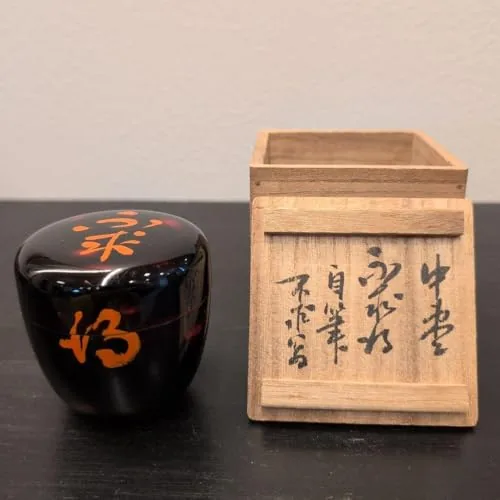
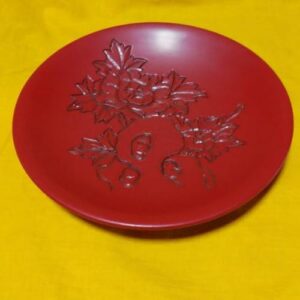
- What it is: one turned-wood natsume tea caddy (棗) in Negoro-nuri lacquer — red over a darker undercoat — listed with a kaō (花押, stylized signature) motif.
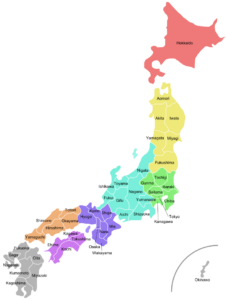
- Made in: Wakayama, Wakayama Prefecture, Kansai region — the old Kii Province, where the Negoro-nuri tradition is rooted.
- Price band: ¥12,000 (about $80 USD as of 2026-11-19) for the single listed piece — mid-range for a lacquered natsume, and a one-off, not a stocked line.
- Best for: someone building a matcha set who wants a caddy with visible craft lineage rather than a plain factory finish.
- Skip if: you need documented dimensions, a named workshop, or a piece you can put in a dishwasher.
- Shipping: ships internationally from Amazon Japan, usually within 6–7 days — jump to our pick ↓
A Negoro-nuri surface is built to be worn. Red lacquer is laid over black, or black over red, in layer after layer, and the finish only reaches its intended look once handling has rubbed the top coat thin enough to let the undercoat show through.
That is the idea behind the natsume (棗) in this guide: a small lidded caddy for matcha, turned from wood, coated repeatedly, and finished so that years of use become part of the object rather than damage to it. The specific piece described here is listed on Amazon Japan as 茶道具 棗 根来塗 花押 — tea utensils, natsume, Negoro-nuri, kaō — at ¥12,000, sold new by the marketplace shop ぽぽななショップ, with dispatch usually inside 6–7 days.
What follows is a reading of that listing against what Wakayama’s lacquer tradition actually is: where the finish came from, how a natsume behaves in tea practice, what the listing does and does not tell you, and which buyer it suits. Prices and stock move, so the linked listing is the authoritative record.
Updated November 19, 2026
Read time: about 9 minutes

- Who this is for — and who should skip it
- Product overview (from published specs)
- 📦 Shipping & where to buy from outside Japan
- Price snapshot across stores
- 📍 Where this comes from — Kii Province and the temple origin of the finish
- What it does well
- Weaknesses and things to verify before buying
- Conclusion — which buyer type are you?
- Other ways to approach this purchase
- 🏆 Editor’s Pick
- ❓ Frequently Asked Questions
Who this is for — and who should skip it
- You already make matcha at home and want a caddy that is not a generic souvenir.
- You like the idea of a finish that changes with use instead of staying showroom-perfect.
- You are comfortable buying a single, individually listed piece rather than a restocked product.
- You want one object that reads well on a tea shelf and still works on a tray.
- You are willing to hand-wash and dry a lacquered item.
- You need exact diameter, height, or weight before ordering — the listing title does not give them.
- You want a signed workshop piece with a named maker and a box.
- You expect the object to look exactly like the photo after a year of daily handling.
- You want something that can go in a dishwasher or hold hot water.
- You are shopping purely on price and would rather have a plain lacquered caddy for less.
Product overview (from published specs)
ℹ️ Our snapshot covers the Amazon JP listing only — there is no US listing for this exact piece and no maker spec sheet, so dimensions, wood species, and workshop are marked unconfirmed below.
Kishu Negoro-nuri Natsume Tea Caddy
茶道具 棗 根来塗 花押
通常6~7日以内に発送します。 · Sold by ぽぽななショップ · ASIN B0GMCL59G1
Price and availability as of 2026-11-19 09:14 JST. The Amazon listing at the time of purchase is authoritative. jpmono.com earns a commission on qualifying purchases at no extra cost to you.
| Attribute | Stated | Source / note |
|---|---|---|
| Item type | Natsume (棗) tea caddy, one piece | Listing title: 茶道具 棗 根来塗 花押 |
| Finish | Negoro-nuri (根来塗), red over a darker undercoat | Listing title; finish definition below |
| Motif | Kaō (花押), a stylized signature mark | Listing title; the title does not say whether it is painted or a maker’s mark |
| Material | Turned wood, lacquer coated | Standard for the form; wood species not stated |
| Dimensions / weight | Unconfirmed — not stated in the listing | Ask the seller before ordering |
| Maker / workshop | Unconfirmed — no maker named | Listed by ぽぽななショップ, a marketplace seller |
| Condition | New | Listing condition field |
| Availability | Usually ships within 6–7 days | 通常6~7日以内に発送します。 |
| Price | ¥12,000 (≈ $80 USD as of 2026-11-19) | Amazon JP listing; verify on the listing |
| Set contents | The caddy only as titled; no box or cloth stated | Listing title names a single natsume |
📖 Glossary — the terms this article uses
- Natsume (棗)
- A small lidded container for matcha, named for the shape’s resemblance to a jujube fruit. Turned from a single block of wood, it holds enough powdered tea for one sitting of tea practice.
- Negoro-nuri (根来塗)
- A lacquer finish of one color laid over another, associated with Kishu (present-day Wakayama). The defining trait is that wear reveals the undercoat.
- Urushi (漆)
- Japan’s traditional tree-sap lacquer, applied in thin coats and cured in humid air. It is the material that makes repeated over-coating possible.
- Kaō (花押)
- A stylized signature mark, historically used in place of a written name on documents. On lacquerware it can be a painted design or a workshop’s mark.
- Kishu (紀州)
- The old name for the region now centered on Wakayama Prefecture, corresponding to ancient Kii Province.
- Kii Province (紀伊国)
- The historical province covering the Kii Peninsula, home to the Kumano shrines and Mount Koya.
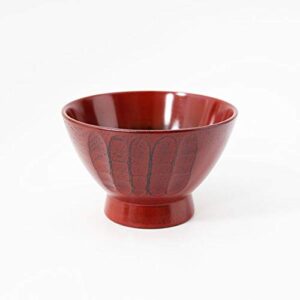
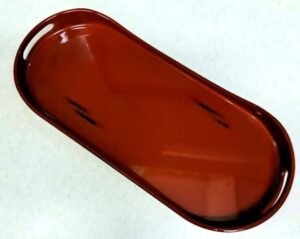
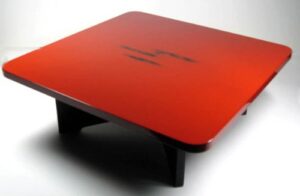
Other pieces in the Negoro family, plus near neighbors in Japanese lacquer, so you can see where a single natsume sits in a wider table setting.
📦 Shipping & where to buy from outside Japan
The piece is sold through Amazon Japan and is offered to international addresses through the Amazon JP Global Store, which ships Japanese listings to 65+ countries — Canada, the UK, and Australia included. Import fees are estimated at checkout for most destinations, which takes most of the guesswork out of customs on arrival.
| Destination | Typical shipping | What to expect |
|---|---|---|
| United States | Roughly $15–$40 | Amazon estimates import fees at checkout; no separate broker needed. |
| Canada | Similar range | Duties and tax are collected or estimated at checkout; see our Canada import guide. |
| United Kingdom | Similar range | VAT and handling are the costs to watch; see our UK import guide. |
| Australia | Similar range | GST applies on low-value imports; see our Australia import guide. |
If a listing will not ship to your address, a proxy service such as Buyee or Tenso is the fallback: you buy domestically in Japan, the parcel goes to the proxy’s warehouse, and they forward it. That path adds a service fee and a second shipping leg, so it usually costs more than the Global Store for a single small item.
Price snapshot across stores
| Store | Item / variant | Price | Notes |
|---|---|---|---|
| 🇺🇸 Amazon.com (US) | Browse Japanese lacquerware and tea utensils | varies (USD) | Best if you are shopping from the US — Prime shipping, USD pricing, no international customs. Amazon US carries lacquer cups, trays, and matcha bowls from several makers, which is useful for comparing shapes and price tiers. This exact natsume ships from Japan (next row). |
| 🇯🇵 Amazon JP Global Store | 茶道具 棗 根来塗 花押 — one natsume, kaō motif | ¥12,000 (≈ $80 USD as of 2026-11-19) |
Ships internationally from Japan to 65+ countries — including Canada, the UK and Australia — with import fees estimated at checkout. Usually dispatches within 6–7 days. |
| Maker direct | — | — | No workshop storefront was identified for this piece; the listing names a marketplace seller rather than a maker. |
| Proxy services (Buyee / Tenso) | Same Japanese listing, bought and forwarded | ¥12,000 plus fees | Adds a domestic shipping charge, a service fee, and international forwarding. Worth it only when the Global Store will not deliver to your address. |
Prices as of 2026-11-19; verify on the listing. USD figures are approximate and depend on the current exchange rate.
📍 Where this comes from — Kii Province and the temple origin of the finish
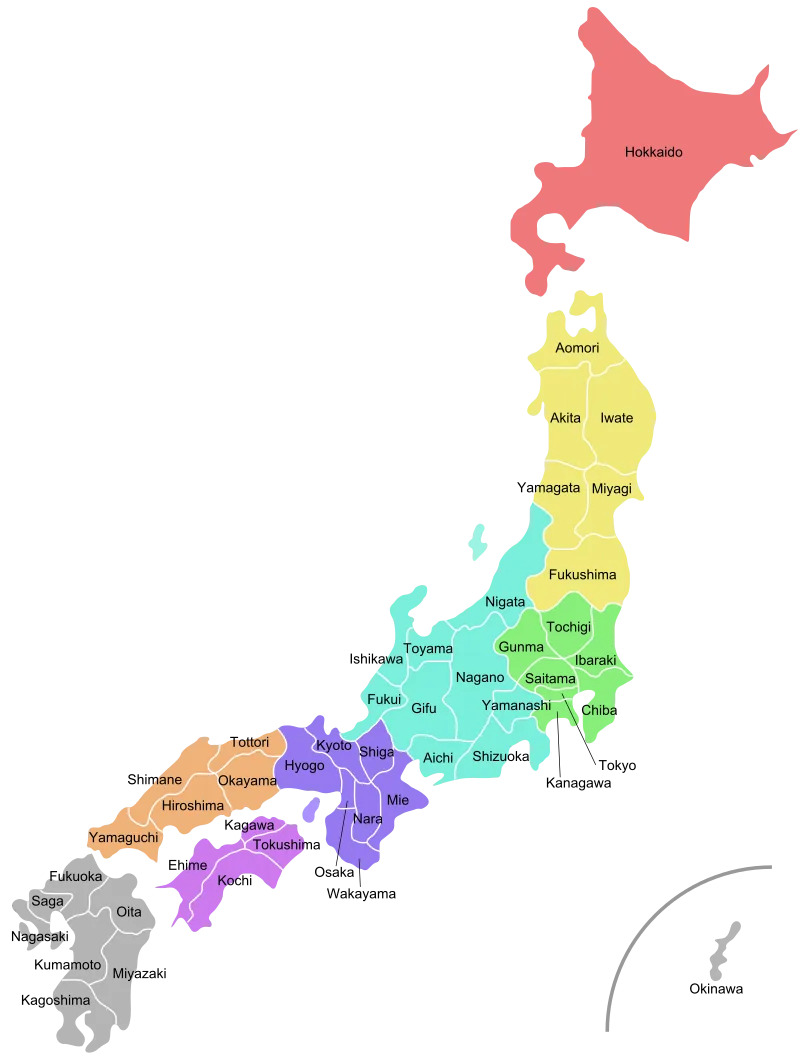
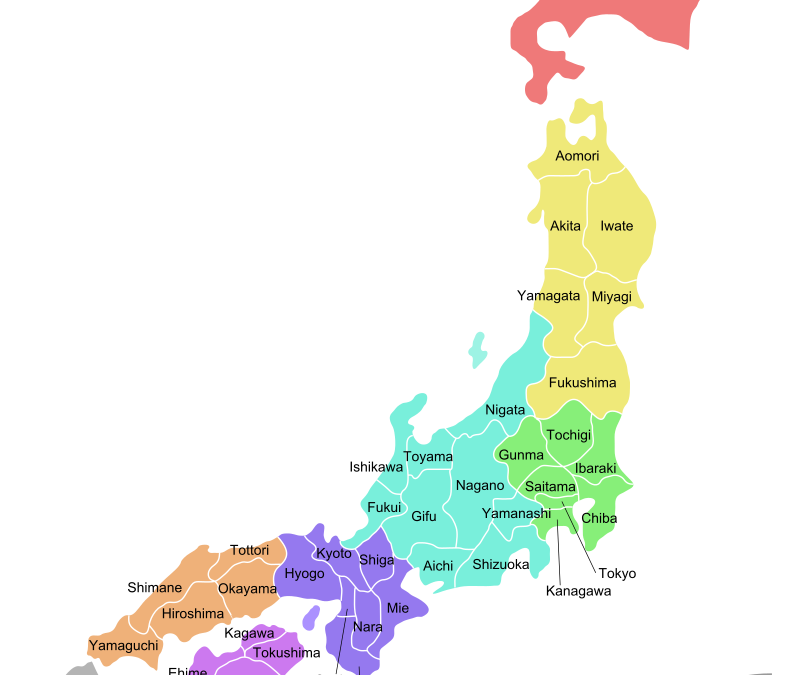
Wakayama Prefecture occupies the western side of the Kii Peninsula, the large mountainous landmass that hangs below Osaka and Nara at the bottom of the Kansai region. The terrain is the first thing to understand about the craft: this is a peninsula of forested ridges, river valleys, and mountain temples rather than broad farmland, and it has been a place people walked into rather than passed through.
The peninsula corresponds to ancient Kii Province, and the two names that anchor its history are easy to find on any map — the Kumano shrines in the south, and Mount Koya in the northern mountains. Both are pilgrimage destinations with long records, and both sit within the same prefecture that later became the seat of the Kishu Tokugawa branch domain in the Edo period.

Negoro-nuri takes its name from Negoro-ji, a temple in present-day Iwade, in the northern part of the prefecture. Lacquerware made there for temple use is the commonly cited origin of the style, and lacquerers in Kishu are said to have continued the tradition after it left the temple’s hands. That is the story as it is usually told; the finish itself is what carries the name forward.
- Heian period — the commonly told story places the founding of Negoro-ji at the foot of the Kii mountains.
- Medieval period — the temple’s lacquerware becomes the commonly cited source of the style, and the name travels with the finish.
- Muromachi–Sengoku — tea practice spreads among warriors and merchants, and the small turned caddy takes its place in the tea setting.
- Edo period — the Kishu Tokugawa branch domain rules from Wakayama, and lacquer work continues under domain patronage.
- Meiji onward — lacquerers in Kishu are said to keep the tradition, with the wear-to-undercoat look becoming its signature.
- 2026 — one Negoro-nuri natsume is listed at ¥12,000 on Amazon Japan, new, from a marketplace seller.

The mechanism of the finish is simple enough to describe and hard to do well. A wooden core is turned, then sealed and coated in lacquer many times over. Negoro-nuri lays one color over another — red over black, or black over red — so the surface has a hidden second layer. As the top coat is handled, polished by hands and cloth, the undercoat begins to appear at the edges and high points. The result is a piece that looks different in its fifth year than in its first.
“Negoro-nuri is a finish in which being handled is the point — the wear is not decay, it is the second color arriving.”
In the Edo period, Wakayama Castle was the seat of the Kishu Tokugawa branch domain, one of the three great collateral houses of the Tokugawa line. A castle town of that rank supported a market for fine household goods, tea utensils among them, and the lacquer trade around it had a reason to keep refining rather than merely producing.

Wood was never the constraint here. The peninsula’s ridges supplied the material, and the same mountain roads that carried pilgrims carried finished goods down toward the ports and markets of Kansai. A turner working in Wakayama sat inside a supply of timber, a market of tea practitioners, and a temple tradition that had already established what the finish was supposed to look like.
That combination is why the classic Negoro forms are tea utensils and incense containers rather than furniture: small, turned, handled objects that improve in the hand. A natsume is close to the ideal test case for the finish, because a tea caddy is picked up, opened, closed, and wiped at every session.

Tea practice in Wakayama was not a hobby layered on top of the craft; the mountain temples of the peninsula were among the institutions that used these objects. Mount Koya, in the northern part of the prefecture, is the largest of them, and a lacquer caddy made a few valleys away had an obvious first market. The natsume form settled where the tea was.
What it does well
- 🍽️ Dishwasher: no — hand-wash with a soft cloth and mild soap, then wipe dry immediately.
- ♨️ Microwave and hot water: no — lacquer softens with sustained heat; use it for dry matcha, not liquids.
- 🧴 Daily care: wipe with a dry, soft cloth after each session and keep it out of direct sun; the patina is the point, so do not polish it away.
- 🔧 Repairs: re-coating is possible in principle, but the listing does not state a repair service — ask the seller who would do the work before you rely on it.
Weaknesses and things to verify before buying
- No dimensions. The listing title gives type, finish, and motif, but not diameter, height, or weight. A natsume that is larger than expected will not sit where you planned; ask the seller for measurements before ordering.
- No workshop named. The piece is sold by a marketplace shop, not by a named maker with a workshop page. If provenance matters to you, this is the wrong listing.
- Kaō is ambiguous in the title. The word can describe a painted signature motif or a workshop’s mark. The title does not say which, so do not assume a hand-painted signature.
- Lacquer needs attention. No dishwasher, no microwave, no soaking, no long sun exposure. If the household habit is to rinse and leave things in the rack, this piece will suffer.
- Wear is intended, and uneven. The undercoat appears first at the rim and the points your fingers reach. If you want a uniform surface, the finish will look like damage rather than patina.
- It is a single, one-off piece. One listing at one price. If it sells, there is no restock to wait for, and comparing options means looking at other listings entirely.
- Set contents are narrow. The title names the caddy. No box, cloth, or scoop is stated — do not expect a gift set from the description.
Conclusion — which buyer type are you?
Other ways to approach this purchase
🏆 Editor’s Pick
The pick is the single natsume listed on Amazon Japan under that title: one turned wooden caddy, Negoro-nuri lacquer in red over a darker undercoat, with a kaō motif named in the listing. It is new, sold by ぽぽななショップ, and dispatches in about 6–7 days.
- The finish is the reason. Negoro-nuri is the rare lacquer that is meant to change with handling, which makes a daily-use natsume its natural application.
- The form is functional, not decorative. A natsume is opened and closed at every tea session; the turned shape and light lid are part of the practice.
- The price is legible. At ¥12,000 (≈ $80 USD as of 2026-11-19) you are buying the lacquer work and the form, not a named maker’s premium — and the listing makes no claim beyond that.
❓ Frequently Asked Questions
Is this natsume actually Negoro-nuri from Wakayama?
The listing title names Negoro-nuri and a natsume, but it does not name a workshop or a place of manufacture, so the specific provenance of this individual piece is not confirmed by the listing. The tradition the finish belongs to is documented in Wakayama.
What does kaō mean here?
A kaō is a stylized signature mark used in place of a written name. In the listing title it describes the piece, but the title does not explain whether it refers to a painted motif or to a maker’s mark.
Can I use it for everyday matcha, or is it display only?
It is a working tea caddy. Dry matcha is what it is made for; what it should not meet is standing water, hot liquid, a dishwasher, or a microwave. Wipe it dry after each session and it will hold up.
Does it ship to Canada, the UK, or Australia?
Amazon JP Global Store ships Japanese listings to 65+ countries, including Canada, the UK and Australia, and estimates import fees at checkout for most destinations. Shipping typically runs $15–$40 depending on destination and speed.
How should I care for urushi lacquer?
Hand-wash with a soft cloth and mild soap if needed, then wipe dry immediately. Keep it away from sustained heat, prolonged direct sunlight, and soaking. Do not polish the surface to make it look new — the change in color is the finish working as intended.
Is there a box, cloth, or scoop included?
The listing title names a single natsume and states nothing about a box, cloth, or scoop. Treat it as the caddy only unless the seller confirms otherwise.
jpmono.com is curated by a Japan-based editorial team working out of Toyama in the Hokuriku region and Nara in Kansai, and is independent. We do not take payment from the makers we feature; income comes from affiliate links. Read more about our editorial standards.
Editorial note: this article was drafted with AI assistance and reviewed by our editorial team. Product details, prices, and availability were checked against the linked listings on the dates shown, and unconfirmed attributes are marked as such in the text.
Affiliate disclosure: jpmono.com may earn a commission on qualifying purchases made through links on this page, at no additional cost to you.