![Iiyama Butsudan Brass Orin Bell: Nagano’s Buddhist Metal Craft [2026]](https://jpmono.com/wp-content/uploads/2026/05/japan-map-regions-and-prefectures-800x1050.png)
An orin (おりん, also written rin 鈴) is the small standing bell that sits on a Japanese Buddhist altar — struck once with a padded mallet, it produces a long, clean tone used to open and close a moment of prayer. The bell covered in this guide is finished in the metal workshops attached to the Iiyama Butsudan (飯山仏壇, “Iiyama Buddhist altar”) craft of Iiyama, a snow-country town in northern Nagano Prefecture. Iiyama Butsudan was designated a traditional craft by Japan’s Ministry of Economy, Trade and Industry (METI) in 1975, and its metal arm covers both gilt altar fittings and the brass orin bells that ring inside the altar.
What makes an Iiyama piece worth a second look from outside Japan is not the bell alone but the ecosystem behind it. Iiyama is nicknamed the “Little Kyoto of the Snow Country” for the unusually dense cluster of temples packed into a small castle town on the Chikuma River. Centuries of pilgrim traffic toward nearby Zenko-ji and an Edo-period temple economy built a deep local division of labor — joinery, lacquer, gold leaf, and metalwork — and the brass bell is the part of that system you can hold in one hand.
This article is written for international readers weighing a hand-finished Japanese altar bell: what it is, where it comes from, how the Iiyama brass orin differs from a meditation singing bowl, and the practical considerations when choosing one. Brass orin from the Iiyama region are typically cast and tuned at small workshops that supply Buddhist supply shops, so the maker, finish, and dimensions can vary from piece to piece.
🔄 Updated:
⏱️ Read time: ~11 min
- Who this is for — and who should skip it
- Product overview (from published specs)
- Where this comes from — place, era, and the craft tradition
- Where to buy Iiyama Butsudan bells
- What it does well
- Weaknesses and things to verify before buying
- Conclusion — which buyer type are you?
- Other ways to approach this purchase
- ❓ Frequently Asked Questions
Who this is for — and who should skip it
- Keep a Japanese Buddhist altar (butsudan) or a small home shrine and want a ritual bell with a documented regional craft lineage.
- Value a long, clean, sustained tone for opening and closing prayer or meditation.
- Appreciate brass that develops a warm patina over years of handling rather than a permanent factory finish.
- Want an object tied to a specific place and tradition, not a generic import.
- Are comfortable buying from Japan and verifying the maker before ordering.
- Want a thick-walled meditation “singing bowl” played by rubbing the rim — that is a different instrument (see the comparison below).
- Expect a guaranteed single named artisan; mass-market orin and workshop-finished pieces are sold side by side.
- Prefer a maintenance-free finish and dislike the look of aging brass.
- Want a large temple-scale bell; home orin are small, desk-sized objects.
Product overview (from published specs)
Brass altar bells in the Iiyama tradition are most often sold as a set with a striking mallet and a seating cushion; exact dimensions, weight, and the finishing workshop vary by piece. Because small workshops each tune and finish their bells by hand, the table below distinguishes between what is typical of the craft and what should be verified at purchase.
| Attribute | Detail | Source |
|---|---|---|
| Item | Brass orin (rin) Buddhist altar bell, set with mallet and cushion | Amazon JP Global Store |
| Material | Brass (shinchū, copper-zinc alloy) — distinct from high-tin sahari bronze | Craft tradition / data notes |
| Craft lineage | Iiyama Butsudan metalwork (gilt fittings & bell finishing), Iiyama, Nagano | METI traditional-craft record (1975) |
| Use | Struck once with a padded mallet to mark the start/end of prayer | Maker direct (general) |
| Dimensions / weight | — | — |
| Price | — | — |
| Primary market | Japan (ships internationally via Amazon JP Global Store) | Amazon JP Global Store |
📖 Glossary — key terms
- orin / rin (おりん・鈴) — the small standing bell on a Buddhist altar, struck with a mallet to produce a sustained tone.
- butsudan (仏壇) — a household Buddhist altar, a cabinet that holds the family’s object of devotion and memorial tablets.
- Iiyama Butsudan (飯山仏壇) — the METI-designated (1975) Buddhist-altar craft of Iiyama, Nagano, encompassing joinery, lacquer, gold leaf, and metalwork.
- kazari-kanagu (錺金具) — decorative gilt metal fittings applied to altars; the same metal workshops finish the brass bells.
- shinchū (真鍮) — brass, a copper-zinc alloy; the metal of these orin.
- sahari (砂張) — a high-tin bronze used elsewhere (e.g., Odawara) for singing bowls; a different alloy with a different sound, noted here only for contrast.
- shokunin (職人) — a skilled craftsperson working within an established trade.
- Zenko-ji (善光寺) — the major non-sectarian temple in Nagano City whose pilgrim traffic helped build the regional temple economy.
Other jpmono guides cover related Nagano crafts and the broader world of Japanese metal, lacquer, and altar objects. Each opens in a new tab.

Where this comes from — place, era, and the craft tradition

Iiyama sits in the far north of Nagano Prefecture, in Japan’s mountainous Chūbu region, along the upper reaches of the Chikuma River — the longest river in Japan, which flows north out of the Nagano basin and eventually becomes the Shinano River as it reaches the Sea of Japan. This is some of the snowiest inhabited country in the world: cold, damp winters bury the town for months, and that long indoor season historically suited slow, exacting interior crafts. The river gave Iiyama its trade artery, tying it to suppliers of lacquer, gold leaf, and metal, and the surrounding temple culture gave it steady demand.
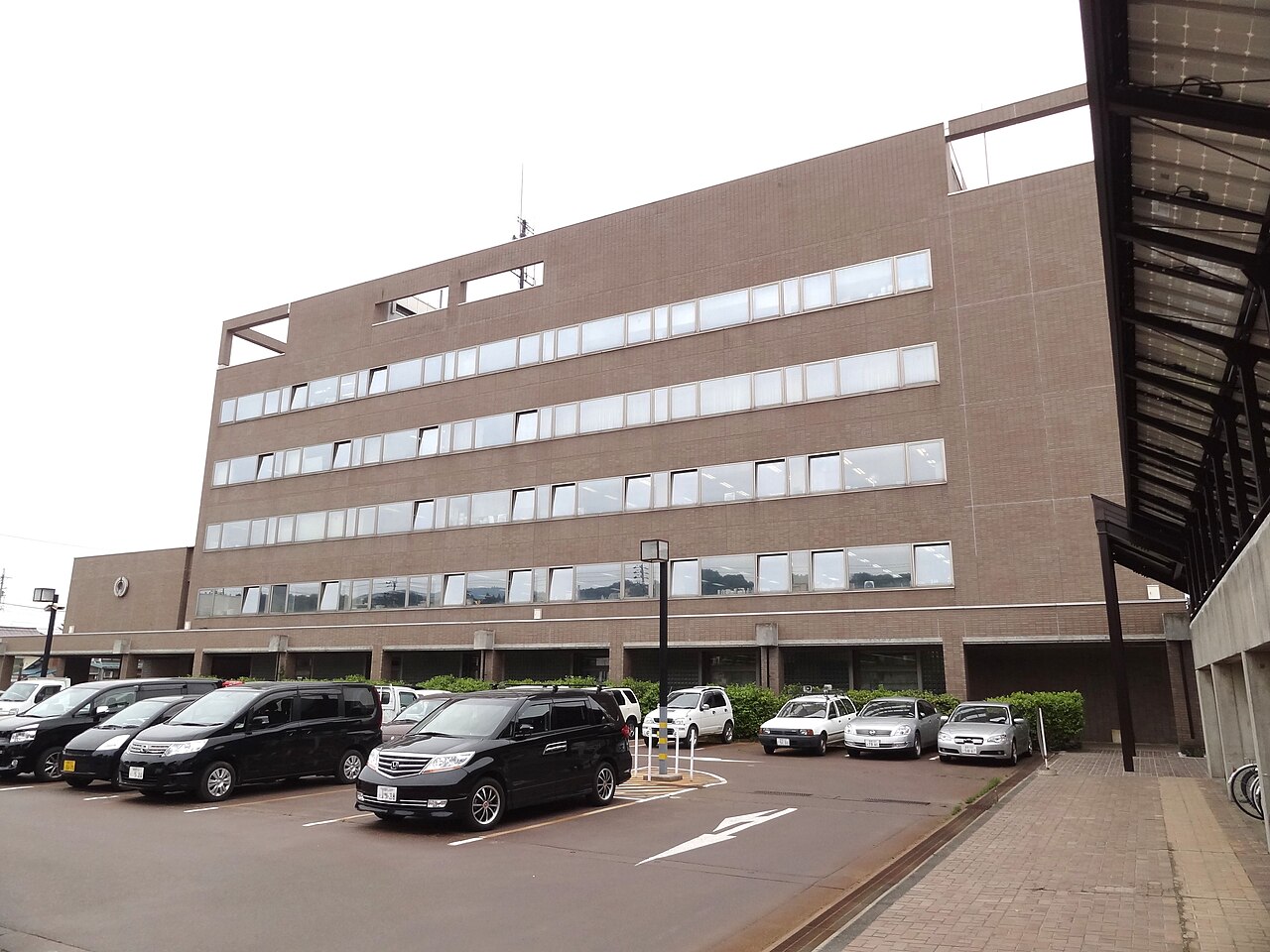
The reason Iiyama earned its “Little Kyoto of the Snow Country” nickname is concrete rather than poetic: an unusually dense cluster of temples packed into a small castle town. That concentration was not an accident. Iiyama was a frontier domain in the late medieval and early modern periods, and over the Edo era a settled temple economy took hold — temples needed altars, altars needed joiners, lacquerers, gold-leaf workers, and metalsmiths, and the trades fed one another in a compact geography. The result was the Iiyama Butsudan craft, in which a single finished altar passes through several specialized hands.

The historical anchor for the whole region is Zenko-ji, the great non-sectarian temple in present-day Nagano City. By tradition it dates to the 7th century, and for many centuries it has drawn pilgrims from across northern Shinano (the old name for the Nagano region) regardless of sect. That open, cross-sect pilgrimage traffic created broad, durable demand for devotional goods — altars, fittings, candles, and bells — far beyond any single temple’s needs, and towns along the pilgrimage corridor, Iiyama among them, developed the trades to supply it.
- 7th c. (traditionally) — Zenko-ji is founded; cross-sect pilgrimage to it grows over the following centuries.
- 1560s — Iiyama Castle serves as a frontline stronghold during the regional wars around Kawanakajima.
- Edo period (1603–1868) — Iiyama Domain is established; a dense temple economy and pilgrim traffic support specialized altar trades.
- 18th–19th c. — Iiyama becomes known as the “Little Kyoto of the Snow Country,” its altar joinery, lacquer, gold leaf, and metalwork maturing into a coordinated craft.
- 1975 — METI designates Iiyama Butsudan a traditional craft (dentōteki kōgeihin).
- 2026 — Workshops continue altar and metal finishing, including the brass orin bells covered here.

Within Iiyama Butsudan, the metal arm does two related jobs. The first is kazari-kanagu (錺金具) — the gilt decorative fittings that brace and ornament the altar’s corners, doors, and pillars. The second is the finishing of the brass and copper orin bells that ring inside the altar. The same metalworking culture that knows how to cut, chase, and gild a fitting also knows how to true and finish a bell so it rings cleanly. The brass bell, in other words, is the smallest, most portable output of a much larger devotional-metal tradition.

“The brass bell is the part of a centuries-old altar tradition you can hold in one hand — the smallest output of a town built around temples.”
The METI designation year (1975), the alloy distinction (brass, not high-tin sahari), and the role of Zenko-ji’s pilgrim economy are well established; finer claims about any single workshop’s age or output should be confirmed with the maker before you treat them as fact.
Where to buy Iiyama Butsudan bells
| Store | Item / Variant | Price (JPY + USD est.) | Notes |
|---|---|---|---|
| 🇺🇸 Amazon.com (US) | Browse Japanese orin altar bells | varies (USD) | Best if you are shopping from the US — Prime shipping, USD pricing, no international customs. Amazon US carries brass and bronze orin from various makers, useful for comparing sizes and tone tiers. The exact Iiyama-finished piece ships from Japan (next row). |
| 🇯🇵 Amazon JP Global Store | Brass orin set (bell + mallet + cushion) | — | Ships internationally from Japan to most major destinations. Confirm the maker before ordering. |
| Maker direct | Iiyama Butsudan workshops | Unconfirmed | Some Iiyama altar makers sell fittings and bells directly; international shipping is not guaranteed and may require Japanese-language ordering. |
| Proxy services (Buyee / Tenso) | Forwarding from JP retailers | Item price + forwarding fee | Useful if a maker or Japanese retailer does not ship abroad. Adds a service fee and a consolidation step; customs duties may apply at your destination. |
What it does well
Brass orin are made to ring long and clear when struck once — the practical purpose of the bell in ritual use.
Tied to the METI-designated Iiyama Butsudan tradition (1975) rather than an anonymous import.
Sold with the mallet and cushion needed to use it, so there is nothing else to source separately.
Brass takes on a warm patina with handling, so the bell looks lived-with rather than worn out.
Weaknesses and things to verify before buying
- The exact finishing workshop should be verified. “Iiyama Butsudan” describes a regional craft, not a single brand; confirm the specific maker if provenance matters to you.
- Dimensions and weight are not confirmed here. Home orin come in several sizes; check the diameter so the bell fits your altar and produces the tone you expect.
- Brass requires light care. Fingerprints and tarnish are normal; if you want a permanently bright finish, brass is the wrong material.
- It is not a meditation singing bowl. An orin is struck once for a marking tone; it is not designed to be played by rubbing the rim like a high-tin sahari bowl.
- International shipping and customs vary. Amazon JP Global Store ships many items abroad, but duties and delivery times depend on your country; confirm before ordering.
Conclusion — which buyer type are you?
You want a documented Iiyama-finished brass bell and value verified provenance. Favor a seller who identifies the workshop and the regional craft background.
You want a good brass orin with a clean tone for a home altar. The JP Global Store set (bell, mallet, cushion) is the straightforward choice.
You mainly need a working bell. Browse Japanese orin on Amazon US for a comparable piece with USD pricing and Prime shipping.
You actually want a rubbed singing bowl, or a permanently bright maintenance-free finish. This brass altar bell is not the object for you.
Other ways to approach this purchase
Brass bells last for decades; a gently used orin can be a sound choice, though tone and condition vary and are hard to verify remotely.
If you already use Amazon points or card rewards, applying them to the JP Global Store order offsets the international shipping cost.
If you do not keep an altar or shrine, a ritual bell may sit unused. There is no obligation to buy one to appreciate the craft.
❓ Frequently Asked Questions
What is an orin bell used for?
An orin (rin) is the small standing bell on a Japanese Buddhist altar. It’s struck once with a padded mallet to mark the beginning and end of prayer or chanting, producing a long, clean tone. Many people also use one simply to signal a quiet moment.
How is this different from a singing bowl?
A brass orin is struck once for a marking tone. A meditation singing bowl is typically a thicker high-tin sahari bronze played by rubbing the rim to build a continuous sound. They look similar but are different instruments made from different alloys for different uses.
Does Amazon Japan ship an orin internationally?
How do I care for a brass orin?
Wipe it with a soft dry cloth and avoid abrasive cleaners. Brass naturally develops a warm patina; if you prefer a brighter look, a brass polish used sparingly will restore shine. Keep the striking surface clean so the tone stays clear.
Is Iiyama Butsudan a single brand?
No. Iiyama Butsudan is a regional craft designation covering several workshops and trades — joinery, lacquer, gold leaf, and metalwork — in Iiyama, Nagano. The metal arm finishes both gilt altar fittings and brass orin bells. If provenance matters, look for a seller who identifies the specific maker.
Why does the price show as unconfirmed?
Affiliate disclosure: jpmono.com may earn a commission on qualifying purchases made through links on this page, at no additional cost to you.