![Kamejirushi Yoshiwara Denchu (吉原殿中, individually wrapped stick assortment box) — Mito’s Edo-era kinako-dusted puffed-rice candy born in the Tokugawa castle’s inner chambers [2026 Guide for International Readers]](https://jpmono.com/wp-content/uploads/2026/09/kamejirushi-yoshiwara-denchu-where-to-buy-2026-featured.jpg)
- What it is: Yoshiwara Denchu (吉原殿中) — a slim stick of puffed mochi rice bound with starch syrup and sugar, then rolled heavily in roasted soybean flour
- Made in: Mito, Ibaraki Prefecture — a Kantō-plain rice-and-soybean region, made by Kamejirushi Seika (亀印製菓), a long-established Mito confectioner
- Price band: everyday regional-confection pricing rather than luxury wagashi — check the live listing, as our snapshot carried no price
- Best for: readers who want a dry, toasty, low-drama Japanese sweet that survives a long postal journey and can be eaten one stick at a time
- Skip if: you are shopping for soft, fresh nama-gashi, or you need a guaranteed nut-free and soy-free product — soybean flour is the main coating
- Shipping: shelf-stable and ships internationally from Amazon Japan — jump to our pick ↓
The name of this sweet points at a room. Denchu (殿中) means the inner chambers of a castle — the residential quarters where the lord’s household and its women-in-waiting lived — and Yoshiwara was the name of a woman who served there. Put the two together and you get a confection named after a person and a floor plan, which is a strange and rather precise thing for a candy to be called.
The story told in Mito runs like this. During the rule of Tokugawa Nariaki (1800–1860), the ninth lord of the Mito domain, whose administration pushed hard on austerity and the elimination of waste, a lady-in-waiting named Yoshiwara took leftover hoshi-ii (干し飯, dried cooked rice) — the sort of thing that would otherwise have been discarded — bound it with mizuame (水飴, starch syrup), and rolled the result in kinako (きな粉, roasted soybean flour). Nothing was thrown away. A regional specialty was the byproduct. This is the standard regional account rather than a documented archival fact, and it is worth holding it as such, but it is the account you will hear in Mito, and it explains both the name and the frugal, almost austere construction of the sweet itself.
The modern version, made in Mito by Kamejirushi Seika (亀印製菓), is a slim cylinder of puffed rice bound with syrup and sugar and dusted so heavily in kinako that the first bite is mostly toasted soybean. It eats closer to a dry rice-crisp bar than to anything soft or chewy. This guide is written for readers ordering from outside Japan: it covers the origin story and its Mito context, how the texture differs from kinako-bo and okoshi and senbei, what the ingredient list does and does not contain, and what to verify on the live listing before you place an international order.
🔄 Last updated:
⏱️ Reading time: about 13 minutes

ℹ️ Live pricing and the exact piece count were not in our data snapshot — the linked listing is authoritative, and unconfirmed attributes are marked as such in the tables below.
- Who this is for — and who should skip it
- Product overview (from published specs)
- Glossary — the Japanese terms used in this guide
- 📍 Where this comes from — place, era, and the craft tradition
- 📌 How does it compare?
- 📦 Shipping & where to buy from outside Japan
- Price snapshot across stores
- What it does well
- Weaknesses and things to verify before buying
- Conclusion — which buyer type are you?
- Other ways to approach this purchase
- 🏆 Editor’s Pick
- ❓ Frequently Asked Questions
Who this is for — and who should skip it
- Prefer dry, crisp, lightly sweet confections over soft, rich, or cream-based ones
- Want a sweet that ships at ambient temperature with no melting risk — there is no chocolate and no dairy in it
- Are buying a gift box and want individually wrapped pieces that can be shared out or eaten across several weeks
- Eat plant-based: the ingredient list is mochi rice, starch syrup, sugar, kinako, and salt
- Are collecting meibutsu (名物, regional specialties) with a documented local story attached to a specific city
- Avoid soy — kinako is roasted soybean flour and it is the defining coating, not a garnish
- Were expecting mochi in the soft, chewy sense; the rice here is dried and puffed, and the bite is friable
- Need a long best-by window: this is a short-to-medium shelf-life confection, not a year-stable pantry item
- Live somewhere Amazon Japan’s international shipping does not reach, or where food imports are tightly restricted
- Want an intensely sweet dessert — the sugar here is restrained, and the dominant flavor is toasted soybean
Product overview (from published specs)
The table below draws on the maker’s published product description and the Amazon Japan Global Store listing for ASIN B0CBTRCG1T. Where a value was not present in our snapshot, it is marked unconfirmed rather than guessed.
| Attribute | Value | Source |
|---|---|---|
| Product | Yoshiwara Denchu (吉原殿中), individually wrapped stick assortment box | Amazon JP Global Store |
| Maker | Kamejirushi Seika (亀印製菓), a long-established Mito confectioner | Maker direct |
| Made in | Mito, Ibaraki Prefecture, Kantō region | Maker direct |
| Category | Higashi-style dry confection — puffed rice bound with syrup, coated in roasted soybean flour | Maker direct |
| Core ingredients | Mochi rice, starch syrup (mizuame), sugar, kinako (roasted soybean flour), salt | Maker direct |
| Form | Slim cylindrical stick, heavily dusted on the outside | Maker direct |
| Texture | Dry, light, crisp-crumbly; not chewy and not hard-pressed | Maker direct |
| Flavor | Toasty roasted soybean, restrained sweetness, a trace of salt | Maker direct |
| Diet profile | Fully plant-based; contains no dairy, egg, meat, or chocolate. Contains soy and rice. | Maker direct |
| Packaging | Individually wrapped sticks in a gift box; bagged formats also sold | Amazon JP Global Store |
| Piece count / net weight | Unconfirmed — check the live listing | — |
| Storage | Ambient, sealed, away from humidity and direct sun; no refrigeration | Maker direct |
| Best-by | Commonly a few weeks to a few months from manufacture — check the date printed on the package | Maker direct |
| ASIN | B0CBTRCG1T | Amazon JP Global Store |
| International shipping | Via Amazon Japan Global Store; confirm AmazonGlobal eligibility for your country at checkout | Amazon JP Global Store |
Glossary — the Japanese terms used in this guide
📖 Key terms (tap to open)
- denchu (殿中) — the inner chambers of a castle: the residential and administrative quarters of the lord’s household, where the women-in-waiting served. Half of this sweet’s name.
- kinako (きな粉) — soybeans roasted and milled to a fine flour. Nutty, faintly bitter, and dusty; used across Japanese confectionery as a coating rather than a filling.
- mizuame (水飴) — a thick, clear starch syrup used as a binder and sweetener. It is what holds the rice grains together here.
- hoshi-ii (干し飯) — cooked rice that has been dried for storage or travel. In the Mito account, this is the leftover material that became the sweet.
- mochigome (もち米) — glutinous or “sticky” rice. Dried and puffed rather than pounded in this application, so the result is crisp rather than chewy.
- higashi (干菓子) — the “dry confection” family of wagashi, as opposed to nama-gashi (生菓子), the fresh, moist family. Yoshiwara Denchu sits squarely in the dry camp.
- meibutsu (名物) — a regional specialty product, usually bought as a gift when returning from a trip. Yoshiwara Denchu is Mito’s.
- gosanke (御三家) — the three Tokugawa branch houses (Owari, Kii, and Mito) from which a shogunal heir could be drawn. Mito’s status as one of them is why its castle had a denchu worth naming a sweet after.
📍 Where this comes from — place, era, and the craft tradition

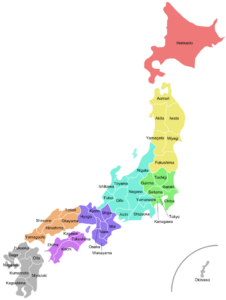
Ibaraki occupies the eastern edge of the Kantō plain, the largest flat expanse of arable land in Japan, and Mito is its prefectural seat. That geography matters more than it sounds. The Kantō plain is where rice and soybeans grow in quantity, and Ibaraki has long been an agricultural prefecture rather than an industrial one. Mito is nationally famous for natto — fermented soybeans — which tells you exactly what the surrounding fields have been producing for a very long time.
So a confection built from glutinous rice and roasted soybean flour is not an idea imported from somewhere fashionable. It is a direct expression of the local crop base: the two things the district grows most of, combined with a syrup binder, and nothing else except sugar and a little salt.
“Rice and soybeans are what Ibaraki grows. Yoshiwara Denchu is those two crops, a syrup, and a refusal to throw anything away.”
The historical anchor is the Mito domain itself. Mito was one of the gosanke (御三家) — the three Tokugawa branch houses — which gave a provincial castle town unusual political weight for its size and gave its castle an inner household large enough to have named attendants. Tokugawa Nariaki, the ninth lord, ruled in the first half of the nineteenth century and is remembered for an austerity-and-reform program that pressed on waste in every direction, including inside his own household.
That reform climate is the setting the Mito account places this sweet in. Dried rice left over from the castle kitchens was not discarded; it was bound with syrup, rolled in soybean flour, and turned into something worth eating. The name preserves both the maker and the room: Yoshiwara, the lady-in-waiting, and denchu, the inner chambers she served in.
-
1609 — Tokugawa Yorifusa is installed at Mito; the domain becomes one of the three Tokugawa branch houses, the gosanke. -
1657 — Tokugawa Mitsukuni begins the compilation of the Dai Nihonshi, the scholarly project that gave Mito its reputation for learning. -
1800 — Tokugawa Nariaki is born. -
1829 — Nariaki becomes the ninth lord of the Mito domain and begins his austerity-and-reform administration. -
1841 — Nariaki founds the Kōdōkan domain academy in Mito, and lays out the Kairakuen garden in the same period. -
First half of the 1800s — By local tradition, a lady-in-waiting named Yoshiwara makes a sweet from leftover dried rice inside the castle’s denchu. This is the story told in Mito, not a documented record. -
1860 — Nariaki dies, closing the reform era the sweet’s origin story is set in. -
1871 — The domains are abolished; Mito’s castle household disperses, but the confection stays in the city as a meibutsu. -
2026 — Kamejirushi Seika still produces Yoshiwara Denchu in Mito, now individually wrapped and boxed for gift use.
What “still made here” means in this case is narrower and more honest than a heritage-craft claim. This is not a workshop where a named artisan shapes each piece by hand. It is a Mito confectionery company producing a regional specialty on a continuing commercial basis, in the city the specialty is named for, from the crops the surrounding prefecture grows. The continuity is of recipe and place rather than of individual hands.
Seasonally, the sweet belongs to the everyday gift economy rather than to the tea-ceremony calendar. Boxes of meibutsu confections move constantly through Japanese social life — brought back from trips, handed over on first visits, distributed to an office after a business trip — and a dry, individually wrapped, room-temperature confection is precisely engineered for that role. It travels, it waits, and it divides.
📌 How does it compare?
Yoshiwara Denchu is a dry, toasty sweet that asks for a plain hot drink beside it. These related guides cover the teas that pair with it and the other shelf-stable Japanese snacks that ship the same way.
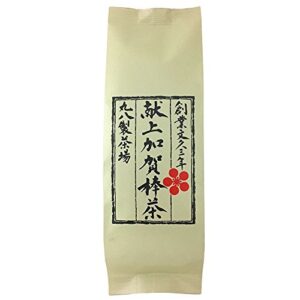

Maruhachi Seichajo Kenjo Kaga Bocha (献上加賀棒茶, sealed bag/tin)

Hoshino Seichaen Yame Matcha (星野製茶園 八女抹茶, sealed 30–40g tin)
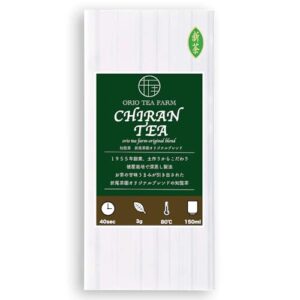

Chiran-cha Deep-Steamed Sencha (知覧茶 深蒸し煎茶, sealed 100g bag)

Ooigawa Chaen Fukamushi Sencha (大井川茶園 深蒸し煎茶, sealed foil bag)
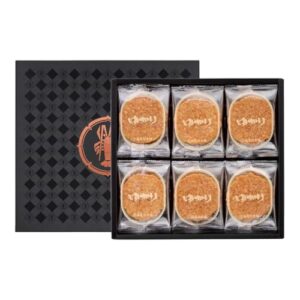

Bankaku Sohonpo Yukari Ebi Senbei (坂角総本舗 ゆかり, individually sealed)
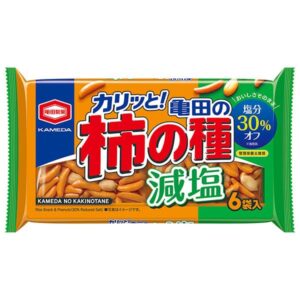

Kameda Kaki no Tane (亀田の柿の種, 6-bag box) — Niigata’s rice-cracker standard
📦 Shipping & where to buy from outside Japan
This is a shelf-stable food item, which makes it one of the easier things to import from Japan. There is no cold chain to maintain, no chocolate to melt in a summer container, and no liquid to leak. The listing covered here is sourced from the Amazon Japan Global Store, which ships to 65+ countries including Canada, the UK, and Australia, with import fees estimated and generally collected at checkout.
Readers outside the US may find our country-specific guides useful before ordering: Canada, the UK, and Australia.
Two things need checking before you commit, and neither is optional for a food item. First, confirm at checkout that AmazonGlobal international shipping is actually offered to your country for this specific item — food eligibility varies by destination and is set at the item level, not the store level. Second, understand that this is intended as a small personal-quantity purchase. Bulk food quantities attract commercial-import scrutiny in most jurisdictions, and several countries restrict food imports more tightly than general merchandise.
Price snapshot across stores
ℹ️ Our data snapshot returned no live price for this item, so no figure is quoted below. The linked listings are authoritative for current pricing and stock.
| Store | Item / Variant | Price | Notes |
|---|---|---|---|
| 🇺🇸 Amazon.com (US) | Browse Japanese rice-based sweets and kinako confections | varies (USD) | Best if you are shopping from the US — Prime shipping, USD pricing, no international customs. Amazon US carries mochi snacks, kinako sweets, and rice crackers from a range of Japanese makers, which is useful for comparing texture styles and price tiers. Kamejirushi Seika’s Mito-made sticks themselves are sourced from Japan (next row). |
| 🇯🇵 Amazon JP Global Store | Yoshiwara Denchu, individually wrapped stick assortment box (ASIN B0CBTRCG1T) | See live listing — no price in our snapshot | This is the exact item covered in this guide. Ships internationally from Japan to 65+ countries — including Canada, the UK, and Australia — with import fees estimated at checkout. |
| Maker direct | Kamejirushi Seika’s own retail and online channels | Unconfirmed — check the maker’s site | Widest format selection, including bagged and boxed sizes. Japanese-language ordering, and international shipping is not assumed. |
| Proxy services (Buyee / Tenso) | Domestic-only Japanese listings, forwarded | Item price plus service and forwarding fees | Useful for formats not carried by the Global Store. The extra warehouse leg costs days against a short best-by window, so this is the least attractive route for a dated food item. |
JPY (¥) is the authoritative currency for the specific listed item. Any USD figures elsewhere on this site are approximate estimates at a ¥150/USD baseline, and depend on the current exchange rate. Prices and stock fluctuate — the affiliate link above carries the current data.
What it does well
The kinako is applied heavily enough that roasted soybean, not sugar, is the leading note. For readers used to Western confectionery, that inversion is the most interesting thing about the sweet.
The rice grains stay discrete and loosely bound, so the stick collapses rather than snaps. It is lighter than awa-okoshi and not remotely chewy like kinako-bo.
Ambient, sealed, individually wrapped, no dairy or chocolate. Very few Japanese confections survive an international parcel this comfortably.
Mochi rice, starch syrup, sugar, kinako, salt. No dairy, egg, meat, or chocolate — which simplifies both gifting and cross-border shipping.
- 🌡️ Storage: ambient and sealed, away from humidity and direct sunlight — no refrigeration is needed or wanted
- 💧 Once opened: humidity is the enemy; an individual wrapper that has been opened should be eaten rather than set aside
- 📅 Best-by: check the date printed on the package — commonly a few weeks to a few months from manufacture
- 🎁 Gifting: the individually wrapped format is designed to be divided, so a single box can be shared out without cutting or plating
Weaknesses and things to verify before buying
- Short-to-medium shelf life. The best-by window is commonly measured in weeks to a few months from manufacture, and an international transit leg consumes part of it. Verify the printed date on arrival, and do not order a multi-box quantity you cannot finish.
- Soy is unavoidable. Kinako is roasted soybean flour, and it is the defining coating rather than a topping that can be brushed off. Anyone avoiding soy should not buy this.
- Humidity ruins it. The appeal is dryness and crispness. In a humid climate, an opened stick left uneaten goes soft, and the individual wrappers are the only real defense.
- It is friable in transit. A loosely bound puffed-rice stick can arrive with broken pieces inside the wrappers. The flavor is unaffected, but a box intended as a formal gift is a small gamble over a long shipping route.
- The kinako gets everywhere. A heavy soybean-flour coating sheds onto fingers, plates, and clothing. This is a sweet best eaten over a napkin, and it is not a desk snack for anyone working near a keyboard.
- Piece count and net weight were not in our snapshot. Box formats vary between bagged and boxed assortments, so confirm the quantity on the live listing before assuming you know what is arriving.
- The origin story is tradition, not documentation. The Yoshiwara-in-the-denchu account is the standard regional explanation told in Mito. Treat it as local tradition rather than as verified archival history.
- International food eligibility is item-level. Amazon Japan’s Global Store ships widely, but food items can be excluded for specific destinations. Confirm eligibility for your country at checkout rather than assuming it from the store’s general coverage.
Conclusion — which buyer type are you?
You want the boxed, individually wrapped assortment with the Mito story attached. Buy the gift box, and time the order so the best-by date still has room when it lands.
You want to know what a kinako-forward dry confection actually tastes like. The box works, and it pairs naturally with hojicha or a plain sencha rather than with coffee.
Start with a small bagged format of five to ten sticks rather than a gift box. If the texture is not for you, you have not committed to a boxed quantity.
You avoid soy, you wanted soft chewy mochi, or your climate and schedule mean an opened box would sit for weeks. Any of those three, and this is the wrong sweet.
Other ways to approach this purchase
Dated confections rarely go on deep discount, and a discounted food item is often a short-dated one. Waiting for fresh stock is the better play than waiting for a price drop.
International shipping cost is dominated by the parcel, not the item. Ordering alongside other shelf-stable Japanese goods in a single Global Store order spreads that cost.
Amazon account points and card rewards apply the same way as on any order. On a modest confection purchase they matter less than shipping consolidation does.
If soy or short dating rules it out, a sealed rice cracker or a tin of tea from the guides above travels better and keeps far longer.
🏆 Editor’s Pick
❓ Frequently Asked Questions
Is Yoshiwara Denchu chewy like mochi?
No. The mochi rice here is dried and puffed rather than pounded, then loosely bound with starch syrup. The result is dry, light, and crisp-crumbly — it collapses under the teeth rather than stretching. If you are expecting the chew of fresh mochi or of kinako-bo, this is a different texture entirely.
Does it contain dairy, egg, or chocolate?
No. The ingredient list is mochi rice, starch syrup, sugar, kinako (roasted soybean flour), and salt — fully plant-based. It does contain soy, since kinako is the coating, and it is rice-based. Always confirm the printed ingredient panel on the package you receive, as formats can differ.
How long does it keep, and does it need refrigeration?
It is stored at room temperature, sealed, with no refrigeration. Best-by windows for this style of confection commonly run from a few weeks to a few months from manufacture, so check the date printed on the package rather than assuming a fixed number. Once a wrapper is opened, humidity is the main threat to the texture.
Where does the name “Yoshiwara Denchu” come from?
The story told in Mito is that during the austerity-minded rule of Tokugawa Nariaki (1800–1860), the ninth lord of the Mito domain, a lady-in-waiting named Yoshiwara serving in the denchu — the castle’s inner chambers — reworked leftover dried rice into a sweet by binding it with starch syrup and rolling it in roasted soybean flour. The name joins her name to the room. This is the standard regional account rather than documented archival history.
Can it be shipped outside Japan?
It is shelf-stable and ships via the Amazon Japan Global Store, which reaches 65+ countries including Canada, the UK, and Australia, with import fees estimated at checkout. Food eligibility is set per item and per destination, so confirm at checkout that international shipping is offered to your country for this specific listing. It is intended for small personal quantities, not bulk import.
What should I drink with it?
A plain hot tea suits it better than anything sweetened. The dominant flavor is toasted soybean with restrained sugar, so a roasted tea such as hojicha or kaga bocha sits alongside it comfortably, as does a straightforward sencha. Milk-based drinks tend to flatten the kinako note.
Who makes it, and how old is the company?
It is made by Kamejirushi Seika (亀印製菓) in Mito, Ibaraki Prefecture. The company is widely described as a long-established Mito confectioner, and a mid-nineteenth-century founding is commonly cited, but we were not able to confirm a specific year against the maker’s own material, so we do not state one here.
jpmono.com is a Japan-based curation site, with editorial centers in Toyama (Hokuriku region) and Nara (Kansai region), introducing Japanese household objects and regional specialties to international readers. We focus on items with a verifiable regional origin and a clear international shipping path. We do not physically test every product — we read maker specifications and source listings — and affiliate links support the editorial work. We take no payment from the makers we feature.
🤖 This article was drafted with AI assistance and reviewed by a human editor before publication. Product facts are drawn from maker-published specifications and marketplace listings as of September 5, 2026; where a value could not be confirmed, it is marked as unconfirmed rather than estimated.
Affiliate disclosure: jpmono.com may earn a commission on qualifying purchases made through links on this page, at no additional cost to you.