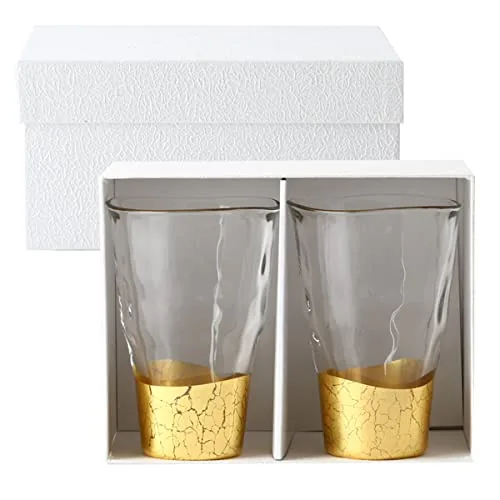
- What it is: A two-piece set of clear kan’nyū (crackle) glass tumblers from Hakuichi (箔一), a Kanazawa gold-leaf maker — 9.5 × 9.5 × 13.2 cm, model A061-03002
- Made in: Kanazawa, Ishikawa Prefecture — Japan’s principal gold-leaf producing city
- Price band: Upper-mid range for everyday glassware — the set is listed at ¥10,824 (≈ $72 USD) as of 2026-11-19
- Best for: Buyers who want a small, giftable piece of Kaga craft for a table that already has plain glass
- Skip if: You need a dishwasher-safe, stackable set, or you want the gold-leaf decoration confirmed before you order
- Shipping: Ships internationally from Amazon Japan to 65+ countries — jump to our pick ↓
A sheet of Kanazawa gold leaf is roughly 0.0001 mm thick — thin enough that a fingertip can lift it, and light enough that an open window can carry it away. Beaten to that gauge, the foil stops behaving like metal and starts behaving like light: laid on glass, it reads as a warm vein running through the material rather than a coating sitting on top of it.
Kanazawa, on the Sea of Japan coast in Ishikawa Prefecture, is where most of that foil comes from. The city and its gold-leaf industry commonly state that around 99% of Japan’s gold leaf is made in Kanazawa, and the trade itself took root under the patronage of the Maeda lords of Kaga during the Edo period, when foil went onto temple ornament, folding screens and lacquerware. Putting it on drinking glass is a much later move — a modern extension of the craft rather than an Edo-period product type — and it is the version most people can actually hold.
This article looks at one such tumbler set from Hakuichi (箔一), a Kanazawa gold-leaf house, and treats the category honestly: what the retailer listing actually states, what it leaves out, how a two-piece glass set compares with lacquer, cut glass and hand-blown tumblers from other Japanese traditions, and which kind of buyer should stop here and which should keep looking.
Updated
Read time: about 11 minutes

- Who this is for — and who should skip it
- Product overview (from published specs)
- 📍 Where this comes from — place, era, and the craft tradition
- Which finish should you choose?
- Price snapshot across stores
- 📦 Shipping and where to buy from outside Japan
- What it does well
- Weaknesses and things to verify before buying
- Conclusion — which buyer type are you?
- Other ways to approach this purchase
- 🏆 Editor’s Pick
- ❓ Frequently Asked Questions
Who this is for — and who should skip it
- You want a gift that carries a specific place name, not a generic glass.
- You already own plain tumblers and want two that read differently on the table.
- You are comfortable buying from a Japanese marketplace listing and waiting out the shipping.
- You like the idea of crackle glass, where the surface pattern comes from the glass itself.
- You are buying for a household that handles glass by hand rather than in a dishwasher.
- You need a set that survives a commercial dishwasher cycle.
- You want the maker to confirm, in writing, that this exact set carries hand-applied leaf.
- You are shopping for eight or twelve matching glasses; two pieces will not cover it.
- You want a capacity figure in milliliters before you buy — the listing does not give one.
- You expect domestic-return convenience; returns cross an ocean here.
Product overview (from published specs)
The set is simple enough that the listing reads almost like a parts label: a maker, a shape word, a count, a size and a model number. What follows is what the listing states as of November 19, 2026, with the gaps marked rather than filled.
| Item | Value on the listing | Notes |
|---|---|---|
| Maker | 箔一 (Hakuichi) | A Kanazawa gold-leaf maker; the name appears at the head of the listing title. |
| Type | 貫入 タンブラーグラス — kan’nyū tumbler glass | Kan’nyū refers to the crackle pattern in the glass. |
| Set contents | 2個セット — two pieces | Two tumblers, not a single glass. |
| Dimensions | 9.5 × 9.5 × 13.2 cm | Given as three figures only; the listing does not label width, depth and height separately. |
| Model number | A061-03002 | Useful when asking the seller or maker about this exact set. |
| Decoration | Not itemized in the title | The title does not spell out a gold-leaf finish, so treat leaf on this particular set as unconfirmed and ask before ordering. |
| Capacity | — | Not stated. |
| Condition | New | Marketplace listing, sold by a third-party seller. |
| Price | ¥10,824 (≈ $72 USD) | As of 2026-11-19; verify on the listing. USD is an estimate at ¥150/USD. |
| Availability | Usually ships within 6–7 days | The seller’s handling window, before international transit. |
ℹ️ Some attributes are not in the retailer listing — capacity, care instructions and the decoration itself are marked as unconfirmed above, and the linked listing is the authoritative source.
📖 Glossary — the craft terms on this page
- Kinpaku (金箔)
- Gold leaf: gold beaten into foil thin enough to apply to a surface. In Japan the word usually implies foil made by beating, not by rolling.
- Kanazawa kinpaku
- Gold leaf made in Kanazawa, Ishikawa Prefecture, the city that supplies the large majority of Japan’s foil.
- Kan’nyū (貫入)
- Crackle: the fine network of lines that forms in certain glasses and glazes as they cool. Decorative, not damage.
- Kaga (加賀)
- The old provincial name for the area around Kanazawa, and the name of the domain ruled by the Maeda family.
- Maeda
- The lordly house that held Kanazawa Castle and governed Kaga through the Edo period; its patronage is the usual explanation for the density of crafts in the city.
- Edo period
- 1603–1868, the long peace during which many of Japan’s regional craft industries took their present shape.
- Tumbler
- A straight-sided drinking glass without a handle or stem.
📍 Where this comes from — place, era, and the craft tradition
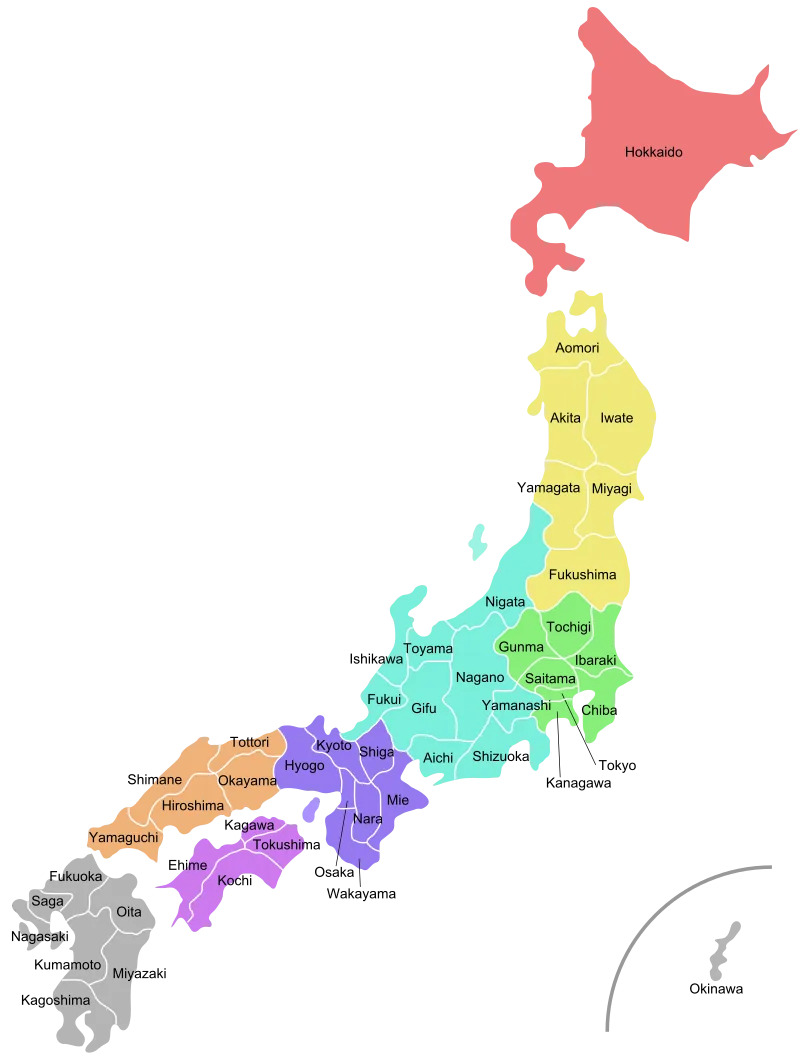
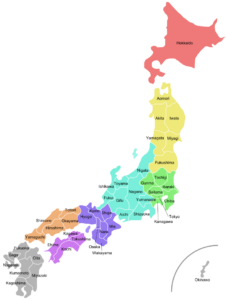
Kanazawa sits on the Japan Sea side of central Honshu, in Ishikawa Prefecture, which the wider Chūbu region also claims at its western edge. The city backs onto hills and faces a coast that takes winter weather straight off the water, and it grew as a castle town rather than a port: the streets still bend around the moats and gates of the old centre, with the two surviving teahouse districts and the garden a short walk from one another.
The reason a gold-leaf trade exists in this particular city is patronage. Kanazawa Castle was the seat of the Maeda lords, and under their rule Kaga became one of the wealthiest domains in Edo-period Japan. Wealth of that kind had to be spent on something visible — temple fittings, screens, the lacquer boxes that went out as gifts — and foil was one of the materials that made a surface look like it belonged to someone important. The craft did not sit apart from the rest of the city’s trades; it fed them.

-
1583 — Maeda Toshiie enters Kanazawa Castle; the Maeda become the ruling house of Kaga. -
1603–1868 — Edo period. Kaga’s gold-leaf workshops supply foil for temple ornament, folding screens and lacquerware under domain patronage. -
1670s — The Maeda lay out the garden that becomes Kenrokuen, the visible expression of Edo-period patronage in the city. -
1871 — The domain system is abolished. Craft workshops that served a lord now have to sell to a market. -
20th century — Gold-leaf production consolidates in Kanazawa; the city and industry come to cite about 99% of Japan’s output. -
Recent decades — Foil moves onto glass for tableware, an extension of the craft into objects used daily rather than displayed.
The foil itself is the technical story. Kanazawa gold leaf is traditionally beaten to the order of 0.0001 mm — a thickness at which the metal is no longer a sheet in any ordinary sense. That thinness is why the material behaves the way it does on glass: applied to a curved, transparent body, the leaf takes on whatever the glass is doing, whether that is the crackle pattern in this set or the plain wall of a blown tumbler.
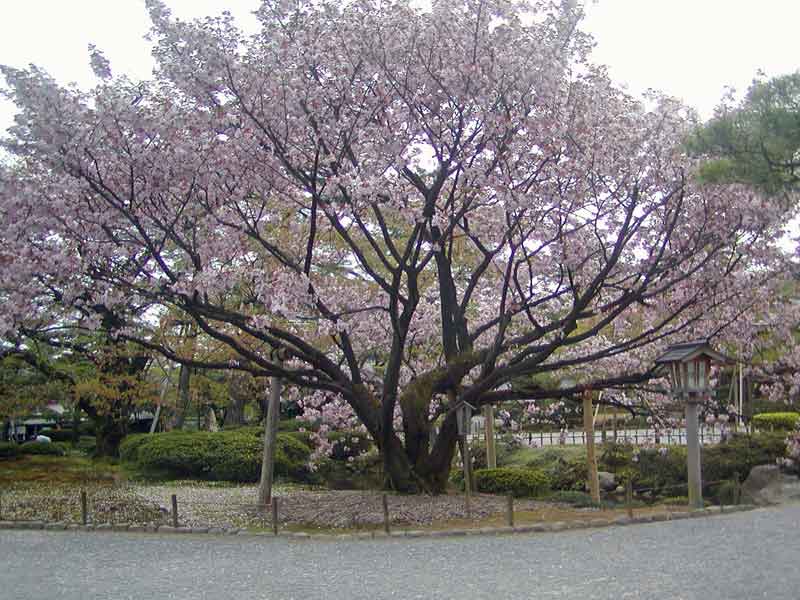
Walk the city today and the craft is visible as retail rather than as court display. The Higashi Chaya district, the Edo-era teahouse quarter on the east bank of the Asano River, is now lined with gold-leaf shops and studios where foil is sold by the sheet, pressed onto boxes and, increasingly, applied to glass and tableware. That shift matters for a buyer: the object you are looking at belongs to a working commercial trade, not a museum reconstruction.

The continuity is worth stating precisely, because craft copy tends to overstate it. What survives in Kanazawa is not an unbroken line of the same workshops doing the same commission — the domain that ordered the temple fittings is gone, and the trade reorganised more than once. What survives is the skill base: the beating, the handling, the local supply of foil, and a city where a buyer can still walk into a shop and watch leaf being laid down.
“Gold leaf is measured in ten-thousandths of a millimeter. On glass it stops being a coating and starts being a material — which is why a tumbler can carry the same foil as a temple door.”
For a table, that inheritance translates into something modest: two glasses, roughly the size of an ordinary water tumbler, whose interest comes from the crackle and whatever foil is on them. It is a use of Kaga gold leaf that no Edo-period craftsman would have recognised as a product — and that is the honest way to frame it. You are buying today’s application of an old material, not an antique form.
Which finish should you choose?
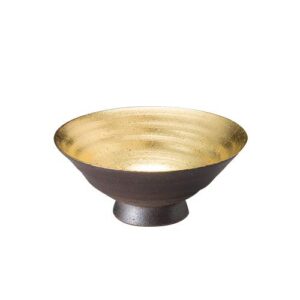
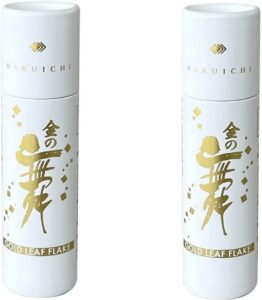
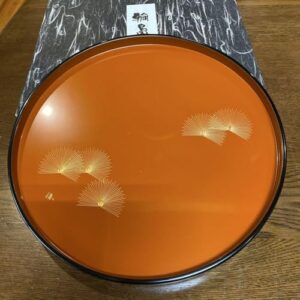
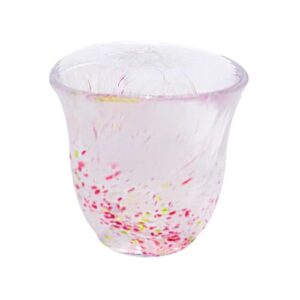
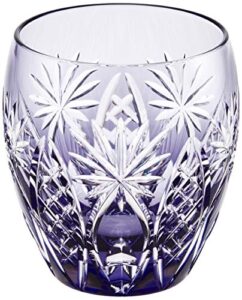
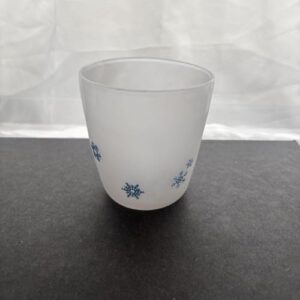
This piece is listed in 3 sizes. The photos below are the actual size options on the listing right now — pick the one you want and confirm it on the product page before ordering, since hand-finished wares vary slightly piece to piece.


Kanazawa gold-leaf glass sits in a crowded field of Japanese drinking vessels. These are the adjacent guides on this site, from the same foil in a different form to glass traditions from other regions.
Price snapshot across stores
Prices for Japanese craft glass move with the yen, the seller, and the batch. The table below shows the paths a reader outside Japan can actually take, cheapest to most involved in effort rather than in yen.
Kanazawa Gold Leaf Glass Tumbler
箔一 貫入 タンブラーグラス 2個セット 9.5×9.5×13.2cm A061-03002
通常6~7日以内に発送します。 · Sold by ミーニャ 簡易梱包、衣類ぬいぐるみ等は圧縮後発送となります · ASIN B001H03KBS
Price and availability as of 2026-11-19 09:14 JST. The Amazon listing at the time of purchase is authoritative. jpmono.com earns a commission on qualifying purchases at no extra cost to you.
| Store | Item / variant | Price | Notes |
|---|---|---|---|
| 🇺🇸 Amazon.com (US) | Browse Japanese glassware and gold-leaf craft | varies (USD) | Best if you are shopping from the US — Prime shipping, USD pricing, no international customs. Amazon.com carries Japanese-style glass and decorative craft from several brands; this Hakuichi set itself ships from Japan (next row). |
| 🇯🇵 Amazon JP Global Store | 箔一 貫入 タンブラーグラス 2個セット 9.5×9.5×13.2cm A061-03002 | ¥10,824 (≈ $72 USD as of 2026-11-19) |
Ships internationally from Japan to 65+ countries — including Canada, the UK and Australia — with import fees estimated at checkout. Verify price and stock on the listing. |
| Maker direct (Hakuichi) | Current Hakuichi glass lines | Unconfirmed — check maker site | Useful for asking about a specific model number or care instructions; not every line is sold abroad. |
| Proxy services (Buyee / Tenso) | Same or similar sets from Japanese retailers | Item price + service and shipping fees | A route when a Japanese shop will not ship abroad; adds handling steps and consolidation time. |
USD figures are approximate conversions at ¥150/USD and depend on the current exchange rate. The JPY price is the authoritative one for the listed item.
📦 Shipping and where to buy from outside Japan
- From Japan: Amazon JP Global Store ships this category internationally to 65+ destinations.
- Named markets: delivery is offered to Canada, the UK and Australia, as well as the US and much of the EU.
- Typical shipping: roughly $15–$40 for a small parcel to the US, EU, Canada, the UK or Australia; glass is packed for transit but adds weight.
- Duties: import fees are usually estimated and collected at checkout; above local thresholds you may still be asked to pay on delivery.
- Handling time: the listing quotes dispatch within about 6–7 days before the parcel leaves Japan.
There is no domestic shortcut for most readers. The practical choice is between the US search route, which lands you in Amazon.com’s own glassware aisles with Prime delivery dates, and the JP route, which is the only place this specific two-piece set is actually listed. For a gift with a deadline, the US route is faster but will not be the same Hakuichi set; for the set itself, the JP route is the one that matters, and the transit time should be planned for.
If you are buying from Canada, the UK or Australia, check the country-specific guide linked above before ordering — the main variables are the de minimis threshold for duty and whether the marketplace collects tax at checkout for your address. None of this is unusual for Japanese tableware; glass simply raises the stakes on packing quality, which is why the seller’s note about simple packaging is worth reading before you commit.
What it does well
Kanazawa is not a vague “Japan” label. The maker is from the city that supplies most of the country’s gold leaf, and the object carries that city in its listing.
The kan’nyū surface gives the glass visible texture even before light and foil are involved, so it does not read as a plain tumbler with a logo.
Two pieces is the right count for a couple, a guest, or a gift box — not a set that assumes you are outfitting a restaurant.
The seller states that goods are packed compactly before dispatch — a hint to inspect the parcel on arrival, and a realistic sign of how marketplace glass travels.
- 🍽️ Dishwasher: not stated on the listing — hand-wash as the safe default for leaf-decorated glass.
- ♨️ Microwave: not stated — keep gold-leaf glass out of it as a precaution.
- 🧴 Daily care: rinse promptly, dry with a soft cloth, and avoid abrasive sponges on any decorated area.
- 🔧 Repairs: no re-leafing or replacement service is mentioned by the listing seller.
Weaknesses and things to verify before buying
- The gold-leaf finish is not spelled out. The title calls the pieces kan’nyū tumbler glass and names Hakuichi, but it does not say that leaf is applied to this particular set. If the leaf is the reason you are buying, ask the seller or the maker to confirm before ordering.
- It is a third-party marketplace listing. The seller is not Hakuichi itself, so packaging standards, dispatch times and after-sales answers come from that seller rather than the workshop.
- The seller describes compact packing. The note mentions compression for textiles and plush goods; glass needs more care than that, so open the parcel and check both glasses before the return window closes.
- Capacity is missing. Dimensions are given, but nothing tells you how much the tumbler holds. If you want a specific pour — a 300 ml highball, say — you are guessing.
- Care instructions are absent. No dishwasher or microwave claim appears on the listing, which for decorated glass usually means hand-washing is the safer assumption rather than a confirmed suitability.
- The price is not small for two glasses. ¥10,824 (≈ $72) buys a pair of craft-brand tumblers; plain hand-blown glass from other Japanese traditions can cost less per piece, though without the Kanazawa association.
- International returns are expensive. Sending glass back to Japan costs more than the item’s shipping in many cases, so damage claims need to be raised immediately with photos.
Conclusion — which buyer type are you?
You want the named city, the named maker and the craft story, and you will pay for a pair rather than a dozen. This set is aimed at you — after you confirm the leaf.
You want attractive Japanese glass for daily use and care about value per piece. Compare the Toyama or Otaru hand-blown tumblers first; this set may be more than you need.
You want the look without the outlay. Browse the US search route for Japanese-style glass, or wait for a marketplace discount; the craft premium is the first thing to go.
You need dishwashers, stacking, exact capacity, or certainty about the leaf before purchase. None of those is satisfied here, and a plain tumbler will serve you better.
Other ways to approach this purchase
Marketplace prices on imported craft glass drift. Watching the listing for a few weeks costs nothing and sometimes saves the shipping.
Unused sets occasionally surface secondhand in Japan. Check for chips at the rim and ask for photos of the decorated area; leaf can lift with wear.
Buying through a card or shopping portal that rewards Amazon purchases is the simplest way to soften a price this size.
If two glasses at this price feels like a stretch, the honest answer is a different object. The craft story is not worth buying into a compromise.
🏆 Editor’s Pick
箔一 貫入 タンブラーグラス 2個セット 9.5×9.5×13.2cm A061-03002 — two clear crackle-glass tumblers from a Kanazawa gold-leaf house, listed as new at ¥10,824 (≈ $72 USD) as of 2026-11-19.
- Maker rooted in the craft: Hakuichi is a Kanazawa gold-leaf maker, the city the industry credits with around 99% of Japan’s foil.
- Two pieces, modest footprint: a set you can actually use without committing a shelf to a collection.
- Crackle glass, not plain glass: the surface already has something to look at, with or without extra decoration.
Verify on the listing: the title does not itemize a gold-leaf finish, and the seller is a marketplace seller rather than the maker. Price as of 2026-11-19; verify on the listing.
❓ Frequently Asked Questions
Is this tumbler actually decorated with gold leaf?
The listing title identifies the set as Hakuichi kan’nyū tumbler glass in two pieces, with the model number and size, but it does not itemize a gold-leaf finish. Hakuichi is a Kanazawa gold-leaf maker, so leaf is plausible, but for this exact set it should be confirmed with the seller or maker before ordering.
How many glasses come in the set, and what size are they?
Two glasses. The listing gives the dimensions as 9.5 × 9.5 × 13.2 cm but does not label which figure is width, depth or height, and it does not state a capacity in milliliters.
Can these glasses go in a dishwasher or microwave?
The listing does not say. For decorated glass, hand-washing and keeping the piece out of the microwave are the safe assumptions until the maker confirms otherwise.
Does Amazon Japan ship this set to the US, Canada, the UK and Australia?
Amazon JP Global Store ships this category internationally to 65+ countries, including Canada, the UK and Australia, with import fees usually estimated at checkout. Availability can change by destination, so confirm at checkout for your address.
Why is Kanazawa associated with gold leaf in the first place?
The trade grew under the patronage of the Maeda lords of Kaga in the Edo period, when foil went onto temple ornament, folding screens and lacquerware. The city and its industry commonly state that around 99% of Japan’s gold leaf is made in Kanazawa, where the foil is traditionally beaten to the order of 0.0001 mm.
Is the price fixed?
The set was listed at ¥10,824 on November 19, 2026. Marketplace prices and stock move, and the yen conversion is only an estimate, so check the listing for the current figure before buying.
Who is the seller, and what happens if a glass arrives damaged?
The set is sold by a third-party marketplace seller, not by Hakuichi directly, and the seller notes compact packing. Photograph the parcel and both glasses as soon as it arrives and open a claim within the marketplace’s return window; returning glass to Japan later is costly.
jpmono.com is curated by a Japan-based editorial team working out of Toyama in the Hokuriku region and Nara in Kansai, and is independent. We do not take payment from the makers we feature; income comes from affiliate links. Read more about our editorial standards.
Drafting and research for this article were assisted by AI tools; product facts, prices and descriptions were checked against the retailer listing at the time of writing, and the final editorial decisions are the site’s own.
Affiliate disclosure: jpmono.com may earn a commission on qualifying purchases made through links on this page, at no additional cost to you.