![Satsuma Kiriko Whisky Rocks Glass: Bokashi Cut Glass Tumbler [2026]](https://jpmono.com/wp-content/uploads/2026/05/japan-map-regions-and-prefectures-800x1050.png)
A Satsuma Kiriko whisky rocks glass is one of the few drinking vessels where the color is not on the glass but inside the cut. The maker lays a thick layer of colored crystal over a clear core — an overlay technique called iro-kise — and then a cutter takes a spinning wheel to it, carving facets deep enough that each one fades from saturated color at its edge to clear at its base. That fade has a name, bokashi, and it is the single feature that separates Satsuma Kiriko from every other cut-glass tradition in Japan.
The craft was born inside a 19th-century samurai industrial project. The Shimazu clan, who ruled the Satsuma domain at the southern tip of Kyūshū, imported Western glass chemistry in the 1850s and made cut crystal as a domain enterprise — then lost it to war and rebellion, leaving Satsuma Kiriko dormant for more than a century before a 1985 revival in Kagoshima City brought it back.
This guide is written for international readers deciding whether to buy one. It covers what the piece is, where it genuinely comes from, how it compares to Edo Kiriko and to other Japanese glass we have covered, the honest caveats (care, weight, price opacity, shipping), and the two purchase paths — Amazon US search first and Japan-based retailers second. We do not physically test every item; the analysis below is drawn from documented craft history and maker information, with thin spots flagged plainly.
🔄 Updated:
⏱️ Read time: about 11 minutes
- Who this is for — and who should skip it
- Product overview (from published specs)
- Where this comes from — place, era, and the craft tradition
- 📌 How does it compare?
- Where to buy across stores
- What it does well
- Weaknesses and things to verify before buying
- Conclusion — which buyer type are you?
- Other ways to approach this purchase
- ❓ Frequently Asked Questions
Who this is for — and who should skip it
- Want a whisky or rocks glass that doubles as a piece of decorative cut crystal
- Appreciate the bokashi gradation specifically, and understand it as Satsuma’s signature over Edo Kiriko
- Are buying a milestone or formal gift where heft and refraction matter more than price
- Are comfortable hand-washing and hand-drying a cut-crystal vessel
- Want a revived domain craft with a documented Shimazu-clan origin story
- Want an everyday tumbler you can throw in the dishwasher without thinking
- Need confirmed product details before buying. The information here is limited; check the fit for your bar setup or ice.
- Are price-sensitive; hand-cut Satsuma Kiriko sits well above machine-pressed glass
- Prefer the crisp, high-contrast cut of Edo Kiriko, where facets meet the clear glass sharply
- Want a lightweight glass for casual outdoor or travel use
Product overview (from published specs)
The published information for Satsuma kiriko whisky glasses is limited: prices and dimensions were not confirmed when this guide was prepared, so the table below states only what the craft definition and maker category support and marks the rest as unconfirmed rather than guessing. Sources span Amazon US and Japan market research for comparable Japanese cut-glass tumblers, plus maker-direct background.
| Attribute | Value (per available data) |
|---|---|
| Craft / type | Satsuma Kiriko (薩摩切子, “Satsuma cut glass”) — double old-fashioned / whisky rocks tumbler |
| Maker lineage | Satsuma Vidro / Shimadzu (Shimazu-linked revival workshop), Kagoshima |
| Origin | Kagoshima City, Kagoshima Prefecture, Kyūshū |
| Material | Crystal glass with a thick iro-kise (色被せ) colored overlay layer |
| Technique | Hand-blown, then wheel-cut by hand; bokashi (ぼかし) gradation per facet |
| Capacity / dimensions | Not specified — confirm before buying |
| Weight | Unconfirmed — cut crystal of this kind is typically substantial |
| Care | Hand-wash recommended; dishwasher safety not confirmed in the data |
| Price | Not stated at the time of writing — confirm before buying |
As of June 7, 2026, current prices and exact measurements were not confirmed and may have changed since the writing date.
📖 Glossary — Japanese craft terms used here
Kiriko (切子) — Japanese cut glass; facets are ground into the surface with a spinning wheel. The two famous schools are Edo Kiriko (Tokyo) and Satsuma Kiriko (Kagoshima).
Satsuma Kiriko (薩摩切子) — cut glass developed in the Satsuma domain in the 1850s, distinguished by a thick colored overlay and the bokashi fade.
Iro-kise (色被せ) — the “colored overlay” technique: a layer of colored glass is cased over a clear core. Satsuma’s overlay is notably thicker than Edo Kiriko’s, which is what makes the gradient possible.
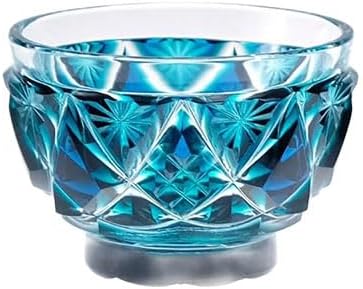
Bokashi (ぼかし) — gradation or “blurring.” Because the color layer is thick, cutting into it exposes a fade from deep color (at the surface) to clear (at the cut’s depth). This soft gradient is unique to Satsuma Kiriko.
Satsuma Vidro (薩摩ビードロ) — “vidro” is the old Portuguese-derived word for glass; the term survives in the names of Kagoshima glass workshops.
Shuseikan (集成館) — the industrial complex Lord Shimazu Nariakira built at Iso (Sengan-en) in the 1850s, where the original Satsuma glass was made.
Where this comes from — place, era, and the craft tradition

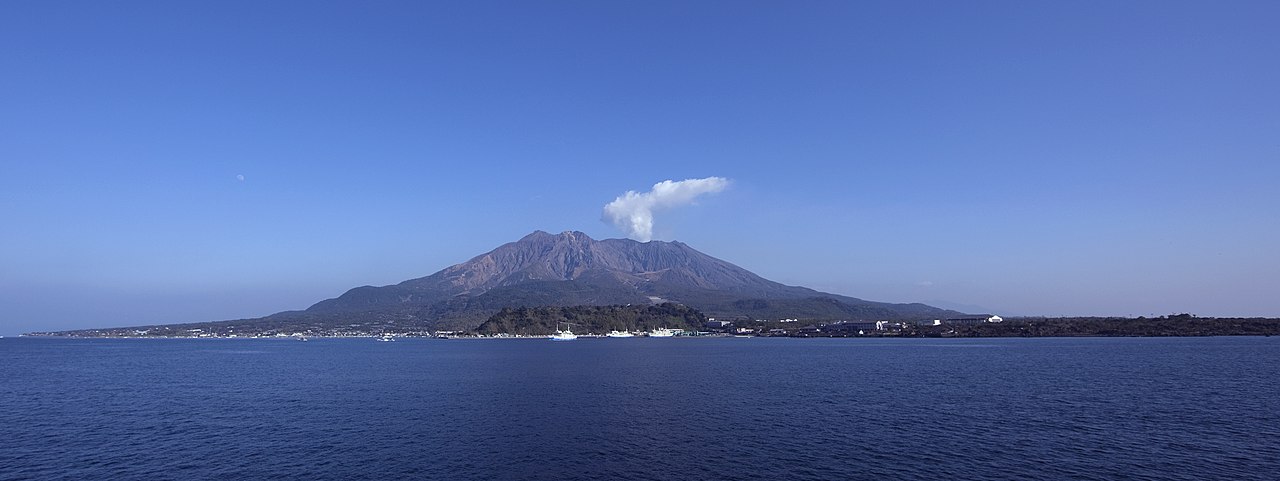
Kagoshima is the southernmost major city on Kyūshū, Japan’s third-largest island, set on a bay dominated by Sakurajima — a volcano so active that ash falls on the city in the ordinary course of a year. This is not the polished Kantō plain around Tokyo; it is a southern, maritime, somewhat frontier corner of Japan, historically oriented as much toward trade with the outside world as toward the capital.
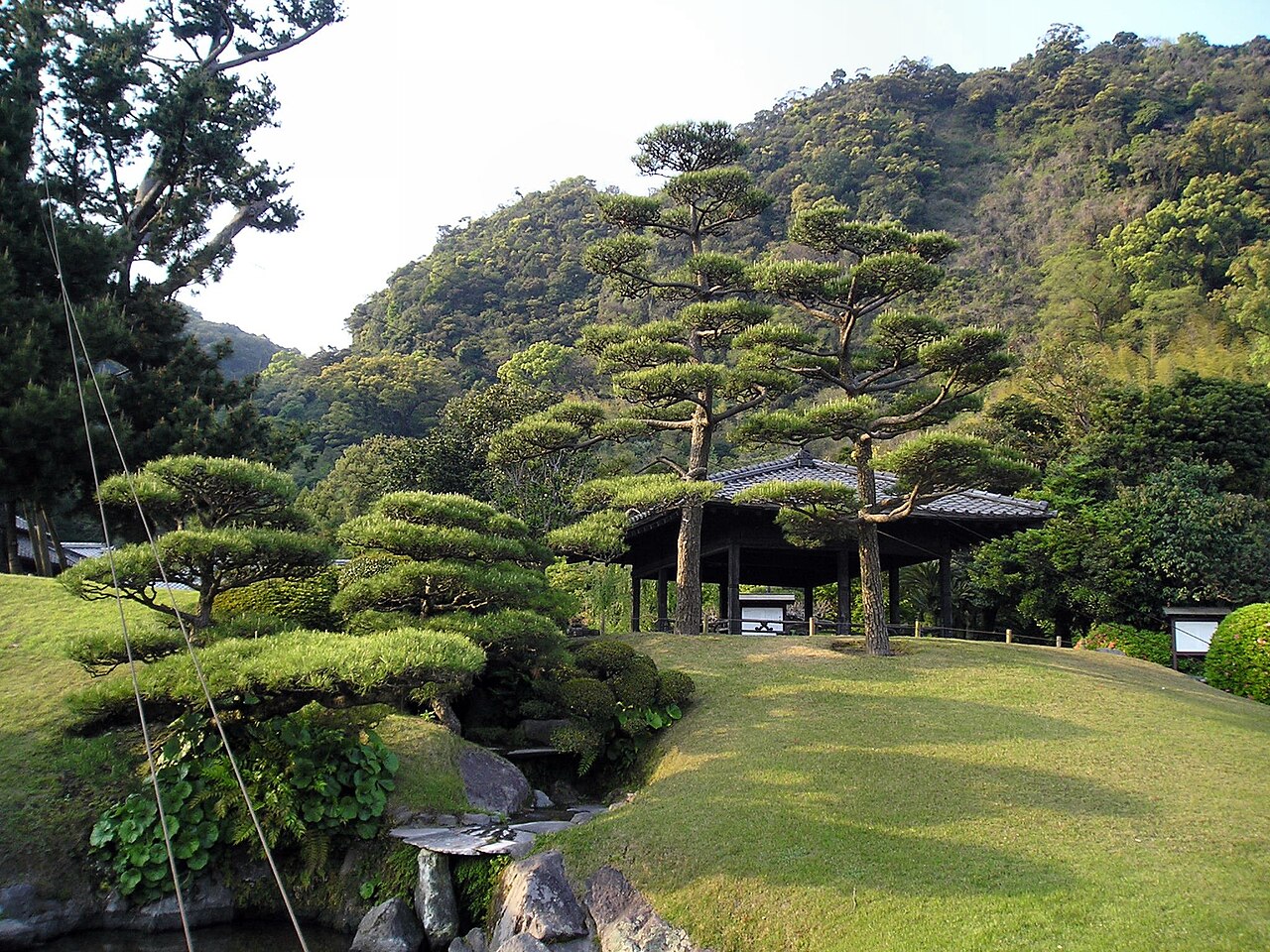
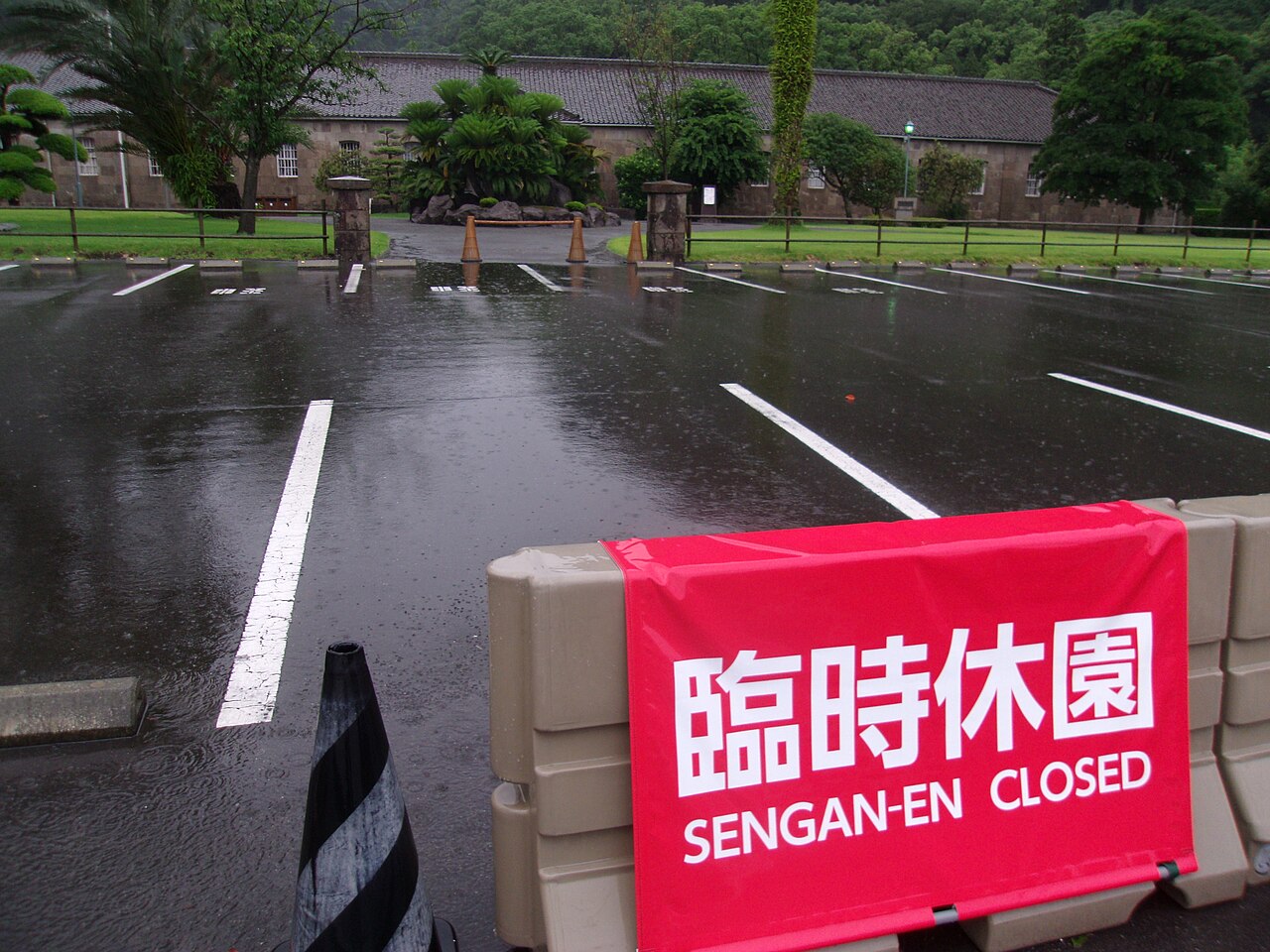
That outward orientation is the whole reason Satsuma Kiriko exists. In the 1850s the Satsuma domain was ruled by Shimazu Nariakira, a reform-minded lord who looked at the encroaching Western powers and decided his domain needed Western industry. He built an industrial complex called the Shuseikan at Iso, beside his clan’s seaside villa at Sengan-en, and imported Western glass chemistry and coloring agents. Cut crystal was one product of that complex — made not by a folk workshop but as a samurai-domain enterprise, a state project.
The technical breakthrough was the overlay. Where Edo Kiriko cased a thin film of color over clear glass, Satsuma’s chemists could lay down a much thicker colored layer. When a cutter then drove a wheel into that depth, the facet did not simply expose clear glass at a sharp line — it passed through the full thickness of the color, revealing a fade from saturated hue at the rim of the cut to colorless at its floor. That fade, bokashi, became the signature.
“Edo Kiriko cuts down to the clear glass and stops; Satsuma cuts into the color itself, and the facet fades as it goes.”
-
1850s — Lord Shimazu Nariakira builds the Shuseikan works at Iso (Sengan-en) and imports Western glass chemistry; Satsuma Kiriko begins. -
1863 — The Anglo-Satsuma War (Bombardment of Kagoshima) damages the domain and its works. -
1877 — The Satsuma Rebellion; original Satsuma Kiriko production dies out and stays dormant for over a century. -
1985 — Satsuma Kiriko is revived in Kagoshima City after more than 100 years of silence. -
2026 — Pieces are hand-blown and wheel-cut by a small number of Kagoshima ateliers; Sengan-en and Sakurajima remain the cultural backdrop.
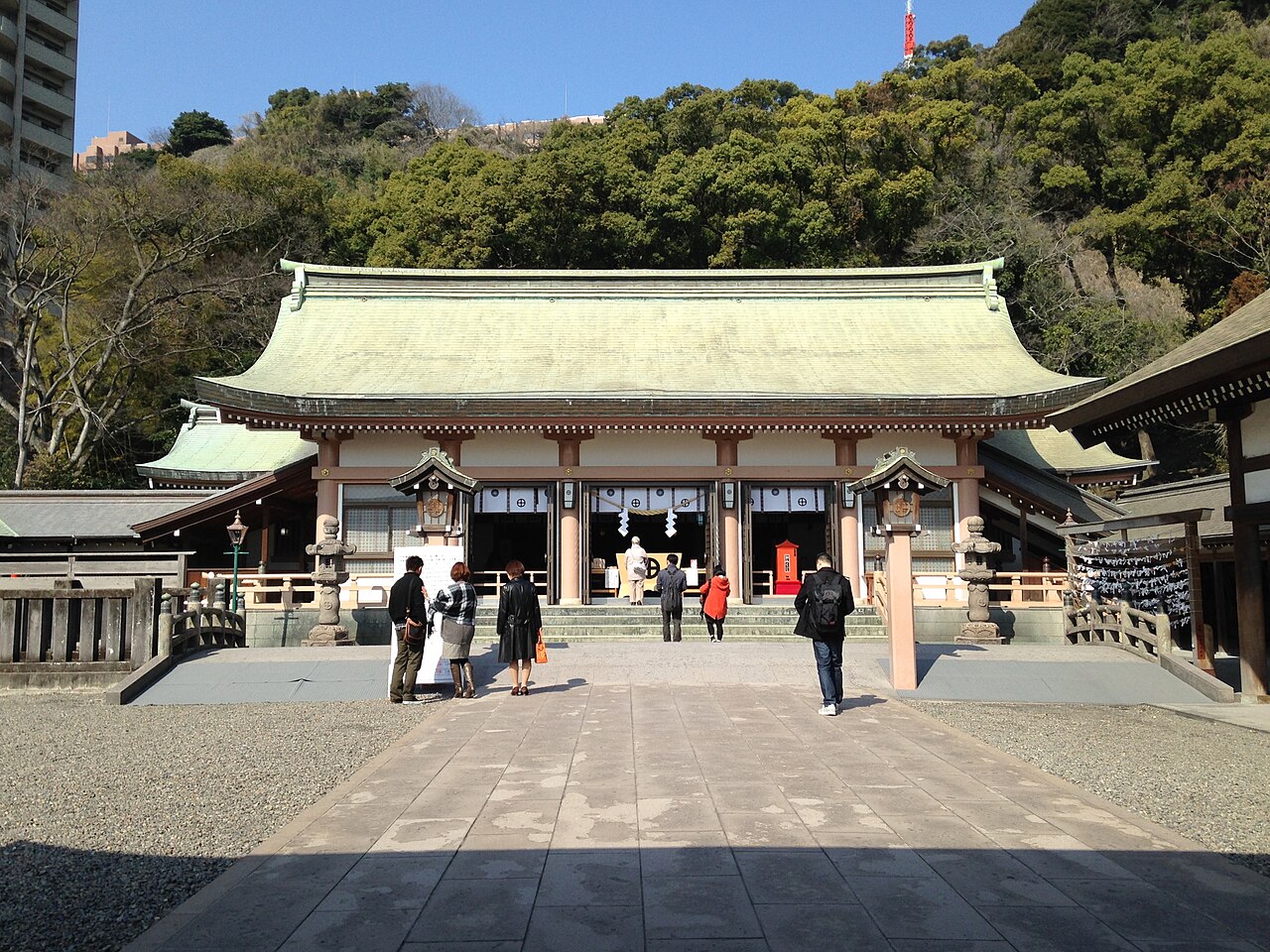
The interruption matters to how you should read this object. Unlike a craft with an unbroken nine-century line, Satsuma Kiriko collapsed completely after the Anglo-Satsuma War and the Satsuma Rebellion, and was gone for generations. What you buy today is a 1985 revival — a deliberate reconstruction of the technique in modern Kagoshima, not a heirloom workshop that never stopped. That is not a flaw; it is simply the accurate frame. The bokashi method and the iro-kise overlay are the genuine inheritance; the continuous hands are recent.
📌 How does it compare?
Related jpmono guides — other Japanese glass and Kagoshima/Kyūshū crafts worth weighing against a Satsuma kiriko tumbler:
 Satsuma Kiriko sake cup
Same craft, smaller vessel
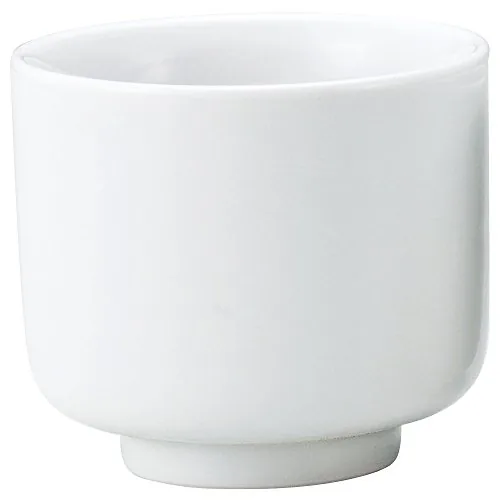 Shiro-Satsuma sake cup
Kagoshima’s other Satsuma craft, in ceramic
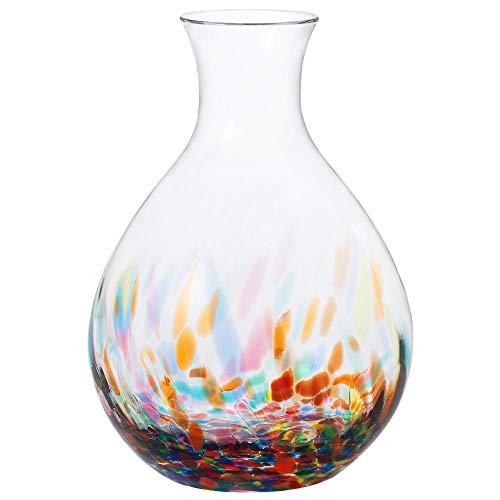 Tsugaru Bidoro tumbler
Aomori art glass, color through the body
 Otaru hand-blown tumbler
Hokkaidō blown glass, no cutting
 Nagasaki Bidoro glass
Kyūshū’s older glass tradition
 Ryukyu glass kara-kara
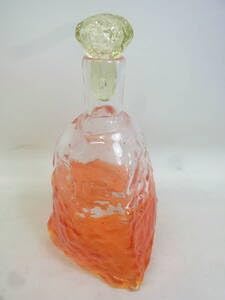
Okinawan recycled glass, bubbles and color
 Miyakonojo blade (Miyazaki)
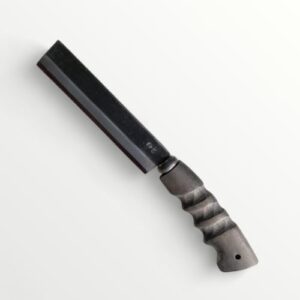
Neighboring Kyūshū craft, forged steel
Where to buy across stores
JPY is the authoritative price for the specific listed item; live pricing was unavailable in the fetched data, so the rows below describe the purchase path rather than quote a figure. Verify the current price at the retailer before buying. USD estimates use a ¥150/USD baseline (mid-2026) where shown.
| Store | Item / Variant | Price (JPY + USD est.) | Notes |
|---|---|---|---|
| 🇺🇸 Amazon.com (US) | Browse Japanese cut glass & kiriko | varies (USD) | Best if you are shopping from the US — Prime shipping, USD pricing, no international customs. Amazon US carries Edo Kiriko and other Japanese cut and art glass for comparison; the exact Satsuma Kiriko piece is sourced from Japan (next row). |
| 🇯🇵 Amazon JP Global Store | This exact whisky rocks glass | Price not stated — confirm before buying | Where the specific item is sourced. Ships internationally from Japan to most major destinations. |
| Maker direct | Kagoshima Satsuma Kiriko ateliers / Sengan-en shop | Unconfirmed | Widest selection and provenance, but Japanese-language ordering and limited overseas shipping; expect higher prices for studio pieces. |
| Proxy services (Buyee / Tenso) | Any Japan-only seller with forwarding abroad | Item price + forwarding fee | Useful when a piece is only sold on Japan-domestic sites; adds a service fee and a consolidation/repacking step (worth it for fragile glass). |
What it does well
Weaknesses and things to verify before buying
- Product details are limited. If fit matters for your bar setup or ice, confirm the product information before buying.
- Price opacity. No price was retrievable at time of writing. Hand-cut Satsuma Kiriko generally sits well above pressed or machine-cut glass, so budget accordingly and check the live figure.
- Care burden. Cut crystal is best hand-washed and hand-dried; dishwasher safety is not confirmed here. Thermal shock (boiling water, freezer-to-hot) can crack glass — avoid it.
- Material caveat. Cut crystal of this type is often lead crystal, which provides a substantial feel and refraction. If you intend long-term storage of acidic drinks, or have specific concerns, confirm the material with the seller.
- Fragility in transit. This is heavy, faceted glass shipping internationally. Confirm the seller’s packaging and return policy; a proxy service that repacks fragile items can be worth the fee.
- Revival, not unbroken lineage. If you specifically want a craft with continuous centuries-old production, note that Satsuma Kiriko died out for over a century and was revived in 1985. The technique is authentic; the continuity is recent.
- Aesthetic preference. If you prefer the crisp, high-contrast line of Edo Kiriko, Satsuma’s soft gradient may read as less sparkling. Compare the two before committing.
Conclusion — which buyer type are you?
Other ways to approach this purchase
❓ Frequently Asked Questions
What makes Satsuma Kiriko different from Edo Kiriko?
Can I put this whisky glass in the dishwasher?
Does Amazon ship Satsuma Kiriko internationally?
Why is no fixed price shown?
Is the color painted on or part of the glass?
Will a large ice ball fit?
Is it lead crystal, and is it safe for daily whisky?
jpmono.com is curated by a Japan-based editorial team (working out of Toyama in the Hokuriku region and Nara in Kansai) and is independent. We do not take payment from the makers we feature; income comes from affiliate links. We don’t physically test every product — we read maker specifications and craft sources, and flag where the information is thin.
Note: This article was prepared with AI assistance and reviewed against maker information and documented craft history. Specifications, pricing, and availability should be confirmed with a retailer before purchase.
Affiliate disclosure: jpmono.com may earn a commission on qualifying purchases made through links on this page, at no additional cost to you.