![Matsusaka Momen Indigo-Striped Noren Curtain: Where to Buy [2026]](https://jpmono.com/wp-content/uploads/2026/06/matsusaka-momen-indigo-noren-curtain-where-to-buy-2026-featured.jpg)
A noren (暖簾, a split fabric curtain hung in a doorway) is one of the quietest objects in a Japanese home. It does not insulate, lock, or fully conceal. It marks a threshold — a soft signal that you are passing from one kind of space into another — and for centuries it also served as a shop’s signboard, carrying the house crest and the weight of its reputation. A noren cut from Matsusaka Momen (松阪木綿, “Matsusaka cotton”) carries an extra layer of that history, because the indigo-striped cloth itself was once the merchant’s badge.
Matsusaka Momen is the narrow indigo-and-white striped cotton woven around the castle town of Matsusaka in what is now Mie Prefecture. In the Edo period its fine stripe — known as Matsusaka-jima (松阪嶋, “Matsusaka stripe”) — became shorthand for iki (粋), the understated chic prized by Edo townspeople, and bolts of it traveled the country in the luggage of pilgrims returning from Ise. This guide looks at one specific product: a hand-loomed Matsusaka Momen indigo-striped noren door curtain sourced through the Amazon JP Global Store (ASIN B0G2JK3RGJ).
Below we cover who the curtain suits, what the published listing actually states, where the cloth comes from, how it compares to other Japanese indigo and cotton textiles we have written about, and the practical realities of buying it from outside Japan. Where the data is thin, we say so rather than guessing.
🔄 Updated:
⏱️ Read time: ~11 min

- Who this is for — and who should skip it
- Product overview (from published specs)
- Where this comes from
- Price snapshot across stores
- What it does well
- Weaknesses and things to verify before buying
- Conclusion — which buyer type are you?
- Other ways to approach this purchase
- 🏆 Editor’s Pick
- ❓ Frequently Asked Questions
Who this is for — and who should skip it
- Want a doorway, kitchen, or shelf divider that reads as quiet craft rather than decoration
- Appreciate natural-indigo (aizome) cotton and the muted, slightly irregular look of hand-loomed stripes
- Like household textiles with a documented regional history behind them
- Prefer cotton you can wash and live with daily over silk or display-only pieces
- Are comfortable buying from the Amazon JP Global Store and waiting for international shipping
- Want a bold, saturated, perfectly uniform print — Matsusaka stripes are deliberately subdued
- Need an opaque curtain for privacy or light-blocking (a noren is intentionally a partial screen)
- Expect synthetic colorfastness — natural indigo can transfer or soften with washing
- Want it tomorrow at a low price — cross-border shipping adds time and cost
- Are looking for a precisely specified size; confirm dimensions on the live listing before buying
Product overview (from published specs)
The product data captured for this article was thin: at the time of writing, the search snapshot returned no live price or structured specification for ASIN B0G2JK3RGJ, and the figures below are drawn from the spec brief and the general characteristics of Matsusaka Momen noren rather than a confirmed listing readout. Treat every cell as “verify on the live listing before purchase.”
Matsusaka Momen Indigo-Striped Noren Curtain
松阪もめんの暖簾本藍染め
通常6~7日以内に発送します。 · Sold by いろとりどりショップ · ASIN B0G2JK3RGJ
Price and availability as of 2026-09-01 05:22 JST. The Amazon listing at the time of purchase is authoritative. jpmono.com earns a commission on qualifying purchases at no extra cost to you.
| Attribute | Detail (per spec / typical for the craft) | Source |
|---|---|---|
| Item | Indigo-striped cotton noren door curtain | Spec brief |
| Craft | Matsusaka Momen (松阪木綿), hand-loomed aizome cotton | Spec brief |
| Material | 100% cotton (typical for the craft — confirm on listing) | Maker tradition |
| Color / pattern | Indigo and white stripe (Matsusaka-jima) | Spec brief |
| Dimensions | Unconfirmed — check manufacturer / listing | — |
| Origin | Matsusaka, Mie Prefecture, Japan | Spec brief |
| ASIN | B0G2JK3RGJ | Spec brief |
| Store / source | Tag | What it offers |
|---|---|---|
| 🇺🇸 Amazon US (search) | moonill-20 | Browse comparable Japanese noren & indigo cotton textiles |
| 🇯🇵 Amazon JP Global Store | moonill-22 | The specific sourced listing (ASIN B0G2JK3RGJ) |
| Maker direct | — | Matsusaka Momen Hand-Weaving Center and local weavers |
| Proxy services (Buyee / Tenso) | — | For domestic-only listings that do not ship abroad |
📖 Glossary — key terms
- Noren (暖簾) — a split fabric curtain hung in a doorway; historically also a shop’s signboard, carrying the house crest and standing in for its reputation.
- Matsusaka Momen (松阪木綿) — indigo-striped cotton woven around Matsusaka, Mie Prefecture.
- Matsusaka-jima (松阪嶋) — the fine indigo stripe pattern; “jima/shima” means stripe.
- Aizome (藍染) — natural indigo dyeing, traditionally fermented from the tade-ai (Japanese indigo) plant.
- Iki (粋) — the restrained, worldly chic prized by Edo townspeople; the opposite of gaudy.
- Okage-mairi (お蔭参り) — the mass popular pilgrimages to Ise Grand Shrine during the Edo period.
- Kishū domain (紀州藩) — the Kii-province Tokugawa branch domain that governed Matsusaka.
Related Japanese craft guides on jpmono — other Mie crafts, and other indigo / cotton textiles to weigh against this noren.
 🍲 Mie Banko-yaki donabe
 🍱 Mie Ise Shunkei lacquer
🟦 Awa aizome indigo tenugui
🧵 Yumihama-gasuri indigo runner
 👛 Iyo-gasuri indigo cotton
 🌊 Hamamatsu chusen cotton
 🧣 Kishu (Kii domain) cotton
🌺 Bingata dyed home textile
Where this comes from

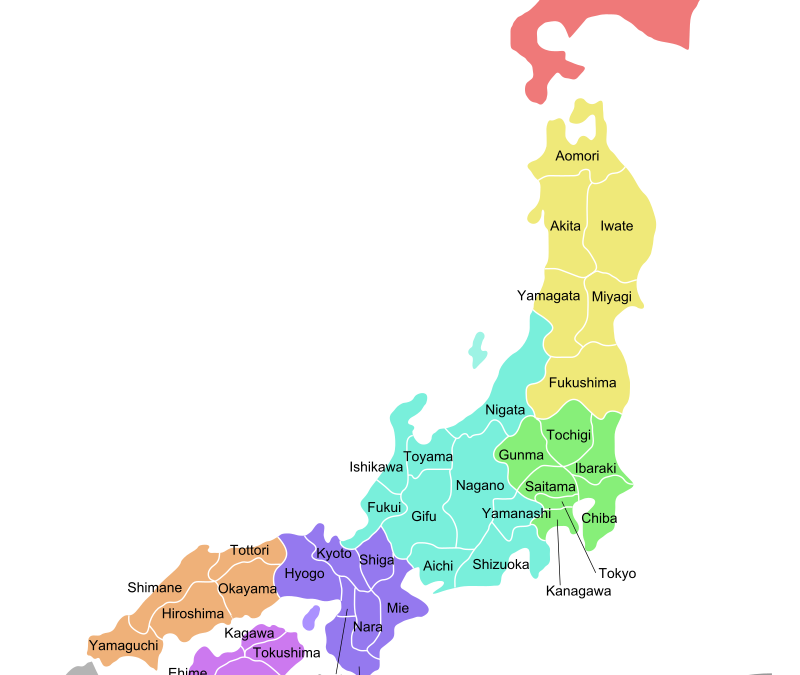
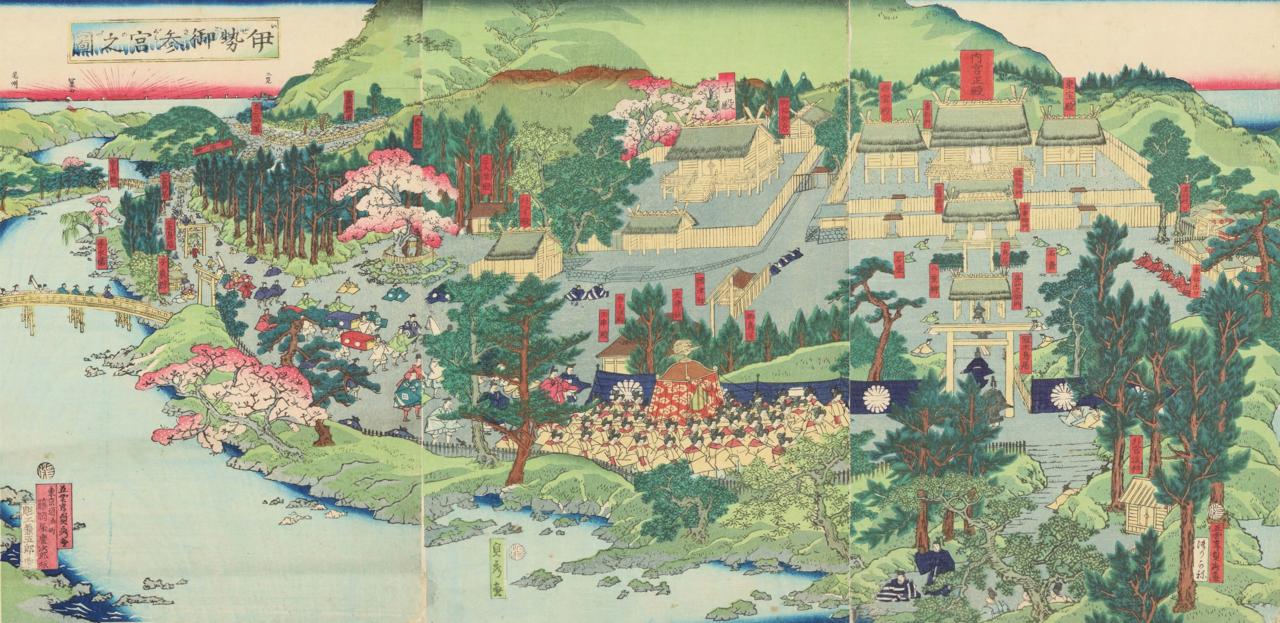
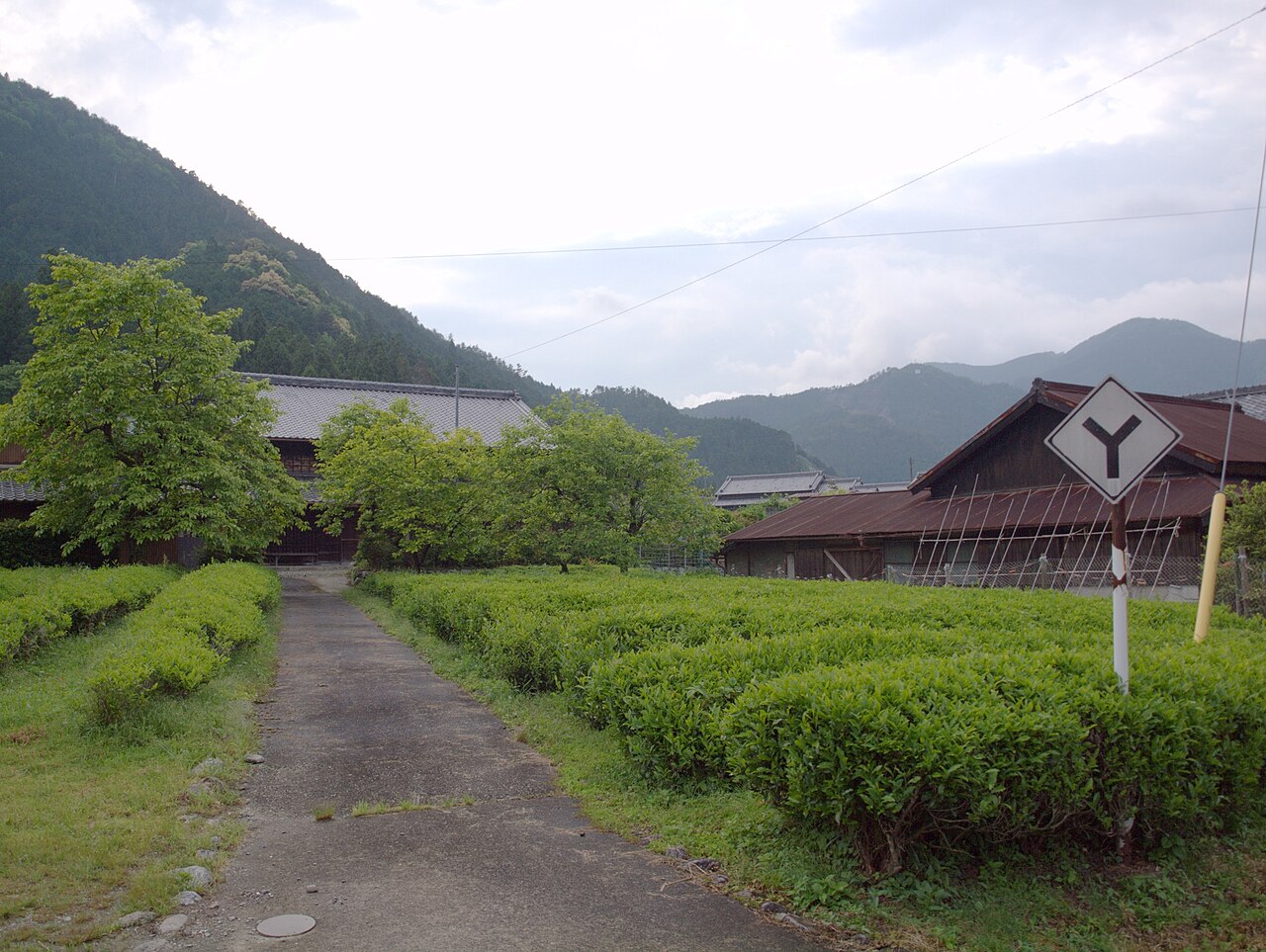
Matsusaka sits on the eastern flank of the Kii Peninsula, facing Ise Bay, in the southern half of Mie Prefecture. The land here is a band of cotton-friendly alluvial plain pressed between the Pacific and the mountains, and the Kushida and Sakauchi rivers gave both the water and the flood-renewed soil that made cotton a viable cash crop from the late medieval period onward. Crucially, Matsusaka also straddled the pilgrim road to Ise Grand Shrine — Japan’s most visited Shinto site — which turned a regional cloth into a national one.

The castle town itself was laid out in 1588 by the warlord Gamō Ujisato, who built Matsusaka Castle and deliberately drew merchants and artisans into the new town. After the Tokugawa settlement, the area came under the Kishū domain — one of the three senior Tokugawa branch houses — and its merchant class was given room to flourish. By the 17th and 18th centuries the fine indigo stripe woven here, Matsusaka-jima, had become a fashion in Edo: subdued, vertical, and read by townspeople as the very picture of iki — the restrained, knowing chic that contrasted with louder, gaudier taste.
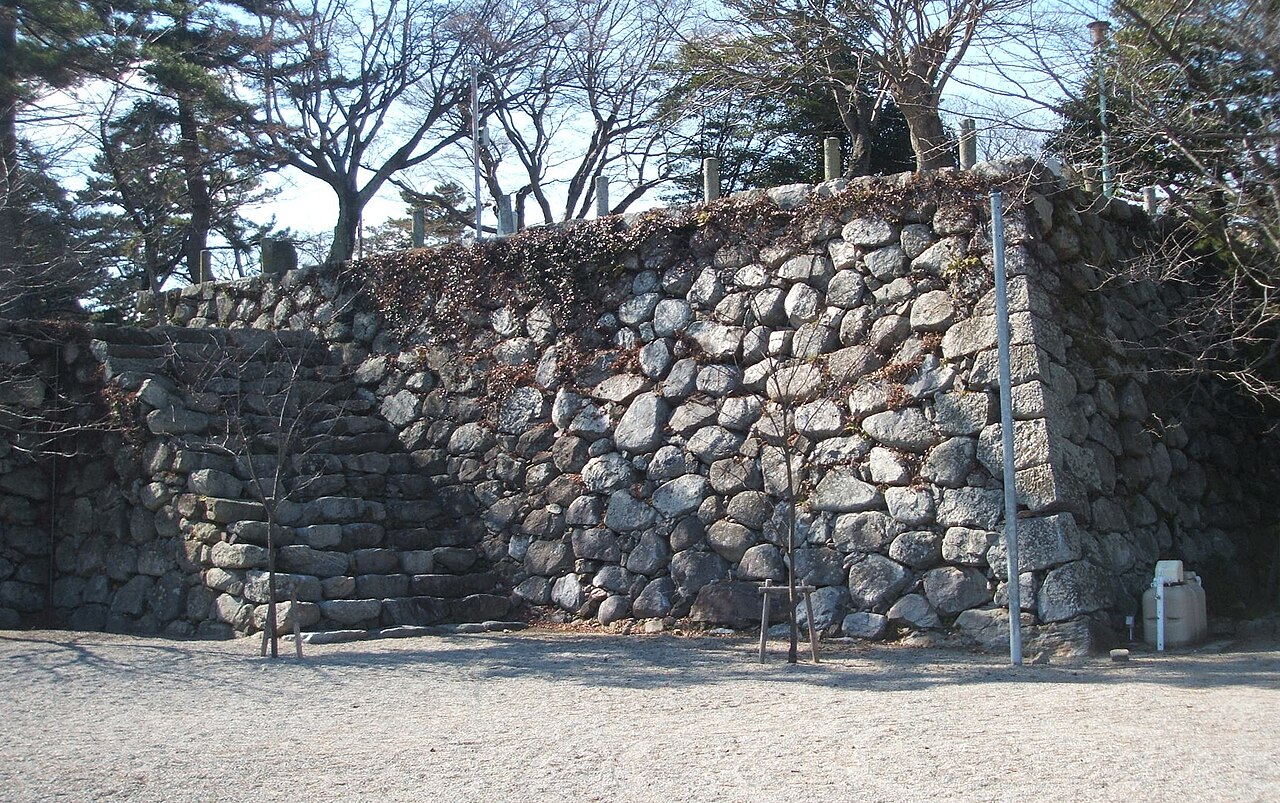
- 1588 — Gamō Ujisato builds Matsusaka Castle and lays out the merchant town.
- 1600s — Cotton cultivation spreads on the Ise plain; the fine indigo stripe develops.
- 1622 — Mitsui Takatoshi, founder of the Mitsui house, is born into a Matsusaka merchant family.
- 1673 — Mitsui opens the Echigoya dry-goods store in Edo (later Mitsukoshi) on a “cash, no haggling” basis.
- 18th c. — Matsusaka-jima becomes a byword for iki in Edo; large volumes ship north each year.
- Edo period — Okage-mairi pilgrims to Ise carry the cloth home as a souvenir, spreading it nationwide.
- Meiji era — Domain system ends; cheaper imported cloth pressures the hand-weaving trade.
- Present — The Matsusaka Momen Hand-Weaving Center and local weavers keep hand-loomed production alive.
The merchant story is not a footnote here. Mitsui Takatoshi, born in Matsusaka in 1622, founded the Echigoya store in Edo in 1673 and pioneered a fixed-price, cash-only model that broke with the credit-and-haggle norm of the day — the seed of what would become the Mitsukoshi department store and the wider Mitsui enterprise. That a single castle town on the Ise road produced both a national fabric and one of Japan’s great merchant houses is no coincidence: the same disciplined, outward-looking commercial culture drove both.
“In Edo a Matsusaka stripe needed no label. The cloth itself told other townspeople what kind of taste its wearer kept.”
What “still being made here” means today is modest but real. Hand-loomed Matsusaka Momen is no longer a mass industry; it survives through a preservation center and a small circle of weavers who keep the indigo-dyeing and warp-striping techniques going, supplying noren, pouches, and yardage rather than the bolt-by-the-thousand trade of the Edo period. The stripe you would hang in a doorway today is woven on the same principles that once made it the merchant’s quiet badge — natural indigo, narrow vertical lines, cotton meant to be used.
Price snapshot across stores
Only a search snapshot was available at the time of writing, and it returned no live price for ASIN B0G2JK3RGJ; the JPY figure below is therefore unconfirmed. Always verify the current price at the retailer before buying. USD figures, where shown elsewhere, are approximate at a ¥150/USD baseline as of mid-2026; the JPY price is the authoritative one.
| Store | Item / variant | Price (JPY + USD est.) | Notes |
|---|---|---|---|
| 🇺🇸 Amazon US (search) | Browse Japanese noren & indigo cotton textiles | varies (USD) | Best if you are shopping from the US — Prime shipping, USD pricing, no international customs. Amazon US carries noren and indigo cotton goods from various makers, useful for comparing pattern and price tiers; the specific Matsusaka piece ships from Japan (next row). |
| 🇯🇵 Amazon JP Global Store | The sourced Matsusaka Momen noren (ASIN B0G2JK3RGJ) | Price unconfirmed at writing — check listing | Ships internationally from Japan via the Global Store to most major destinations. This is the specific listed item. |
| Maker direct | Matsusaka Momen Hand-Weaving Center / local weavers | varies (JPY) | Widest pattern selection and provenance, but most domestic sites do not ship abroad directly. |
| Proxy services (Buyee / Tenso) | Forwarding for domestic-only listings | item price + fee + forwarding | Useful when a maker or marketplace will not ship internationally; adds a service fee and a second leg of postage. |
What it does well
Weaknesses and things to verify before buying
- Size is unconfirmed in our data. Noren come in many widths and drops; confirm exact dimensions on the live listing so it fits your doorway or rod.
- Natural indigo can transfer. Aizome cotton may bleed or rub off color, especially when new or damp — wash separately and keep away from light-colored walls until set.
- It is a partial screen, not a privacy curtain. A noren is split and light; it suggests separation rather than blocking sight or light.
- Price was unavailable at the time of writing. The search snapshot returned no live figure for this ASIN; verify cost and any international shipping surcharge before ordering.
- Subdued by design. If you want a bold, saturated, perfectly uniform pattern, the muted Matsusaka stripe will look too quiet.
- Hand-loomed variation. Stripe spacing and shade can vary between pieces; the item you receive may differ slightly from the listing photo.
- Cross-border logistics. Delivery time, customs duties, and returns are all governed by Amazon JP Global Store terms, not your local store’s.
Conclusion — which buyer type are you?
Other ways to approach this purchase
🏆 Editor’s Pick
❓ Frequently Asked Questions
What is a noren, and how is it used?
A noren is a split fabric curtain hung in a doorway or opening. It marks a threshold and softly separates spaces rather than sealing them. Historically it also served as a shop’s signboard. People hang them in entryways, kitchen pass-throughs, and as light room dividers.
Does the Amazon JP Global Store ship this noren internationally?
The Amazon JP Global Store ships many household textiles to most major international destinations. Shipping time and cost vary by country, and customs duties may apply above local thresholds. Confirm the shipping options and any surcharge on the listing before ordering.
How do I wash natural-indigo (aizome) cotton?
Natural indigo can transfer color, especially when new or damp. Hand-wash separately in cool water, avoid prolonged soaking and strong detergent, and dry away from direct sunlight. Expect the color to soften gradually over time — that aging is part of the appeal.
What size will I receive?
Our captured data did not include confirmed dimensions for this ASIN. Noren come in a range of widths and drops, so check the size stated on the live listing against your doorway or rod before buying.
How is Matsusaka Momen different from other Japanese indigo cotton?
Matsusaka Momen is defined by its fine vertical indigo-and-white stripe, Matsusaka-jima, woven around Matsusaka in Mie. It differs from resist-dyed indigo such as Awa aizome tenugui or kasuri ikat cottons like Yumihama-gasuri and Iyo-gasuri, which build pattern through dyeing technique rather than woven stripes.
Is it a good gift?
Yes, for someone who appreciates understated craft and Japanese textiles. A noren is practical, light to ship, and carries a clear regional story. If the recipient prefers bold patterns or needs a privacy curtain, choose something else.
Can I buy directly from the maker instead?
The Matsusaka Momen Hand-Weaving Center and local weavers offer the widest selection and clearest provenance, but many domestic Japanese sites do not ship abroad. In that case a proxy service such as Buyee or Tenso can forward the order, adding a service fee and a second leg of postage.
jpmono.com is curated by a Japan-based editorial team (working out of Toyama in the Hokuriku region and Nara in Kansai) and is independent. We do not take payment from the makers we feature; income comes from affiliate links. We do not physically test every product — we read maker specs and source listings.
🤖 This article was prepared with AI assistance and reviewed against the source listing data. Specifications, prices, and availability can change; confirm details on the retailer’s page before purchasing.
Affiliate disclosure: jpmono.com may earn a commission on qualifying purchases made through links on this page, at no additional cost to you.