![Hakata-ori Kenjo Silk Obi: Where to Buy Fukuoka’s Woven Sash [2026]](https://jpmono.com/wp-content/uploads/2026/07/hakata-ori-kenjo-silk-obi-where-to-buy-2026-featured.jpg)
Hakata-ori (博多織, “Hakata weave”) is a silk cloth from the city of Fukuoka, in northern Kyushu, whose defining product is a firm, ridged obi — the sash that holds a kimono closed. Its lineage runs back to 1235, when a Hakata merchant named Mitsuda Yasozaemon traveled to Song-dynasty China with a monk and studied weaving. His descendants refined a thick, densely-wefted silk in Hakata’s merchant quarter, and centuries later that cloth still carries the same structural logic: many warp threads packed under a heavy weft, beaten tight.
What makes Hakata-ori notable to an international audience is not surface decoration but engineering. The signature “kenjo-gara” (献上柄, “tribute pattern”) stripe — a row of Buddhist dokko (独鈷, a vajra ritual implement) and hanazara (華皿, “flower plates”) motifs — was fixed in the Edo period when the cloth became an annual tribute to the shogunate. The weave is so dense that a finished obi has a springy hand and emits a faint “kyoki” squeak when the layers rub, which is precisely why it grips a knot and does not slip loose over a day of wear.
This guide covers one specific listing — a Hakata-ori kenjo-gara pure silk obi in the narrow hanhaba/kaku format (ASIN B0DWDJVH8Q) — and how an international buyer can actually acquire one. We look at who it suits, how to read the stripe, where it sits against other Japanese woven silks, and the realistic purchase paths from outside Japan. Written from a Japan-based editorial desk working out of Toyama and Nara.
🔄 Last updated: July 3, 2026
⏱️ Read time: ~12 min

- Who this is for — and who should skip it
- Product overview (from published specs)
- Price snapshot across stores
- What it does well
- Weaknesses and things to verify before buying
- Where this comes from
- Conclusion — which buyer type are you?
- Other ways to approach this purchase
- 🏆 Editor’s Pick
- ❓ Frequently Asked Questions
Who this is for — and who should skip it
- Wear kimono or yukata and want an obi that holds a knot reliably all day
- Value structural craft — a tight, springy weave — over printed or dyed surface decoration
- Want a genuine Fukuoka Hakata-ori with the traditional kenjo-gara stripe, not a lookalike print
- Appreciate a piece with a documented, 770-year regional lineage
- Are comfortable buying silk that ships from Japan and reading care instructions in a Japanese context
- Do not own or plan to wear kimono/yukata — an obi has little use on its own
- Want a wide, formal fukuro or maru obi for full ceremonial dress (this is a narrow hanhaba/kaku format)
- Need machine-washable, low-maintenance fabric — this is pure silk
- Expect Prime-style domestic shipping and returns; this sources from Japan
- Are shopping purely on price and are unbothered by whether a weave is authentic Hakata-ori
Product overview (from published specs)
The listing is a pure-silk Hakata-ori obi woven in the kenjo-gara pattern, in the narrow hanhaba (半幅, “half-width”) / kaku (角, “square/stiff”) format used for everyday kimono and yukata. Because the automated fetch returned no live spec sheet, the table below reports only what is stated by the listing identity and the maker tradition; unconfirmed fields are marked so.
Hakata-ori Kenjo Silk Obi
[京都室町st.] 半幅帯 正絹 本場筑前 博多織 証紙付き 日本製 小袋帯 細帯 yu「梅色系、矢羽に椿」WRT786
現在在庫切れです。 · ASIN B0DWDJVH8Q
Price and availability as of 2026-08-31 02:30 JST. The Amazon listing at the time of purchase is authoritative. jpmono.com earns a commission on qualifying purchases at no extra cost to you.
| Attribute | Detail | Source |
|---|---|---|
| Craft | Hakata-ori (Fukuoka woven silk); National Traditional Craft since 1976 | Maker tradition |
| Product type | Obi (kimono sash), hanhaba / kaku narrow format | Listing title |
| Pattern | Kenjo-gara — dokko (vajra) and hanazara (flower-plate) stripe motifs | Listing title |
| Material | Pure silk | Listing title |
| Origin | Fukuoka Prefecture, Kyushu, Japan | Maker tradition |
| Dimensions / weight | Unconfirmed — check the Amazon JP Global Store listing | — |
| Price | Unconfirmed at time of writing — no live snapshot returned | — |
| ASIN | B0DWDJVH8Q | Amazon JP Global Store |
Sources: Amazon US search (primary, moonill-20), Amazon JP Global Store (secondary, moonill-22, sourced listing), and the Hakata-ori maker tradition. Where a spec is neither in the fetched data nor confirmable, it is marked “Unconfirmed” rather than guessed.
📖 Glossary — key terms
- Hakata-ori (博多織) — the silk weave of Hakata / Fukuoka, characterized by a dense weft-faced structure.
- Obi (帯) — the sash that fastens a kimono or yukata.
- Kenjo-gara (献上柄) — the “tribute pattern”; the stripe layout fixed when the cloth was presented as annual tribute to the shogunate.
- Dokko (独鈷) — a vajra, a Buddhist ritual implement; rendered as a repeating motif in the stripe.
- Hanazara (華皿) — “flower plate,” the vessel that holds scattered flowers in Buddhist rites; the second core motif.
- Hanhaba (半幅) — a “half-width” obi, narrower and more casual than formal obi.
- Kaku obi (角帯) — a stiff, narrow obi, most associated with men’s kimono and yukata.
- Kyoki — the faint squeak the tight silk makes when the layers rub, a marker of a genuinely dense weave.
- Kenjo — a formal tribute or presentation to a superior authority (here, the Tokugawa shogunate).
Related jpmono guides — two more crafts from the same city, and other Japanese woven-silk pieces to weigh against a Hakata-ori obi.
 🎎 Hakata Ningyo clay figurine (same city)
 👔 Sendai Hira silk necktie
 🧵 Kiryu-ori woven silk
 🧣 Yonezawa-ori silk stole
 🌸 Chichibu Meisen silk scarf
🌺 Ryukyu Bingata textile (Kyushu)
Price snapshot across stores
No live price was returned for this listing at the time of writing, so the table shows the purchase paths and general expectations rather than a confirmed figure. The authoritative price is the JPY figure shown on the Amazon JP Global Store listing at the moment you check it.
| Store | Item / Variant | Price (JPY + USD est.) | Notes |
|---|---|---|---|
| 🇺🇸 Amazon.com (US) | Browse Japanese obi & kimono silks | varies (USD) | Best if you are shopping from the US — Prime shipping, USD pricing, no international customs. Amazon US carries assorted Japanese obi and kimono textiles for comparing format and price tiers; this specific Fukuoka Hakata-ori obi is sourced from Japan (next row). |
| 🇯🇵 Amazon JP Global Store | This exact obi (ASIN B0DWDJVH8Q) | Price unconfirmed — check listing | Ships internationally from Japan. This is where the specific item in this guide is sourced. |
| Maker direct | Hakata-ori weavers’ guild / individual weaving houses | Varies | Fukuoka weaving houses sell obi directly; most sites are Japanese-only and may not ship abroad without a proxy. |
| Proxy services (Buyee / Tenso) | Forward-from-Japan option | Item price + forwarding fee | Useful when a Japanese seller does not ship internationally; adds a handling fee and a second postage leg. |
USD figures, where shown, are approximate estimates at a ¥150/USD baseline as of mid-2026. The JPY price is authoritative. Prices in USD depend on the current exchange rate. Only the Amazon JP listing snapshot exists for this item, and live pricing may have shifted since the writing date.
What it does well
“The stripe on a Hakata-ori obi is not ornament borrowed for looks — it is a vajra and a flower-plate, the same tribute pattern the Kuroda lords sent to the shogun every year for two and a half centuries.”
Weaknesses and things to verify before buying
- No live price at time of writing. The fetch returned only the product ID and image. Confirm the current JPY figure on the Amazon JP Global Store listing before ordering.
- Dimensions unconfirmed. Obi length and width vary by format. Check the listing’s stated measurements against your height and tying method — a hanhaba/kaku obi that is too short cannot be tied properly.
- Pure silk means real care. Silk is not machine washable. Expect spot-cleaning or professional cleaning, and store away from direct sun and humidity.
- An obi is not a standalone garment. If you do not already wear kimono or yukata, this has little use on its own. Budget for the rest of the outfit.
- Format is casual, not ceremonial. This narrow format suits everyday and summer wear; it is not the wide fukuro/maru obi used for formal ceremony.
- Authenticity varies in the market. “Hakata-style” printed lookalikes exist. Verify the listing describes a genuine woven Fukuoka Hakata-ori, ideally with the traditional-craft mark, rather than a printed imitation.
- International shipping and customs. Shipping from Japan adds cost and time, and orders above your country’s threshold may incur duties. Confirm the seller ships to your destination or plan for a proxy service.
Where this comes from

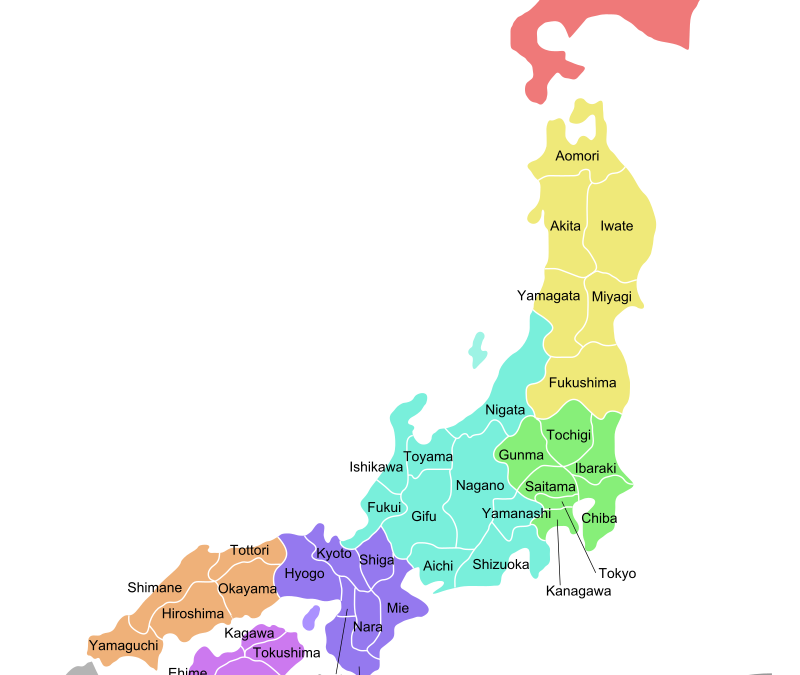
Fukuoka sits at the northern tip of Kyushu, Japan’s southwesternmost main island, where the city wraps around Hakata Bay and looks out across the Genkai Sea toward the Korean peninsula. For most of Japanese history this was the country’s front door to the continent. That geography — a sheltered trading bay, close sea lanes to China and Korea — is the reason a Chinese weaving technique could take root here and stay.
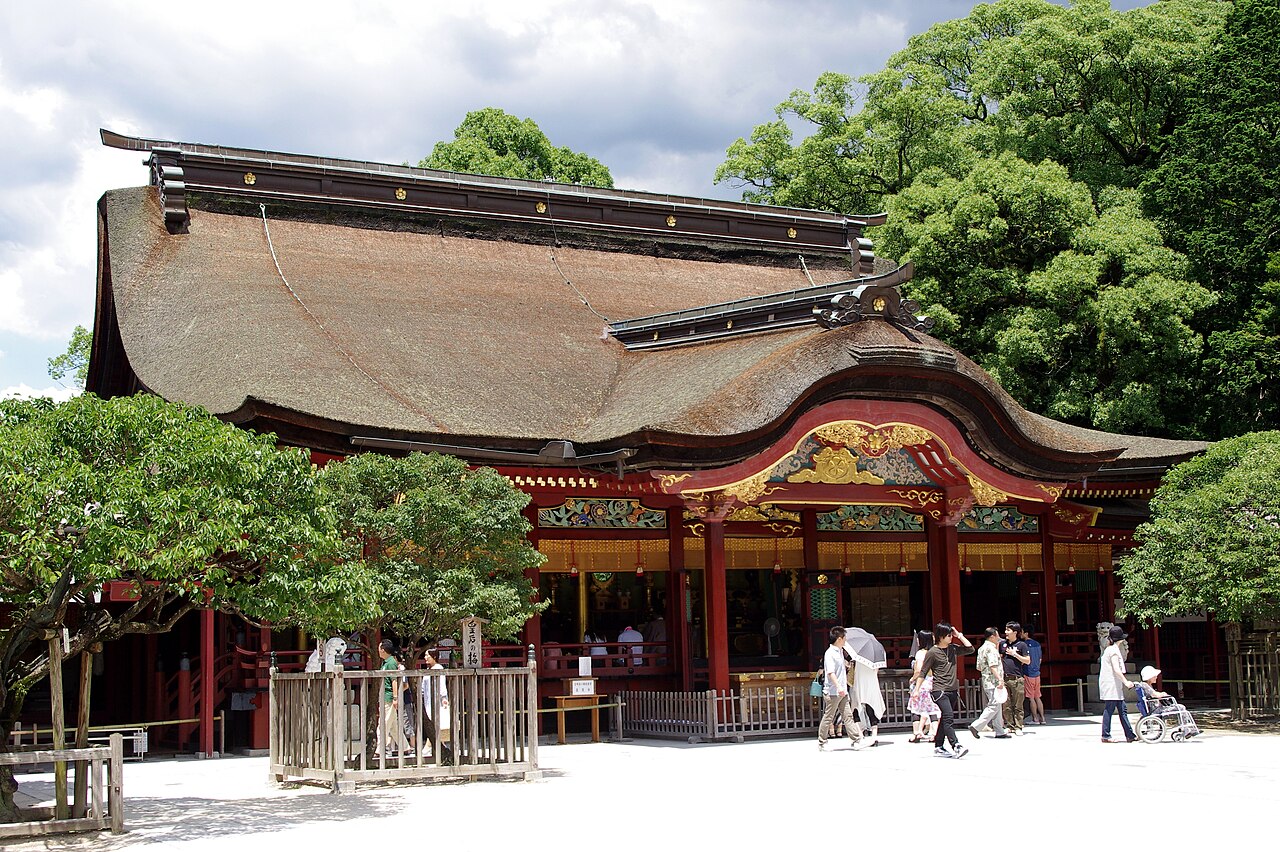
The craft’s own origin is precisely dated. In 1235 a Hakata merchant, Mitsuda Yasozaemon, accompanied a monk to Song-dynasty China and studied weaving there. When his line returned, they refined a thick, densely-wefted silk in Hakata’s merchant quarter — the same warren of trading streets that Dazaifu, the ancient seat that governed Kyushu and handled continental diplomacy, had helped make wealthy. The weave did not arrive in a vacuum; it landed in a town already built on cross-sea exchange.
- 8th century — Dazaifu governs Kyushu and manages continental trade and diplomacy, making Hakata a wealthy gateway port.
- 1235 — The Hakata merchant Mitsuda Yasozaemon travels to Song China with a monk and studies weaving.
- 1600 — The Kuroda clan is enfeoffed at Fukuoka and takes patronage of the weaving district.
- Early Edo period — The cloth becomes a required annual tribute (kenjo) to the Tokugawa shogunate.
- Edo period — The kenjo-gara stripe of dokko (vajra) and hanazara (flower-plate) motifs is fixed as the canonical pattern.
- 1976 — Hakata-ori is designated a National Traditional Craft (METI).
- 2026 — Hakata’s weaving district still produces kenjo-gara obi, roughly 770 years after the technique arrived.
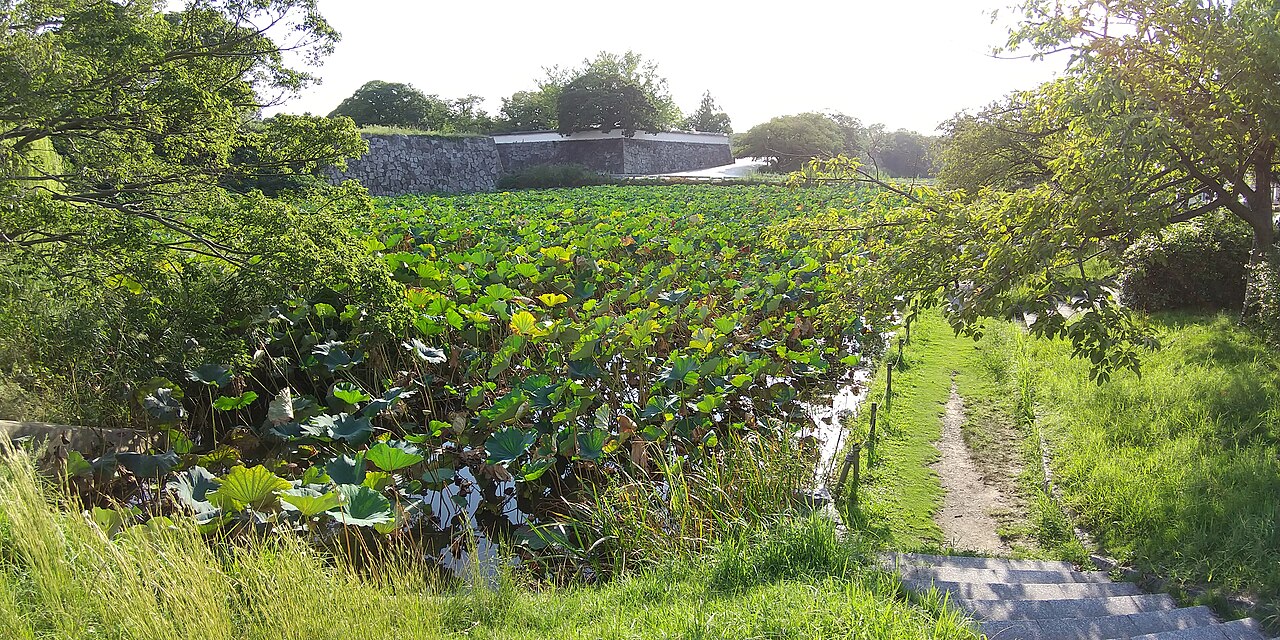
The pattern’s fixity is a matter of politics as much as taste. When the Kuroda clan was enfeoffed at Fukuoka in 1600 and the cloth became a required annual tribute to the Tokugawa shogunate, the stripe stopped drifting: the dokko vajra and the hanazara flower-plate, both drawn from Buddhist ritual, were locked in as the “kenjo-gara” — literally the tribute pattern. A design sent to the shogun every year does not change on a whim. That is why a modern kenjo-gara obi still reads as the same object the Kuroda lords dispatched to Edo.
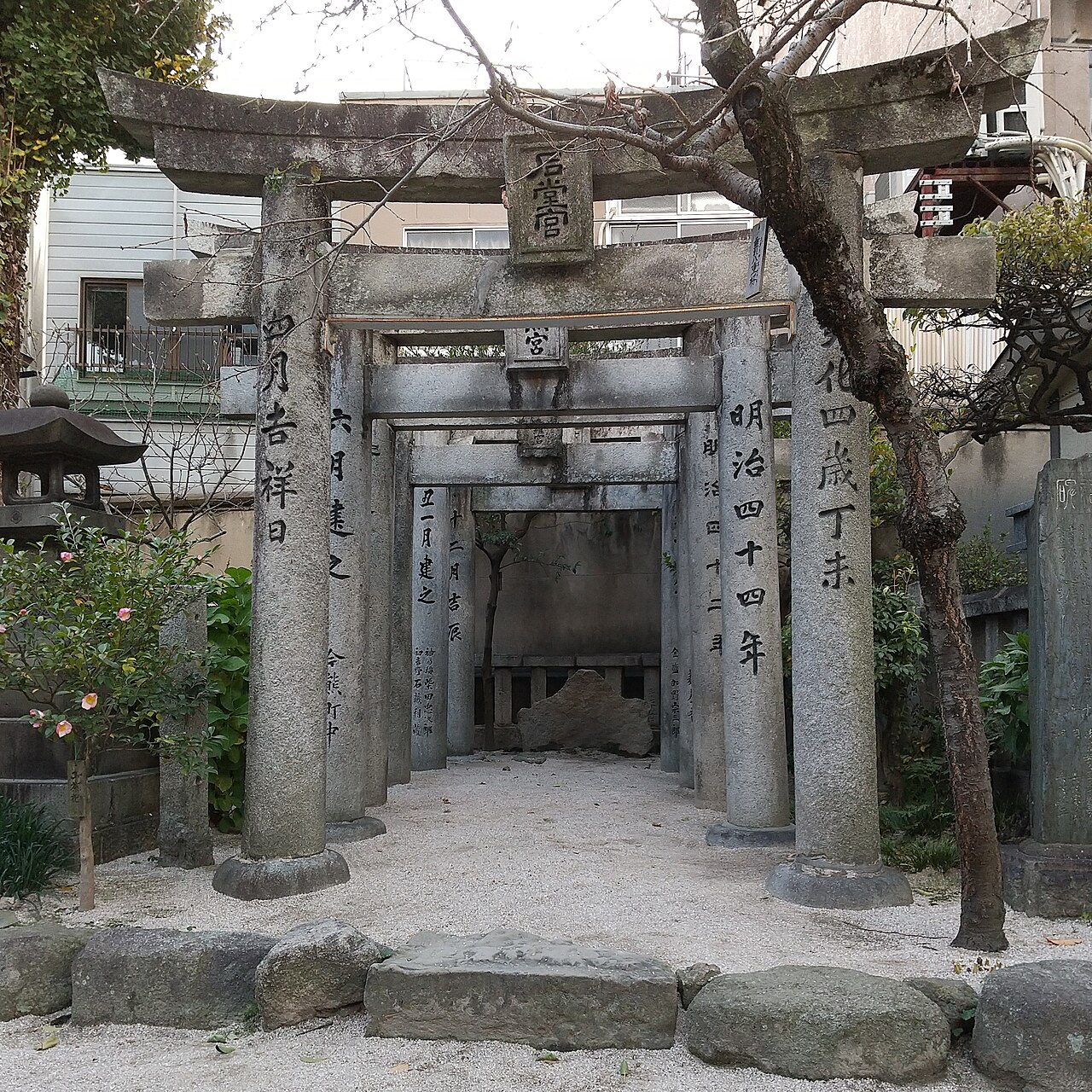
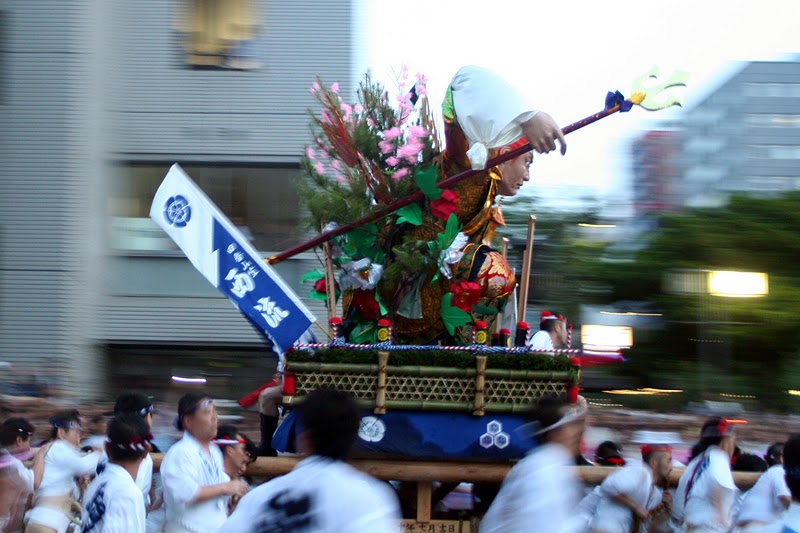
What “still being made here” means, concretely, is continuity of place. The weaving district sits in the old Hakata merchant quarter, watched over by Kushida Shrine, the town’s guardian — the same quarter that has carried the trade for more than seven centuries. The craft earned a National Traditional Craft designation in 1976, which formalized the standards the tribute era had set. The community that sustains it is the same tight-knit artisan townsfolk who run Hakata’s great summer festival.
The signature you can feel is the weave itself. A genuine Hakata-ori has a firm, springy hand, and when you rub the layers together they give off a faint squeak — the “kyoki.” That sound is the audible proof of a dense, high-friction weave, and it is also the functional secret of the obi: the same tightness that squeaks is the tightness that grips a knot and refuses to let it slip.
Conclusion — which buyer type are you?
Other ways to approach this purchase
🏆 Editor’s Pick
❓ Frequently Asked Questions
What is kenjo-gara, and why does it matter?
Kenjo-gara (“tribute pattern”) is the striped layout of Buddhist dokko (vajra) and hanazara (flower-plate) motifs that was fixed when Hakata-ori became an annual tribute to the Tokugawa shogunate in the Edo period. It is the canonical, most recognizable Hakata-ori pattern, and its presence is a strong signal that a piece follows the traditional design.
What is the difference between a hanhaba obi and a kaku obi?
Both are narrow, casual-format obi. A hanhaba (“half-width”) obi is the everyday sash often worn with yukata; a kaku (“stiff/square”) obi is the narrow, firm sash most associated with men’s kimono and yukata. This listing is described in that narrow hanhaba/kaku family rather than the wide formal fukuro or maru obi used for ceremony.
Does the Amazon JP Global Store ship this obi internationally?
The Amazon JP Global Store ships many household and apparel items internationally to most major destinations. Confirm your country is served and check the shipping estimate at checkout. If a particular seller does not ship to you, a proxy service such as Buyee or Tenso can forward the parcel from Japan for an added fee.
How do I care for a pure-silk Hakata-ori obi?
Treat it as fine silk: do not machine wash. Spot-clean gently or use a professional cleaner experienced with kimono textiles, and store it rolled or flat, away from direct sunlight and humidity, to protect both the silk and the woven pattern.
Is the “kyoki” squeak a defect?
No. The faint squeak when the silk layers rub is a hallmark of a genuinely dense, tightly-beaten Hakata weave. That same tightness is what lets the obi hold a knot without slipping, so the sound is a sign of quality rather than a flaw.
Can men wear this obi?
Yes. The narrow kaku obi format is closely associated with men’s kimono and yukata, and the hanhaba format is worn across genders for casual dress. Because this is a narrow everyday sash rather than a wide formal obi, it fits casual wear rather than ceremonial outfits.
How can I tell a genuine Hakata-ori from an imitation?
Look for a woven — not printed — kenjo-gara pattern, a firm springy hand, and, where present, the National Traditional Craft mark; genuine Hakata-ori has been a designated craft since 1976. Printed “Hakata-style” lookalikes lack the dense structural weave and the characteristic grip.
jpmono.com is curated by a Japan-based editorial team (working out of Toyama in the Hokuriku region and Nara in Kansai) and is independent. We do not take payment from the makers we feature; income comes from affiliate links. We do not physically test every product — we read maker specs and source listings — and we focus on items with verifiable craft heritage and clear international shipping paths.
🤖 This article was drafted with AI assistance and edited against the source listing and documented craft history. Specifications not present in the source data are marked “Unconfirmed” rather than guessed.
Affiliate disclosure: jpmono.com may earn a commission on qualifying purchases made through links on this page, at no additional cost to you.