![Koeido Kibi Dango (廣榮堂 きびだんご, individually wrapped box) — Okayama’s Momotaro millet dumplings from an 1856 confectioner [2026 Guide for International Readers]](https://jpmono.com/wp-content/uploads/2026/07/koeido-kibi-dango-okayama-where-to-buy-2026-featured.jpg)
- What it is: Soft, lightly chewy millet-and-glutinous-rice dumplings (kibi dango), each piece individually wrapped in a paper gift box.
- Made in: Okayama City, Okayama Prefecture (Chūgoku region) — by Koeido (廣榮堂), a confectioner founded in 1856.
- Price band: Everyday souvenir-gift range for boxed wagashi — see the live listing (no fixed figure is quoted here).
- Best for: A first, low-risk order of Japanese wagashi from overseas — shelf-stable and sealed piece by piece.
- Skip if: You want an intense, rich dessert; kibi dango are deliberately mild and plain.
- Shipping: ships internationally from Amazon Japan — jump to our pick ↓
In the old folk tale, a boy born from a peach fills his sash with kibi dango and walks toward an island of ogres — and a dog, a monkey, and a pheasant each fall in behind him for the price of a single dumpling. That story, Momotaro (桃太郎, “Peach Boy”), is rooted in the Kibi region around present-day Okayama, and it is the reason that in Japan the words “Okayama” and “kibi dango” arrive almost as one phrase.
The sweet itself is unassuming. Kibi dango (きびだんご, “millet dumpling”) are made from glutinous rice and millet worked with sugar and starch syrup into a soft, gyuhi-style dough, pressed into small flat rounds and dusted so they never stick to each other or to your fingers. Koeido (廣榮堂), founded in Okayama City in 1856, is the maker most associated with the modern form of the confection — the one that refined the old, coarser millet dumpling into the tender, individually wrapped piece sold in gift boxes today.
This guide is written for a reader ordering Japanese sweets from outside Japan, possibly for the first time. Kibi dango travel unusually well for a mochi-style sweet: each piece is sealed on its own, kept entirely at room temperature, plant-based in its classic version, and printed with a best-by date rather than needing refrigeration. Below we cover what they taste like, how the boxed assortment is built, how to read the shipping and customs terms, and which kind of buyer the box actually suits.
🗓️ Published: • 🔄 Last updated: • ⏱️ Reading time: about 9 minutes
ℹ️ Live pricing and current flavor line-up were not in our data snapshot — the linked Amazon listing is authoritative for price, box count, and availability; unconfirmed attributes are marked below.

- Who this is for — and who should skip it
- Product overview (from published specs)
- Price snapshot across stores
- What it does well
- Weaknesses and things to verify before buying
- Where this comes from — place, era, and the craft tradition
- Conclusion — which buyer type are you?
- 📦 Shipping & where to buy from outside Japan — other ways to approach this purchase
- 🏆 Editor’s Pick — the kibi dango box we’d start with
- ❓ Frequently Asked Questions
Who this is for — and who should skip it
- Want a first, low-commitment taste of Japanese wagashi that ships and stores easily.
- Prefer mild, gently sweet flavors over rich or heavy desserts.
- Are buying a shareable gift — individually wrapped pieces pass around a room cleanly.
- Like the cultural angle: a nationally known folk tale attached to a named 1856 confectioner.
- Need a room-temperature sweet with a printed best-by date, not a refrigerated one.
- Want an intense, chocolate-or-cream-forward dessert; this is quiet by design.
- Dislike soft, chewy, mochi-like textures.
- Need a same-week delivery — international shipping from Japan takes longer.
- Have specific allergen requirements you cannot verify — always read the listing’s ingredient panel.
- Are looking for a long-aging keepsake; this is a fresh confection with a limited best-by window.
Product overview (from published specs)
The table below reflects what is stated on the source listing and in the maker’s public description. Where our snapshot did not carry a value, the cell reads “check listing” rather than a guessed figure.
Koeido Kibi Dango (廣榮堂 きびだんご, individually wrapped box)
廣榮堂 元祖きびだんご10個入×4箱(個包装)
在庫あり。 · Sold by ⭕K64ショップ【インボイス発行事業者】 · ASIN B0C531KNHP
Price and availability as of 2026-08-31 02:30 JST. The Amazon listing at the time of purchase is authoritative. jpmono.com earns a commission on qualifying purchases at no extra cost to you.
| Attribute | Detail | Source |
|---|---|---|
| Product | Kibi dango (millet dumpling), individually wrapped gift box | Amazon JP Global Store (sourced listing) |
| Maker | Koeido (廣榮堂), founded 1856 | Maker direct |
| Origin | Okayama City, Okayama Prefecture (Chūgoku region) | Maker direct |
| Core ingredients | Glutinous rice and millet (kibi), sugar, starch syrup (mizuame); classic version is plant-based | Maker direct — verify panel on listing |
| Texture / taste | Soft, tender, gently chewy gyuhi-style dough; mild sweetness | Maker direct |
| Packaging | Each piece sealed individually; paper gift box (assortment count varies by listing) | Amazon JP Global Store |
| Storage | Room temperature; printed best-by date (typically ~2 weeks to about a month for sealed pieces) | Maker direct — confirm date on box |
| Price | Check listing (JPY authoritative; USD approximate at checkout) | Amazon US search / Amazon JP Global Store |
📖 Glossary — key terms
- kibi dango (きびだんご, “millet dumpling”) — a soft, small, flat dumpling of glutinous rice and millet worked with sugar and syrup; Okayama’s signature souvenir sweet.
- gyuhi (求肥) — a soft, pliable mochi-style dough made by cooking glutinous-rice flour with sugar and syrup, more tender and less sticky than plain pounded mochi.
- mizuame (水飴, “starch syrup”) — a clear, mild sweetener that keeps the dough soft and stops it drying out.
- wagashi (和菓子) — traditional Japanese confections, generally lower in fat and less intensely sweet than Western desserts.
- kinako (きな粉, “roasted soybean flour”) — a nutty, toasty dusting sometimes used on dumplings and as a flavor variant.
- Momotaro (桃太郎, “Peach Boy”) — the folk hero, born from a peach, who hands out kibi dango to the animals who join his quest; culturally bound to the Okayama/Kibi region.
- Kibi (吉備) — the historical name for the region that includes present-day Okayama; the source of the “kibi” in kibi dango’s cultural story.
If you are building a Japanese pantry-and-gift order, these other jpmono guides pair naturally with a box of kibi dango — a mild sweet alongside a good tea is the classic combination.
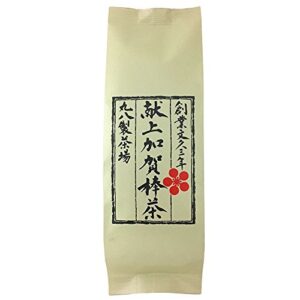

Maruhachi Seichajo Kenjo Kaga Bocha (献上加賀棒茶, sealed bag/tin)

Hoshino Seichaen Yame Matcha (星野製茶園 八女抹茶, sealed 30–40g tin)

Chiran-cha Deep-Steamed Sencha (知覧茶 深蒸し煎茶, sealed 100g bag)

Ooigawa Chaen Fukamushi Sencha (大井川茶園 深蒸し煎茶, sealed foil bag)

Bankaku Sohonpo Yukari Ebi Senbei (坂角総本舗 ゆかり, individually-wrapped)
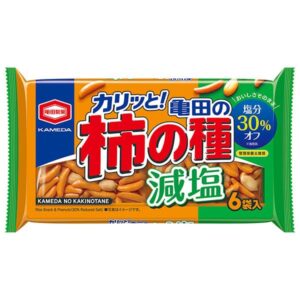

Kameda Kaki no Tane (亀田の柿の種, 6-bag box) — Niigata’s rice-cracker classic
Price snapshot across stores
Prices and availability shift; the figures below point you to the authoritative live listing rather than quoting a number our snapshot did not contain. JPY is the authoritative price for the specific boxed item; any USD figure is an estimate finalized at checkout.
| Store | Item / variant | Price | Notes |
|---|---|---|---|
| 🇺🇸 Amazon.com (US) | Browse Japanese wagashi & kibi dango | varies (USD) | Best if you are shopping from the US — Prime shipping, USD pricing, no international customs. Amazon US carries a range of Japanese sweets and mochi-style confections; Koeido’s exact boxed kibi dango is sourced from Japan (next row). |
| 🇯🇵 Amazon JP Global Store | Koeido kibi dango, individually wrapped box (sourced listing) | See live listing (JPY) | Ships internationally from Japan to 65+ countries — including Canada, the UK and Australia — with import fees estimated at checkout. This is the exact item covered in this guide. |
| Maker direct (Koeido) | Full kibi dango range & seasonal assortments | JPY (Japan address) | Widest selection, but the maker’s own shop is oriented to domestic delivery; overseas buyers usually route through a proxy. |
| Proxy services (Buyee / Tenso) | Any Japan-only listing, forwarded abroad | Item + forwarding fee | Useful for flavors or assortments not on the Global Store. Confirm the forwarder accepts food and check the best-by window against transit time. |
“In Japan, you do not really explain kibi dango — you say ‘Okayama,’ and everyone already tastes the story.”
What it does well
- 🌡️ Storage: keep at room temperature, away from heat and direct sun — no refrigeration needed.
- 📅 Best-by: eat within the printed date (order so the window comfortably outlasts international transit).
- 🍽️ Serving: unwrap piece by piece; best with unsweetened green tea, sencha, or hojicha.
- 🔒 After opening the box: individual wrappers keep remaining pieces clean, but eat opened pieces promptly.
Weaknesses and things to verify before buying
- It is intentionally mild. If you expect a rich, dessert-forward sweet, kibi dango’s quiet flavor can read as plain.
- Shorter shelf life than dry snacks. As a fresh confection it carries a best-by date on the order of a couple of weeks to about a month — check it against your shipping time.
- Flavor line-up varies by listing. The classic plain (元祖) is the anchor; kinako or white-peach assortments may or may not be on the specific box you see — confirm before ordering.
- Allergens need checking. The classic recipe is plant-based, but assortments and seasonal versions can differ; read the ingredient panel for your dietary needs.
- Price and box count were not in our snapshot. Do not assume a size — the live listing states the actual piece count and price.
- Shipping eligibility is destination-specific. As a food item, international availability is confirmed at checkout for your country; it may not ship everywhere.
Where this comes from — place, era, and the craft tradition

Okayama City sits in western Honshu, facing the calm, island-dotted Seto Inland Sea, roughly between Kobe to the east and Hiroshima to the west. The wider area is the old land of Kibi (吉備) — a name that survives, quietly, inside the word “kibi dango.” That linguistic overlap is a genuine part of why the region and the sweet became inseparable in the popular imagination: the millet (“kibi”) and the province name (“Kibi”) sit close enough that the confection reads as belonging to the place.
The deeper anchor, though, is a story. Okayama is broadly identified as the home of the Momotaro legend, the tale of a boy born from a peach who recruits a dog, a monkey, and a pheasant to his side by sharing kibi dango. It is one of the most widely known folk tales in Japan, and its attachment to the Kibi/Okayama region is a major reason the confection became the prefecture’s signature souvenir rather than a generic countryside sweet.
-
Antiquity — The region is known as Kibi (吉備) Province, the “kibi” that later echoes in the sweet’s name. -
Folk tradition — The Momotaro tale, in which kibi dango buy the hero his companions, is traditionally rooted in the Kibi/Okayama region. -
1856 (Ansei era) — Koeido (廣榮堂) is founded in Okayama and becomes the maker most associated with the modern kibi dango. -
Late 19th c. — The old, coarser millet dumpling is refined into the tender, gyuhi-style confection sold as a souvenir today. -
20th c. — Individually wrapped, shelf-stable boxed assortments become the standard gift format. -
2026 — Koeido continues to make kibi dango in Okayama City; it remains the prefecture’s best-known confection.
What “still being made here” means, in practical terms, is continuity of both recipe and role. Koeido has carried the sweet since 1856, and the boxed, individually wrapped form now sold to travelers is a direct refinement of that older dumpling rather than a modern reinvention. The confection did not migrate to Tokyo to become famous; it stayed attached to Okayama, which is precisely why buying it reads as buying a piece of a specific place.
Folk-traditional note: the Momotaro–Okayama link is a widely held cultural association, not a documented historical event. We mark it as tradition, not fact.
There is a seasonal, everyday side to it as well. Kibi dango are an unfussy accompaniment to green tea at any time of year — a small, plain sweet meant to balance a bitter cup rather than dominate it. That is the register the whole category lives in: quiet, portable, and built around sharing.
Conclusion — which buyer type are you?
📦 Shipping & where to buy from outside Japan — other ways to approach this purchase
The specific boxed kibi dango covered here is sourced from the Amazon JP Global Store, which ships internationally from Japan to 65+ countries — including Canada, the UK and Australia. As a food item kept at room temperature with a best-by date, eligibility is confirmed for your destination at checkout, and Amazon estimates any import fees there. Order in small personal quantities and leave enough margin between the best-by date and the shipping time.
🏆 Editor’s Pick — the kibi dango box we’d start with
❓ Frequently Asked Questions
Are Koeido kibi dango vegan or plant-based?
The classic version is plant-based, made from glutinous rice and millet with sugar and starch syrup, and contains no dairy or meat. Assortments and seasonal flavors can differ, so always read the ingredient panel on the specific listing for your dietary needs.
Do they need refrigeration, and how long do they keep?
No refrigeration is needed. Kibi dango are stored at room temperature and carry a printed best-by date — typically on the order of a couple of weeks to about a month for sealed pieces. Order so the date comfortably outlasts international shipping time.
Can Koeido kibi dango ship to my country?
The box is sourced from the Amazon Japan Global Store, which ships to many destinations including Canada, the UK and Australia. Because it is a food item, eligibility is confirmed for your country at checkout, where any import fees are also estimated. Order in small personal quantities.
What do kibi dango taste like?
They are gently sweet with a soft, tender, lightly chewy gyuhi-style texture. The flavor is deliberately mild — meant to complement green tea rather than overpower it — which is part of why they suit people new to Japanese sweets.
What is the connection to the Momotaro (Peach Boy) legend?
In the folk tale, the hero Momotaro hands out kibi dango to the dog, monkey and pheasant who join his quest. The story is traditionally rooted in the Kibi/Okayama region, which is a major reason kibi dango became the prefecture’s signature souvenir.
Is every piece individually wrapped?
Yes. In the boxed gift format each piece is sealed on its own inside a paper box, which keeps the remaining dumplings clean and makes the assortment easy to share.
What flavors are available?
The anchor is the classic plain (元祖) kibi dango. Depending on the listing you may also find assortments such as kinako (roasted soybean flour) or white-peach versions. The exact line-up varies, so confirm on the specific box before ordering.
jpmono.com is curated by a Japan-based editorial team (working out of Toyama in the Hokuriku region and Nara in Kansai) and is independent. We do not take payment from the makers we feature; income comes from affiliate links. We do not physically test every product — we read maker specs and source listings.
🤖 This article was drafted with AI assistance and reviewed against the source listing and maker information before publication. Facts not present in our data snapshot are marked as unconfirmed.
Affiliate disclosure: jpmono.com may earn a commission on qualifying purchases made through links on this page, at no additional cost to you.