![Iwate-ya Nanbu Senbei (南部せんべい, Sesame & Peanut Assortment Box) — Iron-Mold Wheat Wafers from the Old Nanbu Domain of Ninohe, Iwate [2026 Guide for International Readers]](https://jpmono.com/wp-content/uploads/2026/07/iwateya-nanbu-senbei-where-to-buy-2026-featured.jpg)
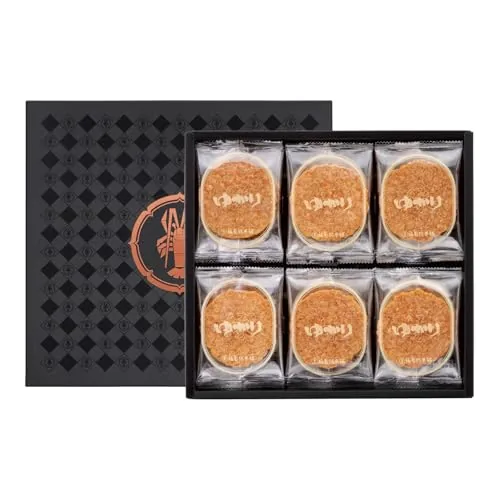
- What it is: an assortment box of nanbu senbei — thin wheat-flour wafers pressed between hot iron molds, in the two classic flavors: toasted sesame and whole peanut
- Made in: Ninohe, Iwate — by Komatsu Seika, the Iwate-ya (巖手屋) brand, baking in the old Nanbu domain since 1948
- Price band: everyday regional confectionery, not a luxury patisserie item — see the live listing for current pricing
- Best for: readers who want a genuine, shelf-stable northern-Japan sweet that survives international post without refrigeration
- Skip if: anyone in the household has a peanut, sesame, or wheat allergy — all three are core ingredients here
- Shipping: ships internationally from Amazon Japan — jump to our pick ↓
A nanbu senbei comes out of its mold wearing a thin, brittle frill around the rim — the overflow of batter that squeezed out when the two hot iron plates were pressed together. The frill is called the mimi, “the ear,” and the maker leaves it on deliberately: it is proof the wafer was baked in an iron mold, and regulars in northern Japan snap it off and eat it first. That small detail tells you most of what matters about this confection — it is plain, it is honest about how it is made, and it has not needed a redesign in generations.
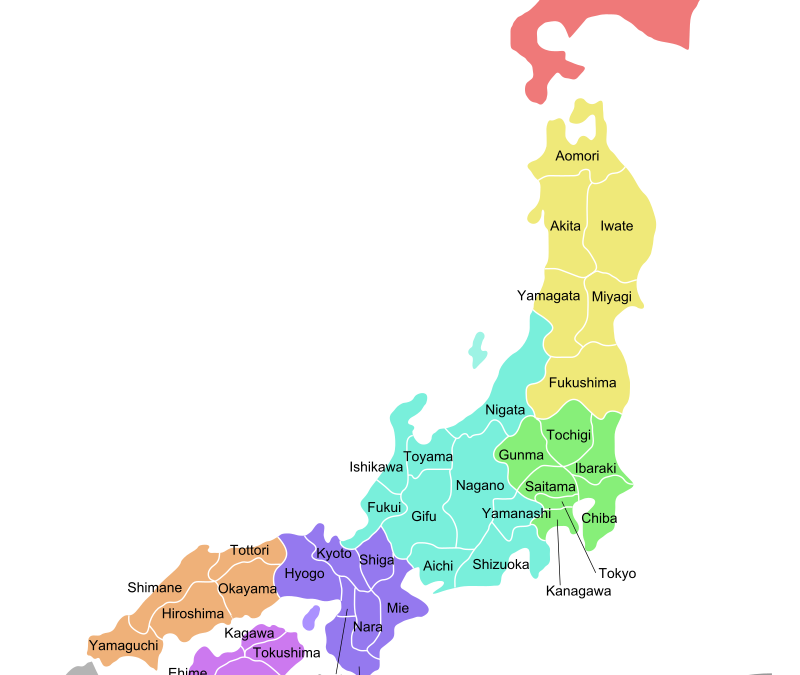
Nanbu senbei belong to the cold uplands that straddle today’s Iwate and Aomori prefectures, the territory of the old Nanbu domain, where wheat and buckwheat historically grew better than rice. Unlike the rice crackers most people picture when they hear “senbei,” these are wheat-flour wafers — closer in spirit to a thin, hard biscuit — developed as a durable, keeping food for a hard climate. Komatsu Seika, whose consumer brand Iwate-ya (巖手屋) is headquartered in Ninohe in northern Iwate, has been baking them since 1948 and is the best-known maker of the style.
This guide looks at Iwate-ya’s sesame-and-peanut assortment box: what is actually in it, where the tradition comes from, how it compares with other Japanese sweets we have covered, and what international buyers should check before ordering a food item from Amazon Japan’s Global Store.

- Who this is for — and who should skip it
- Product overview (from published specs)
- 📍 Where this comes from — place, era, and the craft tradition
- 📦 Shipping & where to buy from outside Japan
- Price snapshot across stores
- What it does well
- Weaknesses and things to verify before buying
- Conclusion — which buyer type are you?
- Other ways to approach this purchase
- 🏆 Editor’s Pick
- ❓ Frequently Asked Questions
Who this is for — and who should skip it
- want a regional Japanese sweet that is not another Tokyo souvenir — this one is firmly from the rural north
- need a food gift that survives two to three weeks in international post at room temperature
- prefer plain, low-sugar-drama snacks: roasted sesame, whole peanuts, a wheat wafer, and not much else
- are curious about Japanese food history — this is preserved-food culture you can actually taste
- like individually wrapped sweets you can share at an office or keep in a desk drawer
- have a peanut, sesame, or wheat allergy in the household — all three are present in this box
- expect the crisp-airy texture of rice crackers; nanbu senbei are denser, closer to a hard biscuit
- want a showpiece dessert — this is everyday fare, and it looks like it
- are after soft, moist confectionery (mochi, namagashi); this is the opposite end of the spectrum
- need certified allergen-free or gluten-free products — this maker’s line is wheat-based throughout
Product overview (from published specs)
ℹ️ Live pricing and per-box piece counts were not in our data snapshot — the linked listing is authoritative; unconfirmed attributes are marked below.
Iwate-ya Nanbu Senbei (南部せんべい, Sesame & Peanut Assortment Box)
南部せんべい乃巖手屋 ちびっこ南部詰合せ 袋入 4種 38枚 個包装 一口サイズ バターせんべい サクサク 食べやすい ごま 落花生 かぼちゃ アーモンド お茶請け 手土産 自宅用 お試し
通常2~3日以内に発送します。 · Sold by 巖手屋 · ASIN B0GY28Y87V
Price and availability as of 2026-08-31 02:30 JST. The Amazon listing at the time of purchase is authoritative. jpmono.com earns a commission on qualifying purchases at no extra cost to you.
| Item | Iwate-ya Nanbu Senbei assortment box (sesame & peanut) |
|---|---|
| Maker | Komatsu Seika (brand: Iwate-ya 巖手屋), Ninohe, Iwate |
| Type | Nanbu senbei — wheat-flour wafers baked in iron molds |
| Flavors in box | Goma (toasted white sesame) and rakkasei (whole peanut) |
| Core ingredients | Wheat flour, sugar, sesame and/or peanuts — plant-based, no dairy or meat |
| Allergens | Wheat, sesame, peanut (stated factually; check the listing’s label scan for your destination’s standards) |
| Storage | Room temperature; fully baked, low moisture, individually wrapped, long best-by |
| Piece count / net weight | Unconfirmed — check the live listing |
📖 Glossary — the terms this article uses
- Nanbu senbei (南部せんべい) — thin, round wheat-flour wafers baked between heated iron molds; a specialty of the old Nanbu domain area (northern Iwate and southern Aomori). Despite the shared word “senbei,” they are not rice crackers.
- Mimi (みみ, “ear”) — the thin, frilled rim of overflow batter around each wafer, left on as a signature of iron-mold baking.
- Goma (ごま) — toasted white sesame; the original mainstay flavor of the style.
- Rakkasei (落花生) — peanut; whole peanuts are baked directly into the batter.
- Nanbu domain (南部藩) — the Edo-period domain of the Nanbu clan covering present-day northern Iwate and part of Aomori; the confection and the ironware tradition of the same region both carry its name.
- Iwate-ya (巖手屋) — the consumer brand of Komatsu Seika, headquartered in Ninohe, Iwate.
📍 Where this comes from — place, era, and the craft tradition

Ninohe sits in the far north of Iwate Prefecture, inland, in the hill country that runs up toward Aomori. Winters here are long and cold, and historically the land favored wheat and buckwheat over rice — a fundamental fact of northern Tōhoku agriculture that shaped what people ate. Where rice-growing Japan developed rice crackers, the old Nanbu domain developed a wheat wafer: batter pressed between heated iron molds into a thin, round, keeping food.
The Nanbu clan governed this territory through the Edo period (1603–1868), and their name still marks the region’s material culture — nanbu tekki ironware from the same broader region, and nanbu senbei from its kitchens. The wafer was a practical answer to a hard climate: fully baked, low in moisture, and durable enough to store through winter. Its shape — and the frilled mimi rim — comes directly from the iron molds it is pressed in.
“The mimi is not trimmed away. It is proof the wafer was pressed in an iron mold — and locals eat it first.”
The maker behind this box is a genuinely local story. Per the company’s own history, its founders learned senbei-making as young apprentices at a small shop in neighboring Aomori around 1930, and in 1948 opened the Komatsu senbei shop in Ninohe with 21 iron baking molds. Sesame was the mainstay then, as it had been for the style generally. The shop grew into Komatsu Seika — the name changed in 1975, the same year the first Iwate-ya store opened in Sendai — and today it is among the most widely distributed makers of nanbu senbei, still headquartered in Ninohe.
- 1603–1868 — Edo period: the Nanbu domain covers northern Iwate and part of Aomori; wheat and buckwheat, not rice, dominate the cold uplands, and the iron-mold wheat wafer becomes a regional keeping food
- c. 1930 — the future founders of Komatsu Seika apprentice at a small senbei shop in Aomori, learning the craft as children
- 1948 — the Komatsu senbei shop opens in Ninohe with 21 iron baking molds; sesame senbei is the main product
- 1975 — the company takes the name Komatsu Seika; the first Iwate-ya (巖手屋) store opens in Sendai
- 1994 — a TBS television drama based on founder Shiki Komatsu’s autobiography airs nationally, carrying the Ninohe brand far beyond Tōhoku
- 2026 — Komatsu Seika still bakes in Ninohe; the goma and rakkasei pair in this box are the same two flavors the region has always favored
What “still being made here” means, concretely: this is not a heritage brand licensed to a distant factory. The company that bakes these wafers is headquartered in the same small northern city where it opened in 1948, three generations of continuous operation later, and the assortment in this box — sesame and peanut — is the same two-flavor canon the region settled on long before souvenir marketing existed.
Seasonally, nanbu senbei are an all-year staple rather than a festival sweet. They turn up beside green tea in the afternoon, in children’s snack drawers, and — in a local habit worth copying — broken into soup: the plain wafers are traditionally dropped into a broth called senbei-jiru, a dish from the same Nanbu cultural area. The sesame and peanut versions in this box are usually eaten as they are, with tea. A cast-iron kyusu from the same region (see the cross-links below) is the natural pairing on a table.


📦 Shipping & where to buy from outside Japan
This box is sourced from an Amazon Japan listing, and Amazon JP’s Global Store ships to 65+ countries — including Canada, the UK and Australia. Food items are the category where eligibility varies most by destination, so the practical rule is simple: add the box to your cart and let the checkout screen confirm whether it ships to your address. Amazon estimates and collects import fees at checkout for most destinations, so there is rarely a surprise invoice later.
Two food-specific notes. First, this is a shelf-stable, room-temperature product with a printed best-by date — exactly the kind of item international post handles well, but you should still expect one to three weeks of transit and order in small personal quantities rather than by the case. Second, customs rules for foodstuffs differ by country; the checkout eligibility check reflects them, which is another reason to trust it over any general statement an article can make.
Typical international shipping for a light parcel of this kind runs in the $15–$40 range to North America and Europe, with Canada, the UK, and Australia in a similar band. If the listing shows as ineligible for your destination, proxy-forwarding services (Buyee, Tenso) are the usual workaround — they receive the parcel at a Japanese address and re-ship it — though for everyday confectionery, the added fees often exceed the price of the box itself.
Price snapshot across stores
ℹ️ Our data snapshot did not include a live price for this listing, so no JPY figure is quoted below. The linked listing is authoritative.
| Store | Item / Variant | Price | Notes |
|---|---|---|---|
| 🇺🇸 Amazon.com (US) | Browse Japanese senbei & snack assortments | varies (USD) | Best if you are shopping from the US — Prime shipping, USD pricing, no international customs. Amazon US carries Japanese senbei and snack boxes from several makers; Iwate-ya’s exact Ninohe-baked box ships from Japan (next row). |
| 🇯🇵 Amazon JP Global Store | Iwate-ya sesame & peanut assortment box (this article’s item) | see live listing (JPY) | Ships internationally from Japan to 65+ countries — including Canada, the UK and Australia — with import fees estimated at checkout. Food eligibility is confirmed per destination at checkout. |
| Maker direct (iwateya.co.jp) | Full Iwate-ya line, incl. items never exported | JPY | Domestic-Japan shipping only; relevant if you use a proxy service or are ordering to a Japanese address. |
| Proxy services (Buyee / Tenso) | Any domestic listing, re-shipped | item + fees | A fallback when the Global Store shows your destination as ineligible; fees often exceed the price of everyday confectionery. |
What it does well
- 🌡️ Storage: room temperature, away from humidity — no refrigeration needed or wanted
- 📆 Shelf life: long best-by printed on the package; individually wrapped pieces keep their crispness after the box is opened
- 🍵 Serving: eat as-is with green tea or roasted twig tea; the mimi rim is edible and traditionally eaten first
- ⚠️ Allergens: contains wheat, sesame, and peanut — store and serve accordingly around allergic household members
Weaknesses and things to verify before buying
- Allergen triple-hit. Wheat, sesame, and peanut in one box — for many households this is disqualifying, and cross-contact between the two flavors in an assortment is a reasonable assumption.
- Piece count and net weight were unconfirmed in our snapshot. Assortment boxes come in several sizes; check the live listing so you know exactly which one you are ordering.
- No live price in our data. We do not quote a figure anywhere in this article; treat the listing as authoritative and expect food-plus-shipping to cost noticeably more than the same box would in a Japanese supermarket.
- Texture expectations. If you are picturing airy rice crackers, recalibrate: nanbu senbei are dense, dry, and quietly flavored. That is the point, but it is not to every taste.
- Food-category shipping eligibility varies. The only reliable check is your own checkout screen; a destination that worked last year can change.
- Plain presentation. The packaging is honest, everyday, and regional — appropriate for what it is, but if you need a formal-gift presentation, a yokan or wagashi box (see cross-links) dresses up better.
Conclusion — which buyer type are you?
Other ways to approach this purchase
🏆 Editor’s Pick
- The right first box: it pairs the region’s two definitive flavors, so a newcomer tastes the whole canon in one order instead of guessing at a single-flavor bag.
- Sourced from the style’s leading maker: baked by Komatsu Seika in Ninohe — the company has been at this in the same city since 1948.
- Logistics-proof: individually wrapped, room-temperature, long best-by — the rare food gift that international post cannot easily ruin.
❓ Frequently Asked Questions
Does this box contain common allergens?
Yes. The core ingredients are wheat flour, sugar, sesame, and peanuts, so wheat, sesame, and peanut — three of the most common allergens — are all present. In an assortment box, cross-contact between the two flavors is a reasonable assumption. Check the label scan on the live listing against your destination’s labeling standards.
How long do nanbu senbei keep, and do they need refrigeration?
They are fully baked, low in moisture, and individually wrapped, and they store at room temperature with a long best-by date printed on the package. No refrigeration is needed. The exact date depends on the production lot, so check it on arrival as you would with any packaged food.
What is the difference between nanbu senbei and regular rice senbei?
Most senbei are rice crackers. Nanbu senbei are made from wheat-flour batter pressed between heated iron molds, which gives a denser, drier wafer closer to a thin hard biscuit, with a characteristic frilled rim called the mimi. The style comes from the old Nanbu domain in northern Tōhoku, where wheat historically grew better than rice.
Does Amazon Japan ship this to my country?
Amazon JP’s Global Store ships to 65+ countries, including Canada, the UK, and Australia, with import fees estimated at checkout. Food items have the most destination-by-destination variation, so the reliable check is to add the box to your cart and see whether checkout accepts your address.
What is the mimi rim, and is it meant to be eaten?
The mimi (“ear”) is the thin frill of batter that squeezes out between the iron mold plates during baking. It is left on deliberately as the signature of mold-baked senbei, it is entirely edible, and eating it first is the traditional habit among regulars.
Is this a good gift for someone outside Japan?
For casual gifting, yes: the pieces are individually wrapped, the box needs no refrigeration, and the sweet has a genuine regional story behind it. For formal occasions, a more ceremonial wagashi presentation (such as a yokan gift box) is the safer register — see the comparison links in this article.
jpmono.com is curated by a Japan-based editorial team (working out of Toyama in the Hokuriku region and Nara in Kansai) and is independent. We do not take payment from the makers we feature; income comes from affiliate links. We do not physically test every product — we read maker specs and source listings — and we focus on items with verifiable craft heritage and clear international shipping paths.
This article was drafted with AI assistance and reviewed against the source listing and maker information before publication. Facts about pricing and stock change over time — always confirm on the live listing.
Affiliate disclosure: jpmono.com may earn a commission on qualifying purchases made through links on this page, at no additional cost to you.