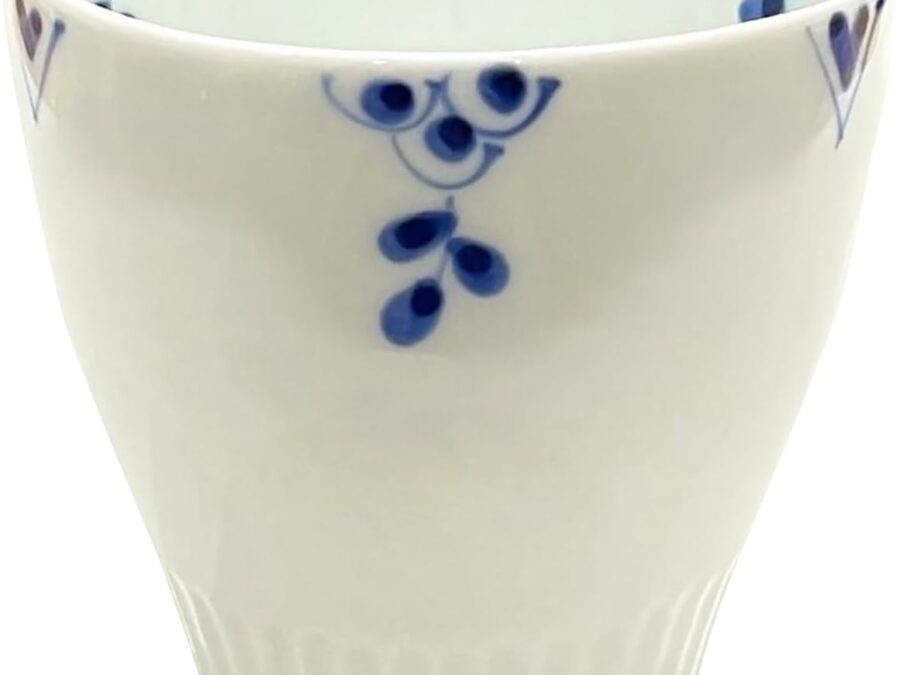
![Kosobe-yaki Guinomi: Osaka’s Takatsuki Sake Cup — Where to Buy [2026]](https://jpmono.com/wp-content/uploads/2026/06/kosobe-yaki-osaka-guinomi-sake-cup-where-to-buy-2026-featured.jpg)
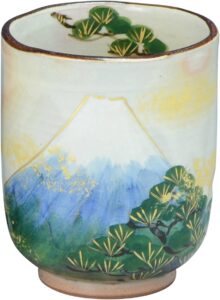
A guinomi (ぐい呑み, a small ceramic sake cup) is one of the most personal objects in the Japanese drinking table — small enough to wrap a hand around, individual enough that collectors keep several and choose one by mood. The cup covered here comes from Kosobe-yaki (古曽部焼), a refined kiln tradition from the village of Kosobe in Takatsuki, Osaka, on the Yodo River plain that runs midway between Kyoto and Osaka. It is hand-painted in the Kyoto-leaning manner that has defined Kosobe ware since it was founded in the late 18th century.
What makes Kosobe-yaki notable for an international reader is not volume but scarcity. The kiln flourished as a small tea-and-sake ware producer for the merchant culture of old Osaka, declined in the Meiji era, and today survives only through a small number of revival potters. That places it in a different category from the large production potteries most overseas buyers encounter first. A genuine Kosobe guinomi is a quiet collector’s piece rather than a commodity cup.
This guide is written for readers deciding whether a small, historically grounded Osaka sake cup belongs on their shelf — and, just as importantly, for readers who would be better served by a more available everyday cup. We cover what the listing actually states, where the tradition comes from, how it compares to other Kansai and Kyushu sake-ware we have written about, and the realistic paths to buy one from outside Japan.
🔄 Updated:
⏱️ Read time: ~12 min

- Who this is for — and who should skip it
- Product overview (from published specs)
- 📍 Where this comes from — place, era, and the craft tradition
- Price snapshot across stores
- What it does well
- Weaknesses and things to verify before buying
- Conclusion — which buyer type are you?
- Other ways to approach this purchase
- 🏆 Editor’s Pick
- ❓ Frequently Asked Questions
Who this is for — and who should skip it
- Collect individual sake cups and choose by mood rather than buying a matched set
- Value a regionally specific, historically grounded kiln over mass-produced tableware
- Appreciate hand-painted, Kyoto-leaning brushwork (sometsuke / iro-e) on a small vessel
- Want a conversation piece for warm or room-temperature sake, or a single-flower display
- Are comfortable buying a scarce, made-to-order-feeling item where pricing and stock fluctuate
- Need a matched set of identical cups for guests or daily family use
- Want a dishwasher-and-everything everyday cup you will not think twice about
- Are price-sensitive and want the lowest cost per cup
- Expect immediate, guaranteed stock — revival-kiln pieces are produced in small numbers
- Prefer thick, rustic stoneware (Shigaraki, Bizen) over fine painted ware
Product overview (from published specs)
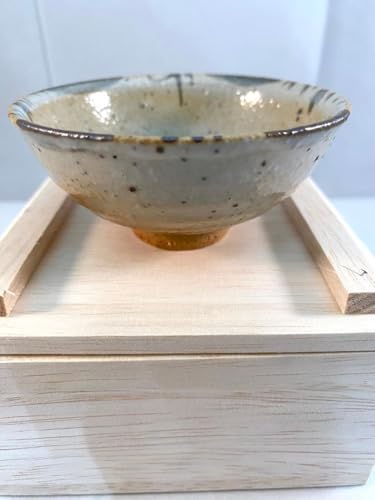
Based on the listing, this is a single hand-painted Kosobe-yaki guinomi. Detailed dimensions and weight are not stated in the data available to us, which is common for small studio-ceramic listings; the figures below reflect what is verifiable and mark the rest plainly as unconfirmed.
Kosobe-yaki Guinomi: Osaka's Takatsuki Sake Cup
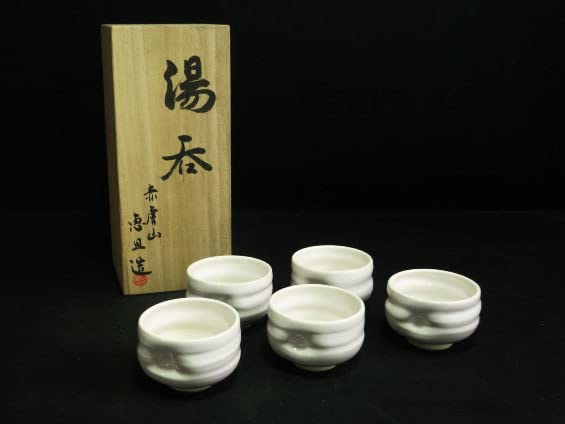
古曽部焼 干支ぐい呑み 4個セット
通常7~8日以内に発送します。 · Sold by オンラインショップ楓 · ASIN B0H3TM13FX
Price and availability as of 2026-09-01 05:22 JST. The Amazon listing at the time of purchase is authoritative. jpmono.com earns a commission on qualifying purchases at no extra cost to you.
| Attribute | Detail (per listing / data_notes) |
|---|---|
| Item | Kosobe-yaki (古曽部焼) hand-painted guinomi sake cup |
| Craft tradition | Kosobe-yaki — refined Settsu kiln, Kyoto-leaning painted ware |
| Origin | Kosobe, Takatsuki, Osaka Prefecture (old Settsu province) |
| Decoration | Hand-painted — Ninsei-style sometsuke / iro-e or kohiki (varies by piece) |
| Material | Glazed ceramic (Yodo River plain clay tradition) |
| Dimensions / weight | Unconfirmed — check manufacturer / listing before buying |
| ASIN | B0H3TM13FX |
Note on data: only a limited Amazon listing snapshot is available for this item, and the fetched dataset contained no live price; live pricing and stock may have shifted since the writing date. Verify dimensions, decoration, and price at the listing before purchasing.
📖 Glossary — key terms
- Guinomi (ぐい呑み) — a small ceramic sake cup, slightly larger than an ochoko, made to be held and sipped from rather than poured for ceremony.
- Kosobe-yaki (古曽部焼) — a refined kiln tradition founded in the village of Kosobe in Takatsuki, old Settsu province, in the late 18th century.
- Sometsuke (染付) — underglaze blue-and-white painting, cobalt brushed onto the body before glazing and firing.
- Iro-e (色絵) — overglaze polychrome enamel painting fired at a lower temperature after the main glaze firing.
- Kohiki (粉引) — a Korean-derived technique in which a dark clay body is coated with white slip, giving a soft, powdery white surface.
- Ninsei-style — after Nonomura Ninsei, the 17th-century Kyoto master whose refined painted ware set the model that Kosobe-yaki followed.
- Settsu (摂津) — the old province covering parts of present-day Osaka and Hyogo, including Takatsuki.
- Kofun (古墳) — a megalithic burial mound of Japan’s Kofun period (roughly 3rd–7th century); Takatsuki’s Imashirozuka Kofun is one example.
Other Kansai and Kyushu sake-ware and ceramics we have covered — useful for comparing painted vs. rustic styles, kiln by kiln.
📍 Where this comes from — place, era, and the craft tradition

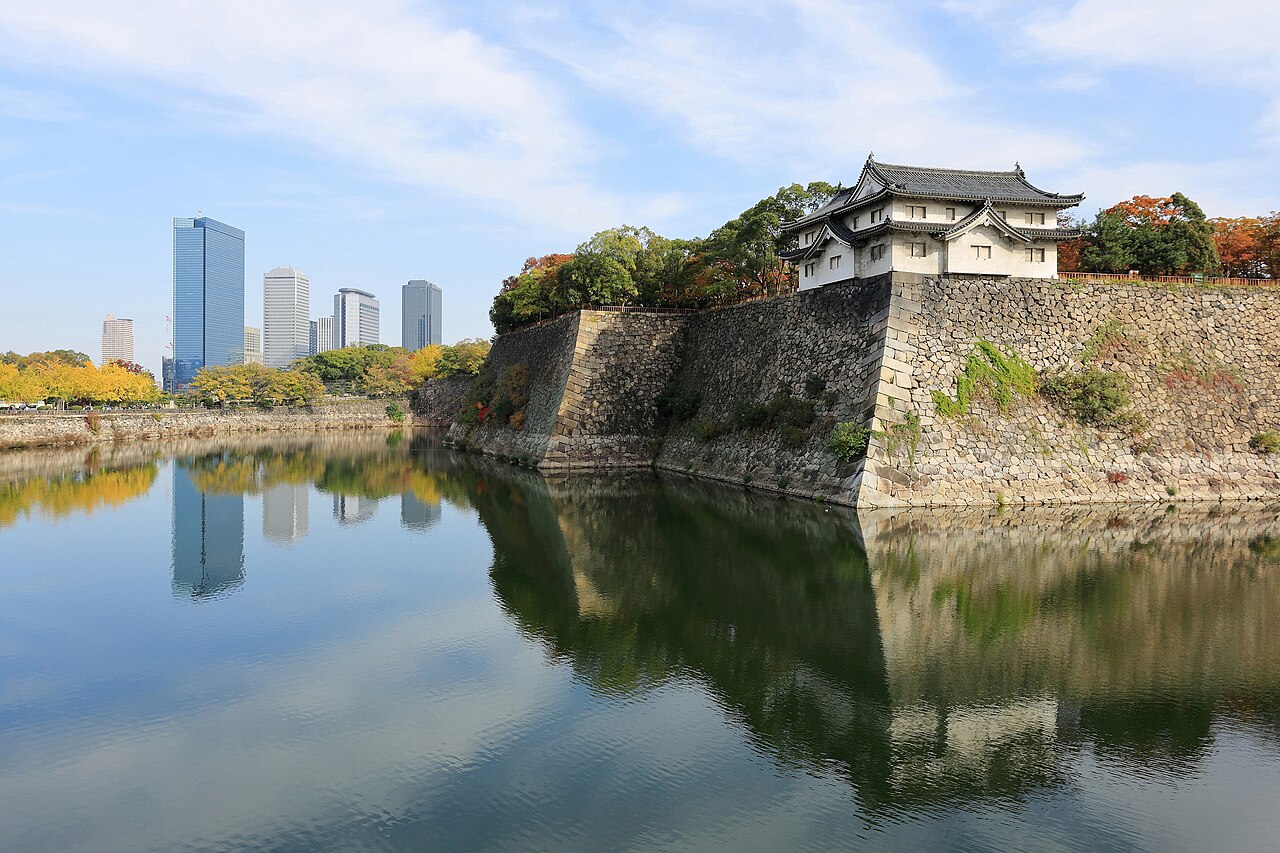
Kosobe sits in the city of Takatsuki, in the northern part of Osaka Prefecture, on the broad alluvial plain of the Yodo River. The Yodo is the river that links Lake Biwa, Kyoto, and Osaka Bay, and the plain it carved has been a corridor of trade, pilgrimage, and clay-rich soil for well over a millennium. Takatsuki lies almost exactly between Kyoto and Osaka — roughly 25 km from each — which is the single most important fact for understanding the ware made here.

That position between two ceramic worlds gave Kosobe-yaki its character. To the northeast lay Kyoto, the imperial capital from 794 to 1869 and the home of refined painted kyō-yaki in the manner of Nonomura Ninsei. To the southwest lay Osaka — Edo-period Japan’s commercial engine, known as tenka no daidokoro (天下の台所, “the kitchen of the realm”), where a wealthy merchant class supported a culture of tea and sake. Kosobe-yaki drew its style from Kyoto and its market from Osaka.
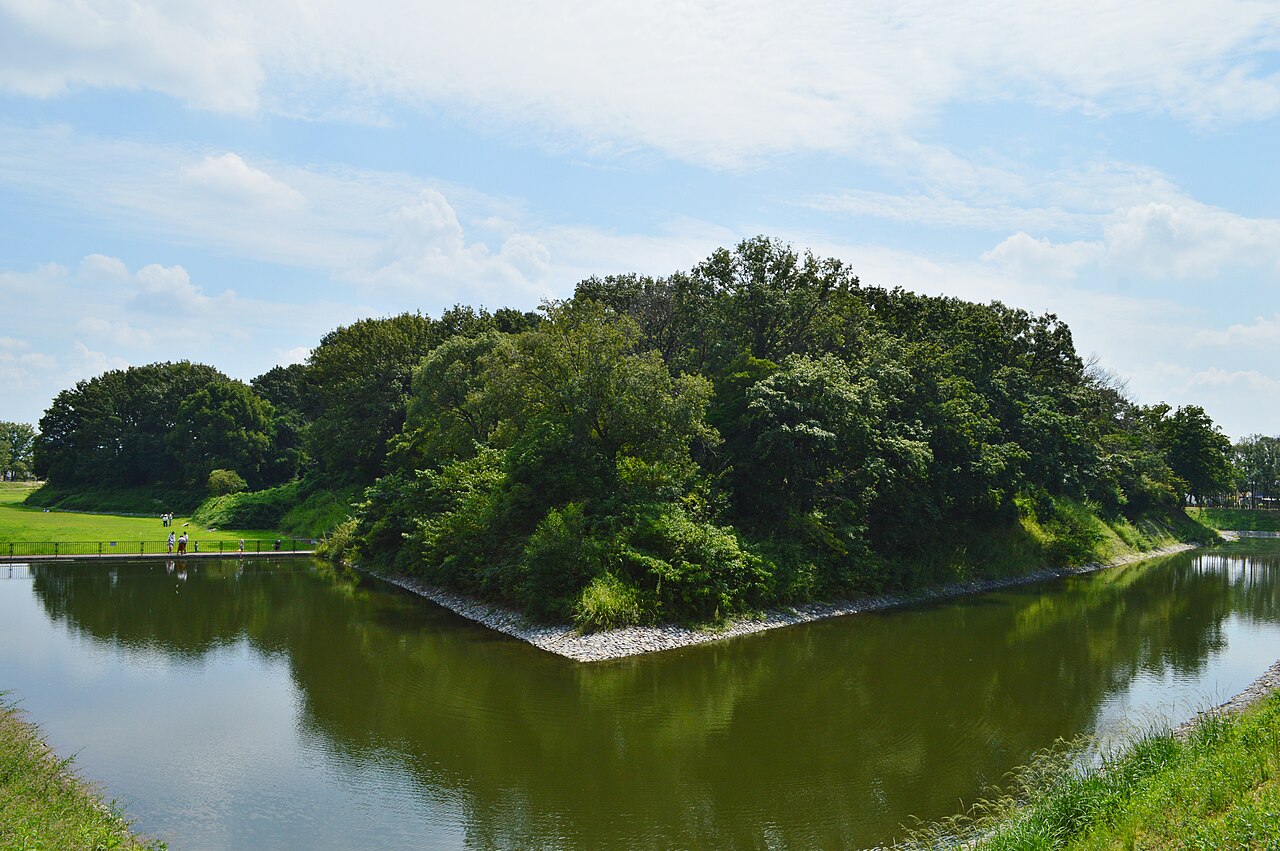
The depth of history around the kiln site is striking. Takatsuki is home to the Imashirozuka Kofun, a sixth-century keyhole-shaped burial mound traditionally identified with Emperor Keitai. Long before any kiln was lit here, this stretch of the Yodo plain was significant enough to hold an imperial tomb — a reminder that the region’s importance runs far deeper than the Edo-period ceramic trade.
- 6th century — Imashirozuka Kofun built in Takatsuki, traditionally identified with Emperor Keitai.
- 794 — Kyoto becomes the imperial capital (until 1869), seeding the refined painted-ware tradition Kosobe would follow.
- 1583 — Construction of Osaka Castle begins, anchoring the merchant city that becomes “the kitchen of the realm.”
- 17th century — Nonomura Ninsei sets the model for refined Kyoto painted ware that later shapes Kosobe’s style.
- c. 1789–1801 (Kansei era) — Igarashi Shinpei founds Kosobe-yaki in the village of Kosobe, Takatsuki.
- 19th century — Kosobe produces Ninsei-style sometsuke and iro-e, kohiki, and Iga / Korean-style tea wares for Osaka’s merchant culture.
- Meiji era (1868–1912) — The kiln declines as industrial production reshapes the ceramic market.
- 2026 — The Kosobe style survives through a small number of revival potters; genuine pieces remain scarce.
Kosobe-yaki itself was founded in the Kansei era — roughly 1789 to 1801 — by Igarashi Shinpei. From the start it was a small, refined operation rather than a mass producer. Drawing on the Kyoto tradition, it made Ninsei-style painted ware in both underglaze blue (sometsuke) and overglaze enamel (iro-e), alongside kohiki and Iga- and Korean-style tea wares aimed squarely at the tea-and-sake culture of the Osaka merchant class.
“Kosobe-yaki drew its style from Kyoto and its market from Osaka — a small kiln that lived on the corridor between two ceramic worlds.”
The continuity case for Kosobe-yaki is honest but slender. Unlike the large production potteries of Mino or Arita, the original Kosobe kiln declined in the Meiji era and effectively ceased as a continuous commercial line. What survives today is a revival: a small number of potters working in the Kosobe manner keep the style alive. That is precisely why a genuine Kosobe guinomi reads as a collector’s object — there is no large factory behind it, and supply is naturally limited.
For the buyer, the seasonal and cultural fit is straightforward. A small painted guinomi suits warm or room-temperature sake, served from a tokkuri flask, and is at home on a quiet table rather than at a banquet. Within Osaka’s craft landscape, pottery is the prefecture’s under-recognized cell — its textiles (Senshu towel) and metalwork (Naniwa tin ware) are far better known abroad — which makes a refined Settsu kiln like Kosobe a genuinely fresh find.
Price snapshot across stores
The fetched dataset did not include a live price for this listing, so the JPY figure below is shown as “check listing.” JPY is the authoritative price for the specific sourced item; any USD figures elsewhere are approximate estimates at a ¥150/USD baseline as of mid-2026.
| Store | Item / variant | Price (JPY + USD est.) | Notes |
|---|---|---|---|
| 🇺🇸 Amazon US (search) | Browse Japanese guinomi & sake cups | varies (USD) | Best if you are shopping from the US — Prime shipping, USD pricing, no international customs. Amazon US carries Japanese sake cups from many kilns; the specific Kosobe piece is sourced from Japan (next row). |
| 🇯🇵 Amazon JP Global Store | Kosobe-yaki hand-painted guinomi (ASIN B0H3TM13FX) | ¥ check listing (price not in dataset) | The specific sourced item. Ships internationally from Japan to most major destinations. |
| Maker direct | Revival-potter studio pieces | Unconfirmed | Kosobe revival output is small; direct studio availability fluctuates and may not ship abroad. |
| Proxy services (Buyee / Tenso) | Any JP listing or gallery item | Item price + proxy fee + forwarding | Useful for reaching Japan-only listings; adds handling fees and consolidated international shipping. |
Prices and stock fluctuate; USD figures are approximate and depend on the current exchange rate. Always verify at the retailer before purchasing.
What it does well
Weaknesses and things to verify before buying
- No confirmed dimensions or weight. The available data does not state cup size or capacity. Verify these on the listing if exact proportions matter to you.
- No live price in the dataset. Pricing was unavailable at the time of writing; confirm the current price and shipping cost before committing.
- Limited stock. Revival-kiln output is small, so the specific piece may sell out or vary from the photographed example.
- Hand-painted variation. Each cup differs slightly in brushwork and shade; this is intrinsic to the craft, not a defect — but buyers wanting identical units should note it.
- Not a matched set. This is a single cup. Building a set of identical Kosobe pieces is difficult given the small supply.
- International shipping and customs. Buying via Amazon JP Global Store or a proxy adds shipping cost and possible import duties depending on your country’s thresholds.
Conclusion — which buyer type are you?
Other ways to approach this purchase
🏆 Editor’s Pick
❓ Frequently Asked Questions
What is Kosobe-yaki, and why is it considered scarce?
Kosobe-yaki is a refined kiln tradition founded around the Kansei era (1789–1801) by Igarashi Shinpei in the village of Kosobe in Takatsuki, Osaka. The original kiln declined in the Meiji era, and the style survives today only through a small number of revival potters, which is why genuine pieces are scarce.
Does Amazon JP ship this cup internationally?
The Amazon JP Global Store ships many household and ceramic items to most major destinations. Shipping cost and customs duties depend on your country; confirm both at checkout, since the fetched dataset did not include a live price or shipping quote.
What is the difference between a guinomi and an ochoko?
Both are small Japanese sake cups. A guinomi is generally a little larger and made to be held and sipped from at a relaxed pace, while an ochoko is the smaller cup often used when sake is poured ceremonially among guests.
How do I care for a hand-painted ceramic sake cup?
Hand-washing in warm water is the safest approach for painted ceramics, especially overglaze iro-e enamels. Avoid sudden temperature shocks and abrasive scrubbing. Dishwasher and microwave suitability is not confirmed in the listing data, so treat the cup as hand-wash only unless the maker states otherwise.
Is this a good gift?
Yes, for a recipient who appreciates Japanese ceramics or sake culture. A single hand-painted guinomi from a scarce revival kiln makes a thoughtful gift; just allow time for international shipping and verify current stock before promising a delivery date.
How does Kosobe-yaki compare to Tamba or Shigaraki sake cups?
Kosobe-yaki is a refined, Kyoto-leaning painted ware, whereas Tamba and Shigaraki are rustic stoneware traditions with earthier, unglazed or ash-glazed surfaces. If you prefer painted decoration and provenance, Kosobe fits; if you prefer rugged texture, the Tamba and Shigaraki pieces linked above are better matches.
Why does the price show “check listing” instead of a number?
The dataset used to build this guide did not contain a live price for this specific listing. JPY is the authoritative price for the sourced item, so rather than guess a figure, we direct you to the Amazon JP Global Store listing for the current price.
jpmono.com is curated by a Japan-based editorial team (working out of Toyama in the Hokuriku region and Nara in Kansai) and is independent. We do not take payment from the makers we feature; income comes from affiliate links. We do not physically test every product — we read maker specs and source listings.
This article was prepared with AI assistance and reviewed against the available listing data and source notes. Facts about the kiln and region are drawn from the editorial source notes; product specifics reflect the listing snapshot at the time of writing.
Affiliate disclosure: jpmono.com may earn a commission on qualifying purchases made through links on this page, at no additional cost to you.