![Sanuki Kagari Temari: Kagawa Hand-Stitched Thread Ball, Where to Buy [2026]](https://jpmono.com/wp-content/uploads/2026/05/japan-map-regions-and-prefectures-800x1050.png)
A Sanuki Kagari Temari (讃岐かがり手まり, “Sanuki hand-stitched thread ball”) is a sphere of cotton thread, wound by hand and then embroidered — division by division — into a geometric pattern. It is not a toy in any modern sense, and it is not pottery or lacquer. It sits closer to needlework: a decorative object whose entire surface is built from layered, plant-dyed cotton stitched over a soft core. The pieces covered in this guide come from Kagawa Prefecture on the island of Shikoku, the historic Sanuki region, where the craft was kept alive and rebuilt after it had very nearly disappeared.
What makes the Sanuki version distinct, internationally, is the color. The thread is dyed only with natural plant dyes — kusaki-zome (草木染め) — using indigo, madder, gardenia, and cochineal rather than synthetic colorants. The result is a softer, more layered palette than the bright machine-dyed temari sold as folk souvenirs elsewhere. Each ball is a mathematical division of a sphere into 8, 10, or 16 sections, and each motif carries a traditional meaning. It reads as an objet for a shelf or a display stand far more than as a plaything.
This article is written for international readers deciding whether a hand-stitched Japanese thread ball is the right purchase — as a collectible, a gift, or a piece of folk-craft decor — and how to actually buy one from outside Japan. We cover what the object is, where it comes from, how it ships, what to verify before buying, and which type of buyer it suits. One honest caveat up front: live marketplace snapshots for Sanuki kagari temari were sparse at the time of writing, so this guide leans on the craft’s documented history and typical retail characteristics rather than on a confirmed live price.
🔄 Updated: June 3, 2026
⏱️ Read time: ~12 min
- Who this is for — and who should skip it
- Product overview (from published specs)
- 📍 Where this comes from — place, era, and the craft tradition
- 📦 Shipping & where to buy from outside Japan
- Purchase options
- What it does well
- Weaknesses and things to verify before buying
- Conclusion — which buyer type are you?
- Other ways to approach this purchase
- ❓ Frequently Asked Questions
Who this is for — and who should skip it
- Want a display object — a collectible for a shelf, stand, or glass case — rather than a functional household tool
- Appreciate hand needlework and the subtle, layered color of natural plant dyes
- Are looking for a meaningful, compact gift that ships well and carries traditional good-luck symbolism
- Value documented regional craft heritage over mass-produced souvenirs
- Are comfortable buying from Japan and verifying the pattern before checkout
- Want a children’s toy — this is a fragile decorative object, not a ball for play
- Need a guaranteed pattern or color; handmade pieces can vary
- Require firm pricing before committing (live pricing was unavailable at the time of writing)
- Prefer bright, uniform synthetic colors over muted natural-dye tones
- Are uncomfortable with international shipping, customs handling, or proxy-buying steps
Product overview (from published specs)
Sanuki kagari temari are handmade folk-craft thread balls, so dimensions, patterns, and prices can vary by maker. The table describes craft characteristics rather than a fixed offer.
| Attribute | Detail (per craft documentation) | Source |
|---|---|---|
| Object type | Decorative hand-stitched thread ball (temari), display piece | Craft documentation |
| Material | Cotton thread, dyed exclusively with natural plant dyes (kusaki-zome) — indigo, madder, gardenia, cochineal | Craft documentation |
| Technique | Kagari (embroidered) geometric patterning, sphere divided into 8 / 10 / 16 sections | Craft documentation |
| Origin | Kagawa Prefecture (historic Sanuki), Takamatsu area, Shikoku | Craft documentation |
| Presentation | Sold as a collectible objet, typically with a display stand | Product description |
| Item reference | — | Spec |
| Price | — | — |
Because each Sanuki kagari temari is handmade, the size and exact pattern can vary. The textile surface and decorative stitching are craft features to compare when choosing a piece.
📖 Glossary — key terms
- Temari (手まり) — literally “hand ball”; a traditional Japanese thread ball, historically a toy and good-luck gift, now mostly a decorative craft.
- Kagari (かがり) — the embroidered stitching that builds the geometric surface pattern over the wound core.
- Kusaki-zome (草木染め) — dyeing with natural plant materials (indigo, madder, gardenia, cochineal) rather than synthetic colorants.
- Sanuki (讃岐) — the historic province name for present-day Kagawa Prefecture.
- Han (藩) — a feudal domain of the Edo period; the Takamatsu domain governed much of Sanuki.
- Asanoha / kiku (麻の葉 / 菊) — common temari motifs (hemp-leaf and chrysanthemum), each carrying traditional symbolic meaning.
Related Japanese craft guides on jpmono — sister Kagawa crafts, other Shikoku traditions, and comparable textile and needlework objects.
 🪭 Marugame Uchiwa (Kagawa)
 🍵 Sanuki Shikki Kinma Natsume
🟦 Awa Aizome Indigo (Shikoku)
 📄 Awa Washi (Shikoku)
🧵 Kogin Sashi Needlework
 🪡 Nabeshima Dantsu Cotton
 🧶 Banshu-ori Cotton
 🏺 Otani-yaki (Shikoku)
📍 Where this comes from — place, era, and the craft tradition

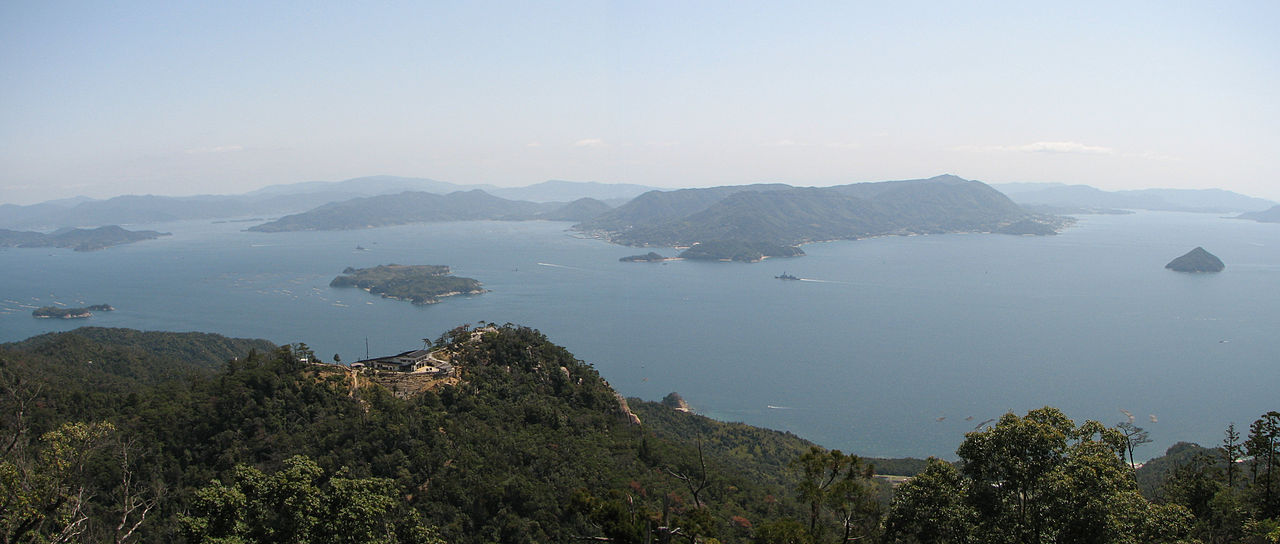
Kagawa occupies the northeastern corner of Shikoku, the smallest of Japan’s four main islands, and faces the Seto Inland Sea — the sheltered band of water between Shikoku and the main island of Honshu. The old province name was Sanuki, which is why the craft is “Sanuki” kagari temari rather than “Kagawa” temari. The region’s climate is famously mild and low in rainfall, shielded by mountains on the Shikoku interior side. That dry, temperate weather historically suited cotton cultivation and the patient indoor handwork — spinning, dyeing, stitching — that grew up around domestic textiles.
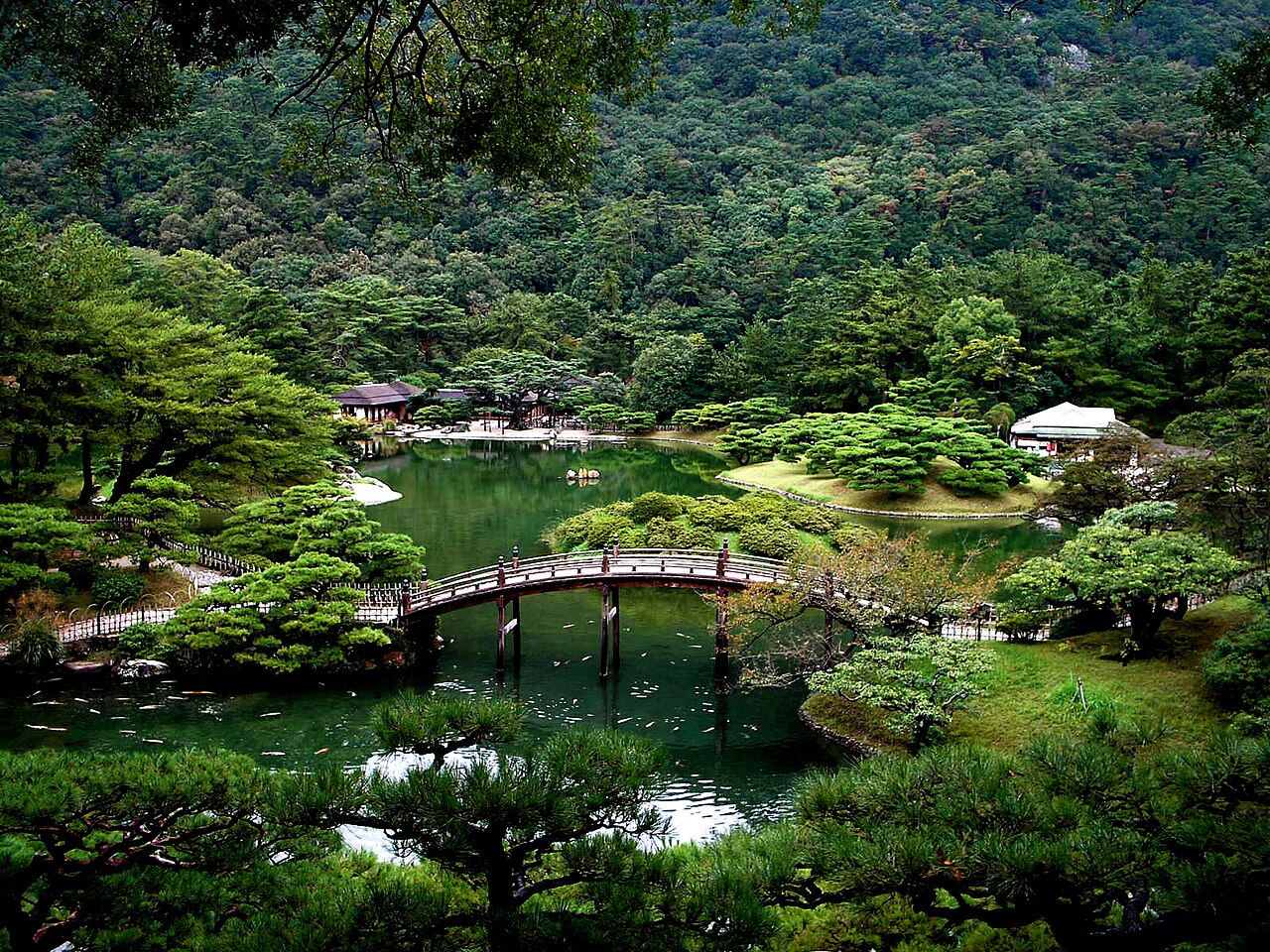
The historical anchor for the craft is the Edo period and the Takamatsu domain (han). After the Matsudaira clan took the domain in the mid-17th century, Takamatsu developed a refined castle-town culture — the strolling garden Ritsurin-en, completed in stages through the 18th century, is its most visible legacy. It was within that domestic, courtly handwork culture that women wound balls from the leftover threads of worn-out kimono and embroidered them with geometric patterns. The balls were given to children as toys and as good-luck gifts, the patterns carrying wishes for health and good fortune.
- Mid-17th c. — The Matsudaira clan takes the Takamatsu domain; a refined castle-town handwork culture develops in Sanuki.
- Edo period — Domain women wind balls from worn-kimono thread and embroider geometric kagari patterns as children’s toys and good-luck gifts.
- 18th c. — Ritsurin Garden largely completed, emblem of the domain’s refined leisure-and-handwork culture.
- Meiji onward — Machine-made goods and rubber balls displace handmade temari; the craft declines.
- Post-1945 — The tradition nearly dies out in the post-war years.
- Shōwa revival — The Sanuki Kagari Temari Preservation Society, led by Araki Kazuo and others, documents and rebuilds the plant-dyeing and stitching methods.
- 2026 — Made today as a collectible objet, sold with a display stand.
The craft did not pass down unbroken. As machine-made toys and rubber balls spread from the Meiji era onward, handmade temari lost their everyday role, and by the post-war years the Sanuki tradition had very nearly disappeared. What survives today does so because it was deliberately rescued: the Sanuki Kagari Temari Preservation Society, associated with Araki Kazuo and others, documented and reconstructed both the plant-dyeing recipes and the stitching methods. That revival is why the natural-dye palette — indigo, madder, gardenia, cochineal — remains central rather than being quietly swapped for cheaper synthetic thread.
“A Sanuki kagari temari is a sphere divided by hand into eight, ten, or sixteen parts — geometry worked in plant-dyed cotton, one stitch at a time.”
Kagawa’s gift-and-pilgrimage culture also explains why the object endures as a present rather than a toy. Konpira-san (Kotohira-gū), the prefecture’s great shrine, has for centuries drawn pilgrims and, with them, a market for the region’s giftable folk crafts. A small, symbolic, beautifully made object carrying wishes for good fortune fits that gift economy precisely — which is why the temari survives today as a collectible objet for a display stand.
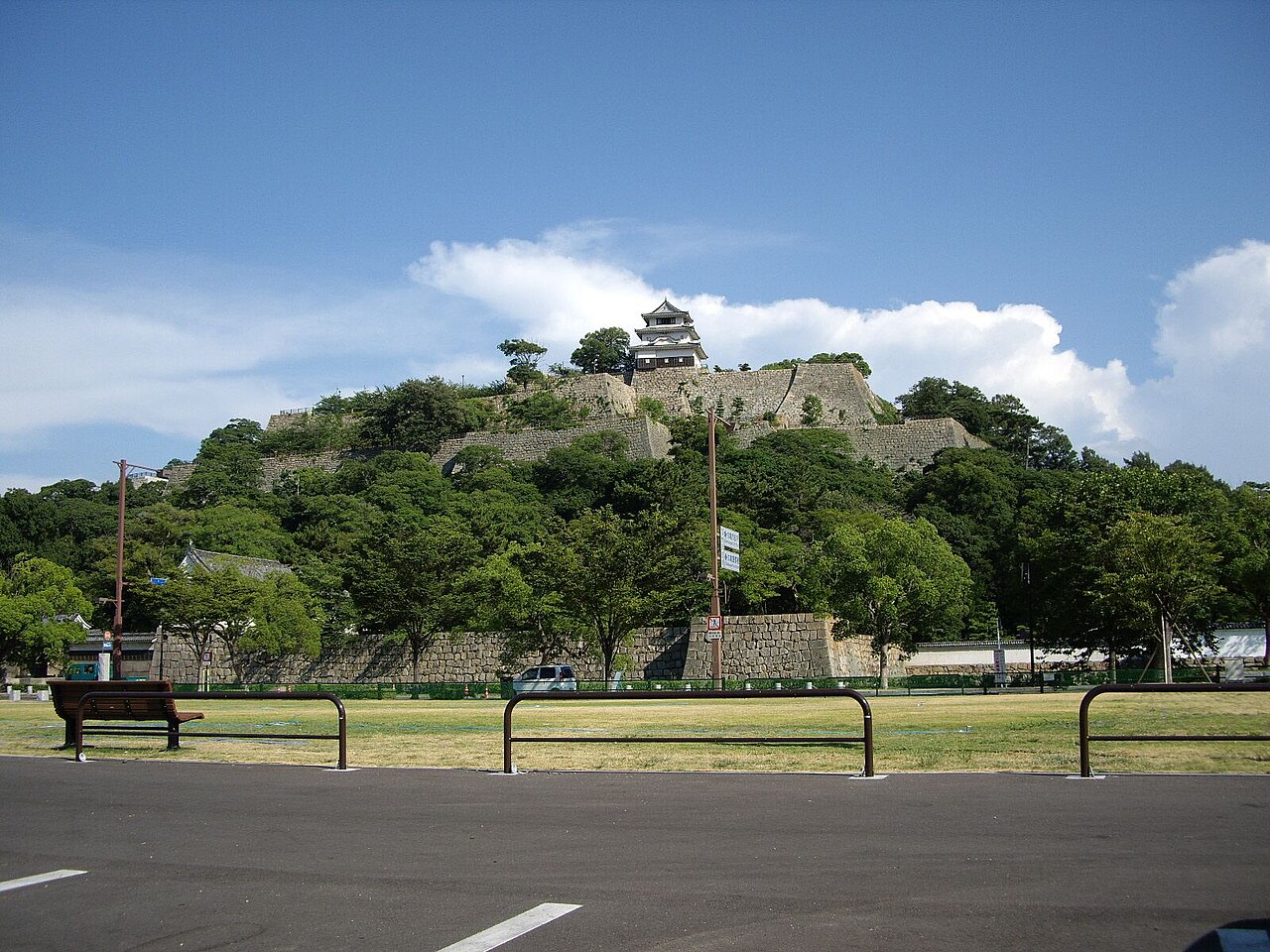
The temari is not the only handcraft Kagawa is known for. Marugame, a castle town to the west, is the center of Marugame uchiwa fan-making — another fine, giftable Kagawa handcraft — and Sanuki lacquerware carries its own distinct techniques. Travelers and collectors often encounter these crafts together, which is part of why we cross-link the related guides below.
📦 Shipping & where to buy from outside Japan
Sanuki kagari temari are typically sourced from Japanese craft sellers. Their light weight makes international shipping practical, though costs and customs vary by destination.
Because the craft is handmade and revival-supported, a particular pattern may be limited or sold by a maker or society shop. This is a textile/decorative object, so electrical certification is not relevant.
Purchase options
| Store | Item / variant | Price (JPY + USD est.) | Notes |
|---|---|---|---|
| 🇺🇸 Amazon US (search) | Browse Japanese temari & folk-craft thread balls | varies (USD) | Best if you’re shopping from the US — Prime shipping, USD pricing, no international customs. Amazon US carries comparable Japanese temari and needlework crafts; the exact Sanuki piece is sourced from Japan (next row). |
| 🇯🇵 Amazon JP Global Store | Sanuki Kagari Temari (item ID 4140311738) | — | Ships internationally from Japan. |
| Maker direct | Preservation Society / society shop pieces | Varies — not listed | Society and workshop shops in Kagawa may sell directly; domestic-only sites usually need a proxy to ship abroad. |
| Proxy services (Buyee / Tenso) | Forwarding from a domestic-only seller | Item price + fee + shipping | Useful when a specific pattern is only on a Japan-domestic shop; adds a service fee and consolidation step. |
What it does well
Weaknesses and things to verify before buying
- Confirm the final purchase details before committing.
- Decorative, not functional. This is a display object, not a toy or a household tool — it has no use beyond being looked at.
- Pattern and size vary. Handmade pieces differ; the exact motif, color mix, and dimensions of the ball you receive may not match a sample photo.
- Fragility and dust. Embroidered cotton can snag, fade in direct sunlight, and collect dust; a display case or stand away from windows is advisable.
- International shipping friction. If the Global Store does not carry the exact piece, you may need a proxy service, adding fees and time.
- Customs and duties. Orders above your local threshold may incur import duties or VAT, paid on delivery.
- Product identity. Confirm genuine Sanuki kagari temari with plant-dyed thread, since “temari” is also used for brighter machine-dyed souvenir balls.
Conclusion — which buyer type are you?
Other ways to approach this purchase
❓ Frequently Asked Questions
Is a Sanuki kagari temari a toy?
No. Although temari were historically given to children as toys, the Sanuki kagari temari sold today is a decorative collectible — a fragile display object, typically presented on a stand, not made for play.
What makes the Sanuki version different from other temari?
The defining trait is plant dyeing (kusaki-zome) — cotton thread colored only with natural dyes such as indigo, madder, gardenia, and cochineal — giving a soft, layered palette. The methods were documented and rebuilt by the Sanuki Kagari Temari Preservation Society after the craft nearly died out.
Can I buy one and ship it internationally?
Yes. Sanuki kagari temari are light textile/decorative objects, and Japanese craft sellers may offer international shipping. If a seller ships only domestically, a forwarding service can help; costs vary by destination.
How much does it cost?
Prices for Sanuki kagari temari vary by pattern, size, and maker. USD conversions are approximate and depend on the exchange rate.
How do I care for it?
Keep it out of direct sunlight to limit fading of the natural dyes, dust it gently, and avoid snagging the embroidered surface. A display case or stand away from windows is the safest way to keep it.
Will the pattern match the photo exactly?
Not necessarily. These are handmade, so the motif, color mix, and dimensions can vary from piece to piece. If a specific pattern matters to you, confirm with the seller before ordering.
What other Kagawa crafts pair well with it?
Marugame uchiwa fans and Sanuki lacquerware are sister Kagawa handcrafts often collected alongside temari. See the cross-link box above for guides to those and to related Shikoku textile and pottery traditions.
jpmono.com is curated by a Japan-based editorial team (working out of Toyama in the Hokuriku region and Nara in Kansai) and is independent. We don’t take payment from the makers we feature; income comes from affiliate links. We don’t physically test every product — we read maker specifications and describe the craft context.
Affiliate disclosure: jpmono.com may earn a commission on qualifying purchases made through links on this page, at no additional cost to you.