![Kurume Kasuri Indigo Cotton Cushion Cover — Where to Buy [2026]](https://jpmono.com/wp-content/uploads/2026/05/japan-map-regions-and-prefectures-800x1050.png)
Kurume kasuri (久留米絣, “Kurume ikat”) is one of the few Japanese textiles whose pattern is dyed into the thread before a single pick is woven. The cushion cover covered in this guide is a 45×45 cm aizome (藍染, indigo-dyed) cotton case in that tradition, made in the Chikugo region of Fukuoka on the island of Kyūshū — the same district where, around the year 1800, a teenage weaver named Inoue Den worked out how to bind and pre-dye the yarn so that the white flecks of a faded old cloth could be reproduced on purpose.
What makes Kurume kasuri notable internationally is not a surface print but a method. The blurred edges of each motif are the visible signature of hand-tied resist dyeing (kukuri, 括り), where bundles of warp and weft are bound, dipped repeatedly in fermented indigo, then aligned on the loom so the design emerges from the cloth’s own structure. Together with Iyo-gasuri of Ehime and Bingo-gasuri of Hiroshima, it forms what Japan calls its three great kasuri; the hand-tied indigo work was named an Important Intangible Cultural Property in 1957 and a METI-designated traditional craft in 1976.
This article is written for readers shopping from outside Japan who want to understand what they are actually buying — how an authentic aizome cushion cover differs from a printed look-alike, how Kurume compares with the Iyo and Bingo kasuri traditions, where it can be purchased, and what to verify before paying. Prices and stock shift constantly, so treat every figure here as “at the time of writing” and confirm at the retailer.
📅 Published:
🔄 Updated:
⏱️ Read time: ~11 min
- Who this is for — and who should skip it
- Product overview (from published specs)
- Where to buy
- What it does well
- Weaknesses and things to verify before buying
- Where this comes from — place, era, and the craft tradition
- Conclusion — which buyer type are you?
- Other ways to approach this purchase
- ❓ Frequently Asked Questions
Who this is for — and who should skip it
- Want a genuine pre-dyed indigo ikat, not a printed imitation of the look
- Appreciate the soft, blurred motif edges that mark hand-tied kukuri resist
- Are furnishing in a natural-fiber, earth-tone, or wabi palette
- Like the idea of cotton that softens and fades gracefully over years of use
- Value a textile with documented heritage and a living workshop tradition
- Want razor-sharp, perfectly registered graphic patterns
- Need a cushion insert included — covers are usually sold empty
- Cannot accommodate hand-wash or gentle care for natural indigo
- Expect bright synthetic colors; aizome is a deep, muted blue
- Are buying purely on price and will not pay a premium over printed cushions
Product overview (from published specs)
| Attribute | Detail (craft tradition) |
|---|---|
| Item | Kurume kasuri cushion cover (zabuton / scatter cushion case) |
| Material | Cotton, indigo-dyed (aizome) |
| Technique | Kasuri (ikat) — hand-tied resist (kukuri), pre-dyed yarn, woven pattern |
| Size | 45 × 45 cm (standard scatter-cushion format) |
| Origin | Chikugo region, Kurume, Fukuoka Prefecture, Kyūshū |
| Insert included | Unconfirmed – covers in this category are usually sold empty; check the maker’s details |
| Designation | Important Intangible Cultural Property (1957); METI traditional craft (1976) |
| Listed price | Varies by seller |
📖 Glossary — key terms
- Kasuri (絣) — the Japanese word for ikat: cloth whose pattern is created by resist-dyeing the threads before weaving, so the design appears in the warp and weft themselves.
- Aizome (藍染) — dyeing with natural fermented indigo, producing the deep blue characteristic of the Chikugo region.
- Kukuri (括り) — the hand-tying of thread bundles to resist the dye; the bound sections stay white and form the motif.
- Monpe (もんぺ) — the everyday work trousers historically made from Kurume kasuri across rural Japan.
- Zabuton (座布団) — the flat floor cushion used for kneeling and sitting in a traditional Japanese room; many Kurume covers are made in this and the smaller 45 cm scatter format.
- METI — Japan’s Ministry of Economy, Trade and Industry, which certifies designated traditional crafts (dentō kōgeihin).
Related jpmono guides — other Japanese indigo, kasuri, and Kyūshū textile traditions worth weighing against this cushion cover.
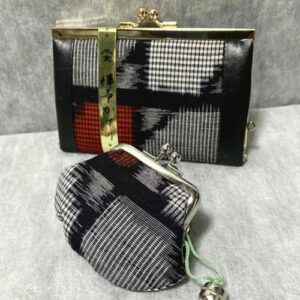 Iyo-Gasuri coin purse →The Ehime kasuri tradition (one of the three greats)
Yumihama-gasuri runner →Tottori indigo ikat, picture-kasuri style
Buaisou aizome tenugui →Tokushima natural-indigo cloth, full-process makers
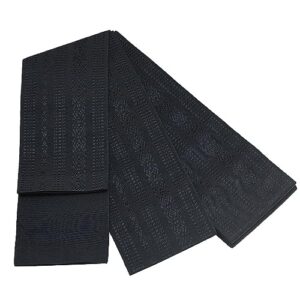 Hakata-ori kaku-obi →Fukuoka’s other flagship textile (silk weave)
Hakata Hasami scissors →Another Fukuoka craft from the same domain
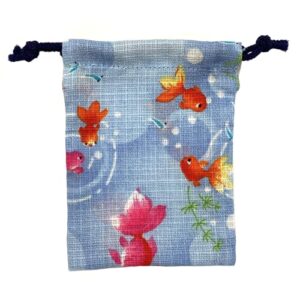 Yanai-jima cotton pouch →Yamaguchi cotton weave, Kyūshū-facing region
Ryukyu Bingata placemat →Okinawa stencil dyeing — contrast with woven kasuri
Where to buy
Cushion covers in this category vary with the cloth, dyeing, and finishing, so compare material and construction rather than treating every piece as identical.
| Store | Item / Variant | Price (JPY + USD est.) | Notes |
|---|---|---|---|
| 🇺🇸 Amazon.com (US) | Browse Japanese indigo & kasuri cushion covers | varies (USD) | Best if you are shopping from the US — Prime shipping, USD pricing, no international customs. Amazon US carries Japanese indigo and aizome home textiles from various makers; this exact Kurume piece is sourced from Japan (next row). |
| Amazon JP Global Store | Kurume kasuri aizome cushion cover, 45×45 cm | Check current price | Ships internationally from Japan to most major destinations. |
| Maker direct | Chikugo workshop weaves (e.g., Unagi no Nedoko and other Kurume ateliers) | Varies by workshop | Some Kurume makers sell direct; selection and authenticity are strong, but international shipping varies by shop. |
| Proxy services (Buyee / Tenso) | Domestic-only Japanese orders | Item price + forwarding fee | Useful for Japan-only shops that do not ship abroad; adds a handling fee and a second postage leg. |
What it does well
The pattern lives in the yarn itself, so it does not crack, peel, or wash off the way a surface print can. Both faces of the cloth carry the motif.
Aizome deepens the cloth and ages into softer, lighter tones with use — a quality many owners treat as a feature rather than wear.
Important Intangible Cultural Property (1957) and METI traditional craft (1976) status anchor the lineage in verifiable record, not marketing.
Kurume cotton was the cloth of monpe work trousers — built to be worn, washed, and repaired, which suits a cushion in daily use.
“The blurred edge of a kasuri motif is not a flaw in printing — it is the fingerprint of a pattern that was dyed into the thread before the loom ever touched it.”
Weaknesses and things to verify before buying
- Insert usually not included. Cushion covers are typically sold empty. Confirm whether a filler pad is included and that your existing insert matches the 45×45 cm size.
- Indigo care is gentle care. Natural aizome can release color, especially early on. Hand-washing or a gentle cycle separately from light fabrics is the safe default; follow the maker’s care notes.
- Color is muted, not bright. Aizome reads as a deep, grayed blue in person. If you want a vivid, saturated tone, this tradition will look subdued to you.
- Pattern placement varies. Because the design is woven from pre-dyed thread, the exact motif position on each cover can differ slightly from a reference photo. This is normal for kasuri, not a defect.
- “Kurume kasuri style” is not the same as the real thing. Some products imitate the look with prints. Look for indigo dyeing, the soft motif edges, and a pattern visible on both faces of the cloth.
- Seller details vary. Confirm availability before ordering.
Where this comes from — place, era, and the craft tradition

Kurume sits on the Chikugo plain in southern Fukuoka Prefecture, on Kyūshū — the southwesternmost of Japan’s four main islands. The city lies along the lower reaches of the Chikugo River, the largest river in Kyūshū, on the broad alluvial flats that run down toward the Ariake Sea. That geography is the practical reason the craft took root here: warm, humid summers and fertile, well-watered fields that grew cotton, and abundant soft river water for the dye houses that fermented and fixed the indigo.

The origin story is unusually specific. Around the year 1800, in the castle town of Kurume, a young weaver named Inoue Den — said to have been only twelve or thirteen — studied the faded white mottling on a piece of old, much-washed indigo cloth and worked out that the effect could be made deliberately. By binding bundles of thread and dyeing them before weaving, she could place the white flecks exactly where she wanted them. That insight — kukuri, the hand-tied resist — is the seed of all Kurume kasuri.
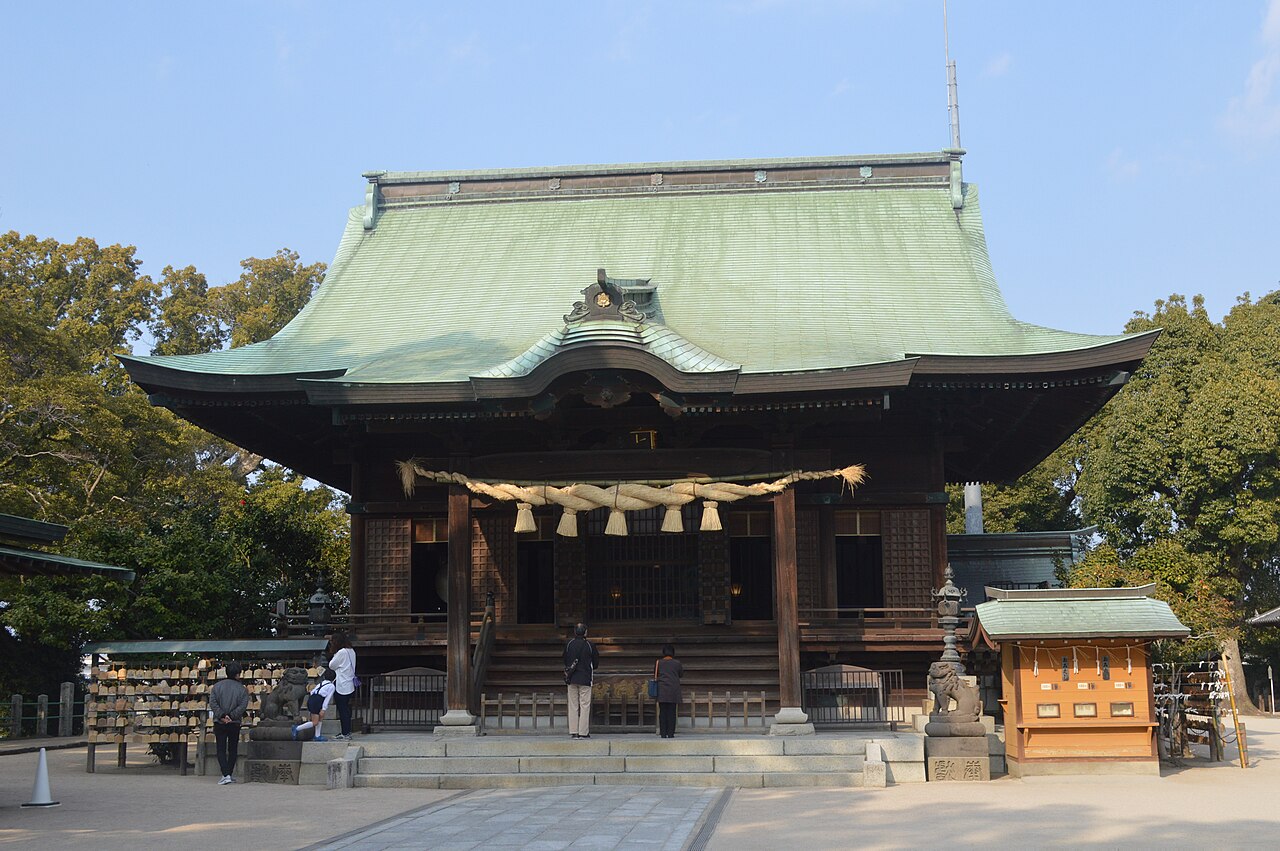
The Arima clan, lords of the Kurume domain, recognized the value of the new cloth and promoted it as a regional industry. Under that patronage, and later through the wider Fukuoka domain’s encouragement of Chikugo textiles, Kurume kasuri grew from a local curiosity into a major trade. By the Meiji era (after 1868) it was the largest cotton-ikat producer in the country, and its sturdy indigo cloth became the everyday wear of rural Japan — most famously as monpe, the baggy work trousers worn in fields and farmhouses nationwide.
- c. 1800 — Inoue Den, said to be about 12–13, devises hand-tied kasuri in Kurume.
- Early 1800s — The Arima clan of Kurume domain promotes the cloth as a regional industry.
- Meiji era (after 1868) — Kurume becomes Japan’s largest cotton-ikat producer; monpe spread nationwide.
- 1957 — Hand-tied indigo Kurume kasuri named an Important Intangible Cultural Property.
- 1976 — Designated a traditional craft (dentō kōgeihin) by METI.
- 2010s–2026 — Contemporary revival led by makers such as Unagi no Nedoko keeps Chikugo looms active.
With Iyo-gasuri of Ehime and Bingo-gasuri of Hiroshima, Kurume forms what Japan calls its three great kasuri. The hand-tied indigo work was named an Important Intangible Cultural Property in 1957 — a designation that protects the technique, not just the product — and a METI-designated traditional craft in 1976. Those two recognitions are the formal record behind the cloth’s reputation.
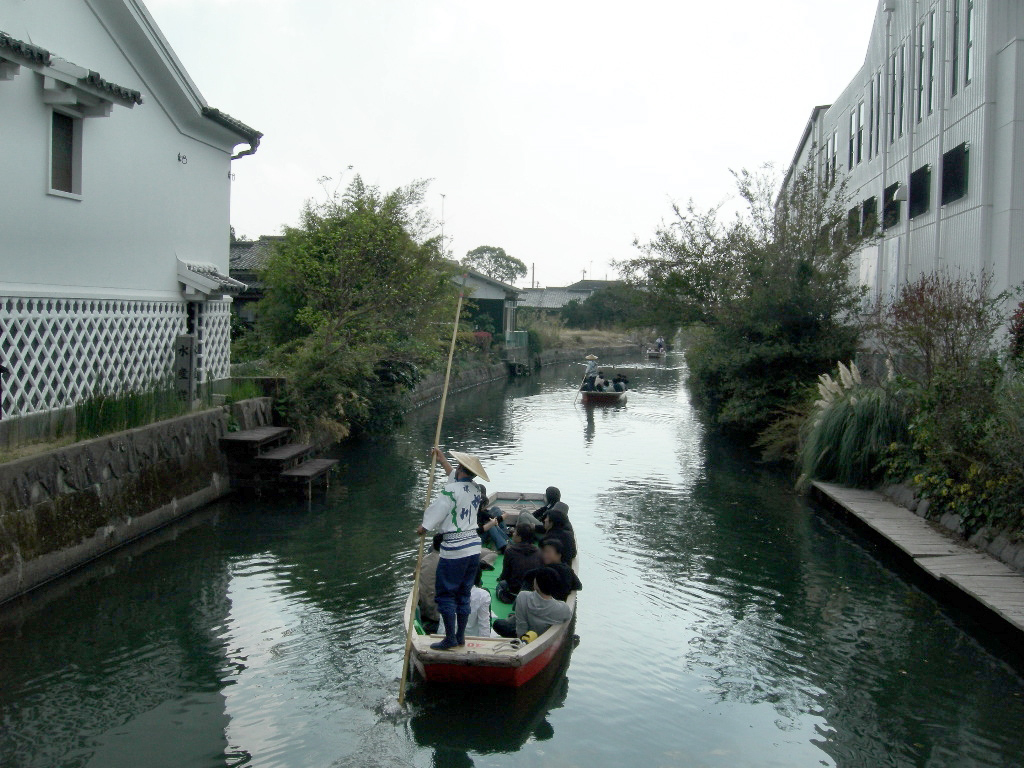
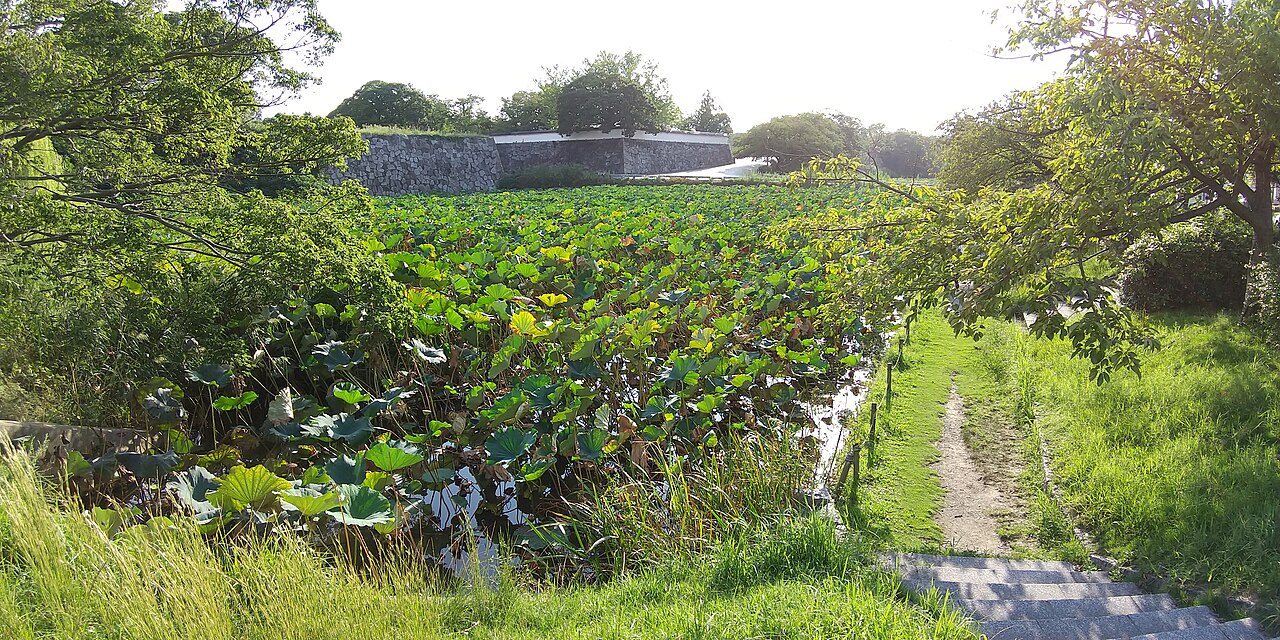
What “still being made here” means today is a working revival rather than a museum. A network of Chikugo-region workshops continues to weave, and contemporary makers — Unagi no Nedoko among the best known — have brought monpe and home textiles back to a younger audience while keeping the hand-tied dyeing alive. The wider Fukuoka domain, whose seat was Fukuoka Castle, historically encouraged the textiles of its Chikugo districts; that institutional history is part of why an unbroken weaving tradition survives in this part of Kyūshū.
Conclusion — which buyer type are you?
Buy a documented hand-tied aizome weave from a named Chikugo workshop. Pay for the technique, not the look-alike.
The 45×45 cm cushion cover in this guide is the sensible middle: real kasuri at a livable price, sturdy enough for daily use.
If price leads, watch for sales or smaller items (pouches, coasters) in the tradition — but avoid printed imitations sold as the real thing.
If you want bright color, sharp graphic prints, or an insert included by default, this is not the right cushion for you.
Other ways to approach this purchase
Seasonal demand can affect textile availability. If you are flexible on timing, buying outside peak gift periods may offer more choice.
Covers are usually sold empty. If you already own a 45×45 cm pad, you only pay for the cloth, which lowers the effective cost.
If you shop Amazon regularly, applying accumulated points or card rewards can offset international shipping on the JP Global Store path.
If natural indigo’s color-care needs or muted palette do not suit you, a printed cotton cushion will be cheaper and lower-maintenance.
❓ Frequently Asked Questions
Does the cushion cover come with an insert?
Usually not. Cushion covers in this category are typically sold empty, so you would supply your own 45×45 cm pad. Check the dimensions before ordering.
How is real kasuri different from a printed pattern?
In genuine kasuri the thread is resist-dyed before weaving, so the motif appears in the cloth’s structure and shows on both faces, with characteristically soft, blurred edges. A print sits only on one surface and has sharp, registered lines.
How do I wash an aizome indigo cushion cover?
Treat natural indigo gently. Hand-washing, or a gentle machine cycle separate from light-colored items, reduces the risk of color transfer, which is more pronounced when the cloth is new.
Can it ship internationally?
The Amazon JP Global Store path delivers to most major destinations from Japan. If you find a Japan-only shop, a proxy service such as Buyee or Tenso can forward it, adding a handling fee and a second postage leg. Orders above local thresholds may incur customs duties.
How does Kurume kasuri compare with Iyo and Bingo kasuri?
All three are indigo cotton ikat and together form Japan’s three great kasuri. Kurume, from Fukuoka’s Chikugo plain, is distinguished by its hand-tied indigo work and its Important Intangible Cultural Property status (1957). Iyo-gasuri (Ehime) and Bingo-gasuri (Hiroshima) are the other two regional traditions.
Is it normal for the pattern to sit differently than the photo?
Yes. Because the design is woven from pre-dyed thread, the exact placement of the motif can vary slightly between covers. This is a property of the technique, not a defect.
Who makes authentic Kurume kasuri today?
A network of workshops in the Chikugo region of Fukuoka continues to weave it, with contemporary makers such as Unagi no Nedoko leading a revival that has brought monpe and home textiles back to a wider audience while keeping the hand-tied dyeing alive.
jpmono.com is curated by a Japan-based editorial team working out of Toyama in the Hokuriku region and Nara in Kansai, and is independent. We do not take payment from the makers we feature; income comes from affiliate links. We do not physically test every product.
Affiliate disclosure: jpmono.com may earn a commission on qualifying purchases made through links on this page, at no additional cost to you.