![Morihachi Choseiden (森八 長生殿, Kaga Wasanbon Rakugan Higashi Gift Box) — Kanazawa’s Entry in Japan’s Three Great Confections [2026 Guide for International Readers]](https://jpmono.com/wp-content/uploads/2026/07/morihachi-choseiden-rakugan-where-to-buy-2026-featured.jpg)
- What it is: Choseiden (長生殿) — a dry, pressed higashi sweet of fine wasanbon sugar and glutinous-rice flour, made by the Kanazawa confectioner Morihachi.
- Made in: Kanazawa, Ishikawa — by a house founded in 1625 under the tea-cultivated Kaga domain.
- Price band: premium gift-box wagashi (see the live listing — we do not quote an invented figure).
- Best for: tea drinkers and gift-givers who want a shelf-stable, plant-based Japanese sweet with real provenance.
- Skip if: you want a rich, chocolatey, or long-shelf-life dessert — this is subtle, sugar-forward, and best-by is measured in weeks.
- Shipping: ships internationally from Amazon Japan — jump to our pick ↓
In the tea rooms of the old Kaga domain, a sweet was set beside the bowl before the matcha was ever whisked — a small white tablet, pressed from sugar so fine it collapses the instant it touches the tongue. That sweet is Choseiden (長生殿), and the house that has made it in Kanazawa is Morihachi (森八), founded in 1625, when the Maeda lords were building a court-level tea culture on the Sea of Japan coast to rival Kyoto itself.
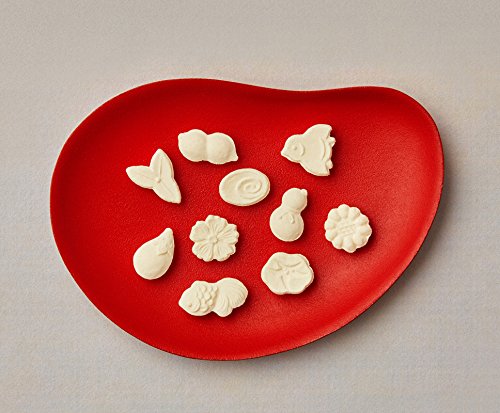
Choseiden is a rakugan-style dry higashi: fine-grained wasanbon (和三盆) sugar and roasted glutinous-rice flour (kanbaiko, 寒梅粉) are packed into carved cherry-wood molds, stamped with characters traditionally associated with the Edo-period tea master and garden designer Kobori Enshū (小堀遠州), then dried into a delicate, snow-white block that dissolves cleanly rather than crunching. It is counted among Japan’s “three great confections” (日本三大銘菓), alongside Nagaoka’s Koshi-no-yuki and Matsue’s Yamakawa — the latter already covered on this site — which makes Morihachi’s box the piece that completes that classic trio for international readers.
This guide is written from a Japan-based editor’s desk for readers buying from outside Japan. Because Choseiden is fully dry, sealed, and made only from plant-based sugar and rice, it keeps at room temperature and travels far better than fresh nama-gashi. Below we explain what Choseiden actually is, why Kanazawa produces it, how the wasanbon texture differs from ordinary supermarket rakugan, how to find the genuine Morihachi gift box on Amazon Japan’s Global Store, and who should — and should not — buy it.
📅 Published:
🔄 Updated:
⏱️ About 9 min read
ℹ️ Live pricing was not in our data snapshot for this listing — the linked Amazon listing is authoritative for current price, box size, and international-shipping eligibility. Unconfirmed attributes are marked below.
- Who this is for — and who should skip it
- Product overview (from published specs)
- 📍 Where this comes from — Kanazawa, the Kaga domain, and its tea culture
- Price snapshot across stores
- What it does well
- Weaknesses and things to verify before buying
- Conclusion — which buyer type are you?
- Other ways to approach this purchase
- 🏆 Editor’s Pick
- ❓ Frequently Asked Questions
Who this is for — and who should skip it
- Drink matcha or sencha and want an authentic sweet to serve alongside it.
- Need a shelf-stable, room-temperature gift that survives international shipping.
- Prefer plant-based confectionery — Choseiden uses only sugar and rice, no dairy, egg, or meat.
- Value provenance: a house running since 1625 and a sweet ranked among Japan’s “three great confections.”
- Enjoy subtle, clean-melting sweetness rather than dense, rich desserts.
- Want a rich, chocolatey, or fruit-forward dessert — this is delicate and sugar-forward.
- Need a long-life pantry item; best-by is typically weeks to a couple of months.
- Are shopping for a price bargain — this is premium gift-box wagashi, not everyday snacking.
- Live somewhere with strict food-import limits; eligibility must be confirmed at checkout.
- Dislike very sweet foods, or want a large-volume everyday sweet rather than small tea portions.
Product overview (from published specs)
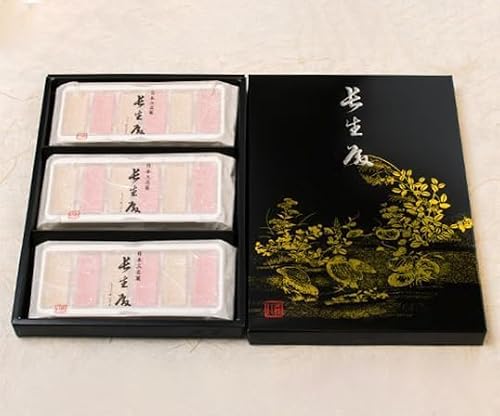
Morihachi Choseiden (森八 長生殿, Kaga Wasanbon Rakugan Higashi Gift Box)
加賀藩御用御菓子司 森八 長生殿 小墨 18ヶ入もりはち 和菓子 手土産 石川土産
在庫あり。 · Sold by 東京土産・全国お土産(適格請求書発行可能) · ASIN B0CX26QR8J
Price and availability as of 2026-08-31 02:30 JST. The Amazon listing at the time of purchase is authoritative. jpmono.com earns a commission on qualifying purchases at no extra cost to you.
| Attribute | Detail (per listing / maker data) |
|---|---|
| Product | Morihachi Choseiden (森八 長生殿) — Kaga wasanbon rakugan higashi gift box |
| Category | Wagashi — dry pressed higashi (rakugan style) |
| Maker | Morihachi, Kanazawa — founded 1625 (Kan’ei 2) |
| Core ingredients | Wasanbon (fine sugar) + kanbaiko (roasted glutinous-rice flour) — plant-based only |
| Form | Dry, snow-white pressed tablets from carved cherry-wood molds |
| Storage | Room temperature; sealed; no refrigeration required |
| Best-by | Typically weeks to a couple of months — check the printed date on the box |
| Box / assortment size | Unconfirmed — check listing (white or red-and-white assortments are sold) |
| ASIN (Amazon JP) | B0CX26QR8J |
| Price | See live listing — not in our snapshot; do not rely on a quoted figure |
Sources: Amazon US search (primary, moonill-20) + Amazon JP Global Store (secondary, moonill-22, sourced listing) + maker direct. Spec-sheet gaps are marked “Unconfirmed” rather than guessed.
📖 Glossary — key terms
- Higashi (干菓子, “dry sweet”) — a category of low-moisture wagashi served with tea; keeps far longer than fresh sweets.
- Rakugan (落雁) — pressed dry sweets made by packing sugar and starch/rice flour into carved molds, then unmolding.
- Wasanbon (和三盆) — a fine-grained Japanese sugar prized for a soft, quick-melting texture; traditionally associated with Shikoku (Awa).
- Kanbaiko (寒梅粉) — flour milled from roasted glutinous rice; the binder that gives pressed higashi its body.
- Nama-gashi (生菓子) — fresh, moist wagashi with a short shelf life — the opposite of a dry higashi like Choseiden.
- Kaga (加賀) — the historical domain centered on Kanazawa, ruled by the Maeda family through the Edo period.
📍 Where this comes from — Kanazawa, the Kaga domain, and its tea culture

Kanazawa is the capital of Ishikawa Prefecture, on the Sea of Japan coast of central Japan — the Hokuriku region. It was the seat of the Kaga domain, ruled through the Edo period by the Maeda family, one of the wealthiest and most culturally invested feudal domains in the country. Rather than pour that wealth solely into military display, the Maeda lords cultivated arts, tea, and craft on a scale that let Kanazawa stand alongside Kyoto as a center of refined culture.
That patronage matters directly to Choseiden. A court-level tea culture creates steady demand for refined higashi — the dry sweets set beside the tea bowl — and the confectioners who could make them at the required standard. Morihachi was founded in this environment in 1625, and Choseiden emerged as its signature: a pressed sweet whose carved molds are stamped with characters traditionally associated with Kobori Enshū, the Edo-period tea master and garden designer.
- 1603 — The Edo period begins; the Maeda-ruled Kaga domain is one of Japan’s largest and most culturally active.
- 1625 (Kan’ei 2) — Morihachi is founded in Kanazawa.
- Edo period — The Kaga domain builds a court-level tea culture, creating demand for refined higashi.
- Edo period — Choseiden takes shape; its cherry-wood molds are inscribed with characters associated with tea master Kobori Enshū.
- Traditionally — Choseiden is counted among Japan’s “three great confections,” with Koshi-no-yuki (Nagaoka, Niigata) and Yamakawa (Matsue, Shimane).
- 2026 — Morihachi still makes Choseiden in Kanazawa, roughly four centuries after its founding.
What makes Choseiden distinct on the tongue is the sugar. Wasanbon is milled and worked to a far finer grain than ordinary sugar, so a pressed tablet does not so much crunch as melt — it collapses into sweetness and is gone. Ordinary supermarket rakugan, by contrast, tends to read as harder and grainier. The glutinous-rice kanbaiko gives the block just enough structure to hold its molded shape and the inscribed characters until it reaches the mouth.
“A house that has pressed the same sweet in Kanazawa since 1625 is not selling nostalgia — it is selling roughly four centuries of continuous practice, in a tablet that dissolves in seconds.”
Because the recipe is plant-based and fully dry — sugar and rice, with no dairy, egg, meat, or need for refrigeration — Choseiden also behaves well as an export. It is sealed, shelf-stable at room temperature, and carries a best-by date measured in weeks to a couple of months, which is why a box travels internationally in a way that fresh nama-gashi cannot.
Choseiden sits naturally beside the tea and tea-ware we have already covered on jpmono. If you are building a Japanese tea table, these pair well with it.
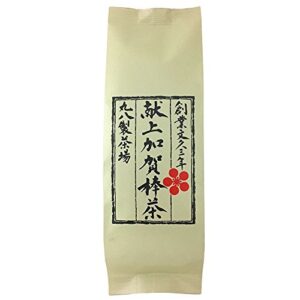

Maruhachi Seichajo Kenjo Kaga Bocha (献上加賀棒茶, sealed bag/tin)

Hoshino Seichaen Yame Matcha (星野製茶園 八女抹茶, sealed 30–40g tin)

Chiran-cha Deep-Steamed Sencha (知覧茶 深蒸し煎茶, sealed 100g bag)

Ooigawa Chaen Fukamushi Sencha (大井川茶園 深蒸し煎茶, sealed foil bag)
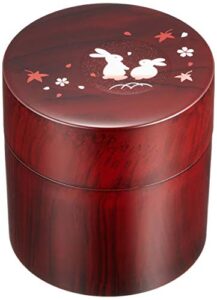

Yamanaka Rokuro Woodturned Tea Caddy: Ishikawa Zelkova Chazu
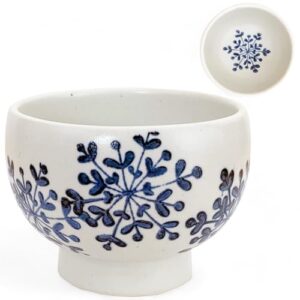

Ohi-yaki Amber-Glaze Matcha Chawan: Kanazawa’s Raku Tea Bowl
Price snapshot across stores
JPY (¥) is the authoritative price for the specific listed item; any USD figures are approximate estimates at a ¥150/USD baseline. Live pricing was not in our snapshot, so verify at the listing before buying.
| Store | Item / Variant | Price | Notes |
|---|---|---|---|
| 🇺🇸 Amazon.com (US) | Browse Japanese wagashi & higashi sweets | varies (USD) | Best if you are shopping from the US — Prime shipping, USD pricing, no international customs. Amazon US carries assorted Japanese sweets and gift sets useful for comparison; Morihachi’s exact Choseiden box is sourced from Japan (next row). |
| 🇯🇵 Amazon JP Global Store | Morihachi Choseiden gift box (ASIN B0CX26QR8J) | See live listing (JPY) | The sourced listing for this exact item. Ships internationally from Japan to 65+ countries — including Canada, the UK and Australia — with import fees estimated at checkout. |
| Maker direct (Morihachi) | Choseiden, various box sizes | See maker site | Widest selection and freshest stock, but the official site may not ship to every country directly. |
| Proxy services (Buyee / Tenso) | Forwarding from JP shops | Item + fees | A fallback when a listing will not ship to you directly; adds service and forwarding fees, and check whether food is accepted for your destination. |
What it does well
- 🌡️ Storage: keep sealed at room temperature, away from humidity; no refrigeration needed.
- 📅 Best-by: typically weeks to a couple of months — eat while fresh; check the printed date.
- 🌱 Dietary: plant-based (sugar and rice only) — no dairy, egg, or meat.
- 🍵 Serving: pairs with matcha or roasted-twig tea; small tea portions rather than a large dessert.
Weaknesses and things to verify before buying
- No live price in our snapshot. This is premium gift-box wagashi; confirm the current price and box size at the listing rather than assuming a figure.
- Delicate. Pressed sugar tablets can chip or crack in transit — a risk inherent to any dry higashi, not specific to Morihachi.
- Short shelf life for a dry sweet. Best-by is measured in weeks to a couple of months, so it is not a long-term pantry stock.
- Sensitive to humidity. Pressed sugar can soften or absorb moisture if the seal is opened and left in a humid room.
- Subtle, sugar-forward flavor. If you want a rich, complex, or chocolatey dessert, this understated sweetness may underwhelm.
- International food-shipping eligibility varies. Confirm at checkout whether Amazon Japan ships this food item to your country, and expect import fees to be estimated there.
- Assortment contents unconfirmed. White versus red-and-white contents and piece counts are not in our snapshot — check the specific listing.
Conclusion — which buyer type are you?
Other ways to approach this purchase
🏆 Editor’s Pick
❓ Frequently Asked Questions
What exactly is Morihachi’s Choseiden?
Choseiden is a dry, pressed higashi (rakugan-style) sweet made from fine wasanbon sugar and roasted glutinous-rice flour, packed into carved cherry-wood molds and dried into a snow-white tablet. It has been made by the Kanazawa confectioner Morihachi, founded in 1625, and is counted among Japan’s “three great confections.”
How is wasanbon different from ordinary rakugan sugar?
Wasanbon is milled and worked to a much finer grain than ordinary sugar, so a pressed tablet melts cleanly on the tongue rather than crunching. Ordinary supermarket rakugan tends to read as harder and grainier by comparison.
Does Choseiden ship internationally, and will it survive the trip?
It is sold on Amazon Japan’s Global Store, which ships to 65+ countries — including Canada, the UK and Australia — with import fees estimated at checkout. Because it is fully dry and sealed, it travels better than fresh sweets, though the pressed tablets are delicate and can chip. Always confirm food-shipping eligibility for your country at checkout.
How long does it keep, and does it need refrigeration?
No refrigeration is required — keep it sealed at room temperature, away from humidity. Best-by is typically measured in weeks to a couple of months, so it is best eaten while fresh rather than stored long term. Check the printed date on the box.
Is it suitable for vegetarians or vegans?
Choseiden is made from plant-based ingredients — sugar and rice only, with no dairy, egg, or meat. As always, confirm the exact ingredient list on the listing or packaging for your own dietary needs.
How should I serve it?
It is traditionally served with tea — matcha or a roasted-twig tea such as Kaga bocha — in small portions rather than as a large dessert. Set a piece beside the bowl and let it melt; it complements the tea rather than competing with it.
What are Japan’s “three great confections”?
The traditional trio is Morihachi’s Choseiden (Kanazawa), Koshi-no-yuki (Nagaoka, Niigata), and Yamakawa (Matsue, Shimane). All three are refined dry sweets tied to regional tea culture; featuring Choseiden completes that classic set for international readers.
jpmono.com is curated by a Japan-based editorial team (working out of Toyama in the Hokuriku region and Nara in Kansai) and is independent. We do not take payment from the makers we feature; income comes from affiliate links. We read maker specs and source listings rather than physically testing every product. Read more about our editorial standards.
🤖 This article was drafted with AI assistance from Japanese-language maker and listing data, then edited for accuracy against the source listing. Specifications, pricing, and shipping eligibility should be confirmed on the linked retailer pages before purchase.
Affiliate disclosure: jpmono.com may earn a commission on qualifying purchases made through links on this page, at no additional cost to you.