![Yuki Tsumugi Silk Stole — Where to Buy Ibaraki’s UNESCO Hand-Spun Weave [2026]](https://jpmono.com/wp-content/uploads/2026/06/yuki-tsumugi-silk-stole-where-to-buy-2026-featured.jpg)
Yuki tsumugi (結城紬, “Yuki pongee”) is a hand-woven silk from the castle town of Yuki, in southwestern Ibaraki Prefecture on the Kantō plain. It is spun by hand from floss silk, woven on a low back-strap loom, and finished without the high-gloss sheen most people associate with silk. The cloth is matte, supple, and astonishingly light — and as a stole, it sits at the most accessible end of a tradition that more often appears as a full kimono costing as much as a car.
What sets Yuki tsumugi apart internationally is not decoration but process. The thread is drawn from silk floss (mawata) by hand and left untwisted, which is why the finished cloth feels warm and airy rather than slick. In 2010 the full three-technique process — hand-spinning, hand-tied kasuri, and back-strap weaving — was inscribed on UNESCO’s Intangible Cultural Heritage list, and it has long been a METI-designated traditional craft. Authentic hon-Yuki (本結城, “true Yuki”) is made by a small number of workshops and is expensive, so genuine pieces are overwhelmingly sold inside Japan.
This guide is for readers abroad who want to understand what they are actually buying, where a Yuki tsumugi stole can be sourced from outside Japan, and how it compares to other Japanese silk accessories. We cover the craft, the place, the price reality, and the caveats — including who should pass.
📅 Published: June 14, 2026
🔄 Updated: June 14, 2026
⏱️ Read time: ~11 min

- Who this is for — and who should skip it
- Product overview (from published specs)
- Where this comes from
- Price snapshot across stores
- What it does well
- Weaknesses and things to verify before buying
- Conclusion — which buyer type are you?
- Other ways to approach this purchase
- 🏆 Editor’s Pick
- ❓ Frequently Asked Questions
Who this is for — and who should skip it
- Want a heritage textile you can actually wear daily, not just display
- Value matte, untwisted hand-spun silk over high-gloss machine silk
- Appreciate objects that soften and improve over decades of use
- Are buying a meaningful gift and want documented craft provenance
- Understand that hand-work commands a premium and are comfortable with it
- Want bright, shiny, jewel-tone silk — Yuki tends toward subdued tones
- Need a low price point; genuine hon-Yuki is costly
- Expect machine-washable, wrinkle-free convenience
- Cannot verify whether a listing is hon-Yuki or a tsumugi-style blend
- Need guaranteed fast domestic delivery rather than cross-border shipping
Product overview (from published specs)
The fetched marketplace data for this specific listing was thin at the time of writing. Only the Amazon JP Global Store listing snapshot is available, and live pricing may have shifted since the writing date. The table below draws on that listing, the maker-direct context, and the documented characteristics of the Yuki tsumugi craft. Where a value could not be confirmed, it is marked rather than guessed.
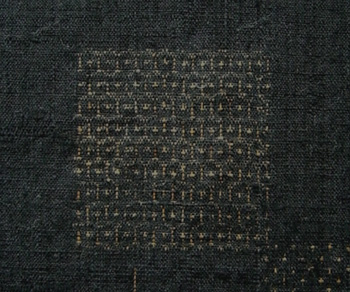
Yuki Tsumugi Silk Stole
[YŪKI OKUJUN] 結城紬 ショール 真綿 ストール フリンジショール 絹100% シルク100% 着物・洋服兼用 まわた ショール 奥順『結城紬 育てるショール 色無地〔5色〕』 (ほの)
通常6~7日以内に発送します。 · Sold by ふだんきものハイムラヤ · ASIN B0BQDT7XT9
Price and availability as of 2026-09-01 05:22 JST. The Amazon listing at the time of purchase is authoritative. jpmono.com earns a commission on qualifying purchases at no extra cost to you.
| Attribute | Detail (per published specs) |
|---|---|
| Item | Hon-Yuki tsumugi hand-spun silk stole / shawl |
| Material | 100% silk, hand-spun from floss silk (mawata), untwisted thread |
| Weaving | Jibata (地機, low back-strap loom), hand-tied kasuri where patterned |
| Origin | Yuki district, Ibaraki Prefecture (and adjacent Tochigi), Kantō |
| Designation | UNESCO Intangible Cultural Heritage (2010); METI traditional craft |
| Dimensions | Unconfirmed — check manufacturer site / listing |
| Weight | Unconfirmed — characteristically very light |
| ASIN | B0GDXVDZ2Z (Amazon JP Global Store, secondary path) |
| Price | Varies — verify at the listing before purchase |
Sources: Amazon US search (primary, moonill-20) + Amazon JP Global Store (secondary, moonill-22, sourced listing) + maker-direct context. Specs not present in the data are marked “Unconfirmed” rather than estimated.
📖 Glossary — key terms
- Tsumugi (紬) — pongee; cloth woven from hand-spun silk thread, traditionally a sturdy, matte everyday silk rather than glossy formal silk.
- Hon-Yuki (本結城) — “true Yuki,” cloth made by the full set of certified hand techniques, as opposed to tsumugi-style or power-loom imitations.
- Mawata (真綿) — silk floss; the puffed silk batting from which Yuki thread is hand-drawn.
- Jibata (地機) — the low back-strap loom on which the weaver’s body tensions the warp; one of the three defining techniques.
- Tegukuri-kasuri (手括り絣) — hand-tied resist used to create ikat-style blur patterns before weaving.
- Ashiginu (絁) — an ancient coarse silk; the Hitachi region supplied it to the imperial court as far back as the Nara period.
- Stole / shawl — a long, narrow wrap worn over the shoulders; here, a wearable, lower-cost form of a cloth usually made into kimono.
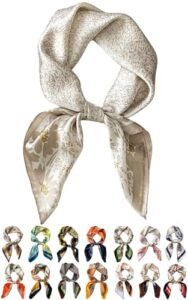
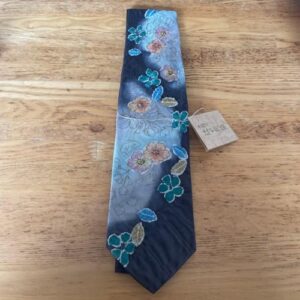
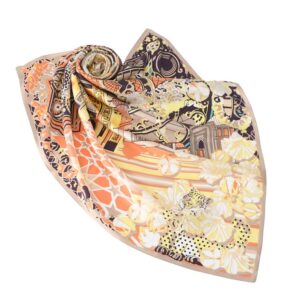
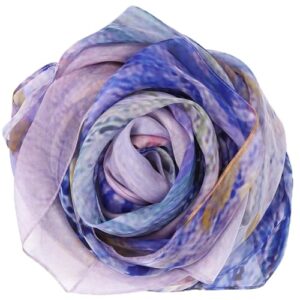
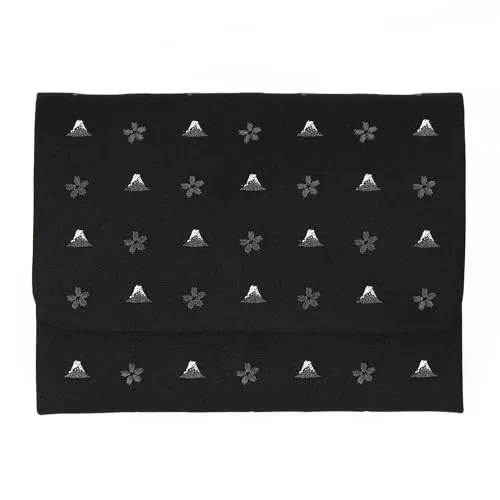
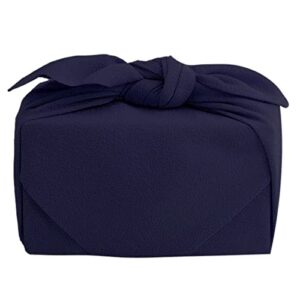
Other Japanese silk textiles we have covered — useful for weighing weave, region, and form against a Yuki tsumugi stole.
Where this comes from

Ibaraki sits on the northeastern edge of the Kantō plain, the broad lowland that surrounds Tokyo, with a long Pacific coastline to its east. The Yuki weaving district lies in the prefecture’s southwest, on the Kinugawa River, and spills across the border into neighboring Tochigi — the cloth is a regional tradition, not a single-town one. This is flat, well-watered farmland, historically suited to sericulture and to the river logistics that moved cloth toward the markets of Edo (old Tokyo) to the south.

The region’s silk lineage is genuinely ancient. The old province of Hitachi, which covered most of present-day Ibaraki, supplied a coarse silk called ashiginu (絁) to the imperial court as far back as the Nara period, when Nara served as Japan’s capital from 710 to 794. That long thread of sericulture is the soil from which Yuki tsumugi later grew.
By the Edo period the cloth had a clear identity and a patron. Under the Yuki domain, tsumugi was a designated local specialty, and it was presented to the Tokugawa shogunate as a formal tribute good — the kind of recognition that fixed a craft’s reputation and kept its standards high. Domain patronage across the Kantō region prized this cultivated, understated cloth.

- 710–794 — Nara period; the Hitachi region (modern Ibaraki) supplies ashiginu silk to the imperial court.
- Edo period — Under the Yuki domain, tsumugi becomes a designated specialty presented to the Edo shogunate.
- 1842 — The Mito lord Tokugawa Nariaki opens Kairakuen, emblem of the domain’s cultivated culture.
- 1956 — The hand techniques of Yuki tsumugi are recognized as an Important Intangible Cultural Property of Japan.
- 1977 — Designated a traditional craft under Japan’s METI framework.
- 2010 — The full three-technique process is inscribed on UNESCO’s Intangible Cultural Heritage list.
- 2026 — A small number of workshops still hand-spin and back-strap weave the cloth.

What “still being made here” means is best understood through the three hand techniques that the designations protect. Thread is drawn by hand from silk floss and left untwisted; patterns, where present, are resisted by hand-tying (tegukuri-kasuri); and the cloth is woven on the body-tensioned jibata loom. Only a small number of workshops still carry out the full sequence, which is precisely why a genuine hon-Yuki piece is expensive and why most of it never leaves Japan.
“The thread is never twisted — which is why a Yuki tsumugi cloth feels warmer and lighter the longer it is worn, softening across decades until a single piece is handed down through a family.”
That durability is the cultural extension worth knowing. Yuki tsumugi was traditionally an everyday silk, not a formal one, and it is traditionally believed to reach its best handfeel only after years of wear — a quality that makes it a generational object rather than a seasonal one. As a stole, it carries that same warmth into a wearable, lower-cost form.
Price snapshot across stores
Pricing for genuine hon-Yuki varies widely by maker, width, and whether a piece is patterned. Treat the figures below as orientation, not quotes, and verify at the listing. USD figures are approximate at a ¥150/USD baseline as of mid-2026; the JPY price is the authoritative one.
| Store | Item / Variant | Price (JPY + USD est.) | Notes |
|---|---|---|---|
| 🇺🇸 Amazon.com (US) | Browse Japanese silk stoles & tsumugi accessories | varies (USD) | Best if you are shopping from the US — Prime shipping, USD pricing, no international customs. Amazon US carries a range of Japanese silk scarves and stoles for comparing weave and price; the exact hon-Yuki piece is sourced from Japan (next row). |
| 🇯🇵 Amazon JP Global Store | Hon-Yuki tsumugi hand-spun silk stole (ASIN B0BQDT7XT9) | Varies — verify at listing | Ships internationally from Japan. This is the sourced listing for the specific item in this guide. Only the JP listing snapshot was available; live pricing may have shifted. |
| Maker direct | Workshop / cooperative stoles & tan cloth | Unconfirmed | Some Yuki workshops and cooperatives sell direct, often Japanese-language only and without international shipping. Best for buyers already in Japan. |
| Proxy services (Buyee / Tenso) | Any JP-only listing forwarded abroad | Item price + forwarding fee | Useful when a piece is listed only on a Japanese marketplace. Adds a service fee and a second shipping leg; factor in customs at your destination. |
Prices in USD are approximate and depend on the current exchange rate. Sources: Amazon US search (primary, moonill-20) + Amazon JP Global Store (secondary, moonill-22) + maker direct + proxy services per availability.
What it does well
Weaknesses and things to verify before buying
- Authenticity is hard to verify remotely. “Tsumugi” and “Yuki-style” are sometimes used loosely; confirm whether a listing is certified hon-Yuki or a power-loom or blended imitation before paying a premium.
- Price. Genuine hand-work is costly, and a stole — though cheaper than a kimono bolt — is still a premium textile, not a budget accessory.
- Thin marketplace data. Only the Amazon JP listing snapshot was available at the time of writing; dimensions, exact weight, and live pricing should be checked directly.
- Care. Hand-spun silk is delicate; expect hand-washing or professional cleaning, not machine wash, and protect from snags.
- Subdued aesthetic. If you want bright, glossy, jewel-tone silk, Yuki’s matte, understated character may disappoint.
- Cross-border logistics. Most genuine pieces ship from Japan; budget for international shipping time, possible customs duties, and — for JP-only listings — a proxy service fee.
Conclusion — which buyer type are you?
Other ways to approach this purchase
🏆 Editor’s Pick
❓ Frequently Asked Questions
What makes Yuki tsumugi different from ordinary silk?
Its thread is hand-drawn from silk floss (mawata) and left untwisted, and it is woven on a low back-strap loom. That gives a matte, soft, very light cloth rather than the high gloss of standard silk. The full three-technique process is UNESCO-listed.
Can I buy a Yuki tsumugi stole from outside Japan?
Yes. The Amazon JP Global Store ships many items internationally, and the listing for this stole (ASIN B0BQDT7XT9) is the sourced path. For JP-only listings, a proxy service such as Buyee or Tenso can forward the item, adding a service fee and a second shipping leg.
Why is it so expensive?
Authentic hon-Yuki is made by a small number of workshops using slow hand techniques — hand-spinning, hand-tied kasuri, and back-strap weaving. That labor, not branding, drives the price, which is why genuine pieces are costly and mostly sold within Japan.
How do I care for it?
Treat it as delicate hand-spun silk: avoid machine washing, keep it from snags, and use hand-washing or professional cleaning. Yuki tsumugi is traditionally believed to soften and improve over many years of careful use.
How can I tell genuine hon-Yuki from an imitation?
Look for certification language identifying it as hon-Yuki made by the recognized hand techniques, rather than the looser “tsumugi” or “Yuki-style.” When buying remotely, prefer listings that document provenance, and treat unusually low prices as a flag.
Is a stole a good way to own this craft, or should I buy a kimono?
A stole carries the same hand-spun thread and weave in a wearable, far lower-cost form than a full kimono bolt. For readers abroad who want to use the cloth daily rather than wear formal kimono, the stole is the more practical entry point.
jpmono.com is curated by a Japan-based editorial team (working out of Toyama in the Hokuriku region and Nara in Kansai) and is independent. We do not take payment from the makers we feature; income comes from affiliate links. We do not physically test every product — we read maker’s specs and source listings.
🤖 This article was drafted with AI assistance and edited against the source listing and verified craft references by the jpmono editorial team. Facts about the craft are drawn from the provided data; specs not present in the source are marked unconfirmed rather than estimated.
Affiliate disclosure: jpmono.com may earn a commission on qualifying purchases made through links on this page, at no additional cost to you.